
When I first arrived in Nice, France I had been traveling for the prior month and it was relieving to arrive at my final destination. The Côte d’Azur is one of the most picturesque regions I have ever seen. I remember the moment when I crossed the French border on a train from Italy being in awe how beautiful it was. The train from Ventimiglia, Italy to Nice takes an hour and a half compared to a 30 minute car ride. That hour and a half slow train ride was unreal experience. The train slowly wove its way along the seaside passing little villages and also the infamous Monte Carlo. After getting settled at my dorm I was ready to see what France has to offer. I have really come to appreciate how connected the university system is back home. Here in France, life is at a much slower pace so in turn everything takes an unreal amount of time to get done. Besides the early frustrations I have come to love my new way of life.
Vietnam: The Wild, Wild Southeast

January 6th, 2015 11:37 pm
One night, as I laid to rest in my mosquito net covered bed, within my open air host family’s home, in the lovely city of Can Tho, Vietnam, I pondered the idea of “How the hell did I get here?” Lets rewind to a couple months prior… to when I made the decision to take on the endeavor of travel halfway across the world to spend my winter break.
November 7th, 2015 4:01 pm
Vietnam. That was the decision. I had applied and been excepted to the College of Forestry and Conservation’s winter session trip to Vietnam to study climate change and the effects on the Mekong Delta. This program would be 5 weeks within the southern end of the Vietnam. I began to think if I had made the right decision? I wanted the freedom of travelling by myself. Exploring. Adventuring. Really immersing myself in the environment. I worried with such a organized itinerary and supervision that this would not be the case…but only time could tell. Lets flip back to my experience to see how it turned out to be.
December 31st, 2014 11:58 pm
I have never been in a crowd of this many people. Literally, I cannot see where the constant stream of people ends. Spending New Year’s Eve in Ho Chi Minh City will be a night to remember. As our teaching assistant, Nyi, takes us around the packed streets of vendors, children, families, and the random stray dog or two who have come out in the masses to reign in the western New Year. As the count down began, this crowd of hundreds of thousands fell completely silent. I could have yelled at a friend a 500 yards away and he would have heard me loud and clear. It was one of the strangest experiences I have ever witnessed. As the fireworks erupted into the smog filled sky of Ho Chi Minh City I realized the night was just getting started… but the rest of that story might be saved for another time.
January 15th, 2015 1:14 pm
The people of Vietnam happen to be come of the most generous and welcoming people I have ever had the chance to meet during my twenty short years on this planet. I was welcomed into the home of a silk weaver today who were members of a Khmer Commune outside of the city of Can Tho. As I sat down upon the bamboo mats outside of their home I was immediately welcomed with tea and the offering of Hero Cigarettes. I declined the cigarettes but did indulge on some of the best tea known to man. My host was a elderly man, probably close to the ages of 60 or 70. He spoke no English and I spoke no Vietnamese. He began the classic game of charades to attempt to converse while enjoying the tea. After about 30 min of this I came to the conclusion that his wife was the one weaving silk, he had three children, he owned 5 cows and used them for milk and meat, and that he was fascinated by my amount of facial hair. This was the best conversation that I had since the trip started, and we did not even speak a single word to each other. I was beginning to see that this trip to Vietnam would mean more to me that I could have ever imagined.
Gone Greek. Month no. 1
It has been exactly one month since I landed in the Athens airport and shortly after arriving at the residence building apartments. Across the Atlantic Ocean and many miles away from a most familiar home to now a completely clean, fresh, blank slate home densely populated and where English is not the first, and in some cases, second or third language of the local people. I ask myself this, how do I find balance within? This is a question to ask yourself anytime and anywhere, but I think especially when relocating somewhere for more than a month. Time is slipping away as quick as smoke does after you blow out a candle, and the days are starting to blur as the more comfortable I become here in the city of Athens, in my neighborhood Agia Paraskevi.

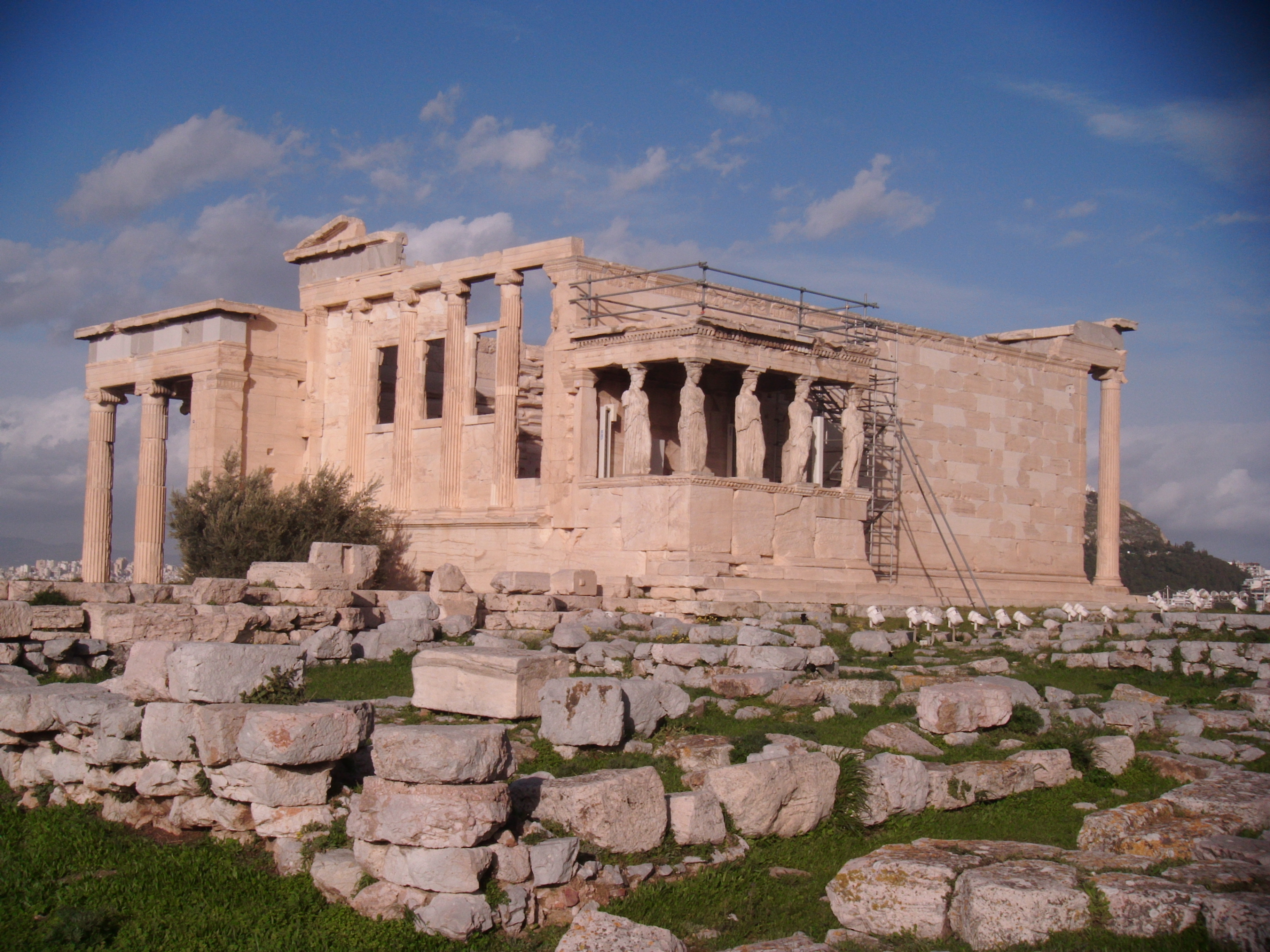
Greece is drastically shifting as a country and this crucial time of political choices made by the newly elected Prime Minister Alexis Tsipras because of the country’s amount of debt. In 2008 the economy plummeted and has since been trying to recover from the massive depression. With Athens as the biggest city in Greece and the country’s capitol with approximately 3 million people, the metro station is usually packed in the morning and afternoon around 5 p.m. Coincidentally, these are the times I’ve gone to the city center and plaka over the last couple weeks to visit the Acropolis, Parthenon, drink coffee, and do as the tourists do. Behind the tourism I feel and see the people of Greece who are worn, worked, and have been through hardships as with any economic downfall. Maybe it’s me being somewhat hypersensitive, but I feel I see sorrow and tiredness in the faces that I pass in my neighborhood down the streets and throughout the city during the day time. I have yet to spend time with local people of Greece besides a few classmates and I hope to gain more details and listen to their stories, so stay tuned.
A little bit of reflection on my journey so far:
The challenges we face in life are accompanied by sacrifice and stress along with the many difficult decisions to make and sometimes with haste. The opportunities we are given sometimes go unseen and simply learning to speak up and voice what you feel is right are obstacles young adults are challenged with daily. I believe small victories add up to great victories in time and every day is a chance to try something different and stray from social norms. I am so grateful for the beauty of life and the opportunities that I have been able to see and take advantage of and will never stop searching for the light of inspiration. Sending love, and good vibes your way.
Be kind,
Teag
If you want to read and see more from my time here in Greece check out my personal blog https://teaganmartin.wordpress.com/ .
6:30 Wake-up Call: How DC forced me to grow up
As a note: this post, so recent after my first one, is more because my supervisor at my internship encouraged me to blog about my experience in DC. So, I’ll probably be writing more for my own benefit than because of the requirements.
ANYWAYS: Growing up.
I’ve always been that kid who doesn’t do mornings. I don’t schedule classes before 10 am (or 9:40, if we’re getting real ambitious), I try to avoid working early, and I get dressed in record time. I’d say I averaged 10 minutes prep time during Fall Semester 2014. That prep usually went as follows: alarm goes off, typically an hour or so before I have to be somewhere. Hit the snooze. Alarm goes off ten minutes later. Hit the snooze. Repeat until it’s 9:20, I have class at 9:40, and it’s a ten minute bike ride to school.
Cue chaotic music.
There’s a lot of mumbled swearing as I rub the sleep from my eyes while yanking on yesterday’s pants, a lot of confused running around while I searched for that shirt I wanted (which, 99% of the time, I’d worn yesterday and is now in the laundry), and me bolting out the door around 9:30 after grabbing my waterbottle and my backpack. Eating breakfast was a rare event – if I was lucky and moving fast, I’d cram a muffin or a piece of toast into my mouth during the bike ride. Sometimes, if I was really on top of things, I could even stop at the coffee shop in the building to grab a latte and a bagel. But usually, I’d just suffer through my slew of classes hungry and grumpy until I could go home for lunch and a nap.
DC doesn’t allow for that kind of morning.
One of the biggest changes upon moving here was getting used to actually commuting to work. Unlike the ten minute bike ride to class, work is now either a 40 minute walk, or a 20 minute Metro ride (with all the unforeseen hiccups that can come with public transit). Rolling out of bed twenty minutes before I have to be at work is basically a death sentence to be late – fortunately, I haven’t had to make that “I’m so sorry I slept through my alarm” call yet. Also, going the entire day without eating (like I was so used to) would probably result in the death of myself or one of my coworkers.
DC isn’t a cheap city, so if I want to live here, take the Metro, eat out for breakfast and lunch, and have money for activities, I’ve either got to marry rich real soon or steal an ATM. Either way: it’s why I walk a lot and why I have to budget my time both at night and in the morning, to make lunch for the next day and to eat something for breakfast.
It’s also why I’ve actually started listening to my alarm in the morning.
6:30 AM used to be my enemy, the time I’d get up at if I needed to finish a paper. Now, it’s when I roll out of bed, and I don’t even touch the snooze button anymore. My roommate, bless her heart, also has to get up at 6:30, so we’ve got a great morning routine. She changes in the bathroom while I change in the room, we swap for the morning pee, and then it’s 6:40 and we’re getting ready for the day. Typically to the tune of her Michael Jackson Pandora radio, but sometimes we’ll just grunt about how tired we are (this has typically followed an up-too-late night when we either watched the Bachelor or stayed up giggling about stupid stories from work).
But we get ready and then I have breakfast. Which is such a strange phenomenon to me. The coffee is brewing while I put on my makeup, and by 7:15, we’re watching CNN and eating food.
Guys, I watch CNN now. At 7:15 am. Voluntarily.
It’s not a life I imagined myself having in Montana – in fact, my tendency to sleep in was one of my biggest worries about moving to DC. Coupled with my tendency to be up until 2 (or 3) am, browsing the millions of cat videos on the web, I kind of thought I wasn’t going to be adult enough to move to DC. Not gonna lie – the first week was rough. I didn’t know what to do when I actually had time to sit down and drink a cup of coffee and make myself some eggs. But now – now, I’m starting to wake up earlier on the weekends (my stupid internal clock has me up by 8 on Saturdays now. I hate it). And I’m also looking forward to that 6:30 alarm clock, because it means CNN and my cup of coffee and Michael Jackson. It also means I’m about to head to the office to my adult job (okay, adult internship).
Some kids grow up when they come to college – that’s when they adapt to early mornings and eating breakfast and going to bed at a decent hour. For me, it’s taken a move across the country and an actual commute to work. But hey – we can’t all grow up at age 18. And not all of us wanted to.
Although I do miss my 1:30 am cat videos.
Culture Shock from Coast to Coast
Okay, technically Montana isn’t on the coast (and really, neither is DC), but “coast to coast” sounded better than “Culture Shock from just west of the Rockies to the center of the Beltway”. Still, both Missoula and Washington DC are definitely located on the same continent, and are part of the same country. Somehow, though, I got more of a culture shock coming here than I did when I went up to Canada over New Year’s (although, Western Canada and Montana are . . . virtually the same).
I was expecting a change when I moved from a Montana town of 65,000 to the nation’s capital (holding a staggering 643,000 people (THAT’S A POPULATION DENSITY OF OVER 10,000 PEOPLE PER SQUARE MILE)), but oh man. Culture shock indeed.
During my first few weeks here, I’d been keeping a list of all the things about Washington DC that surprised me:
- Escalators. Escalators everywhere.
- People use their car horns to be rude! Also, there’s a lot of honking at night, which interrupts my Monday viewing of the Bachelor (we can’t have that).
- The sidewalks are big enough for you to drive a car on (and sometimes people do).
- Business professional does not consist of a nice pair of jeans and a button down shirt.
- Really, I think there are more escalators in one Metro station than there are in the entirety of Montana.
I’d been to DC before, back in 2013 for Obama’s second inauguration. But I’d only visited that time, and visiting in conjunction with hundreds of thousands of other people gave me a bit of a false view of this city. Second time around, now that I’m living here, I’m starting to realize that, yes, the Metro is always crowded (unless you’re riding it at 1 pm – then it’s eerily empty), and yes, everything is overpriced (also – sales tax is the worst invention ever), and yes, there is far greater ethnic and racial diversity here than I’ve ever experienced before. Somehow, though, it all works.
Don’t get me wrong – I’m still adjusting to the city. I’m still walking everywhere, because that seems preferable to cramming myself into a moving metal tube, and I still walk up the escalators even though I really don’t have to, and I still have to double check with the roommate every morning to see if my outfit is professional enough for the workplace (guys, I really miss wearing jeans to work), but I’m starting to expect the crowded streets and the 11 pm honk war outside my apartment and the fact that nothing here really costs a dollar. DC is definitely different than Missoula, Montana, but just like the college town I came to love, it’s got its own, particular brand of weird. A weird I can definitely get used to.
Except for escalators. I don’t think I’ll ever understand the number of escalators.
Tuk Tuks, Ultimate, and Golden Children
First week in Cambodia and first week at Sovann Komar Children’s Village: complete. You would never guess by watching me get lost walking two blocks away from my apartment, but I’m settling in nicely. My second day here I had to really pump myself up to buy some cereal. This morning I walked to Angkor Mart and got a bunch of things without thinking twice. I’m feeling more comfortable, and that’s really cool.
In an effort to fight my jet lag and not waste any time, I decided to walk to the Toul Sleng Genocide Museum during my third day in Phnom Penh. Toul Sleng, also known as S-21, was a high school turned prison/interrogation center during the Khmer Rouge Regime’s rise to power. 20,000 people held there were later killed. Prisoners were required to write an autobiography detailing their lives from when and where they were born to their arrest. A photo was taken of each prisoner and they were given a number. The photos were on display at the museum and made everything that much more real. The whole place was solemn and heavy with the weight of not only what had happened there, but how recently it had occurred. Reading the pamphlet guide that corresponded with each cell or torture device was horrific and nausea-inducing. The oppression was palpable and while it was somewhat numbing, I was kept uncomfortably alert with the shocking reality of it all. It was an abrupt experience upon my arrival in Cambodia, but one that I felt was important to understanding the country’s history.
I was beyond nervous to begin my internship on Monday. I had no idea what to expect. What little expectations I had were immediately shattered as my ride rolled up. For some reason I assumed it would be all teachers, or weirdly just myself and the driver, but the van was full of children. They motioned for me to jump in the front seat but there was a little girl already sitting there. She opened the door and stood up. I waited for her to jump out, and when an awkward length of time had passed it dawned on me that she would be sitting on my lap for the ride. Whatever nerves I had been feeling about interacting with the kids were forced aside. Her name is Natia, and we read from her English textbook for most of the ride. I was very comforted by this first interaction, and it restored some much needed confidence in what I was doing here in Phnom Penh.
The children at Sovann Komar are the sweetest, cutest, most excited little kids you’ll ever meet. Happy enough simply saying “hello” to me, their enthusiasm was contagious and I immediately felt welcomed. The staff is fantastic as well, and were happy to answer my endless questions.
“Hello Teacher Joh!”
“Hello!”
“HowAreYou?!”
“I am great! How are you?”
“IAmFineThankYouAndYou?”
This is a daily exchange. They don’t fully understand that “And you?” isn’t a part of the actual greeting. I try to correct it but there is this issue with it being very, very cute. It’s an internal conflict. Every day on the ride home a couple of teachers from the school try to teach me simple words so that I can communicate a little better with the kids. Khmer has proven to be a very difficult language for me, but I appreciate them trying to help, and they appreciate my effort.
I will be teaching pre-school 3 days a week, kindergarten 2 days a week, “sport” or physical education on Fridays, and assisting with older students’ English classes every morning. I only observed classes this past week, so I’ll write about teaching when I get there.
On Thursday I was given the opportunity to travel to Arun’s (co-founder of Sovann Komar) home village and volunteer with KIDS International Dental Service, an organization that recruits people from the dental industry to volunteer their time and service to children in rural communities all over the world. It was amazing. They gave around 250 children check-ups, educated them on proper brushing techniques, and did free dental work when it was needed. My job was to direct children from one line to another, which was as unhelpful as it sounds- still a very cool thing to be a part of. The dentists performing extractions, fillings, etc. let me observe and explained what they were doing and why. Ironically, there happened to be a South Korean Christian group at the village the same day, and they were handing out candy. I think the children were more excited to get their free toothbrush and teeth cleaning. It was a wonderful experience with a wonderful organization, and seeing Arun’s home felt special as well. He does a lot of charity work for children having been orphaned at the age of 5 himself. He is a very wonderful, kind, and inspiring man to work for.
Friday was a great day. As I mentioned earlier, I get to teach sport on Fridays. I chose to attempt a frisbee lesson. I had no idea how many students I was teaching, how many frisbees we had to use, and how tough it was going to be to explain drills with the language barrier. All three of these concerns ended up being very real, but everything worked out. There were around 50 students, 3 discs, and they did not understand much. I kept it very simple.
“This is a frisbee.”
“YES!”
“Do you like frisbee?”
“YES!!!”
“Do you want to see Teacher Kosal catch a frisbee?”
“YES!!”
I kind of threw Kosal under the bus, but I thought it would be funny. He did not catch the frisbee, and it WAS funny. The kids loved it, so I threw to other teachers as well. They cheered when it was caught; they cheered when it was dropped. I gave a basic lesson on throwing and catching (“This side of frisbee UP. Catch like alligator.”), then decided that the best thing to do with 50 kids and 3 discs would be to split them into three groups and let them throw.
Somehow, this worked perfectly. As long as all of the kids had a turn, it was great. It was easier to help kids throw when I was dealing with a smaller group, and they LOVED it. I only planned on the group throwing taking up 10 minutes or so, but it ended up lasting the entire 40 minute class. My first time teaching “sport” could not have gone better.
Next up, I’m off to play some pick up ultimate. I’m actually literally waiting for my tuk tuk now.
Speaking of, this week I successfully hailed a tuk tuk, and bargained with the driver- all by myself. Little things, little things.
– Johannah Kohorst
One of my favorite parts of the trip were the friendships that I made. When you go to Africa you feel vulnerable, and you are. We were all sick at some point, mostly due to the new bacteria and parasites in our bodies. We all had days where we wanted to go home, and days where we thought we would die if we had to leave. Tanzania puts a lot of stress on your body and a lot of emotions in your heart. Everyone has to be very open about how their body is coping and the emotions they are dealing with so that we can watch out for each other. If someone has a bad canker sore, a sunburn, diarrhea, or is feeling down everyone on the trip knows. When you see someone everyday 16 hours a day, you get to know them pretty well. You realize what’s important to them and what they need help with. As the trip goes on certain people gravitate towards each other and make little families. Being a part of a family like that is beautiful. It is a family free of judgment, expectation, chaos and authority. I think that part of the reason we were able to make such great friendships is that we learned from the people. We learned how to love others better than we love ourselves and I hope that we can all bring that home with us.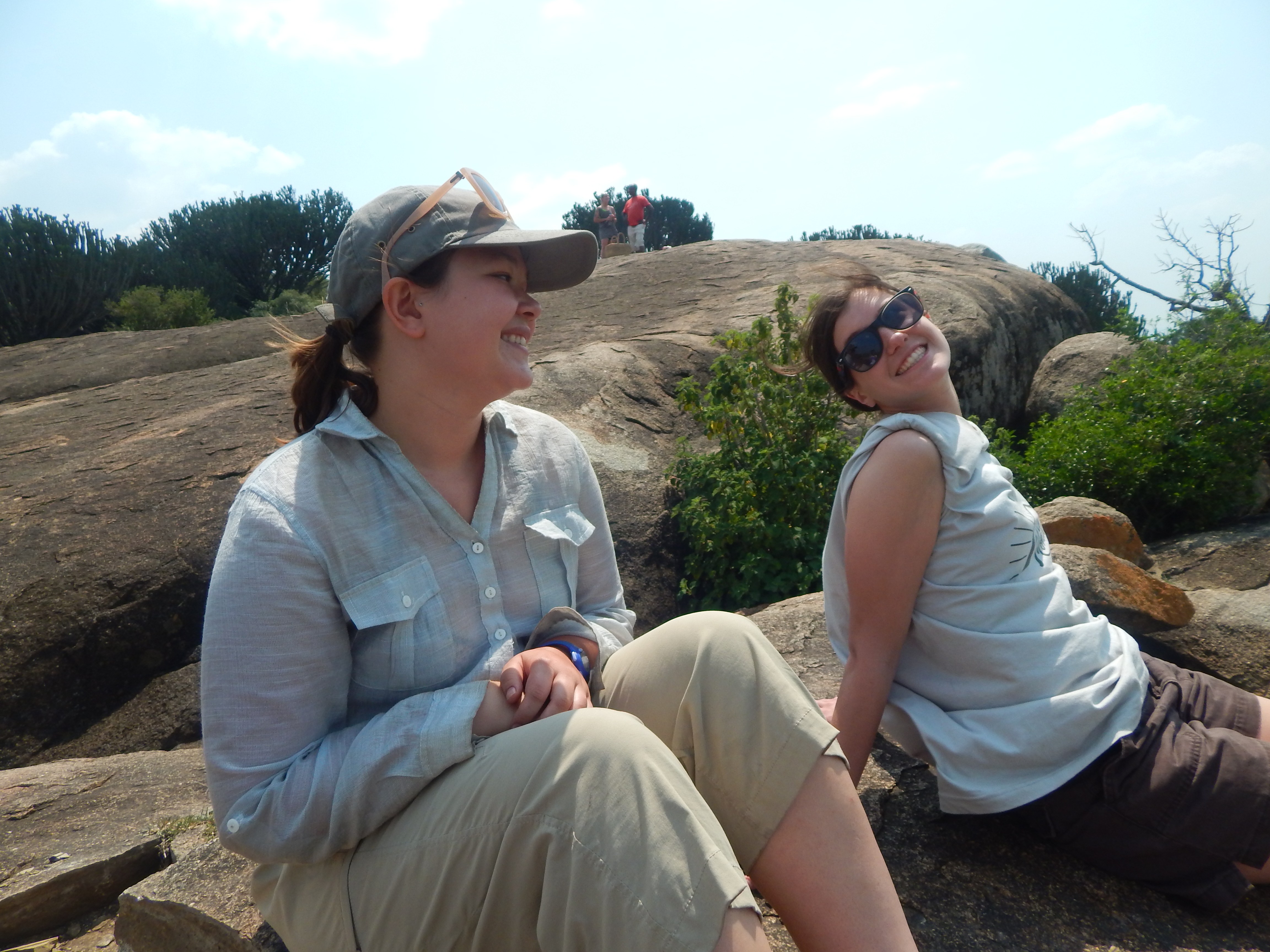

The Market
Learning to bargain in Tanzania was a lot of fun. At first I thought I could never do it, but a girl learns. My biggest learning experience was at the Maasai Market. Men are lined up both left and right in all too literal “holes in the wall” the size of a large walk-in closet. They greet you with “Sista!” And as you navigate from about, shop owners will stop you and say “ Sista! My shop next! I give you good price!” Shopping was extraordinarily fun because it was a cultural experience. Many people wanted to trade me their product for my watch. One man asked if I had a flashlight to trade. He pointed to his and said that his didn’t work anymore. I’m pretty sure it just needed new batteries. Although all of the men claimed to have made everything themselves, we saw some of the same products again and again. Because we were clearly tourists, the shop-owners would try to charge us outrageous prices, often about three times the worth of the product. Once the shop-owners realized we knew what they were doing they would have fun teaching us how to bargain. At one point I asked a man how much he wanted for his product and then told him that he was asking too much. He responded by saying “No, now you say price.” When we really started to bargain well and get the price of the product down, the shopkeepers would tell us “I give you Africa price.” I expected our visits to the Maasai and Hadzappi to be the most influential cultural experiences, and while they were life-changing they showed us only one way of life for one group of people. While shopping we were able to see people from many different tribes use the same skills to either make a sale or a purchase. However, the most important part of bargaining was being able to interact with native people one-on-one.
Culture Shock Meets Social Shock


Arriving in a new country, so different from my own, was indescribable. All the rules change. I noticed this the most socially. Here is Tanzania people’s idea of time, happiness and problems are so different from the U.S. Time is not linear. If the guides say lunch will be about 12:30, then it could very well be at 3:30. Any worry or problem can easily be fixed with a simple “hakuna matata!” Despite the intense poverty that many Tanzanians face, people always seem to be happy and relaxed. Things happen when they happen. No one seems to feel pushed to get things done, yet the people here are some of the most hardworking people I have ever encountered. The thing that impresses me most about the people of Tanzania is how genuine they are. They have self-confidence and are not judgmental. The people want to hold your hand, put their arm around you or call you their friend. All of this left me wondering where America went wrong. Did we trade culture and love for the debilitating pressures of being the powerhouse of the world? When did we forget about people? Tanzania has over 120 different tribes, yet the people are peaceful. When did America forget that people are just people? How do the young Americans attack this problem effectively?
The sad truth about elephants

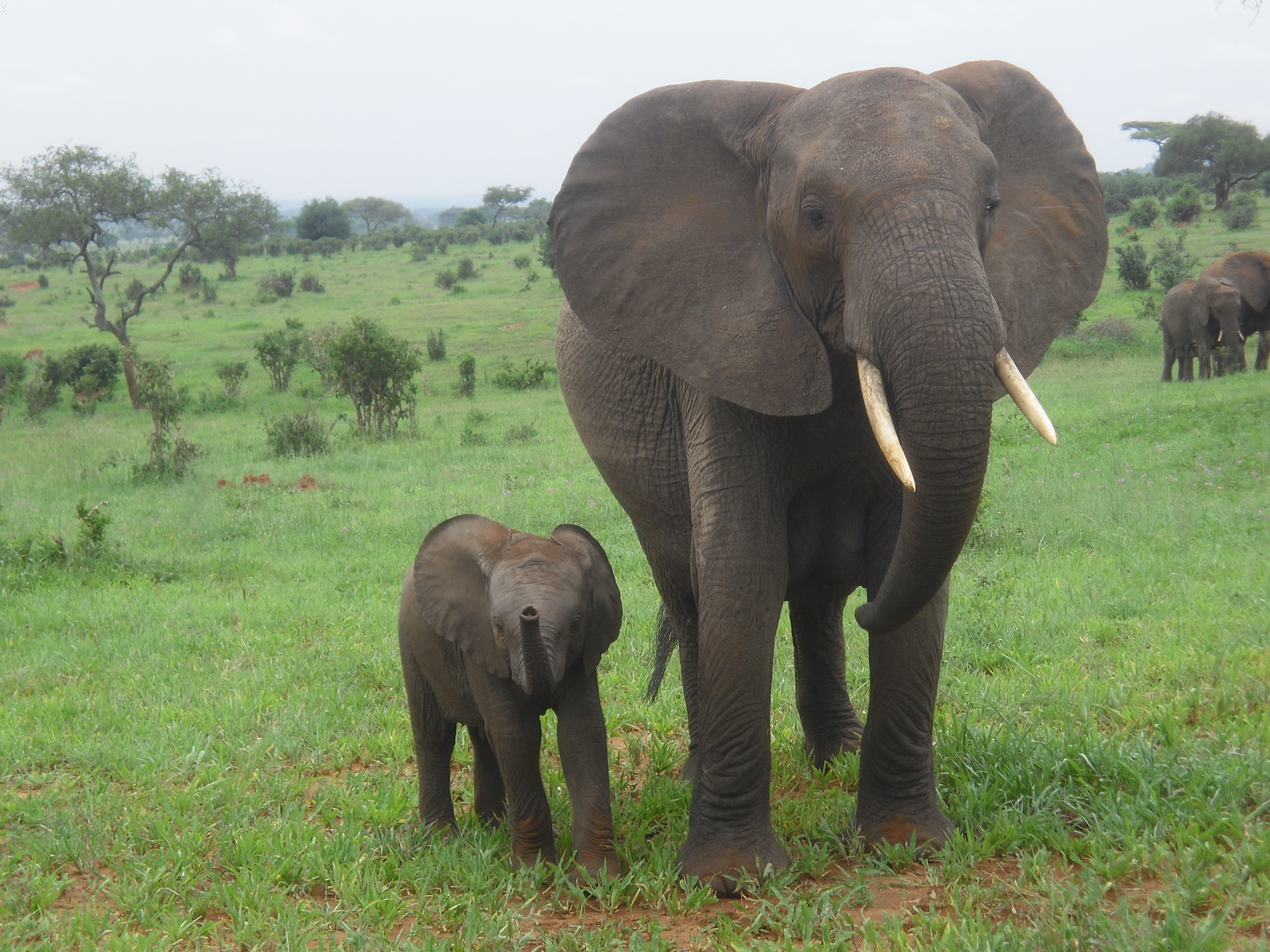
There’s no debate: my new favorite animal is the elephant.
While in Tanzania, we were lucky enough to see hundreds of elephants, from babies and teenagers to matriarchs and large bulls known as “tuskers.” We saw elephants mating, nursing and one in musk (the male equivalent of heat). We drove by as elephants splashed in mud puddles, playfully trumpeted and rummaged for food with their trunks.
We were lucky. In the not-so-distant future, these sightings will be rare.
During our second day in Tanzania, we met up with the head of African Wildlife Trust, Pratik Patel. The organization, along with Pratik, focus their efforts on anti-poaching, and anti-ivory campaigns.
We sat outside, overlooking hundreds of acres of land set aside for a brand-new “Ivory Elephant” orphanage, as Pratik explained why.
“It’s a genocide,” he explained, emphasizing the latter word. “Yes – a genocide.”
According to a 2012 NPR article by John Burnett, an estimated 11,000 elephants are dying each year for ivory. That was three years ago, and the problem is only getting worse.
Ivory is especially popular in China, but the United States isn’t completely innocent. According to the National Geographic article “U.S One of Largest Ivory Markets,” we’re the second-largest ivory-market in the world.
I couldn’t believe that, and I couldn’t believe the number of wild elephants left: an estimated 13,000.
The story is a heartbreaking one, and we’re running out of time.
After leaving Pratik, we went on a game drive through Terengerie National Park. There, I saw a little baby elephant, tucked beneath it’s mother.
“She’s less than two months old,” our guide explained, pointing out the babies’ wobbly steps.
At that moment, the infant copied her mother and sniffed the air, peering at us. My heart stopped.
Elephants are my new favorite animal, and I’ll do everything in my power to help stop the ivory trade.
 Beyond the Classroom