Transportation in Mexico

Hola amigos,

Traveling here in Mexico has been quite the eye-opening experience. I have seen two motorcyclists get hit by cars and unlike the US where people stop and exchange information, the people keep driving. Almost no one has the money to pay and this also plays into the high death rates on Mexican highways. If someone dies there is no legal action the family can take, but if they survive there is a possibility they could have to pay. Our culture professor at the institute here says that many times people would rather kill you in a crash then let you live… Needless to say we look all directions when crossing the street because the traffic does not follow the stop lights but there has still been one death in front of our school during our time here.

Three weekends ago we took a trip to the ocean in a 15 person van. The trip takes 7 hours on a road similar to Highway 12 between Idaho and Montana, except more curves, higher speeds, and large sections without pavement. This trip was rather comfortable compared to our trip to Hierve de Agua, where we rode in true Mexican style with 6 people in the cab of the truck, 6 people in the back, and 2 people hanging out the back. My seat was an old air filter and despite the dust we were all smiles while speaking with a local woman.

HDA
It is easy to ask “why” Mexico is the way it is, but those are the thoughts of a “guero” or a foreigner. The correct question is “why not”. In many ways I think Mexico is much more complicated than the U.S. and has much more history and culture than the U.S. and much of that culture still survives today. The clash between modern society and indigenous culture is evident every day in the city of Oaxaca.IMG_20150214_112959_841

Oh My Buddha!

This is what my most recent tuk tuk driver said to me as I was bargaining. I got the price I wanted but also found out it was lower than I should have paid. Bit of a win(cheaper)/lose(I’m a jerk) there.

Anyway, that’s not what I’m writing about. Recently, Ruth and I have taken to watching BBC documentaries during our lunch break.
Ruth (British accent): “What do you want to watch? What theme. Something historical? Something culturally relevant…?”
Myself (Really American): “Is there one on meth? I’ve heard there are a lot of good documentaries on meth.”
Ruth: “………. How about one on Buddhism.”
Myself: “Ok yeah that would be good too.”

We ended up choosing one called “The Life of Buddha”. I had known vague bits about the Buddhist religion; probably the same things everyone knows. It’s peaceful. There is no “want” (??????) I knew the Buddha had different forms. I knew Monks practiced the teachings of the Buddha. I knew it was present in everyday life here in Cambodia. That’s about it. I didn’t know anything about the history of the religion. I’ll try and give you a quick recap of a 20 year journey.

Buddhism started with the birth of Siddartha Gautama, who came to be the Buddha. It has been adopted by many different cultures, has many different interpretations, and is seen as many things; a religion, a philosophy, a psychotherapy. What makes it so different is that what the Buddha discovered is scientifically true. All-encompassing, it is also a very accessible religion. It is often seen as a therapeutic way to deal with the everyday struggles of life.
The Buddha’s father was a chief, and therefore the Buddha lived a childhood of luxury. His father wanted Siddhartha to follow in his footsteps and become chief as well, so Siddartha was kept in the palace and was rarely allowed outside. When Siddhartha was allowed to partake in a festival at the age of 9, he noticed a plow cutting through a field. He then noticed a bird eating a worm as a result of the plow. If the farmer had not been plowing, the bird would not have gotten the worm. He realized everything is connected, and that all actions have consequences. Siddartha grew up, and was finally allowed to leave on his own. He went on four journeys and noticed things that had been kept from him his entire life. Among these were aging, sickness, death. He continued on, determined to find his own answers to life’s suffering.
Ultimately, Siddartha discovered the Middle Way. It is a sense of mindfulness that neither ignores the body, nor tries to muster it. It is an awareness of self; the goal being a state of wisdom and everlasting bliss called Enlightenment. He realized if we can remove desire we can remove dissatisfaction and suffering from our lives. This insight was the birth of Buddhism.
Cambodians practice a specific form of Buddhism called Theravada Buddhism. Theravada is said to use the oldest recordings of Buddhist texts as its core foundation, but has developed many more diverse traditions and practices over its long history of interactions with different cultures. It is ever changing.
I like the thought of that. A religion collecting and evolving; not in a way that tarnishes the tradition, but in a way that embraces all of the differences among people and cultures that follow its teachings. Learning this, I was distinctly reminded of the Cambodian lifestyle; the effortless calm and way of being that tends to not worry about the little things, but welcomes all, living at a pace that is neither rushed nor still. The Middle Way; it’s clear the Buddhist religion is engrained in the culture. Buddhism is the religion of Cambodia with 95% of the population practicing. It’s evident everywhere. From the small shrines outside each shop, home, and school, to the wonderful smiles and personalities of everyone I meet. The philosophy, outlook, and practice are always weaving and mingling- inextricable.
I thought exploring a Wat, or Buddhist Temple, would be an interesting thing to do post-documentary. So today I visited Wat Ounalom located near the Royal Palace of Cambodia. This Wat is the seat of Cambodia’s Mohanikay order, which is one of two sects of Buddhism, making it the most important wat of Phnom Penh and the center of Cambodian Buddhism. I chose to visit Wat Ounalom because it was severely damaged during the Khmer Rouge Regime. Statues were broken or thrown into the river as a demonstration that Buddhism was no longer a driving force in Cambodia. It has since been restored, and I like the idea that it, like the rest of the country, had made it through such a terrible time and was slowly rebuilding.

The wat was not what I expected at all. I pictured one, maybe two temples that I would pay to see. I walked in through the gate when I arrived and it was like entering a small village. The monastery was really rather large and I was able to go where ever I liked. In traditional Cambodian fashion, it was a very welcoming place to be. I visited a couple temples and then explored the living quarters. I learned that even when monks fail their schooling or leave the monastery, they are accepted back whenever they want, over and over again. I passed a group of monks eating at a restaurant there, and painfully refrained from taking a picture. I’m not sure if it’s old fashioned or even true, but I was cautioned against taking pictures of Monks because of their belief that photos steal the soul- something along those lines. I erred on the side of caution and just walked by smiling. They smiled in return. Thinking about it now I really should have asked one of them for more information about the place. Next time.

It was lovely seeing this part of the culture. I witness snapshots of it in everyday life, but seeing an actual place of worship felt like a necessary and respectful thing to do to further understand where I am, and the people I’m surrounded by. Cambodians are wildly accepting and kind. They have been nothing but friendly since I stepped off the plane. My experience at Wat Ounalom felt like seeing the roots from which the kindness and hospitality I’d experienced everywhere else had grown. Ironically it was entering the wat, which I saw as a literal separation of religion from culture complete with a high-fenced boundary, that helped me see how entwined the two really are.

On a trip to Kampot, our taxi driver pulled over at one point to give a small donation and say a prayer at a Buddhist shrine on Bokor Mountain. I remember thinking how much I agreed with that act. It showed such simple respect and appreciation for the world; respect and appreciation that, according to the Buddhist teachings, will come back around in a positive way. All of our actions have consequences. What a beautiful practice to live by, and what a beautiful outlook that has created an environment that I am very fortunate to be a part of during my stay in Phnom Penh.

Thanks for reading! Pictures are a collection from the orphanage and Wat Ounalom.

Why wouldn’t I go back?

“You can never go to a zoo again, can you?” Never. I heard this from quite a few people I shared my adventures with. Nothing will ever compare to seeing something new every day. I’m pretty sure there was not a day that went by that I did not hear about a new animal and the way it lives. It sure did help that Tommy was always shouting, “WHAT’S THAT BIRD??” every time he spotted a new one. It was baby season, and apparently mating season too. We were all excited once we saw everything from the big 5 (list created by hunters in the past that determined how difficult each animal was to hunt); the lion, elephant, buffalo, rhino and leopard. We were lucky enough to see one of the 20 rhinos that reside in Ngorogoro crater. We were lucky to see old, long tusked elephants. We were lucky to be involved with a safari company that speaks against poaching animals. We were lucky to have the opportunity to make a large effort of tree planting for Pratik Patel, to help get his elephant orphanage release site underway (which may be called ‘Ivory Orphans’). It was also great to support the tribes after they each graciously took time out of their lives to show us who they were and how they lived. I felt lucky to give back to a wonderful country that allowed us to explore itself for two weeks. I’ll never have the same opportunity again. That does not mean I won’t go back. It means, next time I go, I get to share what I know with those who join me. It means I have more room to explore and learn new things. I hoped to gain a ton of knowledge about my theme and topic, but I did not. Two weeks was not enough time. I know I can brainstorm and do further research for assisting my team for capstone. I saw how the Iraqw sit to make their own drums and train to throw a spear at incredibly long lengths. I awed at how the Maasai men jump to great heights and walk 10 miles just to get a bucket of water. I walked miles with the Hadzapi to hunt small prey. I observed the way the Datoga squat for hours, making small pieces of jewelry and art. Best of all, most of them danced for us. When we got the opportunity to dance with them, I could truly feel how they lived their daily lives. I may not be very good at swinging beads with the Maasai women, but I hope to be able to someday relate those movements to potential physical well-being. Also observation of living quarters gives me a good perspective on comparing comfort, mostly in sleeping (mattresses versus curved bed slots in the dirt). By looking into this more and hopefully returning one day, I can make more connections than ever before. Next time I hope I can take the information I have reflected on, along with the new knowledge I have gathered, and ask stimulating questions and provoke conversation about their habits of motion. I cannot wait to see how this applies to my capstone, and how I can then use questions that arise from my capstone to explore at a more advanced level. So, why wouldn’t I go back. I have every reason in the world to.

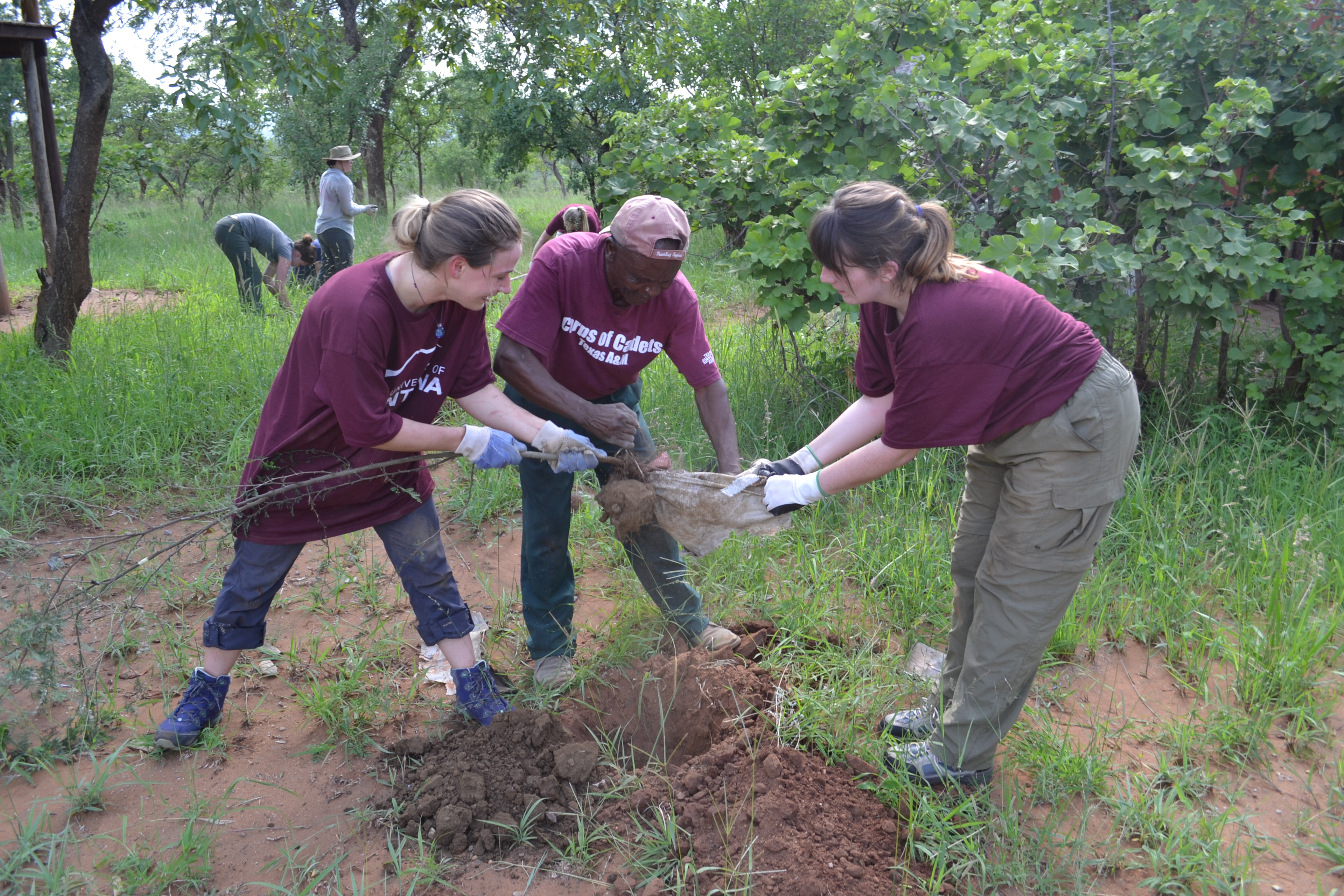
Tree planting at Kikoti camp for the future elephant orphan release site

Tree planting at Kikoti camp for the future elephant orphan release site

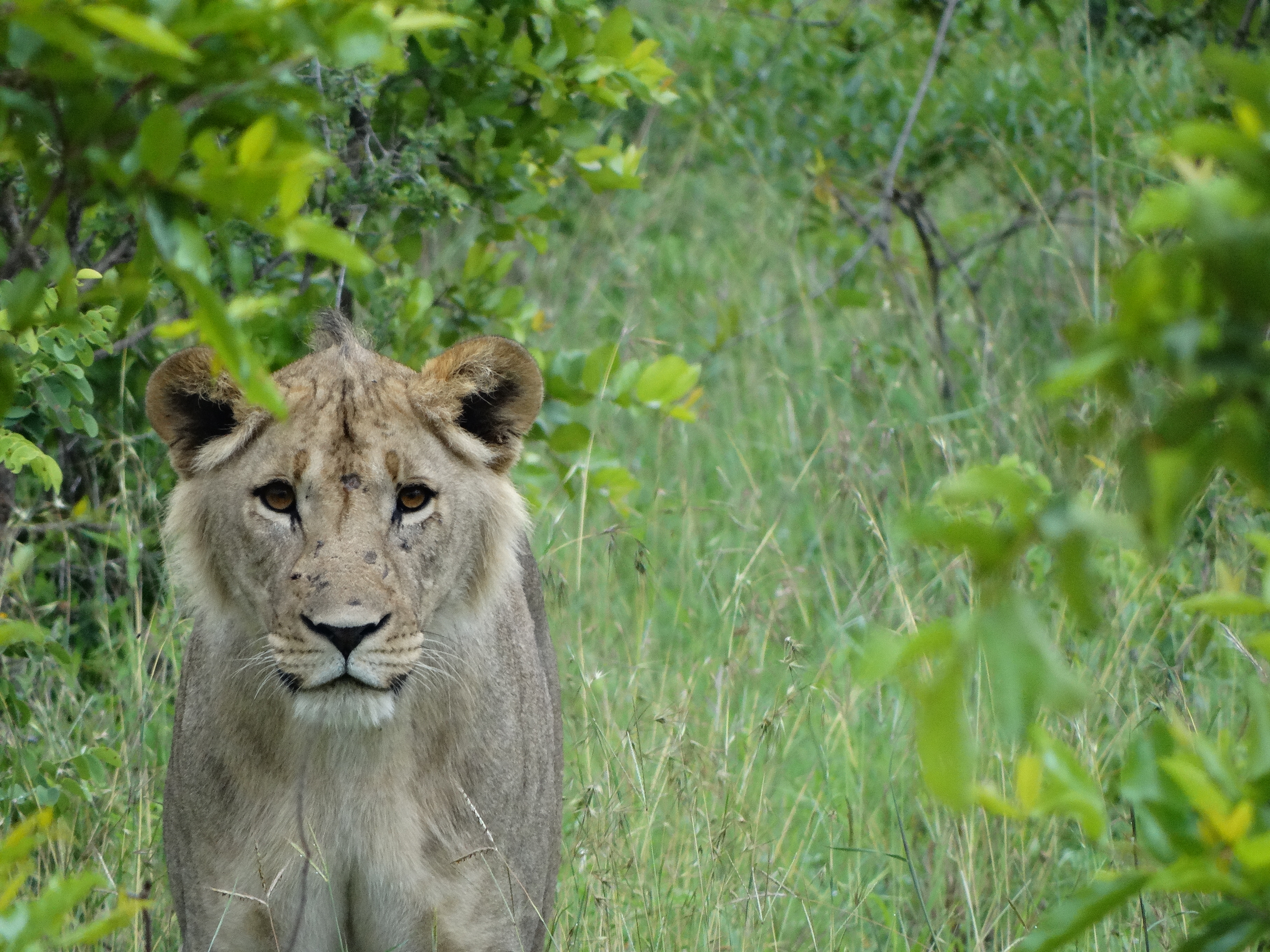
My favorite picture...a young male lion outside camp. We were extremely lucky to find this small pack!

My favorite picture…a young male lion outside camp. We were extremely lucky to find this small pack!


“Sista! Sista!”

I worried about bargaining. A lot. I got anxious. A lot. I left a lot of my worries behind once I got there, and actually forgot my anxiety. I shouldn’t have. When we got to Arusha to exchange some money on the first day, my heart started racing. I was in no way, ready to buy anything from anyone. I was told to buy something if I liked it, whether I questioned it or not; I may never see it again. I just couldn’t work up the courage. Putting myself in a fast-paced, high-stress situation like that was literally the worst thing I could ever do for myself. I get nervous. And when I get nervous, my palms sweat and I sound uncertain. I told myself, I would never be good at this. I chose not to buy anything from there, which I do slightly regret. As we came to our next encounter a few hours later, I stood back once again and watched how Mackenzie put herself out there, and just let it all happen. I thought to myself “I wish I could do that. She looks so confident. But how would I get out? What do I need to do?”. The next day, we found a Maasai Women’s Co-op shop outside Tarangire. This was the perfect place to start. I was sure I wanted some things. So I started letting the women put jewelry on me. I allowed myself to feel vulnerable. It turns out, my group mates were a lot less confident than I took them to be. It got worse when I realized that our master bargainer, Doreen, was worried as well. These women did not speak any English, but Doreen knew enough Swahili to speak with most bargainers, but these women pretty much just spoke Maa. I ran to our Maasai guide, Chris, and he pretty much saved the day. I knew how much I wanted to pay, and he made that happen. My true test came a few days later at the Market in Mto wa Mbu (Mosquito River) market. Every shop had a man standing outside “Sista, Sista, come look at my shop next. I have the lowest prices. I make everything myself”. A ton of the shops had the exact same items in them! I bounced from shop to shop, hearing offers on the items I wanted most. I wasn’t always ready to give a price but they would pressure me into giving them a price back. Sometimes I would just have to walk away and say “Hapana, Asante”, no, thank you. That day, I ended up making one of the best deals of the trip! Turns out walking away is a good technique! The man scouted me out later to give me the item I had asked for, for the price I wanted! From that point on, I felt much better about the deals I had made. A few days later, a man on the street was trying to bargain with me for a shirt. I respond, Hapana Asante. He was polite and walked away. Another man overheard me and says “Oh! You speak Swahili!?” “Not really, kidogo (a little)”. He then asked me if I wanted one of his t-shirts, then I respond “hapana, asante” once more. He was shocked, “where did you learn that,” he asked. “That is not very good language. Bad Swahili. You know, it is bad for my business”. I chuckled and walked away. Others appreciated the pictures that Doreen had taken of them a few months ago. It’s amazing that she remembered exactly who they were. Others were different. Some women in a shop played with our hair and told us how much they loved us for coming into their shop. The people are incredible. They are fun, understanding and different. That is someone who I strive to be. I want to be remembered for the impression I made on people, not because I tried to be noticed. I’m going to take a lesson from each and every person that I met.

Mosquito River Market

Mosquito River Market

 At a small market on our way to Tarangire

At a small market on our way to Tarangire

Unprepared and Uncertain

Now, I mean this in the most positive way possible, but this trip was nothing like I expected it to be. We spent a year preparing for the trip, a lot having to do with funding and culture shock. To a certain extent, I was worried for a while about theft and crime in general. I know Kerr would never intend to bring Tanzania down, but that is how I was feeling. I was worried about leaving and traveling thousands of miles across the globe, mostly on my own. Anxiety kicked in really hard when it was just me, thinking to myself on those planes. When I arrived, I kept close to the group, I worried when I couldn’t see someone. Soon, we were all reunited when getting our visas, and again at baggage claim on the other side of customs. I was relieved. As time went on, I felt freer from constraints of anxiety and let myself go. From the first morning spent in Arusha, with our first breakfast, I had begun to let go. I mean, come on, I was in Tanzania for goodness sakes! How many people do you know that can say that? Why worry? Hakuna Matata. I am usually bound to a schedule and worry what exactly is coming next, but this trip I sat back and let the rover take me wherever the rover wanted to take me. Each moment was new, different and exciting. I have never seen such incredible landscapes, beautiful animals (large ones in such abundance) or met such amazing people. I never felt like anyone was trying to take advantage of me because I was an American (it began to feel that way with bargaining on the street, but that is a completely different story!). Each day, we sat down and ate our amazing variety of soups with dinner, we all talked about the incredible days we had. Each of us shared a part of the day that really stood out to us; our highlights. Some days, our highlights were easy to come up with, other days, not so much. Some days, there were too many incredible sites and experiences to choose just one; some days, some of us just had to discuss more than one highlight. We made sure to write all these down. At the beginning of the trip when we began this, I was glad that through these memories, I would remember the trip. Each day when we discussed them, there was almost so much that went on, you forgot some of it! Hearing everyone’s highlight at the table at dinner helped me relive each day each night. This will help me relive it every time I go back at look at all these highlights, reliving the moments I experienced and seeing the same (or different) experienced through other people’s eyes. I always thought I wanted to go abroad by myself for a semester, see things by myself and feel vulnerable. I’d pass up that experience for another chance to go to Tanzania again with a group like mine. Working together to plant those trees, talking every night, running around and playing like kids, and seeing each other back here at in Missoula over time. I would not trade this for the world. I will be back some day. I’m sure of it.

Zawadi House, Arusha Day 1

Zawadi House, Arusha Day 1

“Homesick for it Already”

On one of our last nights in Tanzania, Professor Kerr read us a quote from Green Hills of Africa by Hemingway. “All I wanted to do was get back to Africa. We had not left it, yet, but when I would wake in the night I would lie, listening, homesick for it already.”

10891677_10205050143607115_2873252133650448183_n

When Kerr read us that quote, I could tell we all knew and felt what Hemingway was talking about. I fell in love with Tanzania. It’s nothing less than magical. The people are warm and spirited. The animals are cultured, mysterious, and majestic. The land is fierce and breathtaking. Tanzania drew me in and entranced me with its wild and full heart. Everywhere I visited I could feel a quiet presence of history, the history of humans. I knew this trip would change me, but I never could have expected the impact it had.

IMG_3265

Days before I left Tanzania I was already planning how I’d get back. It was ridiculous– I was there! I couldn’t get enough, and I’m not sure I ever will. As of now, I’m hoping to return in a few years after I give my bank account time to recover. We had the amazing opportunity to spend time with a mover and shaker named Pratik Patel who runs the African Wildlife Trust as well as a safari company and several lodges in Tanzania. He is extremely passionate in his anti-poaching mission and asked us to help. That was part of our tree-planting project. He wants us to continue helping and I would love to do so. I’m hoping that will be my next ticket to Tanzania. I’d love to spend a summer or a semester volunteering for Pratik. In addition to his conservation work, he also is working to start a traveling screening clinic for women to test for cervical and breast cancer, which is a growing problem. It would be a dream come true to help out with that project. As I said, I’m clearly already trying to get back! It’s been difficult to be back in the U.S. Things here seem overly complicated and wasteful. I love Missoula, I have lived here my whole life, but there’s nothing like traveling, and nothing like Tanzania. I’m all about having roots and wings and I hope to grow both of those evermore!

10360896_10152551961087014_2402788042539513484_n

My absolute favorite animals of Tanzania!

Visiting an African Clinic… As a Patient!

Of all the parasites and blisters, sunburns and indigestion I had prepared for going into Tanzania, I never considered my toenails. I have been known to on occasion come down with the excruciating pain of having an ingrown toenail. Somehow, I didn’t foresee this as a potential problem, until on the second day of the trip my left big toe was swollen and in a lot of pain. At first I figured a few days in my open toed Chacos would do the trick. By the end of the day, however, I decided I would have to do something about it. The first night I sat up on the bathroom counter and soaked my toe in hot water. I explored the contents of our medical kit and gritted my teeth trying to dig the side of the toenail that was overgrown out. I got the top part out but not the root and cried and went to bed. The second day I continued with our tree-planting project despite the pain in my Chacos. I kept my toe clean and bandaged (which with my interest in first aid was actually fun). That night I soaked my toe again, and realizing it was too incredibly painful to dig out (by now it had swollen a lot more and I had created a jagged edge from cutting part out the night before) I sat there crying, cleaned it off with some iodine, wrapped it up and went to sleep. The third morning I knew it was beyond my help. I talked to Professor Kerr who had been helping me keep eyes on it and we agreed to see if we would visit a clinic that morning to get some medical care. Luckily, there was a clinic in the town we were on the outskirts of and we made plans to go there while the rest of the group headed up another tree planting project. Our driver Christopher, Kerr and I planned to go. Then two of my friends Taylor and Mackenzie offered for one of them to join for moral support. I was, a little nervous, but I didn’t think it was necessary. Then I thought about it more and decided it was a good idea. They played rock paper scissors to decide who would go and to my surprise the winner and not the loser was the one who joined me! Taylor won and hopped into our rover for the adventure.

IMG_2963

Planting trees on a muddy morning in my chacos!

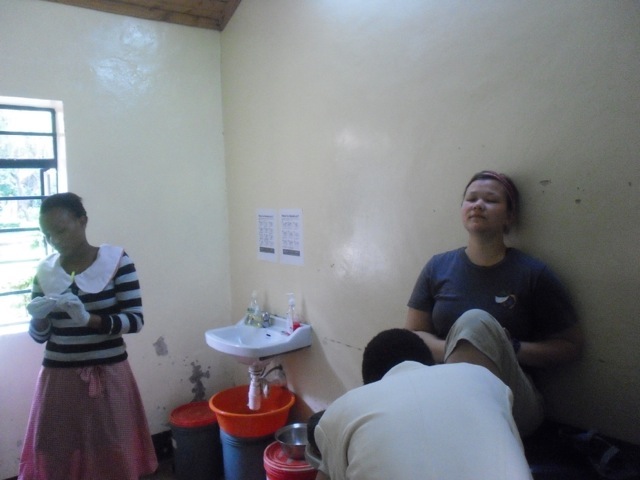
I had no idea what to expect. You hear about all these missions to go build clinics in Africa and also scary stories of how under equipped and unsanitary healthcare can be there. Tanzania is one of the “wealthier” countries in Africa due to their tourism income, but I still was nervous. We drove up through a street of banana trees to a set of brick buildings and got out of the car. There were people sitting out on a porch area waiting to be treated and we sat down while Christopher talked with the receptionist. Next, I went into a small room to be assessed by the doctor. He was a younger looking man and was kind and serious as he examined my toe. He took out his flip phone and turned on the flashlight to get a better look at my foot! That was the first sign that supplies there were low. He wrote me a prescription for some strong antibiotics and sent me to a woman doctor to clean my toe. I sat while she carefully cleaned my toe with a sterile needle and iodine (apologizing each time I winced). She wrapped up my toe with a minimal but efficient amount of gauze and tape and sent me on my way. The whole visit cost a grand total of twelve dollars!

CIMG1549

Getting my toe cleaned and bandaged.

CIMG1556

The very kind woman doctor who bandaged my toe.

Although the clinic wasn’t white and shiny and our idea of a modern sterile clinic- I was very impressed. The doctors were intelligent, kind, and went out of their way to talk to us. They didn’t have a lot of supplies, so they were impressively efficient and sparing with all they had. We learned that a German doctor who was actually visiting that day had set up the clinic and Kerr got to meet and thank him! We later found out, that single clinic serves 20,000 people! That’s a lot of responsibility for a small clinic! At the end of the trip we pooled all of our medical supplies from our first aid kit and medical pack and sent it to the clinic with a thank you letter. I really hope to visit them again someday. Although it was painful, I’m so glad I had that chance to experience being a patient in Tanzania. My toe healed up well too!

Roadblocks

With International Women’s Day coming up on March 8th, I thought it would be the perfect time to reflect on my interactions with women in Tanzania. During winter session, I traveled with Anthropology Professor Gary Kerr and nine other students to Tanzania. Here at University of Montana I study Psychology as well as Women’s and Gender Studies. I chose a very heavy and sensitive GLI topic: gender-based violence against women. When Professor Kerr pitched the trip to Tanzania to us students, I knew it would be a trip of a lifetime. I had wanted to travel to Africa ever since I can remember and I knew that Kerr would help us make it a really great learning experience.

Going in to my beyond the classroom experience, I knew I wanted to learn about the women we would meet. I also knew that going into a foreign country and talking to women about gender-based violence with no experience was a bad idea. Instead, I made plans to learn about women’s roles in their culture. Before I left I put in a lot of work to come up with questions I could ask the women I met and to learn what was already known. I even went to the lengths of filling out a comprehensive IRB form to make sure there were no ethical issues with my quasi-research. I was confident and ready to go talk with some women about their lives and roles as women in Tanzania! I was also a bit naïve…

Our first visit with one of the tribes was with the Maasai tribe. They greeted us with an amazing display of song and dance, and even had us join in! Then, the men toured us around their small village and told us about their culture. The women stood around their beadwork and jewelry. It was clear to me that it was considered the men’s job to lead us and teach us about their lives and that it would be inappropriate for me to try to interview one of the women.

After that first experience it was clear to me that I needed to reevaluate my expectations of my GLI learning goals for the trip. I went in knowing that four tribes I would be visiting were fairly patriarchal and suspected that my visits with the other three tribes would be similar to my experience with the Maasai. I felt very discouraged to meet this roadblock, but I came up with a plan. I would learn everything I could about the concrete roles of women by asking the men and our guides every question I could think of. Second, I would learn everything I could about the women’s perspectives by soaking up all of our interactions- verbal and non-verbal. It wasn’t perfect, but I learned a lot more than I hoped I would!

Each of the women that I met in Tanzania had some things in common. They were strong, kind, and full of life. They work extremely hard and contribute a heck of a lot to their communities. They have plenty of hardships, and yet were still incredibly determined to live a good life. Although things didn’t work out the way I planned, some of my favorite memories and best learning experiences were the little exchanges I had with the women. I also had some wonderful conversations with our Tanzanian guides about marriage, sex, women’s roles and education, and more! Although I didn’t end up needing my IRB approval, it was a really valuable experience to fill it out since I plan to do more research in my academic life. Overall, I’m confident to say that I think I learned more than I would have if it all had went smoothly. What a learning experience it turned out to be!

IMG_3125

Woman from the Datoga tribe.

10940632_10152551961377014_6864491413893303393_n

Women from the Maasai tribe.

10471592_10152551966337014_5506665690012260130_n

Women and children from the Hadzabe tribe.

Tasmania, Australia

People generally have a preconceived idea of what Australia looks like.. beautiful beaches, people that are blonde and tan, kangaroos, dessert, tropical fish, and surfers. While it does offer a taste of that, I’ve found it to be so much more than that.

Exchange is harder than you’d think and everything is very overwhelming in your first few hours and can last for days. The people were so nice and immediately started helping me find my way around the train stations when I was very obviously lost.  I was determined to come here and not come across as the “typical American” but was quickly informed that you stand on the left side of the escalator about an hour in… So even though my origins were apparently obvious I’ve started embracing it rather than trying to hide it. People immediately ask me about American politics and then follow with something about the Kardashians or other reality TV shows. I’ve quickly discovered that most Aussies know more about American pop culture than I do.

The more subtle parts of Australia have quickly become my favorite. Tasmania, is the “hidden gem of Australia.” It has more of a temperate climate and there is a wilderness mindset among most of the people. They love bush walks (hikes) and local food. The cities are full of history and beautiful parks. The diversity here is amazing and you meet people from all over the world every day. My flatmates alone are from the US, Holland, New South Whales, and Tasmania. It’s been a house full of mixed culture and the beginning of some amazing friendships.

I’ve been in Tassie for about three weeks and there is something about the atmosphere that makes it pretty impossible to be unhappy. My days are filled with classes about the local wilderness, good people, interesting food, different kinds of animals and experiences that I never expected in my wildest dreams. I knew there were Kangaroos, but I never expected to feed them out of my hand and hang out with a baby wombat. So far, Australia has surpassed even my highest expectations.

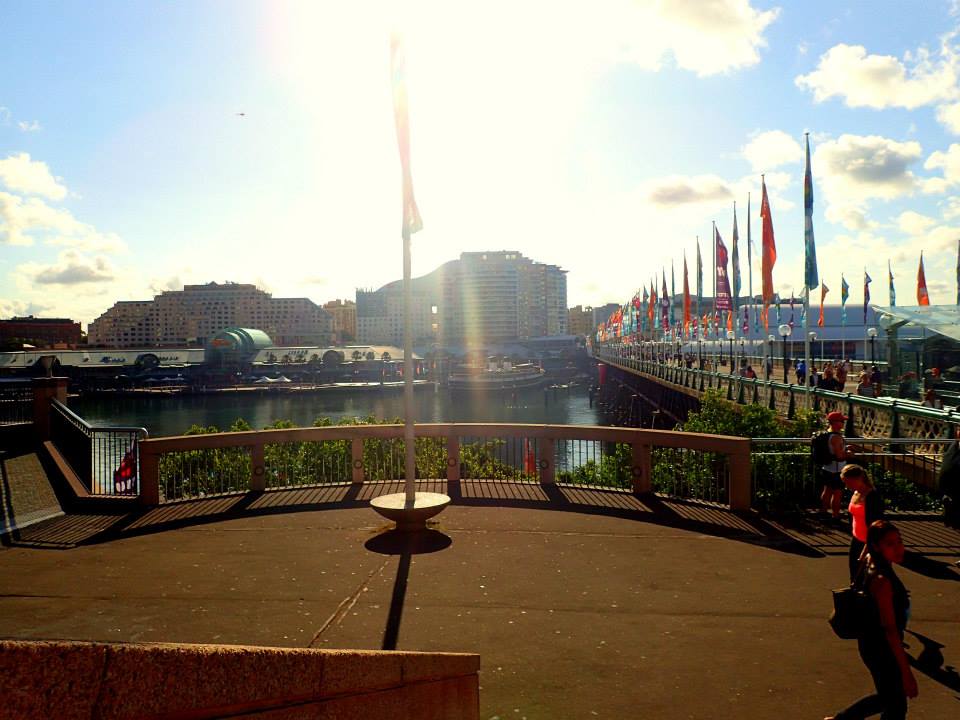
Darling Harbor, Sydney

Darling Harbor, Sydney

Kualas

Kualas

Lorikeets

Lorikeets

Oaxaca, Mexico

When you tell people you are going to southern Mexico for over 3 months you usually get two kinds of reactions: Those who fake a smile and politely ask why you would want to go there? and those that have been and experience this unique portion of the world and are immediately jealous.

Growing up on a small tree farm in north Idaho, I was anxious to leave and experience more of the world. Oaxaca has been very eye-opening, refreshing, challenging, and even after a month has changed the stereotypes I had of “La vida en Mexico”. The city of Oaxaca is situated at 5000ft. in a high mountain valley in the south end of the Rocky Mountains. The city has a chronic water shortage and an ancient septic system that can not handle toilet paper making for an interesting combination.

There are multiple ruins near Oaxaca that were home to the indigenous communities of the Zapoteca and Mixteca. Although many communities were destroyed by the Spanish, the indigenous population is still very much alive here and is evident every day of the week at the markets and plazas in town. Each day of the week there is a large market in one of the surrounding pueblos with the largest one on Saturday mornings in the city central. It covers over 6 complete city blocks and I have explored it three separate occasions and still have yet to explore it all.

Yes, Mexico has its problems, but I have never felt safer in my daily life here. The intersection that I cross to go to school each day has up to 6 police officers making sure we are safe. The state police is currently on strike so 3000 Federal police came in to take their jobs. Even with the teachers demonstrating in the streets and police on almost every corner, the natural beauty and the generosity of the people here is amazing. People are truly interested in your story and I think more people should be interested in their story and culture.