
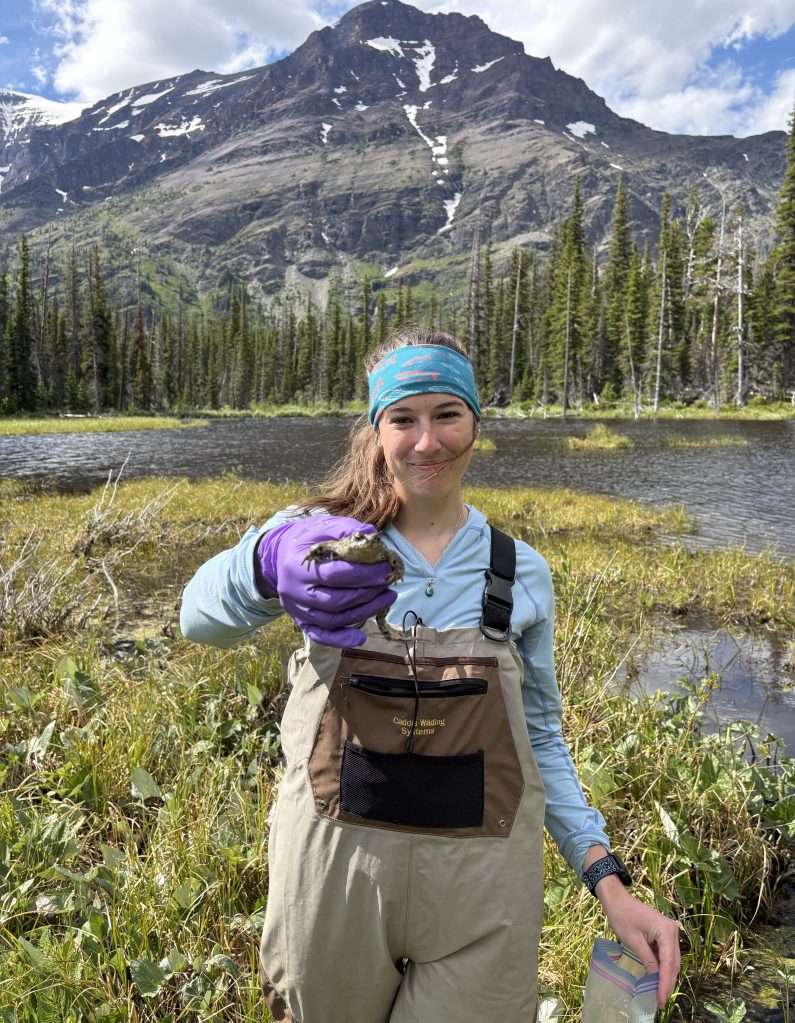
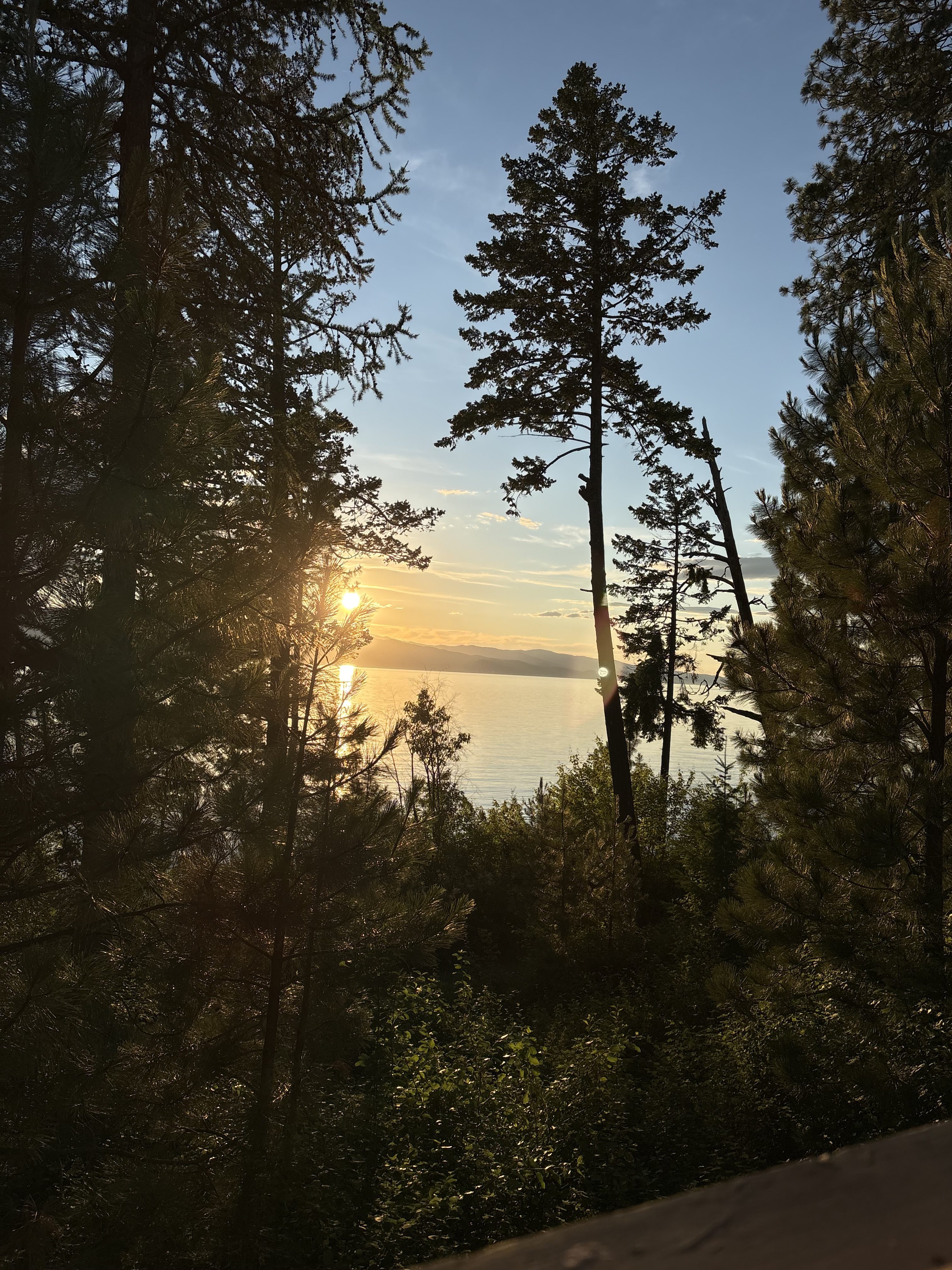
For my Beyond the Classroom Experience, I chose to spend my summer at the Flathead Lake Biological Station. The Bio Station is an extension of the University of Montana, originally founded in 1889 and is rich with history, data, knowledge, and true, passionate researchers. I first discovered the Bio Station when I sought out the University, because of its highly accredited Environmental Science and Wildlife Biology programs, and quickly became enamored. Not only could I picture myself finding a home at the University of Montana, but I envisioned myself taking summer courses at the Bio Station in one of the most beautiful ecosystems in the world. The idea of the Bio Station quickly became one of my main considerations as I decided to commit the to UM. I hoped to spend time in Glacier National Park and immerse myself in my learning.
As I settled into GLI, I still held the Bio Station at the forefront of my mind. I decided to choose natural resources and sustainability as my theme, which paired nicely with my Environmental Science major. For my global challenge, I aimed to focus on how natural resources, particularly water, are interacted with in rural communities in a changing climate. The Bio Station is located on the East side of Flathead Lake near a small town called Big Fork, which is a gem of a community, rich with deep outdoor recreation appreciation. The community at the Bio Station and in Big Fork taught me that public outreach and education is crucial to helping natural resource protection prosper. The Bio Station spends an immense amount of time and effort hosting events, and inviting individuals into the research station to learn more and grow their understanding.
Prior to spending my summer at the Bio Station, I had yet to spend much time in and around Big Fork. While I was well aware of tribal activity nearby, I didn’t fully understand how that may impact my research or time spent at the Bio Station. I quickly learned the CSKT tribe is responsible for managing the southern half of Flathead Lake, while the state is responsible for the northern half. Much of my coursework revolved around the biologic history of the lake, as it is quite unique and very distinctive. We had the opportunity to interact with many biologists who work for CSKT and who were able to share with us the cultural and social significance of the lake, as well as the current natural resource challenges and plans. This opened my eyes to the cross-barrier struggle that can happen in natural resource management.
Not only did the Bio Station challenge me academically, but my courses pushed me physically because much of the work was outdoors on long day trips in the field. While this is not something I am unfamiliar to, I had to learn to take action as a leader at times even when I was unsure about my methods. One of the core principles that the Bio Station aims to instill in students is the idea of ‘learn by doing’. Often I was jumping into a new idea head first, but it strengthened me as a scientist, with the fundamental knowledge I learned, and a leader as I became comfortable being uncomfortable.
I’m beyond grateful for my time spend at the Flathead Lake Biological Station and would recommend it to any young scientist looking to jump head first into one of the most scenic and wild places in the nation!

