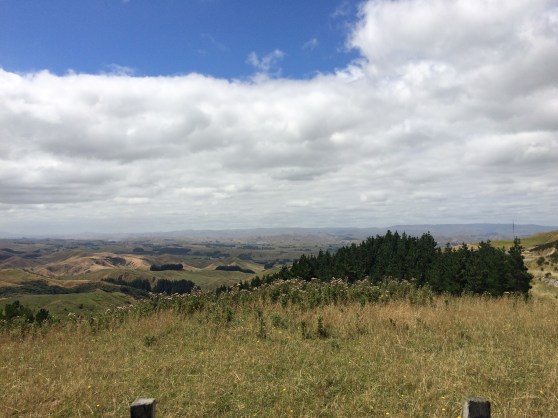
Dear Princeton, Accept me as your graduate student. Sincerely, A Young Astrophysicist.

I am spreading my wings professionally and socially. I have met so many new people and learned so much. I have been working on my galaxy project still but trying to balance it with tours of the East Coast. I went to Philadelphia for a concert with the KONGOS and Strumbellas, building life long relationships with people from all different scientific fields. I have gone above and beyond what I thought I would accomplish via networking this summer. I went to Yorktown Heights to visit IBM and learn about their condensed matter physics. The photo below shows one of the condensed matter labs.Photo Jun 30, 3 33 19 PM

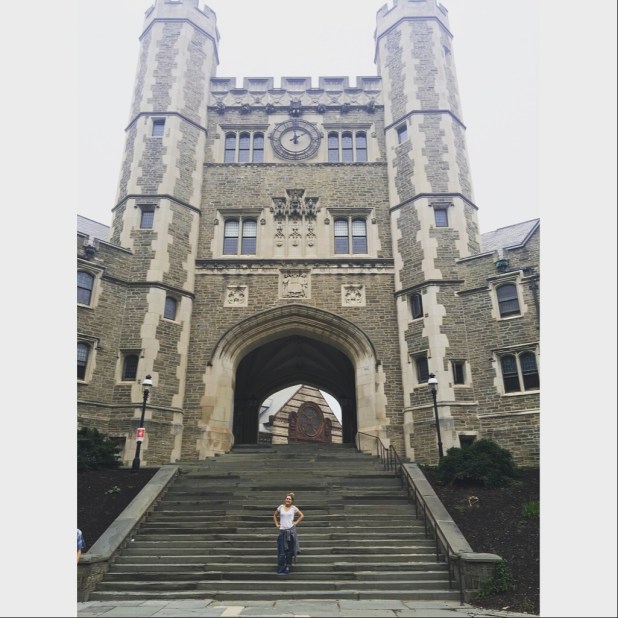
We toured Princeton and saw Einstein’s house. I was able to see the Physics and Astrophysics buildings on the campus. Below are photos of me at Princeton. The three in the photo in front of Einstein’s house are physics majors from other universities, also participating in the Research Experience for Undergraduates this summer at Rutgers. I left the campus with goals of being a graduate student there in the fall of 2017.

For the 4th of July, we all went to the beach to unwind. It is safe to say I am making lifetime friendships. It is wonderful to see what happens when you make 40 scientists live, work, and play together for a summer. We are all from different fields, yet we all get along tremendously and have spent the summer talking about life and science. Photo Jul 04, 8 19 51 PM

I will end this post on yet another high note. I have been offered a Teaching Assistant for the Fall Semester ASTR 362: Observational Astronomy course with my research advisor at UM. I will be happily helping to shape 13 minds. I will get to teach them Python, observing, and how to produce a great scientific paper. This was my favorite course my Sophomore year at the University, and now to get to teach it makes me beyond happy. I only have a few more weeks at my REU, and I have a feeling I will be leaving it with a longing to come back to the East Coast and to see my new found friends again.

“The Argentinian Melting Pot”

While abroad, our group is taking two classes at the University of Belgrano with two professors there.  One of our classes is related to culture of Latin America and within Argentina specifically.  Another aspect of discrimination she had discussed with us was the way that Argentinians behave around all the foreigners that live around them in the city.  There is a large population of Chinese who own many of the supermarkets, a lot of Italian influence, and also a neighborhood named after the amount of Jewish people that have immigrated to the area.  She spent a class discussing how these different cultures are referred to by many as slang terms like Chinos or Jews.

As we’ve spent much time in all different parts of the city, these areas of certainly distinct and carry their own value within the culture of Buenos Aires and even Argentina.  These areas are unique to the city with the kinds of foods that are sold, the people that live there, the way the neighborhood is designed, and sometimes even the language spoken within the corners of the streets.  These districts have their own identity and after hearing about these areas from locals like our host families, discrimination can and is present among fellow Argentinians with different original backgrounds.

I think because of what I have learned from my host family and around the city, I am becoming more interested in the idea of discrimination between groups that may not necessarily be “indigenous,” but rather groups that are considered “minorities” within such a large city.  This other aspect of discrimination is something I never thought about before arriving abroad, but I think it is another important part of racism and discrimination within places that contain more than one different culture.  We like to the think of the United States as “The Melting Pot,” but while abroad, my eyes were definitely opened to how much influence all countries have on one another and the kind of changes they create.

When thinking about my final project, I am wondering if there is a way I am able to combine some of my ideas with what I have experienced.  With three weeks left in the semester and in Argentina, I’m hoping to visit more distinct neighborhoods to learn more about the diversity of Buenos Aires and all that it has to offer.


Thoughts…

I have been in Spain now for about 10 months, and things are finally beginning to wind down as the end of my study abroad draws nearer. Exams are over (phew!) and most of the other international students are leaving sunny Málaga to return to their home countries and continue with their normal lives. I, however, have extended my stay until the middle of August, which leaves me with a fair amount of time on my own, as most of the people I have come to know are already gone. The thought of returning home is bittersweet for me…I love it here. This year has been a whirlwind adventure of travel, new people, new experiences, etc. Not all of it has been great, of course. But these are the things you learn from the most. But I also long for the mountains, nature, and the freedom of Montana. What they say is true–you never really know what you have until it’s gone.

I really feel like I have changed as a person over the course of my study abroad here. Arriving as one of the only Americans studying at the University of Málaga, I was forced so far out of my comfort zone. I consider myself an introvert and I have never been extremely outgoing nor exceedingly social. But being thrust into an entirely new society and culture surrounded by people I didn’t know really doesn’t give you the option of sticking to old habits. And I am so thankful for this. I made lifelong friends with people from all over the world, learned new languages, and truly gained a more broadened and global perspective on things. Not to mention the level of independence I feel I have acquired here. I came to Spain 19 years old and a little intimidated as I didn’t know anybody studying in the same city as me! The longest I had gone without seeing my family was about 5 months in high school when I participated in an exchange program in Argentina, but even then I was living with a host family. This was something entirely different. I found myself a flat with a few other international students, opened a bank account, and got myself a phone contract. These things may seem insignificant, but they are things I never had to do on my own before. I was truly living on my own and supporting myself for the first time (not counting the dorms) and in a foreign country! Not having a car was rough for the first couple of weeks, but I soon worked out how to navigate the bus and metro system. I think the thing that really made me feel like I was becoming my own person, though, was the travel I did. I took trips all over Europe (and technically Africa) on my own or with friends. I visited Gibraltar, Morocco, Sweden, Portugal, England, Scotland, and countless cities all over Spain. My favorite, however, had to be the England and Scotland trip, as I went completely alone. I was a little scared to travel alone, but I am so glad I did. It was so liberating! I planned my trip according to my interests, I could do things at my own pace, eat whatever I wanted, whenever I wanted, and it gave me the opportunity to meet new people and do things that I would not likely have done had I been traveling with others. My favorite memory has to be of the night I met a Scottish guy staying in my hostel in the highlands and we ended up going to hear some traditional Scottish music. It turned out to be one of the best nights of the whole trip, and it was spent with complete strangers! I definitely recommend solo travel to anyone and I will be going again for sure! I think it is incredibly beneficial and everyone should try it at least once in their lives.

Over the next month and a half I will be mostly alone, something that made me a little uneasy before, but now I know that I can make the most of my short time left here in this wonderful country! Ya falta poco.

Hasta luego,

Annalea

Kia Ora!

Kia Ora! (Hello!)

Ko Rehana tōku ingoa. He tauira o te whare wānanga o te ūpoko o te ika a Māui. Kei te pēhea koe? (My name is Rehana. I am a student at Victoria University. How are you?)

Te reo Māori may seem like a strange thing to learn while studying abroad, but I found it incredibly useful–especially when taking a Māori culture and society class alongside it!

The Māori language was an oral language before missionaries started creating a writing system in their schools in the early 1800s. Kaumātua (elders) passed down their knowledge and traditions with stories about the atua (gods) like Māui who fished up the North Island with his hook, or Ranginui (Sky Father) and Papatūānuku (Earth Mother.) These myths shape the worldview in Māori culture and also provided examples for what is tikanga (the right way.)

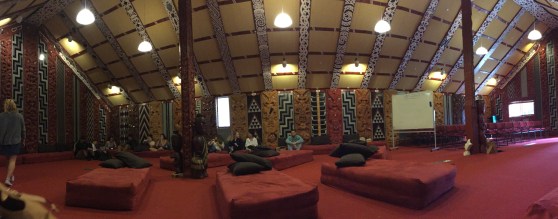

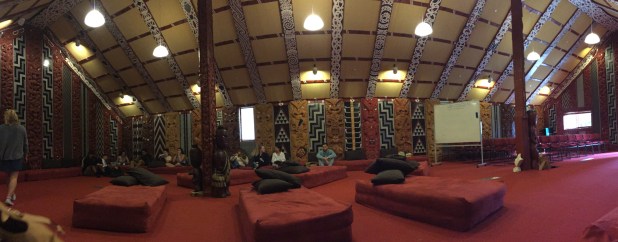
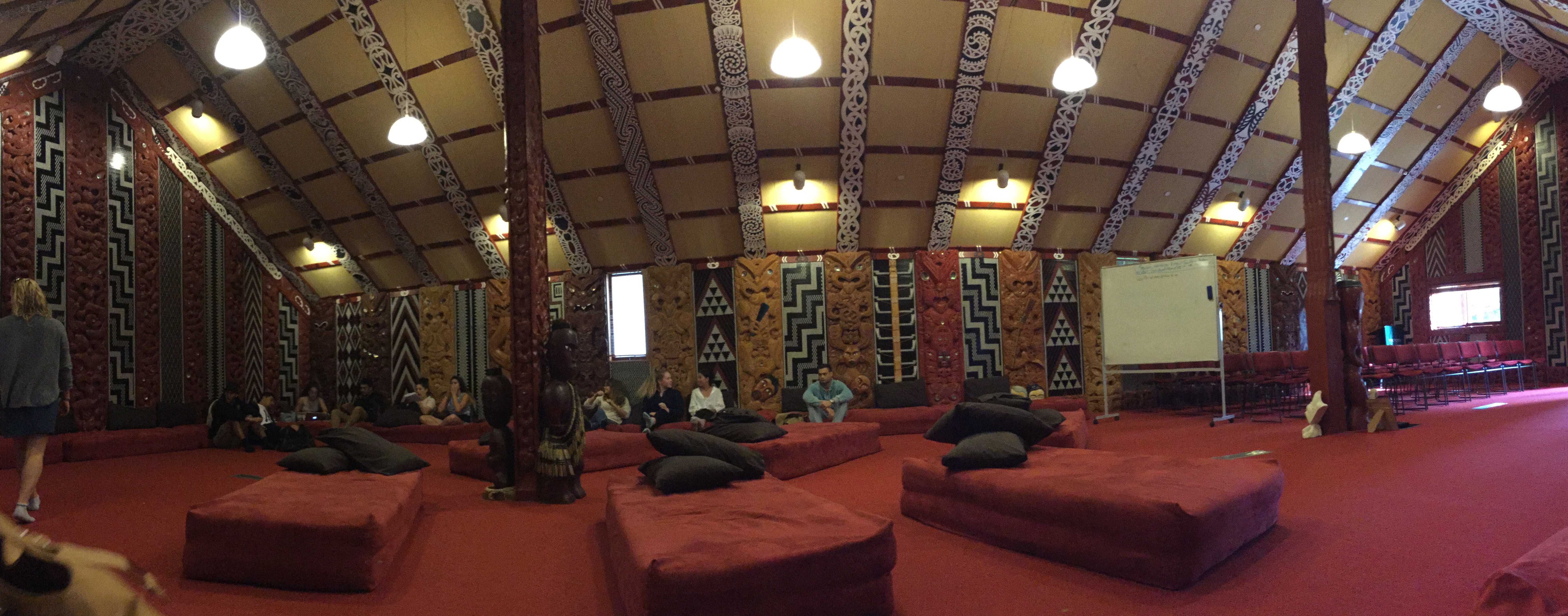
Some of the coolest experiences I had in my Māori classes were at the Te Herenga Waka Marae. A Marae served as a communal space to celebrate the Māori culture and language and can be used for religious and social events. My Māori 123 Class (Culture and Society) had the opportunity to participate in a Pōwhiri, basically a welcoming ceremony for guests onto the Marae. My lecturer responded to the tangata whenua (people of the land, the hosts of the Marae) Karanga calls. Then we listened to the whaikōrero (speeches) and waiata (songs) before proceeding to the Hongi greeting where two people close their eyes and press their noses together to share the “breath of life” (coming from the myth where Tāne, the forest god, created Hineahuone out of clay.) I do apologize to anyone I headbutted during the Hongi!

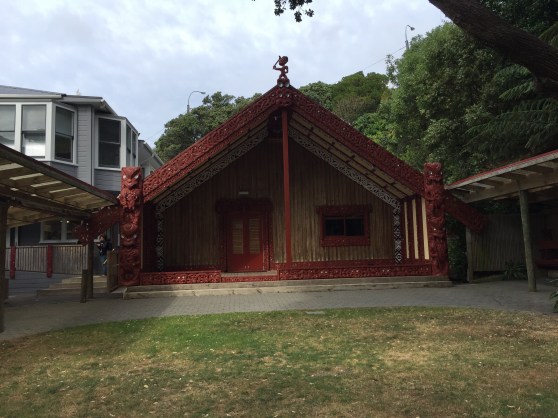

A few weeks later I was back at the Marae for my Māori 101 (Language) class, where we would stand up and recite, from memory, our mihimihi to the Marae. A mihimihi is an introductory speech, starting with where you are from, including landmarks such as mountains and rivers, and then naming some of your family members before finally saying your name. In the Māori tradition, knowing where you’re from and who your relatives are was more helpful to figure out who a stranger was than simply learning their name.

My mihimihi went something like:

Nō Seattle ahau. Ko Rainier tōku maunga. Ko Sammamish tōku awa. Ko Yasser rāua ko Johanna ōku mātua…

Even the language has cultural significance. As you can see, I use ōku and tōku to describe possession of my parents, mountains and rivers. These are in the “o” category because they are important (elders, immovable landmarks, etc.) Also, nō Seattle ahau literally translates to “I belong to Seattle” rather than just “I am from Seattle.”

I am continuously surprised with the Māori language’s integration within Pākehā (Non-Māori, European Kiwi) New Zealand. It could be the simple “Kia Ora!” greeting on Air New Zealand flights, the Haka chant by the All Blacks, and the Māori half of the national anthem.

Bilingual signage is also common, such as Victoria University’s logo. In Māori, the school’s name is “Te whare wānanga o te ūpoko o te ika a Māui” which translates to “the school on the head of the fish of Māui”


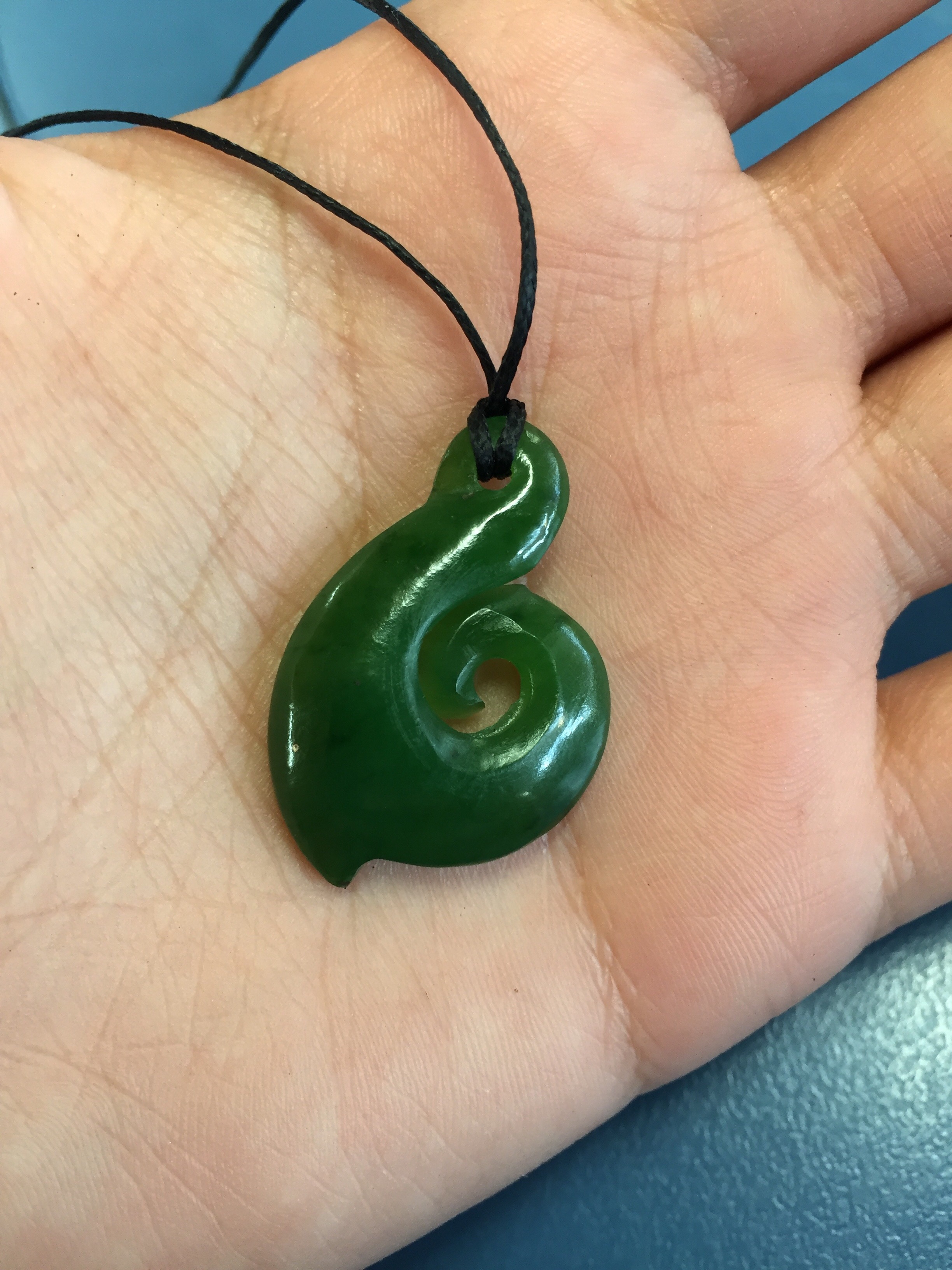
As you can tell, Māui is a pretty important demigod here. Victoria Uni has a sculpture of his hei matau (fish hook) out in the main court yard. Pounamu (New Zealans jade) amulets with Māui’s hook are also common, said to give the wearer good luck and protection when traveling across water.


All of the Māori culture and language that I’ve experienced has been a treat. As student minoring in anthropology, I soaked up the new words and the cultural significance of the Haka or Pōwhiri, the difference between tapu and noa, the patterns of intricate jade and bone amulets that were worn by Māori and Pākeha alike.

But by taking classes at Vic, I learned this was hard earned and it’s still a process to protect and promote Māori culture and language. Language revitalization movements surged in the 1970s and 80s when Māori realized they were losing their language. More political activism followed, including the creation of the Waitangi Tribunal to deal with historic land claims and breaches of the 1840 Treaty of Waitangi with the Crown (a treaty with very different translations of sovereignty between the English and Māori versions.)

It’s not all stuffy academics, either. New Zealand also has Māori radio and Māori TV that was launched in 2004, and then a te reo channel in 2008 thanks to the Waitangi Trib declaring te reo a “taonga” or “sacred treasure” that is protected under Māori sovereignty in the Treaty of Waitangi.

As a journalism student, and someone hoping to get a career in media, this also fascinated me. Early Māori newspapers like Te Hokioi were important to communication and coordination of activism, and now modern media is continuing the fight to make sure Māori narratives stay on air.

So it all connects. Te reo and Māori history, history and language revitalization,  Māori and media representation…

If you’re ever planning on visiting New Zealand, of course go to Queenstown and bungy jump. Of course take a kayak for a spin out in Abel Tasman and go visit Hobbiton. But also take a moment to learn some Māori, take a moment to learn the main characters in their mythology and why the rituals are they way they are. You won’t regret it!

Ka kite! (See you later!)

La primera semana

I’ve only been in Chile for a week, and I’ve already learned so much.

One of the most important things I’ve learned (or realized) is how well I know the Spanish language. Before I left, friends cautioned me that Chileans speak very quickly, use words unique to their dialect, and sometimes don’t pronounce the ‘s’ sounds that end words. All of these factors tend to confuse foreigners, they told me. So I arrived in Chile worrying that I wouldn’t be able to understand anybody, I wouldn’t be able to say anything anyone would understand, et cetera.

All of those fears proved to be unfounded. Since arriving in Valparaíso, I’ve discovered new levels of competence: I’ve gotten to know my host family on a personal level, ordered food and drinks, asked for directions several times, and engaged in complex conversations about abstract topics. For example, the second day I was here I talked to my host mother about the environmental toxicity caused by lead and copper mining, which exists both in Butte, MT and some parts of Chile. It’s exciting and satisfying to apply my prior knowledge from three years of Spanish classes at UM in these real-world contexts.

Through this language learning by immersion, my understanding of Spanish grammar has developed significantly. I’ve observed a change in the way I mentally organize my knowledge of Spanish verb morphology.

In every class or educational software that I’ve encountered, Spanish verbs are taught in their tenses, in order of increasing complexity: first students learn to conjugate verbs in the present tense, then the two aspects of the past tense, and from there on to more tricky conjugations, like the present subjunctive or past perfect.

This is the way I’ve become accustomed to conceptualizing Spanish verbs. But after a week of speaking almost entirely in Spanish, I notice I tend to think of verb endings in groups based on person: first person conjugations I use to speak about myself, second person conjugations for asking about my conversation partner, first person plural conjugations to express something about me and my friends, and so on.

I imagine this is because in actual conversation, I’m far more likely to need to switch between thinking of different tenses within the same person, than to call to mind the different forms of a certain tense for different persons. This type of metacognitive learning will no doubt prove useful when I am teaching these grammatical and linguistic concepts one day.

This is just one particularly interesting thing I’ve noticed about the process of learning a language in an immersive environment. I’m sure that as I spend more time with Chileans, I will gain more insights into their language and culture.

20160620_063728

I took this right before landing at the airport in Santiago.

20160625_152525

A view of Valparaíso.

Learning Māori

Māori to New Zealand are like Native Americans to the U.S. they differ however in their languages. The Native Americans have many different languages and more space to move around. Māori only have one language, te reo Māori. Since the relationship between the Māori and Britain has allowed this language to be taught at my uni (university), I thought why not. So I took and completed MAOR 101 – Introduction to te reo Māori.


Like any other introductory language course, it incorporated listening (whakarongo), speaking (kōrero), writing (tuhi), and reading (rīti). For me the hardest part was whakarongo because there are so many little articles and minor difference in sentence structure, it was difficult to discern. To work on this, our instructor would describe a scene and whoever’s picture came out the same, did a good job of listening.


The most challenging assignment was having to write an essay in te reo Māori about my family. It had a minimum of 280 words and could not go over 400. Here is what I turned in.


Ko Koenig te ingoa o tō mātou whānau. (The name of my family is Koenig) Kei Washinton tōku whānau. (My family live in Washington) Ko Rāwiri tōku matua ā ko Julie tōku whaea. (My father’s name is David[Rāwiri] and my mother’s name is Julie) Kei Washington rāua, enagri nō California rāua. (They live in Washington but are from California) Ko William tōku tungāne. (William in my younger brother) Kei Washington ia. (He is in Washington) Ko whaea pai a Julia. (Julie is a good mom) He wahine tino ātaahua tōku whaea. (My mother is very beautiful) Ko whakarīrā whakamahi a Rāwiri. (David is a hard worker) E maha ōna waka. (He has many cars) He roa ko Rāwiri rāua ko William. (David and William are tall) He rima tekau mā rima a Rāwiri ā he rima tekau mā toru a Julie. (David is 55 and Julie is 53) He tekau mā whā a William ā he rua tekau mā tahi ahau. (William is 14 and I am 21) Kāore ōku tuāhine. (I don’t have any sisters) E mau ana māua ko Julie i ngā mōhiti. (Julie and I wear glasses) Kaore ko Rāwiri raua ko Willliam ana I nga mōhiti. (David and William do not wear glasses)


He nēhi tōku whaea. (My mother is a nurse) He kaiaka mīhini tōku matua. (My father is a mechanic) E mahi ana ia mō Ford. (He works for Ford) E haere ana tōku tungāne ki te kura. (My brother goes to school) Ehara ia i tino pai tauira enagri he koi te hinengaro ia. (He is not a good student but he has a sharp mind)

E tunu ana maha tōku whaea ā ko ia tunu tino pai.  (My mother cooks a lot and she makes good food) E aroha ana ia ki te tunu ā e aroha ana ia ki te rīti. (She loves to cook and she loves to read) Me whakatika a William i tāna rūma moe, nā te mea i te nuinga o te wa he porohe tāna ruma. (William should tidy his room because most of the time his room is a mess) He tungāne pai ia, engari i ētahi wā ehara ia i te tama pai. (He is a good brother but sometimes not a good son. Engari e aroha ana mātou ki ia. (But we love him) He tino hoa maua ko William. (William and I are good friends)


E maha mātou mōkai. (We have many pets) E toru mātou ngeru, e rua mātou hurī ā e maha mātou ika. (We have three cats, two dogs and many fish) Kei Washington ngā mōkai. (The pets are in Washington) E rua mātou hurī, engari kaua e hīkoi I ngā hurī. (We have two dogs but we don’t walk the dogs) Me hīkoi rātou I ngā hurī nā te mea kei Aotearoa ahau. (They should walk the dogs because I am in New Zealand) Kotahi tōku mātua ngeru. (My parents have one cat) Kotahi tōku tungāne ngeru ā kotahi tāku ngeru. (My brother has one cat and I have one cat) Ko Cole te ingoa i te ngeru o William a ko Hippie to ingoa i te ngeru o mātua. (Cole is the name of William’s cat and Hippie is the name of my parent’s cat) Ko Starla raua ko Twilla te ingoa i nga huri o matua. (Starla and Twilla are the names of our dogs) Kaore ika nga ingoa. (The fish don’t have names)


Basically it describes who my family is, where they are from and what they do.

I must have done well because my grade back was a B.


Learning the language really helped me understand more of the culture and appreciate the diversity we have in this world. I suggest to those going somewhere new, learn the language!

Simulated Galaxies

I am not a leader in the sense that most people think of when they hear the word. I do not make speeches. I do not do outreach. I am not on the front lines of some political movement. I code. I do not even code for purpose that many of you would deem worthy of your interest; not even something many have heard of.

For the summer, I get the opportunity to spend the summer in Piscataway, New Jersey. I am simulating galaxies with Professor Alyson Brooks with the hopes of discovering something about galactic evolution. I was offered this position out of 368 applicants. In that sense, I am leader. I got this position, not because I can talk to people, but because I can solve problems.

Aside from the work, I have been able to go on several day trips with others in the program. I have visited the Hayden Planetarium in NYC and the Liberty Bell, Independence Hall, Reading Terminal Market, and the Philadelphia Museum of Art in Philadelphia. Through these visits, I have been making connections that will last a lifetime. My roommates and I plan to go to Asbury Park this weekend.

All of the trips make it sound like I have a lot of freetime, but I work 40 hours a week on simulating galaxies. The cover photo for this post is an example of one. I have been spending long hours trying to use this information to determine information about galactic evolution.

Along with work, we have been doing Physics GRE prep and having many discussions on Graduate School, Collaboration, and Scientific Ethics. I am confident that these “courses” will help me succeed later on as a scientist. I am hoping to take the Physics GRE this fall and begin applications to Graduate School for Astrophysics, specializing in either Observational Planetary Science and/or the Origin of Magnetic Field lines in M Dwarf Stars. Both of these topics are very “hot” in Astronomy right now.

I am incredibly happy about my field choice both because of the people and the amount of open research questions. I am glad I found my passion so early in life.

Palmerston North

New Zealand is probably one of the most beautiful places on Earth. That being said, I probably went to one of the least beautiful cities in New Zealand.

I chose to do my time abroad in Palmerston North where Massey University’s main campus is. It is the only vet school in New Zealand and is surrounded by farms. When I got to the town it was already dark out and I was so exhausted from the flights, four in total, I did not really pay attention to my surroundings. When I did get up the next morning I found myself not doing much because I had just travelled all day before, but I was invited to hang out with some Chinese exchange students who were staying in the same dorm complex as I. When we were walking around the campus, that was when I noticed that it was not as spectacular as I was expecting. The University of Montana’s campus is more beautiful than Massey’s.

As I was hanging with the other students, they were telling me how they had already been into town and that there was not much there. That was a little disappointing, but if it was the worst thing to happen on this experience then I was fine with it. While hanging out with these other students, I was the only native English speaker so many times they would all start speaking Chinese for a good amount of time. I understood that it was easier and more comforting for them to speak in their native language, but I did feel a bit left out. They did, however, invite me to eat dinner with them and I really appreciated it because no one else was in my dorm yet.

When I got back from dinner with the other exchange students, two of my roommates had shown up and they were both from South Dakota and unexpectedly male. It was then we realized that they mainly roomed people by where they were coming from and at orientation we realized that most of the people living in our dorm complex were from China. Even though I am in New Zealand, I was experience another culture by living with many Chinese exchange students. It was during orientation that I saw that even though Palmerston North, or Palmy, is not as beautiful as the rest of New Zealand it does have its moments. IMG_0835.JPG

IMG_0833.JPG

Milford Sound April 25th 2016

April 25, 2016

First off, my feet stink so badly! I can’t even begin to describe, so I’m going to go wash them real quick.

Now that I feel better let’s begin with how today started and I have a feeling that this entry will take some time to finish. Hopefully I have the patience to do so.

Sleeping was easy, easier than the first night.

Breakfast was quick and walking, a breeze.

I was worried I would miss the bus but turned up there early anyways.

The bus driver was funny and enjoyable. But what I really want to do is write a story about today. How to start is still uncertain but one thing I do know for certain, today was a Mountain Top experience. Milford was beautiful as I thought it would be, however, the ride in and out was the best part.


On the way in, the bus driver stopped many times and gave wonderful commentary. Albeit, some were a little inaccurate but I wasn’t there to correct him, I was there to enjoy myself.


The road into Milford Sound is spectacular and some scenery was even used in the Hobbit films. There was one peak that jutted out from the others and that’s the peak that Peter Jackson used.


How can words describe today? How can words describe any day??


Upon leaving Milford Sound, you witness giants carrying out their day. Some are adorned with mist, others with dew. Their presences in all encompassing. You realize how small you really are, but these giants don’t scrutinize you. Instead they bring comfort. Comfort very similar to another powerful force, one even stronger. God. God’s majesty consumes you beneath these creatures’ feet. Yet you know they won’t step on you. They are the guardians to these waters, these trees, these birds. Their power isn’t controlled by humans. Their power is much more than what mere humans have, however, these giants have come to an understanding with humans. This understanding didn’t come right away but these giants were patience. The humans have this way of thinking that they’re the top of the world, but is it the humans that reach for the sky? Is it the humans that continue to grow? Do the humans have the power to live for thousands, even millions of years? No. It is because of their longevity that the guardians waited. They waited until the day came where humans realized how important they are. So now the humans work hard to aid the mountains; aid the livelihood of the coat that surrounds them, the life they support and the majesty they carry.


While leaving Milford sound, I became a dwarf. But instead of being crushed by these giants, I was cradled. I felt more cherished and loved, than frightened. These mountains contain the power of fear but during those moments, I felt none.


The bus driver made a point to mention how infectious mountains can be to the human species and then when surround by them, you feel spiritually connected to them. I connected to these mountains spiritually but what stands out more is that I connected to them emotionally.


These past two months have been hard, emotionally and spiritually. Moving away from home is not something new for me, but moving to a new country, even for four months, is still a big change. I feel different. I process things differently and I speak differently. I have changed.


Change isn’t something to be afraid of, it’s something to strive for.

“To improve is to change; to be perfect is to change often” Winston Churchill.


Because I have changed I needed to discover who this new person was, so I took advantage of the mid-trimester break and left. Alone.


It is by far, the gutsiest thing I have ever done but I wouldn’t change a thing. I have begun to understand this new person and how she feels. Today, one piece fell into place.


I love giants.

For the love of language

People always ask me why I’m studying a language like Irish. “You mean Gaelic?” they say. “I didn’t even know that was still a thing.” One particular professor asked why I didn’t want to study a “useful” language, like Chinese. Usually when I’m talking to someone like this who just doesn’t understand, I don’t bother wasting my time to explain. I just shrug my shoulders and smile, and they seem to let it go. I haven’t yet perfected my persuasive argument on why studying languages that aren’t “useful” is so important to me. But I’m working on it. It started with Latin. I took “the dead language” in high school because I wanted to be different – I didn’t want to be like everyone else who took Spanish and French. And sure, no one really speaks Latin anymore. Less than 100,000 people speak Irish. But these languages are NOT dead – not so long as there is someone like me around who wants to study them and learn from them. A language is so much more than a set of grammar rules, a lexicon, and an alphabet. It’s a complex compilation of a culture. It holds history, values, and perspectives. If we let a language die, we let those components of a culture die. And with each fewer language, each fewer culture, our world becomes all that more homogeneous. And I don’t want that. I think one of the most beautiful things about humanity is our diversity, and more importantly, our ability to learn from each other. We have to preserve other ideals and ways of life in order to be able to learn from them. And we can preserve those ideals by preserving languages. I love Irish, not because it’s “useful,” but because it holds so much history and sacrifice and love within its words.

IMG_2254Old Library, Trinity College, Dublin, Republic of Ireland
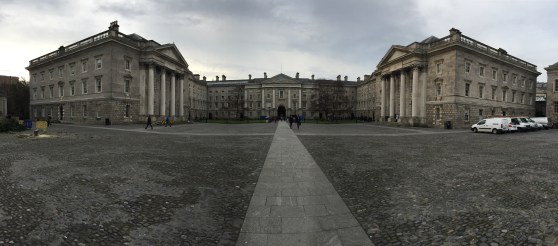
IMG_2249Trinity College, Dublin, Republic of Ireland