My Spring Semester in Malta!

Before I left on a cold Montana afternoon in late January for my exciting six-month adventure 5,000 miles away from home, I had no idea that choosing to study abroad in Malta would end up being the best decision I have made in my entire life. As I sat in the middle seat between two people trying equally as hard as I was to get comfortable for the long flight ahead, I was filled with immense hope and fear about what lay head for me. The only thing I knew for sure: I would return home a completely different person than who I was sitting on the plane that day.

Throughout my life I’ve been no stranger to traveling. My family and I have been on many adventures in states across the U.S., Mexico, and my sister’s senior trip to Costa Rica, but I had never been anywhere far without them, let alone live in Europe all by myself for an extended period of time. I knew I loved to travel, experience new things, and eat lots of good food, but it wouldn’t be that simple. I had to build a completely new life for myself, find friends, navigate foreign experiences like the grocery store or transportation, adjust to a new culture, and deal with the unknown, all the while going to school.  

Now, all the fears that once consumed my thoughts have been replaced with the best memories of my life and having the privilege to call Malta my home away from home is one that I will never take for granted. 

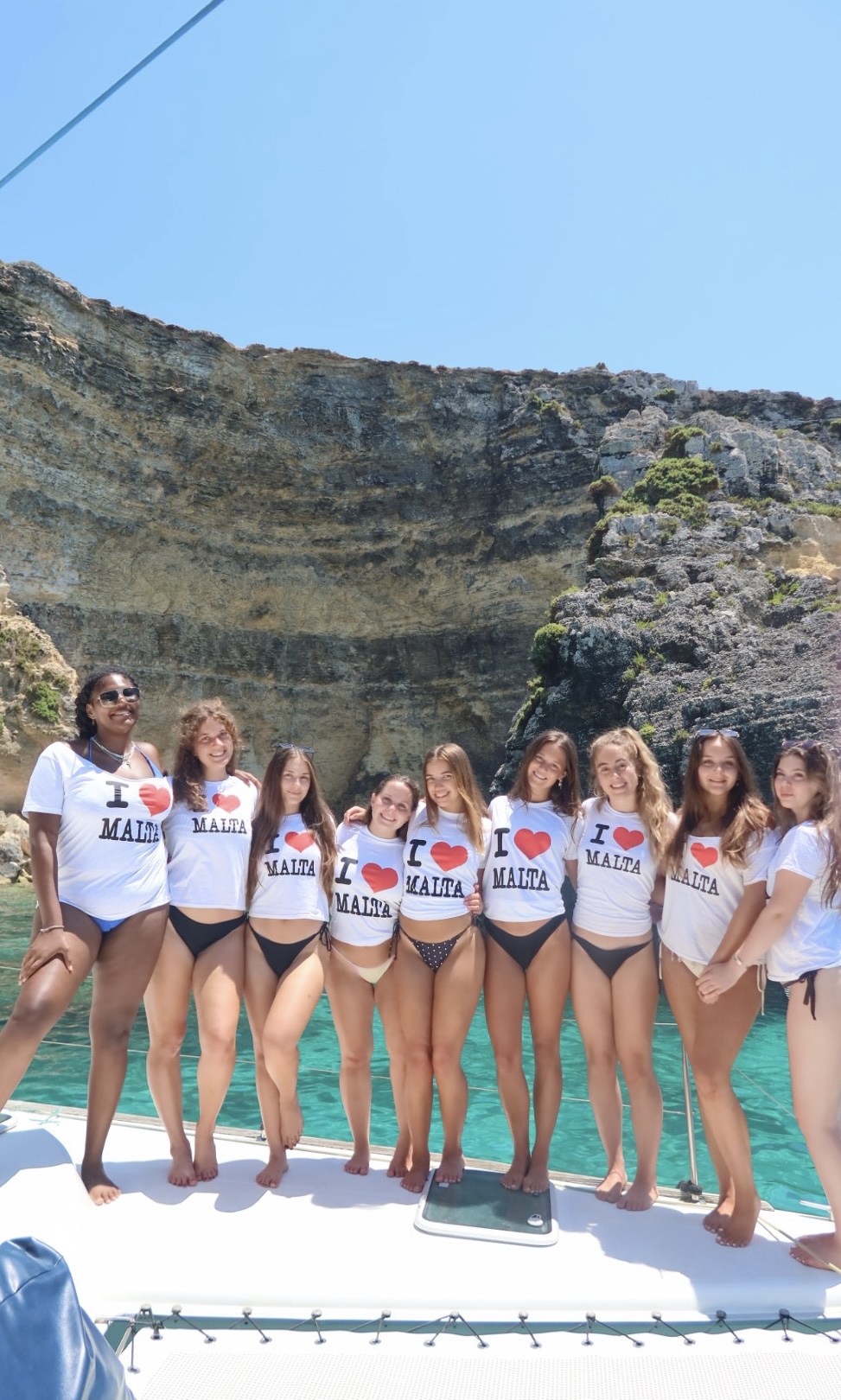
My sweet friends and I at the Blue Lagoon in Malta during our last week abroad 😦

My global theme is Inequality and Human Rights, and my global challenged focuses on ensuring equitable access to education for women and children displaced my migration or conflict. Through my Sociology of Inequality, Health Illness and Society, and Violence Against Women courses, I was able to explore my challenge from two connected angles: the broader systemic structures that create and sustain inequality, and the specific ways violence, more particularly intimate partner violence can hinder a woman and or her child’s access to education and the resources meant to protect them. For example, in my Violence Against Women course, I learned more about how survivors of intimate partner violence often face compounding barriers such as unstable housing, financial dependence on their abusers, and disrupted routines that make consistent access to education nearly impossible for themselves and their children. This especially heightened if you are a migrant to a new country because one’s vulnerability is increased with instability. It became clear to me that addressing inequality in education can’t be separated from addressing violence itself; the two are deeply connected. And together, these three classes helped me to see clearly where the real gaps exist between the rights people are entitled to and the help that actually reaches them.  

Additionally, my Violence Against Women course instructor was Dr. Marceline Naudi, a leading activist for gender inequality and violence against women in Malta and across Europe. She is one of the co-writers of the Istanbul Convention, an international human rights treaty created by the Council of Europe to prevent and combat violence against women and domestic violence. The treaty is built upon four pillars: Prevention, Protection, Prosecution, and Integrated Policies and has now been signed into law by 45 countries and the European Union. Learning from Dr. Naudi, someone who has spent her entire career shaping international policy and providing resources to women across the world, gave me a far broader perspective that I had previous. I came to understand gender-based violence not just as an issue that varies from person to person, but one that is deeply shaped by the specific legal, cultural, and political systems of each country. This means that solutions must be just as thoughtful and context specific as the problems themselves. In Malta, specifically, I learned how the country’s strong ties to Catholicism have historically influenced family and reproductive policy at the national level. For example, divorce was not legalized in Malta until 2011, and abortion remains illegal in nearly all circumstances. Barriers like these illustrate how deeply religion, politics, and culture are intertwined in shaping the protections or lack thereof that are available to women. 

Dr. Naudi’s class had a profound impact on me and deeply inspired me to continue my hopes of perusing a legal career centered on gender inequality. The knowledge and information I received in her class is something I will take with me for the rest of my life and will be applied directly into the policy and advocacy work I partake in. 
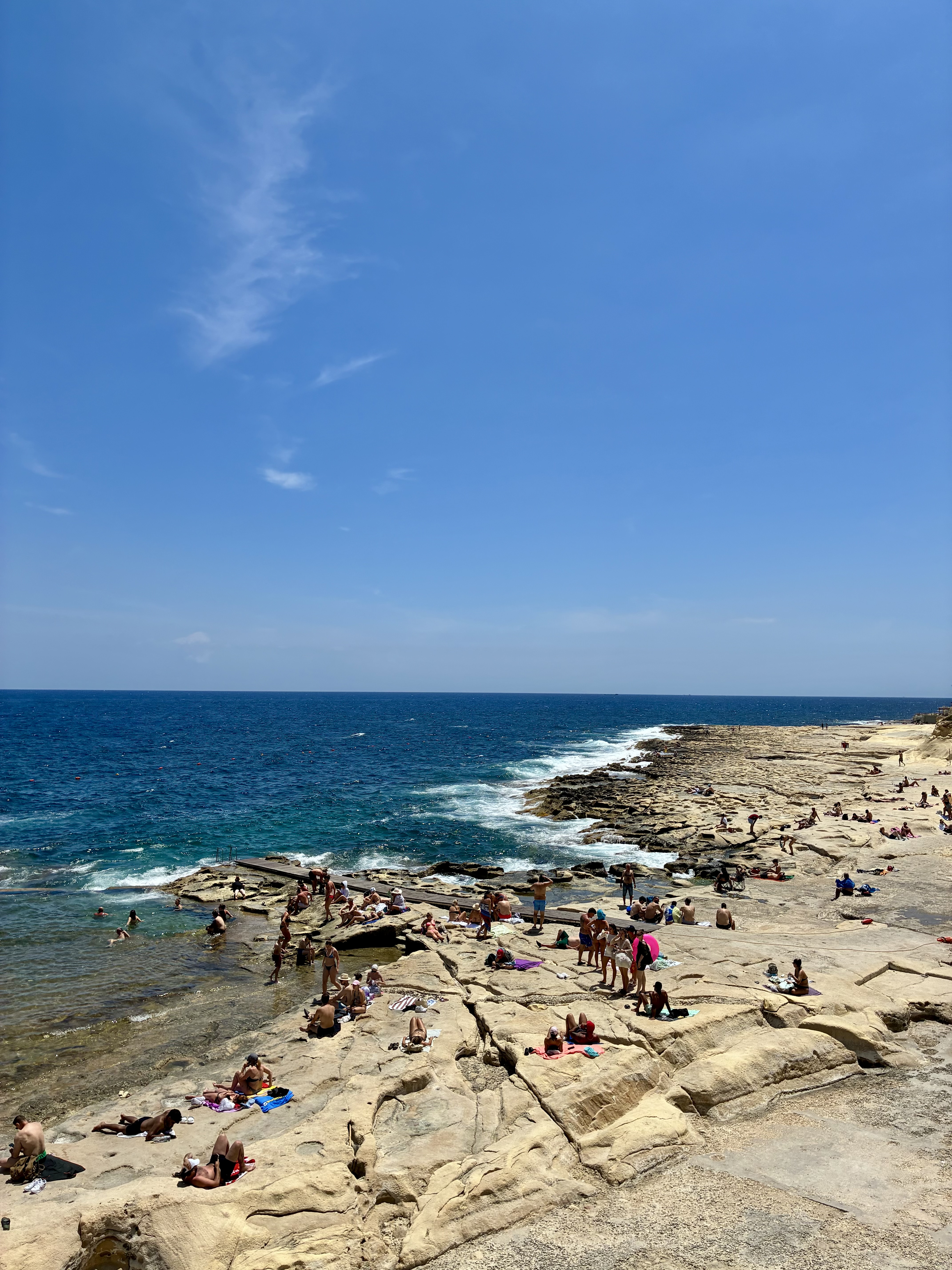
Surfside Beach, Malta. My favorite place in the world.
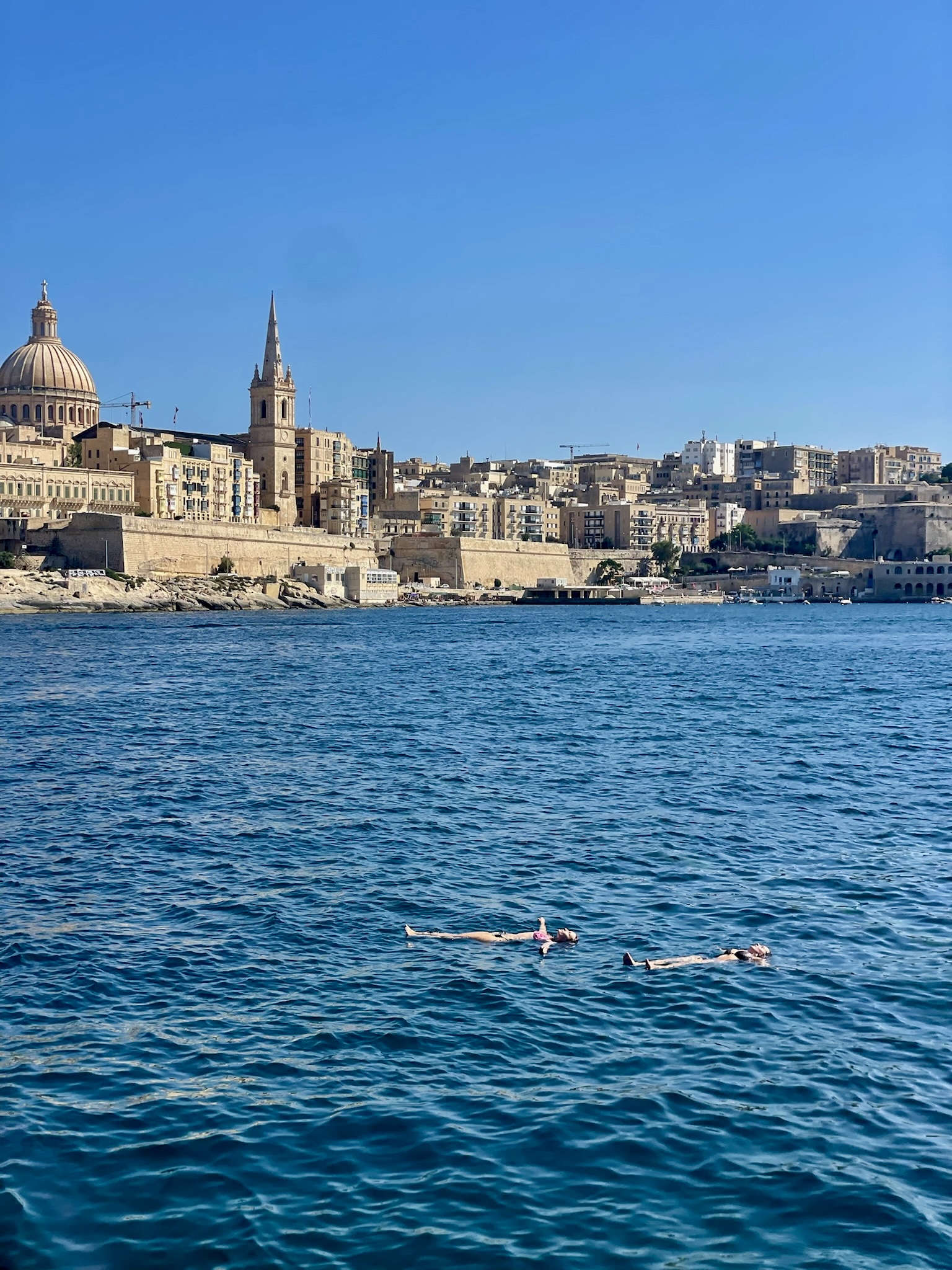
Mina and I swimming at Tigne Point Beach facing the capital city Valletta, Malta.
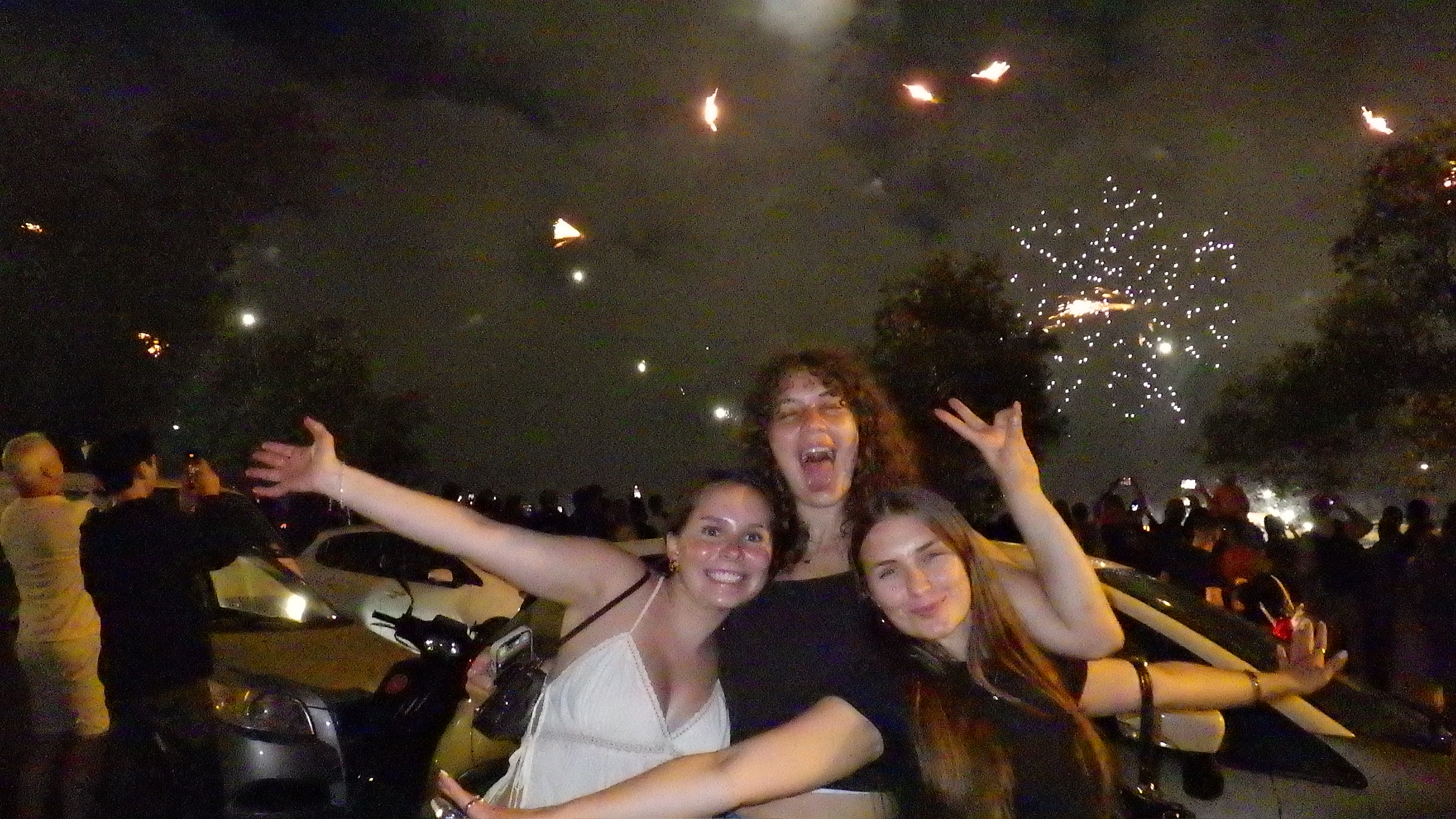
Mia, Mina, and I at the International Firework Show in Valletta, Malta.
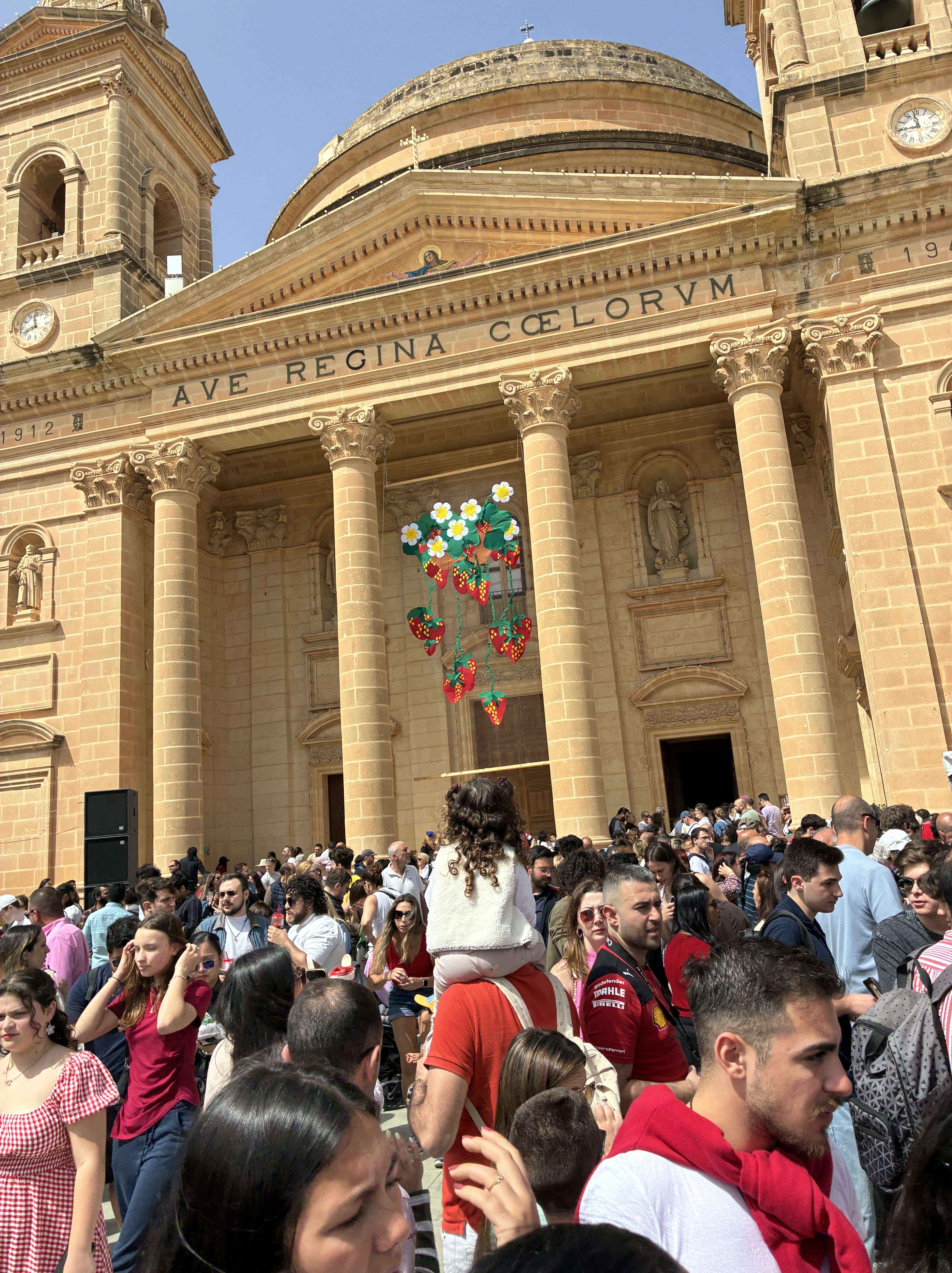
Festa Frawli or the Strawberry Festival in Mgarr, Malta.
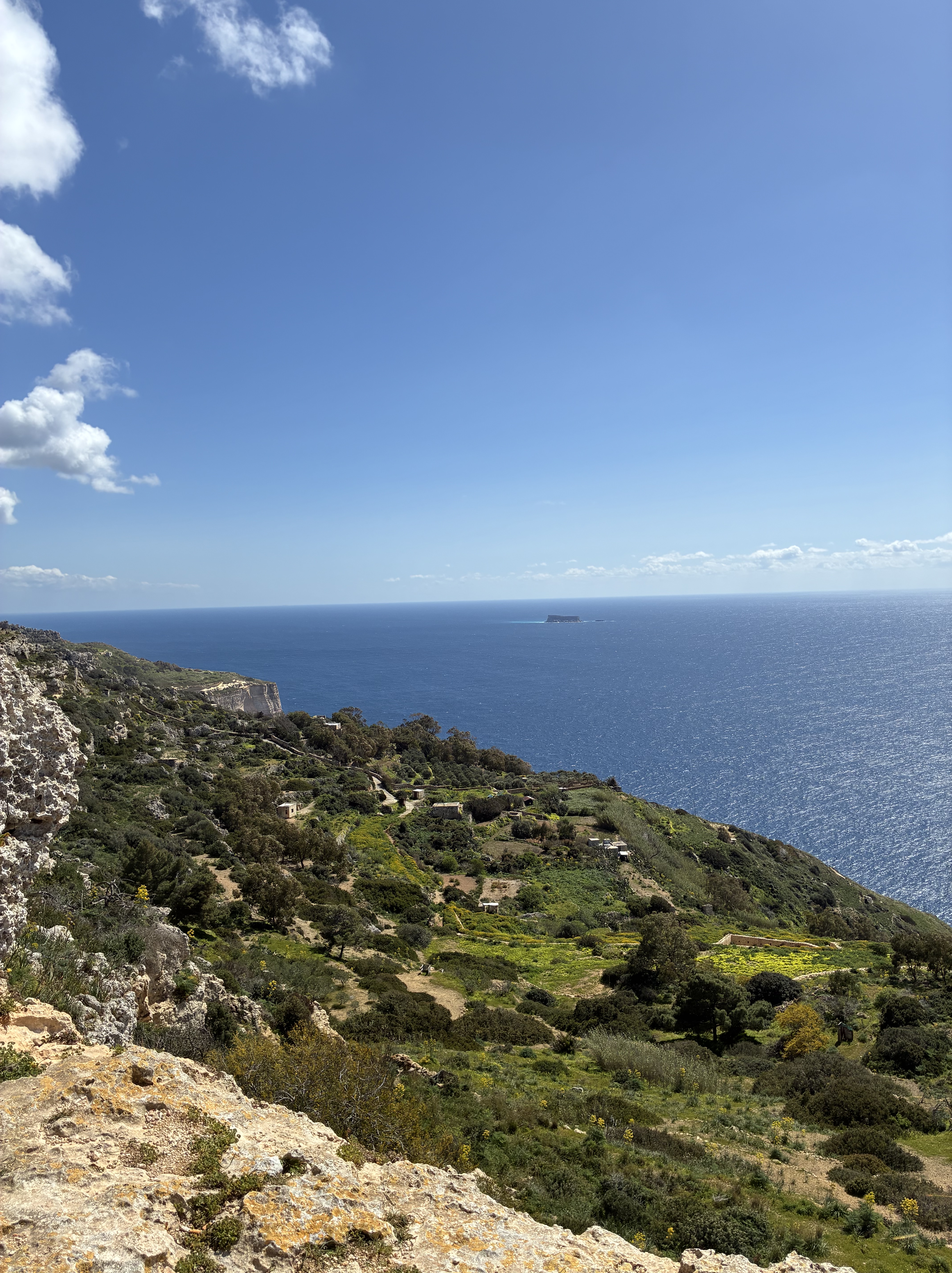
Dingli Cliffs, Malta.

Beyond the classroom, I had the opportunity to travel to fourteen cities and eight countries across Europe which gave me the chance to experience an incredible range of cultures, people, and ways of life. Some of my favorite moments came from hearing stories of shop and café owners, many of whom were genuinely delighted to learn we were from America and from the unplanned discoveries along the way, whether it was a hole in the wall restaurant, a small museum, or getting a little lost with friends and relying on the kindness of strangers to find out way. One of my favorite experiences happened when my friends and I had taken the wrong bus to the middle of Malta. We were sitting on the steps of a small but beautiful church waiting for the next bus to arrive, when an older man approached us and asked us where we were from. After discovering we were from the United States, he informed us he was the first Maltese person to go to school at Yale! It was absolutely incredible, and his kindness and storytelling are something I will never forget. Being surrounded by so many strangers, languages, foods, and traditions made the world feel so much bigger than I had ever understood it to be. 

More than anything, this experience taught me the value of community. Nearly every country I visited (in Italy especially) felt deeply connected in a way I don’t often experience back home in the U.S. It reminded me that you can’t truly understand a place, a culture, or a group of people until you have experienced it for yourself, and that approaching the world with an open mind reveals far more than any assumption ever could. As I move into future leadership roles, I want to carry this same openness with me and work on building the same kind of genuine community I witnessed abroad into whatever spaces I lead in the future. 
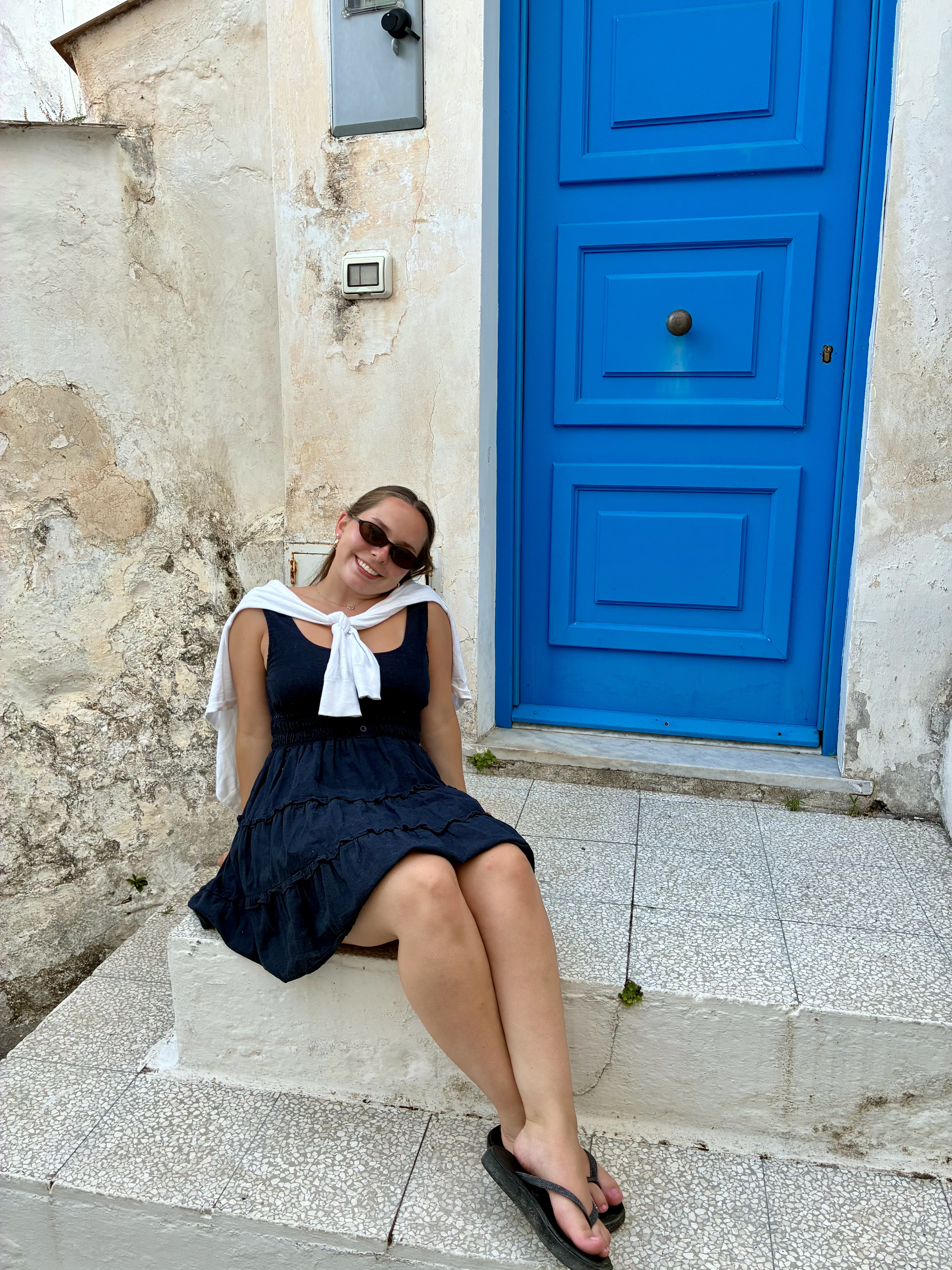
Here I am in the Amalfi Coast, Italy.
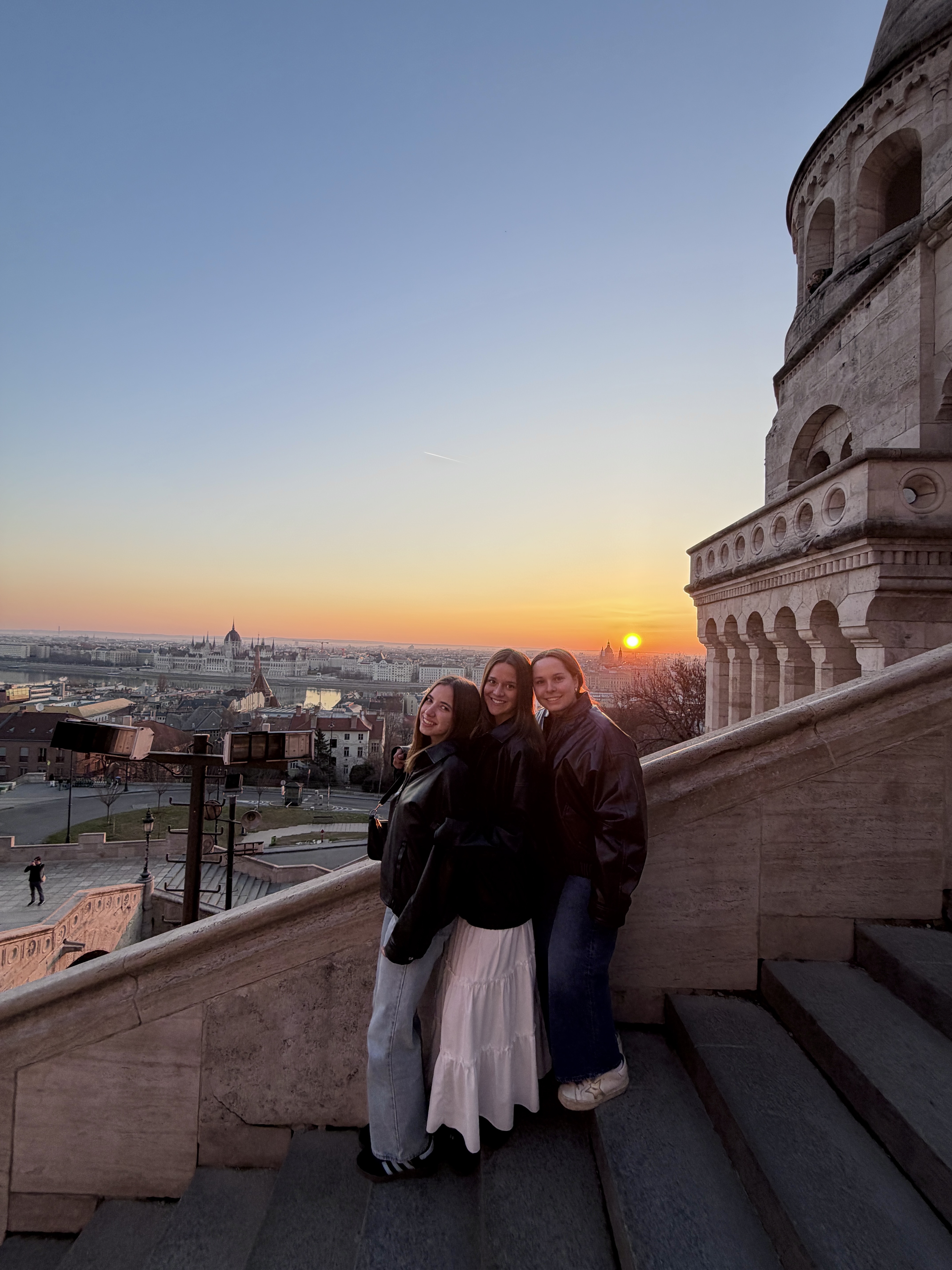
Julia, Mallory, and at the Fisherman’s BastionI in Budapest, Hungary at sunrise.
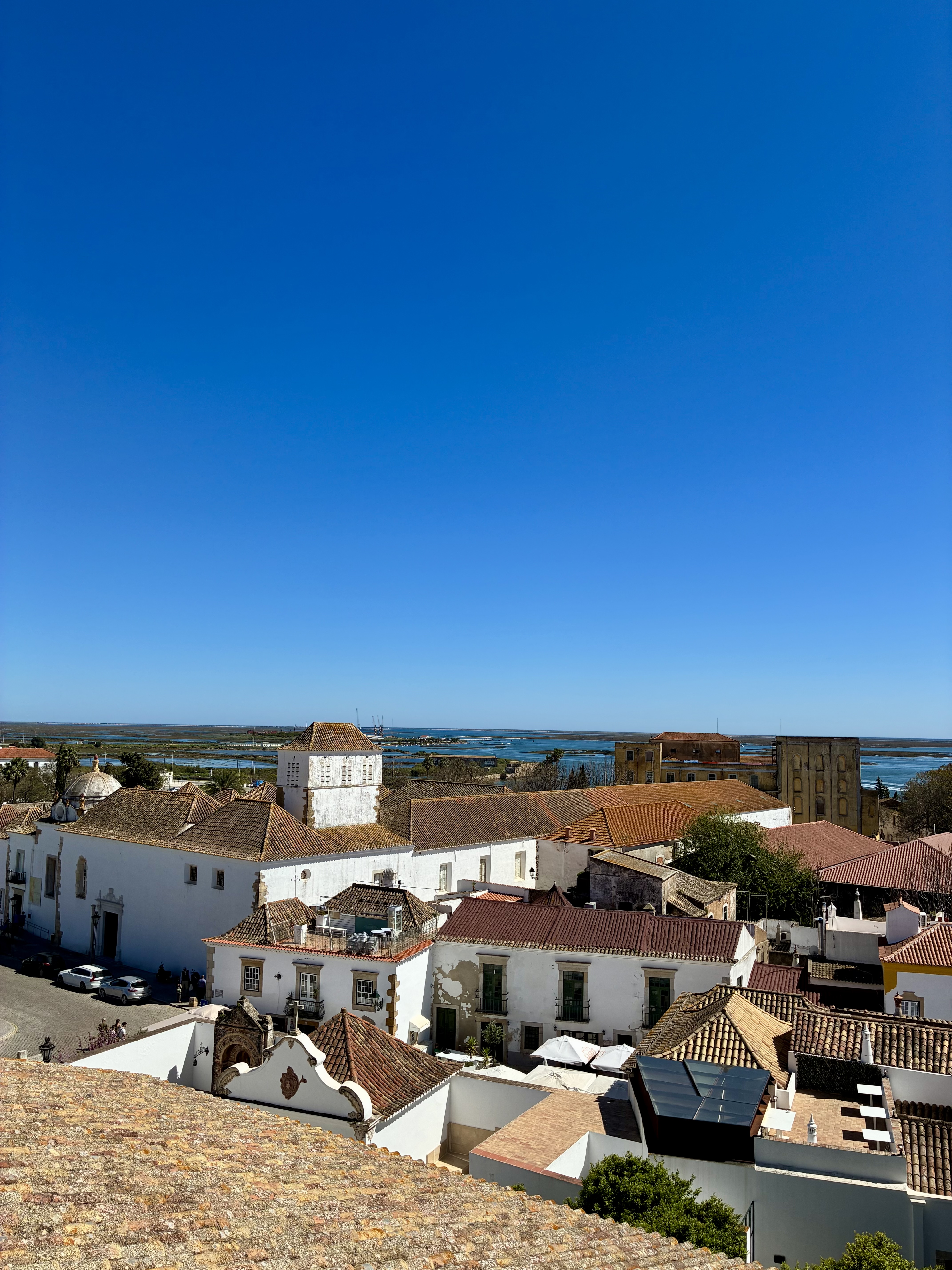
Farro, Portugal.
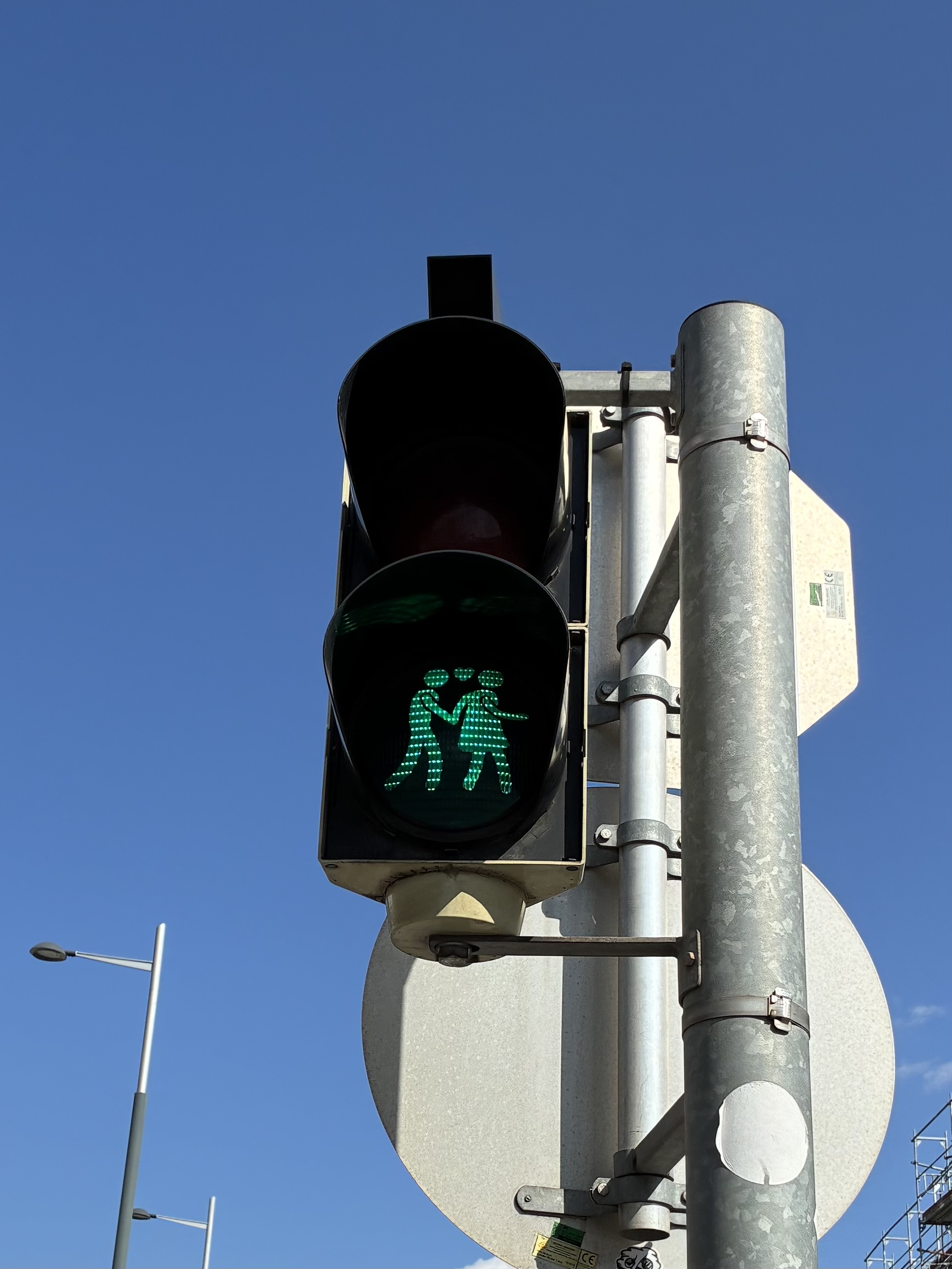
Vienna, Austria.
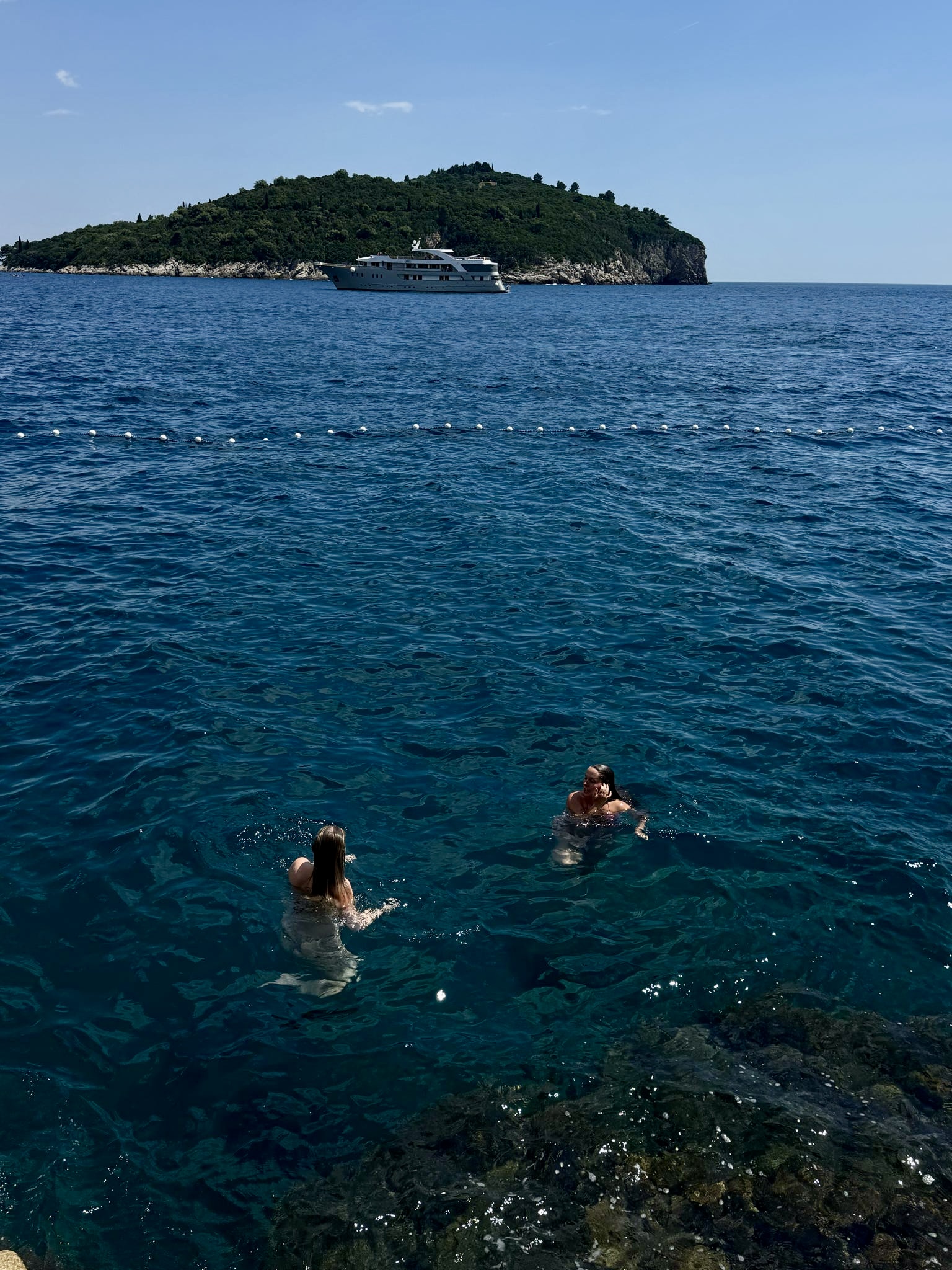
Ashlyn (my friend from high school) and I in Dubrovnik, Croatia.
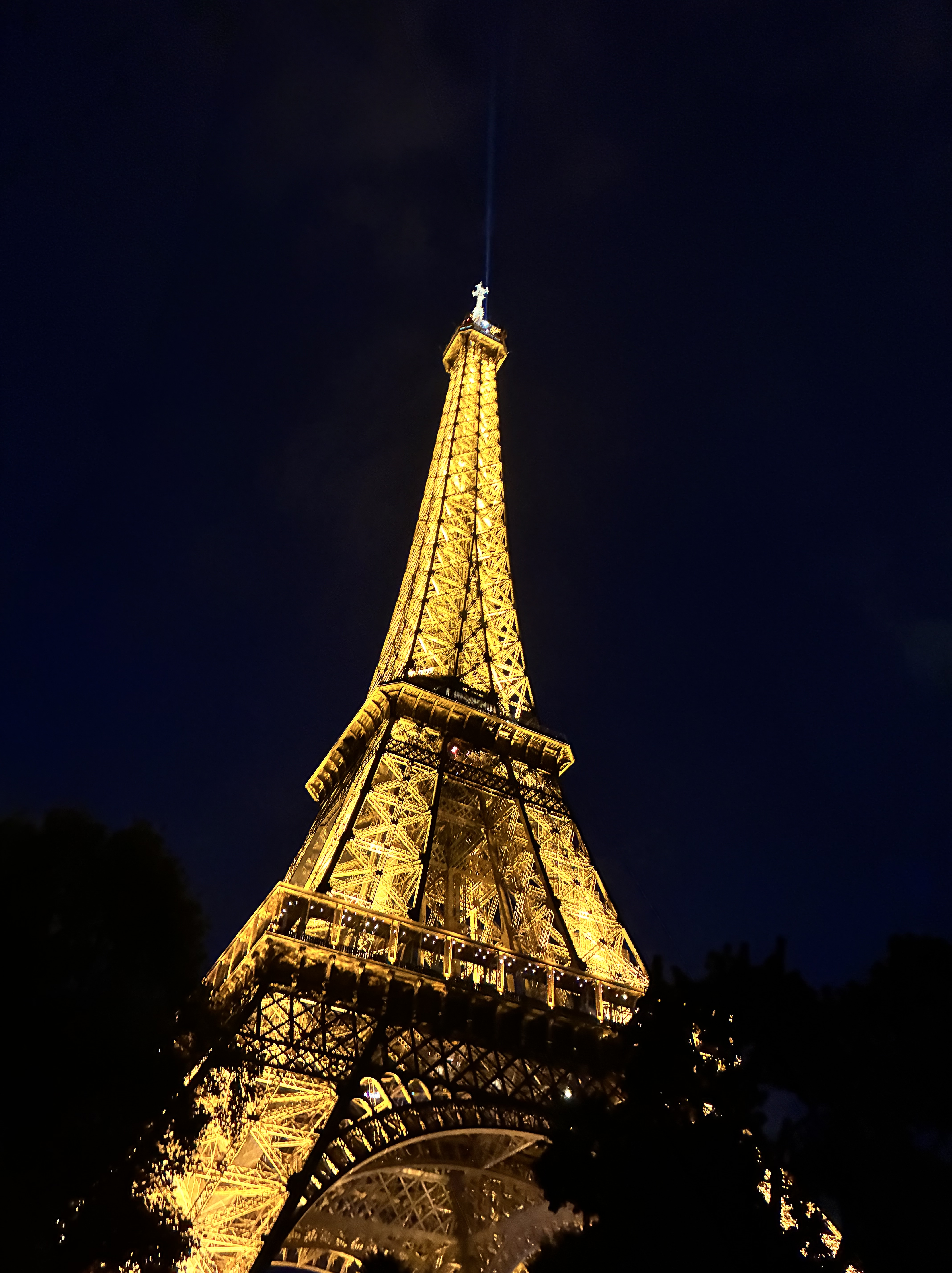
Eiffel Tower at night in Paris, France. My dream come true!!!

Perhaps the most special part of my time abroad were the friendships I made. The nine girls who became my best friends and Maltese “family” are some of the most amazing people I have ever met, and their friendships I will cherish forever. We traveled to so many different countries together, celebrated four birthdays with one another, tried more new foods than I can count, found ourselves in difficult situations, and experienced homesickness alongside some of the best memories of our lives. I don’t think my experience would have been nearly the same without them, and I am endlessly thankful I went into this experience with an open mind. I laughed more than I ever have and did something new almost every day. These girls and memories I will hold close to my heart and think about for the rest of my life. 
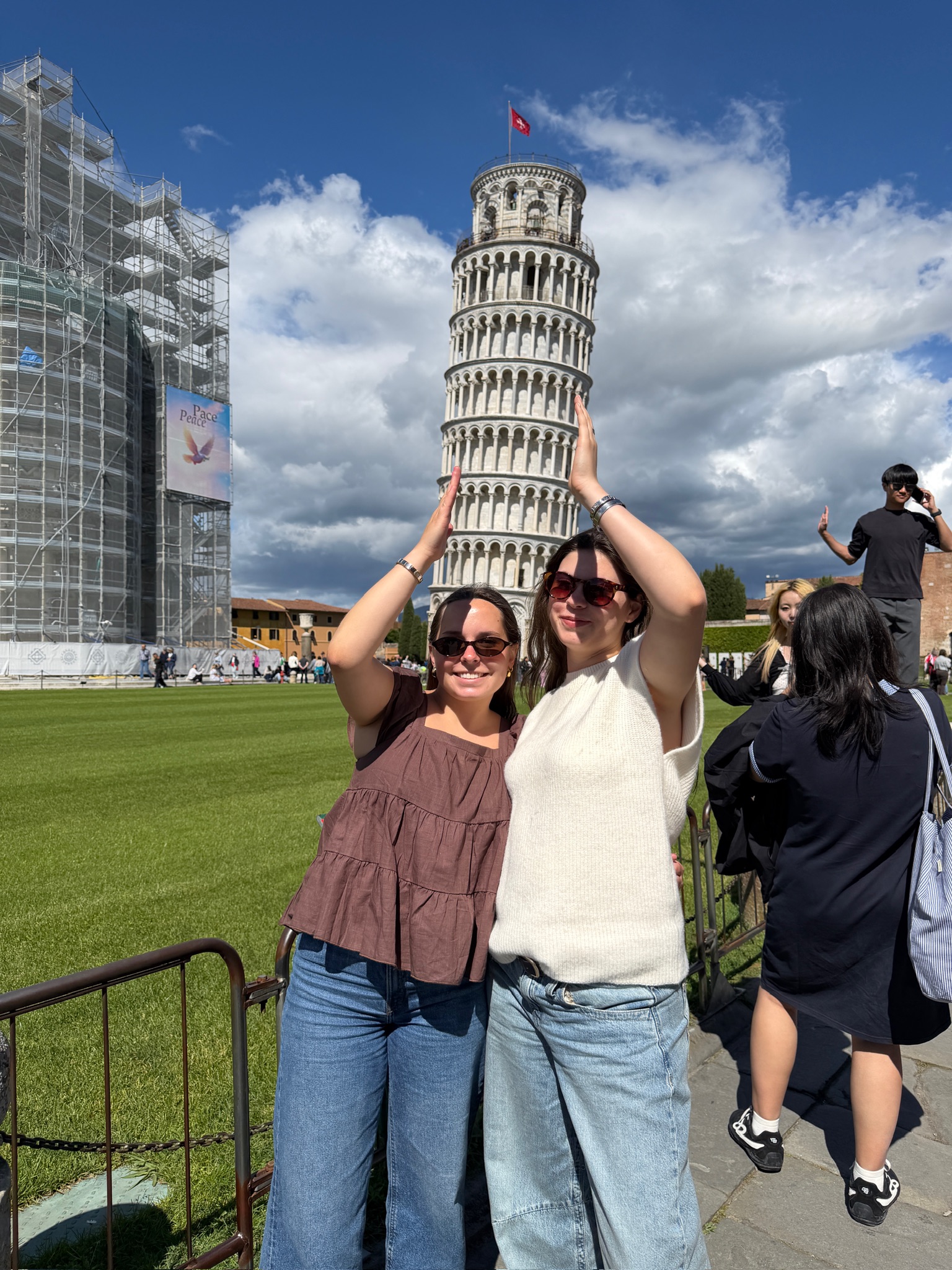
Reese and I at the Leaning Tower of Pisa, Italy.
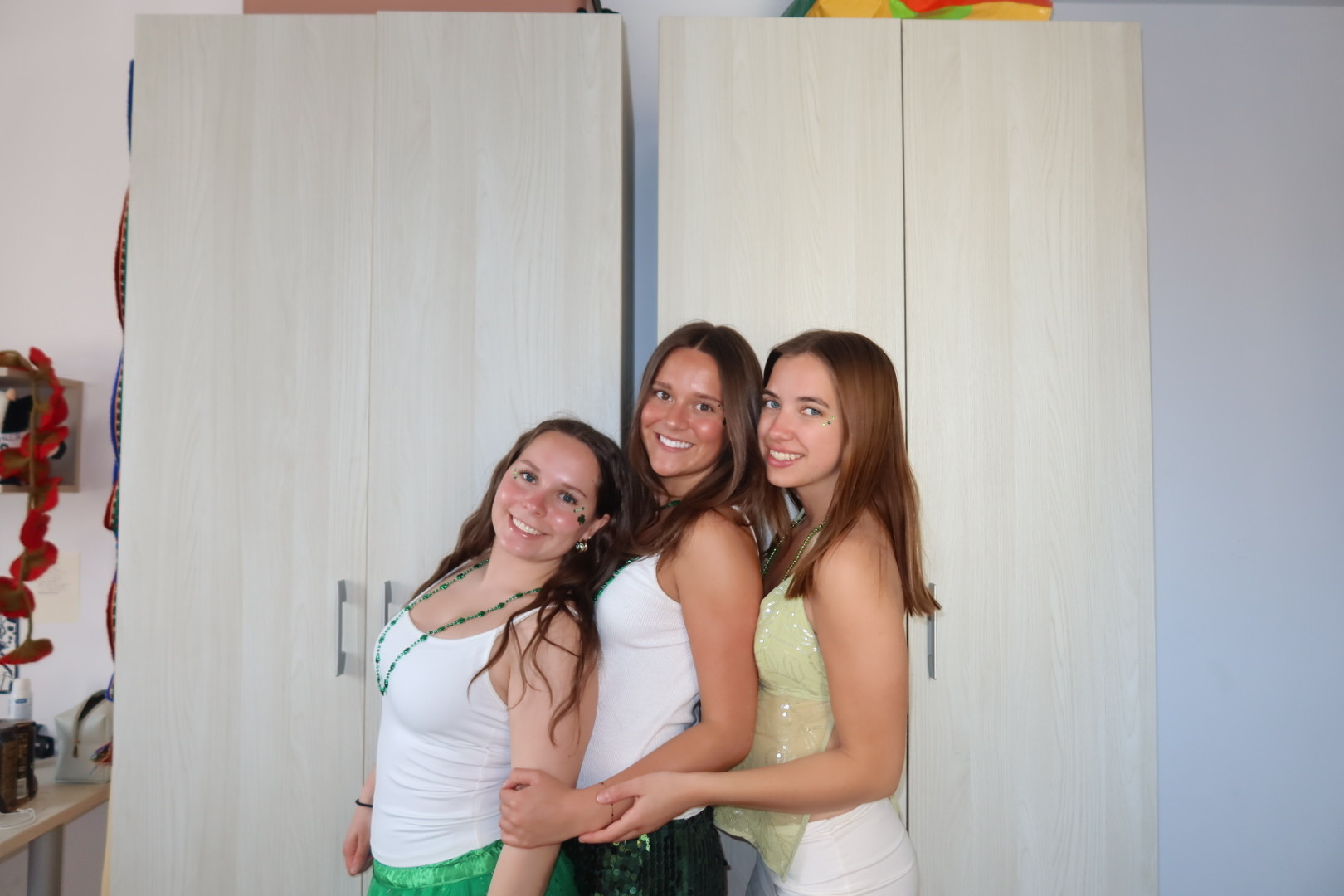
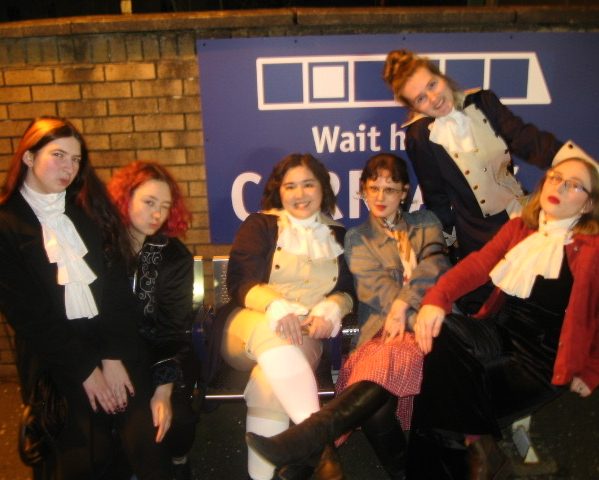
Julia, Mallory and I celebrating St. Patties Day in Malta.
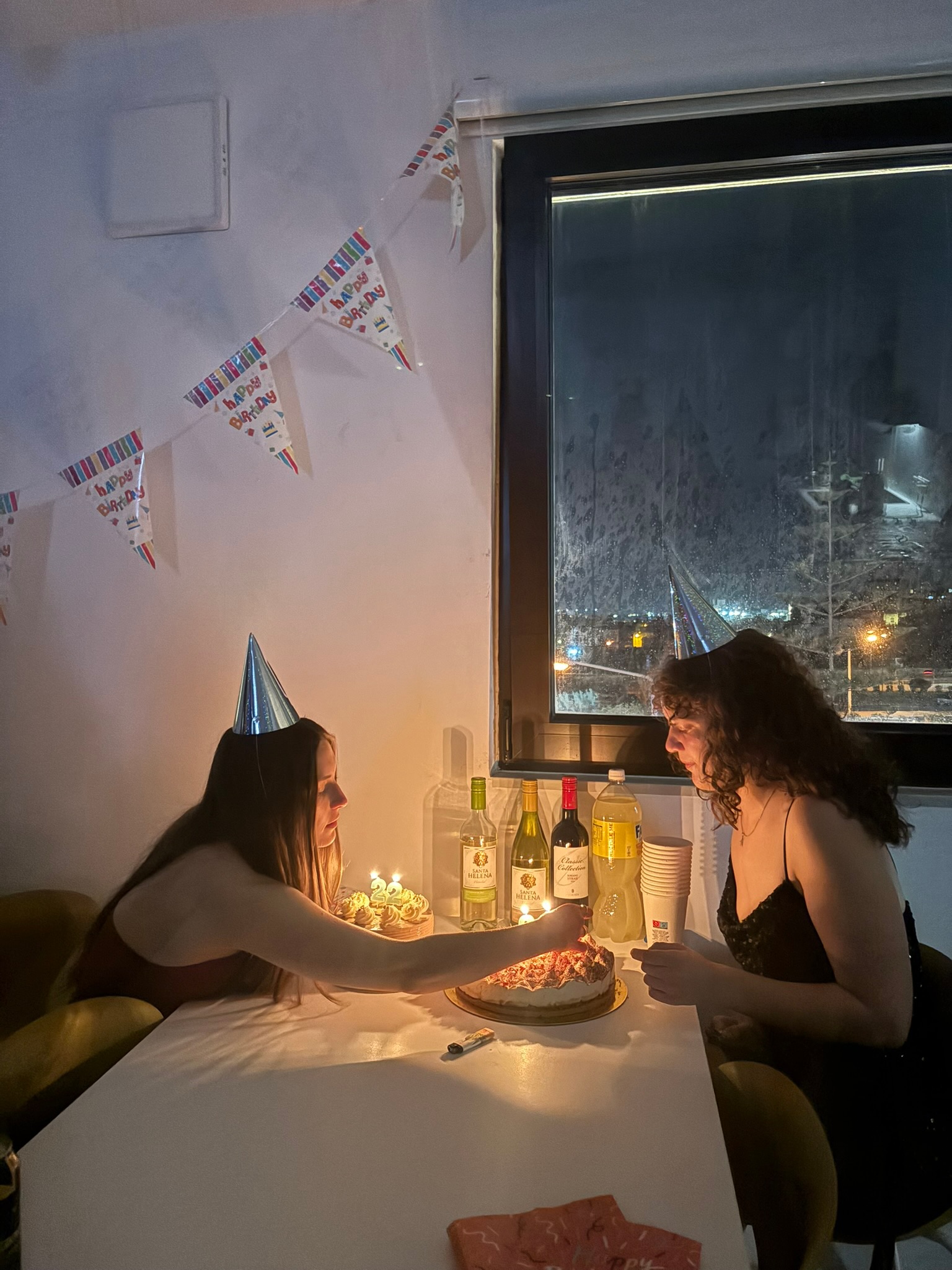
Mia and Mina’s Birthday Celebration in Malta!
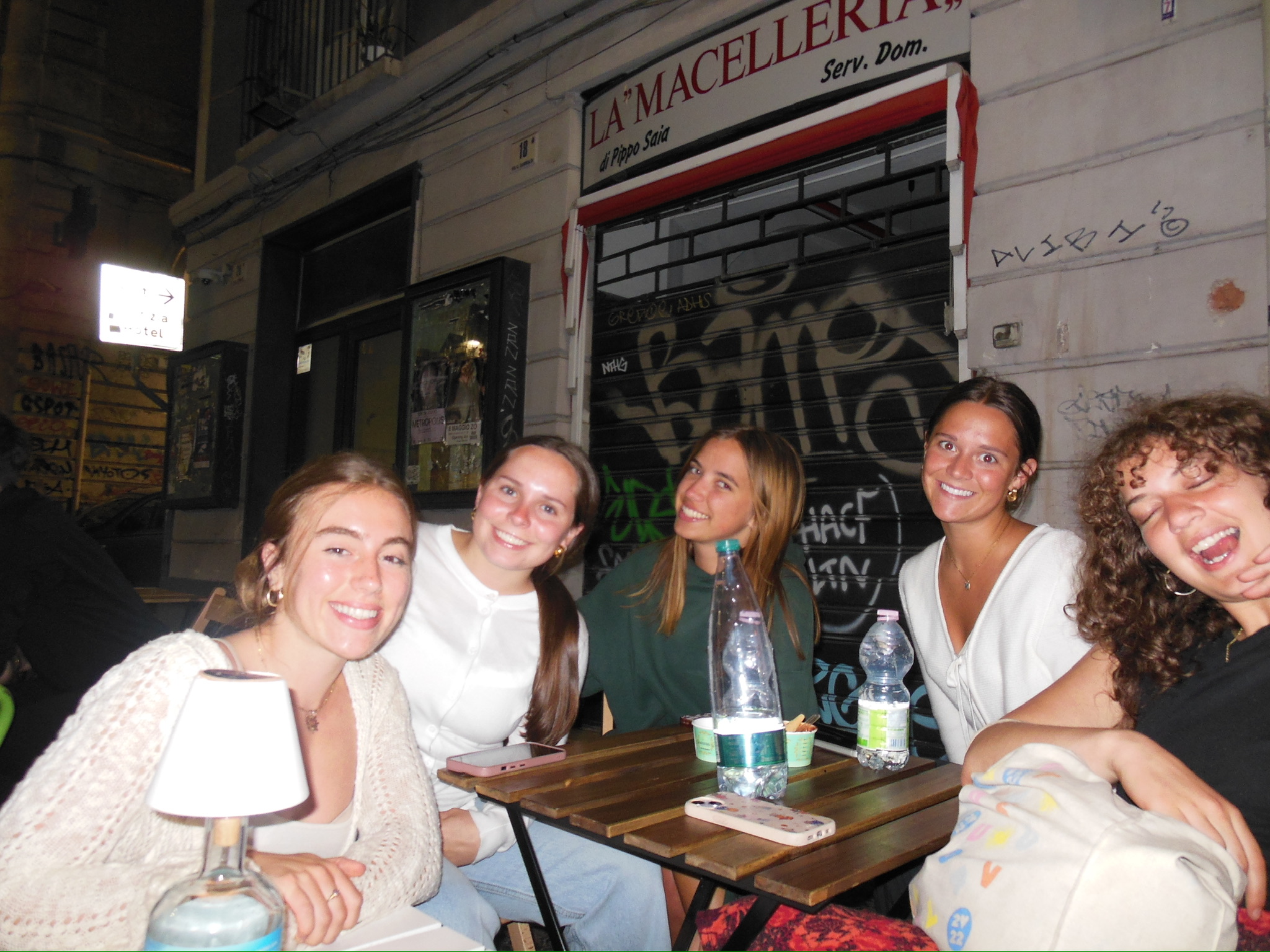
Mia, Mallory, Julia, Amelia and I in Sicily, Italy.
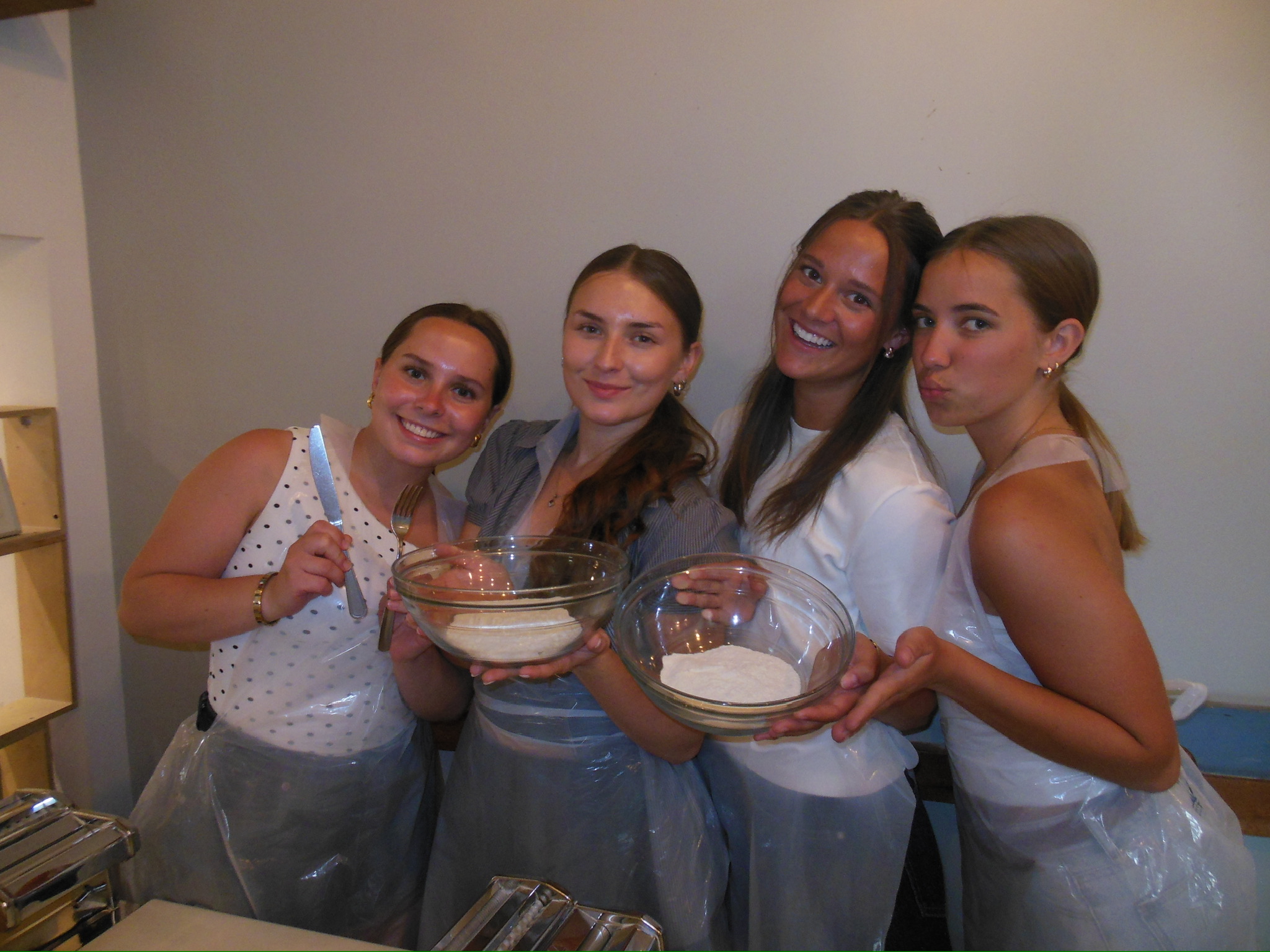
Pasta making class in Rome, Italy.
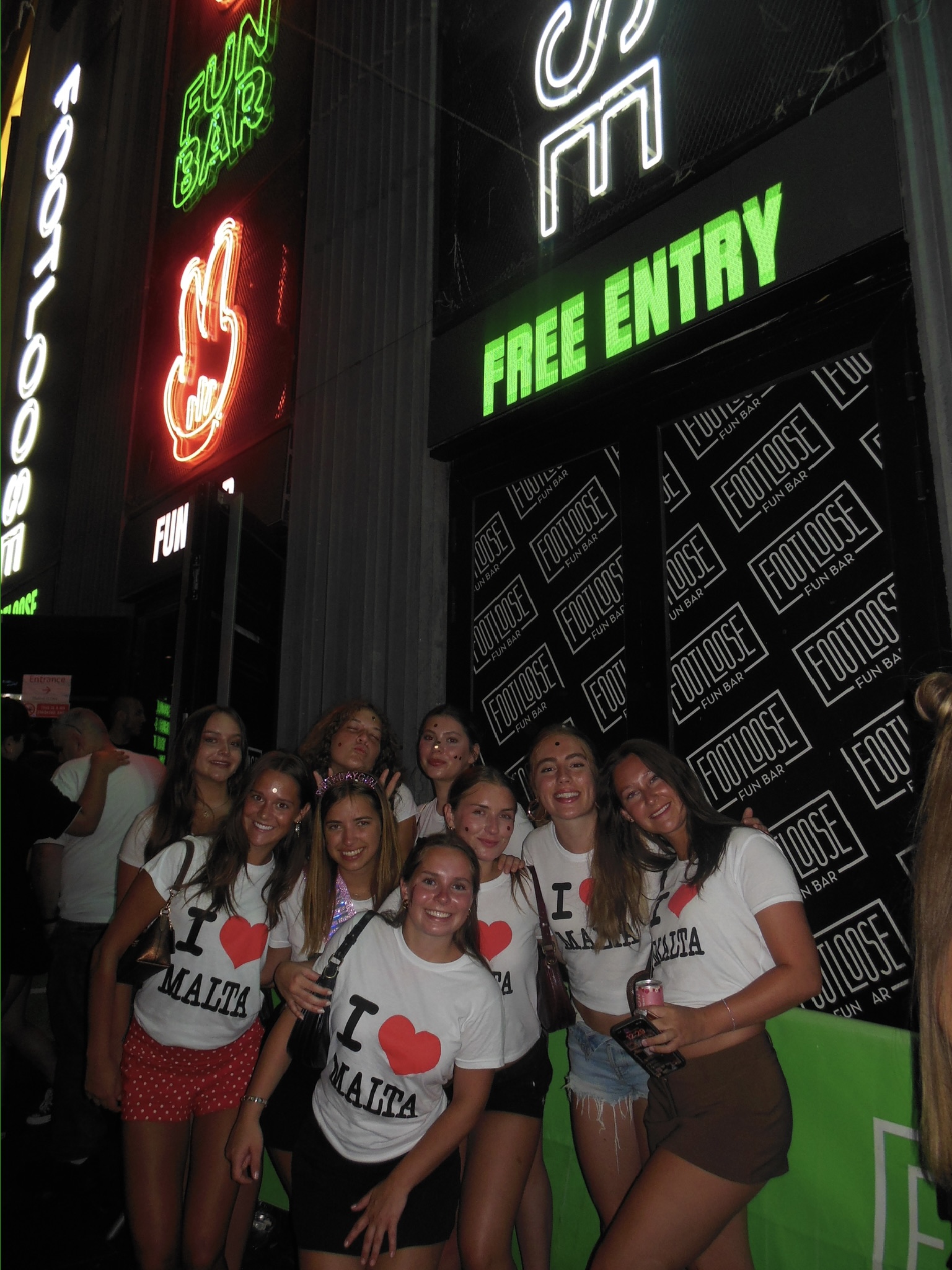
Maddie, Mia, Reese, Mina, Ameila, Julia, Mallory and Mallory’s sister Alyssa celebrating Julia’s birthday in Paceville, Malta.
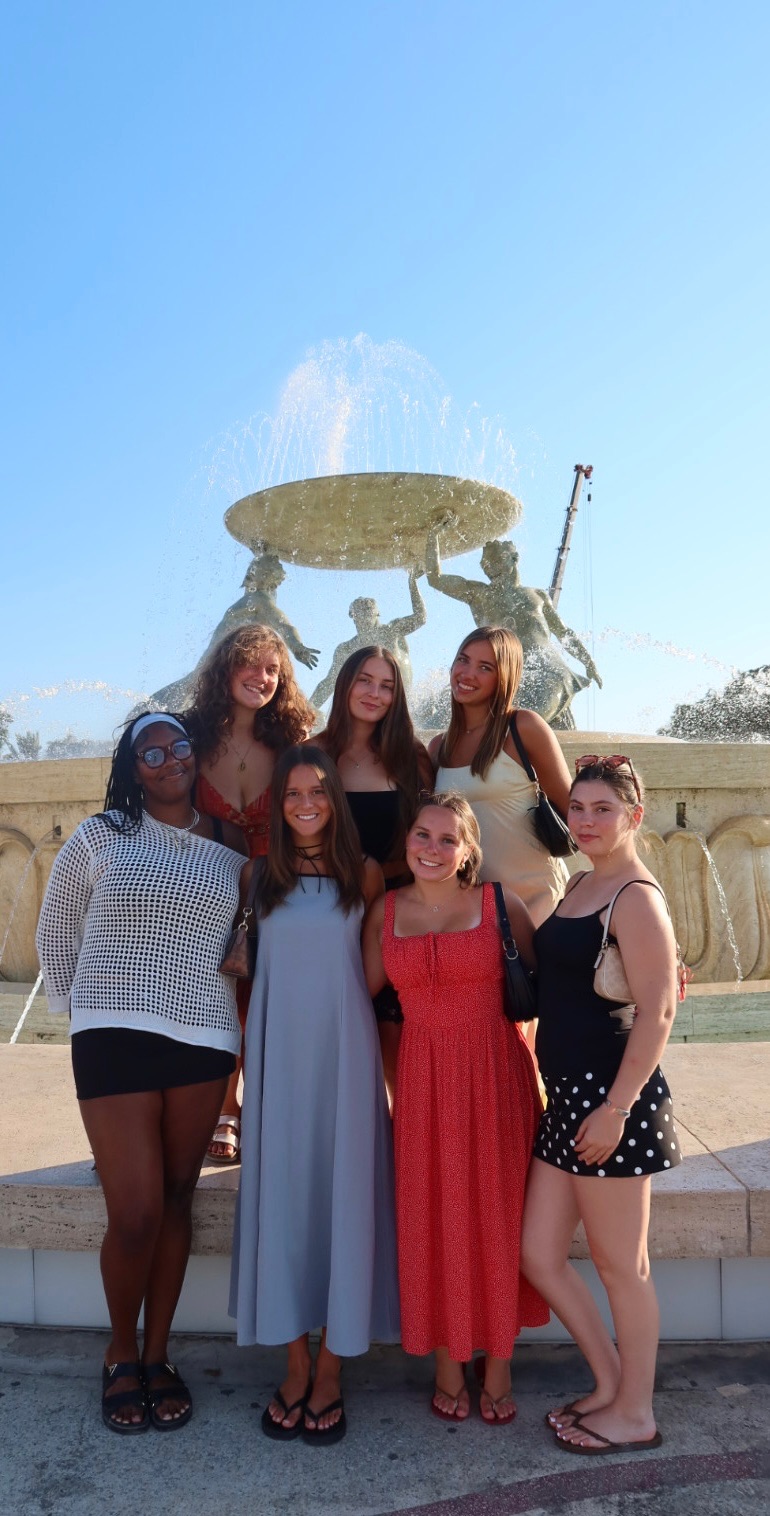
Mayah, Mia, Mina, Julia, Reece, Mallory and I at Triton’s Fountain in Valletta, Malta.

In the end, studying abroad pushed me far out of my comfort zone. It taught me a level of independence I had never experienced before, forced me to navigate hard situations and find real solutions, and somehow did all of this while having the best time of my life alongside my closest friends. It’s an experience I will carry with me, in who I am, how I lead, and the career I hope to build moving forward with my life. There is a Malta shaped hole in my heart forever.  
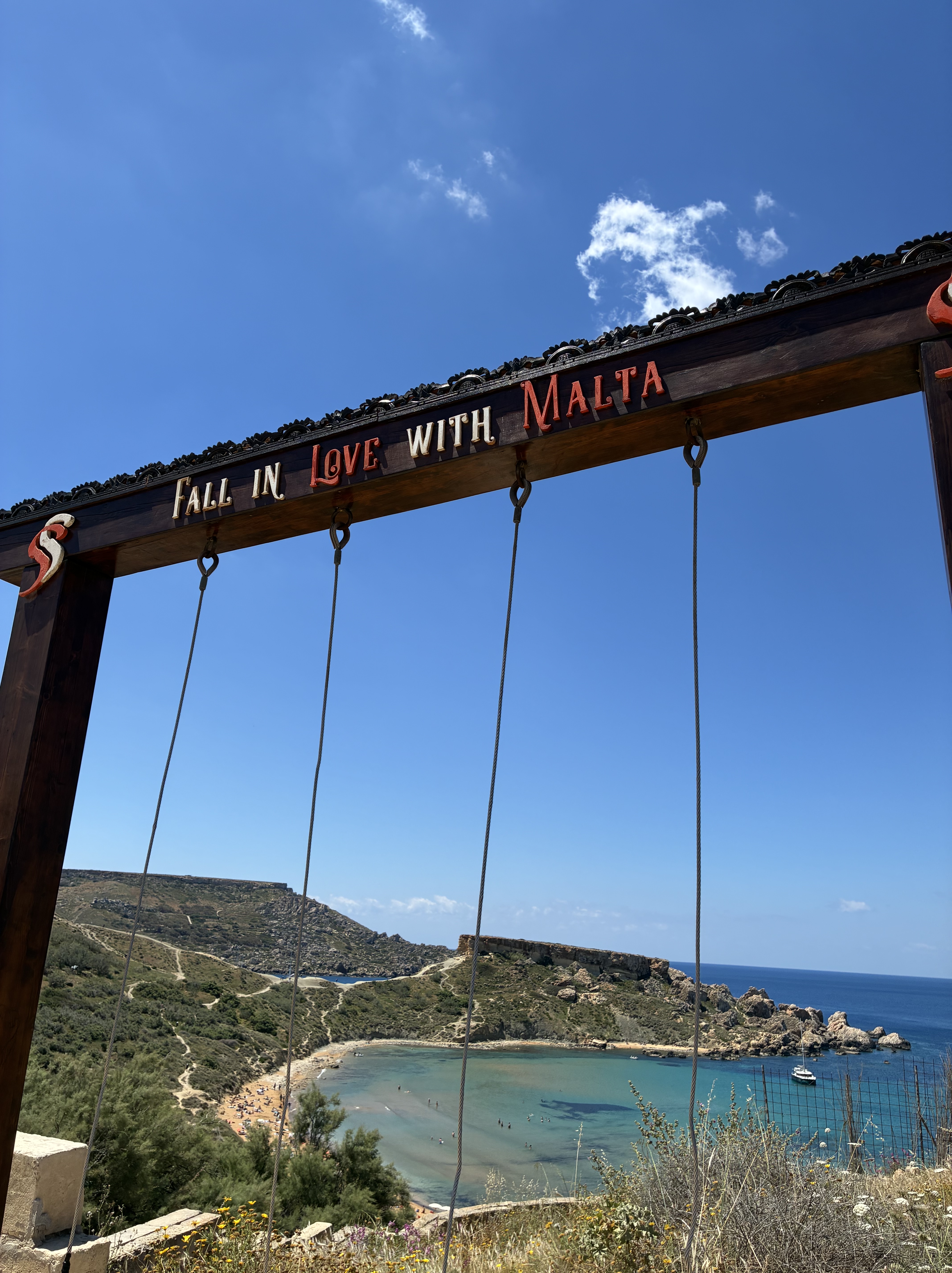
Riviera, Beach, Malta. I sure did fall in love with you Malta!
My Semester in Florence, Italy

Studying abroad in Florence, Italy was one of the most transformative experiences of my college education. Before leaving, I thought I knew what to expect because I had already been to Europe twice before. I was familiar with the excitement of traveling, seeing historic cities, and experiencing different cultures, but living abroad independently was a completely different experience. I wasn’t just visiting Italy for a few weeks— I was building a life there, navigating a new city on my own, making new friends, going to class, grocery shopping, figuring out transportation, and learning how to feel at home somewhere so far from home. Being able to experience Italy in this way was both challenging and amazing. It pushed me far outside of my comfort zone and gave me a new sense of independence and confidence. Things that initially felt intimidating, like navigating public transportation or figuring out what to do when something didn’t go according to plan (shoutout Trenitalia), eventually became normal. I learned that being independent doesn’t mean always knowing what you’re doing; it means being willing to figure things out along the way.

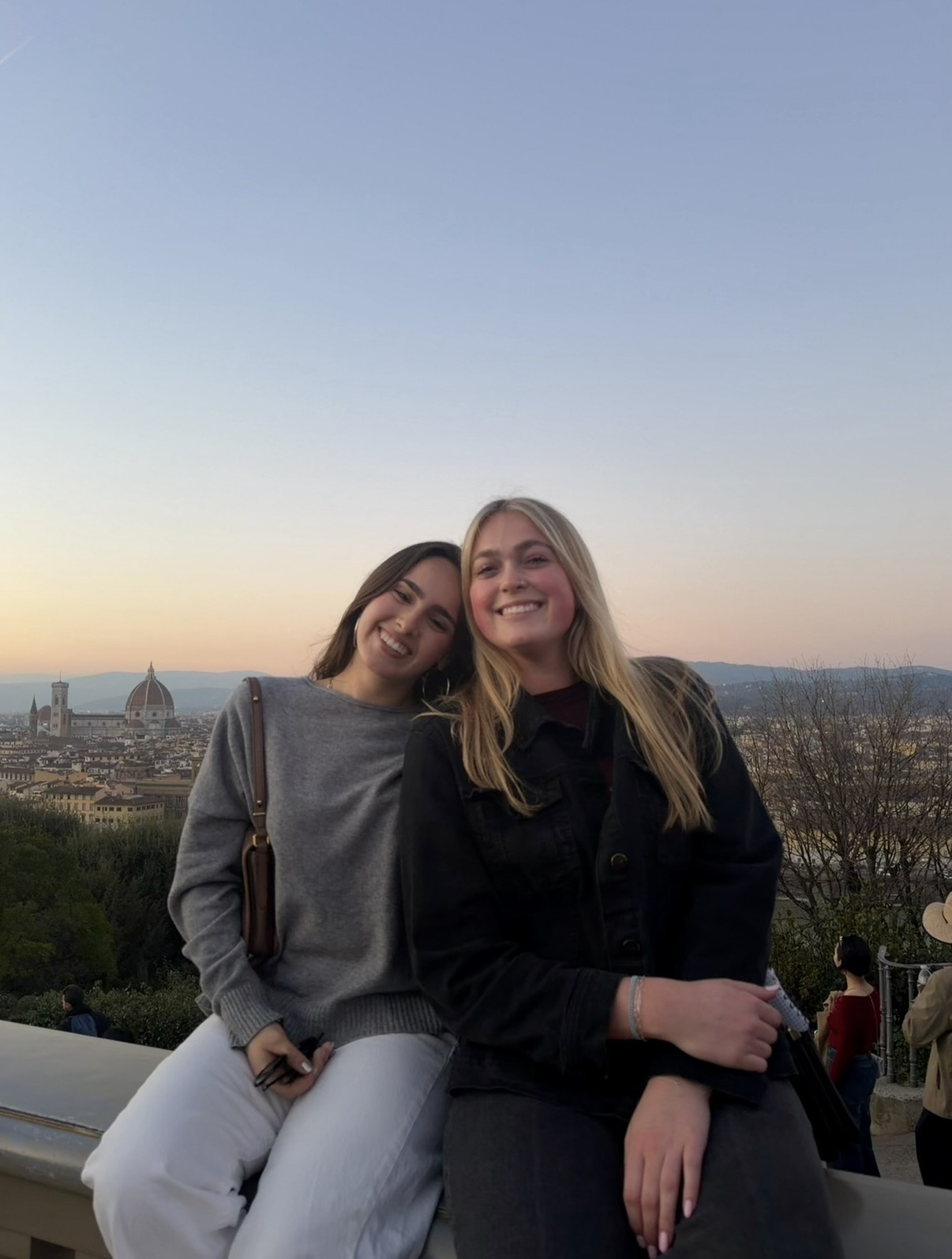
One of my roommates Riley and I watching the sunset at Piazzale Michelangelo. It’s the best place to get a view of the whole city.

My global theme is culture and politics. Living and learning in Italy allowed me to fully immerse myself in the cultural landscape of the country, and there is truly so much nuance to Italian culture that I would have missed otherwise. Beyond simply living there, I furthered my understanding through courses like Intercultural Communication, International Relations, Cultural Anthropology, and even Pairing Food and Wine. Across all of these classes, I gained a deeper understanding of the country I was living in. Italian history and culture are some of the richest and most complex in the world, and within that history come both highs and lows. When many people think of Italy, they think of Rome and the great emperors, and while that is certainly an important part of the country’s history and beauty, there are also periods of insecurity, political instability, and dictatorship, particularly under Mussolini in the 20th century. Italy is, in many ways, surprisingly similar to the United States. It experiences housing inequality, significant wage disparities, and major internal cultural differences. One idea that came up repeatedly was just how regional Italians are. People often identify more strongly with their region—for example, being Tuscan if they are from Tuscany—than with a broader national Italian identity. Experiencing these differences firsthand helped me understand how culture and politics are deeply connected to the communities and places people come from.

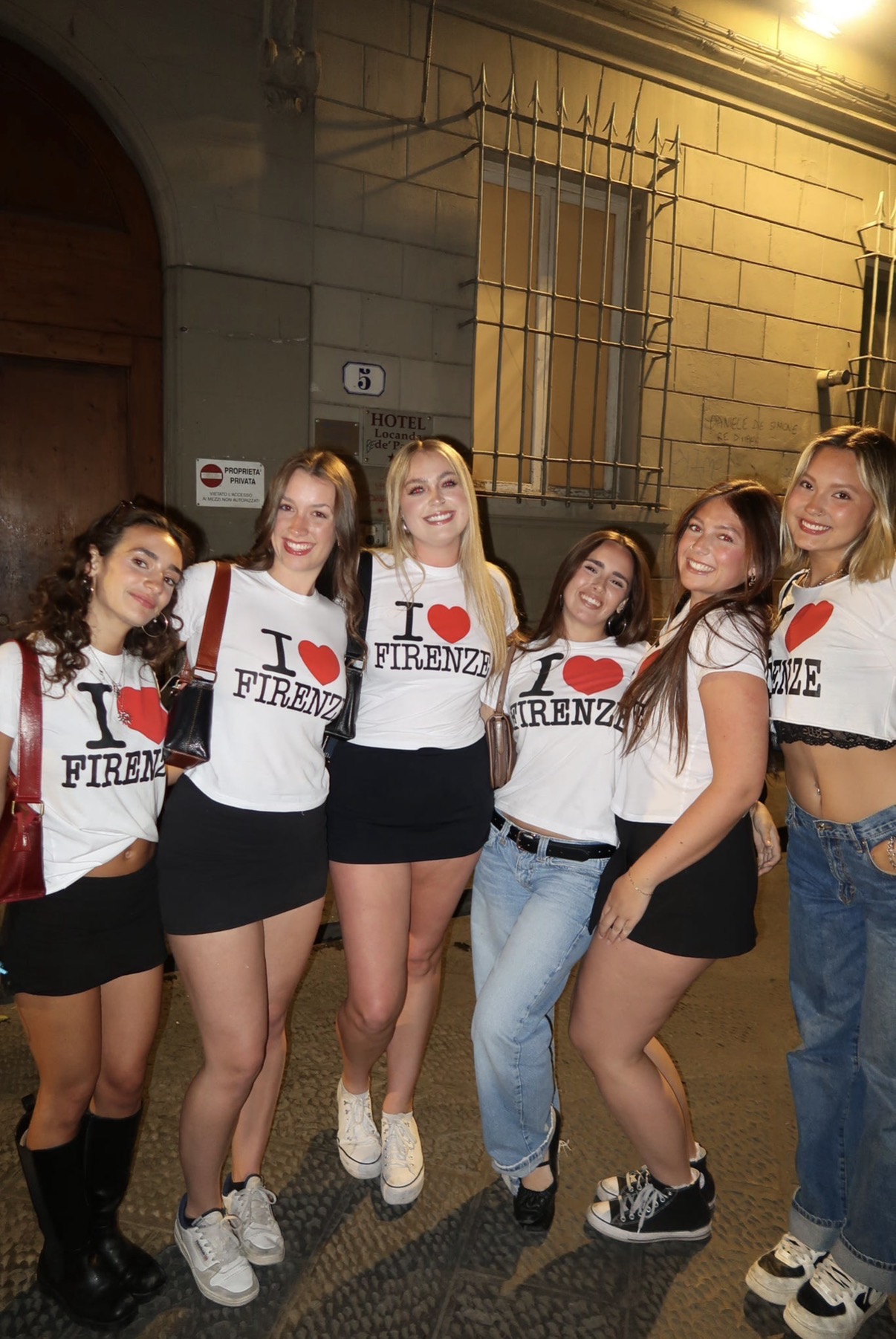
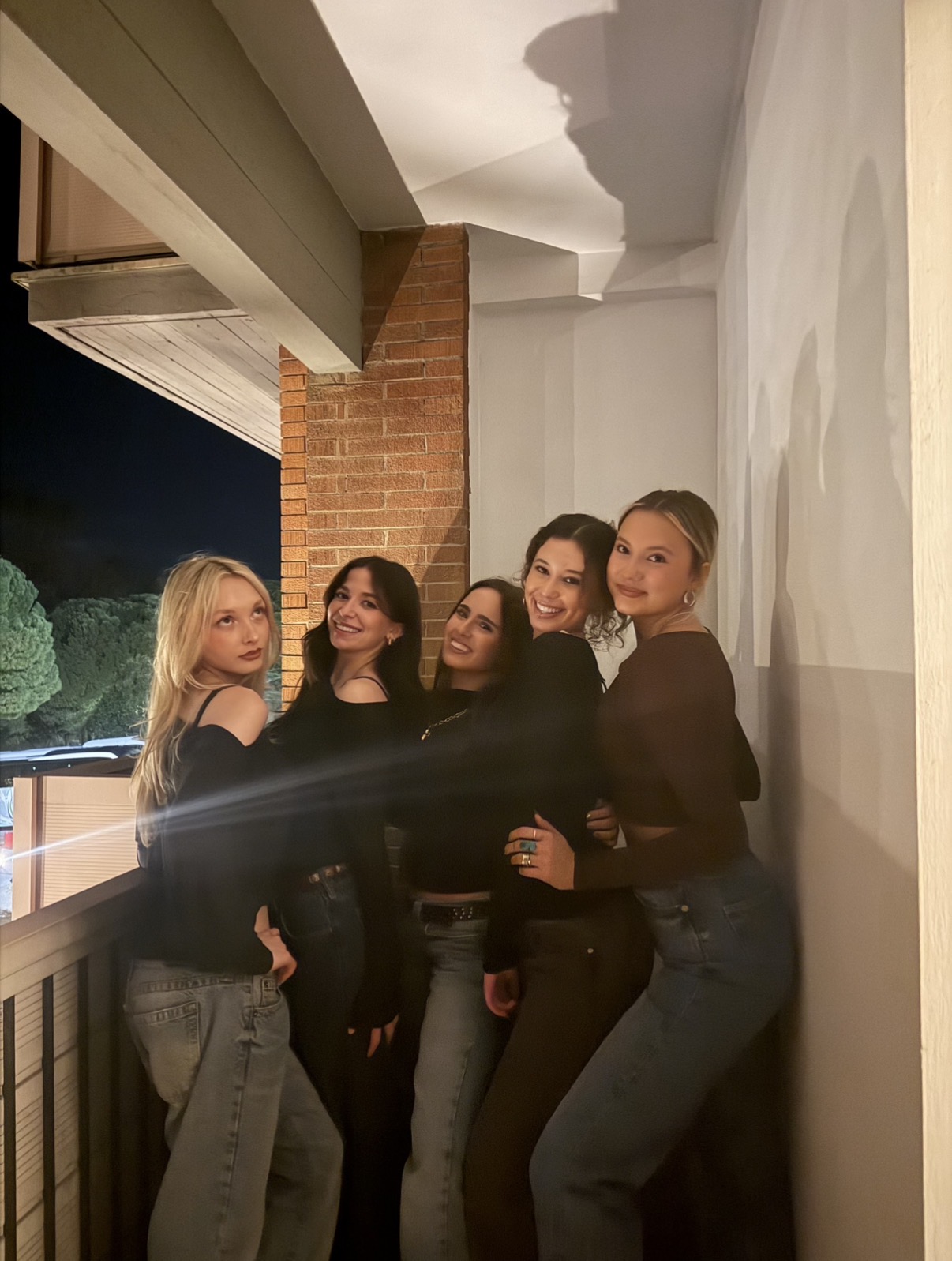
Left to right: Izzy, Megan, Riley, Me, Maddie, and Adele. One of our last nights in Florence!
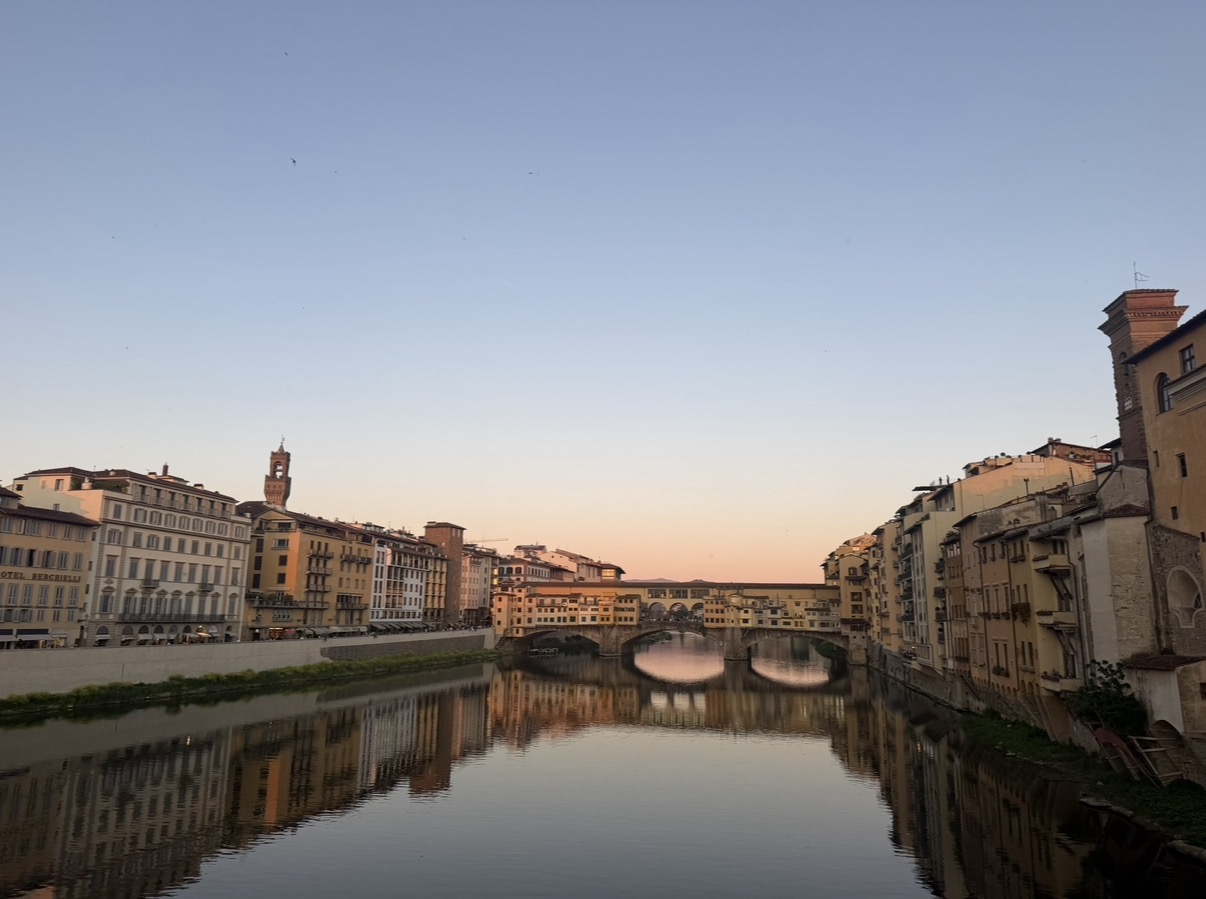
My view of the Ponte Vecchio from the bridge I crossed to get to class everyday. I mourn this view.

Outside of the classroom, I was able to experience this cultural diversity through travel. While Italy itself gave me countless opportunities to explore new cities, foods, traditions, and landscapes, I also had the chance to travel to Morocco, Spain, Poland, Hungary, and the Czech Republic. Each country offered a completely different experience and challenged me to look at the world from a new perspective. Traveling independently also taught me how much I am capable of doing on my own. I learned how to navigate airports and train stations, plan trips, solve problems when things did not go according to plan, and feel comfortable exploring places I had never been before. Some of my favorite memories came from the moments that were completely unplanned—getting lost, finding a small restaurant, meeting someone new, or simply walking around a city with no real destination. Even though I had traveled internationally before, this experience made travel feel completely different because I was responsible for creating the experience myself.

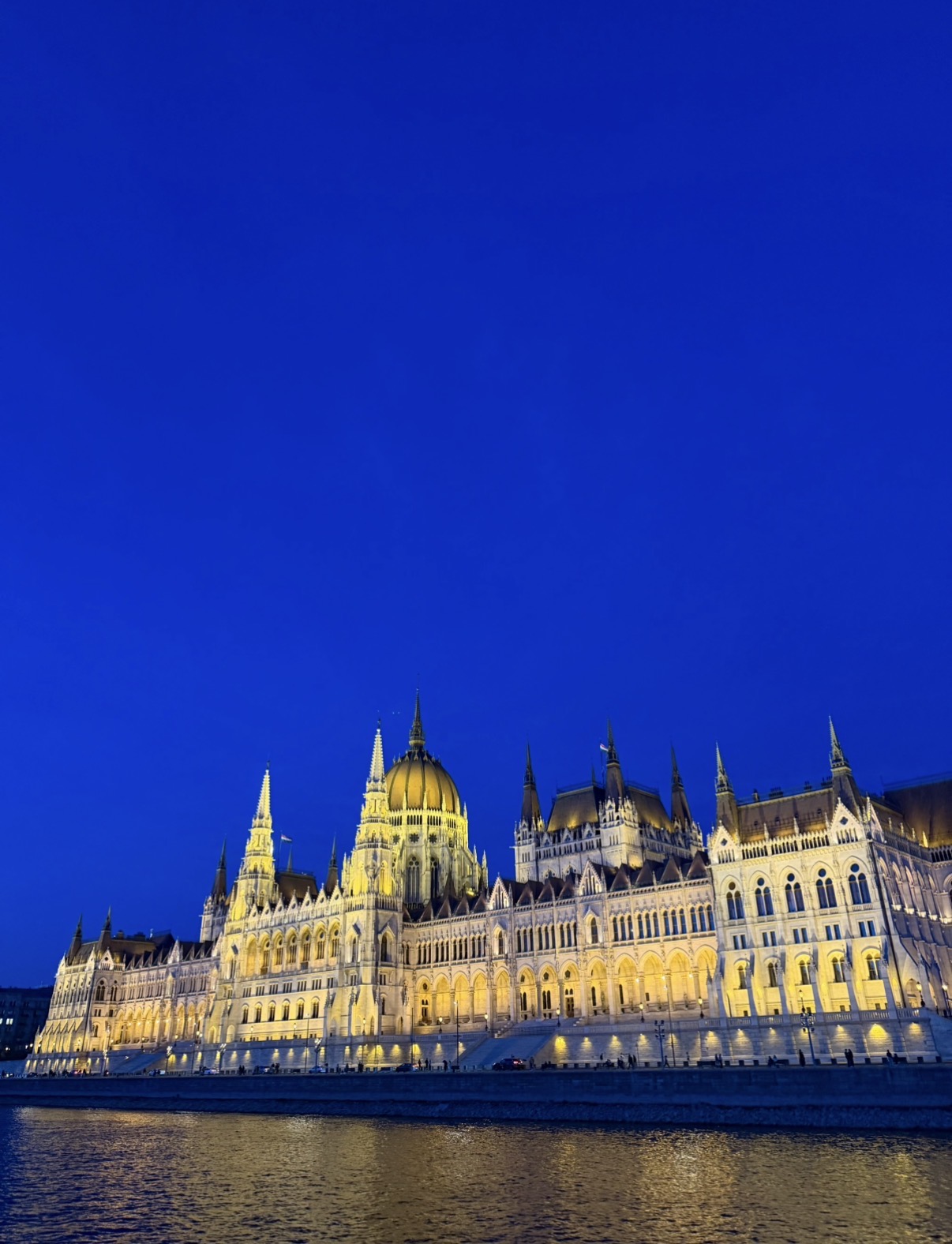
Not a day goes by that I don’t think about the Hungarian Parliament Building. Budapest, Hungary.
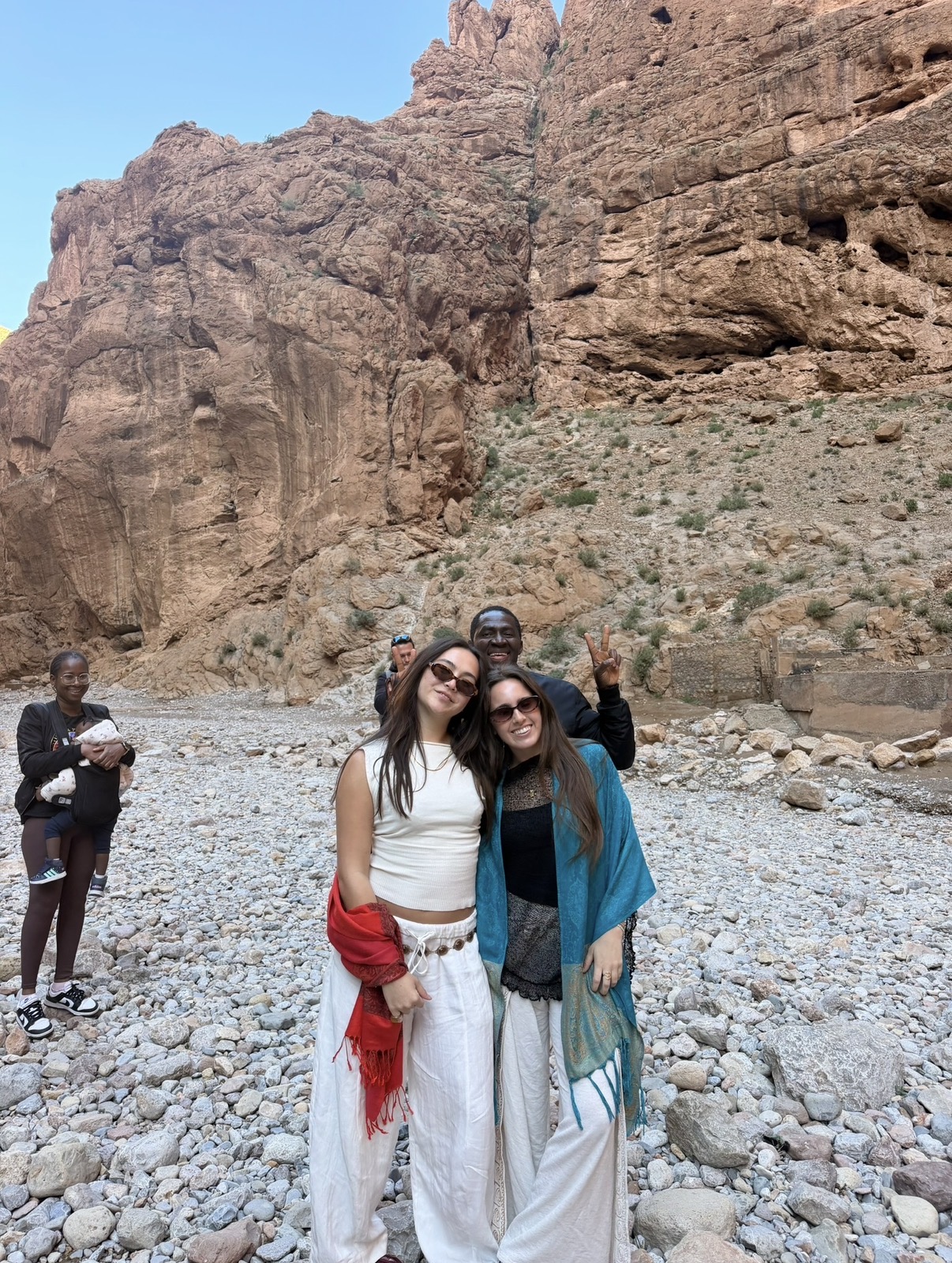
Me and Delaney with some of our French friends we met in Morocco! I told them to call me if they ever need an Au Pair. Todgha River Gorges, Morocco.
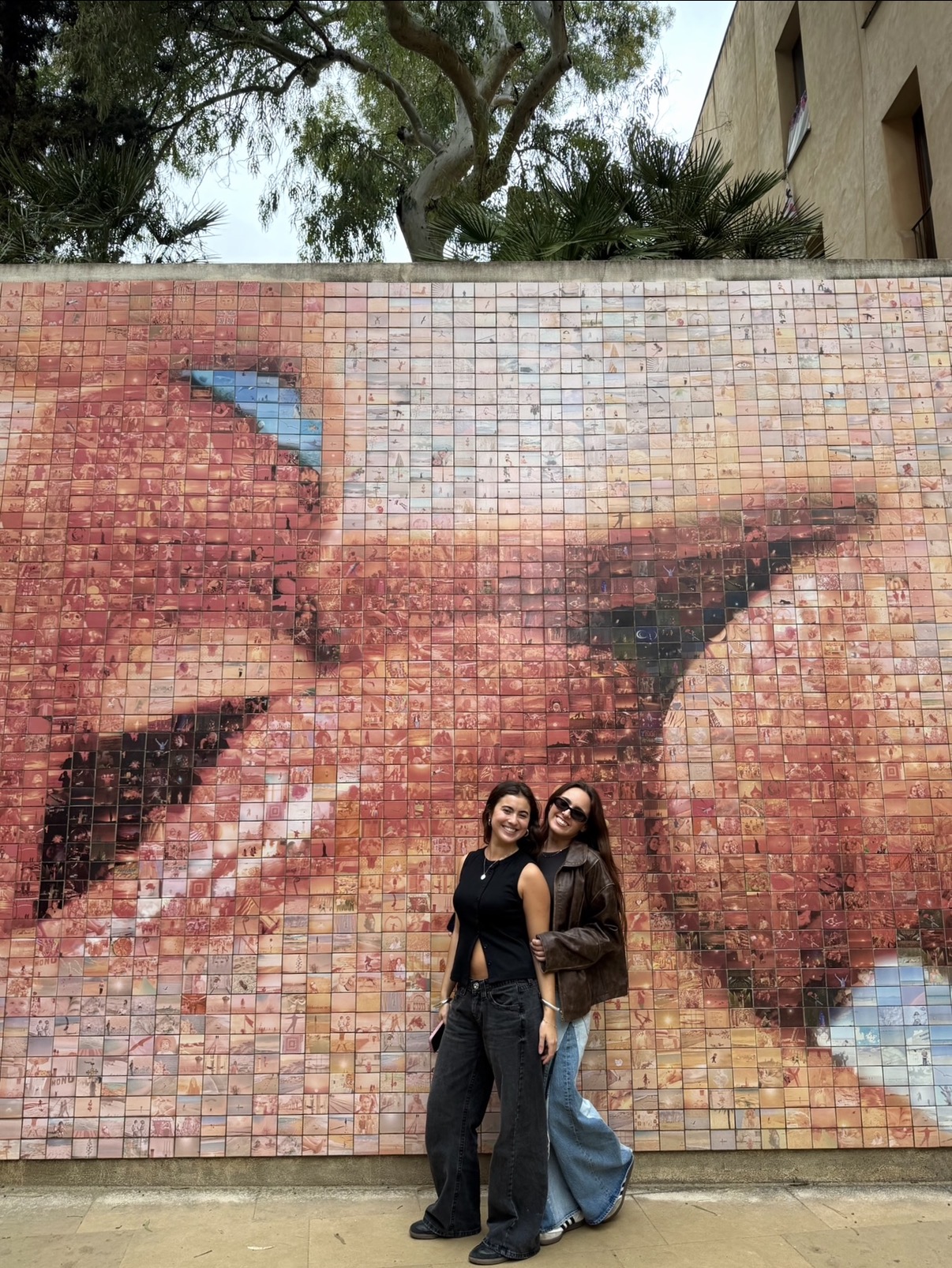
Bella and I in front of ” El món neix en cada besada” (“The World Begins with Every Kiss”) in Barcelona, Spain.
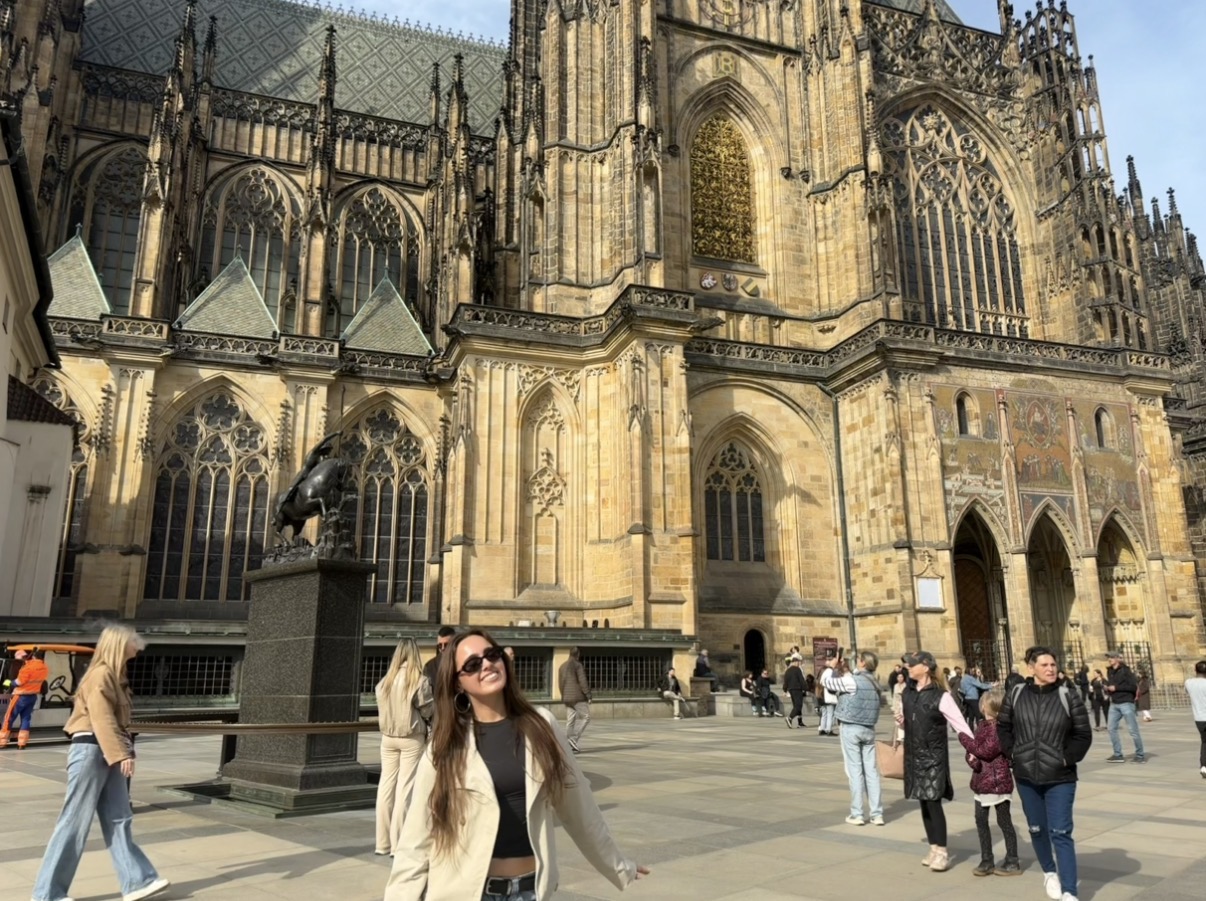
Me in front of Prague Castle!

One of the most meaningful parts of studying abroad was the friendships I made. I arrived in Florence not knowing exactly what to expect, and I ended up meeting people who became such an important part of my experience. There was something special about forming friendships while everyone was simultaneously navigating a new country and creating a life together. We explored Italy, traveled to other countries, shared meals, celebrated birthdays, and made memories that I know I will carry with me long after college. Looking back, studying abroad was so much more than simply spending a semester in another country. It challenged me to become more independent, broadened my understanding of culture and politics, and introduced me to people and places I never would have experienced otherwise. I returned home with a deeper appreciation for travel, cultural exchange, and the importance of seeing the world from perspectives other than my own. Most importantly, I came home more confident in my ability to navigate the unknown, and I know the perspective and independence I gained abroad will continue to shape me for years to come. There isn’t a day I don’t think about going back, I truly left a piece of my heart in Florence.

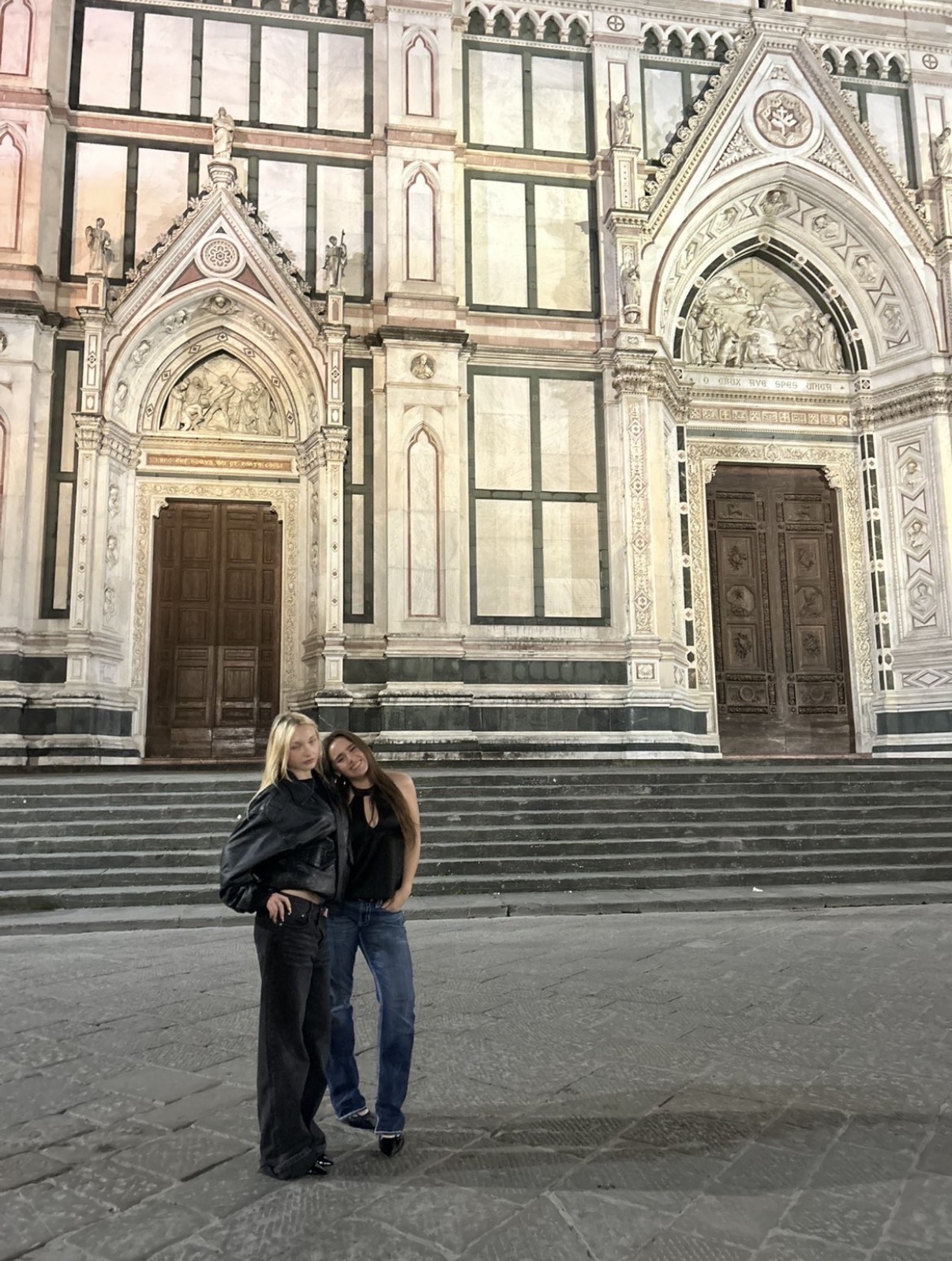
Vendela and I in Florence.
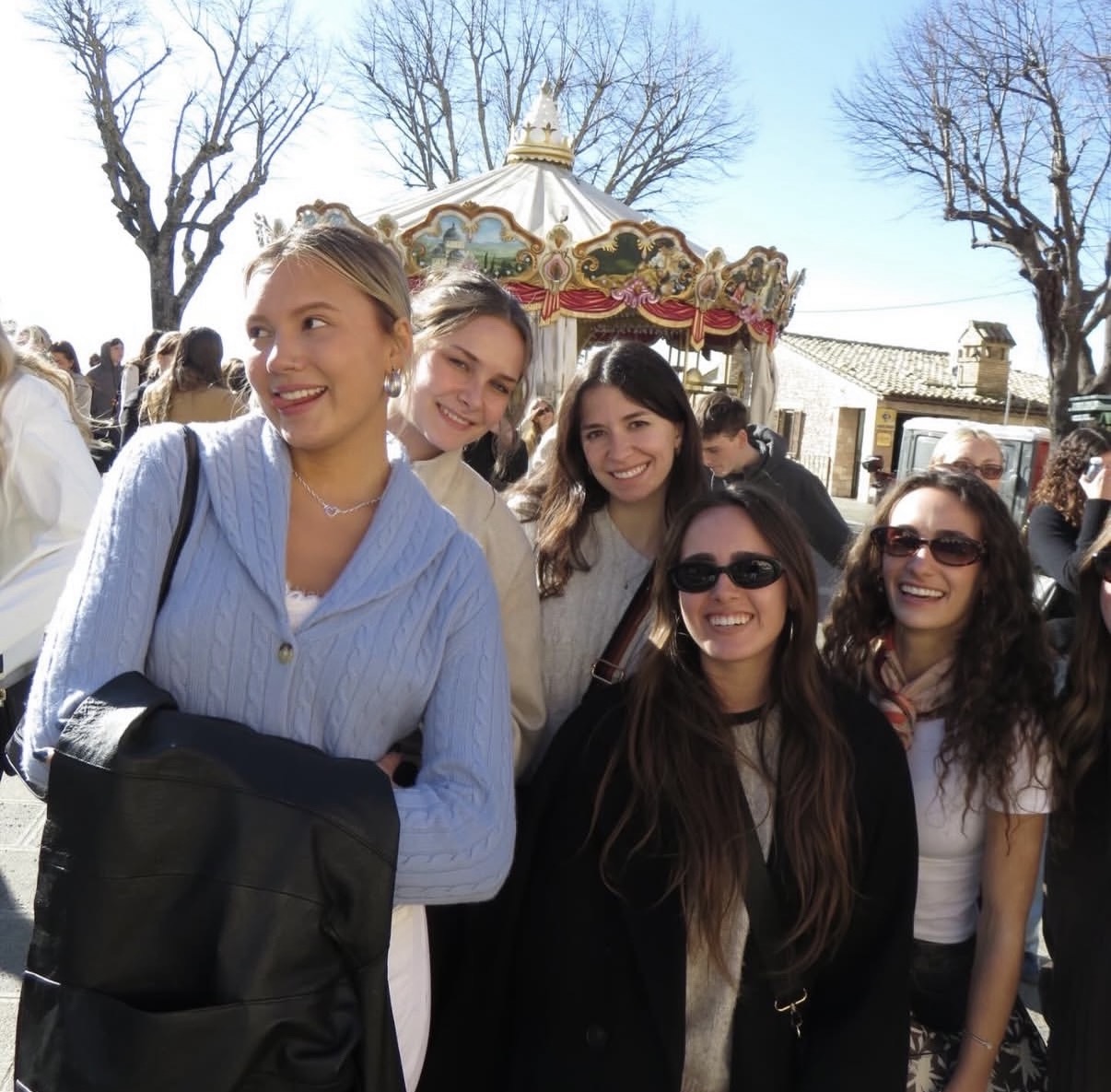
Adele, Ellen, Kenedee, Me, and Izzy in Perugia, Italy.
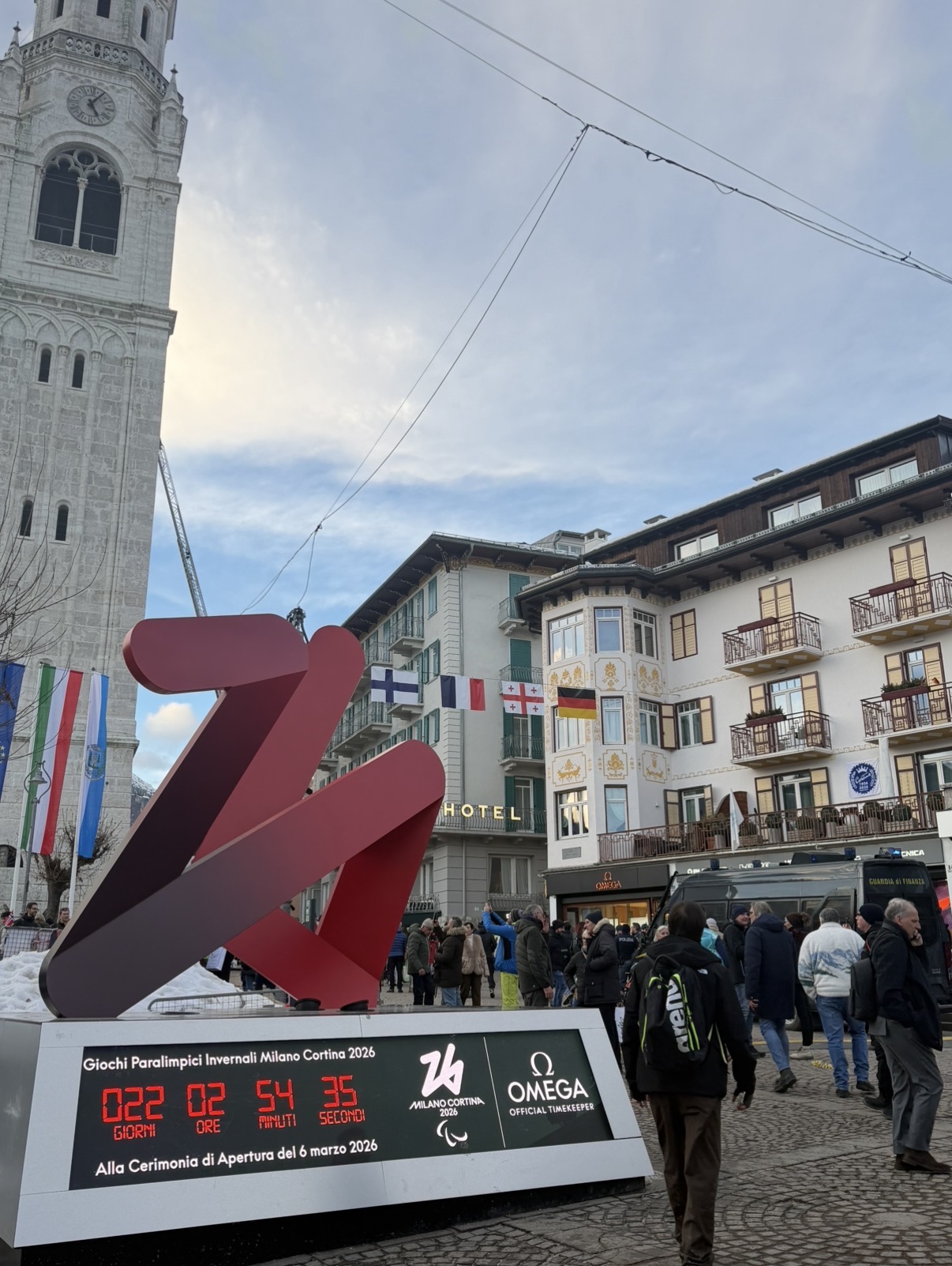
Olympic village in Cortina, Italy.
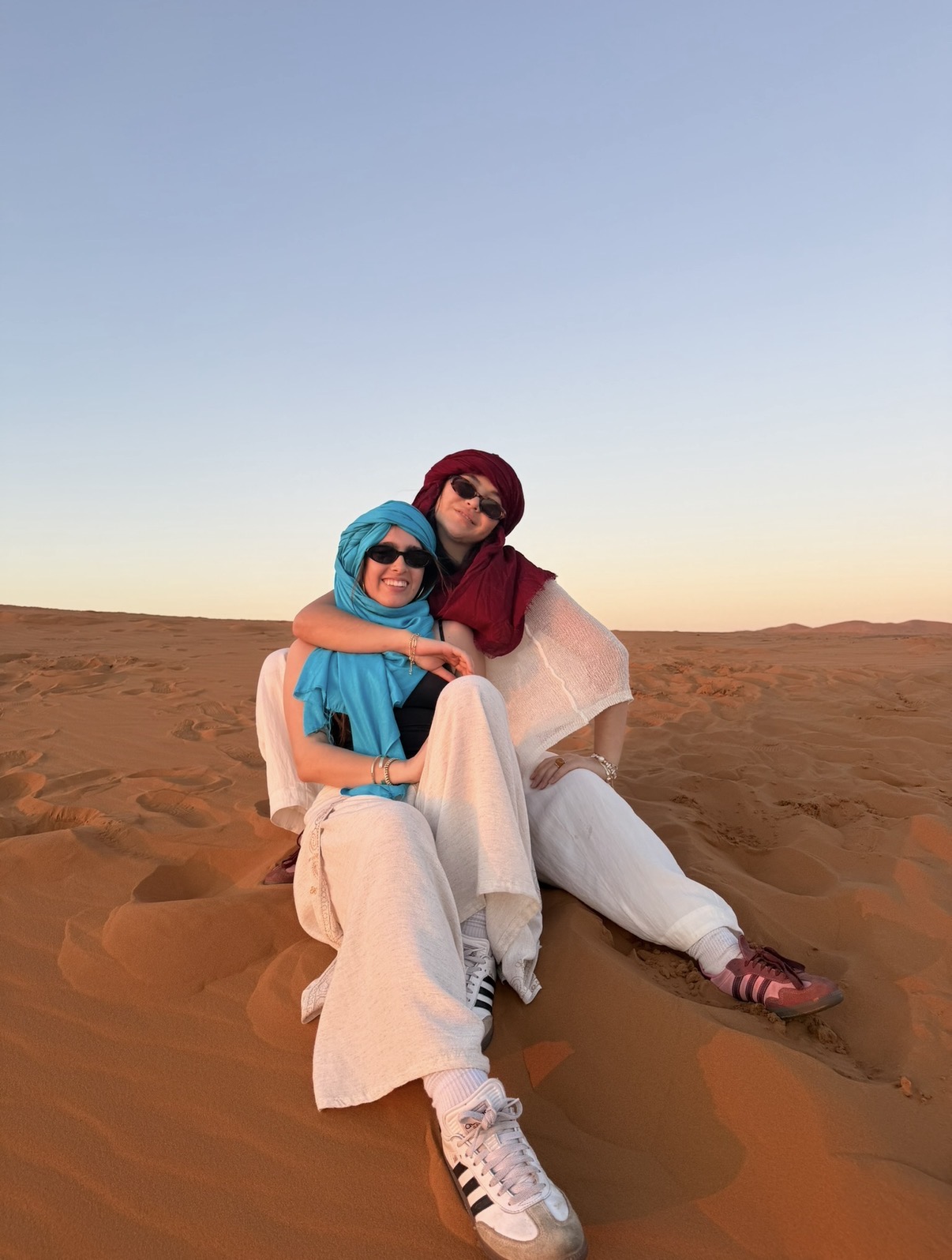
Delaney and I on a sand dune in the Sahara. Erg Chebbi, Morocco.
Vendela, Kendee, Me, Rachel, and Adele. Perugia, Italy.
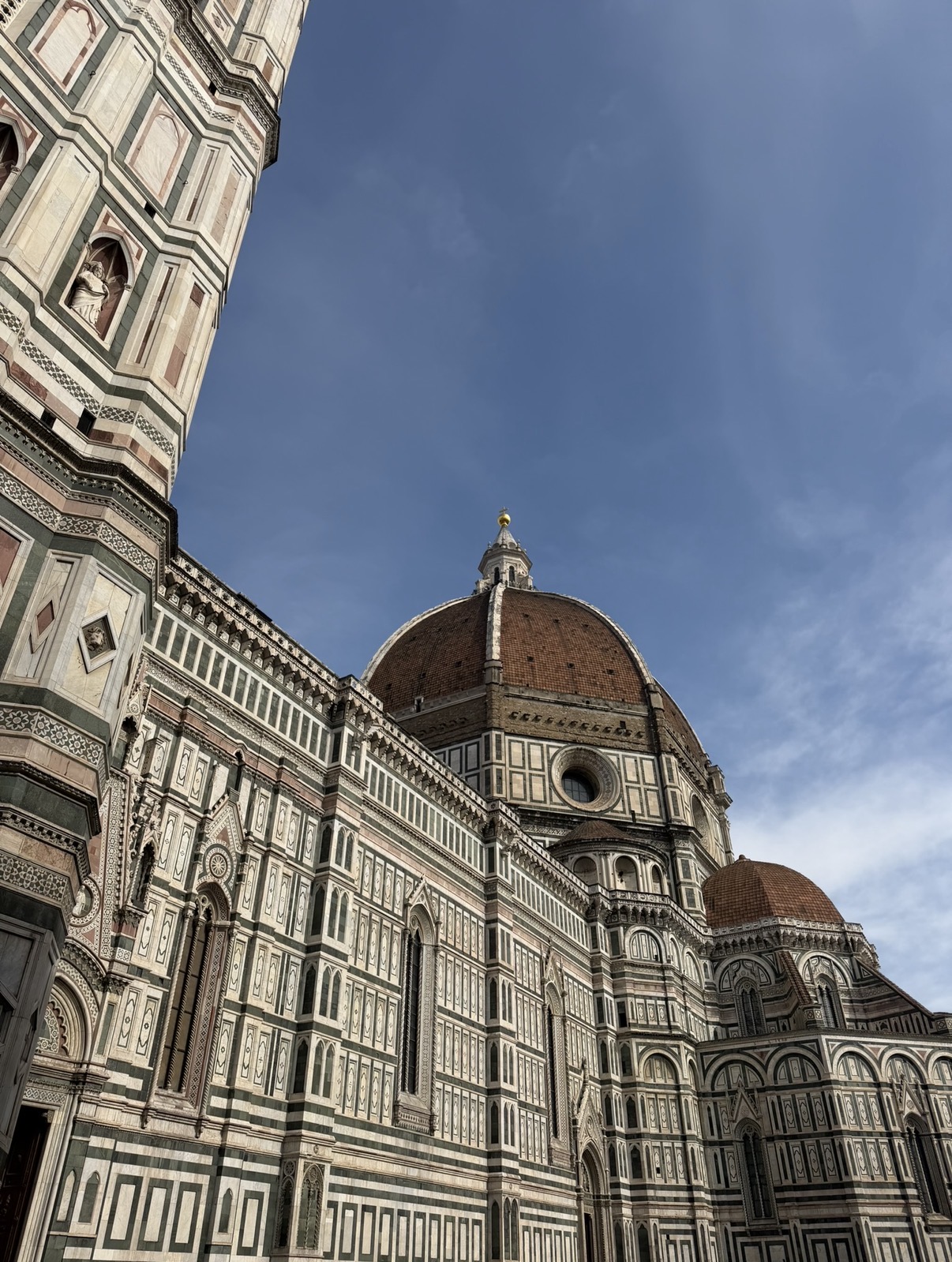
Last but not least, the most iconic building in Florence, The Cathedral of Santa Maria del Fiore aka The Duomo.

Giving Kids a Voice

My name is Rachel Ottman, and I am a third-year student majoring in psychology and political science and minoring in English and international development studies. Along with my studies, I am a speech and debate coach for one of the local high schools in Missoula, with an emphasis on teaching political and current-events speaking. 

When I signed up for the Franke Global Leadership Initiative, I knew immediately that I wanted to prioritize the Culture and Politics Global Theme; it tied closely to my majors and was a centerpiece for many of my personal interests. So, when I had the tangible opportunity to intermix my Global Theme with my academic interests and career into my Beyond the Classroom Experience, I hit the ground running to plan out my excursion. After months of organizing, I went on a 2-week trip to Virginia to explore the relationship between adolescent access to civic education and how it can spearhead their involvement in social movements. 

During the first week of my trip, I chaperoned my students at the National Speech and Debate Association’s 101st annual tournament in Richmond, VA. At this tournament, my school brought five students who competed in four different events, ranging from performances of poetry to ethical debates on the morality of governmental policies. Along with coaching my own students, I also judged over a dozen rounds of debate and was selected for the judging panel in the final round of the tournament. 

For the second week of my experience, I stayed in Arlington, VA, and I commuted daily to Washington, DC, to explore a variety of different museums focused on historical movements to gain insight into the interactions that children and adolescents had with these events. Notably, I had the opportunity to visit the National Museum of African American History and Culture, the National Museum of the American Indian, and the National Holocaust Museum. At these museums, I learned about the historic involvement of children in wars, the impact of adolescents in crucial movements like the Civil Rights Movement, public advocacy of teenagers in response to the Holocaust, and a variety of other topics. 

In exploring these issues, I was able to relate them closely to the advocacy done by my students. While my students have greater distance from many of the issues they discussed when related to teenagers during historic social movements and conflicts, the solutions they advocate for are much closer than one may think. In analyzing the topics of their speeches, my students spoke out about the dangers faced by LGBTQ+ youth, the undermining of civil liberties in the United States, and the growing intensity of international conflicts towards minority groups. My students feel passionate about these issues and actively seek out the knowledge to inform older generations. These teenagers care about the world they live in, and they respond in a way that is familiar to them. They speak out. 

The Beyond the Classroom Experience allowed me to explore Culture and Politics in a wider context, encouraging me to understand that, while the environment we live in has changed, the reaction to it has not. Young people continue to be passionate about the issues they and many others face, and they express that passion by speaking out and advocating for themselves. They just need the understanding that outreach is an option, and they need the skills to do so. As a result, there is an institutional obligation to teach young people about civic engagement and their rights to give them the skills needed to be successful in our ever-changing world. 

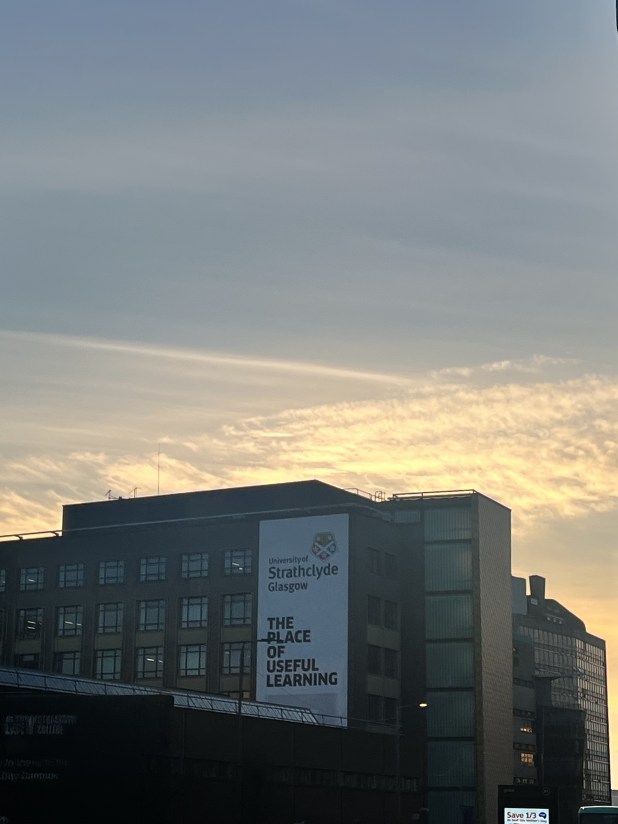
In the Place of Useful Learning

My name is Maggie Nugent, and from the 9th of January to the 7th of June, I was incredibly lucky to call Glasgow, Scotland, my home. Glasgow is on the west coast of Scotland, just a fifty-minute train ride away from Edinburgh (which I visited frequently). Glasgow is considered by some to be the second city of the British Empire, and it certainly does seem that way with all of the Gothic Revival architecture present throughout the city.

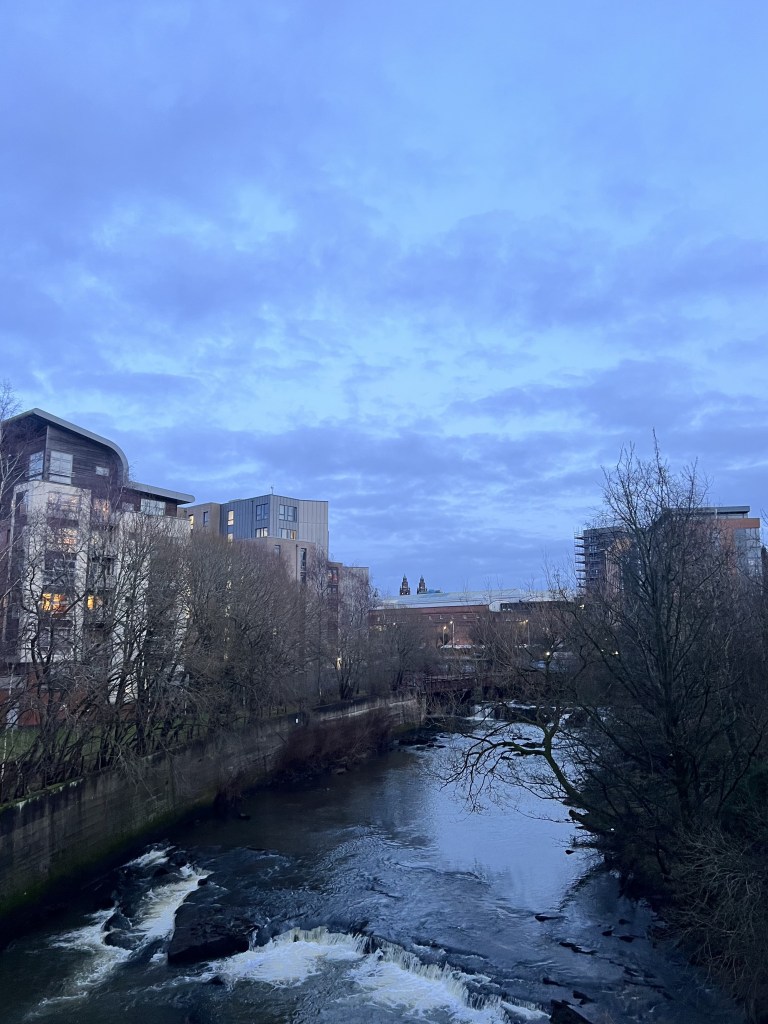
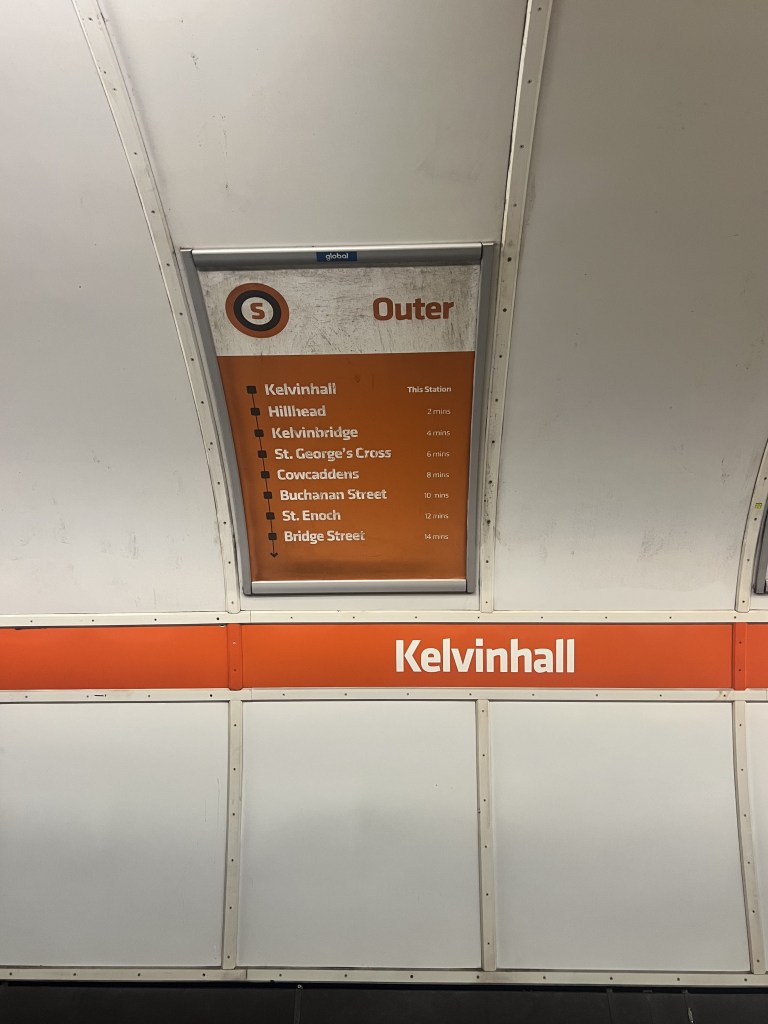
I lived in the neighborhood of Yorkhill. It’s right between the rivers Kelvin and Clyde and is just a ten-minute walk away from Glasgow’s most prominent university: The University of Glasgow. I studied at the University of Strathclyde in what is called Glasgow’s City Centre, which I went to every day through Glasgow’s amazing loop of a subway system.

Even before beginning to plan my study abroad experience in the spring and summer of last year, I knew that I wanted to live within a Celtic culture. I’m a third-generation Irish-American, and my Global Theme is Culture and Politics, so I wanted my study abroad to reflect the cultural connections I already had while also introducing me to the ways that the cultures are expressed within their countries of origin. When I was younger, and when I would imagine myself studying abroad, I always imagined studying in Ireland. But thanks to the constant pleading from my very best friends who just so happened to live in Glasgow, I applied to study in Scotland at the University of Strathclyde.

Coined by natural philosopher John Anderson in the 1790s, Strathclyde is known as “The Place of Useful Learning,” which I can tell you without a doubt was the kind of learning I had while studying there. I studied history at the University of Strathclyde, and my classes included classes on War and Society, British Colonialism, and a general crash course on British history in the modern era (which is something I most certainly needed). During my time at Strathclyde, I wrote a lot of academic papers regarding pieces of history that I would’ve never known about if it hadn’t been for the classes I took (if you ever want to learn about the different ways in which enslaved Jamaicans engaged in acts of resistance, I’m your man!)

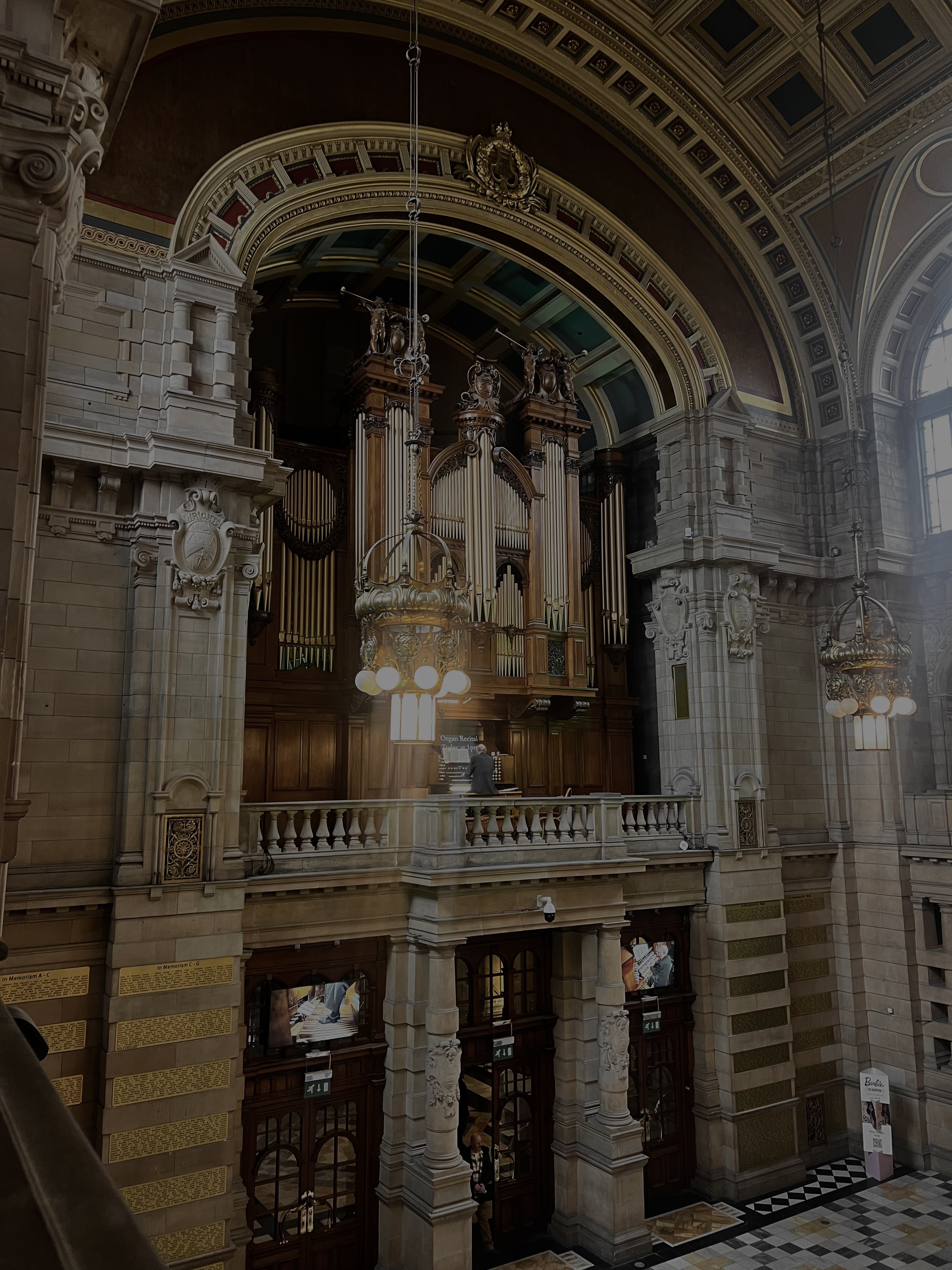
One of my favourite assignments that I had to do at the University of Strathclyde was for my British Colonialism class, in which I had to go to the Kelvingrove Museum and present on an object currently on exhibit. The museum is one of the most beautiful museums I have ever been to, and I was lucky enough to be inside the museum during one of their daily organ recitals. To hear beautiful music coming from an organ as I walked past Rembrandts, Van Goghs, and Dalis was an experience I won’t soon forget.

I would consider my study abroad experience to be incredibly out of the ordinary. Rather than living with other international students in university housing, I lived with friends. I never experienced the emotions presented in the graph of Professor Udo Fluck. And probably most importantly, I never felt homesick. Because Glasgow felt like home.

It still does.

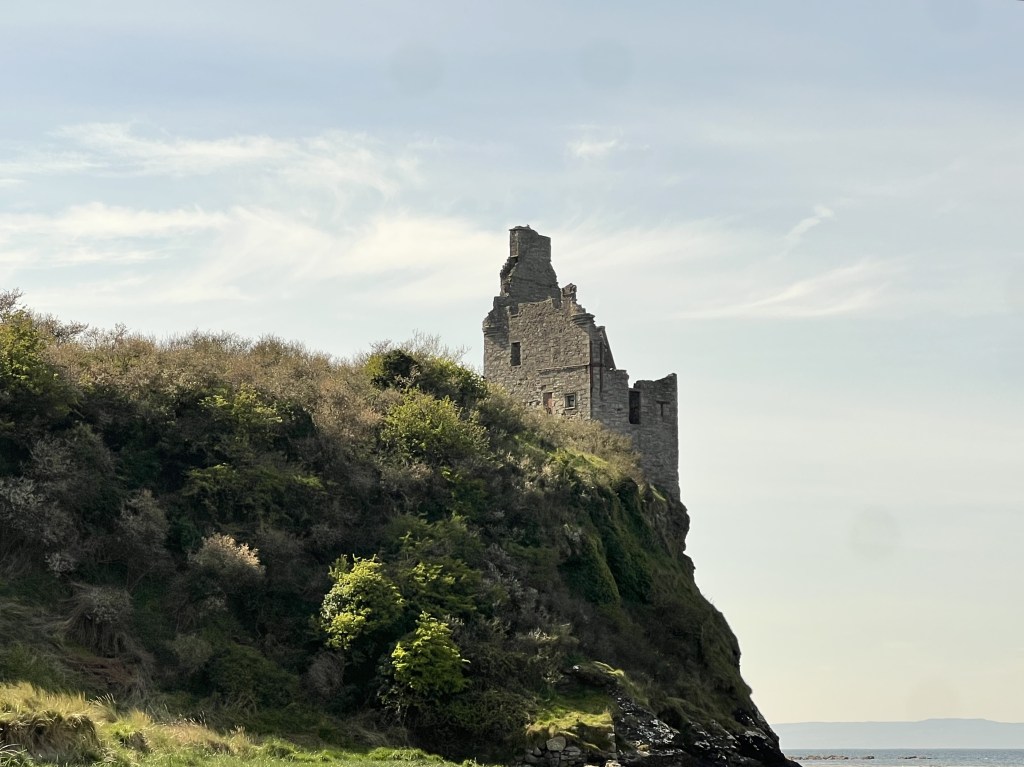
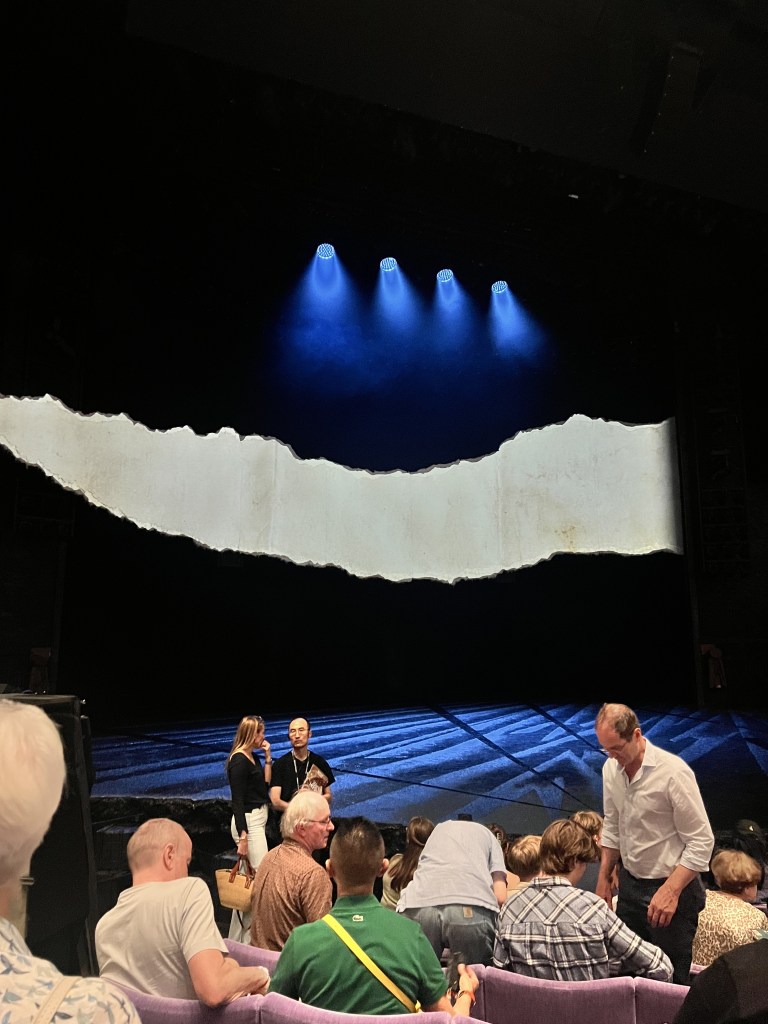
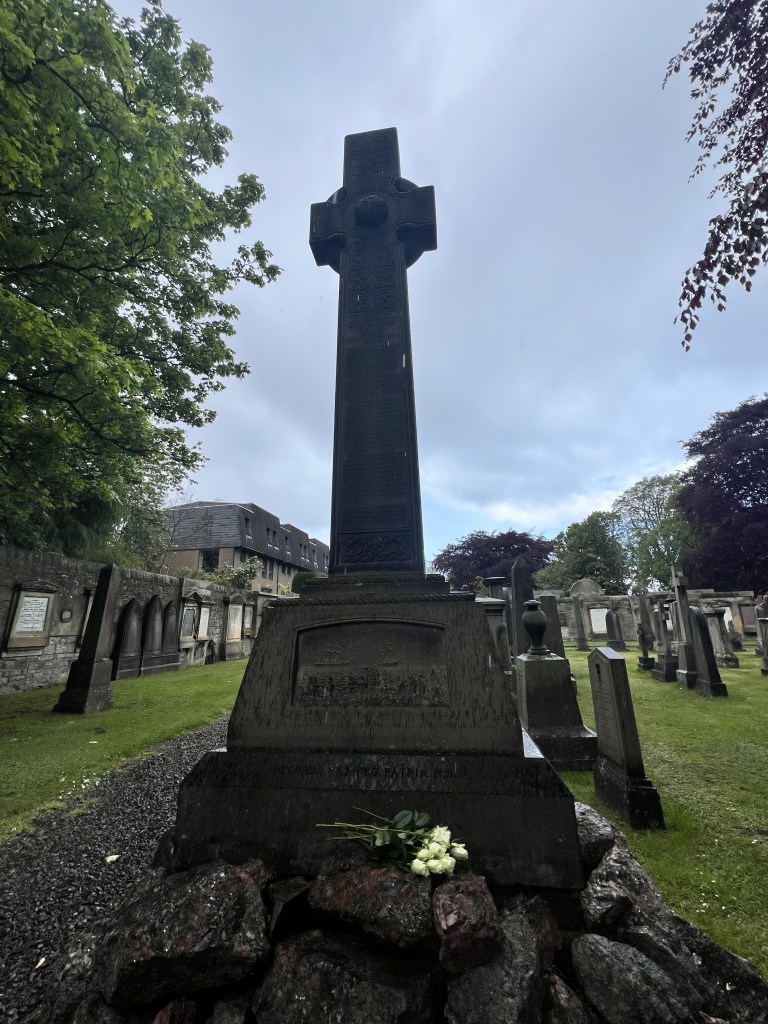
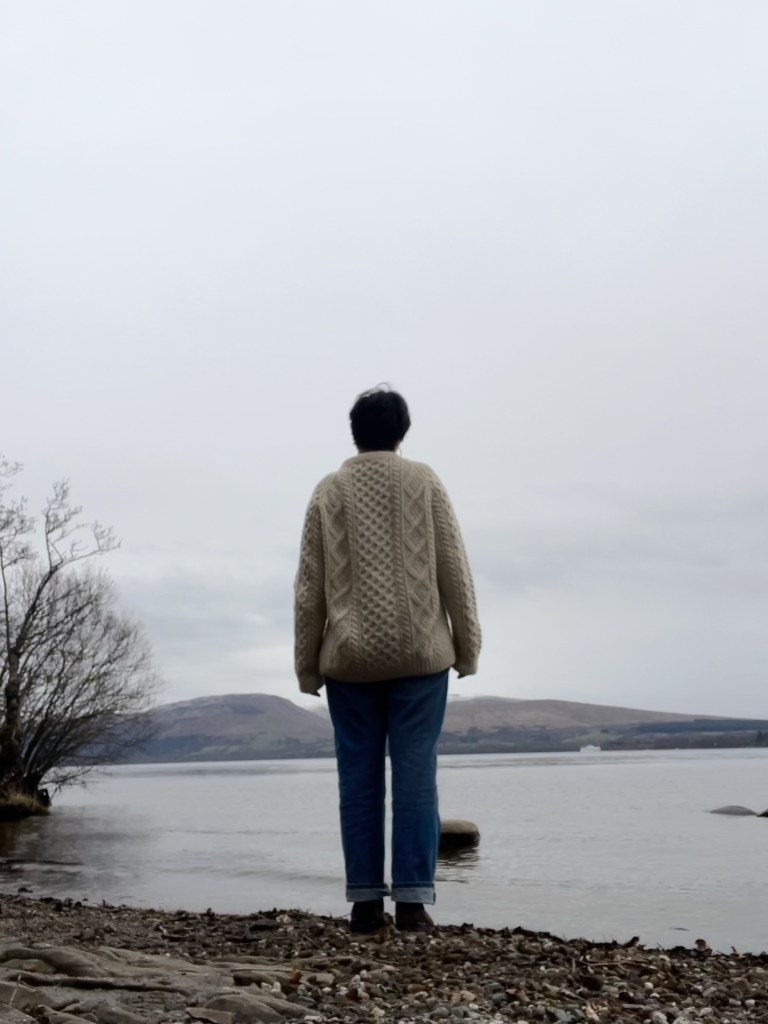
Classes at the University of Strathclyde ended in early April, and my exams didn’t begin until the 10th of May, so I had a LOT of time to explore Scotland and the rest of the United Kingdom! I went down to Manchester to see a play with a friend. I hiked along a beach to see a crumbling castle on a cliff. I traveled to London and saw War Horse at the National Theatre. I took the train to Edinburgh whenever I could, including to Dean Cemetery to lay flowers down at the grave of a polar explorer. But my favourite thing I ever did was making it to a place I’ve had on my bucket list for ages: Loch Lomond.

To quote a traditional Scottish folk song: “There is an old Celtic belief that when a man dies in a foreign land his spirit returns via the low road. In 1745, two Scottish soldiers were made captive in Carlisle; one of whom was to be set free, the other executed. It is the condemned man who’ll return to Scotland by way of the low road of death and reach Loch Lomond before his friend who must travel the earthly high road.”

Hiking around Loch Lomond gave me a lot of time to reflect on how I had made it to Scotland. In the six months I lived in Glasgow, there was never a moment when I was not in awe of my city. It’s that love and appreciation that I’ll hold in my heart until I am back in that Dear Green Place.

An Internship in Chilean Patagonia

My name is Zariah Zosel and this past year I skipped my seasonal allergies by avoiding the spring altogether and going to the southern hemisphere. From the end of February to the beginning of June, I lived on the island of Chiloé doing an internship with a branch of the Chilean forest service, INFOR (Instituto Forestal).

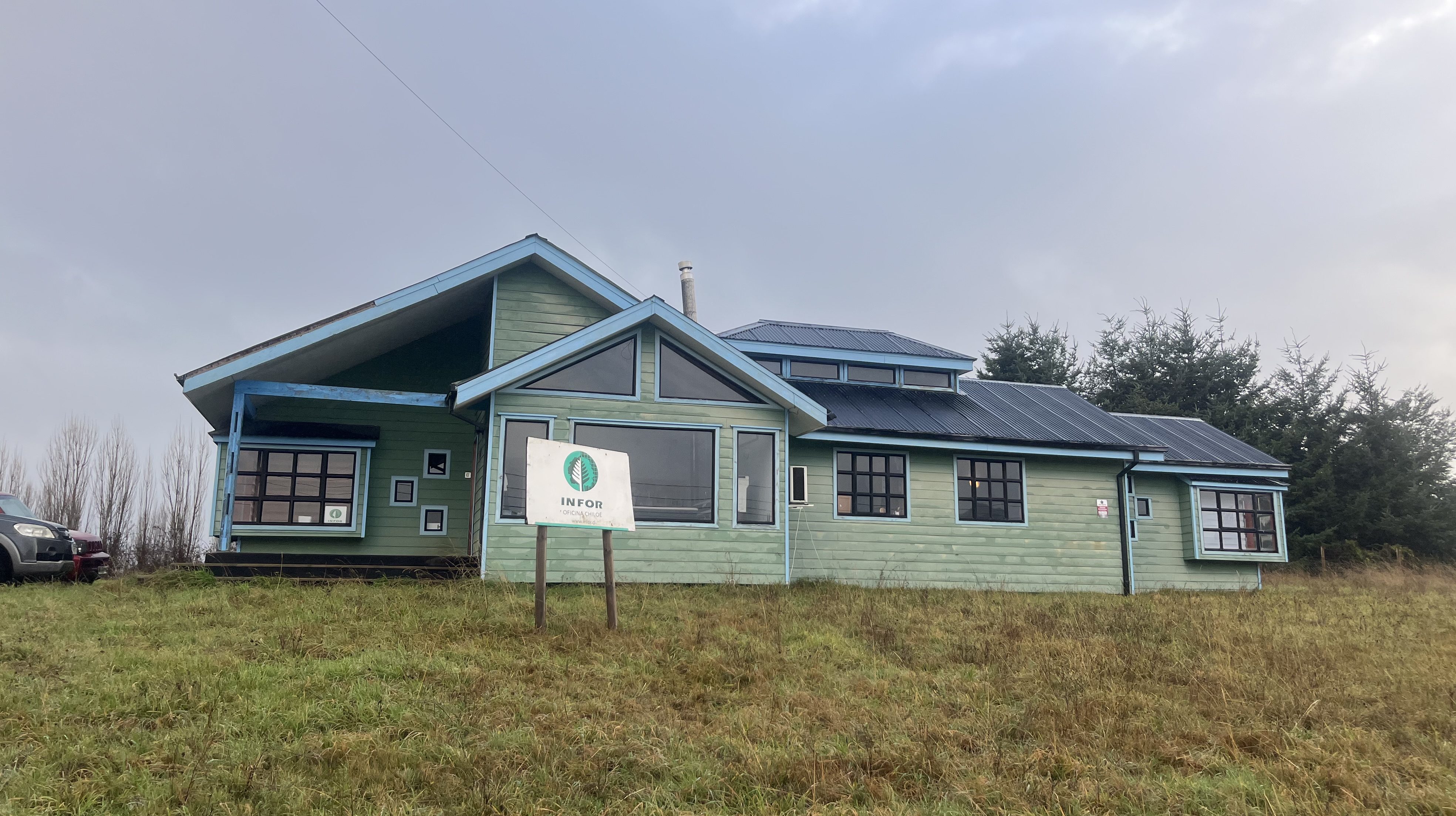
INFOR Office on the island of Chiloé: “The laboratory of island forests”

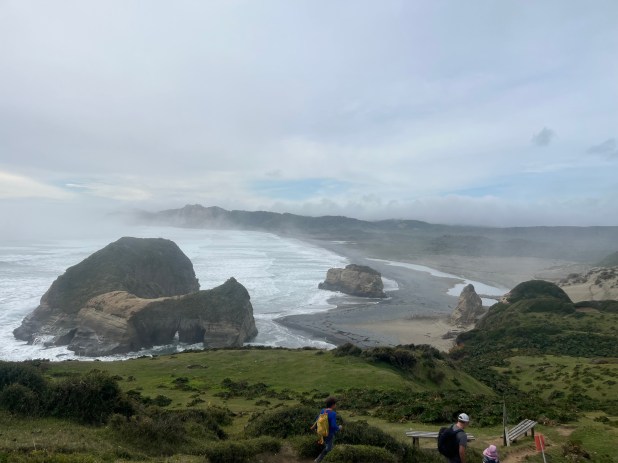
One may hear Southern Hemisphere and islands and expect a tropical climate, however, for Chiloé, this image is very inaccurate. The island of Chiloé is the largest island in the Chiloé archipelago just off the coast of Chile’s mainland Patagonian mountains. Due to its latitude, coastal breeze and inland mountains, the Chiloé archipelago is home to a temperate rainforest, a biome akin to that of Washington State’s Olympic National Park. As such, the ecology of the islands’ forest across the archipelago are unique and host a plethora of endemic and rare species of flora and fauna.

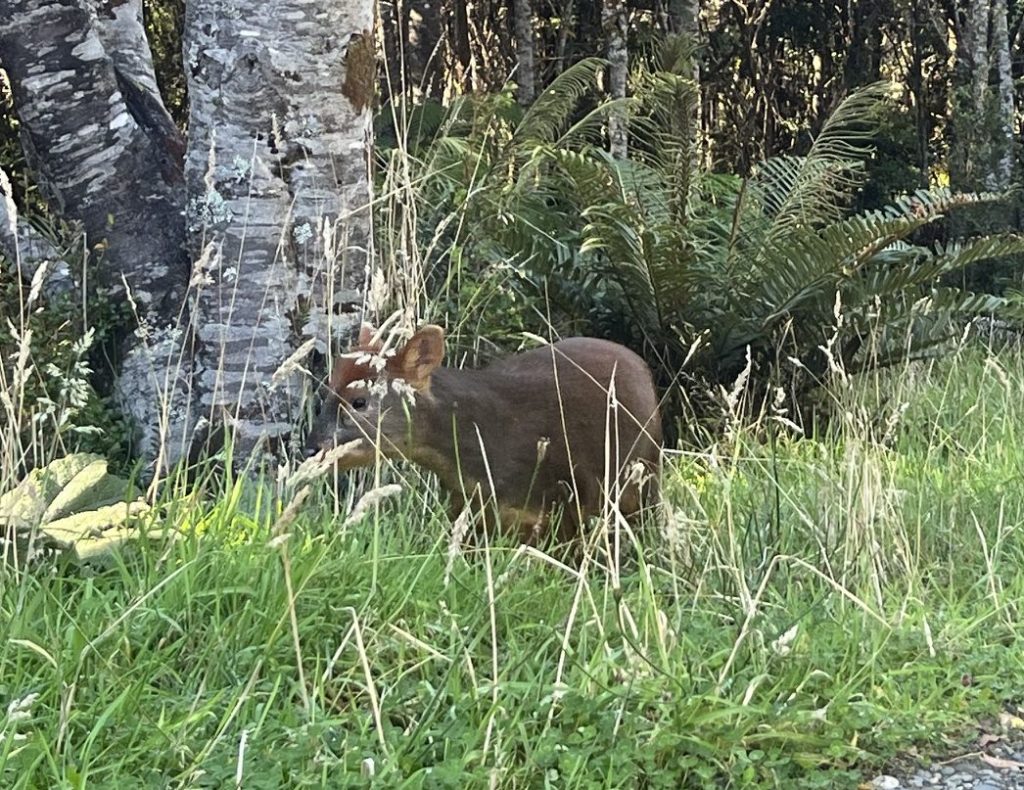
Picture of a Pudu (one of the world’s smallest deer species)
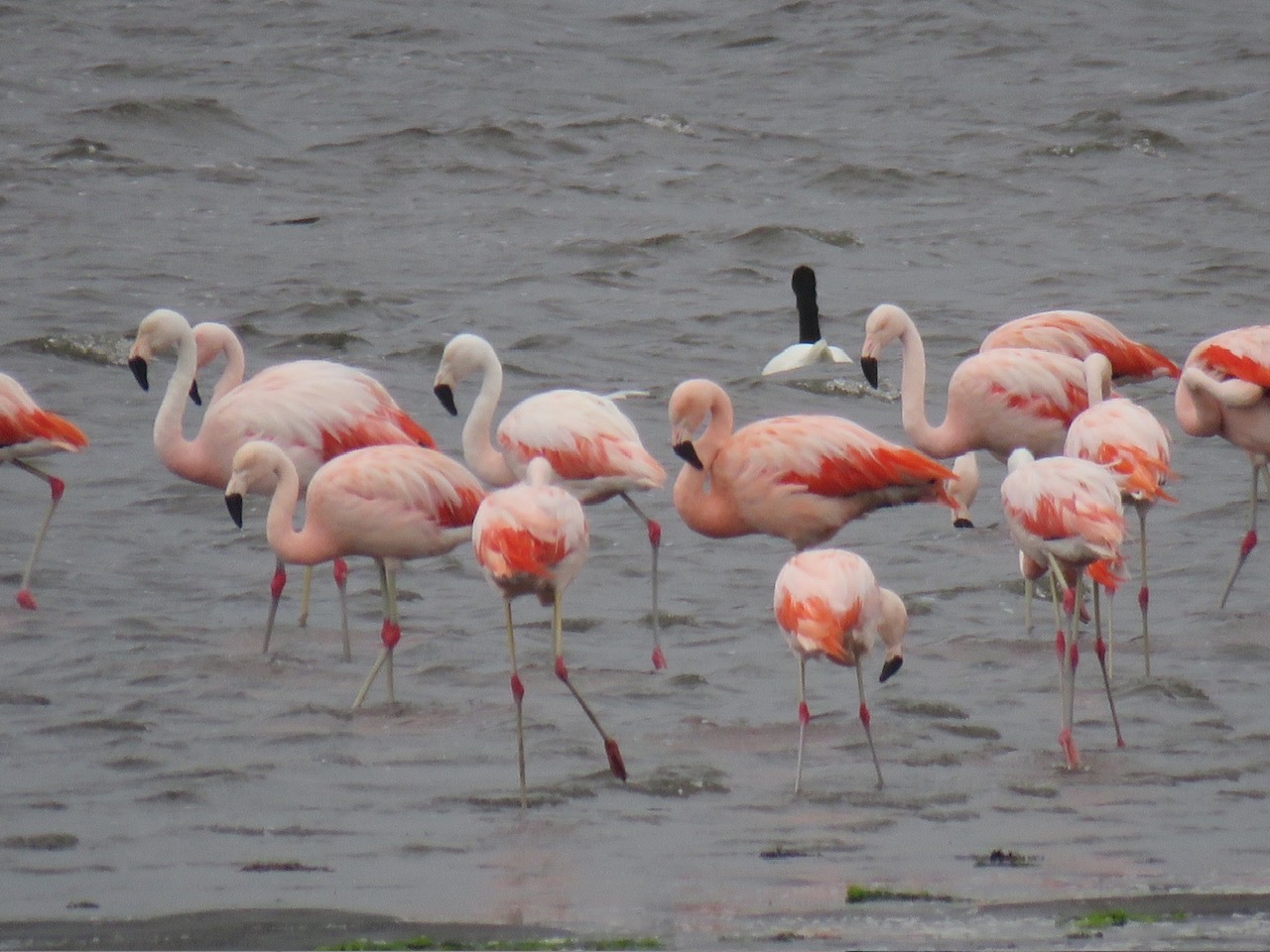
Picture of Chilean Flamingos
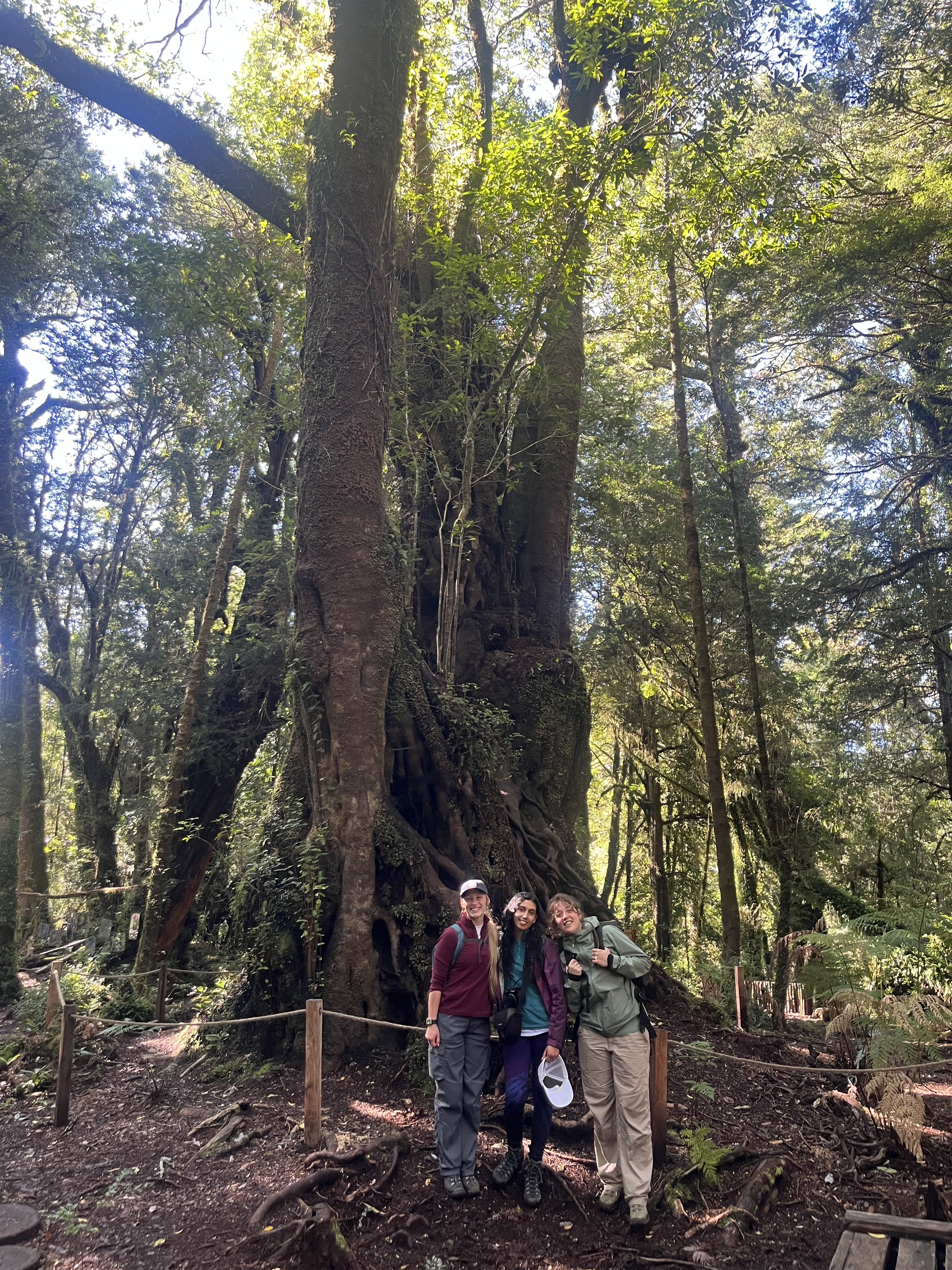
Picture of an old-growth Coigue Tree

Despite initial anxieties about all the unknowns of living and interning in a different country and language, the experience exceeded any expectations by leaps and bounds. My time at INFOR was filled with learning, friendship, and an immersion in the culture that left me as though I had gained a new home in Chiloé.

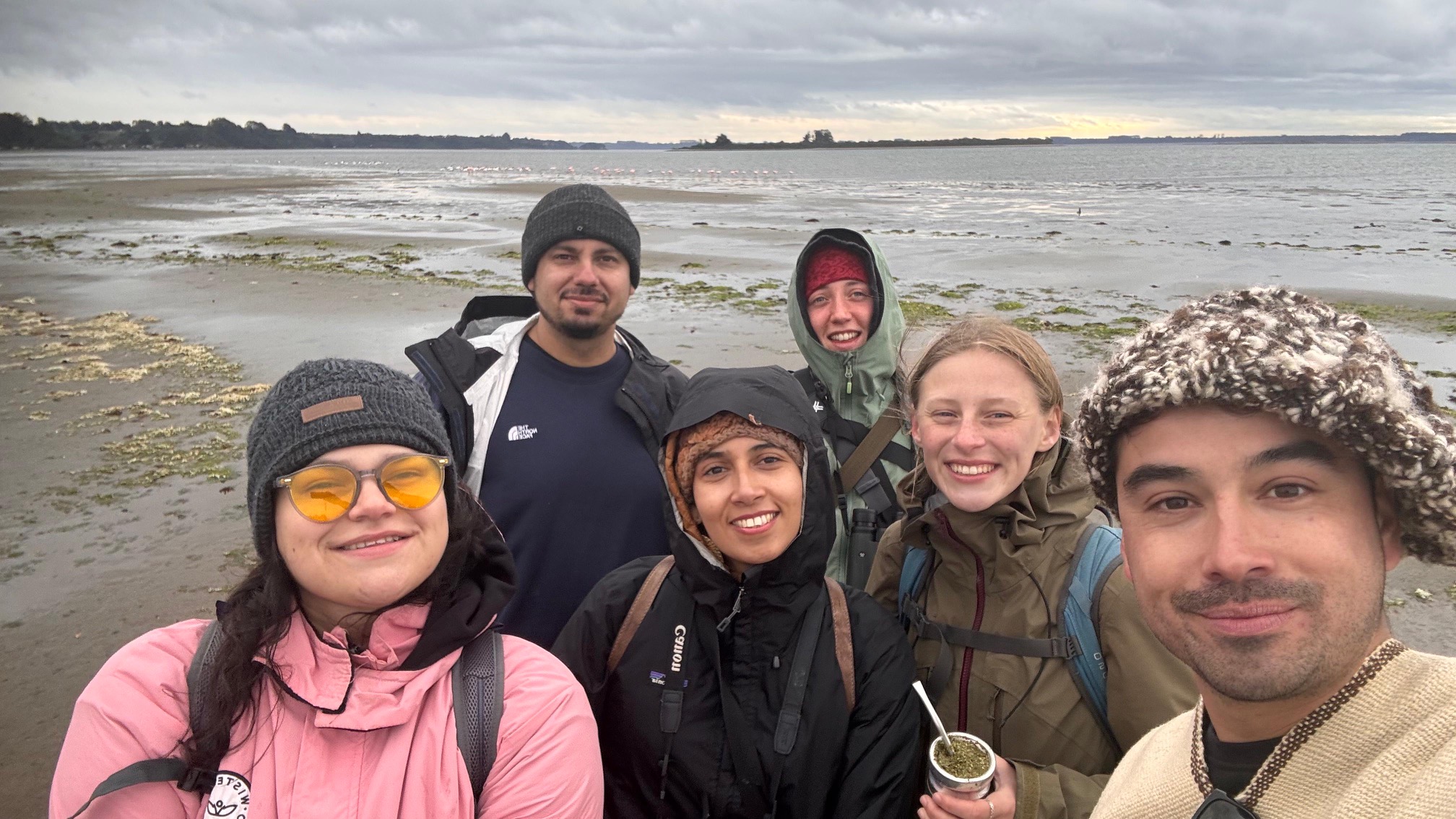
Lab interns and friends see flamingos

My global theme is resources and sustainability, and my global challenge is how different countries and cultures approach the science and practice of forest ecological restoration. My perspective on my global theme and challenge have shifted as during my internship I grew a greater appreciation for the importance of community knowledge and education when it comes to issues of sustainability and forest ecological restoration.

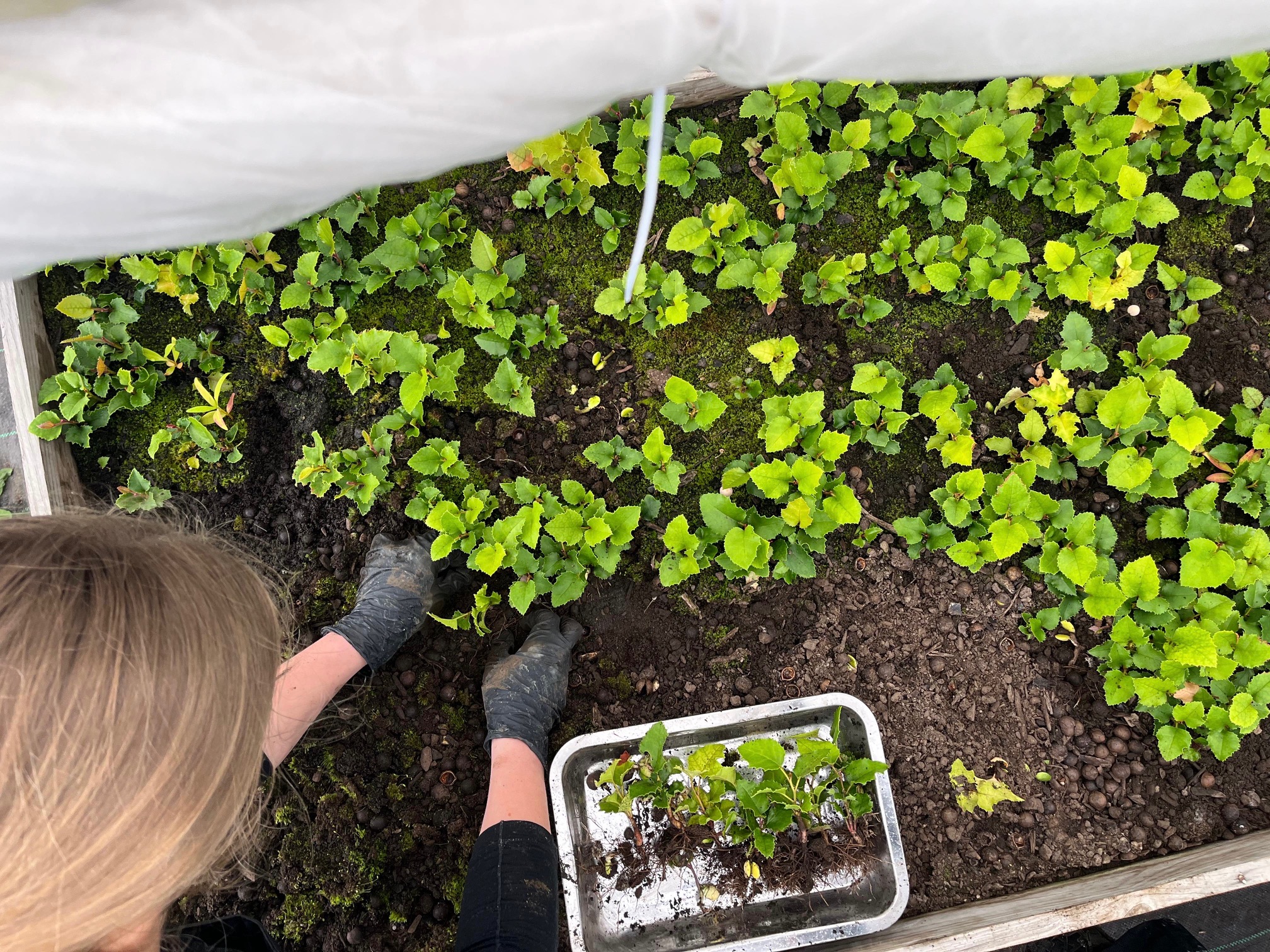
Sapling collection from the nursery
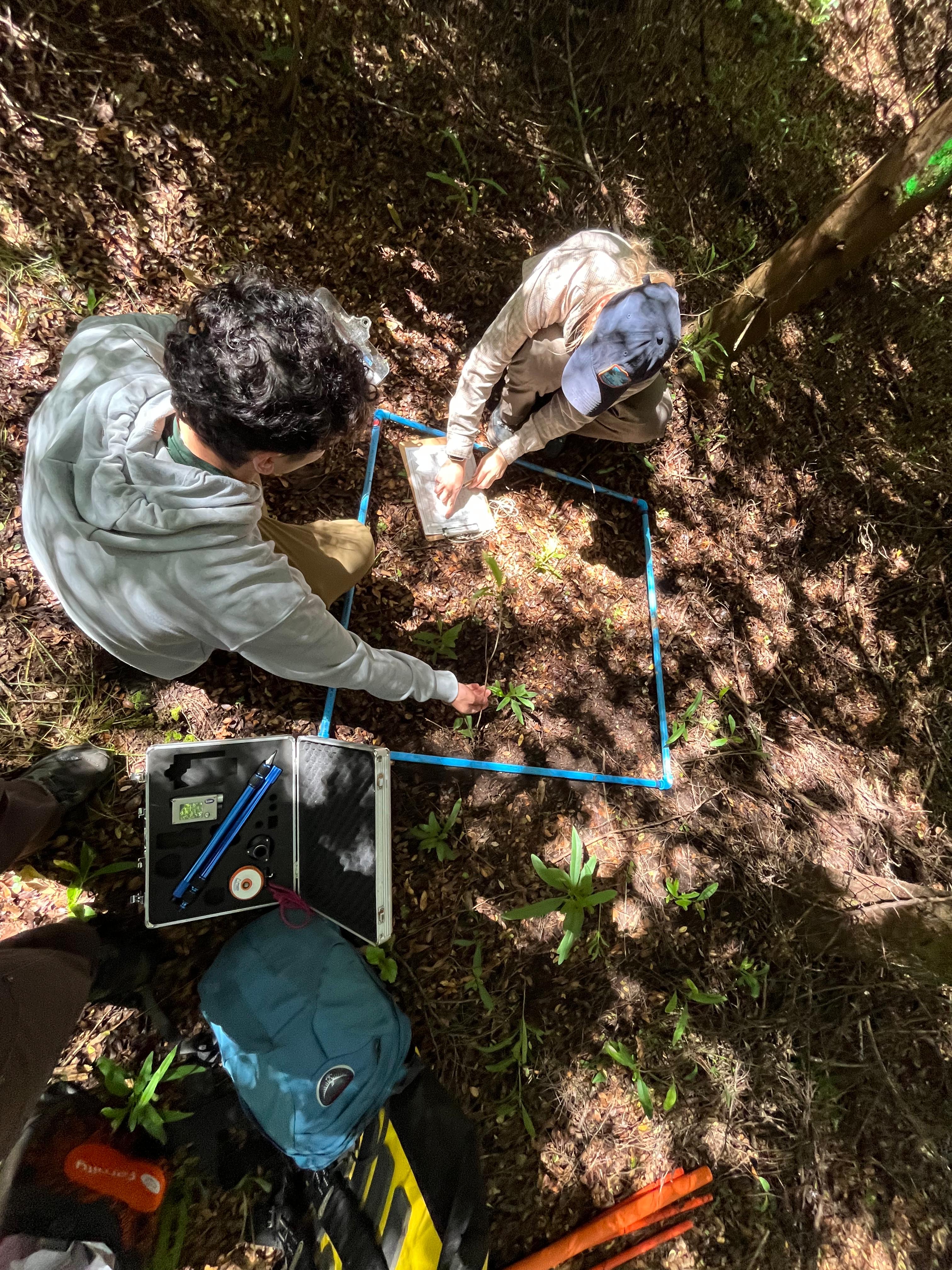
Regeneration plot sampling in the field
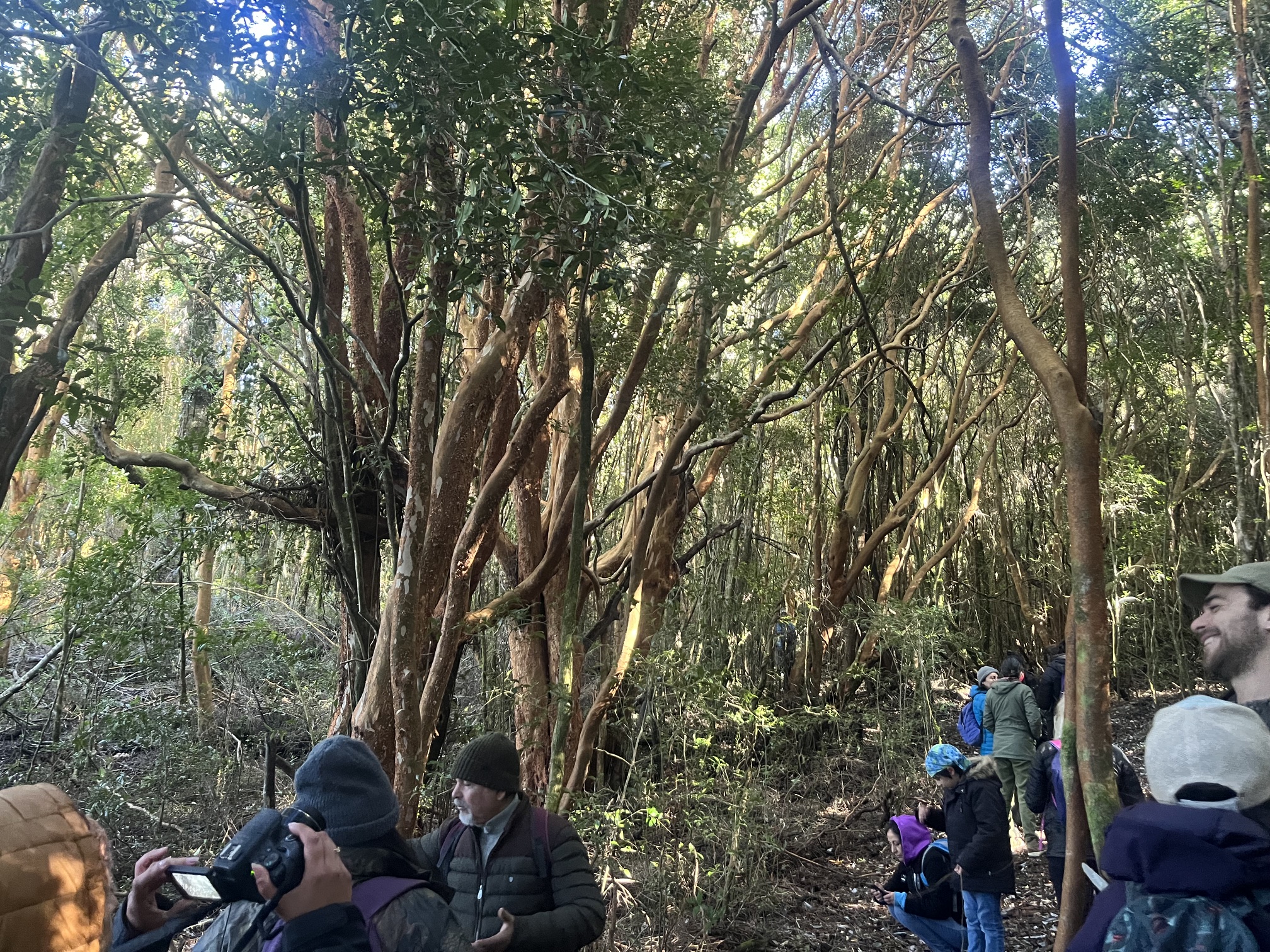
Community tour of the restoration work done in the local forests

Throughout the internship, I had the opportunity to assist with several different projects and tasks. These included a project called the FONDECYT Regular (Evidence-Based Restoration of Fire-Disturbed Temperate Forest Ecosystems of Chile); an experiment of differing thinning treatments done on native and endemic species; and the production of and care for seedlings and saplings. The diversity in tasks and projects helped to provide a unique experience that introduced me to many aspects of forest restoration work.

Because of my experience in Chile, I better understand the ways that different places and cultures interact with ecological integrity and restoration. On the island of Chiloé the main industries are fishing, agriculture and forest timber harvesting. Due to the climate in the region the island of Chiloé offers perfect conditions for the cultivation of many invasive and non-native species, of fish, tree, and livestock (examples of these include salmon, eucalyptus, and sheep). These industries are greatly affected by and connected to these invasive species due to their ability to thrive on the island. As such, the education of the local communities on how they can incorporate native alternatives into their industries is vital for gaining support for restoration efforts. One such project I was able to be a part of led to my writing of a report for the island’s community. The report took a scientific government report on ecological restoration works on the island and created a community-level report that was more accessible to the average member of the community. This project specifically challenged both my Spanish skills, and my understanding of the ecological restoration work I had been assisting with during my internship.

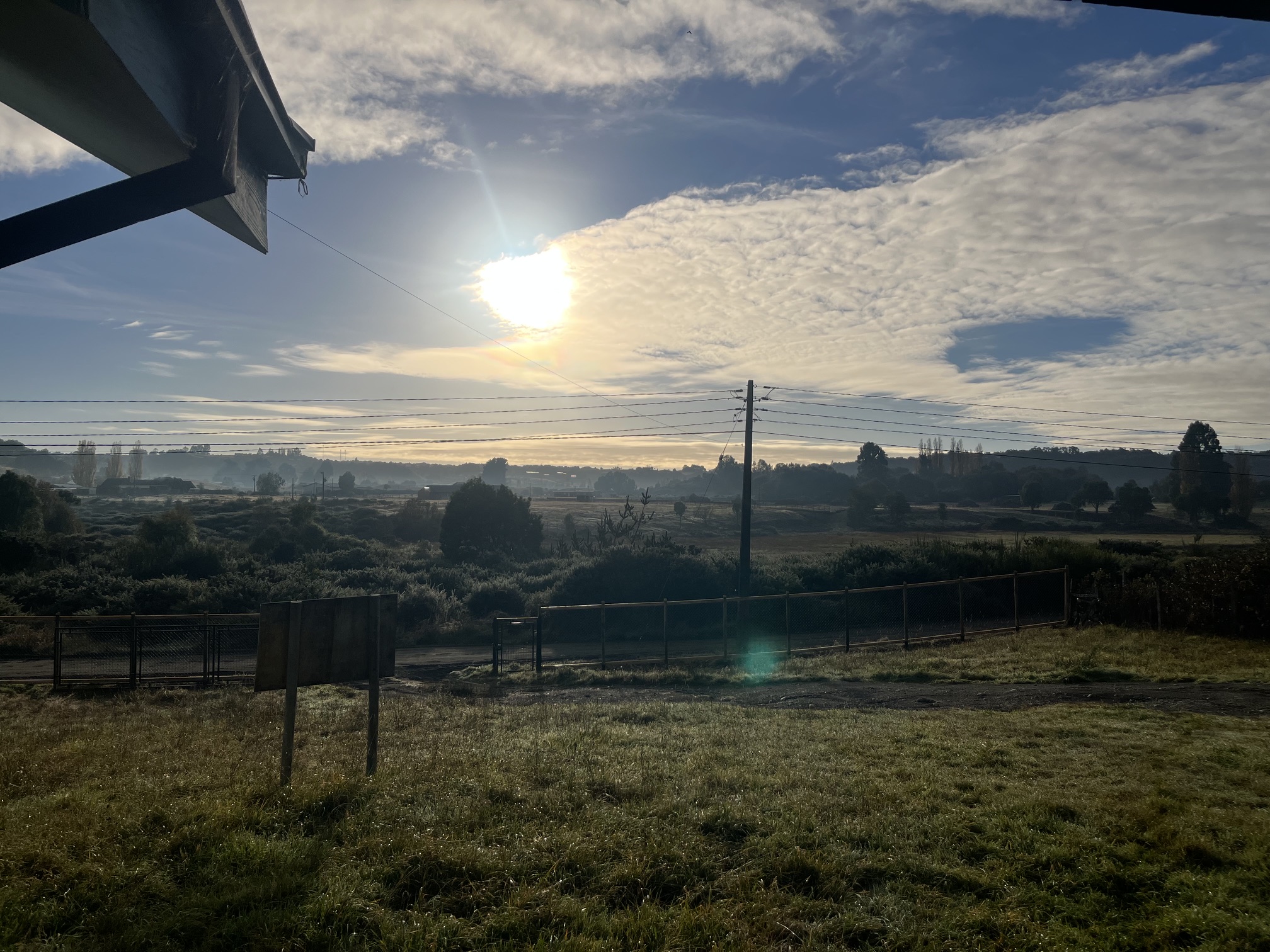
View from outside the INFOR lab

After my internship, and the writing of the community report, I’ve learned a much greater appreciation for the importance of tone when it comes to restoration or any scientific work. To greater effect change in any place, across the globe, a focus on others’ individual experience and values is imperative.

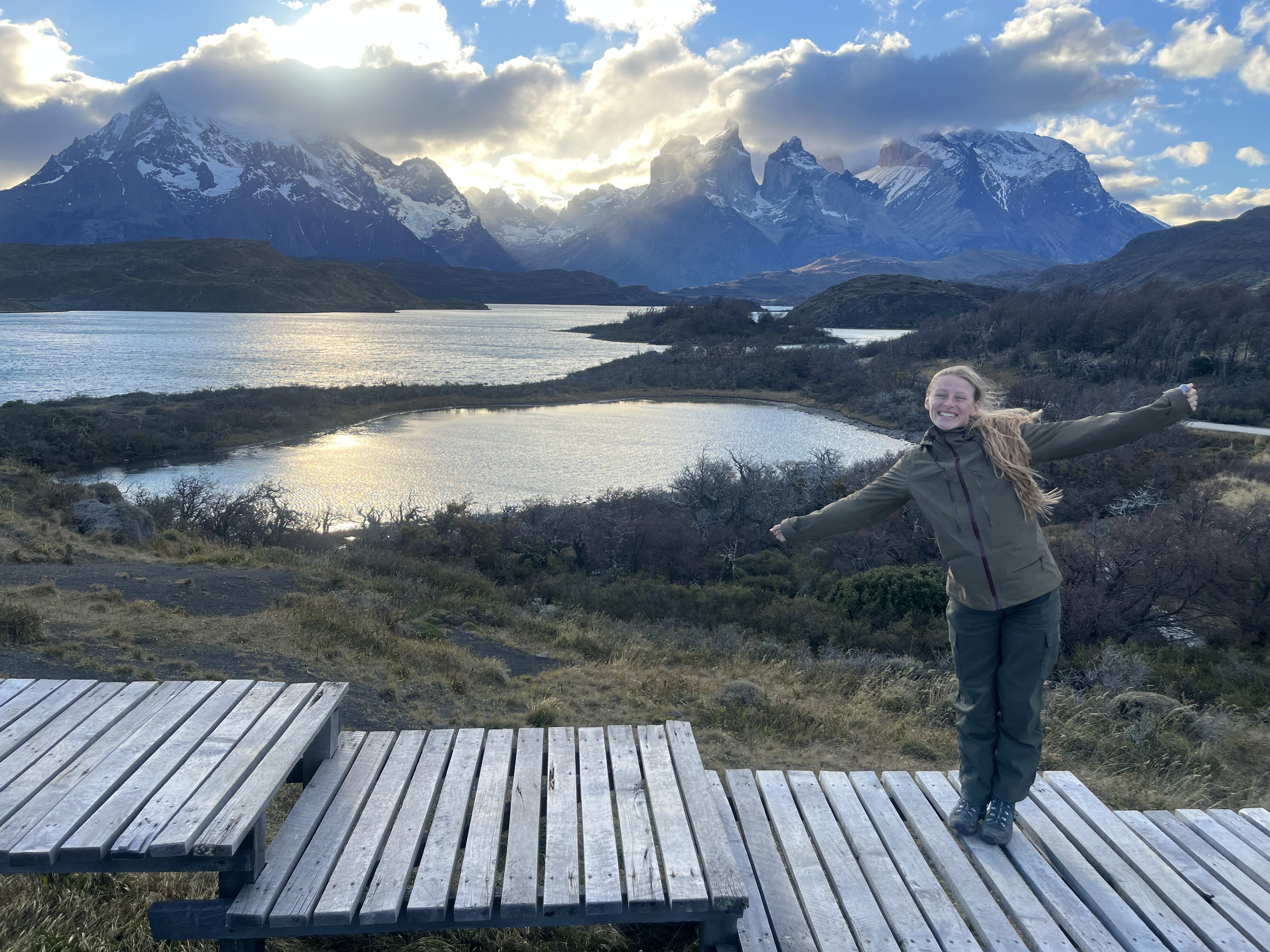
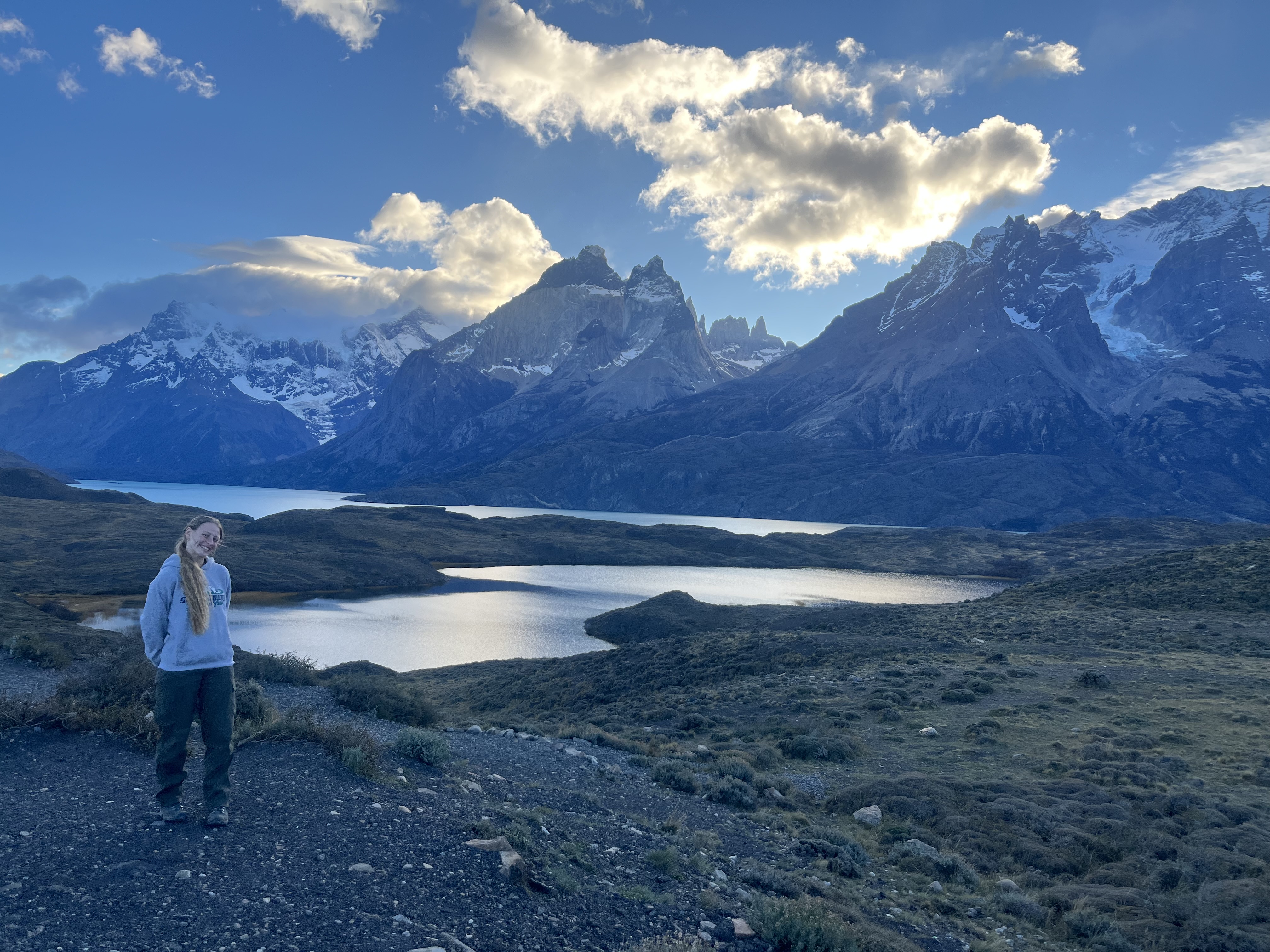
Torres del Paine National Park
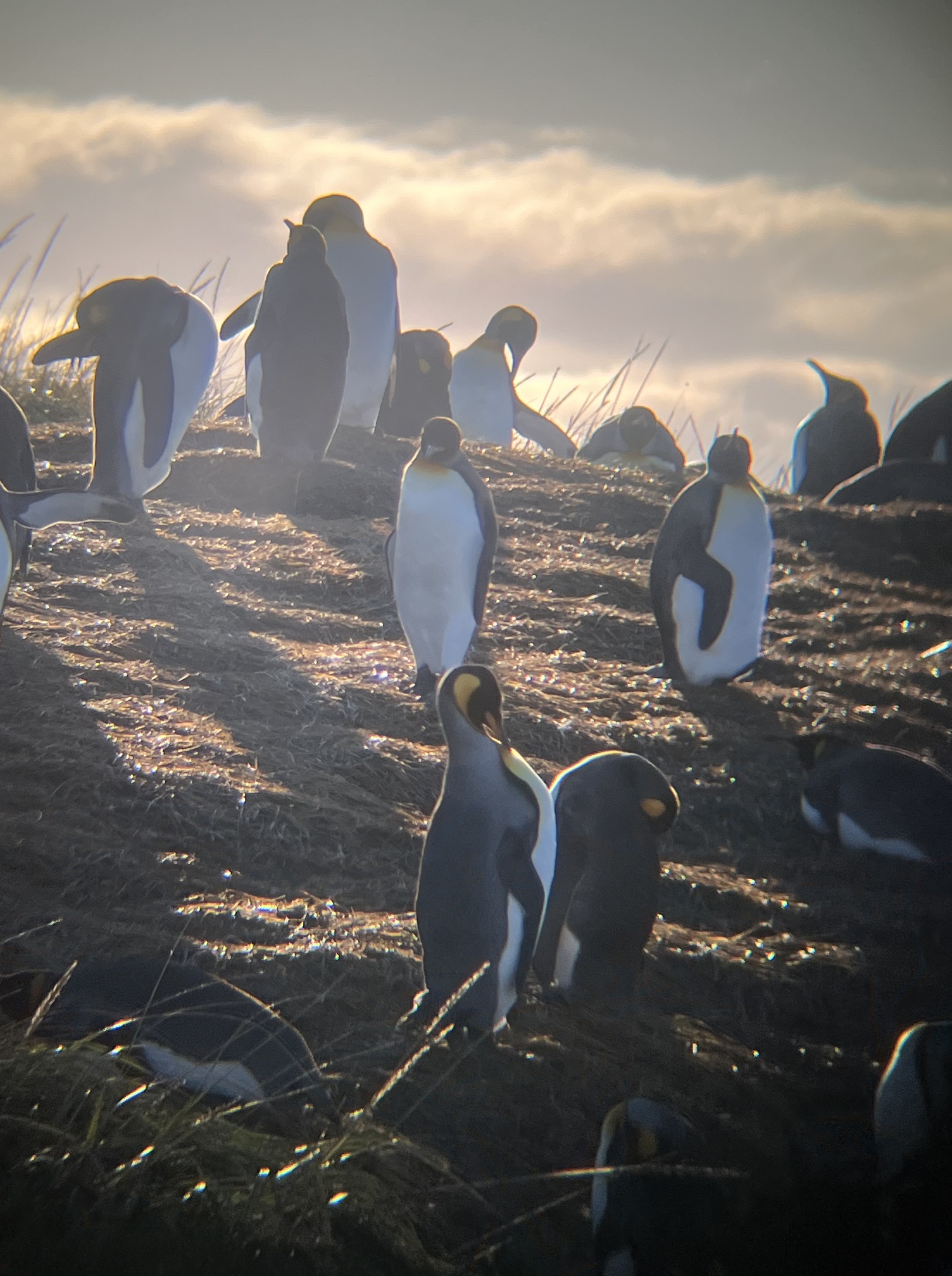
King penguins seen on the island of Tierra del Fuego
Torres del Paine National Park

Creating Change in a Changing Climate

This summer, I participated in a NASA Montana Space Grant Consortium (MSGC) internship with UM’s Zettlemoyer lab. The greater Missoula valley is home to several native cushion plants, including the endemic Missoula Phlox. The Zettlemoyer lab focuses on the ecology of these native cushion plant communities and how climate change may influence their populations. I assisted in their research this past summer and honed in on a specific species, looking at potential drivers for its presence and abundance.

Cushion plants

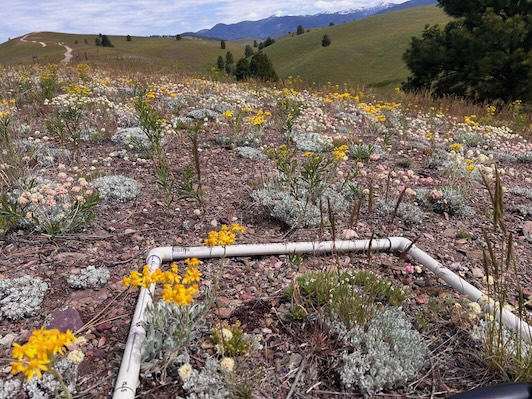
“Cushion plant” refers to a dense, often dome-shaped vegetative growth form. Cushion plants are typically found in alpine habitats, but several lower-elevation populations exist around Missoula. Because they are able to persist in very harsh conditions, they are considered “nurse plants” that provide microhabitat services for less robust species.

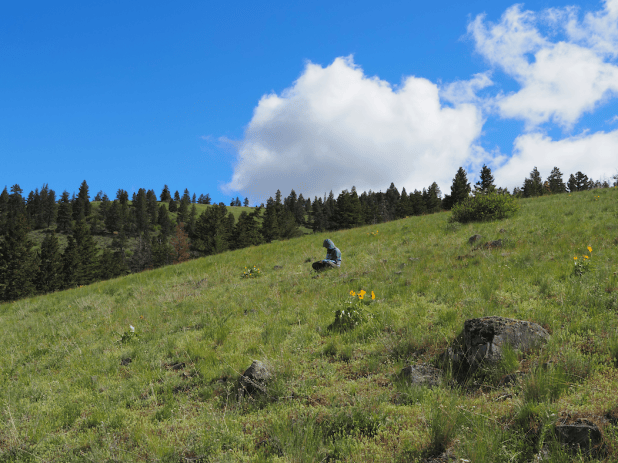
One of my field sites at Waterworks Hill. This quadrat had almost every one of our species of concerns, including my species of interest (Eriogonum ovalifolum)!

Before I started this experience, I was anticipating a summer full of rigorous field work and data interpretation. While I did get my fill of 16 hour field days and meticulous data organization, I was surprised by how rewarding the experience was in terms of global impact. During this experience, I completed a scientific paper in which potential drivers and risk factors for populations of a specific cushion plant species were discovered. Our results highlighted what aspects of shifting climate zones pose the greatest risk to alpine cushion plant communities (hint: its a lot more complicated than just warming temperatures!). Working with active researchers in the field also provided a lot of insight into the challenges scientists (and specifically conservation scientists) are facing in today’s political climate.

This experience furthered my understanding of my global theme (resources and sustainability) and challenge (how to measure and preserve ecosystem integrity in a changing climate) in several ways. The research I conducted over the course of my internship aimed to understand the key factors that influence Montana native plant survival and success (ranging from changes in UV exposure, soil chemistry, shifting pollinator populations, to physical human disturbance from recreation). The data I collected on the current populations and the analysis conducted to determine their risk factors will help build an essential network of data that can be used to better inform future management and conservation efforts in the Missoula valley. Cushion plants also exist (and are understudied) all around the world, so this work has global reach.

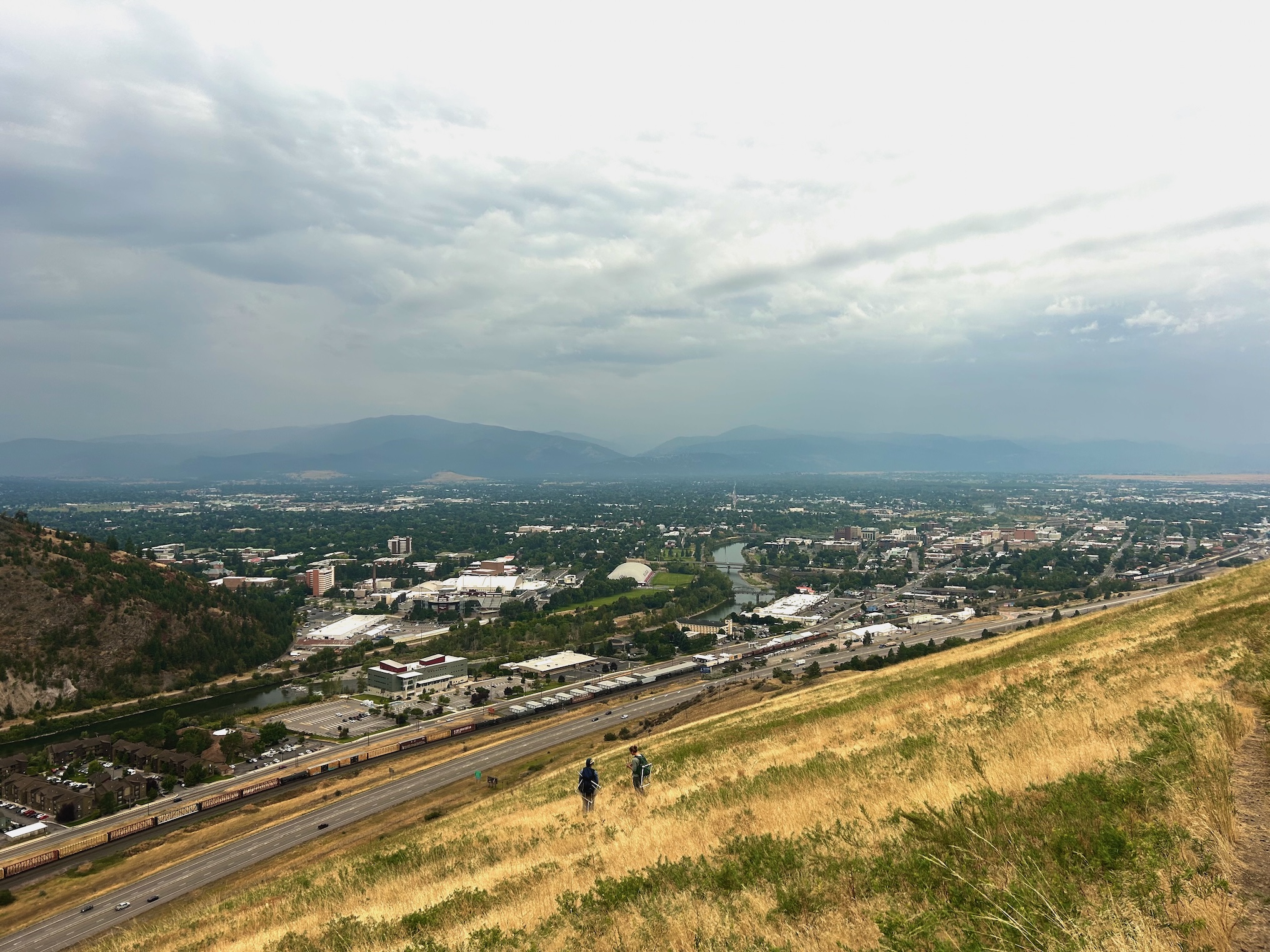
Trudging down Mt Jumbo after a long and arduous
day of soils…

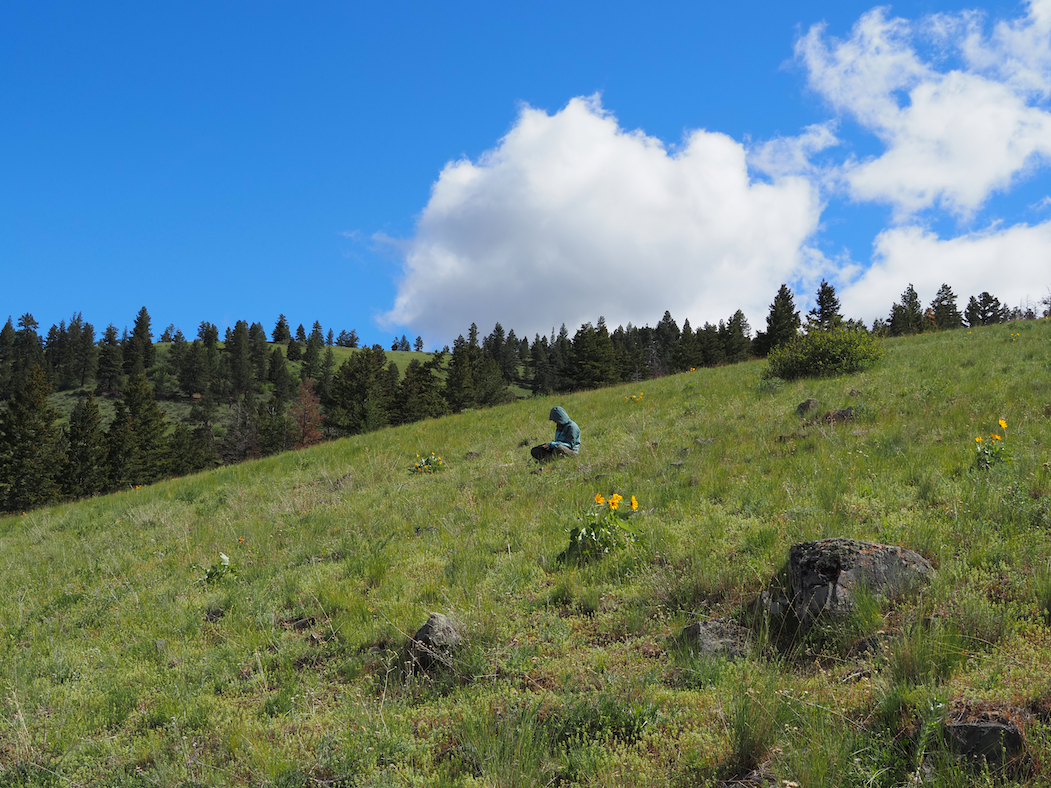
Collecting data at MPG Ranch near Stevensville, MT.

Working in the lab definitely furthered my leadership skills. I was in charge of the final scientific paper produced based on our key findings. I had to set expectations and dates for writing this paper, as well as heading the interpretation of results (and what areas need to be further looked into). The realm of academia was entirely new to me at the start of this experience. Because of this, I didn’t have a clear idea of the kinds of people I would be interacting with. As it turns out, academia is a lot less stuffy and uptight than I thought. Because we were working outdoors, often near public recreation areas, I also got to interact with a wide variety of people from the general public. It was interesting to hear about the different perspectives the average person has on conservation science. While I still don’t think academia is for me, this experience showed me that its not as scary as I thought and is entirely within the realm of my capabilities.

In the upcoming year, after graduation, I look forward to a career in land management. Monitoring and analysis of ecological data is a very important part of this occupation, and this experience provided me with the opportunity to learn and practice a lot of these hard skills. Additionally, I learned how to confidently communicate with peers in the research field. As I enter the work force, I will utilize these skills to continue to make important conservation decisions. I’m so incredibly grateful for this opportunity!