Earth and sky, woods and fields, lakes and rivers, the mountain and the sea, are excellent school masters, and teach some of us more than we can ever learn from books. – John Lubbock

From Wanaka the drive up the west coast was a quick two days but still full of amazing scenery. My first stop was Gillespie Beach, 20 km down a dirt road from Fox glacier. It was a free campsite right on the beach, with the best view of mount cook. After a run, through the forest and on the beach where I saw seals, I got back to camp just in time to start dinner and watch the sunset over the ocean. I watched as the sun quickly disappeared behind the horizon then saw the green flash that I’ve always heard about. I looked behind me and Mount Cook was standing so bold with a pink glow from the sunset. Small world I actually ran into my Chemistry TA there from my Freshman year, she didn’t remember me though. 

The next day after a longer day of hitch hiking, I tagged along with two German girls and saw another glorious sunset at Pancake Rocks. We stayed in Paparoa National Park and the next morning I ventured back to the Fox River Tourist Caves. It was a short hike back though a dense green forest then up to a huge cave that randomly appeared in the towering hundred foot rock wall. I went inside with my torch but didn’t make it far as I was reminded of the movie The Descent and got a little scared. It was a different type of beautiful as the dark cave was lined with jagged calcium carbonate icicles. I do hope to do some caving while I am in New Zealand as there are an abundance of caves everywhere. 


I wanted to stay on the west coast longer but only had so much time before I needed to be in Wellington. I wanted to get in one more walk and headed to Nelson Lakes National Park to do so. It’s hard to say what has been my favorite place in New Zealand, as it is all so beautiful and unique, but Nelson Lakes stands high on the list. 


I got to the park and spent far to much time in the Department of Conservation office trying to figure out which track I want to do.  I picked a short four day circuit to different lakes, hiking in valleys, up and down mountains and then along a ridge. Sounded good to me, and it was!  The first day I walked along Lake Rotoiti into a huge valley and stayed at Lake Head Hut. It was such a beautiful night when I got there but bees covered the ground and kept me inside. Two of the people in the hut had been stung earlier and the bees are quite a problem in the area. Usually the huts are full of Europeans, mostly German, but this time it was different a different crowd with Australians and Kiwis. It was a nice bunch and one guy even gave me a new spork as mine had broke in half the first day I used it. This one didn’t last long either, maybe a week. 


I woke up early the next day to start the climb up the Cascade Track to Angelus Hut. It started with a gradual climb through the forest, where I occasionally got a view of a waterfall and the mountains I was about to climb. I kept expecting to see people but I was all alone on the trail and it was quite peaceful.  I broke above treeline and was astonished with the graceful mountains all around me. They reminded me a lot of Colorado mountains and made me feel somewhat at home even though I was half way around the world. 


The rest of the hike was straight up big boulders at first which turned into scree.  My calves and legs were on fire but I was loving every minute of it and the view kept getting a better. As I was climbing up I would see what I thought was the col and think I only had a couple more minutes but would reach that point to find more to climb.  I eventually made it to the top where Angelus Hut laid on the edge of Angelus Lake and more glorious mountains. The hut was completely full that night with 30 people from all over the world, even some people my age which I don’t normally see in the huts.  It was by far my favorite hut I had stayed in and the view really didn’t get much better.  


I had the best bed in the hut and woke up the next morning to turn over and look out the window to the lake reflecting the mountains above.  It was hard for me to climb out of my sleeping bag but I was motivated with the good weather and wanted to climb Mount Angelus in the distance. It was a short climb up to the top and was the highest I had been in New Zealand at 2075 meters (6807 feet). The view was amazing and a huge inversion made it feel like I was floating on a world of mountains.  It was absolutely stunning and a perfect way to start the day. 


The rest of the hike I was above treeline and had amazing view for miles of different mountain ranges, lakes and small farms in the distance.  I made my way along Roberts Ridge and decided to stay at Treeline Hut to make for a short hike the next day. It was a quiet night with a couple of Germans like usual, they are everywhere.  Everyone was in bed by 8 even before the sun went down but being a night owl I stayed up and finished my book I haven’t been able to put down ( “A Wind from a Distant Summit.” If you like mountaineering, bad ass women or crazy adventures you should most definitely read this book). 


I was sad to hike out of Nelson Lakes and wished I had more time to do the whole cirque that takes 7 days.  I guess it’s just another track to add to the list for next time. I continue to be amazed with New Zealand at its variety of environments. You drive one hour and you are in a completely different landscape.  In the matter of a week I saw rivers, lakes, dense forest, beaches, caves, waterfalls, glaciers, 12,218 feet mountain tops, alpine terrain and more.  How many places can offer all of that in a matter of 300 miles?  Not many and I am so fortunate to be seeing it all. 

GLOVO-

As my volunteer leader’s hat so simply states, “Be the Change.” During my time here in Greece, I was determined to live up to this mantra. In accordance with my GLI theme: Inequality, Justice and Injustice, and my topic of focus: Human Rights, I made extensive preparations a semester prior to work with ACTIONAID, Doctors without Borders, or Amnesty International. I was in constant email correspondence with these organizations, my university (DEREE: The American College of Greece), and some Greek friends to make this dream a reality. I kept thinking to myself what an opportunity this would be to work with any one of these prestigious, dedicated organizations while at the same time studying in Greece. However, when I arrived to Greece, not only was I over-whelmed by an entirely new atmosphere, but I also realized that being accepted as a volunteer at any of these organizations would not be an easy task, because I did not speak Greek and I was there on a Student Visa. It seemed that many volunteer organizations were cautious about accepting anyone with a Student Visa because they may be a liability to their organization (even though this was an un-paid position). Moreover, after speaking to personnel in Student Affairs, Career Services and the study Abroad Office, I realized that even if they were to accept me in the long run, I would not be able to pursue the kind of work I was passionate about. More than likely I would be stuck in an office taking care of administrative work.

Determined not to give up yet, I kept getting my voice out there-talking to administrators and students about what I wanted to accomplish, hoping to find a group with common interests to mine. I considered creating a new women’s club or society on campus to collaborate on women’s issues in Greece; however, an advisor warned against this because of the time required to approve a new club and the DEREE students’ lack of dedication to extracurricular, off-campus activities. Since that wasn’t a viable option, I then turned to the possibility of an on-campus internship, discovering soon after that all the internships were already taken. Luckily, in the end I did find my niche, or rather my niche found me. A week later a volunteer leader from an upwardly mobile organization called GLOVO recruited me to be a part of her group. GLOVO is an organization whose mission was to educate and help young people to develop the skills to make a meaningful impact on their society, and to educate them on how volunteerism can benefit both the society and the individual. In Greece, I found that most of the people I spoke to had a negative view of volunteerism, thinking that it made little difference to society and only served to prop up bad organizations that exploited volunteers to do their jobs for them. Contrary to the general consensus of the public, I found the work I did to be both rewarding and eye-opening, despite the pushback we received from many businesses or citizens who didn’t want us meddling in their affairs. During one of our events, we helped to pinpoint the few places in town that were accessible to persons with disabilities to increase awareness on this issue. Furthermore, in another event we helped to launch the opening of the Solidarity Now center in Athens-a center which aims to help those most affected by the financial crisis in Greece. With the opening of the center in Athens, now Greeks, immigrants and refugees can obtain legal services free of charge.

Since that day that GLOVO found me, I have not only felt welcomed and impassioned by this diverse group of people, but I have also felt like I found my home away from home. I was even invited to attend the GLOVO cruise, which rewarded us volunteers by cruising and volunteering around the Greek and Turkish islands. During my time in Greece, I felt so fortunate to be surrounded by a group of young, like-minded peers with such huge hearts. Each and every person had a different story as to how they came to GLOVO and incredible backgrounds to match. They were also so excited to teach me about the Greek culture, language and history, while also learning about mine. By volunteering with GLOVO I was able to make lifelong friends, and become exposed to opportunities I wouldn’t have ever dreamed were possible.

North and South

The idea of using Nicaragua as a location for a trans-oceanic canal has been around since the French made the first proposals in 1786. Since then, the Spanish, Danish, and the United States have all expressed interest in building a canal across the country. Since the United States abandoned its commission to build a canal in the early 1900’s, all other interest seemed to be brushed aside as well. Until now.

With the new century came new interest in the impoverished and easily exploited Central American country. In recent years, Chinese investors began looking into building a canal. Before long documents were signed, laws, were passed, and the idea of a canal was quickly becoming a reality for the Nicaraguan people. However, just as the country will be divided if or when the canal is actually built, Nicaraguan opinion on the channel is as opposite as north and south. Throughout my travels in Nicaragua, I have had the opportunity to meet with several organizations and talk with local individuals from varying backgrounds about their stance on the matter.

Coming into Nicaragua three weeks ago, I had a pre-formed bias on the canal from what I had learned about it while in the states. By my third day in the country, after having a conversation with my Spanish professor in San Juan del Sur, Lucia, I was already hearing new information and opinions that backed what I knew. My GLI focus being clean water, I was fascinated with what she had to say.

According to Lucia, most people in the coastal town can afford to buy purified drinking water and only use tap water for cleaning. However, the poor cannot and suffer from kidney problems as a result. The canal, which will come out a mere 11 km from San Juan if built, will endanger and add additional pollutants to the region’s water table. To counter this, extra chlorine will be put in the tap water. For the poor who drink the tap water, this will mean increased occurrence of kidney stones and renal diseases.

The next week in Managua my class met with a representative from the Humbolt Center at the University of Central America. The Center, which runs several environmental projects throughout Nicaragua, has been studying the potential impacts of the canal since 2013. It was during this meeting that I learned the depth of the environmental and social injustices that have been and will be inflicted as a result of the canal.

For starters, in regards to social injustice, every Nicaraguan has had their constitutional rights exploited by the signing of the concession document which gave China the right to build the canal. The document was passed into law, law 840, over the period of seven days (most laws take between two and three years to be passed in Nicaragua) without consulting the people in any way. One of its clauses states that any new law passed against the canal will be overturned, which basically places law 840 above the constitution. On top of being constitutionally exploited, those living in the direct path of the canal will be the recipients of additional injustices. They will be forced from their homes with minor compensation for their land and  property. (A mere 300-500 cordobas a hectare or about $4.50-$7.50 an acre). Also, as of right now, the government has no plan for the relocation of people displaced by the canal.

To top off the wrongs being committed to Nicaraguans by their leaders, when made public the 200+ page concession document was only printed in English. A vast majority of the Nicaraguan people speak and read only Spanish, leaving them unaware of the realities of the future canal. Unable to do their own research, they are left vulnerable to the press, which releases only what they government wants people to hear. They believe the rumors that the canal will produce jobs and increase economic growth. As for the latter, perhaps the economy will grow. But it is likely any introduced commerce will be in the form of foreign investment and tourism, both of which only take away from the cultural integrity of a people. Regarding jobs, the belief that the canal project will raise the poor out of poverty by creating thousands of jobs is completely and utterly false. China has announced it will only be hiring Asian workers and, unlike Panama who gained complete control and benefit of its canal after 100 years, the Nicaraguan canal will indefinitely belong to China.

When it comes to the environment, the injustices begin to multiply. While studies performed by the Nicaraguan and Chinese governments insist the canal will not cause any extensive damage, the Humbolt Center believes differently. Starting at the most basic level, the proposed canal will be a 278 km trench dug across an entire country. It will divide the country into a north Nicaragua and a south, creating a physical barrier for both people and animals. Families will be separated from their loved ones and employees from their employers. And while the government’s scientists insist animals will be able to swim across the canal, this is simply not feasible. With the building of the canal, one of the largest animal corridors in the world which stretches from Panama to southern Mexico, will be cut in half.

Just as all people were exploited in the passing of law 840, all regions of Nicaragua will be degraded in the building of the canal. The canal will go through the rainforest of the east, Lake Nicaragua, and the lowlands of the west. In addition to the land being dug up to build the canal, there will be an impact zone stretching several dozen kilometers on either side of the canal for its entire zone which will be subject to erosion, deforestation, and pollution resulting from the building, operation of , and any new infrastructure related to the canal. A lake will be made to feed water to the canal’s system of locks which will flood a massive portion of eastern Nicaragua and displace an enormous number of families from their homes. When it comes to building the canal, Nicaragua has given China the right to any resources within in the country that they may need.  They have given them the right to access all lakes, rivers, and seas within and around the country as well as complete control over the land, sea, and air associated with building the canal. To sum matters up, Nicaragua no longer owns its natural resources, China does. And while the government would like people to believe otherwise, you can’t dig a trench across a country without inflicting serious environmental damage.

Many Nicaraguans views on the canal fall in line with that of the Humbolt Center. They fear for the environmental health of their country and see through the government’s lies related to the creation of jobs. Nevertheless, many Nicaraguans share an opposite viewpoint. They believe the canal is harmless and that it is the solution to all the countries economic problems. We spoke with one women who owned an eco-lodge in the Solentiname Islands who firmly believed the canal would make Nicaragua prosper. She informed our group that a company  independent of the government had come in and done a study of Lake Nicaragua, her island’s host lake, and concluded that the lake would not see any environmental impacts. Personally, I find this hard to believe as the canal will introduce both salt water pollution and chemical/gas pollution from the passage of ships. Seeing as the lake is home to a unique species of freshwater sharks, this could be a very serious threat indeed. However, her economic argument had more validity. Following the proposed canal have come the proposals for several resorts and the prediction of a significant increase in tourism. While it’s true that this will create many new jobs, it won’t necessarily eliminate poverty completely.

The proposed canal has divided the Nicaraguan people. Nicaraguans are either for it or against it. They either believe it will harm the environment or it won’t. They think it will revolutionize the economy or ruin it. Maybe the canal will be a God send to the people. Or maybe they are about to lose all but their sovereignty to a foreign nation. Maybe the environment will see minimal damage, or maybe, as seen time and time again when humankind  tries to alter nature, they are only setting themselves up for disaster. Unfortunately its situations like these where all you can do is watch and wait and hope that somehow, through all these injustices and divisions and perhaps also by spreading information as I have just done, people are brought together to experience a more just future.

Lessons of Culture Shock

When you imagine your study abroad experience unfolding, you never imagine the drawbacks, the low points…you never imagine that culture shock will happen to you. I am here to tell you that you’re wrong. Listen to Professor Udo Fluck in the Pre-Departure Seminar course, because you will probably go through just about every stage of the Cultural Adjustment curve… Because, if you don’t, you should probably wonder what went wrong.

The first month I was in Greece, I sank into a very dark place. About $400 was stolen from my gym locker, I left a brand new LG Android phone in a taxi, and I was feeling very degraded as a woman, constantly being harassed as I walked to school. Not to mention the fact that every time I went to Carrefour (the grocery store down the block) I was left in an annoying state of perplexity, unable to ask the employees for help to find that jar of peanut butter that I desperately NEEDED. It seemed my only friend in this situation was google translate. At one point, all I wanted was to book the next flight home to Missoula. I felt that in Missoula I would be safe. I could avoid all these potentially threatening situations and no one could take anything more from me. I also felt that I didn’t deserve this opportunity, nor the unconditional love I was shown by my parents. I went to bed every night filled with mindless regret; wondering what life-changing opportunity I could have used that money to finance; or, what quality pictures I could have taken with my fancy new phone. I tried to cut down on money for food, and wouldn’t let myself do anything I considered ‘fun’ for the next month or so.

After considerable time, it began to dawn on me, after the consolation from my parents, new friends, and support circle in Greece. These were all things that I had lost, and I could get them all back if I wanted. However, what I could not get back is the time and memories I was wasting in a country that I may never return to, with friends that I may never see again. I needed to cut myself a break and think pragmatically. When I returned to Montana, I would simply work that much harder to earn the money I had lost and I would live at home to cut down on spending. Beyond that, I had to take a hard look at my values. Anas told me something one day. He said that, “there will be times in your life where you may have nothing, and there will be times in your life where you may have everything. Don’t worry about the times you have nothing, because the point is that you will never truly have nothing in life. It’s all about perspective.” Not only was I letting my mistakes define me, but I was also letting temporary, material things come in the way of experiences and friends that might last a lifetime. I realized a valuable life lesson that day-one that will stay with me for a lifetime. Money and material items are temporary entities that come in the way of happiness. And furthermore, the obstacles I will inevitably encounter in another culture are a good thing. Culture shock sets off an internal transformation of sorts which forced me to realize the value and emptiness of money, and establish faith in my own unconditional worth and ability to persevere.

Simply Thankful

What I learned from my study abroad trip to Aghia Paraskevi, Greece is to sit back and relax a little-to find tranquility withing a tantrum of events beyond my control. Not to settle for complacency, or contentment, but to seek a slice of un-rivaled happiness. I found myself overcome with excitement at the thought of my unfilfilled purpose on this earth. But I also came to terms with the hard truth that I will never be able to do it all or have it all in this world. I don’t want to. I want to live for the small unforgettable meet-cutes with strangers I will probably never see again. I want to spend every waking moment living-truly living. I never want to take a deep friendship for granted, nor can I afford to. I learned that money is replaceable but experiences last a lifetime.

IMG_0685

Here’s a quick look back at the group of the people who made my experience unforgettable.

IMG_1940

And a thank you to the special people who will always remain in my heart.

To Omar: Someone once told me that you are the type of friend that only comes around only once in a lifetime. I think that person was wise beyond their years. You were my rock throughout this journey. Beyond that, you will continue to inspire me with your loving, forgiving nature and the humor and kindness that you show to every stranger, acquaintance and friend that crosses your path. I hope to see you in Egypt soon, my friend.

To Anas: Thank you for instilling in me a new-found sense of pride in my origins, and pushing me to be a better Muslim. I marvel at your dedication to your studies and your knowledge about world history, news, and politics. Although I will never forget the chilling stories you have told me about your home country of Lebanon, I will also never forget the strength and perseverance with which you bore these trials in your lifetime.

To Omiros and his family: Thank you so much for letting me stay with you. Staying with you, I learned the true meaning of Greek hospitality. Someday, I hope to return the favor.

To Alyssa: I hope you will continue to be the powerhouse woman I came to know, love and respect during our wild, Spring Break adventures throughout Europe. I hope you return someday to Paris and live your dream… the city that stole both of our hearts.

To Georgia and Gabriela: You were the best volunteer leaders I could have ever asked for, you taught me that volunteering is simple-it is a way of life and a privilege to those who choose its path. Thank you for putting up with my horrible Greek accent and embodying the true sense of the word: leader.

To Sarah, Elise and Rachel: You may have been my roommates but I consider you family. Deep down inside I hope that our story will echo that of the Sisterhood of the traveling pants, and that we may reunite one day to hear about the beautiful lives that we have all chosen to lead..

Looking back on the trip all I can think is how the time was stolen from me, and incessantly worry if and how anyone will remember me. But this is silly. for It is enough for me to have touched the lives of a few, good people and for them to have touched my life in return.

Returning from the French Riviera

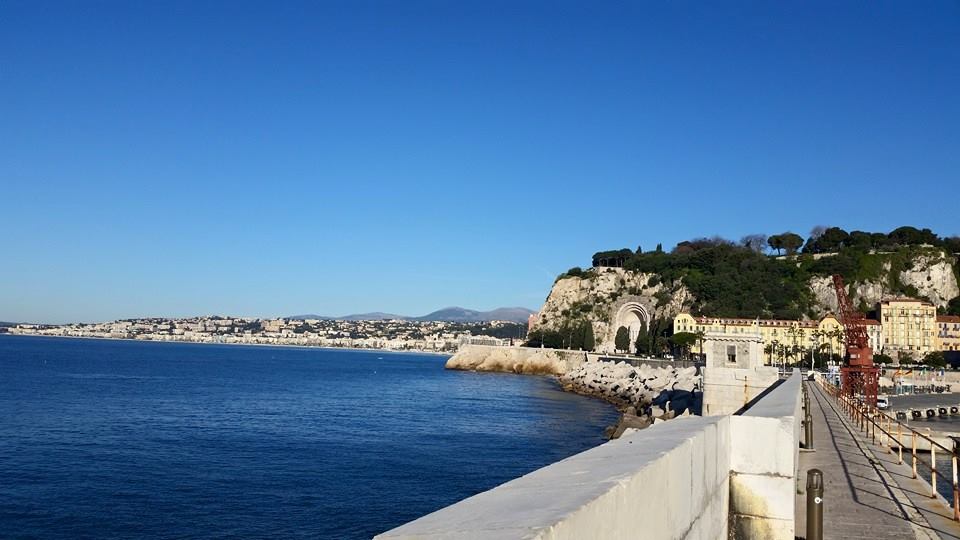
Before leaving Europe to return to Montana I was looking forward to return to everything I had left 5 months ago. Upon returning though I realized things were quite different from what I left them. My best friends had made new friends and I felt like an outsider. Reflecting on my experience I have grown a tremendous amount, I have found out that I can travel through Europe alone and make many new friends along the way. France was such a wonderful experience I cannot wait until I get back over there. I have almost come to the point where I want to do an MBA over in Europe for two reasons. First I love the culture and the people over there and second it costs 900 Euros for a two year program. Studying abroad was probably one of the best decisions I ever made in my college career. I would highly recommend studying abroad to anyone who is interested in getting out of Montana. I compare university in France to UM and Missoula just doesn’t come close. But thankfully I only have one year left. FranceSo until I can return I will just have to look and my Facebook pictures and remember all the good times.

Applying My Irish Experience

As a part of the course I have taken, I have to apply what I’ve learned to my life in the form of a project, a paper, or whatever I chose. I’ve read a lot about how reading Literary Fiction can increase empathy, but I guess what I am most interested in is the emotional response my own creative writing can illicit in others. I wanted to copy the experiment done here but with a brand new piece of my own Fiction.

The first step to completing the project was to complete my story (easier said than done). I made sure that, after I had written the story, I selected the passages I thought were most emotional and defined what emotion I intended to illicit in the reader. The next step was to develop a streamlined instructional page. Because many of the subjects I would be using would come from other areas than Missoula, I had to make sure the experiment was easy to interpret from a mere typed text. I included an instruction page that asked the subject to read the passage provided. When they felt an emotion, they would mark or type “E” next to the passage. If they had a memory triggered, they would write or type “M.” Any other thoughts would be marked with a mere “T.” Subjects were told only to provide marks when they felt any of these things strongly, and not to feel that they needed to provide any marks if they felt nothing. They were also encouraged to define the emotion, memory, or thought and to quantify it’s intensity if they felt it was necessary.

I wanted to do this project because I felt it was the perfect combination of Science and the Humanities in a way that will help me with something I truly care about: writing. In the end, I hope to leave with some helpful raw data that surprises me and gives me a new angle to view my own work from.

As I have yet to finish this project, I will update the blog with the results. I predict that women subjects will be more apt to report emotion than men, that the emotional reports will be lower than I anticipate, and that unrelated thoughts will be higher than I anticipate.

Newgrange: Prehistory and The Mind

What do you picture when you think about Neanderthals? Probably something like this: Prominent brow, big nose, lots of hair, and tiny, close set eyes. People think of Neanderthals with stone tools, spearing mammoths, being ambushed by Cro-Magnons. But people hardly think of Neanderthals as having any kind of spiritual inclination. Newgrange was built during the Neolithic period, around 3200 BC, making it older than the pyramids and stonehenge. It is speculated by archeologists that it was built to serve a religious purpose, which for me, is probably the most interesting aspect of Newgrange.

Newgrange

Although pictures inside were not allowed, you can see from the outside on the entrance stone the swirl pattern that was present in much of the chamber. Not much is known about this pattern. It is speculated to mean anything from life to psychedelic mushrooms. What I think is interesting is that, although the meaning remains unknown, everybody acknowledges that it must have some meaning. We think about Neanderthals as being akin to apes: unintelligible. But here we have a complex structure built by them, one that might have been used for spiritual/religious purposes. In order to have religion, one must first have a mind. And so, to me, Newgrange is an amazing example of the fact that the Neanderthals might have had sentience, although we typically do not interpret them that way.

If you are inside of Newgrange on the Winter Solstice, you can see the whole chamber light up for a solid seventeen minutes. Nobody knows what this means. What they do know is that Newgrange was constructed geometrically so that this illumination of the chamber would happen every year during the Winter Solstice. This is consistent with the notion that Newgrange was built for religious purposes. Why else would they construct it so that it would only be fully lit for a mere seventeen minutes out of the year?

To have spiritual beliefs is to have a mind. You can look at bones, you can carbon date them, but you cannot measure the capacity to have consciousness (just yet). Newgrange was a wonderful compliment to the idea that the Sciences and Humanities must diverge to get the whole picture.

A Pilgrimage to Ireland

Going to Ireland is a sort of rite of passage, a pilgrimage, for anybody who takes an interest in Literature and Creative Writing. Ireland is a small place– it could probably fit into the state of Montana twice. Yet Ireland has spawned some of the most prolific figures in Literature: Samuel Beckett, Oscar Wilde, James Joyce, Seamus Heaney, and and W.B. Yeats, just to name a few. One begins to wonder, what is it about Ireland that makes people so prone to write and to write well? And so it seems a natural extension of the person interested in Literature and writing to travel to the country. Lucky for me, I was able to compliment this journey with a course exploring the scientific basis behind the mind. This meant not only did I study pieces of Literature from these important Irish authors, but I also studied the neuroscience behind what separates the mind from the brain and as such, how we can begin to decipher where creativity originates on a biological level.

Ireland

People tend to think about sentience in two ways: 1) That we are just glorified monkeys 2) In a spiritual sense, where we have souls. Both of these are valid perspectives but, in recent years, we have begun to bridge this gap and some people now understand human consciousness as a balance between both of these. The course I took focused heavily on this perspective.

My professor for the course, Dean Comer, had a saying (which I am certain he gleaned from another man who “had a saying”) that the simplest problems go to Physicists and if they can’t solve it, then on to Chemists who pass it on to Biologists who then pass it on to writers. So if you really think about it, Science and the Humanities are not that far from each other. I often have thought about them as separate entities where you either are a “science” person or a “humanity” person, and neither of these people could mix. James Joyce is sometimes known as the father of stream of consciousness, where he attempted to write how somebody might think. His novel Ulysses, showed a single day in the mind of his characters. While many might view this as a venture in the humanities, maybe we need to see it as a venture in science. Doesn’t modern day Neuroscience try and explain how the mind works? And when Neuroscience can’t provide an indefinite explanation, writers take up their pens and to their typewriters to explain it in the best way they know how. What is being human? All these instruments and tools we use to do things are only so we can explain how we feel inside to somebody else. Science and Literature, they aren’t so different in that way.

As time goes on, people seem to invest more of themselves into a scientific perspective than into a humanitarian perspective. People put less value on the humanities and more value on the sciences. Sciences are STEM careers, lots of sciences directly feed into a nice and neat job after college. How many times have I been asked, with an incredulous look, “And what do you plan to do with that major?” I don’t know, I guess. Lots of us don’t know. But we ought to stop thinking about these specialties as such different schools of thought and start thinking of them as diverging on the same.

The Gift of Words

Our bus skidded to a stop and with a sigh of relief I peeled my eyes from the side of the road and the drop off to the valley floor below. As the dust settled on the single, gravel lane I took in our surroundings. To the left a short, barbed wire fence stood guard before the two huts making up another of the homes in the Sontule community. On my right, a second road branched off of our lane and disappeared into the trees. We had just come from a meeting with the women’s coffee cooperative of the UCA Miraflor region after which our group of students had been divided into pairs and sent to stay with different families around the community. Glancing at Modesta, our host mother, for confirmation that this was our stop, my travel partner Emma and I grabbed our bags and exited the bus. Two other pairs of students also followed their hosts off the bus. One group was led through the fence on our left and the rest of us set off along the path to the right.

Modesta was a full foot and a half shorter than me and the wrinkles on her face told me she had seen many years. She seemed small and fragile and I was reluctant to hand her one of my bags when reached out to help. Her thin arms, however, were not as frail as they appeared and she hoisted the duffle with ease. I knew it wasn’t the first time she’d carried heavy objects long distances. As we wound our way along the ridge, the trees often parted, revealing stunning views of the northern Nicaraguan mountains on either sides of us. Though not nearly as extreme as the Montana Rockies, they were beautiful just the same. Skin slick with sweat from the high, twelve o’clock sun and stomach rumbling with hunger, I was grateful to finally arrive at what would be my home for the weekend. Modesta showed us to our room, set my bag on the table, then left to prepare lunch. Emma and I lay down our bags as well then went to explore.

The building our room was in had two other bedrooms and a dining/living room. It was here that we ate lunch with Modesta and two of her grandsons. The other building on her property was the kitchen. Inside, pots, pans, cups, and silverware filled the shelves. A clay stove in the corner sent smoke spiraling up and out through the space between the tin roof and the wooden panels that made up the walls. A stone-lined path led the way down the hill to an outhouse and a view of the far off town of Esteli. Throughout the day, dogs ran in and out of the buildings and a kitten was always darting between feet and around the flower pots. People came and went. Sometimes there was a horse tied up to the fence and sometimes there wasn’t. It was hard for me to tell who actually lived there and who was only visiting. Thinking back on it now I don’t think anybody in the community lived in one house alone, rather the community itself was home and they all shared the buildings with everybody else.

Late that afternoon, Modesta’s grandson Hanir led us back to the first house our group had met at. Along the way we picked up our classmates as we passed their houses. Once all together, we were taught about the process of growing coffee. Afterwards, we hiked to the top of a nearby hill to watch the sunset and hear the story of a local man and his family’s experiences during the Contra war of the 80’s. By the time six o’clock came it was already dark. Hanir brought us back home for dinner and we went to bed early.

The next day, May 30th, was Mother’s Day in Nicaragua. Rumor had it Mother’s Day was a big deal in this part of the world but with that in mind, nothing could have prepared Emma and I for the day we had in store. At breakfast, Emma and I wished Modesta a happy Mother’s Day. Her deep eyes and wrinkled checks exploded into a smile as she gave us hugs and a chorus of “Gracias mis niños!!!” She told us she’d be hosting a mother’s day party that evening and with that we finished breakfast and took off down the road again for the school. There, we learned about how primary and secondary school worked in the community. Three teachers taught all 12 grades. Each teacher had their own, one room building and set of supplies. However, they were extremely lacking in many of the basics. It was amazing to me how they could organize their day in such a way that all the age groups received the attention and lessons they needed and that the children could understand their teachings with such a limited supply of pictures, diagrams, and maps. Nevertheless, Sontule’s children made do with what they had and were happy. They had never known anything different so how could they not be?

With a basic understanding of how the school system operated, our group of students from the University of Montana spent the remainder of the morning preparing a set of geometrical garden beds for the kids to grow vegetables. From there, we left to another community to learn more about the coffee industry and some of the flora in the Miraflor reserve. Back in Sontule, Emma and I hurried up the road to Modesta’s. We were late and worried we’d missed the forewarned party. Upon our arrival, however, we saw the party was just beginning.

The night began with Emma and I being introduced to several of Modesta’s children and grandchildren. Twenty-some people from the community and from Esteli mulled around the yard chatting with each other. Everyone was related to Modesta one way or another. I was delighted to discover one of her grandson’s, Uriel, had gone to university and learned English. At long last I was able to converse with someone other than those in my class! Although Emma was able to translate a bit for me, there was still a lot she couldn’t say and it was frustrating not being able to converse directly with most people. After dinner with Modesta and a few of her relatives, we socialized with the family, and then were herded into the living room with everyone else. I don’t know what I expected was going to happen but the following events surpassed anything I could have imagined.

Once the last of the family had trickled in and claimed a chair in the circle that filled the room, Uriel gave an introductory speech. When he was done he told Emma and I he had thanked everyone for being there to celebrate Mother’s Day and to honor Modesta and that to start things off one of the grandsons wanted to dance for Modesta. A couple guys fiddled with a radio until a local station began to play. The young boy began to dance in the center of the circle. People laughed and cheered and clapped as he moved to the music in the flickering candlelight. After a minute or so he stepped to the side, grabbed my hands, and pulled me into the circle with him. I smiled and laughed with the rest as I tried to mimic his footsteps. We danced for a while and then he grabbed Emma and danced with her too. He finished up with another solo and then the family transitioned to the next event of the night.

One of Modesta’s sons grabbed a guitar while several grandsons clustered around him. He began to play and the boys began to sing. Eventually, those sitting in the circle joined in, their voices ringing together as they sang the praises of Nicaragua. I’m sure if someone had stepped outside in Esteli that night they too would have felt the pride and love poured into those songs flowing out over the mountains. As I listened a grin begin to spread across my face until my cheeks were frozen in a permanent smile. What an experience! To be here, in this little hut with this beautiful family and to be able to listen to them singing the songs of their nation and their culture. When their voices faded Emma and I joined the others in shouts of “Otra! Otra! Otra!” and they came together to sing one last song. I didn’t want the music to end but it was time for the main event, the reason we were gathered here tonight, to begin.

Uriel stood up again and thanked those who performed. He then either gave some instructions or everyone just knew what to do from there, for one by one, each member of the family stood up and gave a short speech to Modesta. I can only guess what they were saying but with putting together their tones of voice, Modesta’s tears of joy at their words, and the fact that it was Mother’s Day I’m pretty sure they were thanking her for everything she did in the family and sharing reasons why they loved her. After each son, daughter, and grandchild spoke they gave Modesta a hug and presented her with a gift to a polite round of applause.

If it was possible for my smile to grow any wider it did. Tears filled the corners of my eyes as I watched and listened. I was in awe of what I was seeing. Here were these people, who lived in the deepest kind of poverty, who slept in huts and baked in clay ovens, who pumped their water from wells and hadn’t a spare penny to spend on themselves. Yet they had all gone out of their way to save up and buy their mother/grandmother a gift for this special day. I suddenly felt very aware that Emma and I hadn’t brought anything to give. I did a quick, mental scan of everything I’d brought with for our weekend in the mountains but none of my belongings seemed fitting as a gift. Yet I wanted to give Modesta something. Suddenly I realized a gift didn’t have to be physical. I could give the gift of words. Leaning over I whispered to Uriel, “If I wanted to say something, could you translate?” He nodded yes and when the last of the relatives had spoken and presented their gifts he stood up and announced that Emma and I would like to speak.

Emma went first and, after saying a few sentences in Spanish, I stood up and faced Modesta. “Hello,” I started. “I’m sorry I cannot say this to you in your own language and I’m sorry Emma and I have brought nothing to give. But we give to you our gratitude for allowing us to stay in your home.” I continued on, thanking her for her hospitality, for sharing the food on her table and the beds under her roof. I thanked her for her kindness and for welcoming us into her family and letting us join in their celebration of Mother’s Day. Uriel, standing a few feet behind me, translated my words after each sentence. When I was done everyone clapped one last time as Modesta gave me a hug and we resumed our seats.

The remainder of the night consisted solely of conversation and the passing of the guitar between one another. Little by little family members wandered out the door and headed down the road. We bade farewell to Uriel and various other relatives we had spoken with over the course of the evening and when all but a few were left, we made our way to bed. As I lay awake beneath my mosquito net that night listening to a baby cry and the fading whispers of the remaining guests, I replayed the last couple hours in my head. I couldn’t believe how lucky I was to have been there for such a special occasion, such a unique, cultural experience. What an amazing experience it had been! Listening to the traditional songs, seeing the kindness and selflessness of the Nicaraguan people and of those who had so little yet gave so much. And perhaps most memorable of all, despite the language barrier, still being able to give a gift myself: the gift of words.