Surviving Yanapaccha

I went to Peru to experience other mountains. I need mountains, having left Seattle to live in Missoula. I wanted to meet someone else’s mountains, so I trekked over a couple in the Andes and Cordillera Blanca. My guides shared their culture and reverence for nature in a mixture of English, Spanish, and Quechua. But walking was familiar. Arriving at the end of my trip, I realized, terrified, I am going to climb a mountain.

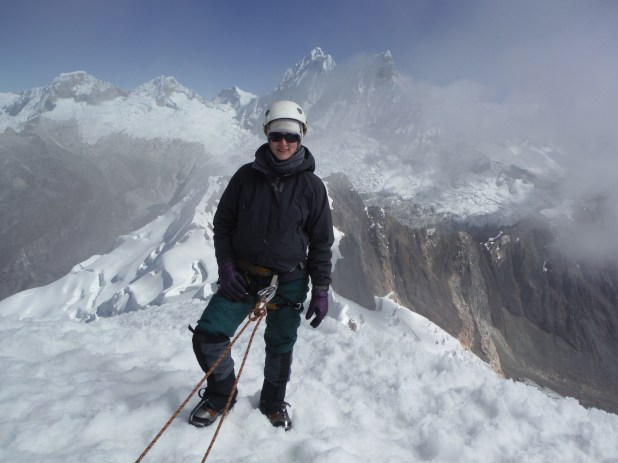
When we begin, the sky is dark. Dark enough to see the swath of pinpricks composing the Milky Way – without my contacts in! The ground is dark too, save for the round white beams emanating from our headlamps. Yana, Quechua for “black,” I learn. For twenty minutes we clamber over rocks in our moonboots, following the trail marked only by occasional rock cairns and the dirt of rocks crushed by those who’ve passed before. Today, I lead.

Reaching the glacier, we clamp on our cramp-ons and unhitch our pickaxes. Our guide scrambles up the ice face to set an anchor. “On belay!”

Hours of slow steps across thick, frozen snow follow. The altitude gives some of us stomachaches, others headaches, and makes our breathing heavy.

A bright light shines over the edge of a nearby mountain. Sunrise? But it is only 3 am. The moon reveals itself fully, outlining the enormity of the mountain.

My feet barely pass each other with each step. One of my partners does not feel well either though, so my pace suffices. We keep our heads down, sights set on following the pre-existing footprints that keep us on trail. By halfway, sunrise imbues the snow with a soft glow.

Here we rest. I cannot stomach food so I down a juice box. I try to keep my eyes open. My friend does not feel well at all. The summit may be a lofty goal for us. Our guide points to some hills, two-thirds of the way.

“If you cannot go any more, just say so and we can turn around,” He says.
“Let’s go there and then chat,” we decide.

We never had that chat.

Slope after slope rises in front of us. The severity of the steepness overwhelms me – how can I climb this? “Zero!” I call, as my heart climbs into my throat and my eyes well with tears. If I can just compose myself… I close my eyes for a moment. I am afraid. Yes. But, I have made it all the way here. “Clear!”

By the last ice wall, immense, we are too close to give up. Despite dwindling strength, we pull ourselves up twenty meters. We each collapse at the top of the wall, only to be roused to our feet. We are not there yet. With the guide tugging on the rope, I struggle to crawl up the last bit. I gave up hours ago on reaching the summit. I only agreed with myself to take the next step, the next hill, the next traverse. Now I’m here.

“You made it!” a friend at the top exclaims. “I didn’t think we would,” I mutter. I wanted to let the mountain beat me, but my team’s encouragement refused. They gave me the courage to lead, to bite down my fear, to remember the skills at my disposal to evade all the danger and thoughts the mountain threw at me. Laying on my pack, I cry at my exhaustion, my upset stomach, my aching limbs. I cry because I did not have faith in myself and yet I still succeeded. Pagcha, or paccha, Quechua for “waterfall,” I remember, making my own. I feel intense respect for Pacha Mama, Mother Earth, and what she can do for or to us.

The peak is beautiful.

Where Theories became Force: A summer in East Germany

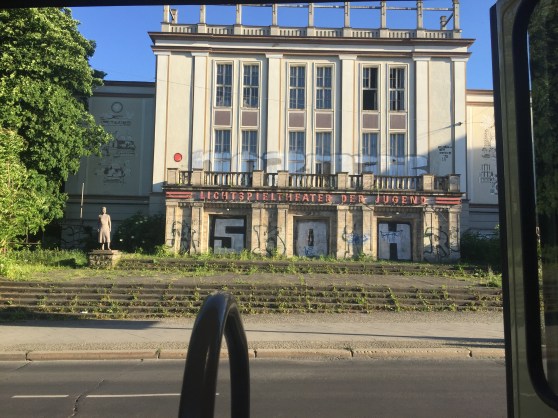
From May 31st to July 14, 2017 I studied the history of European Integration and violence in Europe at European University Viadrina in Frankfurt an der Oder, Germany. I was surprised from the moment of arrival, essentially – as I saw a side of Germany that I did not think about – the difficulty of recovery from being divided. When I arrived in Berlin, I was surprised to find that two years of German and learning about the culture and language still could not fully prepare me for culture shock. When I arrived in Frankfurt an der Oder, taking a train from Berlin eastward, I was even more surprised to find something that had yet to cross my mind learning about Germany. Frankfurt an der Oder, a smaller, different town than Frankfurt am Main (the big one) used to be an industrial hub under the Soviet Union, and when Germany was reunited, all the heavy industry was shut down and the town suffered unemployment and a population drain. When I think about Germany, I think about how it is the economic hub of Europe, how its infrastructure is nearly unparalleled, and how its political system functions quite well. I did not think of abandoned buildings that the local government has no money to repair, or how Germans in the east blame the EU for many of their troubles. Not only did my studies relate to Social Inequality and Human Rights – my whole experience showed me an experiment in trying to fight inequality. I did not think how the culture of former east Germany has yet to fully assimilate to the west. Nor did I think of how the west has failed to adjust and help merge the former two Germanys in many ways. The cultural problem remains difficult to solve in many ways, as there is still almost an anti-western sentiment in eastern Germany, and vice versa in west Germany. The way the country has attacked the economic problem, and even started to attack the cultural divide, has been interesting though. With the dawn of European integration and the revival of the German economy, the infrastructure – the public institutions, transport, and other structures in east Germany – has undergone serious revitalization.

IMG_2312.JPG

(Pictured: The Abandoned Communist Youth Theater, Frankfurt an der Oder)

IMG_2291.jpg

(European University Viadrina, Frankfurt an der Oder, Germany)

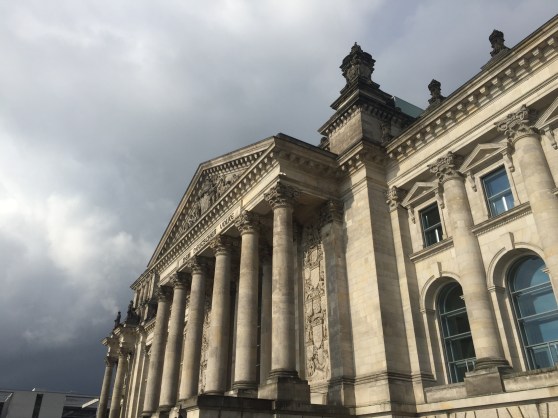
IMG_2649.JPG

(Façade of the Reichstag, Berlin, Germany)

The university I studied at was closed by the Soviets, but has been built back up by the country to become a well-known international educational institution. In many ways, though many buildings are abandoned and still destroyed – the infrastructure in East Germany is better than the west, as its become more focused on making its students cosmopolitan. Therein lay the biggest cultural difference I saw in Germany – the way children are brought up to know their own history more thoroughly than anything before they broaden their knowledge to the world. The Holocaust is a giant scar on German history, and the Nazi period is a taboo subject for many in the United States. However, in Germany, people fully recognize the past’s mistakes, as the old slogan “never again” truly means something to them. In discussing their history, Germans were very blunt and thought the only productive way to move forward was to recognize the past so as to understand the problems of today and solve them. Though most Americans know their country’s history, the attitude toward it, and attitude toward education here is far different than the German one, and I honestly wonder now what changes developing these attitudes and approach toward a more efficient infrastructure at a local level, particularly here in Montana, with the presence of historical trauma on reservations and a lack of proper education structures for many, could make.

Meandering through Morocco

My name is Julia Maxon, and over the summer I had the unique opportunity to intern abroad for a women’s empowerment organization in Rabat, Morocco.

When I first arrived in Rabat, I remember peeking through the faded curtains in my hotel room watching as the city moved fast below me. Blue petit taxis zoomed by trying to pick up their next rider, restless people were trying to squeeze onto the crumbling sidewalks just to shuffle past one another, and older men lined the crowded buildings below trying to take it all in just like me. It seemed as though this city stopped for no one, and I felt afraid to throw myself into the mix. As I peered out and looked at my surroundings, it all just felt overwhelmingly unreal. How could I be in Montana one day and Morocco the next? How could I be 5,250 miles from home? 5,250 miles from the ones I loved?

19748503_10209468208772072_4866088758518383550_n

(Pictured: My first view of Morocco)

As weeks passed, I grew accustomed to the medina where I resided, which is the oldest portion of the city before the French colonized the region. The initial maze that was laid out before me felt increasingly more manageable each day. My loving host family was one of the main attributes that made me feel the most welcome throughout my entire experience. My host mom, Saana, especially always made sure I had enough food to fill my belly until I couldn’t eat anymore, and had a pot of mint tea always ready.

While in Morocco, I was also incredibly lucky to be able to experience Ramadan. Prior to my arrival, I had never fully experienced Ramadan or the traditions and culture associated with it. It was captivating to see how Ramadan took form in a predominantly Islamic nation. It was beautiful to see families like my host family preparing iftor, or the evening meal that breaks the daily fast, each night for people in the medina who didn’t have as much. It was moving to hear the evening prayer call echo throughout the streets of the medina, and to see so many people come together in an act of peace.

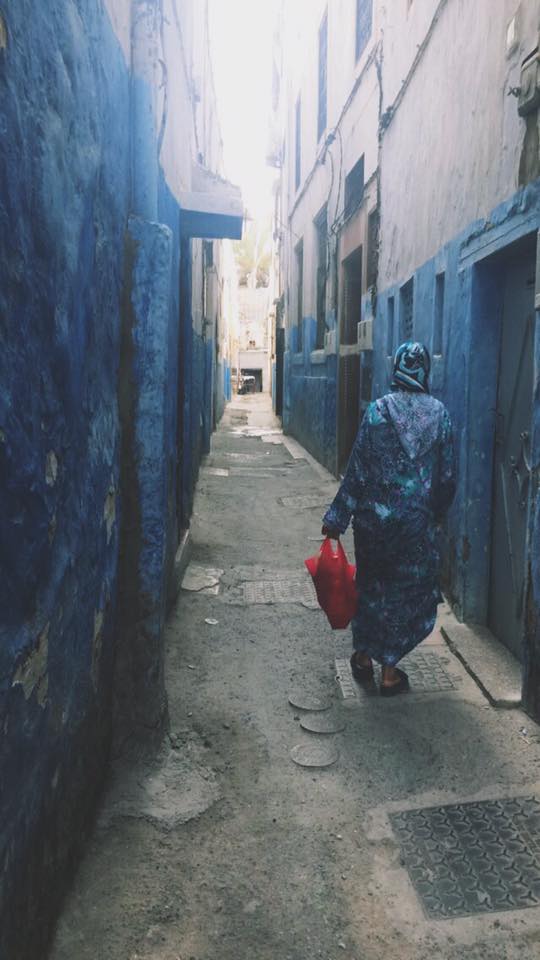
19756911_10209468203811948_1179240224108977840_n

(Pictured: My host mom, Saana, leading the way home through the medina)

Morocco is a beautiful country filled with so much life and so much love, but like many other nations, it has its faults as well. As a GLI student, I was interested in looking at social inequality and human rights, or more specifically how the individual, community, organizations, and public policy come together to contribute to the inequalities women face in Morocco. The organization I interned with was a nonprofit specifically interested in the socio-economical development and empowerment of women in the Saharan region of Morocco. During my internship, I facilitated the NGO’s social media and social marketing department on various projects aimed at promoting and furthering the efforts of multiple couscous cooperatives throughout the Saharan region to improve its members’ quality of life.

By being able to have this experience, I was able to learn more about women’s rights in the Middle East, and create a proposed intervention plan based off of the needs that women in rural Morocco vocalized. I wouldn’t trade this experience for the world, as it helped give me a broader perspective on women’s rights and human rights in a global context.

A few days before I was to depart from Morocco, I returned to that little hotel on the corner where I watched the world move before me. However, this time, I sat below with my back against the cement wall, studying the street move idly by.

This experience gave me a sense of renewed confidence that I could take on whatever life throws at me. Whether that be venturing out into a world where I may not necessarily know anyone nor speak the common language, or hopping onto multiple trains traveling solo to destinations unknown. By escaping my comfort zone and throwing myself in, I was able to experience endless possibilities and pursue unexpected adventures that I will never forget. ~

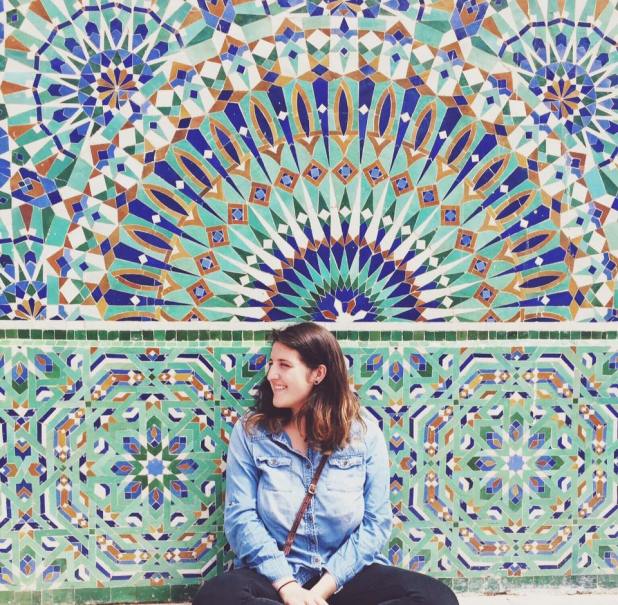
19059051_1775744995785947_877865961425579413_n

(Pictured: Me ready for my next adventure!)


A Year in Spain

During my third year at the University of Montana, I studied abroad in Málaga, Spain, a smaller city on the southern coast in a province called Andalucía. My experience was filled with ups and downs, challenges, and growth as well as unadulterated fun. My global theme and challenge is Culture and Politics. Living in Spain and traveling throughout Europe, I was lucky enough to meet friends from Spain, Portugal, France, the Netherlands, Germany, England, Ireland, Poland, Italy, Greece, Turkey, Austria, Hungary, Belgium, Denmark, Sweden, Morocco, China, South Korea, Argentina, Mexico, Colombia, and even other Americans. By interacting with cultures from across the globe, many of them completely different from that of the United States, I was exposed to cultural differences that opened my mind and challenged my perspective on life. I also noted similarities between myself and everyone with whom I interacted, and felt connected globally to other human beings, without regards to nationality or upbringing. Learning Spanish was also an incredibly humbling and eye opening experience. I immersed myself in the Spanish language and was able to gain so much understanding about the culture through speaking and listening to the language itself. This highlighted, again, both differences and similarities between Spanish and American culture. I also learned to be humble and listen more than I speak – at first because I couldn’t say much but by the end because I found value in listening to others before seeking for my own voice to be heard. I was exposed to countless different cultures and I was able to find a connection with nearly everyone I met, whether it be over something superficial or a deep, lifelong connection. As a leader, I believe it is important to listen to others and find common ground, while having an open mind and an understanding heart. Through living in a completely unfamiliar world I was able to hone in on these skills and develop them each day through different social interactions with new people. My experience abroad was never completely perfect – my computer, passport, and many other things were stolen, I struggled to find close connections at first, I was homesick and frustrated with Spanish culture at points, but the struggle is what makes the incredible moments stand out, and the experience so life-changing. My thirst to travel and experience new cultures, eat different foods, and meet new people has only grown stronger over the course of the last year, and I can’t wait to see how my cultural connections grow and change and to foster new ones as I use the skills I learned in Spain to explore every corner of the world and capitalize on new opportunities to see where life takes me.

Nasdaq Summer Internship

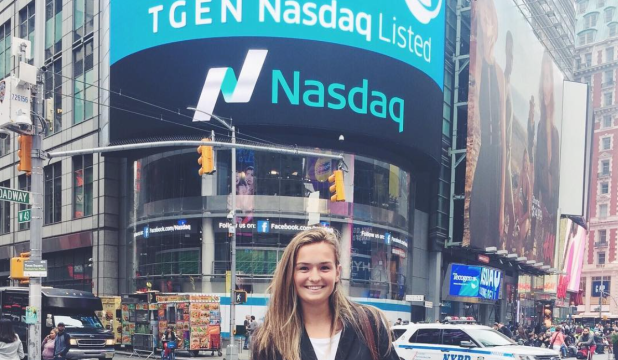
This summer I interned with the Nasdaq Futures Exchange in Chicago, Illinois. My theme is Technology and Society and my Global Challenge is: how can organizations harness technology and data.

The past few years the growth of technology in our world has been apparent and fast moving. Almost everything can be connected with technology.  To remain competitive in the marketplace, and keep up with competitors, organizations must figure out a way to harness the power of technology. Interning at Nasdaq this summer helped me learn a lot more about my global challenge because Nasdaq is a company that has already begun to harness the power of technology. Nasdaq has created technology that powers the world’s market operators, clearinghouses and regulators, the building blocks of the global financial marketplace. In all of my experiences this summer, I learned about the diverse factors that come into play when harnessing technology.

For my specific job, using technology to automate daily reports was tremendously beneficial for running an efficient exchange. I took on this project and went above and beyond what was asked of me to create a keyboard shortcut to cut down on time and to automate my daily report. By far my most memorable experience was being successful with this automation project and being able to leave a lasting impression with Nasdaq. I took this experience to learn as much as I could about the futures industry and all that I could about using technology as a tool so I could play a beneficial role in our product development team.

Working in a corporate office is a much different environment than any I have experienced before. This experience made me more independent and confident as a person, as I was thrown into challenging situations and made to problem solve and think on my feet. I feel as though my leadership skills have grown because of this experience, because I had to be accountable for my own work and manage my responsibilities while working cohesively in my team. I am pleased I was able to learn about the corporate environment while gathering useful information to take back to my GLI team in the fall!

Having this experience not only prepared me for a job after college but it also gave me great insight on a global company’s daily operations and how they use and continue to unite technology and data. I am so grateful for this experience as I was offered a full time position post-graduation! I am appreciative to everyone that made my summer internship possible and for those I met throughout my involvement with Nasdaq. My GLI out of classroom experience truly was life changing and has launched my future career!

Lost in Japan

IMG_1757.jpg

  I had a lot of expectations and plans for my time in Japan, but I never imagined  that I’d find myself in a tiny house in an abandoned village in Fukushima, singing karaoke with an elderly man that I had just met. He didn’t speak English. I didn’t speak Japanese. But when we finished singing “Hey Jude” by the Beatles, he gave me a huge smile and a thumbs-up and said “Good”. I said “sugoi”, which I think means “great!” or “amazing!”. It was one of the few Japanese words I could remember.

  I had been planning and dreaming about this trip for almost a year. I had a meticulous schedule and budget for every day that I would be there. I studied flashcards of Japanese survival phrases. I even made a map of all the places I would go. The trip was part of an international journalism class that I had with 15 other journalism students and two professors. Our plan was to write and report stories about people that were affected by the 2011 earthquake, tsunami, and nuclear meltdown. Each of us were assigned a story to focus on. Mine would be about how fishermen, the ocean, and Fukushima’s fishing economy were affected. I spent most of my time reporting in a fishing village in Fukushima and had the chance to interview several fishermen about their experience.

  It was was one of the most educational experiences of my life. I learned more in one month than I could have learned in a semester-long lecture class. I learned the most, though, when things went wrong and I had to veer off of the original plan. My maps and flashcards frequently failed me. Whenever I got lost in Japan, without the group or a translator, something magic would always happen. I would find myself laughing with strangers as we tried to use wild hand gestures and facial expressions to communicate with each other. I once got lost and ended up being physically pulled into a temple by a woman who wanted to show me how to perform a Buddhist prayer. Another time, I was dragged into a group of drunken Japanese college students who wanted to light fireworks with me to celebrate the beginning of summer.

  That night was one of the strangest and most memorable nights of my life. At the last minute I volunteered to write a story about a man who leads “darkness tours” of a small village in rural Fukushima that was abandoned after the nuclear disaster. I went to the village with two other students. Before we even talked to the man, I had the story all mapped out in my head. It would be about this village, frozen in time after people fled after nuclear disaster and about how this man found a way to profit on that by offering scary tours.

  When we got there, though, the experience was much different. For the tour, he just took us to his friends’ houses. Over the years since the disaster, he became close with the few remaining people in the village. When I asked him why he was taking us to see his friends as part of a “darkness tour”, he confessed that he just loves his village. He hoped that by offering tours, he could convince outsiders that Fukushima was not a nuclear wasteland. He wanted us to see that it was actually a beautiful forest and some friendly people still lived there. I didn’t have a plan for this kind of story.

  He drove us to a tiny house on top of a hill, where his friend greeted us at the door. He explained to us that his friend’s name was Hiroshi and he was a great singer. Hiroshi had a karaoke stage and microphone set up in his living room. He sang us a beautiful song in Japanese and and then asked us (via a Google Translate)  if we wanted to sing with him. We shrugged and agreed.

  While we were in the middle of singing the chorus in this man’s tiny living room, I asked myself “What am I doing here? This wasn’t part of the plan. How am I going to explain this to my professor? How am I going to write a story about this?”. I started to laugh and sing even louder because the situation was so bizarre. I forced myself to accept that the story I had planned to write wasn’t going to work out. After the song was over, we made a traditional Japanese dinner with the men we met in the village. We asked each other questions all night via Google translate. We laughed and ate a lot. It was wonderful. I learned last night that it is okay to let yourself stray from your plans and expectations.

A Summer with Missoula Beekeepers

This summer I interned with Environment Montana in Missoula, which is a branch of Environment America. This has been an enlightening experience about the environmental issues facing both our state and country. For my experience, I was assigned to work on the organization’s Bee Friendly Food Alliance campaign, which brings together chefs, restaurants and others in the food industry to come together to help save the bees. Bees pollinate 71 of 100 crops that supply 90% of the world’s food and in the past decade, beekeepers have been reporting an average loss of 30% of all honeybee colonies each winter. Montana is not an exception to these statistics and bees are essential for the pollination of Montana crops like strawberries, pumpkins, onions and tomatoes. One major reason for bees dying off is the use of a category of insecticides called Neonicotinoids, also known as neonics. Missoula beekeepers have noticed the impact of insecticide-treated plants on their bees and know that the only way to protect bees is by changing agricultural practices and supporting wild plant life.

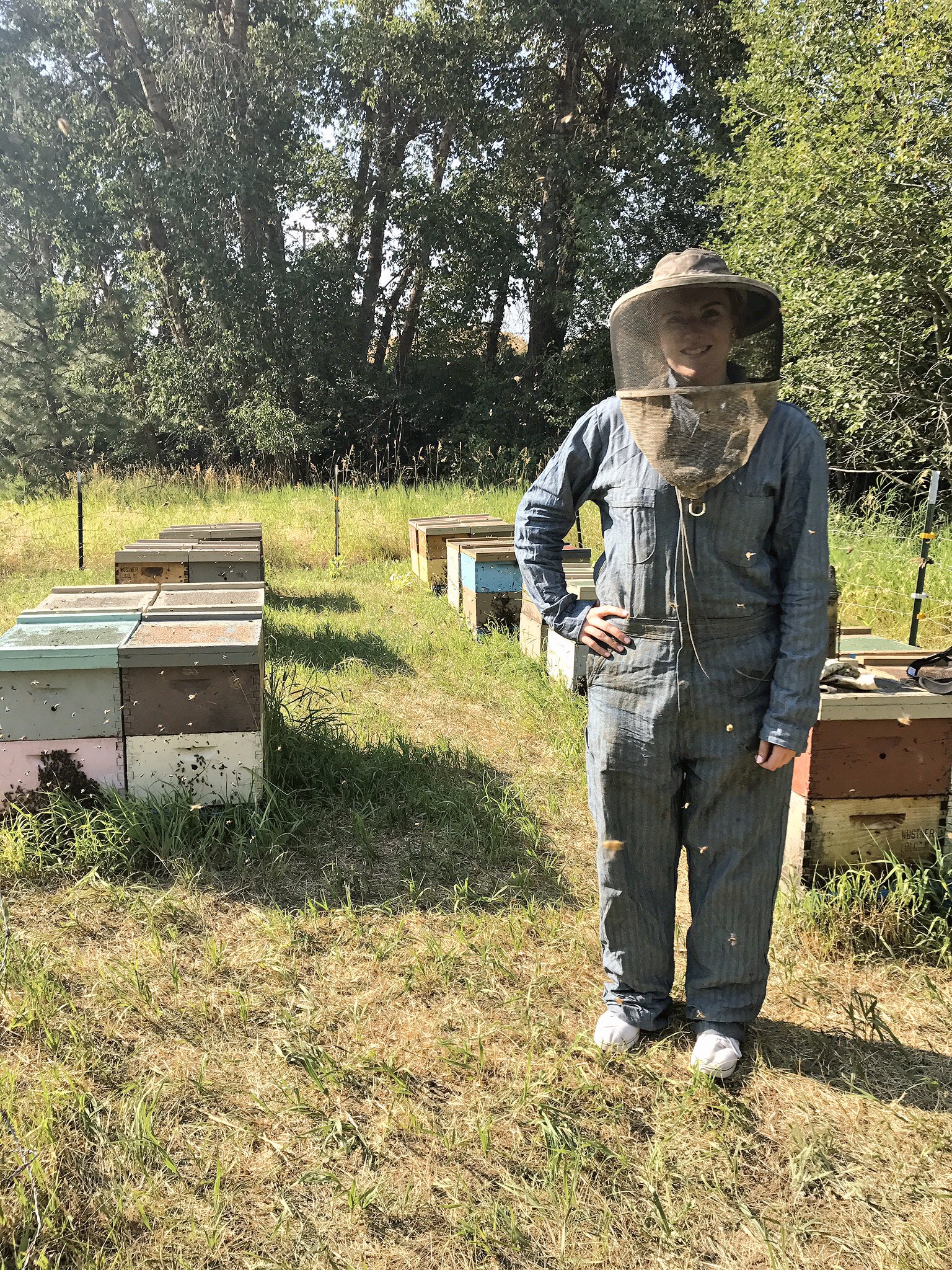
I had the opportunity to interview Missoula beekeepers about these issues and create an informational video about these people and issues. It was a really great experience and I had a lot of fun making the video. Each beekeeper I spoke to was a wealth of information and taught me a lot about the importance of bees, what’s causing them to die off and how to protect them. I’m grateful that I was able to combine my journalistic skills and passion for the environment to form a really meaningful internship experience with Environment Montana and a video to share to communities around the country. I am much more aware of what issues are facing both bees and Missoula beekeepers after working on this project. Now, instead of swatting bees away, I’m thankful for their presence and am more aware of how my actions affect these tiny creatures and their ability to make much of the world’s food possible. Not only that, but I also got to experience beekeeping first-hand, suit and all. 

Tiffany Folkes


A Semester in Ireland

kurtThis spring I studied abroad in Cork, Ireland. I lived in the city and attended UCC Cork. My experience was, in a world, incredible. Having been born and raised in Montana, I was completely unprepared for living in an urban city halfway across the world. Still, studying abroad was the one thing that I absolutely wanted to do in college, and I am extremely grateful that it was possible. As part of the GLI program, I have a unique theme and challenge that I wanted to research. My goal was to examine how international policy programs can effectively fuel environmental protection efforts.

Cork is fortunate enough to be one of the multicultural towns in Ireland. I was able to meet and become friends with several French, Italian, Spanish, and (of course) Irish students over the course of the semester. I was also been fortunate enough to travel across Europe at various points throughout the semester, which has helped me discover just how diverse and complex the world is. I’ve had conversations with my Portuguese roommate about the refugee crisis, witnessed a march against Brexit in London, and was part of a rally for science outside the Pantheon in Italy. More than anything, during my time abroad I’ve been made aware of how little I really know about the world. I’m forced to wonder how to best spur international cooperation on the issue of climate change. The problem doesn’t have an easy answer. However, I don’t believe it is impossible to solve the problem. There are a variety of small steps many countries have taken to work towards lessening carbon emissions. One of the major bus companies in Germany, for example, gives customers the option to pay a small amount more to purchase a carbon-offset for their bus trip. The extra money will go towards funding programs in Germany or developing countries that promote more sustainable business practices.

I also took the time to do some independent research and observations on climate change and environmental efforts in Europe, as was a part of my goal when originally coming here. Ireland has several areas where policies and regulations produce excellent energy results. Recycling is more prominent in Ireland than America, for example. Regarding my challenge, I’ve realized how difficult it is to communicate the causes and effects of climate change. Raised in suburban Montana, I took it for granted that people were at least aware that greenhouse gas emissions are a long-term problem. Since travelling, I’ve realized that this is not always the case. We should take greater efforts to not only combat the problem, but also to improve general awareness of the issue. In the U.S. especially, recent discussions over current political actions and environmental leadership have convinced me that there is a need for action. We will need political support in order to make any meaningful progress in slowing human-caused climate change. The European Union has enacted programs such as the Carbon Emissions Trading Scheme in an effort to reduce overall emissions without damaging the European economy. Norway, as well, has contributed substantially to REDD, a program designed to reduce emissions from deforestation. I believe that we in the US can emulate these political actions. However, in the current political economy, it will take substantial pressure from grassroots organizations and corporations to progress towards meaningful change. I feel that as a result of having studied abroad and talking to so many different people I am more ready to take action in local and national efforts. We have many challenges to tackle, but taking action begins with efforts as simple as having conversations about the topic.

I feel that my time spent abroad helped to widen my view of the world. I remain amazed at the many achievements so many people I met abroad have met. I spoke to one man who was hitchhiking across Europe so that he could teach in Iran. I saw pictures of a mural one refugee painted after years spent seeking a new home in Scotland. And I hope that I can achieve a fraction of what these incredible individuals have done.
Thanks for reading.
Kurt Swimley

Living in Italy: Life on the Farm

Day 1:
I arrived here at the farm about midday and I was soon greeted by the entire family. The Acetia Malagoli Daniele, named after the father Daniele Malagoli, is a small family run business managed by their eldest daughter Sofia. The family of four and their grandmother live in a beautiful yellow house in the countryside along with a herd of donkeys, several sheep, an army of chickens, a cow named Rosa and a few peacocks. They greeted me with open arms and showed me to my room for the next two weeks.

I met with the other volunteers at the farm, Sabine and Floris from the Netherlands and Anna from Australia, they promised to show me the farm tomorrow along with how to feed the animals and some other daily work. Tonight, however, Daniele had asked us to pick cherries at a nearby farm so that Barbara, his wife, could make some jam and cherry liquor. So off we went, the five of us packed into the back of an old car equally entertained and terrified as Danielle drove about 80 mph down country roads while singing opera in his deep baritone voice. We did survive and returned home with about 75 pounds of cherries. (This is not an exaggeration, we later had to pit all of them and it took several hours over the course of two days.)

Though I have only been here a day I can already see how much the Italians value their food, not just the recipes but also the ingredients. We all eat dinner together, with the ten of us seated around a table piled high in pasta and fresh vegetables. We talked about the differences in cherry names and what you use each kind for, today we picked large sweet cherries that are best for eating raw or cooking down into jam.

Day 2-5 The art of faccina and more cherries:
The past few days have been a whirlwind, I learned how to feed and water all the animals on the farm, how to pit a couple thousand cherries (by hand) and the ‘art’ of faccina. Now what is faccina you might wonder? Several days before I arrived the other workers helped to trim the vineyard, after feeding the leaves to the goats the remaining sticks were loaded onto a bigger pile of sticks and that where our new job starts. In the mornings before the temperatures climb into the 90’s we break the sticks down into usable sizes and then bundle them. In all seriousness faccina, or creating bundles of sticks, is an important part of making balsamic vinegar. The sticks help create the fire that the grape juice is cooked over eventually turning it into a thick sugary liquid that is then aged into vinegar. The work is quite monotonous but it has been good to spend time getting to know the other workers, talking about international politics and why we all decided to work here.

Flo (Floris) and Sabine, are taking a few months off work to travel. They have spent the last few months in Southeast Asia and decided to spend their last month away from work volunteering and learning some new skills on the farm. Anna, a graphic designer, just finished her work in Germany for Adidas and wanted to take a break from normal city life while she looked for new work. They are a really great group of people all with different strengths and experiences working and traveling abroad.

Today was also the final day of pitting the cherries and I am really happy it’s over. Tomorrow Barbara, Danielle’s wife, will start making the jam and other sweets. Now we will start preparing for a large tour of cyclists coming on Saturday. The Acetia offers a tours to a variety of different groups. Sofia manages all of the public relations for the family, and has really turned her family’s passion for vinegar into a business. The family used to make balsamic vinegar as a hobby and give what they made away to friends and family. (This sounds a little crazy when you realize that the family has at any given moment about 700 barrels of balsamic vinegar.). Sofia decided to turn the family hobby into a business and has since expanded their product to several different countries. Barbara however does the majority of the work. She is the one in charge of making the vinegar, bottling the vinegar and maintaining a high quality product. She is incredible.

Day 6
The cyclists came today, what we expected to be around 200 people ended up being closer to 50 because of the heat. The next few weeks are going to be hot as a huge heat wave moves through Southern Europe. It was a little disappointing not having a big turn out but it was never the less a good event. In the morning we helped set up tables, prepared food and cleaned the yard. It was also the first day I got to go into the acetia.

The acetia is actually located right above my apartment (thankfully my apartment doesn’t smell like vinegar). Walking into it you get hit with this overwhelming smell of vinegar, it’s not bad but it definitely grabs your attention. Inside all the walls and floor space is filled with vinegar barrels, some of them almost 200 years old. The sizes range from wine barrel to bread loaf. In the process of aging the vinegar you move the vinegar from largest to smallest barrel, the smallest barrels are at least 25 years old and contain the most expensive vinegar. While in the acetia Sofia gave the cyclists a tour and I aided in passing out samples. She talked about the aging and production processes and the importance of following the traditional method of balsamic vinegar production. In Italy balsamic vinegar that follows a strict traditional production method is labeled with D.O.P., meaning it is only made with cooked grape juice grown in a specific region in Italy and aged in wood barrels without any artificial additives. Vinegars with the D.O.P label are considered to be some of the best in the world.

Day 7-12
The last few days have been hot, really, really hot. We moved an old bathtub into the yard and have been using it as a swimming pool. Whenever it’s too hot to work we fill it with the hose and sit in it for a few hours. Beyond that things are going well (with the exception of the peacocks who decide to sit outside my window and scream for all hours of the night. If we get to choose what animals get eaten next I’m choosing peacock). In the mornings we feed the animals and over the last few days have done quite a few odd jobs. Moving hay bales, moving chickens, finding new chickens and putting them in the incubator, stoning about 50 lbs of peaches, and splitting giant logs are a few of the most memorable. Today Anna found several newly hatched and abandoned ducklings (we think a fox got onto the farm the other night because several of the birds abandoned their nests, these eggs hatched from the heat. It’s really hot here). Anna has since adopted the ducklings, they have imprinted on her and now accompany her in our daily chores.

We have moved into the vineyard and have started to prune more of the grape vines. It’s fun work and very rewarding when you finish a row. I am feeling very thankful to have been given the opportunity to travel and to find myself in the company of so many talented and kind people, not to mention this beautiful landscape. I am really enjoying staying with the Malagoli family, all of them are very kind and personable people. Barbara has been teaching us about traditional Italian cuisine and showed me how to roll tortelloni, Danielle has been helping us to finish some of the wood cutting. We actually managed to break an industrial wood cutter that Danielle designed because the wood was so hard. Taisia their youngest daughter has been hanging out with us a little between studying for her final exams next week. It feels like I am part of the family.

One very memorable thing that happened the other day was that I met an Oscar winner, Roger Ross Williams. About three days ago Flo was whisked off by Sofia to accompany her on some ‘errands,’ so he got to go and tour cheese and meat factories with the Oscar winner for best documentary. All of us working at the farm were invited to go and see a screening of his movie Life, Animated, in Bologna. So the four of us hopped into Flo and Sabine’s car, drove to Bologna and then met Roger at the movie theater with his friend and guide Lucas Tabareli, a local pasta maker and entrepreneur. I highly recommend Life, Animated, it was a beautiful and touching story that I won’t go into detail about here, but you should watch it. Afterward Roger took us out to the film festivals after party as his ‘official entourage.’

Day 13
Today was weird. A good weird but I’m still working out the details in my mind. So the morning was as usual, fed the animals drank some espresso, nothing too crazy. But then Sofia mentioned that there was a street party in a nearby town and all of us were invited to go. We decided that it would be fun and agreed. Then Danielle asked us if we wanted to go to his friends BBQ and we agreed to that too. So come about 7 at night we arrive at Danielle’s friend’s house which was in a beautiful and kind of secluded, forestry area. Things are good, everyone is socializing, eating and then they lighted a large bonfire. Apparently we agreed to go to a pagan summer solstice celebration and before I knew what was going on I was covered in sage smoke and jumping over a fire and rolling dice to help me decide what I would accomplish in the next year.

Then we went to the street party at about midnight. It was a completely different world from the solstice festival. Loud music, people dancing, strobe lights and some really crazy outfits. We hung out for a few hours and then made out way back to the house. Upon arriving home we were scared by a peacock hanging out in a tree above us like a ghost from a horror movie. Like I said, it was a strange day.

Day 14
Today is my last day here and I am sorry to go, it has been such a great experience getting to learn about agriculture in such a small and intimate setting. I feel like I have learned a lot about Italian culture, food and various international perspectives on farming, politics and what it means to be connected to one’s cultural roots. On my last day here Anna and I headed out into the vineyard with her ducklings to trim some of the plants and then had a great lunch with the family. I have a new appreciation for traditional food products and quality food. I have always loved cooking but being in Italy has taught me about the history behind their food and why it is important to keep alive these century old traditions. Food is the glue that holds Italian families together, everyone is involved in either cooking, eating, cleaning, shopping or making something that contributes to the meal.

I am incredibly thankful for the Malagoli family for this experience. Now I leave for Spain to do a month long course in Spanish in Almeria, Spain. Thanks again to everyone I met in their past month, you all taught me so much!

 

Me in Japan and the world

Kyoto, the emperor’s home of the past and today’s cultural heart of Japan. This is the setting of my study abroad experience. Upon arriving I had a lot of challenges ahead of me, from learning a new transportation systems to studying the language. Some challenges are easy to overcome, while others take time. When considering GLI, I’ve taken the challenge of trying to come to an understanding of how cultural differences might affect relations, especially economical, between Japan and other countries, in particular the United States. My study time here is not yet over, but I feel like I’m coming to a level of understanding where I can contrast the two with accuracy and confidence. While in Japan, I feel like I’ve come to know my own country better than ever before. To give an example, let’s take a look at work in Japan versus the United States. With my time here, I can confidently say that the Japanese are hard workers, and I can also say they tend to take this admirable trait too far at times, overworking themselves. Given this comparison, I began to see how much and at what level Americans value personal and family time in relation to work. When talking about social topics like this, it becomes difficult to leave out parts of the grander narrative, which includes a country’s culture and politics all the same. Having so far spent much time with Japanese friends, international friends, and from time to time Japanese families, I would say my perspective on Japan’s culture and politics has definitely broadened. Although with the past year’s tense elections, both in the US and Europe, I have also been able to see the reactions of events taking place around the world. Whether or not this experience has greatly developed my leadership skills is yet to be tested. However I do know I am more confident now, especially when it comes to subject matter such as Japan or politics. Given I were to be involved with these topics, I would no doubt feel comfortable in taking a position of action. I have come to really love Japan, though I will say there are also things I have discovered to dislike as well. Likewise can be said for America. This brings up some big questions, both societal, and personal. In particular, personally I’ll likely one day have to make the decision of where to live and work in the world. What is better, Japan, America, or some other country? Unfortunately the world is not cookie cut into good and bad pieces, which makes such questions difficult, to say the least. So instead, with my remaining time in Japan, and at The University of Montana, I’ll have to continue thinking about a variety of things. What is valuable in the American culture? How much should politics affect my actions regarding international matters? Does culture affect economy, and if so at what level? With time, it is my hope I can come to a right answer to at least a few of these questions.

Thank you for reading.

Best,

Isaac LaRowe