Harnessing the Chilean Wilderness

Aldridge Patagonia

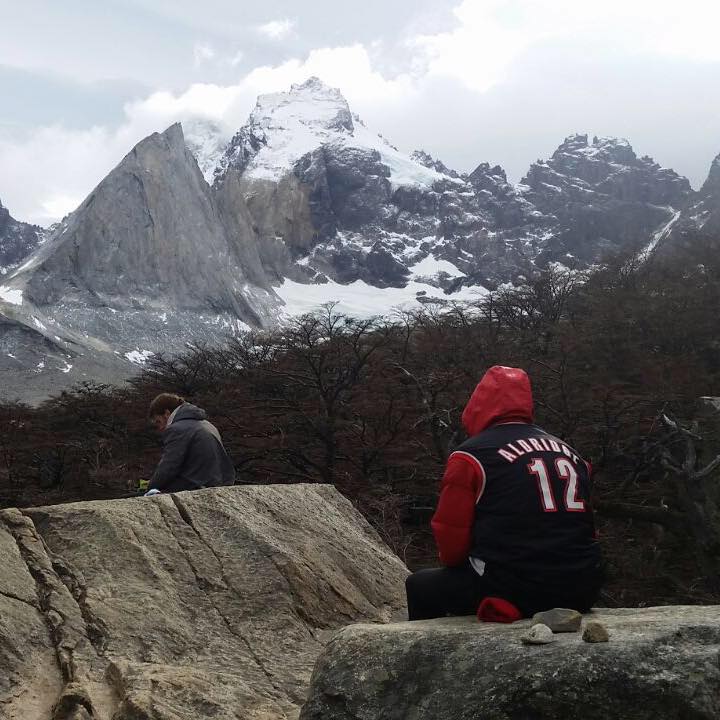
Few times in my life had I been more excited than when my peer from Germany asked me if I wanted to go backpacking for five days in Torres del Paine National Park. Going to school in Montana, the outdoors are part of the culture of the university. While during the semester it isn’t uncommon to have friends go away on a day hike or weekend camping trip, people who go to school in Missoula generally love the outdoors. Choosing to study abroad in Santiago, I was scared that nothing about my exchange would be outdoorsy. After two months of living in the hustle of a metropolis consumed by smog and volcanic ash, I was itching to escape to somewhere peaceful. Torres del Paine is located on the southern tip of Chile, commonly referred to as the “end of the world” because of the way the sky slopes downward and seemingly touches the ground. When I first arrived at the park, I was struck by how naturally beautiful it was. Never in my life had I seen such massive mountains covered in pristine glaciers surrounded by ancient old growth forest. Even though a few years back two Israeli’s accidentally started a forest fire that severely burned large portions of the park (and caused numerous warning signs in Hebrew to be put up everywhere we looked) it was as if the fire added to the mystery of the park. Walking along the trail felt like it was straight out of a classic horror movie, with the burned trees, the howling wind, and icy temperatures making the forest an astoundingly beautiful, yet “wicked” forest.

When we arrived to the park, there were just four of us. Stefan from Germany, Colomban from France, Nick from the USA, and myself. With all of us except for Colomban having prior backpacking experience, I felt that since the park was such a national staple, it couldn’t be too terribly hard of a trek. Boy was I mistaken. After the second day, we had walked a shade under 45 kilometers (28 miles). I woke up with horrible pain in both my legs that radiated all the way down to my feet. With no other option than to walk another 12 miles to the next campsite, I wasn’t sure I knew what I had gotten myself into. As I walked straight up hill to the first view point, I knew it was all worth it. Never before had I been struck by such natural beauty. At every view point I went to, I became more and more impressed with what Chile had to offer. By the end of the trip I had seen lakes, rivers, mountains, glaciers, and some of the most impressive wildlife I had ever come across. At every view point there were massive condors flying above us with 7 foot wing spans. At one point in the trail, we came across a wild puma lounging in a tree just off to the side. The nature in Torres del Paine was mesmerizing and lived up the the hype 100%.

The people we encountered on the trail were just as interesting. I’m not sure how it is in other countries, but there are so so so many french people in Chile. Having Colomban proved to be our ticket to figuring out every shortcut and trick on the trail due to the amount of french people that we crossed. We spent a lot of time on the trail with two frenchmen, Willy and Gerrard. Both in their thirties, they didn’t speak hardly any Spanish so I tried my best to pick up French, without much success. We also met three college friends from Poland, who were reuniting twenty years after graduation to spend some time together before they all went back to their respective careers. Finally, we spent time with a Chilean couple, one of which appeared to be completely European. Born and raised in Chile after her parents moved from Europe, she didn’t speak any English, much to the surprise of everyone who didn’t expect a small European woman to speak perfect Spanish with Chilean accent. All in all, the people we met were friendly, and it’s sad to think that we’ll never see each other ever again. It just goes to show how the outdoors can unite people from all walks of life, and how even though we don’t speak the same language, the love of nature can help us communicate in ways that we don’t see coming.

The things I lost

While traveling in Morocco I have lost 2 debit cards, $90, a wallet, a drivers license, an iPhone 4, a student ID, a passport and all but a shred of dignity. Wether these things were stolen or lost they are gone. At first glance this list is substantial, and when compiled I felt like I should have just been sent home and put out of my misery.

I spent a while feeling this way. Each time I lost something I would promise myself It was the last time. And when it eventually occurred again I would only affirm this great fear that I didn’t deserve to be here. It was in a bus station in Agadir when I lost my wallet, student ID and $90 that I truly wanted to go home. I was embarrassed and tired. Ashamed that I could be so stupid to continue to lose my valuables, I was not just penniless for the rest of spring break I was blue too.

Of course I was fine. My friends were champions and all helped me get through the rest of the week. And most astonishingly my wallet was found and posted to a lost and found board online and was returned to me (without the cash (gotta pay that $90 idiot tax sometime)). But something had changed in me. A month later when I lost my phone in the back of a taxi I spent 1 hour distraught and angry at myself. I then calmly accepted the fact that I no longer had a phone and made a list of reasons why I needed it, and the answer was I didn’t really.

These are things, some of them are important others are not. Some things you can afford to lose others you cannot. But trust me as an expert on the subject when I say there is always a solution (unless you break the law and become the next episode of locked up abroad). I lost all my Identification including my passport in the Charles De Gaulle Airport and look at this incredible journey I’ve been on.

If you really want to hold on to your belongings get a body wallet that can be hung around your neck or strapped to your body underneath your clothes. Keep your passport and documents in there. Only keep a small amount of money in your wallet (I only keep $20 or so). Travel light! Only take what is absolutely necessary the less you take the less you have to lose. Have a routine, this can be hard when you are on the road but even just doing a check every time you are about to leave a location and every time you arrive is good. Have a designated place for your items. If you loose everything (like I did) take a moment and think what are your assets and what has to be done. Don’t stress, don’t beat yourself up you aren’t solving any problems that way. There is a solution, you are smart, you are here for a reason and you will get through it.

What was most comforting to me when I had lost everything was the list of things that I had gained while I was in Morocco. In this beautiful place I have gained a tan, and a beard, I am in the best shape of my life, I have improved my french and arabic, I have learned to dance salsa, I have learned to play the ukulele, I have gained incredible friendships, tasted delicious food, I have watched the stars in the sahara, and I’ve found myself.

I have paid a fair price. I am stronger for my trials. I have learned how to hold to the things that are important (the hard way) and to let go of the things that are not.

Safe travels
Michael Nelson

Lessons from Ruins and Silences

IMG_1562

Our second day in the backcountry was our first day hiking in the bottom of Horseshoe Canyon. Within the first hour of our trek, Ben stopped in his tracks and stooped to grab something half buried in the sand. Amid a mosaic of stones and pebbles, the shiny red glint of a small specimen had caught his eye. It was a flat triangular thing, maybe an inch from base to tip, and it had clearly not achieved this form through the forces of nature. All eight of us crowded around for a show and tell that would spark a whole new topic of intrigue in canyon country. “It’s the tip of an arrowhead! Ancient people made them out of chert,” Ben informed us. He pointed to the once razor sharp edges and drew our attention to scalloped ridges indicative of human handiwork. We passed the artifact around and each took a turn imagining the prehistoric person who had created it. At this point, we realized that frequently scanning the ground was just as important as gaping at the immense beauty of the canyon surrounding us.
During this first section of our course, we read Singing Stone by Tom Flieschner. At the end of this book, he asks, “How do we live here? How should we live here?” in reference to the high deserts of the Colorado Plateau. Initially, I thought that maybe we shouldn’t live here. Maybe the delicate soils of the desert can’t tolerate our impacts. Perhaps the water sources in this region are too scant to support any sort of human population. But people lived here before. They lived here for thousands of years! The Colorado Plateau harbors a great deal of evidence supporting the notion that the Ancient Puebloans and the Freemont people utilized an intimate knowledge of the land to support their civilizations.
Our next encounter with the area’s past inhabitants occurred on the fifth day of our journey down Horseshoe Canyon. We entered an area that has been incorporated as a satellite unit of Canyonlands National Park. Not long after passing into this new territory, we came across a large alcove. The walls of this sandstone overhang were covered with dark red paintings of long-bodied humanoid shapes with short little limbs. Some had horns, some held spear-like objects, but my favorites were those that had intricate patterns of zig-zags and animal figures covering the interior of their bodies. One that caught my attention in particular had two goats on either side of its chest.
There is no way of knowing what message, if any, the artists of these pictographs were trying to convey, but it is always fun to speculate. Perhaps the goat-covered man was symbolic of the connection people had to goats as a source of food. There was another image that was a horizontal oval with small vertical hash marks attached to its bottom side. They then continued down the wall for about a foot. I supposed that it was a rain cloud , and that this panel praised the rainwater necessary for the crops these people grew. Maybe the intention of these painting was to tell the tales of how to live within the means supplied by this landscape.
On the fourth morning of our trip along the Dirty Devil River, we had class in No Man’s Canyon. As we wrapped up our session for the day, Katie pointed out a rather large alcove in the canyon wall. The eight of us wandered over to check out a pile of strategically placed flat rocks held together by some sort of cement, the remnants of an ancient structure.
The alcove was high above us and we were unable to scramble up to it, so we were unable confirm its purpose, but it was likely a dwelling or a place for storing food. At the foot of this aged structure, we spent some time thinking about what life was like for these people. I reflected on how they might have interacted within their families and within their communities. I imagined a father taking his son for a walk to find perfect pieces of chert for making tools. He would spend hours teaching his child the tedious process of chipping away tiny pieces of the red stones in just the right way. During one instructional session, a neighbor may have come over to ask the father for help with building a new grainery, as the corn he had planted was doing very well that year. I imagined that these people were close to the land, their livelihood depended on it, so they taught each other to be very intentional, to take great care in the things they did.
A couple days later, we were hiking up Larry Canyon. We followed a creek bed, the sides of which were eight-foot high vertical walls of dirt. Horizontal lines of sand, decomposed organic matter, and pebbles told us the history of the movement of sediment and water through the canyon. Amid the layers of strata, we saw a bubble of charcoal and ash. We were lucky enough to have stumbled upon a prehistoric fire ring! I approached the dark oval, which was set about a foot below eye level. The top of the terrace it was embedded in was several feet above my head. It takes a very long time for an inch of new soil to form in this dry climate, so the layers of sand and pebbles I looked up at served as a perfect visual for the 800 years that have passed since this fire ring was used.
The desert is a place where I have experienced profound silence, unlike that I have known anywhere else. There are times when no breeze rustles through the trees, no flowing water babbels, and no creatures chitter. Have these moments always existed here? Has this landscape changed in the last 800 years? How will the things we leave behind affect the landscape 800 years in the future? I like to think that the ancient people of this region did have these silences, and used them as a reminder that life-giving resources are not in abundance, but rather, can be carefully reaped to support civilization. I like to think that we can contemplate the lessons of the past and interpret these silences in the same way.

Living in Germany for a year, or taking a vacation for a year… where’s the line?

This week marks the first week of the Summer semester in Braunschweig (Brunswick, Germany). This means I’m actually more than half way done with my study abroad. I have learned so much, and hope to learn more in the coming months.

Because this past week was the first of the semester, I now reflect on my semester break. While quite a few of my friends and acquaintances traveled home for extended periods of time, I have mostly stayed in Braunschweig during this period. Sure, I took the train and explored for a weekend, and have taken a few day trips, but I still could have travelled more— After all, I had 6 weeks off. So, besides financial reasons, why did I not travel more in this free-time?

Well, I came to Germany to live in Braunschweig. I did not come to Germany to live on the rails. I firmly believe its better to go “a mile deep and an inch wide,” rather than “a mile wide and an inch deep.”

In our current age of Wikipedia, I can simply look up things about cities and buildings. Pictures are everywhere. Naturally, looking online is not as breathtaking as actually going and seeing these things. In all truth, though- I’m tired of looking at old buildings.

The things you can’t get on Wikipedia, is the culture. You can’t talk with Wikipedia. You can’t eat the food pictured on Wikipedia. You can’t experience the other persons point of view, as explained on Wikipedia. You can’t make cross-cultural friendships on Wikipedia.

Each of these things you don’t get on a vacation (Well, maybe the food, but even then, as food is seasonal).

I came to Braunschweig to live here. To make friendships, drink great beer (it is Germany, after all), to live as a German. To be in their shoes.

Once one lives in a city, one starts to understand the deeper intentions, the deeper history. Not just facts about old buildings, but rather why. Why were the buildings built, and why are they still maintained? Why is our castle also a shopping mall? These “Whys” are not simply the physical utilitarian purpose of the buildings at one certain time, but the cultural attitude toward them and their existence. One starts to look less at the building, and the culture defining it, and the people behind the culture.

People. That’s what’s missing on Wikipedia.

So vacation? Well, it’s nice for a week. But me? I would rather live somewhere. Not watch the people, but be apart of the crowd.

This is my “Goal” in Braunschweig. And everyday I think “I can’t believe this is actually happening”

When In Africa (Get your Anthropological Hat On!)

As the only anthropology major on the trip it seemed like I may have been dealt a great hand with going on an anthropological trip to Tanzania. We were allotted many experiences that normally would only be designated to professional anthropologist. I am forever grateful for these experiences. Granted some aspects that were ‘anthropological’ were more touristy, such as our meeting with the Massai compared to our meeting with the Hazabe.

The Massai seem to have this sort of meet and greet with tourist groups often. They were all very respectful and nice, answered as many questions as I could come up with, but the entire experience felt rushed and like we were being siphoned for money. Before we showed up the Massai already had the entire visit structured from one activity to another.  The head of the village partnered each student up with a ‘guide’ that didn’t seem concerned with making personal relations, but rather to get you through their set up, and help us shop for trinkets their mothers and other women in their village made. I learned some things while being there, like what the inside of one of their huts looks like, and the type of food they eat but still some experiences were more educational and anthropological than others.

One of my favorite experiences was meeting the Hadzabe people which are one of the last nomadic hunter/gatherer groups on Earth. When we showed up to the location that our one day guide brought us to, bright and early in the morning, two other groups were in the midst of their visit with them. Eventually, they left, and the people that entertained the last group was resting and getting ready to ‘welcome’ us. Welcoming us basically involved them acknowledging our guide. Walking among their grass huts that they only make for part of the year, I got the sense from the people’s lack of caring that we were there that they may get visited by many different groups during all times of the year. Heck one of these hunter/gatherers may of meet more people from different places in the world than I have. I take pictures of these people and where they live, and they seem to look right through me. One woman speaks to another, and their language, a Khoisan language that has distinct clicking sounds, is one of the strangest but most familiar sounding language I think I have ever heard. It seems to be a language that would come more naturally than our English disaster. Our group went on a ‘small’ hunting trip with three of their men, which is kind of like speed walking as quietly as you can and as fast as you can. The village’s dogs stuck at the heels of the hunters, hoping to pick up one of the birds that the hunters manage to get. It was astonishing seeing them pull back their hand-made bows with hand-made arrows, shoot it 20-30 feet through the air and hitting a target smaller than a BlueJay or Robin back home. All in all the hunters of the hour got four small birds; a nice little snack. While we were there our professor gifted them with tobacco, which the entire village smokes daily along with marijuana. They were highly appreciative of this gift, but in the end said that it will probably only last them a day or two for their entire village of 60 people. We also got a more rare of experience of seeing the Hadzabe sing and dance one of their traditional songs, the lyrics pertaining to going out for a hunt to see what they can get. Of the people that we met my favorite, or the one I seemed to develop the best relationship with at the time, was the most excitable gentleman there, who was was probably in his mid twenties to early thirties. He enthusiastically showed me his grass hut which was very large compared to the others. He also helped me navigate to the rovers and back to the little village center, where the rest of my group was purchasing jewelry and other products the Hadzabe make to sell to their frequent visitors. He also posed with me for pictures, and led the group during the song and dance we witnessed. Though we didn’t spend more than five hours with them, I feel like my understanding of humanity was definitely deepened after that meeting.

Overall I met many different people while in Tanzania, many will be in my memory forever, some I hope to visit again sometime in the future, and forever will I crave more Anthropological experiences that Tanzania has to offer.

When In Africa (Go on Safari or Adventure!)

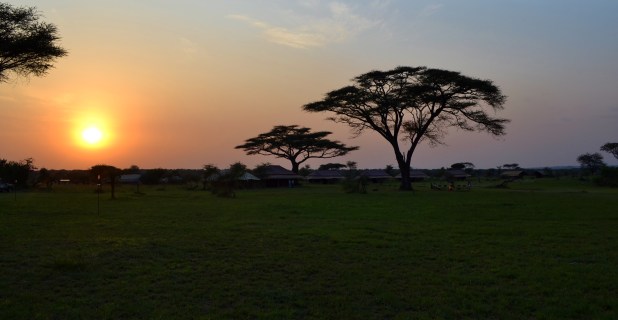
On our anthropological trip in Tanzania its kind of hard to miss the millions of wild animals that inhabit the country. So you go on Safari to see all those animals, Safari also means to go on a journey or adventure. Especially when you go through multiple National Parks, including the Serengeti, Tarangire, Ngorongoro Crater, and Lake Manyara.

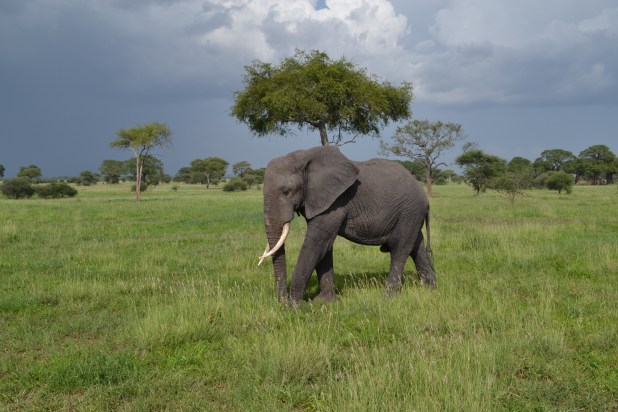
Seeing your first elephant in the wild is absolutely ..well.. wild! Seeing this massive and brilliant creature exist in its natural habitat before you own very eyes is awe inspiring, it blows you away farther than than I would of ever dreamt possible. But then you see a giraffe not even 30 yards away and the same feeling washes over you again! Can you be any more awe struck? Then you see a lion, then a lion nursing two baby cubs, and then two lions mating! What?!? Ok maybe it didn’t happen that fast, but depending on which park you visit the animals are all together and are everywhere. And we were told that our seeing all of the animals and the activities they were engaged in was highly unusual.  Going there I had no expectations on which animals I was going to see and I was not expecting to see all that we did. We did end up seeing the extremely endangered Rhino while at Ngorongoro Crater, where we also witnessed the lions mating and the mommy lion nursing her couple cubs. But this Crater has a plethora of wild animals, with millions of zebra, wildebeest, antelope, cape buffalo, birds, hippos, and much, much more.

Our group also somehow ended up in the midst of the great migration, with even more wildebeest, zebra, and antelope, which was amazing! Seeing millions of bodies all moving in the same direction with a common purpose was extraordinary. Nature really does know how to throw you curve balls in life that makes you to take a step back and reevaluate your purpose and experience in life. And I think thats one of the biggest things I took away from this experience was finally understanding where my priorities lay in life, and what I actually want to pursue in my daily existence.

Going on safari and seeing the way of the world in a way that I never experienced in my many trips to Yellowstone National Park is a very special experience for me. It really is the circle of life that they sing about on The Lion King. I hope everyone will get this sense of where they stand in this world like I did, with my mutual appreciation of being an animal damned to existence on the planet Earth and just making the best of it. Living life and going on safari.

When In Africa (Plant Trees)

“Wow! what? I’m in…I’m in…Af… Africa? When did this happen??”

Stepping off the plane onto the soil of a continent, that I thought I would never be graced with the experience of stepping foot on to, my mind was constantly repeating the same words over and over again. I was in utter shock. How did this happen? Wasn’t I just sending out college applications a few days ago? But in reality its been years, and I have somehow managed to put myself on the content of AFRICA, with a group of my peers, and one of my favorite professors. I was so flabbergasted that in my first few minutes of being there, before I even got through customs, I lost my jacket. This wasn’t a total loss since I was currently in a pretty warm country, in the midst of their summer, Tanzania. And I was ready for the adventure of a life time.

We trecked only a small portion of the beautiful country of Tanzania, which is the size of three Montanas. We did so much while we were there its hard to even evaluate what to share and what to leave out whenever I have time to share my experience.

The reason we went to Tanzania was to have an anthropological expedition and learn as much as possible. Before we left we also planned on doing as much reforestation work as possible while we are there. This was an amazing opportunity all in itself. Overall we were able to plant over 600 trees in three different areas. The first area, during our first and second day in Africa, we planted trees at the location of where the first baby elephant orphanage in Tanzania is, located in Tarangire National Park. This helped add landscaping to an area that will be snacked on by the massive, beautiful, and endangered elephants. The second area where we planted trees was at a school that severely needed some sort of shade and greenery. This area reflected what I envision to be a dry desert. And the last location was at the base of a watershed that provides a large town with fresh water, including the school where we planted trees at. We hope for the trees planted in this last location to help preserve the water source for many people, for a long time to come.

I was blessed with the experience of being able to plant only a small amount to trees and help an amazing country that in the end gave so much to me, and that will be with me for the rest of my life.

Homesickness: Or how I learned to stop worrying and looked forward to going home

I still have time left in DC.  Two more weeks at my internship (okay, two more 4-day work weeks), as well as three more TWC Friday events, with three more weekends.  And a Monday.

If you can’t tell – I’m getting a little anxious to leave.  If you’d talked to me a month ago, I would have been gung-ho about staying in DC for the summer, convinced I wasn’t going back to Montana until the day or two before fall classes started.

Yeah – I’ve definitely changed.

Don’t get me wrong – I did look into staying in DC for the summer (and it’s still an option – just one that shrinks by the day).  I did the Craigslist hunt for an affordable apartment, quickly learning that my dollar goes a lot farther in Montana than it does in DC.  Seriously guys – Montana rent is so much cheaper than DC.  Just to compare:  $375 gets me an apartment with all utilities, internet, and cable in Montana.  In DC – $450 would get me a bed and room for nothing else, utilities partially included, in a bad part of town.  I also applied for a buttload of summer internships.  But again: a couple of snags.  I needed a paid position (to pay for my overpriced and undersized apartment) and those are few and far between.  Another issue – most of the internship deadlines were back in February, during my first month in DC and long before I considered staying in DC.  For the positions that had later deadlines in April or May, those positions wouldn’t start until late May or early June – too late for me to just hang around in DC without a job.  The biggest issue though – my lack of experience.  DC is a place where you need at least a Bachelor’s degree.  Most positions wanted me to either have or be working towards a Master’s degree.  So . . . that’s an issue.

I don’t want to blame my lack of a summer internship on the hiring places – I’ve had to come to terms with the fact that I’m not a qualified candidate.  But it is a bit of a shock, realizing how much weight DC puts on a degree.  Especially for interns.  That’s what I’m starting to love about applying back in Montana – they let their students be students, and they let their interns be inexperienced.

But speaking in broader, non-job/non-house related terms:  I just miss Montana.

But I miss home.  Not just the mountains, not just the ability to get out doors.  Not just my car and my bed and my stuff (I came to DC with two suitcases, okay?  90% of my clothes are back home) – but all of it.  I miss living in my own room, without a roommate to battle for the shower lights out time.  I miss my friends, and I miss being able to call up someone to just go hang out.  That’s not to say I haven’t made friends in DC – I have.  My roommates are great people, I’ve clicked with some of my classmates, and there are a few people who I know I’ll definitely keep in contact with after this whole program is over.

But I went from Helena to Missoula and took a good chunk of friends with me.  Most of my good friends in college were people I knew in high school, or people I quickly clicked with during freshman year.  It’s weird, leaving behind friendships that I’ve been building for 2+ years and come to DC, where no one knows anyone (okay, that’s a lie – some schools here bring in 10+ students.  I’m the only student from my state, so my situation is a little different).

I miss home.  I miss the comforts I was used to, comforts I can’t reproduce here for various reasons: I can’t put down some roots (for example – I’m wary of buying anything I can’t eat simply because I’ll be flying out in a couple weeks and my suitcase was already stuffed when I came here), and friendships are tricky when you know you’ll both be leaving soon.  It took a couple months, but I’ve finally developed that homesickness that hit people I know a lot sooner.

I’ve loved DC – I’ve met great people, I’ve done awesome things (both in terms of job and personal), and I’ve got to experience things here that can never be recreated elsewhere.

But I’ve also realized that DC – it’s a city I like to visit.  Not a city I permanently want to settle in.

So Montana:  I’ll see you in a few weeks.  And I can’t wait.

“The US Measuring Stick”

He pasado 136800 minutos en Oaxaca, México y me ha gustado cada uno de ellos. Ojalá que tuviera más tiempo aquí para explorar y aprender más pero tengo que regresar a los Estados Unidos para terminar mis estudios universitarios. Recomiendo a todos que viajen a Oaxaca porque esta ciudad, ubicada en un valle de gran altitud al sur de México, es un crisol de la cultura, el arte y la gente.

Siendo de los Estados Unidos, es fácil juzgar y usar los Estados Unidos como una “vara de medir” para comparar muchos aspectos de la vida en México. He aprendido que se puede comparar México con los Estados Unidos y mantener los estereotipos perjudiciales, o se puede entrar a México con una mente abierta y cuando se le enfrentan situaciones que son incómodos o diferentes… puede preguntarse, ¿por qué no? y aprovechar la situación como una oportunidad para aprender más sobre la cultura mexicana compleja.

Tengo que admitir que no es fácil tener una mente abierta siempre. Es fácil pensar: “¡que esto no pasaría en los Estados Unidos!” y es absolutamente correcto—no pasaría en los Estados Unidos porque estamos en México. He visto choques entre coches y motocicletas, una falta de cambio cuando se compran productos sencillos en los almacenes, maestros protestando en las calles cada semana, una falta de seguro, y la lista sigue… algunos de estos “problemas” ocurren porque hay o había algo en la cultura que resulta en las acciones, pero algunos ocurren sin ninguna razón.

Mucha gente cree que el sistema en los Estados Unidos es la mejor manera de hacer cualquier actividad, pero he visto muchos aspectos de la vida aquí en Oaxaca que son al contrario de esto. En el estado de Oaxaca, más de 61% de la población vive bajo la línea de pobreza y 16% de la población es analfabeta pero esto no para a la gente de disfrutar de la vida y tener fuertes lazos familiares. Me temo que la falta de fuertes valores familiares en los Estados Unidos vaya a ser evidente en las generaciones futuras.

México ha abierto mi mente a una nueva forma de vida y de alguna manera me hizo más crítico de los Estados Unidos. En lugar de usar la vara de medir para “medir” México, creo que es mejor medirme a mí y cómo me relaciono a mí mismo aquí en México y en mi vida en los Estados Unidos. Me siento privilegiado y esto es evidente aquí en México; ahora: ¿qué puedo hacer para ayudar a otros seres humanos que no son tan afortunados como yo?

Para empezar voy a quedarme aquí para un mes después de clases para ser voluntario enseñando inglés en un pequeño pueblo fuera de la ciudad. También compartiré mi experiencia maravillosa en Oaxaca con los otros estudiantes universitarios y alentarlos a también viajar y ” medirse a sí mismo”. Estoy muy agradecido de haber tenido la oportunidad de venir aquí y además de mejorar mi habilidad en español, he ganado a nuevos amigos, una perspectiva mayor de mi lugar en el mundo y espero mejorar la vida de al menos un ser humano.

Martin Luther King. "I am not hurt by the acts of the bad people. I am hurt by the indifference of the good people"

Martin Luther King. “I am not hurt by the acts of the bad people. I am hurt by the indifference of the good people”

Uganda Have a Good Time (safari)

After we left our village we traveled through larger cities until we finally got back to Kampala the capital of Uganda. From here we started our safari adventure. We went to a nice hotel resort on the outskirt of Kampala where we lounged by the pool, had a couple beers and oven brick pizza. It didn’t even seem real that I was in a third world country and was laying by a pool, and basically one of the nicest resorts that I’ve ever been to. It was very nice and relaxing to be there, but I felt guilty and not happy that I was able to enjoy a beer and pizza and a short 10 minute drive away people sleep in little shacks with no sanitation or any clean water. The next morning we went on another long car ride, 8 hours. We traveled into the national park of Uganda, we saw a lot of baboons, which are very aggressive animals, also a lot of antelopes. We arrived at our safari home, where we slept in tents, but there was running water and a food shack with good quality food and a full bar. We went and explored an enormous waterfall. Once we arrived at our camp I was walking to the restroom and pack or warthogs came charging at me. I was very nervous cause I thought that they were rude animals, but the ones here were friendly, simply because they are used to a lot of human interactions. The next morning we went on our first safari we started at 6:30 n the morning. We saw hippos, elephants, a lot of different types of antelopes, hyenas, crocodiles, giraffes and many many other animals, that you only see in zoos. It was amazing to be able to see these incredible animals in their natural habitat. We went on a boat tour later that evening and saw a lot more animals, then the next morning we went an our last safari. We saw the same animals as before, but this time we saw fresh kill by a couple hours. I was disappointed that we weren’t able to see a lion, but all in all it was an amazing experience. I will never forget my amazing experience that I was given. I now have a travel itch and won’t be able to stop traveling until I see the world, and can hopefully help at least one person in each destination that I can hopefully one day travel to. Thank you for reading this, I hope you all had a great day.