WWII and Shoes

My biggest focus with the GLI program has been the question of what gets the point across the best.  In what way can one human being make a message really resonate with another. This trip made me realize that there can’t be one right way, there has to be many ways to get to many different audiences.

I did a lot of amazing things during my six week stint in Vienna, including visiting Budapest, Munich, and the Czech Republic. Each city had its own story to tell, and in most cases they had to tell me in under 48 hours. Some of these stories are familiar, and some with a new twist. For the longest time I’ve thought that stories were the best way to make things really stick. But since being back in the states, I’m starting to realize that the things that stuck with me aren’t the stories, it’s other various things.

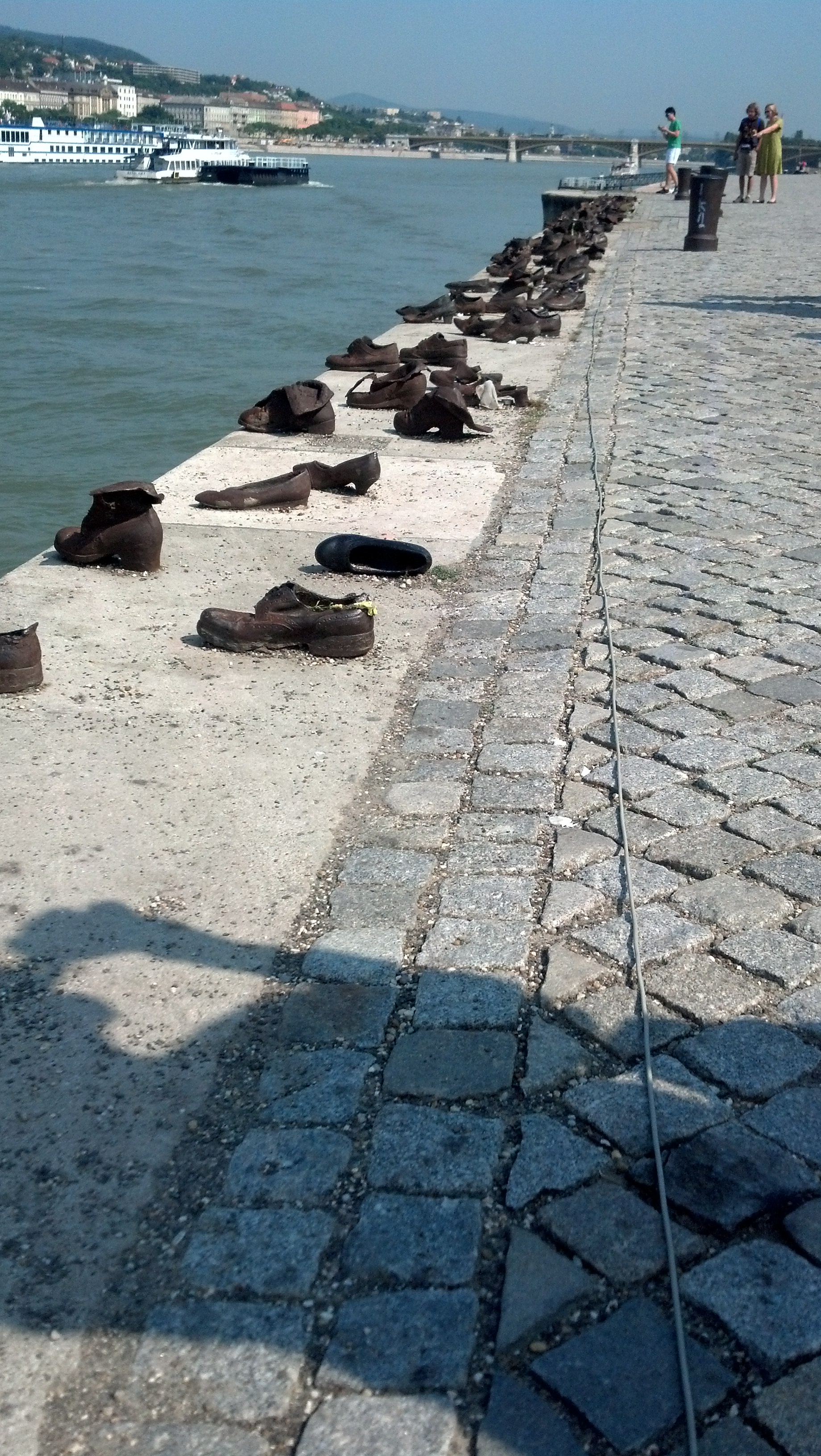
In Munich, I visited Dachau, or the first work camp under Hitler’s regime. But somehow, even though I heard the stories of the horror that occurred in that place, it didn’t stick. I barely remember it. There were lots of places on that trip related to WWII, as most of the fighting was in that area of the world. But the only place that resonated with me was in Budapest. It was a memorial for Jewish victims in the city who were shot by arrow cross militia men into the Danube. The memorial is a bunch of shoes along the Danube bank. And though it was subtle, it hit me the hardest.

For the longest time I have always thought of WWII being much further in the past than it actually was. But this memorial was of shoes. Style and fashion and how it evolves has always been of interest to me. The only thought I had was that these shoes were so similar to ours. Half of the women’s shoes are styled pretty much exactly the same as some of the ones in my grandmother’s closet that I used to play dress up with as a child.

As it turns out, that was what I needed to make this story real to me. Not a story about the holocaust. Not a story about Hitler’s rise to power. Not a tour of the places in Munich. The thing I needed was to see an artist’s memorial using shoes.  This is why we need artists. We need musicians, painters, writers, story tellers, and everything else. We need these people to put emotion behind fact and turn facts into perceived reality.

IMG_20150701_095513_503

What an Atheist Learns at Corpus Christi

It was rather surprising when I found myself at Saint Stephan’s Cathedral on Corpus Christi. As a catholic turned atheist I hadn’t been to mass in years, and I did it while I was out of country nonetheless. Since I went with a group of music students, we were there to listen to Mozart’s Requiem along with a couple of Handel pieces being performed in the space they were originally written for. I found the entirety of this experience to be something much more than any mass could even hope to be in the United States….or at least the churches I’ve been to.

The mass started out with incense. Incense everywhere. The sweet smell filled the room and left no space for any other scent to be perceived. Next came a procession of families tied to the church, followed by all of the altar boys and officials of the church. All were in traditional garb. From the sectioned off area to the front of the cathedral was painted with costumes that could only be outshone by the architecture of the building itself. As stated in my previous blog post, Saint Stephan’s cathedral is of a Gothic style. This means that of course every inch of every wall is decorated with the finest of details. One could get lost in the details for the rest of their lives, if it weren’t for the gothic way of forcing the eyes to the front of the room. This ensured that we paid attention to the sermon.

Though it was hot, and we were sitting (and occasionally kneeling) shoulder to shoulder on hard benches, it was not hard to make it through the entirety of the program. The chanting filled the entire space with one vibration that we could feel. The sermon was entirely in German, but we could still generally get the gist. The music was absolutely gorgeous. Every part had enough space to really be heard, it wasn’t all cramped together in a tiny space where they only thing you can hear is the sopranos. Every part was allowed to flourish.  During greetings there was a sense of connectedness when you shook the hand of your neighbors. During communion it was something else to have the taste of the body and blood of Christ at the tip of your tongue.  At one point in time during the music you could see the incense’s smoke flowing upward toward the light of an open window and the only thing that I could think of was the smoke’s ascent to the heavens.

All of the senses were in overdrive. There was not one sense that wasn’t being utilized to create this indescribable feeling. Some people no doubt think of it as the presence of God. Many of us on the trip that I spoke to after said it was more unsettling than comfortable- it probably didn’t help that most of us are non-believers. Nonetheless, so many people made it their lives work to craft this feeling.  Many people expressed their love and/or fear of God through the format of the service.

And this lead me to the realization that expression isn’t just for communication. Expression brings feelings—whether that feeling be a cozy one or one that shakes you to your bones. It’s so much more than communication. While communication can bring you facts or opinions, it’s really the expression of these facts that gives somebody feelings of empathy. With no empathy, there is no real understanding. I can calmly state that the world is going to end for ages, but if nobody else truly feels the same way I do, then what good is it? People would continue on in their normal way if they hadn’t really internalized the message.

Expression, no matter the medium, is far more important than I have ever previously given it credit for.

Expression in The Walls

For the past three years, I have been studying in-depth one side of my theme-communication. So for this study abroad, I decided to leap into expression, as after much self-reflection I realized I had no clue really what expression was to me. I, for the life of me, could not figure out just why expression was important. Don’t get me wrong, I knew it was, but I wished to know why. What drives humans to express, and what is the purpose? For my study abroad, I chose to take a trip with 18 music students to Vienna. I thought I would learn mostly about music, but thus far I have been very wrong.

I spent the first couple of weeks not learning about music that much at all. My class did not start for three weeks, so I spent my time taking walking tours offered by another class and an Art teacher that tagged along for the first week, Dr. H. Rafael Chacón. Through his stories and insight, I have found a purpose to expression.

Vienna is an interesting city. I have traveled around Europe a lot and have seen many ruins and buildings that were made during the time that the style was popular. Vienna, however, displays many buildings that were built more recently when the particular architecture would be out of style, but with a purpose in mind (note- recently is still about 200 years ago). Take for example the Rathaus, which hosts the mayor and city council. It was built between 1872 and 1883 in a neo-gothic style. Why? Gothic style architecture itself flourished during the 12th century France and lasted into the 16th century. Around this time you see cities becoming more independent- almost to the point that they were independent city-states. So when making a seat for the mayor and city council, the architects pulled from a time frame that was reminiscent of city government. The architecture choice basically screams to the people (or it would, if people knew much about art history unlike myself) “Hey, this is the city government!”

The domes in Vienna also are very expressive. There’s the dome of St. Michael’s gate- the entrance to the Hofburg. This gate was never designed to be used for any other purpose than a gate- which is weird. Most domes in European palace architecture are placed over important spaces such as great halls or throne rooms. So why here? Dr. Chacón believes it to be a symbol of wealth and power. During the time this was built, it was ever important for the Hapsburg in rule to remain in power. This was one of the last monarchies. So putting the dome at the gate from the city to the palace was their way of reminding the people that they were in power.

Thus far I’ve been talking about the expression of the royals to the people. But what about the people themselves? That’s where this next dome sort of comes in. It is, in fact, probably my favorite dome that I’ve ever seen. It’s gorgeous, it’s golden, and it’s basically a big “Fuck you” to the art academy. I am referring to the dome atop the Secession building. At the point in time of its building, times were changing. Art was shifting. The artists didn’t want to be stuck in historicism, they wanted something new. So they started the Seccession movement. This dome, which serves no purpose as it is airy and does not change the inside of the building at all, makes fun of the other domes of all of the historicism buildings.

What I’ve learned from these three pieces of architecture (along with many, many more) is that sometimes expression is an enhancement to communication. Sometimes, simply saying you are powerful isn’t enough. Sometimes you have to build a dome to really prove your point. Sometimes, the action of doing something speaks much louder than the words ever could.

Zambia, a Unified Nation

After visiting Zambia, I was surprised to learn that it is one of the poorest countries in the world. Although there is a lot of poverty, Zambians have a high quality of life. The people were happy and very friendly to tourists. This shocked me as in most of my travels abroad I’ve had to be careful not to be taken advantage of and even robbed. There’s some frustration in Zambia that the country doesn’t perform as well as it could, but the reality is that it’s doing great for a nation of its type.  Zambia is a very stable country that has never fought a war. Part of the country’s success is that the government recognizes all of the nation’s 73 chiefdoms. Each chief controls his own land and the profits from any economic activity in his area. Each tribe speaks its own language, but the tribes are able to communicate with each other in English due to their colonial history with England. It is rare for a county with such diversity to get along, particularly in Africa. The reality is that the people of Zambia are very peaceful, which is surprising given their northern neighbor, the Congo, is fighting a civil war. These peaceable traits could make Zambia very attractive to a strong tourism industry if there were enough investment. According to our guide, who has led safaris in Africa for eight years, “Zambia is the real Africa.”

Livingstone’s Tourism Industry

Livingstone is known as the tourism capital of Zambia. This is due to its location near various national parks including the World Heritage Site, Victoria Falls. Victoria Falls is the country’s third largest industry only behind copper mining and agriculture. The city itself is completely reliant on this industry either directly or indirectly. Local villagers profit from the falls by selling merchandize to tourists. I don’t know if a better example of globalization exists than Zambia’s tourism industry. In a formerly isolated black country, it is now common to see white tourists on the streets. In the city, many locals work to attain desirable jobs in lodging and restaurants, while others try to sell any goods they may have to tourists on the streets. This has affected the village way of life visibly as locals exploit this new market. Though village life is common, they have also modernized due to western influence. For example, the Makuni village near Victoria Falls has a paved road leading to it, has walkway signs for its dirt trails and its chief owns his own vehicle. This success is largely due to the chief working with the tourism industry to arrange for foreigners to visit villages where the locals are more than happy to give tours and sell goods. The villagers benefit economically from this practice, but It is also changing the culture and identity of these people.

Most visitors come to Zambia to visit the grand Victoria Falls. This site is the major funder of the rest of the country’s 20 national parks due to the large amount of visitors is receives. One of the major faults in the industry is that the country’s other parks aren’t well advertized by the government either domestically or abroad.  The government doesn’t provide enough funding for brochures to be printed for display at the visitor centers or lodges. For example, even though Victoria Falls receive a lot of visitors, the park which surrounds the falls is hardly recognized by visitors. These are places where the industry could expand.

zambia

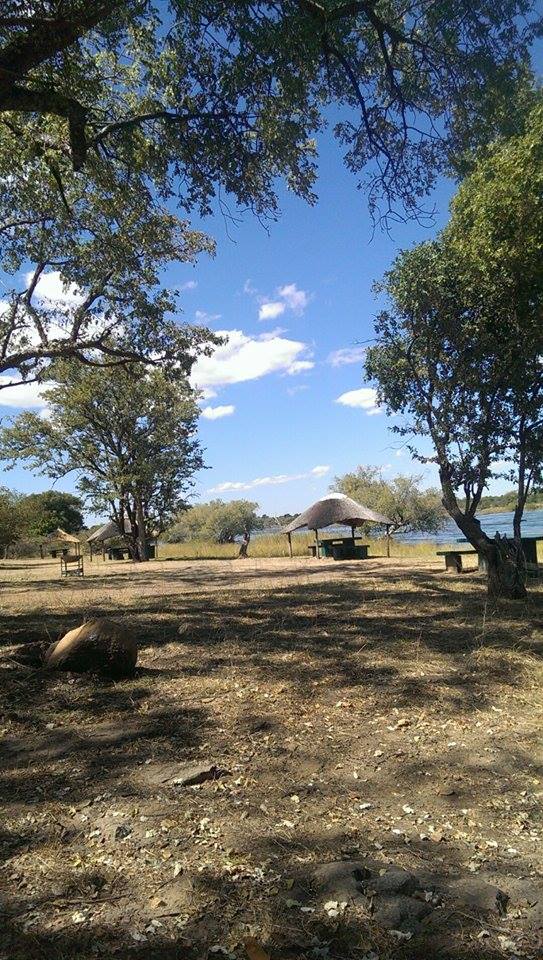
Empty picnic area, Mosi-oa-Tunya National Park

The other inhibitor to expansion is that most the money the tourism industry brings in goes to companies abroad. All lodges except one we visited were foreign owned. It’s one of the major hurdles a developing nation such as Zambia has to overcome. The lack of wealth in Zambia equates to a lack of domestic investment.

On Zambia’s Conservation Issue

My first few days in Zambia were focused on studies on the local tourism industry as well as learning about locals, their culture and lifestyles. We spent the days visiting local organizations, trusts and lodges and following up on what we learned with afternoon discussions. The focus on the class was on the importance of the tourism industry to local economies and the conservation of environment and wildlife which attracts visitors.  We spent a lot of our time with the Zambian Wildlife Authority (ZAWA) which serves in the same manner as the National Park Service in the U.S.

The largest issue with conservation in Zambia and its surrounding countries is poaching. It’s done in such a large scale that it’s nearly eliminated lion and rhino populations and heavily affected water buffalo, elephants and other species. The issue is so severe that there are only nine white rhinos in the country which are guarded 24/7 by armed guards from poachers. Most illegal hunting however is done with the use of snares. Snares are simply tangles of barbed wire and are so widely used that ZAWA has a difficult time keeping up. To put it into perspective, the lodge we stayed at after our first week would sweep its roughly 100-acre property each week for snares. Wildlife organizations we visited in the area would also display snares they’d picked on large stacks by the hundreds. It is difficult to catch the culprits since there is so much land they cover and they are able to set up traps under the radar. Those who are caught are usually found when checking on their snares. They face a prison sentence when they do. Much of the issue is due to a lucrative market for such animals in a heavily impoverished area. This makes it a challenge to keep people from resorting to poaching for a living.

Zambia

ZAWA guarding rhino’s in Mosi-oa-Tunya National Park

One of the more attainable methods to combat poaching is through education. In Zambia, education is not easily attainable, but it is possible. Public schools are often underfunded and sometimes hard to reach. Even so I was impressed to see how many kids attend school, which was visible when we drove by as classes were dismissed. Toward the end of our stay we were able to visit a public school that was well funded by the African Wildlife Foundation. They renovated their facilities and also the style of education, focusing on conservation of the environment and wildlife. I wonder what the long-term impact could be if all schools were that way.

zambia

AWF funded school focuses on conservation

ZAWA has only limited funding, so is its ability to operate is limited. This leads to a lack of confidence in the organization by locals and businesses. The owners of our lodge indicated they would be willing to work with ZAWA, but there is little interaction between them and other tourist lodges. Perhaps the private sector could help the organization’s operations in the future.

The Final Moments and Jumping the Pond

August 26, 2015

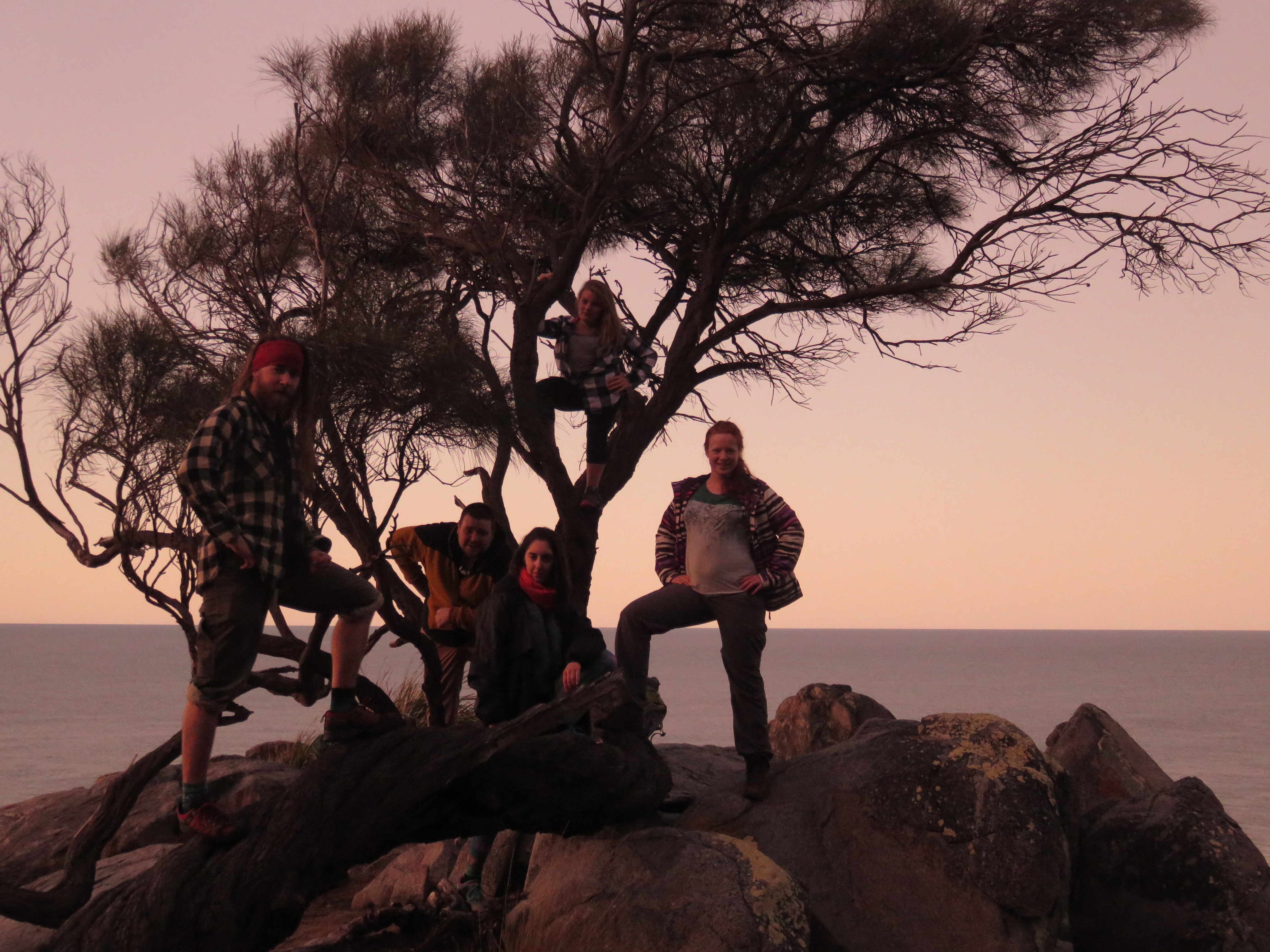
Wrapping up in Tassie included diving the Great Barrier Reef, Climbing above Seals on the coast, taking finals, saying goodbye to some of the most incredible people I’ve ever met, and more adventures than I could have ever imagined. It was a place that once was overwhelmed by the fear of the unknown, but by the beginning of July, was just as hard as leaving my home in Montana. I’ve been back home for about a month and it still amazes me just how much I miss Australia. I grew to love the culture, the people, the food, and the continual kindness that everyone showed me. I was able to explore so much and took classes about subjects that were completely foreign to me. It was incredible in almost every aspect.

I think one of the hardest parts of going abroad is the idea of leaving this new home you’ve created without knowing when you’ll be back. Most times, we visit our homes on Christmas or maybe spring break. But, when your home is on the other side of the world, things are automatically more complicated. Coming home, while great in a different way, was one of the hardest parts of my study abroad experience. However, there is a Whinny the Pooh quote that sums up the entirety of this experience… “How lucky am I to have something that makes saying goodbye so hard?” This quote really hit home, because it’s exactly how my experience was. I looked forward to coming home, but never wanted to say goodbye. I created a new family and home. I’m so incredibly lucky to have an experience that changed my life in a completely positive way and I couldn’t have asked for anything more!

.IMG_2276

Continuing the App

August 24, 2015

It has been quite the summer. It is difficult for me to believe that it is almost time to begin another semester, yet alone the first semester of senior year. I have helped my younger sister move to college and my parents have transitioned to new jobs. It has been difficult balancing family, friends, and work, but somehow it was manageable. It has been a summer of transition and adjustment, but it has all been for the best. Progress on the wheelchair user fitness application has not happened as I planned. Unfortunately, Professor Laskin (the Physical Therapy professor for whom my partner and I are making the app) has been preoccupied with other obligations that took precedence, so our communication with him has been minimal. I have corresponded with him recently, and we will plan to take up the project again when the semester begins and will discuss a new progress plan.

If anything, this project has taught me about the importance of flexibility and reinforced independent learning. Even though I thought I knew exactly how it would work out, I had to accept the fact that external situations do take precedence sometimes. Even though I did not accomplish what I had “hoped”, we were able to do almost an entire layout of the app with almost all of the screens. There is baseline functionality to navigate through the screens and interact with the controls, like the text inputs and buttons. This project has reminded me a great deal of my highschool experience because I was homeschooled during highschool. I have had to acquire resources for myself and teach myself how to create this app in the Android programming environment. Fortunately, I had a solid programming base in multiple languages which helped, but the learning curve was still steep. Every little thing I learned how to do was a tremendous victory. I spent days trying to get a “spinner control” also known as a drop down list to work. That right there was a huge accomplishment. Also, you cannot approximate color; you must enter specific RBG color values to make sure it is consistent on different devices. Just a word to the wise, what looks like deep burgundy on one device, looks like a brownish-pink on another. Those colors are totally not the same….save yourself time and enter specific values, do not pick random colors on the color wheel.

This coming fall semester, I plan to continue to modify it aesthetically, continue working on the fitness calculator, and create the integrated database within the app. I am excited to continue working on this project with the goal of having the first generation app ready to download in spring of 2016. Hopefully, we will be able to present it at the UM Undergraduate Research Day and at the American College of Sports Medicine Research Conference in Tacoma next year. I am looking forward to beginning a new semester, and I am motivated to finish building this app.

Lisa H. Morgan

Healthcare in Ecuador

In 2008, the new constitution of Ecuador declared healthcare must be accessible by all residents. Since this new mandate, Ecuador has invested heavily into public health which has resulted an in increase of the budget of Social Security health care services. There has been significant improvements in healthcare and public health in the last 5 years with this increased budget.  New technology is being purchased in large facilities, increase in staff and changes in age restrictions and individuals with preexisting medical conditions who may now join “voluntary”. More people have been paying into social security with strengthening confidence in healthcare. Full and free medical coverage is being provided under this new health system. Overall, by allowing residents to pay into this new Social security health care program for a monthly fee of approximately $70, accessibility and quality of public health have only grown. I was fortunate to witness many of the positive impacts and obstacles of this new healthcare plan Ecuadorians are paying into.

Volunteering at several different clinical settings in Quito, Ecuador I was able to see many benefits of the new healthcare system. One of the ingenious benefits of this new health care system is that healthcare is completely free for children under the age of 5. This includes the cost of vaccinating children. Immunizations such as diphtheria, tetanus, pertussis, mumps, hepatitis B, etc. are free of charge. By providing these vaccines, Ecuador is able to prevent the resulting life threatening diseases in these children as well as avoiding the issue of parents refusing to vaccinate their children and compromise herd immunity, the overall immunity of the general population, as seen in Disneyworld.

Although immunizations are provided free of charge for children under the age of 5, the parents or the current guardians of the child do not always have the correct paperwork in place, thus the child cannot receive the immunizations. This is very troublesome because not only are parents not taking advantage of a free service being provided to their children, but they are putting others at risk as well.

Another service that is provided free is prenatal care. By increasing prenatal visits there is a corresponding decrease in poor perinatal outcomes.  This is wonderful service as it is probably the most cost effective way in reducing prior and during pregnancy. However, as you move from urban to rural Ecuador, the utilization of this service declines. One of the Doctors I was following explained that this might be due to some rural people’s current mistrust of modern medicine.

There is a higher percentage of individuals in rural Ecuador than urban Ecuador that still practice traditional medicine.  These individuals usually have little understanding of modern medicine and how it works as well as mistrust in the people who administer this type of medicine.  Typically in rural Ecuador, when a pregnant woman, or her family, with these beliefs is giving birth often the birth occurs without complications; however, when the birth does not, usually the family waits until the woman has been in labor for a very long time and complications have become exacerbated. By the time the family brings the woman into the clinic it is almost always too late. The family feels that it is the Doctors or clinics fault for not saving the child and or mother. Thus, continuing the mistrust of certain individuals in modern medicine and the new Social Security health care program and the amenities it has to offer. Although there are great benefits being provided in the new health care program in Ecuador there are still obstacles to be addressed and overcome.

DSCI0095

Hospital San Francisco is a new public Hospital built only 4 years ago.

Africa In My Blood – What I learned

I wanted to make a post especially for summarizing what I learned while I was in Africa. I want to share these things because I think they are important, but they are also my most cherished souvenir. I learned practical things but also some things about myself. If I was to break it up I would have to say that the first two weeks I learned a lot of important things about Africa that I had misconceptions about before. But over the second two weeks I learned more about myself.

I learned a lot about conservation in Africa while I was in Masebe. Issues there are all pretty complicated because of a couple of reasons; both the humans and the wildlife demand a lot of space and don’t necessarily get along very well and a lot of the world has opinions about what should be done regardless of whether the information they have is correct.

IMG_3780-EDIT-FB

A lioness which was in the Moholoholo Rehabilitation Center, one of the places that will come in and remove problem animals from areas where human/wildlife conflicts arise.

Many of the communities that have to deal with the wildlife on a daily basis are very poor and many of them need livestock or land to make a living and feed their families. Conflict arises when the wildlife in the area start interfering with their ability to make a living through those means. For example, if there is a leopard in the area and it has started to kill their livestock, in order to keep their family from starving these people have no choice but to trap or hunt that leopard, whether or not it’s legal. One way they can fix this issue is by putting up fences. In my experience with fences in Montana they are mostly a problem because it creates barriers in migration routes. In Africa this is a problem as well, but there are other benefits to the fences that may outweigh the negatives. Fences in this environment serve many purposes and in most people’s eyes they see them as a good thing. Fences keep the wildlife out of communities, and with all the dangerous wildlife this is a pretty important function, they also help keep people out of wildlife spaces, especially in the case of poachers. The fences are also quite fortified compared to fences I was used to and it’s because they are meant to be more permanent barriers than the fences we have in Montana.

IMG_3532-EDIT-FB

A bull elephant we saw in Kruger National Park

Although the fences can fix issues for communities, such as elephants eating all their crops or lions eating their livestock, they also create issues for a lot of wildlife in the process. How many elephants do you think there are in Kruger right now? 1000? 100? Too few? There are over 20,000 elephants in Kruger National Park today, which is triple the carrying capacity, or how many elephants Kruger can sustainably hold. (http://www.krugerpark.co.za/krugerpark-times-23-elephant-numbers-18006.html). I was shocked to find this out, I was pretty confident that African elephants were having a hard time. The media has falsely advertised the problem of African elephants, there aren’t too few, there are way too many. The real problem is what to do with these animals. Part of the reason that they are so over populated is because they are confined to one space thanks to fences. There are many advocates of tearing down fences to connect national parks all over Africa. There are other projects in place to help control their population like the implementation of contraceptives for female elephants. Then of course there’s the thing no one wants to talk about, culling. The fact of the matter is that culling may be the only way to bide enough time right now to come up with a better solution before the environment is totally altered by the over population, but officials are afraid to make that decision because the media would explode with negativity if they did. People would be irate – how could they kill these animals in cold blood?

Each solution comes with severe pros and cons. I saw the effects of these animals first hand while I was in Kruger. Elephants are destructive, the eat by knocking down trees to get to the fruit and leaves at the top. We drove through some spaces that were nothing but pushed over trees. The trunks were torn and the tree was dead. I don’t envy the person who is in the position to have to make this decision right now. If you take down fences you risk poaching and conflict with people, if you choose contraceptives you are going to have to spend a lot of time and money as it isn’t easy to administer a drug to a four ton animal, and if you choose culling you will have to face an onslaught of angry people who don’t really understand the issue. I don’t know what the right answer is, but it’s something I know I will be thinking about for a long time.

* * *

“Africa In My Blood” is actually the title of a book I read a few years ago. It was an autobiography written in letters about Jane Goodall, one of my biggest idols. In one of the first letters she wrote home after she arrive in Africa for the beginning of her incredible work with chimpanzees she wrote, “…on the whole I am living in the Africa I have always longed for, always felt stirring in my blood.” This quote resonated in me when I read the book, but it held a whole new and deeper meaning for me while I was in Africa myself. I felt a strong calling there that I haven’t felt before, and I am certain I will be back one day. I also learned that I actually do love to travel, given this was my first trip out of the country I wasn’t sure how I would take to it. I learned that I love the sky from caving and I also love the ground from scuba diving (seasickness). I learned that I can be adventurous and I can do lots of amazing things if I just go for it. I also learned how to travel responsibly and that it’s important to look into the organizations you travel with if you want to make a positive impact in a new place. I inadvertently made a good decision with ISV, they are very environmentally conscious and all of the activities we did, especially those that involved interacting with animals, were done with the utmost respect for the culture and the environment.

This trip was just incredibly enriching and it both filled and fueled a need to see the world and do good in every aspect of my life. I can’t wait to go on my next trip where ever that may be and I know I will carry the lessons I learned from this trip with me for the rest of my life.