
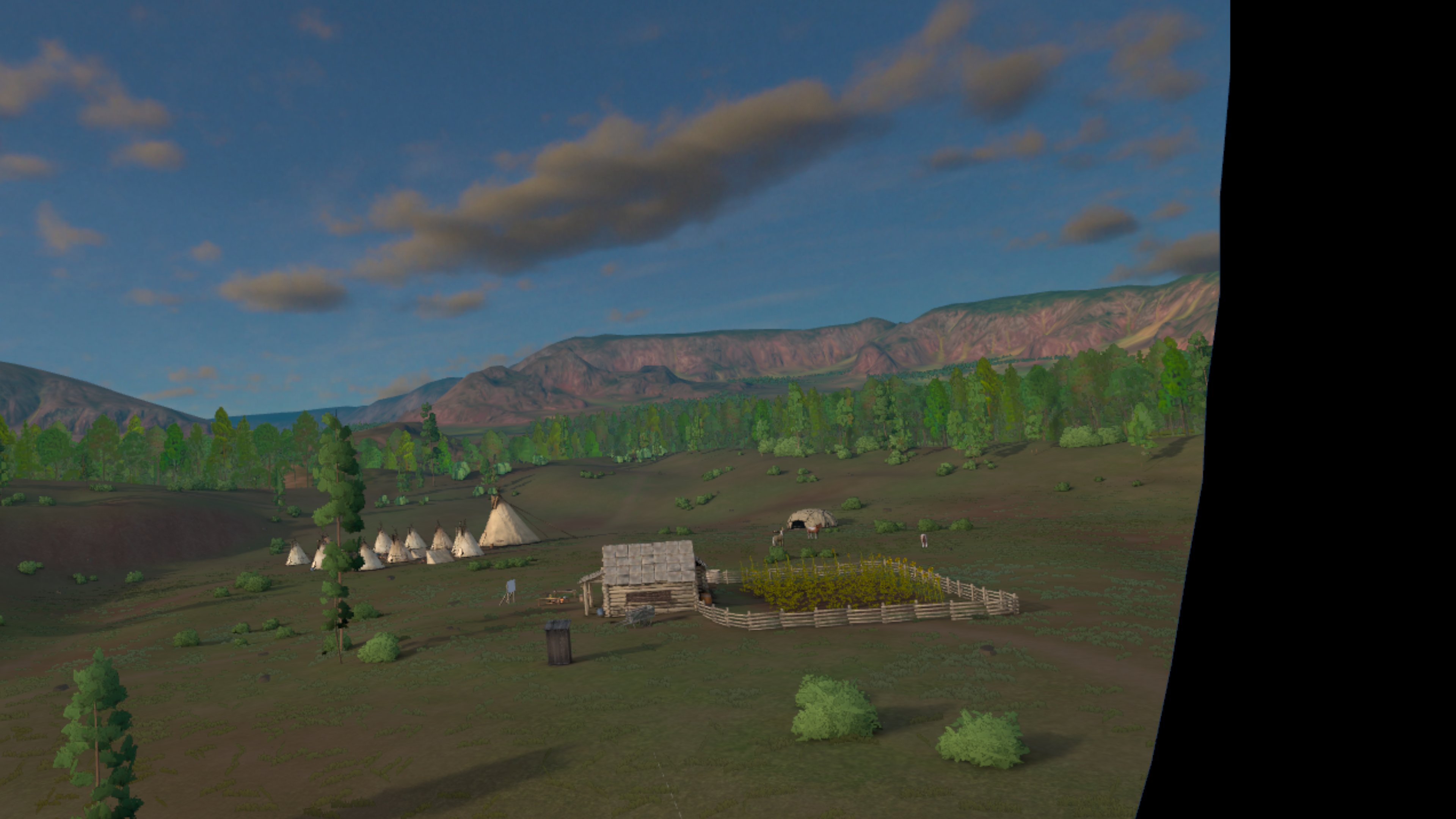
My name is Neveah Killsnight and I participated in a Cheyenne Language class taught through Virtual Reality this summer. The Cheyenne Virtual Reality Project was created by Northern Cheyenne Community members through the American Institute for Research (AIR). The purpose of the class is to learn how Virtual Reality (VR) can support language learning. There were 13 total students and 2 instructors from locations all over the United States. All of the participants are Northern Cheyenne tribal members. The program provides the participants with Meta Headsets. All of the participants were at different levels, so I wasn’t sure how much we were going to learn. I had no experience using virtual reality headsets either, so I really did not know what to expect.
The class met weekly on Monday, Tuesday, and Thursday for 1.5 hours at a time. The class started in March and ended in August. In addition to these meetings, there was homework assigned outside of class as well. The goal was to get 10 hours of language learning a week. These 10 hours were a mix of individual and group practice. All of the students were starting from a different level; some had never taken a class before, some were being taught at home but never taken a class, and some were more advanced. In other words, there was no requirement for the participants’ Cheyenne language level. As far as the virtual reality space, it was created to look like the Northern Cheyenne Reservation. There was a small teepee village, a fire, a sweat lodge, a wood cabin, river and spring, and animals.
I came into this program only having taken one Cheyenne class at Chief Dull Knife College the summer prior. I lived with Cheyenne speakers who taught me a few words, and I would hear them speak the language to each other. I knew basic words and how to say my name and introduce myself. During this class, we learned how to introduce ourselves and others, animals, how to introduce our family (mother, father, grandparents), how to say what you were doing or where you came from, and other basic phrases. As class progressed and we became more comfortable with VR, we stopped being able to see the spelling of the words and only learned by ear. Learning this way brought us closer as a class because we had to interact more and learn from each other. Even though we are at different locations we have become closer as a group. Additionally, working with people who were at different levels was actually beneficial for our class. The ones who were at a higher level were able to assist others, and we all learned from one another.
Learning in the virtual reality setting that was created to look like the Northern Cheyenne Reservation, reminded me of stories that my grandparents would tell about how he grew up. My grandpa and grandma were both Cheyenne speakers, it was their first language and English was their second. My grandpa would always tell us about the wood cabin he grew up in. I remember once we were driving on the highway, and he knew the land so well. As we drove and he would tell us the history, he pointed at a small creek and told us that was where he used to play, he pointed at the abandoned buildings and told us who lived there, and other stories. Learning in this setting that looked like home made me feel more connected to my culture and family, even when I was across the state in Missoula.
Through this experience, I learned the importance of making language learning more accessible to tribal members throughout the United States. Our tribal college offers language in-person classes, but it might be hard to access them unless you live on our reservation. Almost half of the total enrolled Northern Cheyenne tribal members live off the reservation. The Cheyenne language is also considered an endangered language, due to assimilation, colonialism, boarding schools, and other government policies that discouraged speaking of native languages. Our language is crucial to our identity and holds so much cultural and spiritual significance. It is important that we continue to learn our language so it does not disappear. I know that this struggle is shared with many indigenous people throughout the world. The Cheyenne Language VR Project taught me so much about language revitalization.
Before this class, I never even thought that learning a language through virtual reality was possible, even the online classes I took were challenging. The language classes I have taken were very structured, and we were always able to see the language spelled out. This class was very immersive. Through this experience, I was able to learn Cheyenne the way our ancestors did; through interacting with each other and hands-on practice. This expanded my knowledge on how we learn a language, and I hope that this can be used to make language learning more accessible in the future.

