Studying Abroad in Cork, Ireland

Hello! My name is Daniel Martin, and from September to December 2024 I studied abroad in Cork, Ireland at University College Cork (UCC). My global theme is Resources and Sustainability, and my global challenge is how to use governmental policy to solve environmental problems such as climate change, especially in rural states like Montana. I used my experience to better understand and work towards the resolution of my challenge because Ireland is a vastly different place than Montana, and by understanding its environment, people, and issues, I could prepare for similar analysis back home in Montana. A key part of my experience was a class I took at UCC called People, Places, & Politics: Ireland 1660-1960. In this class, we took a deep dive into understanding Ireland’s past and present through the lens of the country’s relationship between environment and people. In one particular lesson we looked at how land was used by various groups throughout Ireland’s history to control populations and how those policies were able to enact, or failed to enact, lasting change in Irish history. 
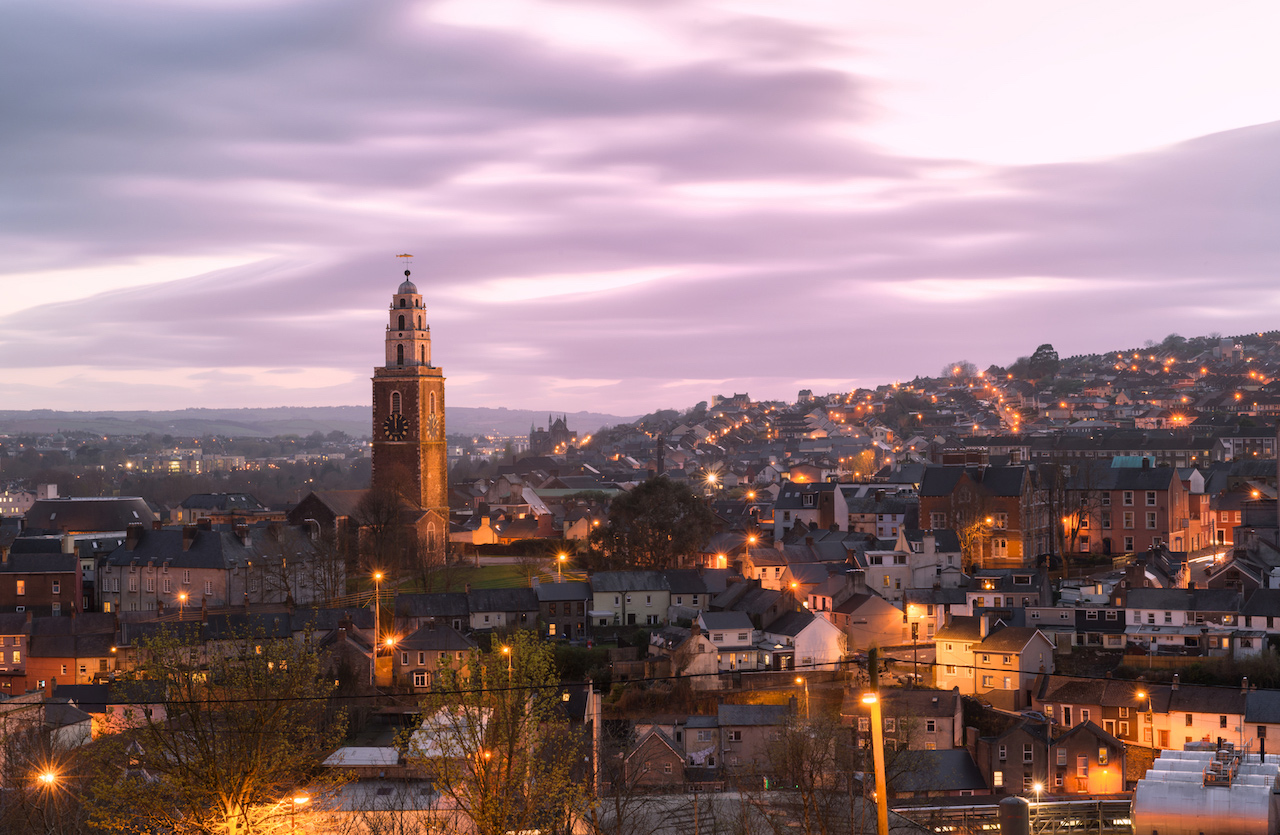
Cork City at Dusk

Alongside the courses I took at UCC, I also learned innumerable things from travelling throughout the country and experiencing the environments and communities that existed in Ireland. From the rocky coasts of County Sligo to the hilly farmland of County of Meath and from the distinctively British culture of Northern Ireland to the Irish-speaking areas such as the Dingle Peninsula, I was able to take my learning outside the classroom for an even more amazing experience. I was also fortunate enough to travel throughout Europe, where I expanded my cultural immersion. On one particular trip I visited Brussels and visited the headquarters of the EU, an organization whose climate and environmental policies, including their Net Zero plans, were key to understanding Europe and Ireland’s approach to climate change and sustainability.

One of the coolest things about Ireland I learned while on my semester abroad is that Ireland’s nickname, the Emerald Isle, is partially due to its prime environment for growing grasses. All this grass allows Ireland to be a world leader in wool production, which it uses for its famous sweaters, and butter production, thanks to the especially productive dairy cows on the island.

My favorite part of the semester in Ireland was exploring the incredible outdoor opportunities the country offered. In one of my favorite trips, I took the train from Cork to a city north of Dublin called Drogheda, not far from the border with Northern Ireland. Beginning in Drogheda is a long-distance hiking trail called the Boyne Valley Camino, which is part of the larger Camino de Santiago in northern Spain. I spent an entire day hiking this trail, which took me through lush farmlands, ancient battlefields, and finished at a Cistercian Abbey from 1142. This hike allowed me to truly experience the Irish outdoors while also exploring the rich history of Ireland.
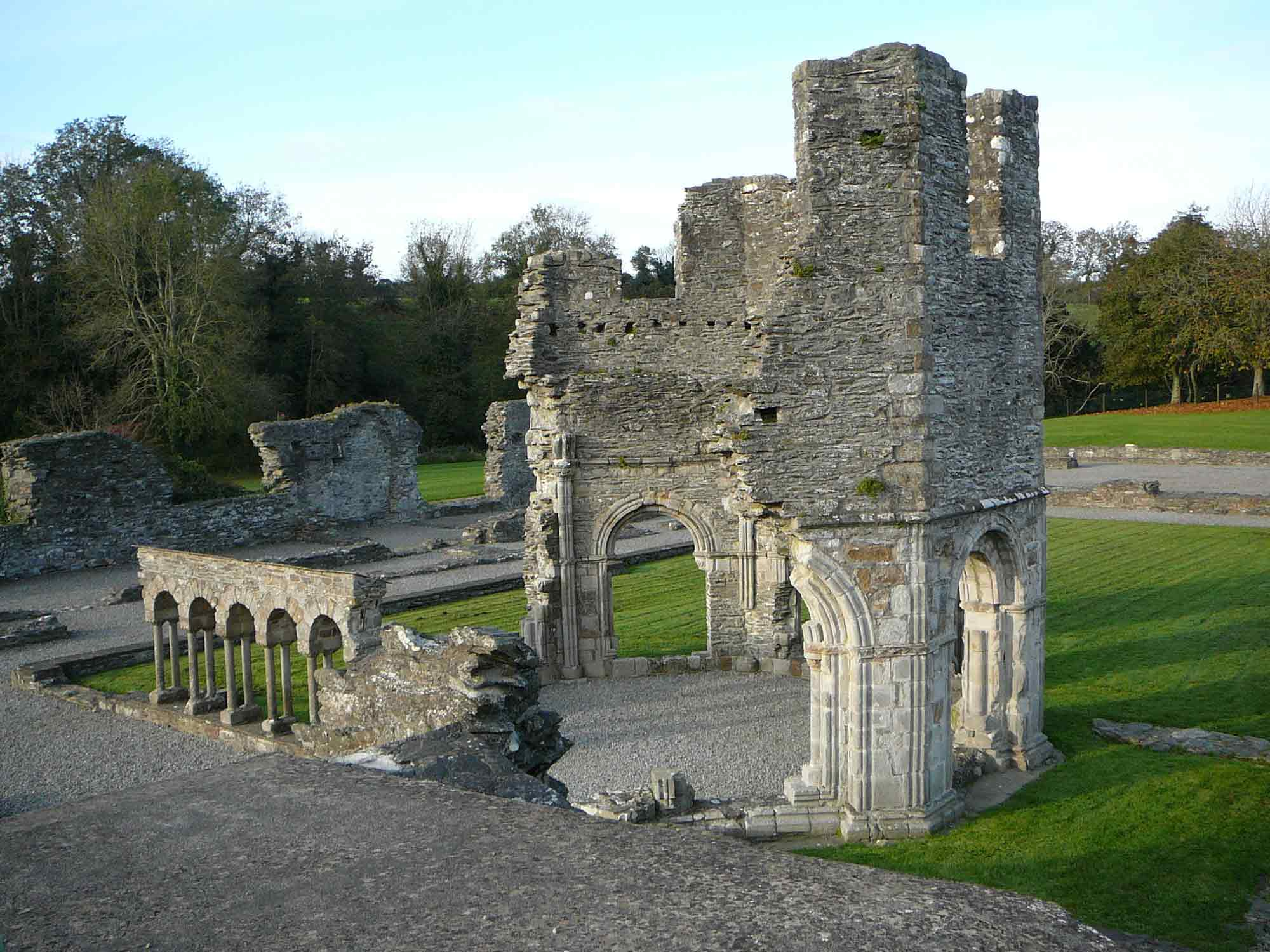
The Ruins of Old Mellifont Abbey near Drogheda, Ireland

Me on a trip to the Aran Islands, off the coast of Galway

As I reflect on the 16 weeks I spent in Ireland, it is amazing to reminisce about everything I experienced, all the people I met, and the things I learned. I highly recommend a semester abroad for anyone who may be interested, it truly is a life changing experience. Of course, I could not have done it without the generous support of the Franke Global Leadership Initiative, of whom I am very grateful.
European Union, Brats, and the Bundesländer

Complicated and interlocking political and economic administration systems. I expected most of Germany to be devoid of trees and heavily influenced by the Cold War cement. Waking up at the end of my flight I noticed a polka dotted landscape of villages that grew in size while coming closer to major cities. All over Germany there are fields of wind turbines and solar panels. A brave utilization of land, lush and beautiful. The area I called home for a year is the ‘Ruhrpott,’ distinguished by a preserved mining heritage reminding me of Butte, America. Embodied in the state-of-the-art UNESCO museum at the Zollverein Mining area, it follows Germany’s history in utilization of coal mining, industrialization, and worker life in the area. This museum displays local artifacts ranging from archeological treasures found while mining, cultural tides of an imperial past, and the final chapters of coal mining in the area. Local Dortmund peers educated me on the Fußball Club rivalries and diverse communities within the Ruhrpott. As one could expect, this city prides itself on diversity with citizens coming from all over the world. I was particularly impressed with the international students at the Techniche Universität campus as they number 14% of the student body.

I opted to intern with a local high school as an English teaching assistant in my second semester. Unsure how this experience would go, once these “at risk” students learned about where I was from their curiosity pushed them to communicate in my native language. It helped I spoke enough German to answer simple questions and I was able to play a bit of charades when these students wanted to dig deeper than their English textbooks allowed. (I was really proud when during this year my I managed to pass as a local giving directions at the Hauptbahnhofs.)

Personal connections are the lasting souvenir from Dortmund. In an online German Intensive Language course, I invited a bunch of peers out one evening and quickly became friends with a Turkish fellow, Maltepe. He had been attending a Military Academy in Istanbul with the expectation to become an officer. I immediately knew I’d found another politics buff. We traded thoughts about Turkish current events and American culture. I enjoyed telling him stories of my Montana home and other parts of the U.S., particularly national parks, and he enjoyed explaining growing up in Malatya on an apricot farm. He opened up about his love of Turkey and his hope for a better future. He works hard for his studies in a foreign country, learning his fifth language, working, and following a different career than he was educated for. He became a fellow explorer of German culture, architecture, bratwursts, and museums.

I thoroughly enjoyed my time using the Deutsche Bahn public trains because of the easy use long distance and local systems. I was able to use the regional train systems with the German 9 Euro Ticket allowing individuals to buy an all-inclusive ticket to travel anywhere in Germany (regional and local in all cities). This was a promotional legislation and experiment to see if Germany could attract a large amount of tourism after the pandemic. It worked and train platforms had no elbowroom and felt like being at a concert.

Dortmund is an undiscovered gem. A central location near the Rhine river, there is easy access to historical sites in Germany such as Cologne, Aachen, and just a few train stops from Münster (where they conceived of national sovereignty). The downtown boasts the oldest Pharmacy in Western Europe that was founded in 1332 which put into perspective how young the United States are. While traveling Germany and exploring the national museums show an ancient and divided history in a youthful nation (remember it only unified after the fall of the Berlin wall). I was fortunate to study and travel Germany while political passions were high. The election of a new Chancellor (Olaf Schultz of the SPD). A common spirit of decency and respect and anti-Nazi sentiment referring to the far-right AfD party. Traveling the former Eastern block countries when Putin’s War in Ukraine began gave me a fright and incentivized a habit of being glued to the news even while in museums. I had a few heavy visits to concentration camps; in particular the Dachau camp which my great grandfather Allen Chesbro Jr. (UM Class of 1941) helped to liberate with the Rainbow Brigade. I enjoyed representing Montana to my international peers, it gave me a diplomatic perspective I hope to carry in my final year at the University of Montana. The intensive German language learning courses offered by TU were a great way to meet other new exchange students and there were many events on the TU campus to connect with the local Germans before classes began. Learning a language takes a little humor and a lot of dedication to try. I took many classes on the E.U. structure and recent crises. I learned from new friends to make traditional Calcutta Curry and Schnitzel while memorizing different phrases in Turkish. While participating in day trips and longer travels in Europe I taught these same friends to respond ‘Fight On’ to my chant of ‘Go Griz’.

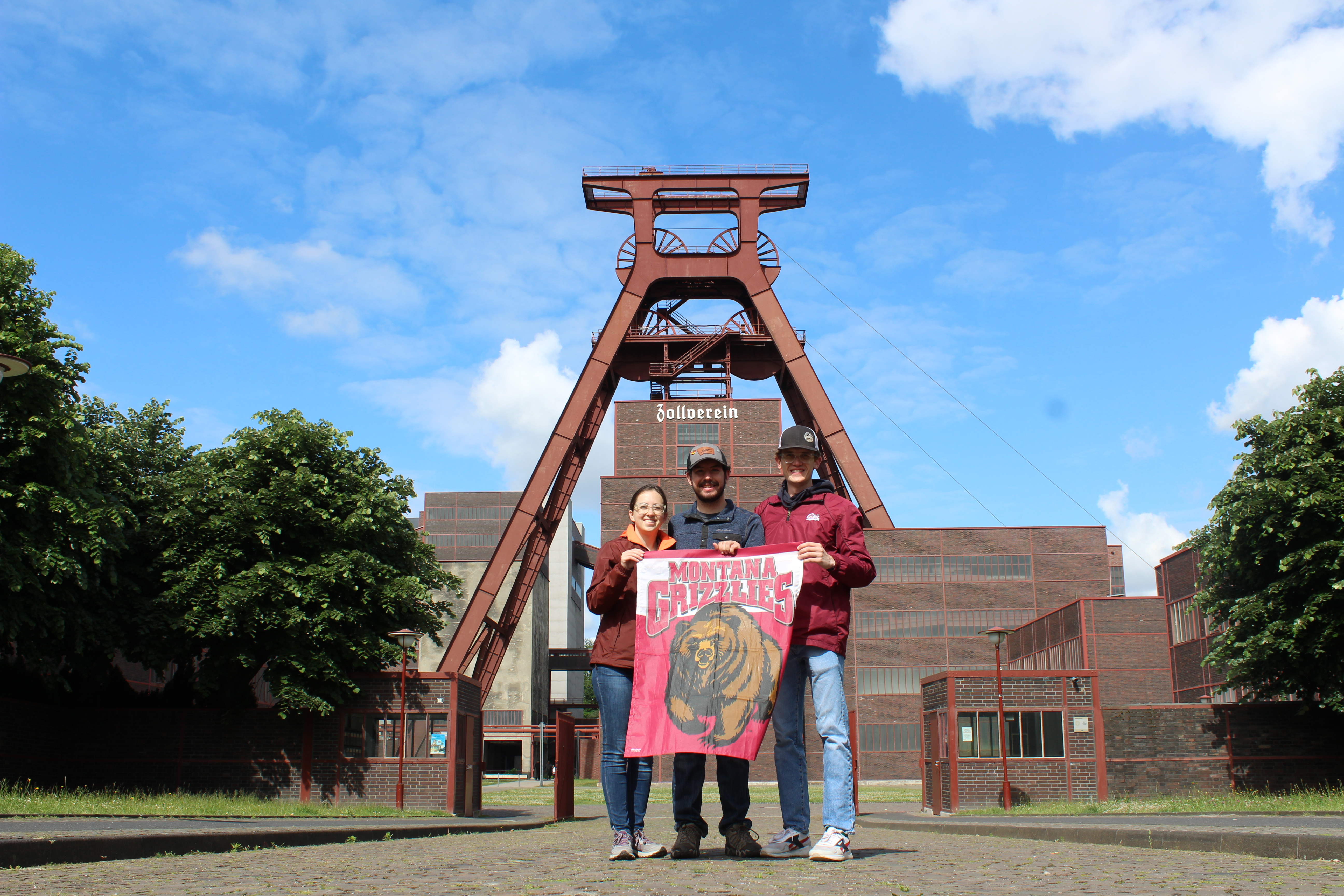
Hunter Grimes (recent UM graduate) and Ben DeBar (current UM student) visit Seth Carmichael at the Zollverein UNESCO World Heritage Site
Visiting the top of the Reichstag in Berlin
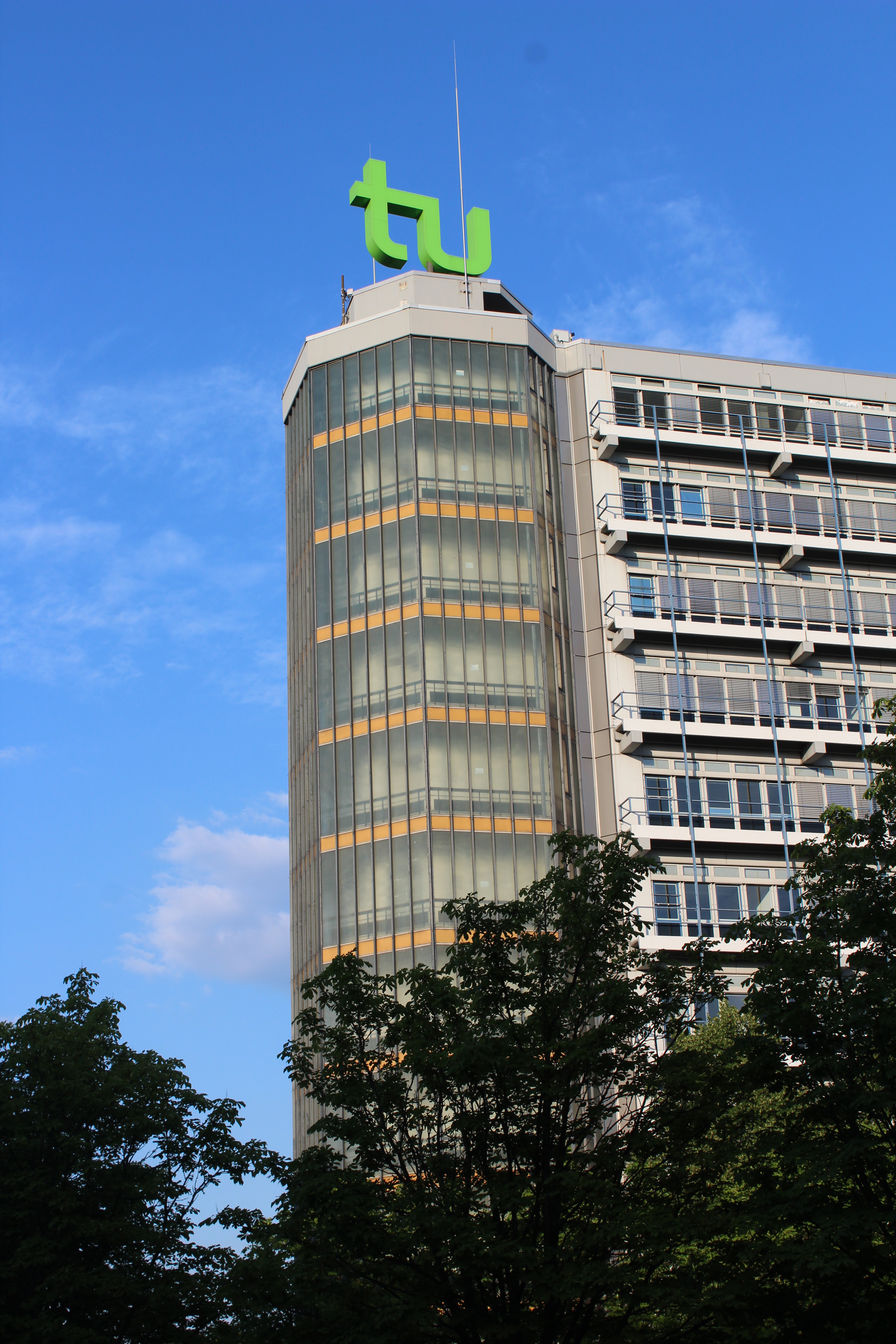
Techniche Universität Dortmund (main campus)