A blue-eyed local?

Three times, three times in ONE week, I was mistaken for being Chilean…. by Chileans! Toot toot! Ok I’ll put my horn away.  I may not be able to say much, but damnit I can sure imitate that accent. 🙂

If anyone was wondering.. it’s been confirmed. I’m the proud owner of the biggest feet in Chile (on a female, that is. Although in general, I’m probably close). La mama chilena approached me last week and very forwardly looks at my Chaco-clad feet and says “Uh-uh. Nope. Not acceptable. No more Chacos. We’re going shopping.”  Promptly at 9 a.m. the next day, she hauled me out of bed and off to the mall we went. First store we stepped in, we browsed a bit before I realized I hadn’t seen my size once.  Nor anything within 3 sizes of my size. She marches up to the front desk and asks if they carry a 44, and he says, “of course!” …pointing to the men’s section. “No no no,” she says, “women’s!”  …The response: a headshake….followed by a squinty, not-real-subtle look of disbelief and a quick up-and-down of the tall gringa (me) by her side.  11 stores later, I was laughing and shaking my head while she, ever more determined, starts calling in the whole family, asking where in the country there might be a shoe store that carries my size. “Ay dios mio” she says, “what are we going to do with you!”  Hey– at least in Missoula socks and Chacs are cool.

A few weeks ago I spent a four day weekend in Santiago.  I had a blast.  It started out being picked up at the bus terminal by two wonderful people I didn’t know, just friends of friends, who pulled me into the crazy mess that is the Santiago metro.  Thousands of people, lines in every direction, about 8 different floors of trains… kinda made Valparaiso feel like a deserted forest.  My fearless leaders stuck by me, though, and an hour later we stumbled out into, well, I still have no idea where we were. Another twenty minute walk and we made it to his house, where his mom (everyone lives at home until they’re 30 here….so weird) cooked us dinner and insisted we practice his English.  David actually attends an English institute, and he knows a fair amount of the language but is very shy about speaking it.  It worked out perfectly–I help him with English and he helps me with Spanish. He is ruthless when it comes to correcting my Spanish and I love it.  People are usually too nice to point out errors.  We still keep in touch almost daily, and he’s always quick to help me out with stuff I don’t understand.  The best was when we got into an argument over Spanish grammar– something HE had said, and I brought it to my professor here and proved him wrong. Hehehe. His sweet mother gave me a woolen doll she had made and insisted I come back anytime.  Later, we went to a party where I saw all of my “army of Chilean protectors,” aka the goofy guys I met camping back in February.  What a blast.  And this time, I could understand them. 

I spent the rest of the weekend exploring Santiago and being passed around from friend to friend, seeing all kinds of friendly faces I met when I was traveling.  I went to see La Moneda, the president’s house, that was bombed in 1973, killing Allende during the military coup.  I wandered all the famous hills, parks, museums, tried supposedly the 25th best ice cream in the world (I wasn’t convinced), saw an enormous protest in action and decided, rich with history though Santiago may be, I am so very glad I chose the city that I chose.  I feel more and more like I hit the jackpot living where I do.

Lunch with la mama and her son turned immensely powerful and educational when I brought up that I was going to a showing of a new movie, Allende en su Laberinto (Allende in his labyrinth), a film documenting the last hours of Allende’s life in La Moneda as Pinochet rose to power.  I had been nervous about approaching the subject at home, and it’s something I had been wanting to ask her about since before I even arrived.  It is a touchy subject here, though, and I’ve heard it compared (by Chileans) to asking a German about the Holocaust.  The country is still very much divided.  When I mentioned the film, her son Oscar, who thankfully speaks very clearly, warned me that the film was unlikely to be objective, but rather would paint Allende as the hero. He is well-educated and objective himself, and was able to clearly explain both sides, as in who supported Allende and why, the mistakes he made, and who was in support of his fall.  And the same was said for Pinochet; who benefited from his rise to power, his economic success with Chile, and the horrible social actions he took in the process.  On the other side, my host mom is poorly educated because she couldn’t leave the house for 12 years of her young life under Pinochet, but was able to explain what life was like for her at the time… the things that she saw, the family members who were killed, the friends who were never heard from again, and how she would stand in line once a week for a single kilo of bread for the family, silent and head down while the military stood over them with machine guns, ready to drag off and shoot anyone who stepped out of line.   For 3 hours they talked, each supplementing each other’s thoughts with interjections of their own… it was more than I’ve ever learned in any history class on the subject, and well-worth staying with a family for that alone.

Perhaps the most fun I’ve been up to is playing tour guide for a plethra of buddies who come visit me. I am so glad I traveled first… I am so lucky.  I met so many excellent people on the road, and instead of having to say goodbye, I got to say come see me in the North! Each person who has come here to see Valparaiso and visit me I only knew for a few days at most, and yet the second time around it’s like seeing an old dear friend again. Plus, it has allowed me to do so much exploring of these cities! Visiting the house of Pablo Neruda, free walking tours, hours and hours wandering the steep hills of Valpo, getting lost in street art and friendly characters, finding the best empanadas and the cheapest underground pubs. Beaches, beautiful sand dunes, street performers, artists, ancient rickety elevators, the adorable musicians on the metro who round up the ladies and serenade us with their guitars and their catchy lovesongs, the sweet Rasta man on the corner who sells shawarmas at a discount if you help him with his English….  If someone had told me 6 months ago that I would soon fall in love with a city, I’d never have believed it.
My Advice to You

There is a certain, unmistakable ball of dread that awakens in my chest and circulates to my head, flows down my limbs to the tips of my fingers, and quickens my heartbeat as soon as my foot touches the unknown territory directly below the bus that became my home over the last five hours. Like a car emerging out of a thick fog back into clear visibility, the courage that once surrounded my being, providing not necessarily comfort but the motivation to keep pushing forward, immediately evaporates around me. I start to question my naivety in traveling so far alone without an absolute awareness of the bus stop location in the big, bustling city at night’s dark, intimidating hour. The crisp air soothes the burning anticipation in my chest, and my observation mode kicks into overdrive as I explore the new area in search for the train station. With a deep breath and some small, internal pep talks, I move with the flow of my instincts and expect nothing more than an adventure with each step.

          ♦                                   ♦                                       ♦

This was my initial reaction after arriving in Vienna, Austria after twelve long and lonely hours from Karlsruhe, Germany. I had a place to stay with someone to contact if I needed help, and I had heard of some big places to visit while in Vienna, but the rest of my trip was intentionally spontaneous, unplanned and open to any possibilities. Of course, I had traveled alone before to Switzerland and other locations in Germany, and certainly compared to the trip alone from Montana to Europe, twelve hours on a bus was nothing; nevertheless, I had yet to find the remedy for the doubt, fear, or uneasiness caused by the sharp reality of thrusting oneself outside of the welcoming, understanding, and affirming borders of the comfort zone. Yet, I do not want a solution for this sensation.

Some people claim to solve the world’s problems or find the answers to long sought-after questions while in the shower; but for me, this special experience of revelation and re-evaluation find me when I travel alone. These small weekend trips on which I have embarked during my time in Europe have taught me more lessons and instilled more cultural insight than I could have ever extracted out of my comfortable, familiar surroundings. Traveling in general, of course, will invest remarkably into the spirits of the Adventurous; however, I stand firmly in my respect for the Lone Rangers.

Going solo showed me how to be more assertive in my basic needs, such as personal security, and more observant of the most minor details composing the physical environment. Venturing out into the world by myself has taught me how to question reality more thoroughly and listen more sincerely to the answers I receive. Most significantly, perhaps, is the rebirthing of my indescribably deep appreciation for and my continuously un-quenched curiosity about communication and interaction between human beings, which has followed me into every new city and etched itself into my most favorite memories during my time abroad. 

If I could leave you with anything, it would be this: travel alone. Be smart, know your own boundaries and follow your gut if the risk tickles greater than the opportunities. Be curious, be confident, be patient, and breathe deeply when your nerves tremble so strongly that you cannot identify your heartbeat over your self-doubt.

Blog Picture

We as humans didn’t survive by caging ourselves in comfort, and frankly, we never will. These moments, scary as though they may appear to be, are what we, as curious, creative, and compassionate individuals live for.

Day Two: January 6, 2016

We landed in Ireland at the break of dawn, it was beautiful, but the plane ride was terrible. Tonya (one of my classmates) and I spent most of the flight getting to know each other, because neither of us could get comfortable enough to sleep. It felt like the flight attendants were waking everyone up every ten minutes anyways; to hand out everything from drinks and food to hot towels and sleeping masks. On top of all of that, they kept the cabin lights on most of the night, and the guy in front of me leaned his seat all the way back, until he was – quite literally – in my lap. That alone made it a very long and difficult ride. Tonya, being a rather tiny human being, was kind enough to curl up in a ball and offer me some of her leg room.

After landing, everyone wanted nothing more than to head to the hotel, shower, put on some fresh clothes, and pass out, but Laure (our professor)  and Tom (our tour guide) made sure that we stuck to the schedule and began touring instead. At that point, Adam and I had only slept about five hours since Sunday evening, and it was now Wednesday. You can do the math on that one.

Tired and cranky, Tom took us to the Kilmainham Gaol prison, a place where both de Valera and Charles Stewart Parnell both did time, it was also the location of the outrageous 1916 Easter Rising rebel executions. I walked through the prison, haunted and excited; pausing occasionally to wonder how many great men had stood where I was standing. The size and complexity of the prison amazed me, along with the logic behind the design of it all. It was genius yet disturbing how they planned the place out; making sure that nothing anyone or anything did went unseen by the guards.

This slideshow requires JavaScript.

After the tour of the prison, we drove around Dublin and grabbed lunch at Temple Bar (the happening, pub-filled, area of town). Once we ate, we walked over to Trinity College and visited the Book of Kells. The book itself is strikingly beautiful, but I was much more interested in the grand library upstairs, that’s filled with antique books and artifacts.

Saint Patrick’s Cathedral was our next stop. A very beautiful and holy ground, I am not religious, and certainly not Catholic, but I loved looking at the architecture, sculptures, and stained-glass windows that adorned the place. Catholics really don’t spare any expense when it comes to their house of worship. Sadly, I spent a large deal of our time there waiting in line for the bathroom, which was impressively small by the way.

Following the Cathedral tour, we finally went to the hotel; at that point, everyone was walking around like zombies, except instead of brains we really just wanted to sleep in peace. Of course, we had to check in and eat dinner first though. I was pleasantly surprised by how delicious the dinner the hotel prepared for us was. Not only did they work around everyone’s allergies, but they also prepared an excellent vegetarian meal for me (traditional pasta, vegetable spring rolls, and cheesecake).

Finally, after eating, we were dismissed to go to our rooms, take hot showers, and sleep in actual beds. It was a fantastic first day in Dublin, but I wish I would have been less tires and more alert to enjoy it.

Day One: January 5, 2016

After months of waiting, our journey has finally begun. Now the entire class is jet-lagged, exhausted, and stuck in yet another airport (JFK to be exact). But, I guess that’s just how travelling goes. I cannot even imagine how good it is going to feel to get off of the next plane, and walk out onto foreign soil for the first time. Several of the other students in this class have already travelled the world, but this is a first for me. I am excited, to say the least. Also, I thoroughly regret not getting more than an hour of sleep last night, but in the end, it was probably worth it.

20160105_160507

As usual, the airports have been awful: crowded, noisy, boring, and they all have the same over-priced, mediocre food. I have flown many times in the past, but never for more than ten or twelve hours at a time. This twenty-four plus hour thing is a little much for me. I’m sure it will be worth it in the long-run though. It better be. I am honestly terrified that I put hundreds of hours of work and god knows how much money into a trip I might be miserable on. That’s ridiculous though. I have Adam (my wonderful boyfriend) to keep me company, and am beginning to get to know some of the others in the class, and I am sure that after the first few days I will be more comfortable with everybody. The fact that I was not actually in the fall-semester history class with everyone else (I had to take an independent study instead, due to a schedule conflict), makes me feel outside of the rest of the group, but that will certainly change soon. Either way, I am thrilled to go on this amazing adventure, and see/learn all that I am able to, in such a short amount of time.

Snow School

It was my last week here at Swan Valley Connections. A bittersweet end to such an amazing time. I spent my last week primarily in the field, exploring new areas and working on my track identification. Badger, bobcat, wolf and lynx were just of the few species we were able to track, but my last day was spent a little bit differently than the rest. I was fortunate to help instruct 20 students from Potomac in a day of Snow School. Our primary objective for the day was to get kids out on snow shoes and to teach them about winter ecology, including plant and animal adaptation as well as some basic snow science. We built snow pits and measured the temperate as well as took snow water equivalent measurements. We built homes for our “animals” (cups of hot water) to teach the students about the insulating properties of snow. The students loved caring for their animals and were all pleased to find that each individual made it through our winter. The game the students loved the most though was a game of camouflage. Similar to hide and seek although the seeker isn’t allowed to move. The students had to earn their food to survive the winter and some even adapted by being given white sheets. We went on color hunts and did memorization scavenger hunts. Over all the students had an amazing day, and I walked away with a renewed sense of wonder and the possibility of discovery fresh in my mind.

Tracks, Scat, and Snowmobiles

Although I have been fortunate enough to travel and work abroad, there is something very unique about intimately learning about the place you are from. I think place-based, experiential education is key to the success of students, and now more than ever I hold that to be true.

We spent our first week of the project going through an in-depth training, where we traveled to Seeley to coordinate with the Forest Service who are our partners on this project. We covered the basics- the purpose of the project as well as the history and data that has been collected over the past four years. We learned the protocol for bait station set-ups, the importance of winter-tracking, snow-mobile mechanics, avalanche safety and first-aid as well as our emergency response procedure.

The content of our first week was extremely important, but the anticipation to get in the field was building, and I couldn’t wait to get on our sleds and head into the field. We had long days ahead of us, but the payoff is big.

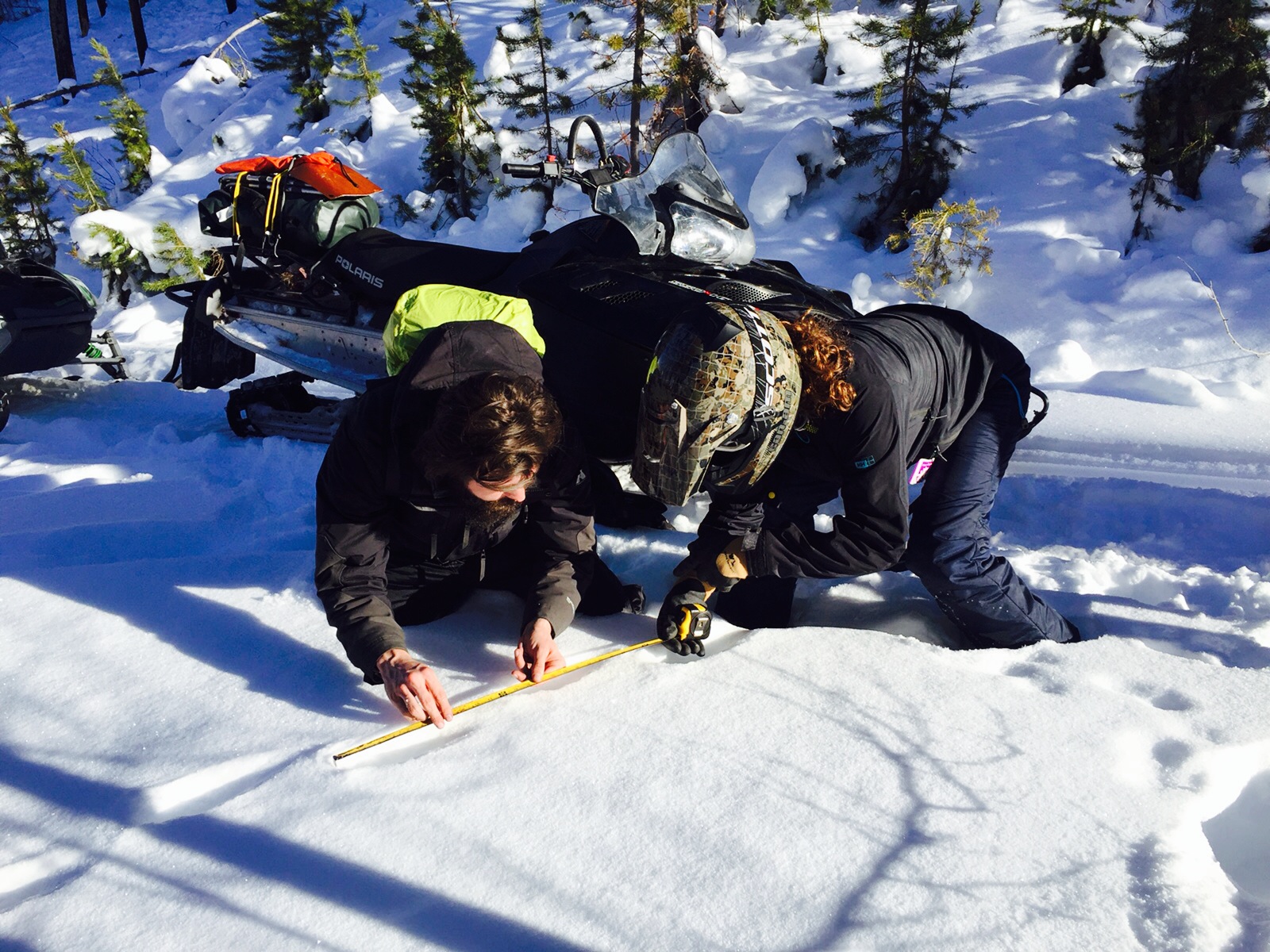
We set out on Monday, and although we usually head out in groups of two, we went out as a group of four to make sure everyone was on the same page. Immediately the trails were inundated with tracks, and we had our GPS units out marking waypoints for wolves, bobcats, and mountain lions (below is a picture of us taking measurements on a track to identify the species).

photo 3


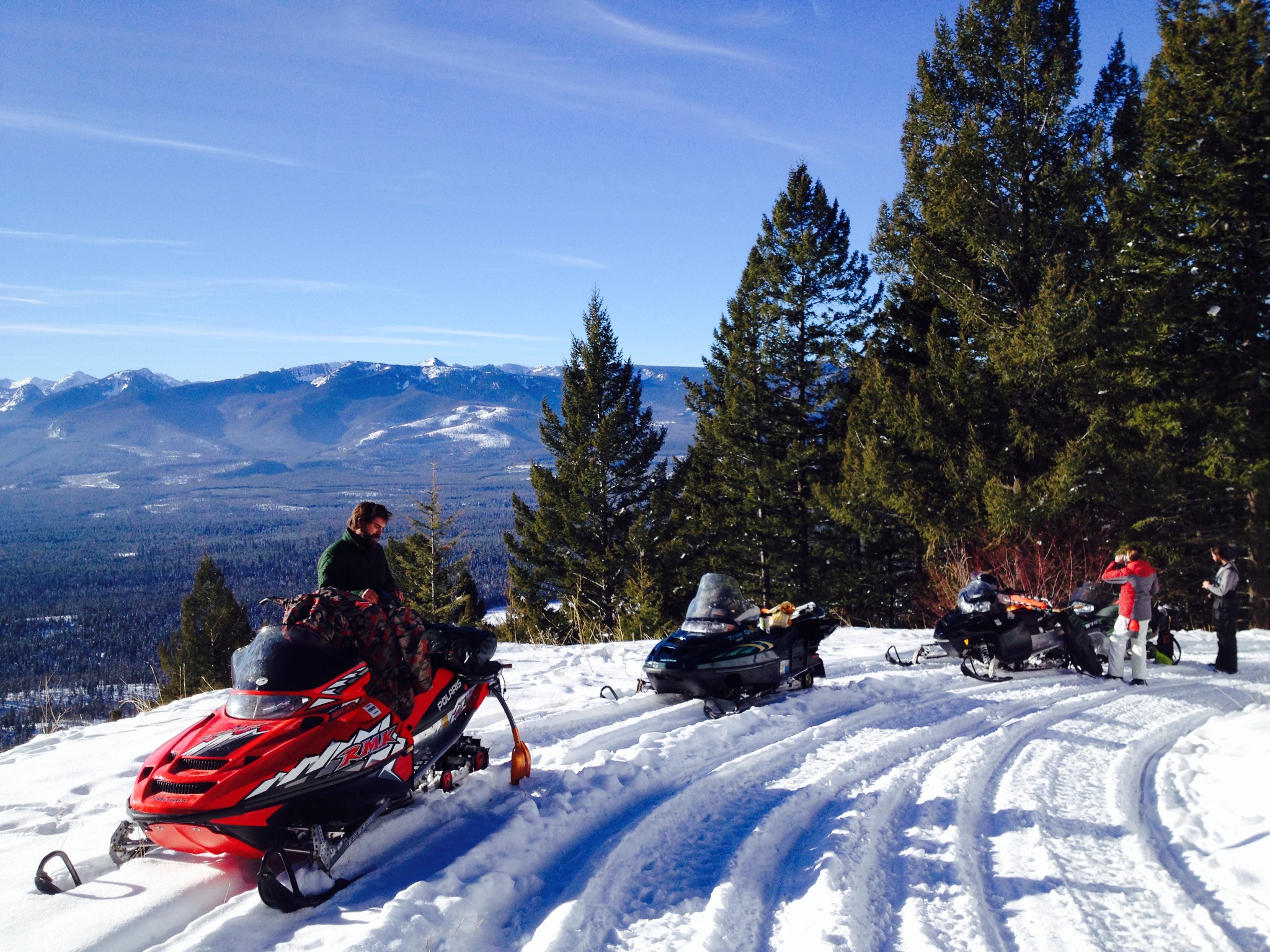
We made it about 5 miles in before we broke for lunch; over-looking the Swan Valley where we enjoyed the views and were greeted by two soaring golden eagles (lunch spot is pictured below).

photo 1

We continued on, where we would set up our first official bait station. I included a link in my last post but I will post the map here of our grid system, 5×5 mile cell units that draw on research from Squires that states in an 8×8 mile grid cell if lynx are present you will detect tracks in that cell. The reason the cell unit is smaller is to account for the distribution of Fisher, whose home range is smaller.

Southwestern-Crown-Carnivore-Monitoring-Project-Bait-Stations-2014

The bait stations we set up use a combination of bait and lure to draw in our target species, we have gun brushes positioned on the tree to grab any fur from suspected species (this is an extremely non-intrusive DNA extraction technique). Pictured below are two field-techs setting up our bait station.

photo 4

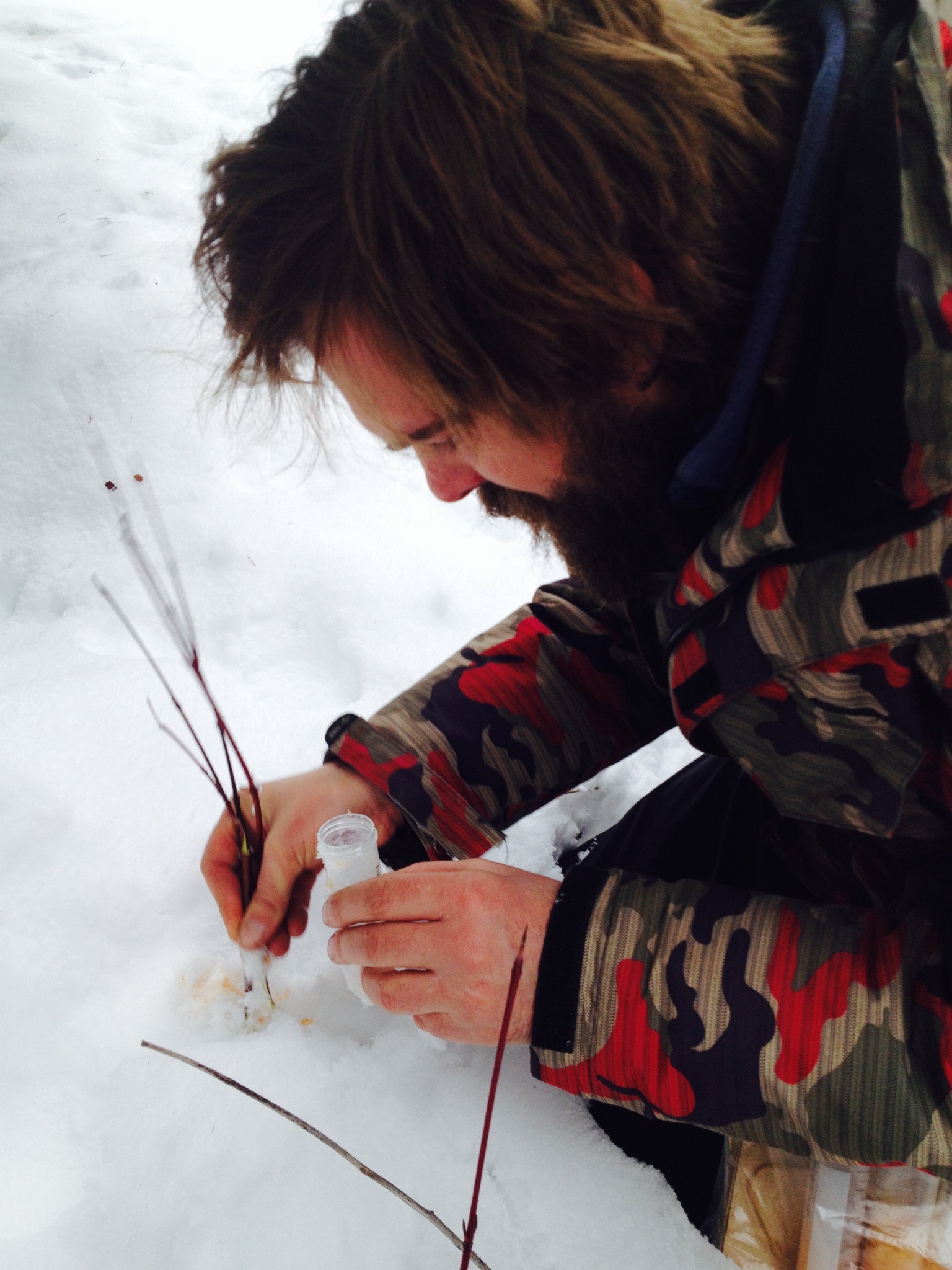
The following day we split into our designated groups and set out into the field in pairs. After snowmobiling into our unit we soon found lynx tracks, we hopped off our snowmobiles to take some measurements- a female lynx was suspected. We set off on snowshoes to backtrack and attempt to find DNA samples (either urine, feces, or even vomit). We were surprised to find multiple individuals- we had discovered a mother lynx with two yearlings! We spent the next three hours backtracking through wetlands, up mountainsides, across the road and back through the woods, collecting 9 genetic samples.

photo 1 (1) photo 2 (1)

We returned home later than anticipated but elated with our findings. We headed into the field the next morning where we set up three more bait stations, and a few game cameras. The game cameras help us to confirm our track surveys and genetic samples, and can help guide the lab to detect individuals.

photo 2 (2)

We returned home after we were hit with an intense snow that left us soaking wet and tired after digging out the sleds. Although we still were referencing our maps through it all.

photo 3 (2)


An Old Path, A New Direction

As I read through past blog posts I find a unique, eloquent, voice that radiates through each passage. Individuals that have traveled to different countries, experiencing new cultures, and are faced with adjusting to a new way of life. I am confronted with a much different experience.

I was raised in the Swan Valley, which is located in Montana’s Crown of the Continent. I moved to Missoula in 2006 and although I had returned to the valley over the years I didn’t feel connected to the place like I had as a young child. In the fall of 2014 I returned to the Valley to participate in Northwest Connection’s field semester- Landscape and Livelihood. Prior to this program I had lost the appreciation for the unique culture and beauty that has been bestowed upon this small town. It re-kindled that sense of belonging- the pride and responsibility that develops around a place that you love and care for.

I kept in contact with Connections over the past year and looked for an opportunity to return and work with the organization. My wish was granted when a position as a field technician on their winter Rare Carnivore Monitoring Project opened up. I was elated to have the opportunity to join the crew and be a part of on the ground monitoring efforts that will help to inform management decisions and conservation strategies in the area as well as gather invaluable information on the distribution and abundance of three target species: Canada lynx, Wolverine and Fisher.

When I looked for a Beyond the Classroom Experience, I wanted to do something unique, something that would connect me to my theme and allow me to explore the concept of sustainable “rural” growth and development through education. The Rare Carnivore Project did just that, and I look forward to the coming weeks and the opportunity this internship presents.

I included a video below that was taken from Northwest Connection’s website on the field work we are doing. The second link is on the project itself.

https://youtu.be/a5hoPudWNxY

http://www.northwestconnections.org/forest-carnivores/


Re-Learning Creativity

Ten years ago, the most popular, most watched Ted Talk by Sir Ken Robinson was released. Even though an avid Ted Talk fan, I had actually never seen this speech until my new Finnish friend and I bonded over our love for the nonprofit, and he introduced me to this video — his favorite. Out of all varieties that Ted Talks cover, from abstract concepts such as leadership and motivation, to vital educational disciplines such as communication and business, to even random objects like cars, water, or robots, with animals everywhere and in between, it is interesting that the most attention grossing Ted Talk is titled, “Do Schools Kill Creativity?” I find this to be ‘interesting’ because, out of all things that unite people around the world, it would seem that the strongest connection we share as intellectual humans (as to be assumed from this Ted Talk’s success in the abundance of other topics) is education.

After watching this video, I had to watch it again. I would reflect on the topics Robinson covers, and then I would watch it yet again. Although I recommend for you reading this to watch his speech and absorb his style of approaching this information, I will explain Robinson’s opinion in brief. Robinson introduced his personal understanding of the definition of creativity to be “the process of having original ideas that have value [resulting] through the interaction of different disciplinary ways of seeing things.” With both humbling humor and fierce intelligence, Robinson informed his audience that school systems, as we know them to be today, were the initial consequence of meeting industrialism demands in the 19th century, but they have since become a universal hierarchy accepted as a “protracted process of university entrance.” In a nutshell, the Ted Talk revolved around Robinson’s claim that “We do not grow into creativity; we grow out of it. Or rather, we get educated out of it.”

This Ted Talk, like all of the other videos provided by the nonprofit organization, offers profound insight into a taken-for-granted and blindly accepted area on a large scale. It is undeniable that our schools prioritize certain academics over others, and whether in America or in Germany, we naturally find academic systems that favor theories over theater and calculations above color charts. Not surprisingly, though, scholars know that learning enhancement can be measured when students have the ability to express themselves through music, dance, and art; and likewise, any school can see the negative effects on students when the arts are cut from curriculums. While I understand the social ranking of mathematics over Mozart in academics, I also see how the strict standards of our school systems unintentionally implant the stigma that, in Robinson’s words, “mistakes are the worst thing [a student] can make.”

Luckily for us students, there is an opportunity that encourages, inspires, and ultimately instills creativity back into our schooling systems: studying abroad. Robinson saw education systems as mine shafts, digging around until finding the commodity that is deemed socially worthy and then exploiting the resource. But, studying abroad has shown me a world where the worth of such commodities are defined differently by every culture and the exploitation of knowledge is a positive human interaction. Studying abroad has introduced me to an education outside of a classroom’s borders, a place where mistakes are actually my best teachers. 

In the end, I do believe that creativity is indeed affected by our education; but, it isn’t a trait that is completely masked by our school systems. Instead, creativity fades when we become so comfortable in our systems of discipline that we lose the ability to react to the unknown.

Granada, Spain and The Whirlwind of the New

Tuesday, September 23, 2014

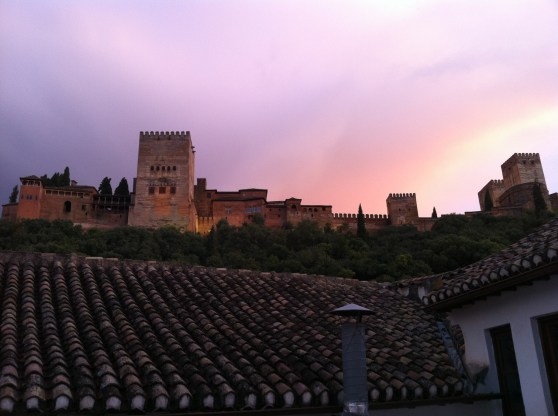
I have now been in Granada for about a week and a half, and today was my first day that was “just okay.” My entire first week went by in a flash of new sights, smells, people, and words. It was exciting and educational. Spaniards are crazy about night life. It is normal here to stay out at the clubs or bars until 4, 5, 6 in the morning! The accent is still difficult for me to get used to. Everyone in my house is incredibly warm and friendly- like a big family- and many are foreigners so we are constantly learning together. There are 6 French; 5 Americans including myself, an Englishman; 3 German; an Italian, an Ecuadorian, a Colombian, and 5 Spanish.  I can’t believe how lucky I got with housing.  We live in Albayzín, the oldest neighborhood, and we have an incredible view of the Alhambra, the last Moorish fort before the Christians reconquered Spain in 1492! I have a view of this castle-like fort from all of my windows! There is so much history here.  The Arabic influence persists on every street.  There’s even a street filled with tea rooms (teterías)!

IMG_0979view of the Alhambra from my apartment in Albayzín bajo 😀

Classes started today. I didn’t understand very much, which was very discouraging. I don’t know how I will get good grades, or more importantly, learn anything. It turns out that most Americans who study abroad here attend the Centro de Lenguas Modernas, a school for foreigners that has language and culture classes.  I really want to stay at the Facultad de Filosofia y Letras, so that I am surrounded by the Spanish, but I also don’t want to bite off more than I can chew, and I have no way of telling from which I will gain the most knowledge of Spanish life at this point.  I’m feeling pretty humble today, after being sent from office to office trying to register for classes, and failing to understand most of what my professors said. I’m wishing that I had just entered the Centro de Lenguas Modernas, so that I would actually be with other lost folk. I feel very clumsy.

My assessment of Spanish young adults, based only on today and not on the past week of good-humored Spaniards, is that they are not as warm and smiley as I had imagined. They are more attached to their phones and dressed much fancier than my classmates in Missoula. But this could be attributed to the big city life.

I’ve been pretty overstimulated with everything new and everything seems to grasp my attention and generate enthusiasm for my future.  I’m trying to just soak in the present experience, but I keep thinking about future adventures!

Habré aprendido 5 idiomas
Habré dado la vuelta del mundo en velero
Habré dominado el tango, Judo, y Chi Kung
Habré sido profesora, doctora, y psicóloga
Habré salvado vidas y mejorado mas
Habré subido las montañas mas altas del mundo
Habré habido éxito con agricultura sostenible
Habré hecho queso de cordera
cuando echaré de menos este momento

Friends Across the Globe and the Bug

I’d say one of the most special things about my study abroad experience is the group of close friends I developed over the course of my stay. The experience of packing up and starting new in a foreign place is a profoundly unique recipe for friendships that enter strange and visceral pathways in the heart. When I think about my closest friends and what they are most likely up to these days I am overcome with a profound sense of connection and compassion. It brings me so much pleasure to imagine the ongoing story lines of each my peers and how many other stops and stories they have ahead of them. I love the way that the details of their stories are far away, but the love I have for them is alive and well and makes me feel as though a part of me is still with them as they move through life and a part of them is definitely still with me. I let a lot of people into my life and I’ll never be fully rid of them. All of the small newness that they displayed has been swallowed by my concept of what is possible in this world and so I take them along to every new excitement and adventure.

My best friend back home recently offered to take me along with him to visit his siblings in Myanmar. People have warned me that the bug for travel is stubborn and hearty. I definitely felt that pesky addiction fire up when I got that invitation. I can’t even begin to imagine all of the small sensations and emotions that I could be signing up for. All of the people and moments I will be letting into my life, for good, makes the 1000 dollar round trip ticket rather hard to turn down. I might be hooked!