As an out-of-state student at the University of Montana I found my Beyond the Classroom Experience to be a blessing in disguise. Originally, I had planned to spend a semester studying abroad at the University of Tasmania. Due to the COVID-19 pandemic my experience was cancelled, and I had to get creative to meet the GLI Beyond the Classroom requirements.
I am an Environmental Studies major and constantly heard about the intensive PEAS Farm class our department provides. I decided to participate in the class for my requirement. Although it wasn’t four months on a tropical rainforest island it was a 12-week experience I will never forget.
My Global Theme and Challenge for the GLI program is Natural Resource and Sustainability. I chose this theme because I’ve been interested in creating more accessible information on how to become more sustainable in our world’s everchanging situation. The PEAS Farm stands for Program in Ecological Agriculture and Sustainability. The program offers a summer long outdoor classroom experience learning about how to practice agriculture in a way that works with nature, and how to provide pounds of produce for the community in a sustainable way.
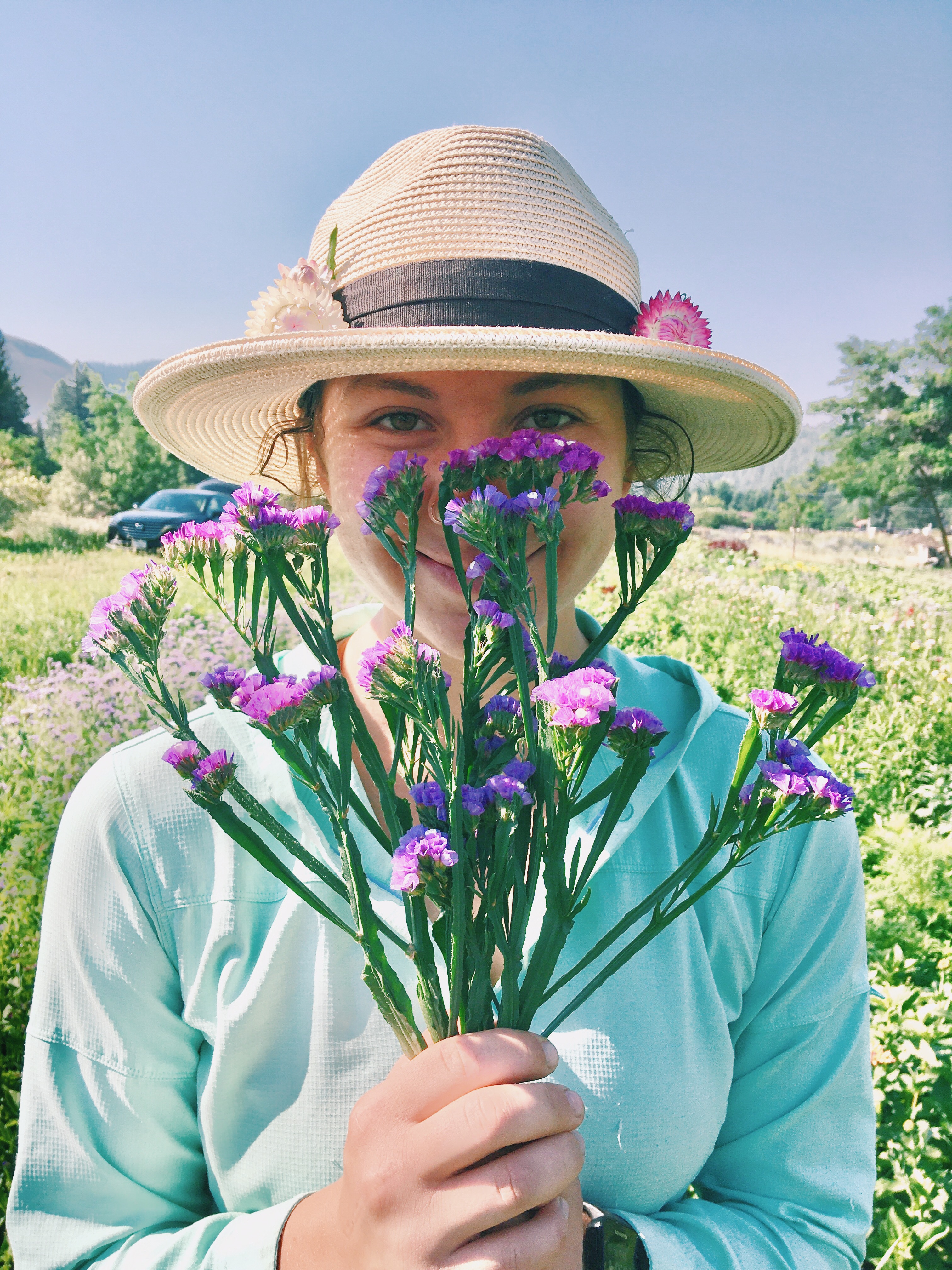
Picking flowers for CSA bouquets.
I grew up in a Minneapolis suburb where it seemed eating local meant grabbing a block of cheese labeled “Made in Wisconsin”. There wasn’t much education around the topic, and almost no time for hustling suburban families to understand the importance of knowing exactly how food gets to their table.
While getting my hands dirty each day on the farm, I learned an important factor when it comes to local and sustainable food production – community. Finding a place in the smaller PEAS community, and then the greater Missoula community was a feeling unlike any other.
It was eye-opening to see how necessary community is in making sustainability accessible. Each person working on the farm, and each person buying the produce understood how important it was to eat food locally. It changed my perspective on how achievable sustainability is, and I now understand with good education and effective outreach communities can be brought together to create real change.
View of farm in mid-July; flower patch out to corn field.
At the beginning of the summer, I had no idea all that farming entailed. As the summer progressed, I was able to step into a leadership role with my fellow crew members, and community. I enjoyed being a leader on the farm by facilitating the creation of what we called “FARMily”. Bringing people together and creating a safe place was a role I was honored to have, and it became essential for producing nourishing food for others.
I am extremely grateful for the opportunity to spend a summer in Montana soil and gaining new perspectives on the Missoula community. With all the knowledge I now have surrounding natural resource and sustainability I am excited to take the next step and find ways to keep learning more while educating others.
To better understand my global theme of culture and politics, my summer was spent contemplating what differentiates big ‘W’ Wilderness from small ‘w’ wilderness. Big ‘W’ Wilderness is land specifically assigned the designation of Wilderness. It can be a state or federal designation, but once designated, management for these lands changes a great deal. I also observed how those statutes are interpreted based on need and human agendas. Wilderness is an interesting concept because its creation is based off the Wilderness Act of 1964, where Wilderness was officially defined as, “…in contrast with those areas where man and his works dominate the landscape, [Wilderness] is hereby recognized as an area where the earth and its community of life are untrammeled by man, where man himself is a visitor who does not remain” (Wilderness Act, 1964). It prohibits anything mechanized such as chainsaws, mountain bikes, or motor vehicles from being used within its boundaries. That being said, some Wilderness areas have some grandfathered in clauses that permit some of those prohibitions. For example, in the Frank Church River of No Return Wilderness—where I worked all summer—backcountry airstrips were grandfathered into its statute, and thus, airplanes are allowed to fly and land in that Wilderness. This is unusual for Wilderness as motorized vehicles (i.e., planes) are supposed to be illegal. I heard these planes all summer while we worked. There are a few contradictions like that in the Wilderness Act, and I have struggled with understanding them all summer. My conclusion is that in order to protect the majority of the land, compromises were made to sacrifice smaller sections for established commodities. It still sits uncomfortably in my stomach, but such is the way of the world.
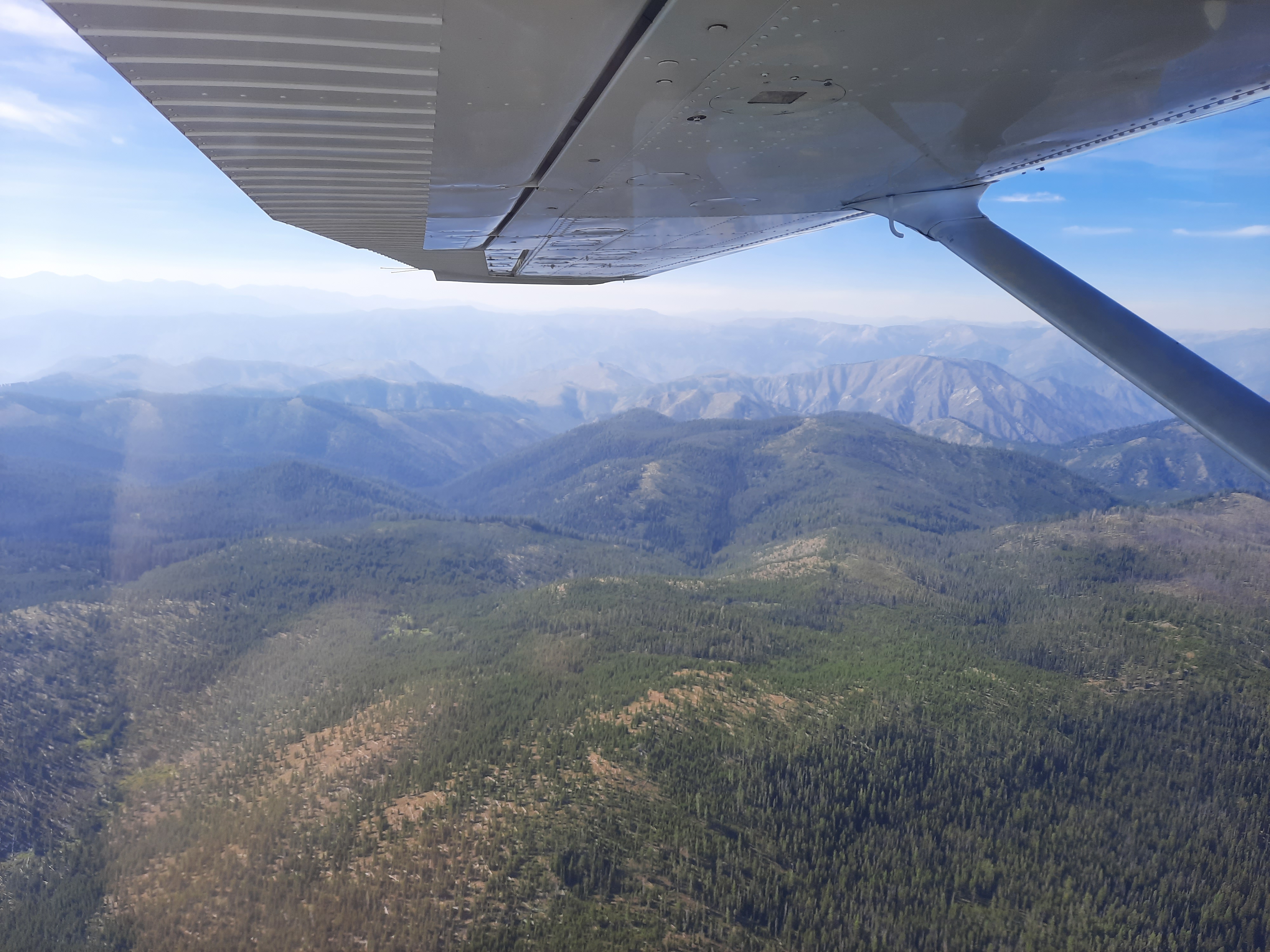
I must admit, despite my discomfort with the ambiguity of the Wilderness Act, I had the opportunity to fly in a plane over the Frank Church Wilderness, and I loved every minute of it. Looking down upon the mountains and seeing where I had been working all summer from a birds eye view was simply spectacular. I wrote in my journal that night:
“There’s little more humbling than looking down upon mountains thousands upon millions of times larger and older than you are. And there’s something so delightful about looking down and seeing a backcountry trail. Not many have traveled it but it’s something you see as a member of a trail crew and think ‘my people have walked this, my people have worked this; this is why we’re here.’ These tiny ant lines cut into mountains and valleys, down to rivers and following ridges. We are so so small. But we are so so powerful.”
It was really inspiring and encouraging to be able to experience that. It was a highlight of the summer, and I am so grateful I got to have that opportunity—for work nonetheless!
The view from the plane as I flew over the Frank Church Wilderness. Photo credited to Jaime Breisch.
The cultural aspect of my internship was in working on trails and surviving in the backcountry, which was something I learned a great deal about firsthand. It can be tough at times, but if you can find your rhythm, make peace with the structure, and embrace being brought down to the simpler lifestyle of survival, it can be so rewarding. Being in the backcountry, you learn quickly there are a number of things that are out of your control: thunderstorms, where water sources are located, when trees decide to fall. All you can do is persevere through and keep in mind; these troubles will pass.
People who do regularly work trails—trail dogs—are diverse. More so than I ever expected. That’s not to mention the community and comradery that comes from suffering with people. As a woman, you are warned of being leery of men and making sure they don’t walk all over you. The Selway-Bitterroot Frank Church Foundation—my employer for this summer—is an organization that does not tolerate or stand for that kind of sexism in the front or back country. Seeing as the majority of the organization is run by women and the president of the board for the organization is a woman, prejudice was never something that was an issue. Instead, the community is open, accepting, and non-judgmental. Being out in Wilderness for up to nine days at a time can be hard on a person mentally, physically, and emotionally. This isn’t work that’s cut out for everyone. To have such a community that is persistent yet patient as you discover where you stand on such work, is priceless. The connections I discovered this summer are ones I will have for the rest of my life.
I gained a better understanding of the diverse perspectives related to my theme and challenge, however, not in the way I thought I would. I never realized the importance of work culture and its relation to the success of a team such as the crews we worked on this summer. I was lucky enough to have a small crew and we all got along famously. Other interns in their crews, I came to learn, did not. Being able to work with people greatly different from yourself is critical. Adaptability is everything, and it’s important to be able to communicate issues that come up in a clear and succinct way, so problems don’t ruminate until someone blows up. I had ample opportunity to practice these kinds of skills throughout the duration of my internship. My crew leader made sure to offer opportunities for us to take charge and practice being the leaders for the day, including planning where the team would go and what we would do. My organizational, communication, and preparation skills also improved exponentially as it was critical, I be prepared for our excursions into the backcountry, and that I knew where things were should I need them quick. As a result, my confidence in my physical ability and my ability to handle emergency situations has increased as well.
Wilderness Stewardship is so important, and going forward, I hope to continue pursuing work opportunities in Wilderness.
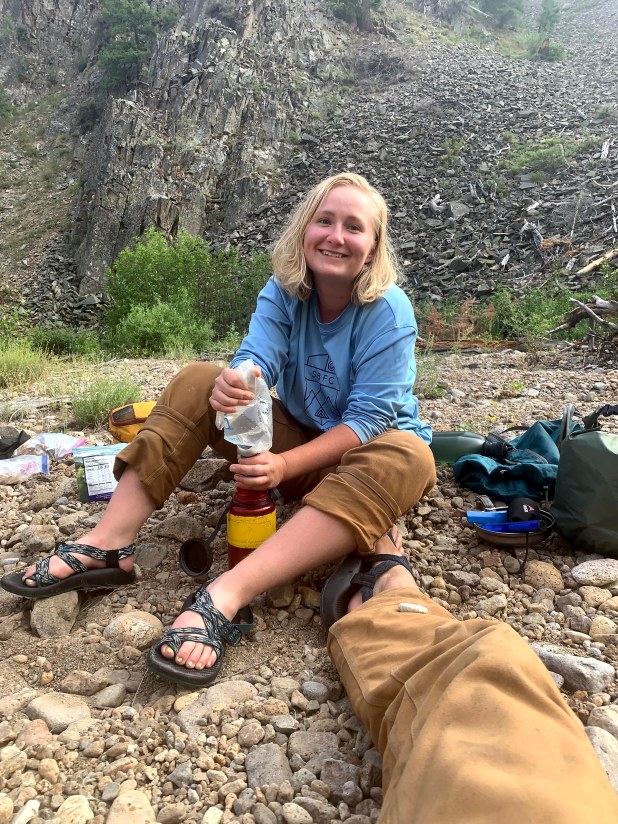
Jaime Breisch filtering water on Marble Creek Trail (Trail #062). Photo credited to Parker DePond.
Hi! My name is Abby Vogt and my global theme is Natural Resources and Sustainability. This past summer, for my Beyond the Classroom Experience, I interned at the Clark’s Fork Fish Hatchery. This fish hatchery is located in Clark, Wyoming and has 5 full time employees. I worked to rear fish from eyed eggs to catchable size for stocking. The purpose of rearing and stocking is to maintain sustainable fish populations in public waters while also providing anglers the opportunity to recreate in these waters. My summer experience directly connects to my global theme through the vital management of natural resources in the state of Wyoming.
I learned so much through this experience. Before the internship, I knew I had an interest in fish management, but I didn’t know a lot about the hatchery process. I learned about the entire process of rearing fish. I learned to properly care through feeding, sampling, cleaning, and stocking multiple fish species at once. During my time at the hatchery, we reared Fall rainbow trout, Eagle Lake rainbow trout, Bear River cutthroat trout, Snake River cutthroat trout, Yellowstone cutthroat trout, and Kokanee salmon. Many of these species we received as eggs and by the time I was done, they had grown enough to be transferred into the hatchery tanks and eventually to the outdoor raceways.
I didn’t realize how vital the management of fish species were in the state. Wyoming is a very outdoors focused state and thousands of people take pride in their ability to use its resources, especially fishing. Without the work of the ten hatcheries in the state, the populations of multiple fish species would be extremely diminished and sustainable populations of fish would not be possible. There are a lot of diverse perspectives in regard to natural resources and sustainability, especially in relation to fish hatcheries. There is the environmental perspective of maintaining populations but also the angler perspective of being able to enjoy fishing and the thrill of being in the outdoors. It is clear that many anglers care deeply about the management of natural resources to keep populations thriving in the state.
One of my favorite moments while working at the hatchery was when I was able to go stock a very popular lake in Cody. Beck Lake is a popular spot for families to enjoy fishing as well as swimming. Often during stocking trips, people will come up and ask what we are doing or what types of fish are being stocked. This time there was a family with two little kids that came up and asked about the stocking. These kids were super excited because they had never seen a stocking truck or watched a stocking occur. We often try to engage kids in stock trips to encourage future angling and outdoor experiences. We allowed the kids to drop a net of fish in the lake from the truck. They were very excited to be able to put fish into the lake and see them swim off. It is experiences like this that show kids what they can do in the future and it gets them excited about the outdoors.
These are hatchery tanks that hold fish until they are big enough to transfer outside.
These are egg jars that circulate eggs until they hatch.
My name is Beatrix Frissell and I spent my summer interning with the Department of the Interior in Washington D.C., focusing on my global theme of Culture and Politics. As a native Montanan from Polson, MT, I have been interested in politics since my experience at Girl’s State my senior year of high school, but I have spent little time outside of my home state. In taking the trip to Washington D.C., I was immersed in a city and cohort far more diverse than the one I grew up with, I learned how politics and our country’s management of natural resources have changed over time, and I gained confidence in traveling and meeting others for the future.
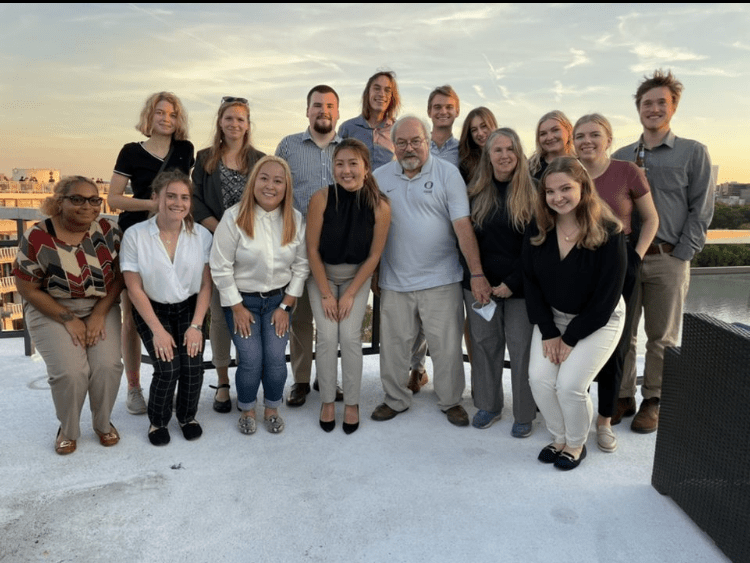
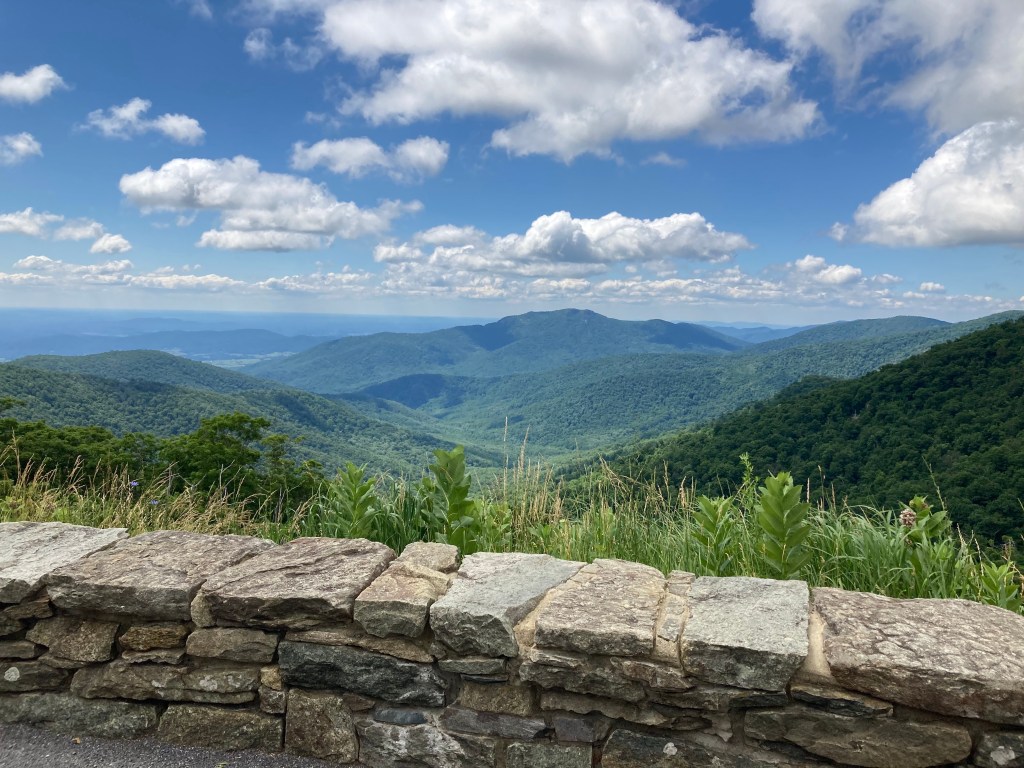
Perhaps my favorite part of my experience in Washington D.C. was getting to know my fellow cohort of Demmer Scholars, all of us a mix of students interested in natural resource policy from the University of Montana, Michigan State University, and Mississippi State University. Our weekly weekend field trips became my favorite part of my trip, from seeing horseshoe crabs on the Delaware Bay for the first time to eating dinner on top of the Watergate hotel. Despite the differences and diversity within the group from hometowns to internships, we clicked easily through our shared interest in the environment and policy. One such trip was to Shenandoah National Park, where I witnessed the expansive view of the East coast forests on Skyline Drive. Forests like those in Shenandoah National Park look quite different from those in Western Montana, a fact that is influenced in a large part by the history of our country. Almost everything, from natural resources to food, have been influenced by values and political views within our country. In early United States history, after Indigenous inhabitants were wrongly wiped or pushed off the land, this area was entirely homesteads that were meant for farming and ranching. However, the land has changed in recent decades with factors like poor soil and the emancipation of enslaved peoples, and it is now home to an expanse of rather young and densely populated chestnut and red oak trees. I learned far more about culture and management of policies around natural resources by witnessing their ecological impact directly.
Having grown up in a small town, living in a city as large as Washington D.C. was a stressful experience in many ways, but it was rewarding in that I am now more confident navigating and meeting others in new places. In fact, perhaps the biggest way my experience in D.C. developed my leadership skills was by instilling more confidence in me, like teaching me through my work experience and class experience to ask more questions and allowing me to understand that I can be put in a new environment, be successful, and even thrive. Over time, as I worked on projects from environmental justice to research on implementing a new orphan oil and gas well plugging program, I learned to communicate and connect with my boss, received kudos from the office director, and balanced my busy schedule. My nerves went away. Now, I am excited to continue exploring new places, with hopes to go on an international experience in the coming years to continue to grow as a person and discover how I can best make a positive impact for my local and global community.
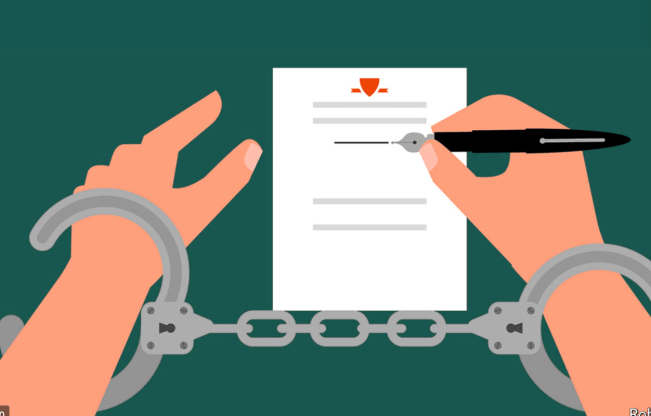
On day one of my internship at the Montana Innocence Project my supervisor asked to meet at the picnic tables outside of the Alexander Blewett III law school to review my summer assignments. I was eager to help, even though I was unsure what I would be helping with… or where the picnic tables outside the law school were at. With one hand on the handlebars and one wrestling with an americano I rolled my bike to a stop in front of my supervisor, sat down, and by the meetings end I had compiled a list of assignments in my notebook. Now, as I cross the last of those assignments from my notebook in my final week at MTIP, I have a lot to smile about and little to forget. My global theme is “inequality and human rights” and I worked with the development and communications associate at the MTIP, whose mission is to exonerate the innocent and prevent wrongful convictions. During this experience, I have made incredible connections with impressive people, and I have learned a ton including: how to better synthesize expert jargon to write a story that connects with people, how to better research on the internet using tools like google alerts, how to create engaging social media posts and I have learned the difference between journalism and writing as part of an organization’s communications team. But the most impactful and all-encompassing realization that this internship has provided me is that “justice” in our criminal legal system is more subjective than I previously had thought. And the work MTIP is doing is admirable and very closely aligned with my idea of “justice.” It has spurred me to consider law school more seriously. And it has made me more aware of the criminal legal system’s often unknown or misunderstood obstacles that are placed before somebody charged with a crime in the US. I chose this beyond the classroom experience because to entertain my own interests and to explore my global theme of “inequality and human rights” and it did just that. As I wrote in the article I have linked on the picture below: Benjamin Franklin once wrote, “It is better 100 guilty persons should escape than that one innocent person should suffer.” But to MTIP legal director Caiti Carpenter, “That’s not how the system works. We are a system of efficiency, more often than not.”
My global theme is Inequality and Human Rights. This theme means different things to different people, but I use it to explore how the world is shaped by disparities in education, gender equality, and political power. Inequalities are woven into the institutions, norms, and language around us. When enough people find these inconsistencies unacceptable, we have a chance to change.
This summer, I went to Capitol Hill in Washington D.C. and interned in Senator Amy Klobuchar’s office. I was in the gallery while the historic infrastructure vote was passed, I saw Dr. Anthony Fauci walk down the hallway, and I listened to the Capitol Policemen’s testimonies on the January 6th insurrection. Washington D.C., itself is proof of forward motion, positive change, and history created.
The most important thing to me was being exposed to different people from different places with different life experiences and world views. I’ve been in Montana for most of my life, often around like-minded people. The internship was in a Minnesota office, where I met with Texas delegations, ate with Maine interns and talked with people from around the United States. We got to discuss different issues, their opinions, and our preferred outcomes. This was worth the trip.
Most importantly, this experience showed me the leader I don’t want to be. Another intern and I were chosen to sign Senators and their staff into a committee meeting our first week. When we got to the meeting, it was set up differently than requested. Without missing a beat, the man in charge started yelling. He was yelling at the catering staff, his own employees, into his phone, at the interns. I had never heard someone talk to people so harshly. The other intern and I left that meeting thankful he was not our permanent boss. If there comes a day when I talk to someone like he talked to those around him, I will rescind my place as a leader. He showed no compassion, sympathy, or patience, three very important traits.
Coming away from this experience, I know that the political world is not for me, but I wouldn’t trade it for the world. There are still cultures and environments I haven’t met and problems we haven’t solved.
My global theme is resources and sustainability, and my global challenge is focused on sustainable food production. This theme and challenge emphasize humans’ dependency on the natural world and preserving what limited resources we have left by integrating sustainability practices into humans’ everyday activities. I believe that sustainable food production relates to resources and sustainability because by reducing the amount of resources needed for food growth it can decrease humans impact of the environment. During my Beyond the Classroom experience I participated in an internship through the UM Dining Gardens. I worked with three UM gardens that are associated with the University. I worked at the on campus Lommasson Garden as well as the Microgreens Garden within the Food Zoo. I also had the chance to work at the garden located off South Avenue, a few blocks away from campus. UM Campus Gardens work tirelessly to ensure their food is grown sustainably. In addition, the UM Campus Gardens invest in composting food waste, conserving water and energy, collaborating with other community members and businesses, and pursues the purchase of locally and sustainably produced food.
During this internship, I developed a better understanding of the diverse perspectives related to resources and sustainable food production. I had the chance to experience the hands-on hard work that sustainable food production requires from a farmer’s perspective. While working with the UM Campus Gardens, I learned that patience is not the only essential skill for a successful harvesting season. It also requires time management, and extensive planning. This is what I valued the most from this internship. I gained knowledge about the in-depth planning that garden creation requires. I also learned that what makes a garden successful is the amount of work you put into it. For example, I spent a lot of time this semester weeding the many rows at the South Ave, Garden. This was really time consuming and wasn’t necessarily rewarding at the time, however, when the plants began to grow without being disturbed by weeds it felt incredibly rewarding. This internship has opened my eyes to the hard work that is put into sustainable food growth. More importantly, it taught me that the hard work pays off when the environment around us continues to thrive. I plan to use the knowledge that I gained during this internship in any future careers that I have in environmental sustainably and use it to aid in completing my global challenge in the upcoming year.
This is me after a harvest of fresh garlic from the garden.
My global theme is Inequality and Human Rights. I believe that human rights are so important because it is important to understand that we are all human and deserve the same treatment no matter where a person comes from. My beyond the classroom experience was being a remote intern for CASA of Missoula. CASA stands for Court Appointed Special Advocates and it is a non-profit organization that advocates for children in court who come from abused and neglected homes. I was able to help supervisors organize paperwork, send out court emails, read through case files and so much more. With this experience, I was able to work with an organization that advocated for children’s human rights and helped these children find a safe place to live when they were not being treated well. Abused and neglected children are a group that cannot often speak for themselves, so it is amazing to work with an organization that helps these children have a voice and live a better life.
When I first signed up for my global theme, racial injustice was the first thing that came to mind when I thought about inequality and human rights, so I did not expect to be working with an organization like CASA. This experience has helped me understand a different population that could also be a part of inequality and human rights. There are many minority groups in society that can identify with being treated unequal to others and are being restricted by their human rights. Working with CASA has opened my eyes to different perspectives of how inequality affects our society but also what other ways we can help break away from inequality in this world. Even though I did not get to work with an organization that worked on racial equality, I was able to gain so much knowledge from an organization that advocated for children’s human rights and it was such a rewarding experience. This internship allowed me to not only gain more computer skills, considering the internship was remote, but to learn about a population I never had much knowledge about and a way I could help advocate for them as well. I understand now that inequality does not just affect people by race, but many factors of society that may separate a certain population from the rest. With this experience I hope to continue to expand my mind to advocate for equality and human rights in other new ways to learn more about populations in society that are also treated unequally.
Hi all! My name is Sydney Lang and my global theme is Resources and Sustainability. For my Out of The Classroom Experience I spent my fall semester working at the PEAS Farm. The PEAS Farm is an educational farm nestled in the rattlesnake. The farm has 5 full time staff members and the rest of the help comes from interns on the farm who are students at the University of Montana. The food that we grow goes to many different programs in Missoula. Some of the food grown goes back to community members through a Community Supported Agriculture Program (CSA) where community members invest money in the farm and in turn they get many weeks worth of fresh, sustainably grown goods! The other food we grow goes to the Missoula Food Bank.
View of the Chard and Kale crops at the PEAS Farm.
The PEAS Farm grows many different kinds of foods! Some of my favorites from my time there were the fresh corn, garlic and carrots. Though we got the chance to eat a lot of local foods, the farm was about a lot more than that. On the farm one of the main things we focused on was how food production is such a key component to sustainability. We learned many different sustainable practices such as cover crops, seed saving and composting.
I spent every Tuesday and Thursday afternoon at the farm doing a variety of different tasks. Some days we would harvest foods, other days we would prepare food for storage or for the CSA members. As time went on at the farm, my appreciation for local agriculture grew quickly. My eyes were opened to an avenue of sustainability that I hadn’t considered much before. I found my time at the farm to be very grounding. I felt connected to our earth in a new way. I understood food from a whole new lens. I even grew a new appreciation for manure after spending two weeks spreading it on all of the fields!
This year I have been working on my capstone project for GLI which connects directly into my time at the farm. Our group is working on understanding how to make a local food system sustainable, resilient and accessible. It has been a wonderful experience to go straight from getting my hands dirty in the field to working on connecting with other local farmers for my capstone to understand the importance of local foods at an even deeper level. Through my time getting educated on the farm, I feel more equipped to encourage others and myself to be stewards of the earth. I feel so thankful for this experience and how it has burst open the doors in my world view of sustainability. I now know that great things can be grown with my own two hands!
Hi! My name is Sami Sykes and I spent the last semester in Cork, Ireland! My global theme that I focused on was Public and Global Health. I took classes like Crime and Deviance, and Women’s Prison Systems. These classes took me up close and personal with the Irish prison systems and the way of life for the average Irish inmate. I found the coursework and education system in Irish very intriguing. There was little homework and classes really relied on the discussions that happened in person. I found this more engaging than standard American schooling and I absorbed more information because everything was discussion based.
School, though interesting, was such a small part of my semester abroad. I made friends with so many different individuals from all over the world and most of which I still talk to! I also traveled all across Ireland and immersed myself within the culture from day one. I think the best way to gain experience and knowledge in a new place is to dive head first into the culture. I met people from Ireland, America, Netherlands, Thailand, and more! Not only did I get to experience Irish culture, but because I met so many people from all over, I also got a taste for their cultures as well. I was lucky to become fast friends with another fellow UM student, Christian, and we were able to explore this country together. I’m lucky to have him because he pushed me to leave my comfort zone and broaden my horizons.
Studying abroad is a gift, a life-changing experience, and overall the best time. From seeing twelve different castles to experiencing the Cliffs of Moher, it was the most enlightening experience. The memories you make while abroad will last a lifetime. One blog post won’t do justice for how amazing it is. It truly is something you need to experience for yourself. I’m glad I had this experience because it made me grow as a student, person, and world traveler.