The main reason I chose the Zambia and Botswana study abroad was the difficulty finding a science related faculty-led study abroad. I chose this trip because I am a biology major and have an interest in wildlife. While on this trip, and after more thought I realized the importance of certain species of wildlife as a food resource, and began to ponder the science and ethics behind managing a common pool resource. There are certain animals that it is treasonous to poach and others abundant enough to hunt like deer in Montana. If too much is taken from this common pool, everyone suffers for a small group’s short term gain. Properly managing a common pool resource allows everyone to benefit in the long term. The science in managing such a resource involves establishing a sustainable target population number of a species and setting up the proper methods of management. One reason I made this connection is that food is a big issue that I care about. A career goal of mine is to use science to be sure everyone in the world is fed. I believe that through proper use, management and consumption, we can ensure that every one gets fed and that everyone can afford to be fed without giving up other basic human amenities.
The Life that Drew Me to Zambia & Botswana
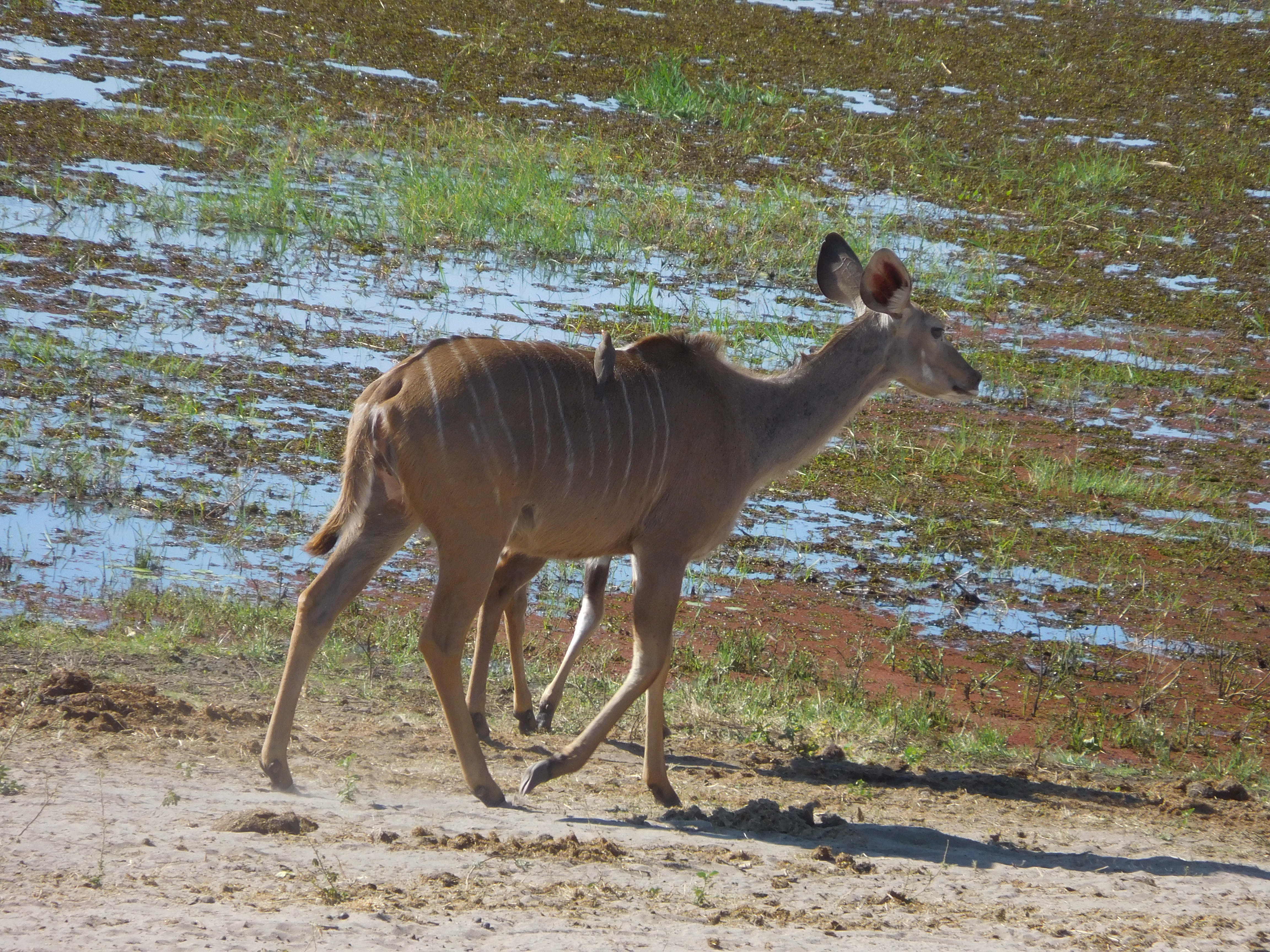
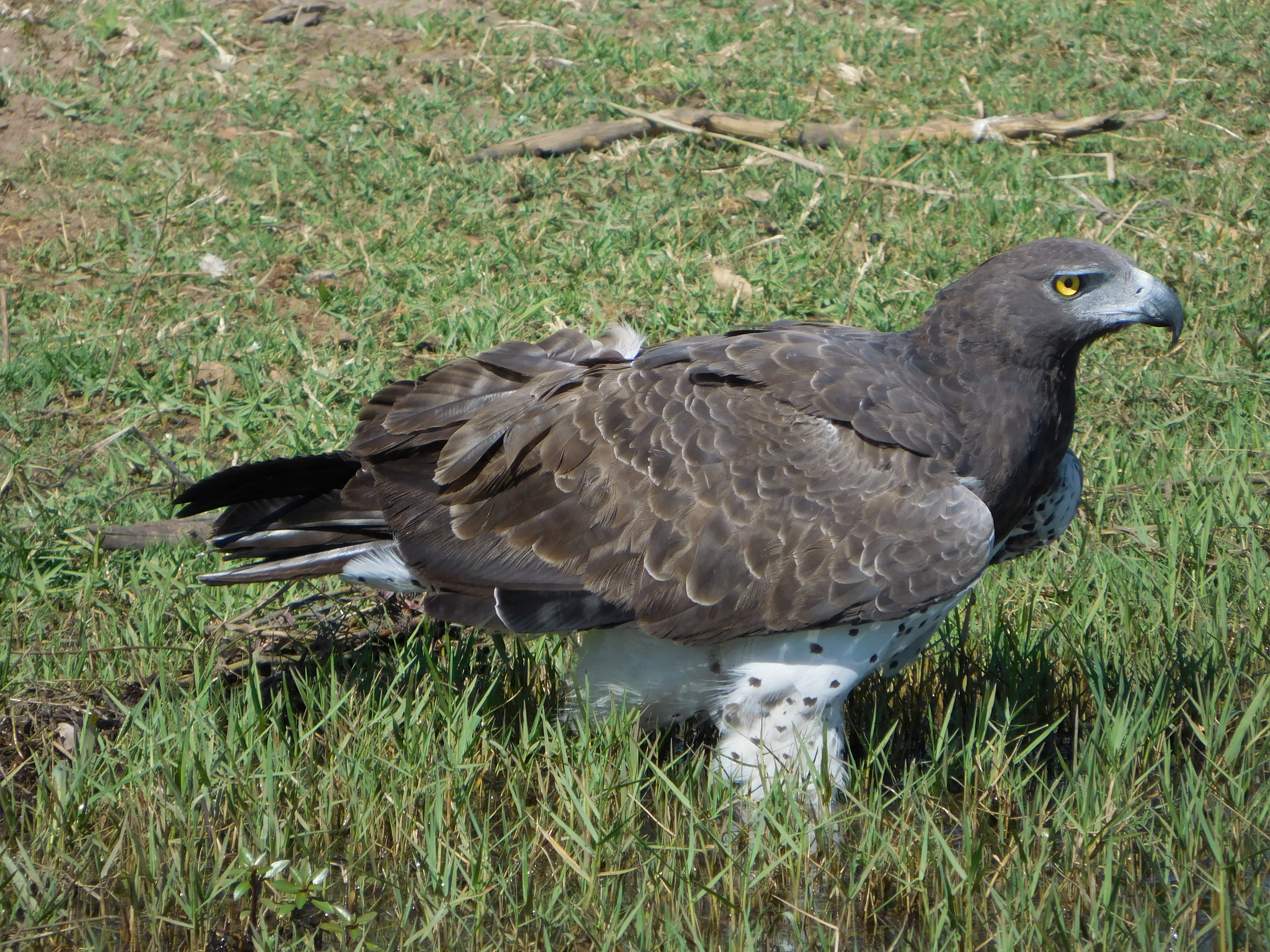
On top of an interest in food, I am also studying to be a biologist. One of the most exciting parts of my trip to Zambia and Botswana, and the biggest draw for most visitors to this area, was seeing the wildlife. The variety of animals appearing daily during my trip was breathtaking. I saw a herd of elephants swim across the Zambezi River and was no more than 10 feet away from a juvenile Marshall Eagle. The first night we stayed in Chobe National Park in Botswana, I fell asleep listening to lion calls, and on the third night was serenaded by hyenas. I even saw a baby White Rhino in Mosi-oa-Tunya National Park. A truly memorable experience I would recommend to anyone that has an interest or passion for wildlife. It is these sorts of experiences that generate much of the most sustainable revenue for the African economies. This is one important reason why the government and non-government agencies are now putting so much effort into conservation work. They want to maintain the revenue stream generated by that particular kind of tourism and also ensure that their descendants can benefit from it as well. The African people, villages and governments can benefit from protecting the local sites and wildlife.

Feeding the Children of Zambia
For my beyond the classroom experience I went to Zambia in Africa. Prior to this trip I have never spent more than a few days in another country. This experience was the first time I truly experienced a culture different than my own. It was amazing seeing all of the differences as well as all of the similarities between that country and my own. It was also interesting seeing the food and the culture of food in Zambia. The reason I find it so interesting is that food and sustainable ways of using and cultivating it is one of the main issues I hope to address in my career. One of the most heartening things that I saw on this trip involved the school and preschool programs. The main reason that this impacted me so much is that these programs and schools work with NGOs (non-government organizations) and philanthropic individuals to ensure that the kids in their care have a decent nutritious lunch, seven days a week. Another reason I was impressed with the school my group visited was that it was built to teach its students conservation on top of their basic all around education. I wish more of the schools in the U.S. were more concerned about teaching conservation to their students.


A New Sustainable Way of Ranching?

http://www.westernsustainabilityexchange.org
When one thinks about cattle ranching, many tend to think of cowboys hollering on horses with ropes at the ready to herd any unruly cows back to the herd. Maybe that is how it’s done on some cattle ranches, but not on the Oxbow Cattle Ranch, which is a ranch that I had the privilege of visiting during my time at the PEAS Farm. Bart (the mastermind behind the operations) is a humble, intelligent and caring man who has a Wildlife Biology degree, that he chose to put towards raising cattle in a sustainable and low stress way. I chose to write about this man and his ranch because I found his ways of cattle raising so incredibly fascinating that I had to talk about it!
Bart believes that raising cattle needs to be done with integrity for the cows, as well as the land. First of all, he utilizes wildlife friendly fence to aid wild animals in movement across the land. The fence essentially has two barbed wire lines in the center, and just smooth wire on the top and bottom, that can be connected to the center two barbed wires to make it wildlife friendly. The cows can’t get out of the fence and the wildlife can move through with less chances of injuring themselves. It really is a brilliant fence to use in a place such as Montana.
http://www.missoulanews.bigskypresss.com
Bart is the man on the left, installing the wildlife friendly fences on his property.
He also does intensive rotations of his cows on his land, so that the cows will not overgraze the areas that they are in. If the cows are in the space for the right amount of time they will eat enough, but not down to the roots, which leads to stress on plants and less vegetation the next year. While in that space for the set amount of time the cows hooves will churn the earth and return organic matter to the soil (through their feces and left behind loose grasses), which leads to a richer soil. The idea is that the vegetation will grow back in more volume the next year, all the while reducing invasive weeds (knapweed). He showed us an example of these, and it was amazing to see the results of sustainable grazing rotations in the works.
The thing that I found to be the most amazing was how he treats his cows. Bart employs a low stress method of herding his cows. He never yells at them, nor slaps or uses a shock rod to get them moving. He explained a way of ‘putting pressure’ on the cows by just taking steps or moving your body in the right way to get them to move in the way that is needed. It was all very technical, and I think that I would have to see it in action to truly understand how it is done. I was so intrigued by this, because I have never heard of any methods life this before.
I was just so impressed with how much time and effort he put into thinking about how to raise these cows. Many people don’t realize that animals can feel things that humans do, and I respect Bart for realizing this and using methods that are low stress on these animals that are living and ultimately dying for our consumption.
The Secret to Happiness
I don’t think that I have ever been quite as happy as I am this summer working at the PEAS farm, living a simple but fulfilling life. I ate great food, worked in a beautiful place, had meaningful conversations with people who sincerely care about what is going on in the world, and I was finally in a place where I think I belonged. I think that usually I was always looking for something more, yet I never quite knew what it was I am looking for. But, this summer I realized what I have been needing to be truly happy.
My fellow workers and even instructors at the farm had many conversations about what it takes to live a fulfilling and joyful life. We narrowed it down to a few different components; a person needs to have meaningful conversations with people, to exercise daily in some form or another, as well as seeing the rewards from your hard work.
Humans are not solitary creatures; we crave human interaction. To be happy, people instinctively need other people in their lives. We cannot be truly happy unless the people we have in our lives mean something to us; we have to care about the people we have in our lives to live a fulfilling life. We need meaningful conversations with these people we care about, because we cannot be happy with small talk that essentially means nothing.
Another extremely thing humans need in life to be content is daily exercise. This doesn’t mean that we all need to hit the gym every day, but we definitely need to be doing something active. The activity that I experienced at the farm was just the routine farming: weeding, planting, walking, and lifting heavy objects. Any kind of activity—such as hiking, walking or biking to work, or playing a fun game of basketball with friends—can help people to live a more fulfilled life.
The last component of happiness that we discussed at the farm was seeing the rewards of your work. I experienced this in the way of planting small crops at the beginning of the summer, watching them slowly grow into large and lush plants, and then eating the fruits of my (and my peers) labor. Simply eating the food that we grew, somehow made it all taste better than I could have ever believed.
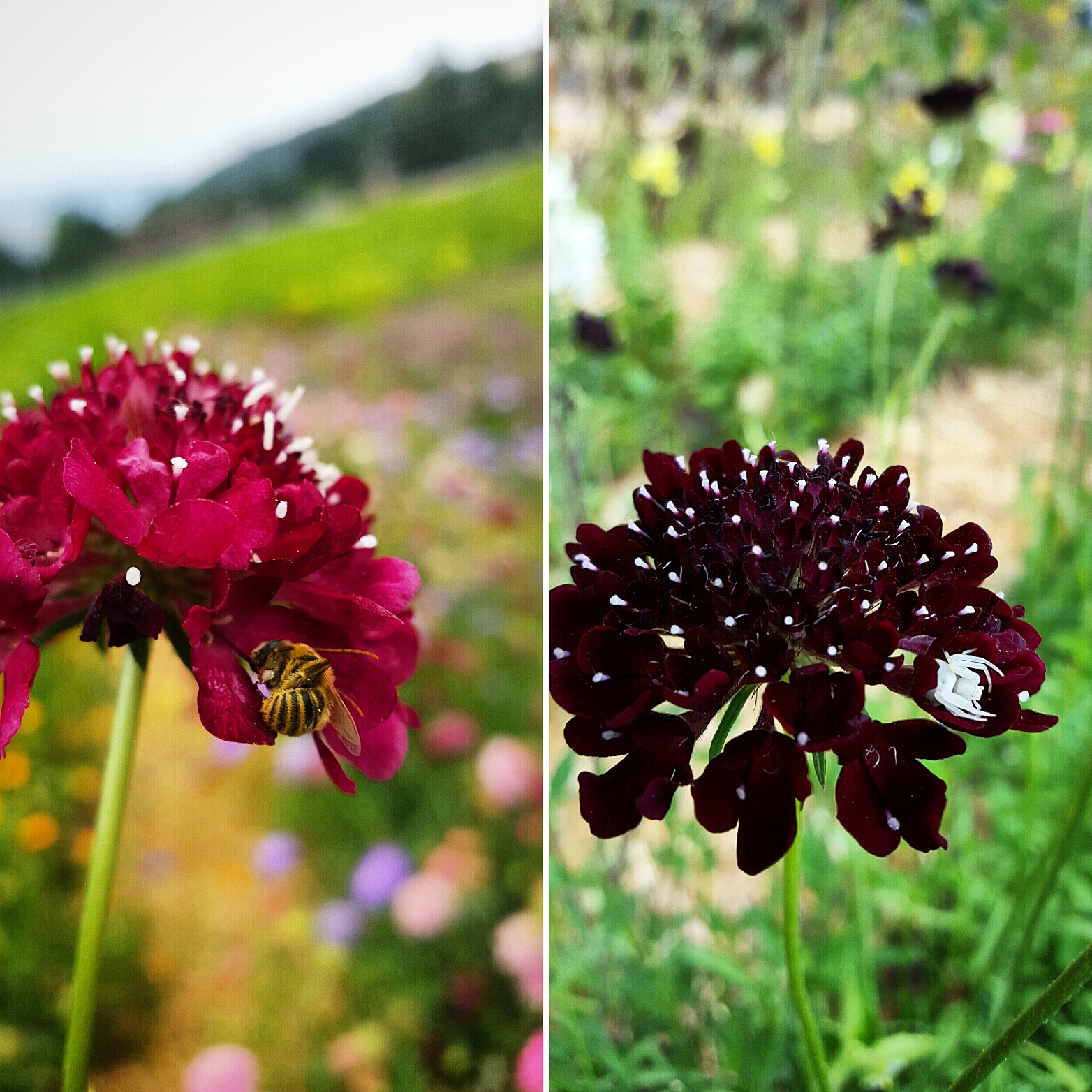
You know you’re happy when you see bugs snuggled in the flowers and you wish that you could capture that moment forever. Happiness comes in all shapes and forms, but this summer, I connected with people, plants and the land, and that is all I could ever ask for.
Local Farming Unveiled
Until this summer, I had never truly thought about where all of my food comes from. Although, I had thought about where meat comes from and how terrible the commercial industry is for those animals that are raised for our consumption. I have never realized how ultimately disconnected I–as well as many other people are–was from my food sources. What I didn’t realize before was that the commercial produce industry is about as bad to the land as the commercial meat industry is to both the land and animals. The majority of the commercial produce industry supports mono-cultures of food and therefore supports the use of herbicides and pesticides, which in turn ruins the soil and pollutes rivers and streams. People are so disconnected from this reality because the majority of people just buy their food from the grocery store and don’t pay attention to where it is coming from and how it is produced.
Working this summer at the ten acre organic PEAS Farm up the Rattlesnake, I learned just how large of a disconnect there is between people and their food in the modern world. Because of my time working at the farm, I now try to make more responsible choices with where I purchase my food from. I have realized that I want a life filled with good, real food, that is produced from local growers who work hard to produce this beautiful and delicious food. After meeting many of these local growers around the state of Montana, I recognized their integrity and their love of the land. These people work so hard to produce real food for people all around Montana, all the while making sure that their practices uplift the land rather than tearing it down. These are the farmers and ranchers who, at the farmers markets, will talk to you, tell you how they grow everything, and get about anything you need from what they produce. Fortunately, in Missoula there is a large amount of people who really do care, and this is evidenced by the crowds of people under the bridge and by the X’s in downtown Missoula on Saturday mornings during the summer. I am so fortunate to live in a place where the integrity of the land is protected, and where purchasing real local produce is a livelihood.
WWII and Shoes
My biggest focus with the GLI program has been the question of what gets the point across the best. In what way can one human being make a message really resonate with another. This trip made me realize that there can’t be one right way, there has to be many ways to get to many different audiences.
I did a lot of amazing things during my six week stint in Vienna, including visiting Budapest, Munich, and the Czech Republic. Each city had its own story to tell, and in most cases they had to tell me in under 48 hours. Some of these stories are familiar, and some with a new twist. For the longest time I’ve thought that stories were the best way to make things really stick. But since being back in the states, I’m starting to realize that the things that stuck with me aren’t the stories, it’s other various things.
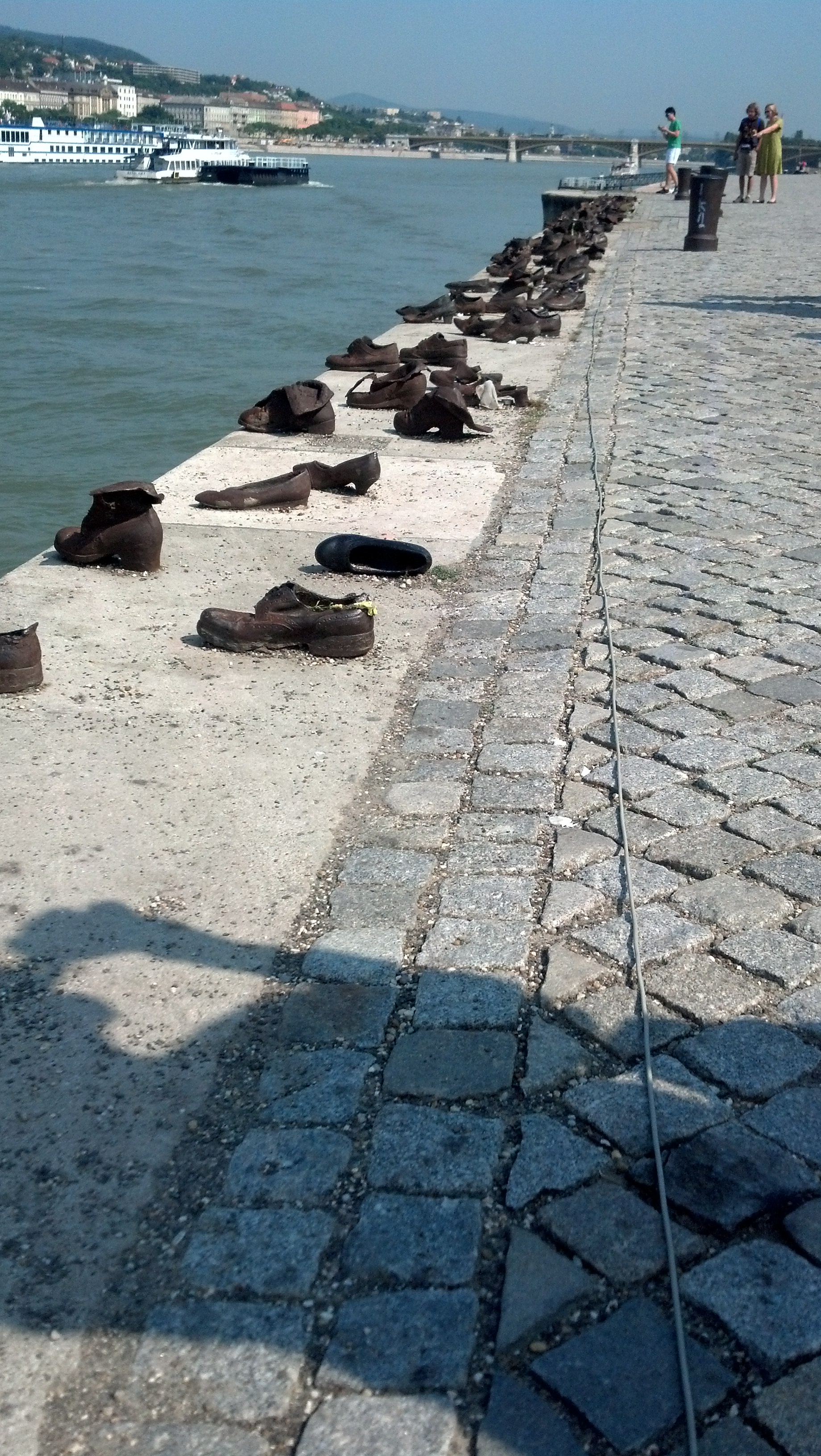
In Munich, I visited Dachau, or the first work camp under Hitler’s regime. But somehow, even though I heard the stories of the horror that occurred in that place, it didn’t stick. I barely remember it. There were lots of places on that trip related to WWII, as most of the fighting was in that area of the world. But the only place that resonated with me was in Budapest. It was a memorial for Jewish victims in the city who were shot by arrow cross militia men into the Danube. The memorial is a bunch of shoes along the Danube bank. And though it was subtle, it hit me the hardest.
For the longest time I have always thought of WWII being much further in the past than it actually was. But this memorial was of shoes. Style and fashion and how it evolves has always been of interest to me. The only thought I had was that these shoes were so similar to ours. Half of the women’s shoes are styled pretty much exactly the same as some of the ones in my grandmother’s closet that I used to play dress up with as a child.
As it turns out, that was what I needed to make this story real to me. Not a story about the holocaust. Not a story about Hitler’s rise to power. Not a tour of the places in Munich. The thing I needed was to see an artist’s memorial using shoes. This is why we need artists. We need musicians, painters, writers, story tellers, and everything else. We need these people to put emotion behind fact and turn facts into perceived reality.
What an Atheist Learns at Corpus Christi
It was rather surprising when I found myself at Saint Stephan’s Cathedral on Corpus Christi. As a catholic turned atheist I hadn’t been to mass in years, and I did it while I was out of country nonetheless. Since I went with a group of music students, we were there to listen to Mozart’s Requiem along with a couple of Handel pieces being performed in the space they were originally written for. I found the entirety of this experience to be something much more than any mass could even hope to be in the United States….or at least the churches I’ve been to.
The mass started out with incense. Incense everywhere. The sweet smell filled the room and left no space for any other scent to be perceived. Next came a procession of families tied to the church, followed by all of the altar boys and officials of the church. All were in traditional garb. From the sectioned off area to the front of the cathedral was painted with costumes that could only be outshone by the architecture of the building itself. As stated in my previous blog post, Saint Stephan’s cathedral is of a Gothic style. This means that of course every inch of every wall is decorated with the finest of details. One could get lost in the details for the rest of their lives, if it weren’t for the gothic way of forcing the eyes to the front of the room. This ensured that we paid attention to the sermon.
Though it was hot, and we were sitting (and occasionally kneeling) shoulder to shoulder on hard benches, it was not hard to make it through the entirety of the program. The chanting filled the entire space with one vibration that we could feel. The sermon was entirely in German, but we could still generally get the gist. The music was absolutely gorgeous. Every part had enough space to really be heard, it wasn’t all cramped together in a tiny space where they only thing you can hear is the sopranos. Every part was allowed to flourish. During greetings there was a sense of connectedness when you shook the hand of your neighbors. During communion it was something else to have the taste of the body and blood of Christ at the tip of your tongue. At one point in time during the music you could see the incense’s smoke flowing upward toward the light of an open window and the only thing that I could think of was the smoke’s ascent to the heavens.
All of the senses were in overdrive. There was not one sense that wasn’t being utilized to create this indescribable feeling. Some people no doubt think of it as the presence of God. Many of us on the trip that I spoke to after said it was more unsettling than comfortable- it probably didn’t help that most of us are non-believers. Nonetheless, so many people made it their lives work to craft this feeling. Many people expressed their love and/or fear of God through the format of the service.
And this lead me to the realization that expression isn’t just for communication. Expression brings feelings—whether that feeling be a cozy one or one that shakes you to your bones. It’s so much more than communication. While communication can bring you facts or opinions, it’s really the expression of these facts that gives somebody feelings of empathy. With no empathy, there is no real understanding. I can calmly state that the world is going to end for ages, but if nobody else truly feels the same way I do, then what good is it? People would continue on in their normal way if they hadn’t really internalized the message.
Expression, no matter the medium, is far more important than I have ever previously given it credit for.
Expression in The Walls
For the past three years, I have been studying in-depth one side of my theme-communication. So for this study abroad, I decided to leap into expression, as after much self-reflection I realized I had no clue really what expression was to me. I, for the life of me, could not figure out just why expression was important. Don’t get me wrong, I knew it was, but I wished to know why. What drives humans to express, and what is the purpose? For my study abroad, I chose to take a trip with 18 music students to Vienna. I thought I would learn mostly about music, but thus far I have been very wrong.
I spent the first couple of weeks not learning about music that much at all. My class did not start for three weeks, so I spent my time taking walking tours offered by another class and an Art teacher that tagged along for the first week, Dr. H. Rafael Chacón. Through his stories and insight, I have found a purpose to expression.
Vienna is an interesting city. I have traveled around Europe a lot and have seen many ruins and buildings that were made during the time that the style was popular. Vienna, however, displays many buildings that were built more recently when the particular architecture would be out of style, but with a purpose in mind (note- recently is still about 200 years ago). Take for example the Rathaus, which hosts the mayor and city council. It was built between 1872 and 1883 in a neo-gothic style. Why? Gothic style architecture itself flourished during the 12th century France and lasted into the 16th century. Around this time you see cities becoming more independent- almost to the point that they were independent city-states. So when making a seat for the mayor and city council, the architects pulled from a time frame that was reminiscent of city government. The architecture choice basically screams to the people (or it would, if people knew much about art history unlike myself) “Hey, this is the city government!”
The domes in Vienna also are very expressive. There’s the dome of St. Michael’s gate- the entrance to the Hofburg. This gate was never designed to be used for any other purpose than a gate- which is weird. Most domes in European palace architecture are placed over important spaces such as great halls or throne rooms. So why here? Dr. Chacón believes it to be a symbol of wealth and power. During the time this was built, it was ever important for the Hapsburg in rule to remain in power. This was one of the last monarchies. So putting the dome at the gate from the city to the palace was their way of reminding the people that they were in power.
Thus far I’ve been talking about the expression of the royals to the people. But what about the people themselves? That’s where this next dome sort of comes in. It is, in fact, probably my favorite dome that I’ve ever seen. It’s gorgeous, it’s golden, and it’s basically a big “Fuck you” to the art academy. I am referring to the dome atop the Secession building. At the point in time of its building, times were changing. Art was shifting. The artists didn’t want to be stuck in historicism, they wanted something new. So they started the Seccession movement. This dome, which serves no purpose as it is airy and does not change the inside of the building at all, makes fun of the other domes of all of the historicism buildings.
What I’ve learned from these three pieces of architecture (along with many, many more) is that sometimes expression is an enhancement to communication. Sometimes, simply saying you are powerful isn’t enough. Sometimes you have to build a dome to really prove your point. Sometimes, the action of doing something speaks much louder than the words ever could.
Zambia, a Unified Nation
After visiting Zambia, I was surprised to learn that it is one of the poorest countries in the world. Although there is a lot of poverty, Zambians have a high quality of life. The people were happy and very friendly to tourists. This shocked me as in most of my travels abroad I’ve had to be careful not to be taken advantage of and even robbed. There’s some frustration in Zambia that the country doesn’t perform as well as it could, but the reality is that it’s doing great for a nation of its type. Zambia is a very stable country that has never fought a war. Part of the country’s success is that the government recognizes all of the nation’s 73 chiefdoms. Each chief controls his own land and the profits from any economic activity in his area. Each tribe speaks its own language, but the tribes are able to communicate with each other in English due to their colonial history with England. It is rare for a county with such diversity to get along, particularly in Africa. The reality is that the people of Zambia are very peaceful, which is surprising given their northern neighbor, the Congo, is fighting a civil war. These peaceable traits could make Zambia very attractive to a strong tourism industry if there were enough investment. According to our guide, who has led safaris in Africa for eight years, “Zambia is the real Africa.”