


Arriving in a new country, so different from my own, was indescribable. All the rules change. I noticed this the most socially. Here is Tanzania people’s idea of time, happiness and problems are so different from the U.S. Time is not linear. If the guides say lunch will be about 12:30, then it could very well be at 3:30. Any worry or problem can easily be fixed with a simple “hakuna matata!” Despite the intense poverty that many Tanzanians face, people always seem to be happy and relaxed. Things happen when they happen. No one seems to feel pushed to get things done, yet the people here are some of the most hardworking people I have ever encountered. The thing that impresses me most about the people of Tanzania is how genuine they are. They have self-confidence and are not judgmental. The people want to hold your hand, put their arm around you or call you their friend. All of this left me wondering where America went wrong. Did we trade culture and love for the debilitating pressures of being the powerhouse of the world? When did we forget about people? Tanzania has over 120 different tribes, yet the people are peaceful. When did America forget that people are just people? How do the young Americans attack this problem effectively?
Category Archives: Uncategorized
The sad truth about elephants

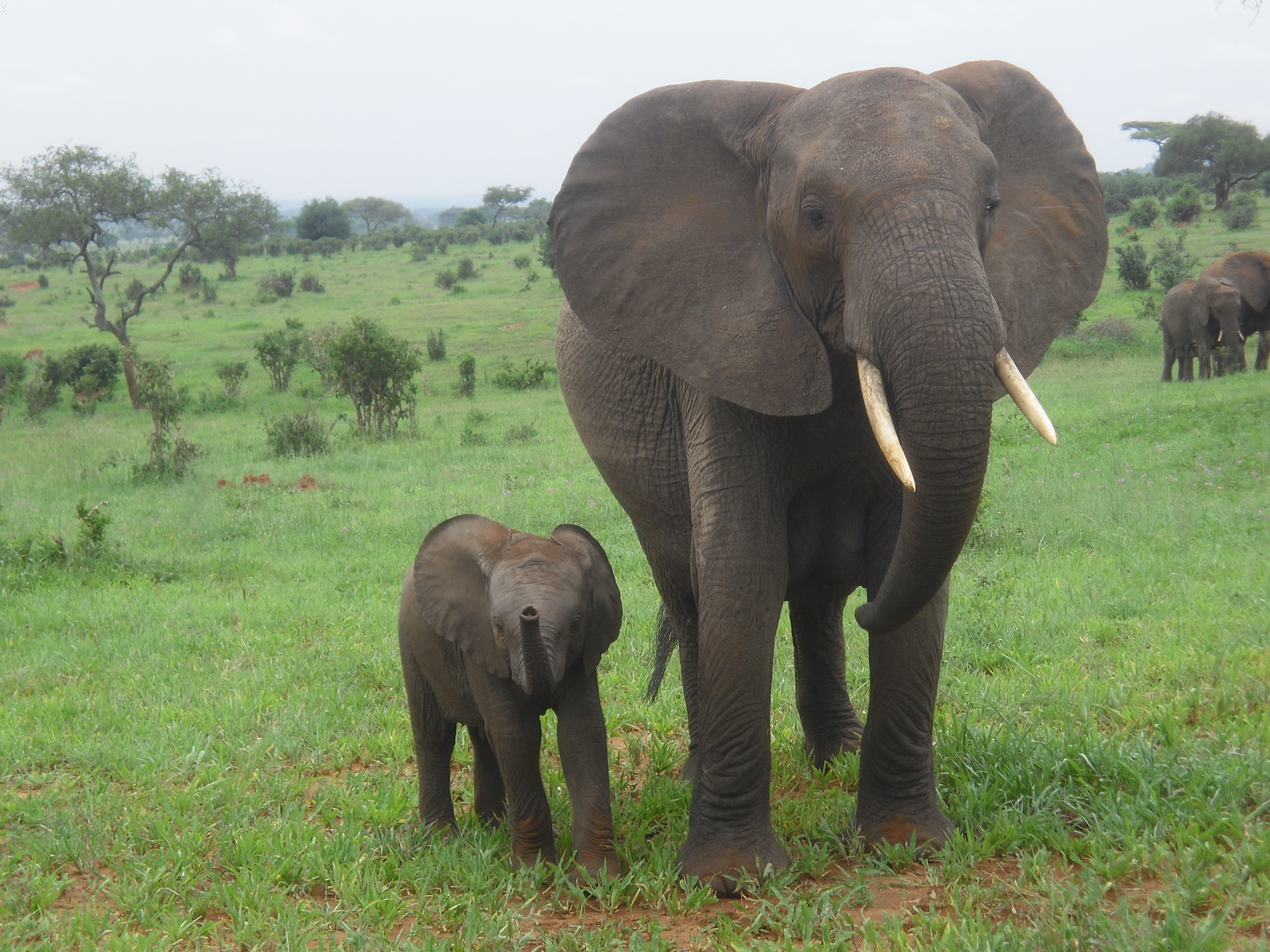
There’s no debate: my new favorite animal is the elephant.
While in Tanzania, we were lucky enough to see hundreds of elephants, from babies and teenagers to matriarchs and large bulls known as “tuskers.” We saw elephants mating, nursing and one in musk (the male equivalent of heat). We drove by as elephants splashed in mud puddles, playfully trumpeted and rummaged for food with their trunks.
We were lucky. In the not-so-distant future, these sightings will be rare.
During our second day in Tanzania, we met up with the head of African Wildlife Trust, Pratik Patel. The organization, along with Pratik, focus their efforts on anti-poaching, and anti-ivory campaigns.
We sat outside, overlooking hundreds of acres of land set aside for a brand-new “Ivory Elephant” orphanage, as Pratik explained why.
“It’s a genocide,” he explained, emphasizing the latter word. “Yes – a genocide.”
According to a 2012 NPR article by John Burnett, an estimated 11,000 elephants are dying each year for ivory. That was three years ago, and the problem is only getting worse.
Ivory is especially popular in China, but the United States isn’t completely innocent. According to the National Geographic article “U.S One of Largest Ivory Markets,” we’re the second-largest ivory-market in the world.
I couldn’t believe that, and I couldn’t believe the number of wild elephants left: an estimated 13,000.
The story is a heartbreaking one, and we’re running out of time.
After leaving Pratik, we went on a game drive through Terengerie National Park. There, I saw a little baby elephant, tucked beneath it’s mother.
“She’s less than two months old,” our guide explained, pointing out the babies’ wobbly steps.
At that moment, the infant copied her mother and sniffed the air, peering at us. My heart stopped.
Elephants are my new favorite animal, and I’ll do everything in my power to help stop the ivory trade.
A Completely Foreign Culture
The man, who spoke no English, looked toward the trees. He raised his hand-carved bow, pulling back the string made of an antelope’s tendon.
I held my breath. The nine other students with me did the same.
The man kept his arms steady, then in a flash, released the arrow. A puff of multi-colored feathers exploded from the tree and he raced to catch the falling caucus.
While the students surrounding me chattered with excitement and pushed forward to get a picture, I stood in my place. I didn’t know what to think: I’d just seen an animal die.
I’ve been a vegetarian for 12 years. I grew up tucked in a dense community of suburbs next to the city of Detroit, miles and miles away from the closet farm or ranch. Once I moved to Montana, I heard discussions of hunting, but I’d never been closer. And there I was, thousands of miles away in Tanzania, as close as you could get.
The man, and the rest of my group, moved forward. I walked along, secretly hoping he wouldn’t find a bigger animal to kill. But, at the same time, I leaned forward and kept an eye on his every movement.
This man was hunting to feed his tribe. Without the animals he caught, he would starve along with his brothers and sisters, wives and children. This was how he lived, and he generously let us see a peak.
I wasn’t entirely comfortable while we walked around the African bush, the man shooting a handful of more birds, but I wasn’t uncomfortable either. These people were different from me, yet they recognized from birth what I was only starting to uncover: humans are a part of nature, we’re animals like giraffes, elephants and lions, even birds.
I couldn’t watch as they plucked the bird and pulled off it’s skin, grilling the meat over their fire. I was happy when we left their village – littered with skulls, skins and drops of blood. But I look back to that experience more than any other, seeing it as an example of what our whole trip represented.
We are all different. But when it comes down to it, we’re very much the same.

A man from the Hadzabe tribe holds up a bird he just killed. The Hadzabe use small arrow-heads, often coated in poison, to hunt.
Photo by: Gary Kerr
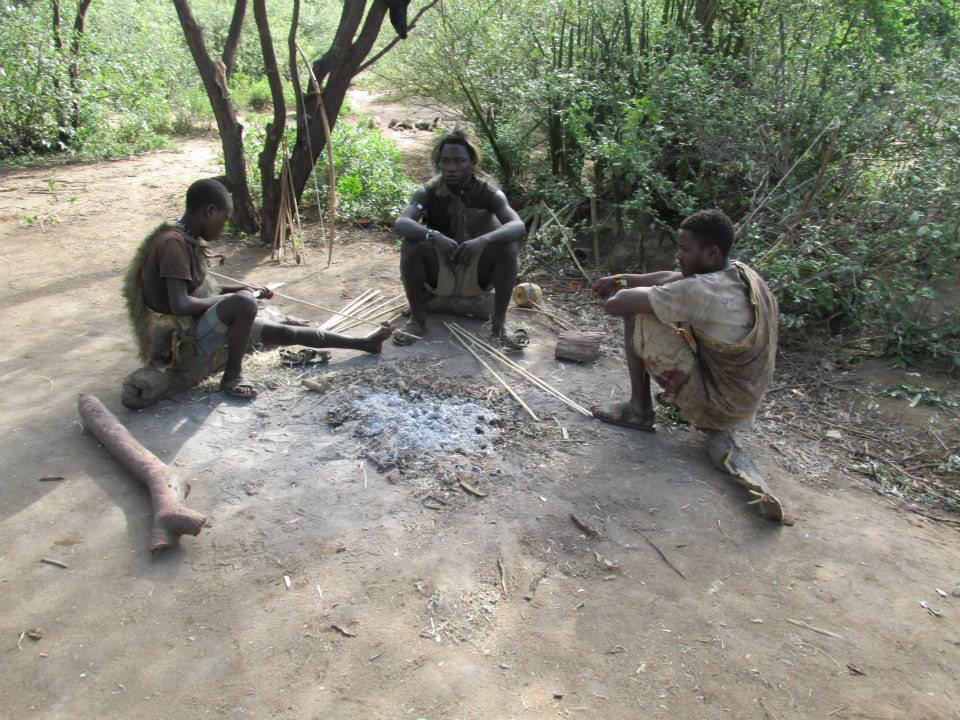
Hadzabe men sit around after their hunt. The tribe is completely nomadic, and lives off the land. There are only 600 members of the tribe left.
Photo by: Gary Kerr
A Global Society; a two-week trip to Tanzania
You don’t hear much about the plane ride.
Students travel halfway across the world and sit in turbulence-ridden aircrafts for 15 plus hours, dealing with crying babies and rock-hard, boxed food. Sometimes claustrophobia sneaks in, other times a bad case of nausea. But as soon the wheels touch the ground, they seem to magically forget the whole ordeal.
At first, my trip to Tanzania was no different.
We landed in Arusha after the sun had set and the land was cast in shadows. We drove to our lodge blind, forced to use all other senses to take the country in. It smelled of eucalyptuses and bananas, it felt warm, fresh, and inviting. The sounds were different too – all bird calls foreign, insects I couldn’t identify buzzing around our vehicle, and the quiet nature of it all. The bouts of silence were newest to me – there were no cars honking, no trains whistling.
I felt a sense of relief and closed my eyes. It didn’t feel like I’d been traveling for almost two days. I was there and that’s all that mattered.
I didn’t think of the plane ride again until we stopped outside Lake Manyara almost a week later. The water level was low, despite the recent rainy season, and our tour guide explained why.
“Global warming,” he said.
I thought back to the 15 hours I spent stuffed in a small chair on that plane. I was so far from my American life – over a day’s journey – but in that instant I realized the distance didn’t matter. What I did back home, from buying products that supported drying up African wells, to driving my car, impacted the lives of the people of Tanzania. The people that live 9,000 miles away from my home.
For the rest of the trip, I’d notice the little things that connected my American world with my Tanzanian one; the shrinking Lake Eyasi, the baby elephants orphaned by Ivory poaching, even the little boys and girls running around in American shirts.
On the plane ride home, I was able to sit up against the small window. I watched as we flew over oceans, brightly-lit cities and sheets of melting ice. Our world is magically diverse, but I knew as I watched, we were all connected.
I’d heard it before, but it was then that it dawned on me: we are a global society.
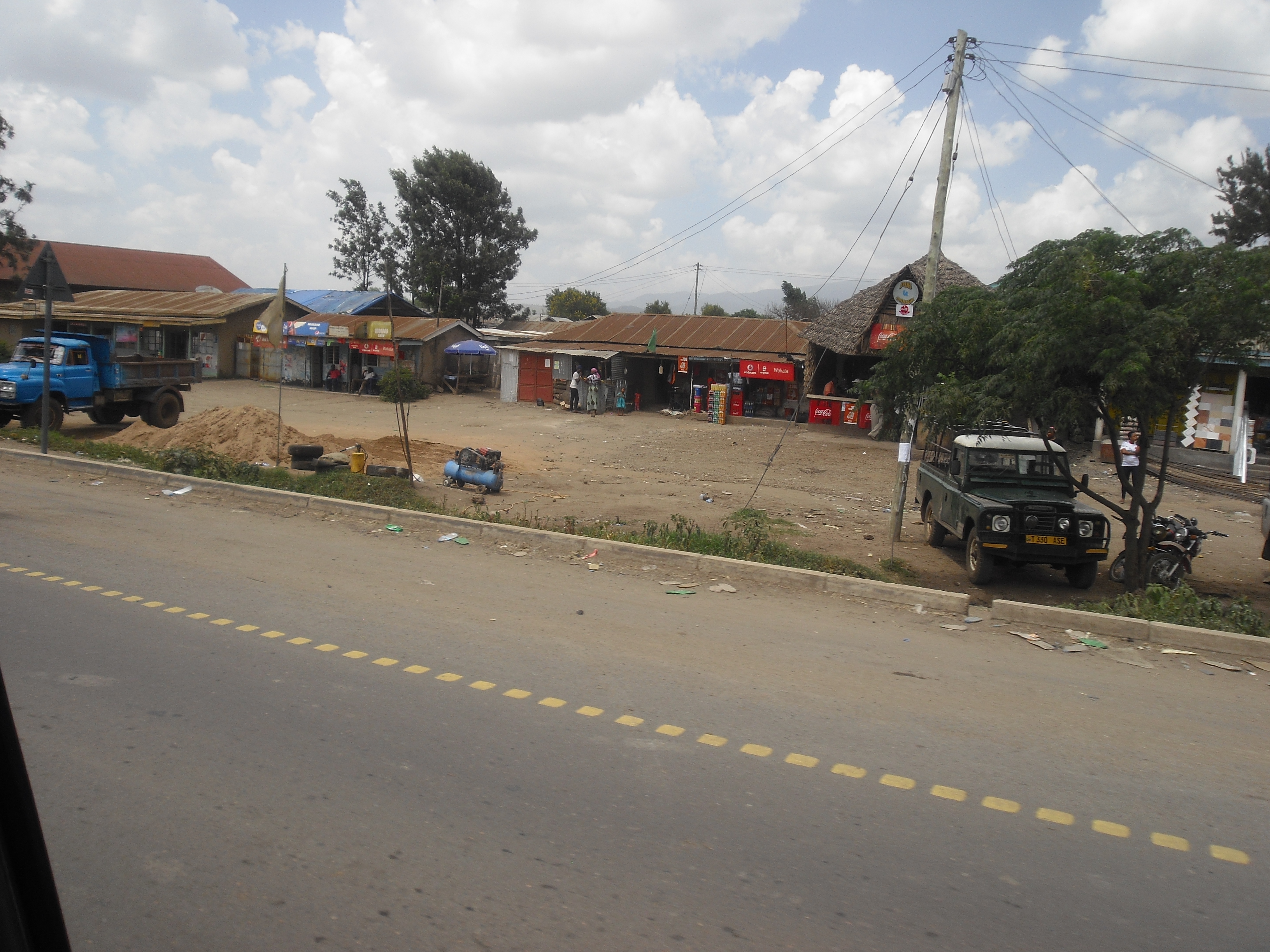
Arusha is one of the largest cities in Tanzania. In it, coke products are found everywhere.

Lake Manyara is one of the many lakes that are getting drier and drier each year. Our guide attributed this to global warming
Sustainable Agriculture in Thailand
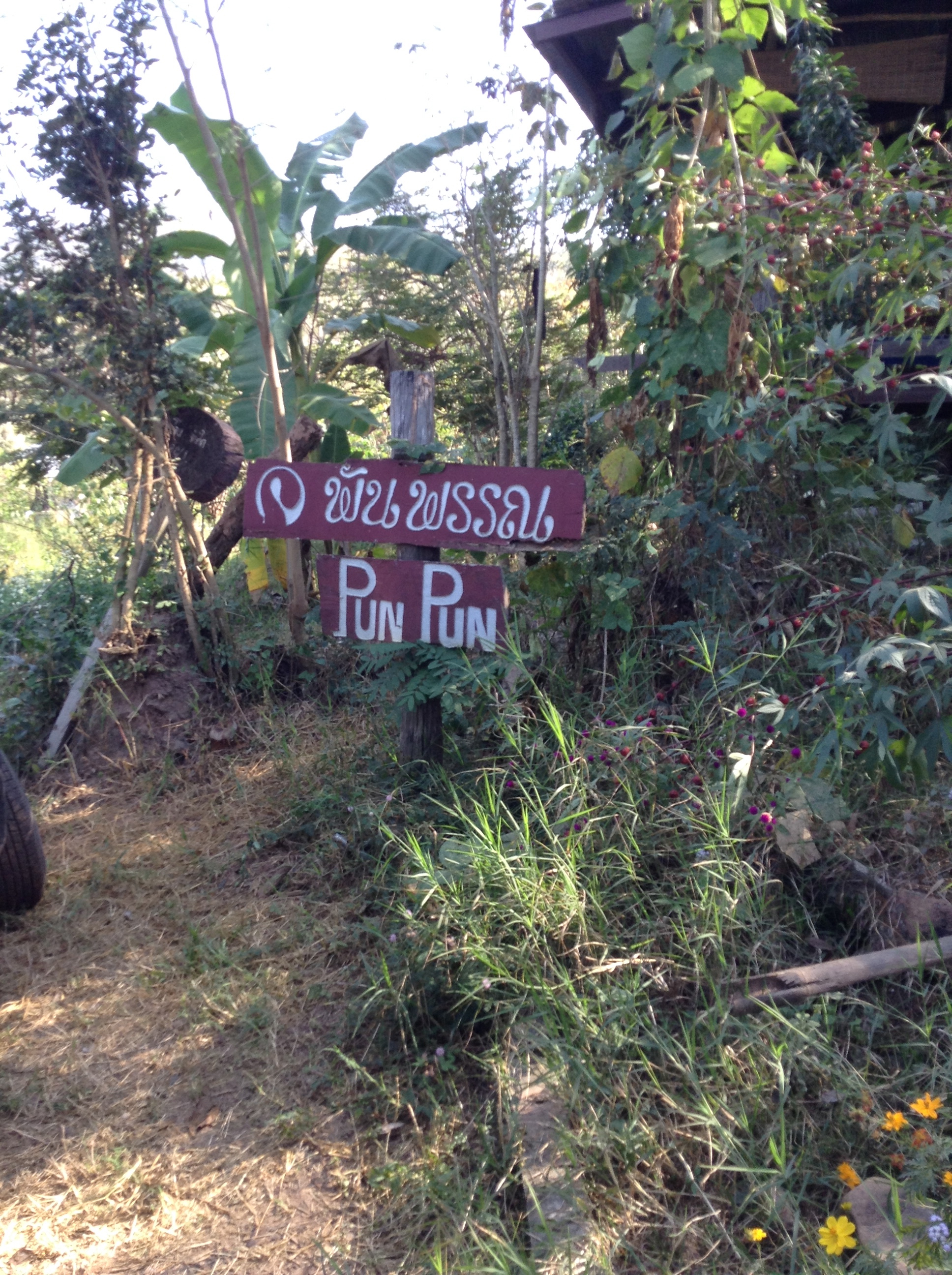
Traveling to Thailand during winter session of 2015 was my first time overseas. Everything was new and exciting and I didn’t know what to expect. Our group went to two different farms and multiple markets over the two week period. The first farm we stayed at was called Pun Pun which mean “a thousand varieties”. Pun Pun is located an hour north of Chiang Mai, in Norther Thailand. It is an intentional community of about twenty people. Peggy and Joe started the farm ten years ago. When they bought the land it was all cleared and nothing was growing there. They started with banana tress and after two years they were able to get fruit and other things were able to thrive around the banana trees. Pun Pun is a very sustainable, everything there is used. Throughout our week stay at Pun Pun we leaned so much. We leaned how to make compost, built an adobe house out of mud, made kambucha, made garden beds, cooked, went fishing, did yoga, weeded and watered plants, leaned about fermentation, and leaned about Thai culture.

Composting squat toilets
 Making compost in a basket, with layers of chicken poop, food scraps and hay. It then needs to be waters and will be ready in two months.
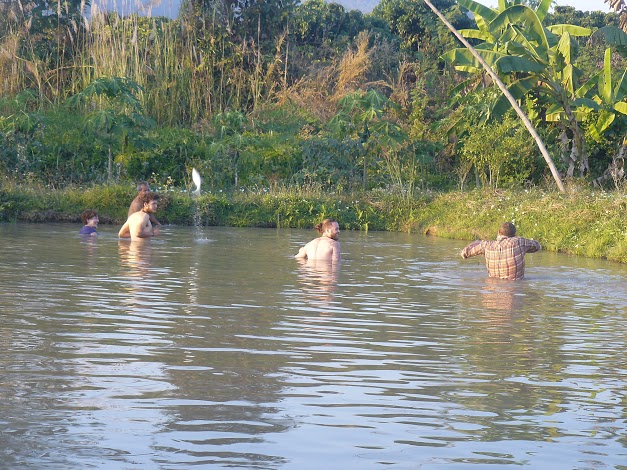 Hand fishing with a net
The second farm we visited was Payong’s Farm. Payong lives a couple hours from Bangkok. His farm is small and is just for his family. We hoed out the dragon fruit and banana patches and also planted lettuce, we leaned how to plant parachute rice, and Payon’s wife Jane taught us how to make lip balm! Payong’s family was very welcoming to us. paying had grown up in a small village and went to Thammasat University in Bangkok, after getting a degree he decided to move back to his village and work with Karen people. Karen people are the indigenous people of Thailand, they are working with Payong and leaning how to farm and use CSA’s.
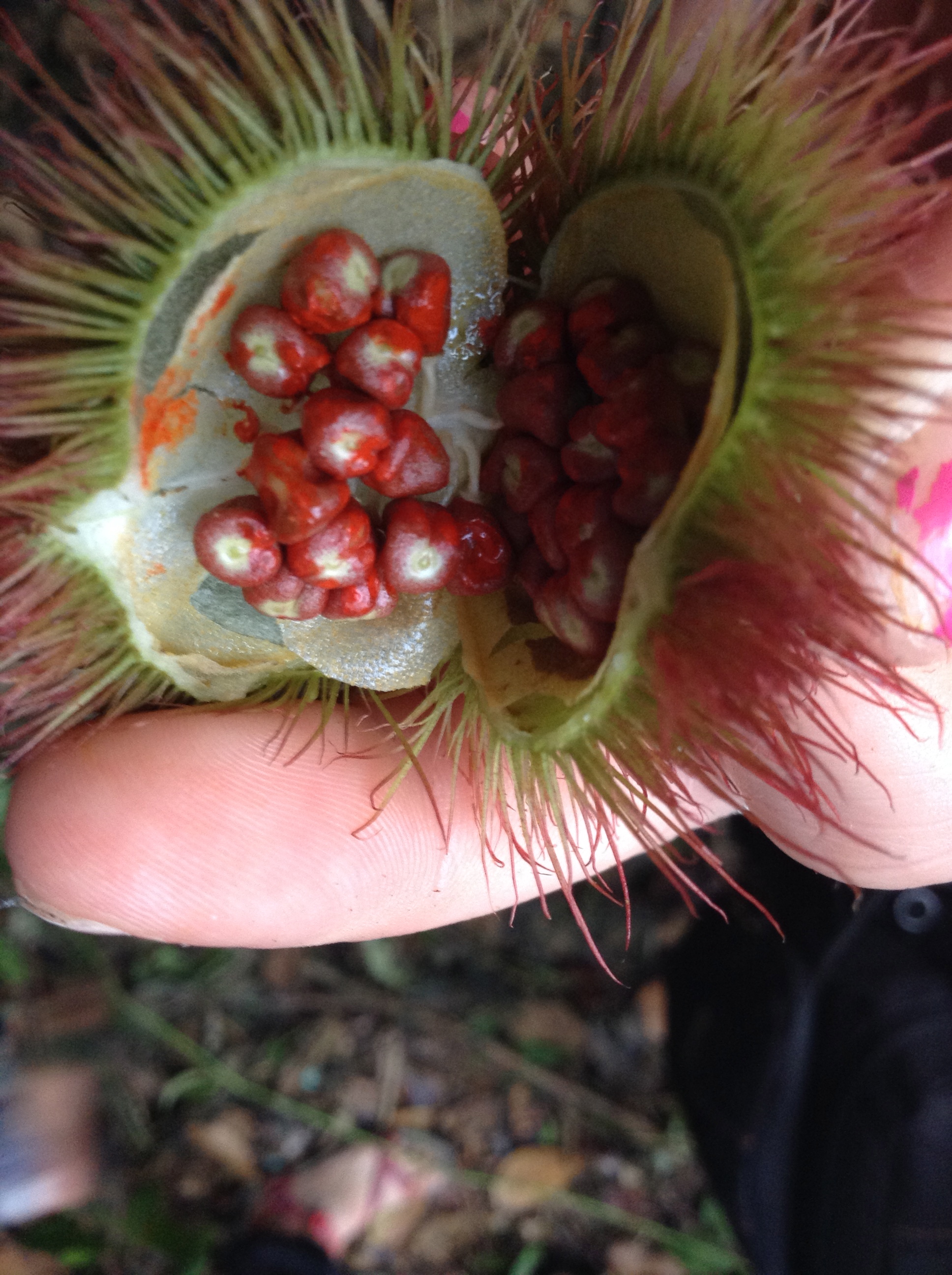


 Parachute rice planting
Santiago
On the day you awaken fifteen kilometers outside of a thousand-year-old holy site holding the remains of the apostle St. James, patron saint of Spain, you might have a headache. You have been imagining this day since months before you started your two-and-a-half-month pilgrimage, since before you became injured, since before you gave up the bragging rights of walking across two countries. You decided, about a month ago, in the border between France and Spain, to finally listen to an injured body, to give up your dream of a perfect pilgrimage and submit to the still-mysterious experience offered to you, taking busses some days, walking others, resting others. That’s the exact word–submission–to a storyline, it turns out, that you didn’t control. Every day, you had to wake up and make the decision again. And again, the next day. Some days, you whispered your intention in arching Gothic cathedrals. Some days, you silently cried about it over cups of espresso. Some days, you laughed about it with new injured, window-shopping, irreverent pilgrim friends. Some days, you mumbled sarcastically about it as you were rudely awakened by hasty hostel hosts turning the bunkroom lights on at six am and telling everybody to “get walking” when you couldn’t walk. Oh, the irony. Some days, others unknowingly reinforced its importance for you; a nun saying “you are not a hiker. You are a searcher for God;” a local woman in Leon blessing the statue of a fatigued pilgrim right in front of you on her way to work. So on the day when you will arrive at your destination, you not only have to make that decision for the day; you must make it for the whole pilgrimage, and for the way it colors the rest of your life. No coffee included.
——-
It was Halloween morning. I was dressed as a modern pilgrim, complete with compression socks for my aching shins, and Santiago was on the day’s itinerary. I stuffed my two-pound sleeping bag into my blue pack, so small I’ve seen others use it as a schoolbag, and walked into the darkness of the morning to meet Lisa and Jay from Connecticut and Margaret and James from Las Vegas.
The air hung low as we walked through the forest with eucalyptus trees outside of the town we had stayed in that night. I had taken a short, quiet shower at the albergue early that morning in an attempt to “cleanse” myself for Santiago, but now the dampness of my hair just seemed to make the dawn moisture cling more readily to me. My head ached. The tiny cookies I had eaten for breakfast had not broken the fast. I was still wrestling with a last bit of self-doubt. Small talk of the others buzzed around and through me. All night, I had tossed and turned, woken up, tried to sleep.
An hour and a half in, we stopped for coffee. I started to tell Lisa my worry, which was that when I got to Santiago I wouldn’t recognize what I had just accomplished and would be too caught up in what I did wrong. Everybody said, “Rebecca! You are going to be proud. You have to be.”
Finally, after coffee, I talked. We were talking about “the power of the camino,” a big buzzword with these friends. The whole point, they said, of the term is that the Camino has more power than most people expect. Many people flee. And many people stay. For days, in my anxiety over the end of the way and my grief over the injured shins, I had stayed silent, convinced that I in no way embodied the power of the Camino. But on this morning, I finally wanted to give myself credit. I said to them that there comes a moment when you have to make a choice. You can either submit to what the world gives you or keep attempting to control your life. Controlling hurts. It is violent. Submitting, asking, experiencing–there, you find fulfillment. There, you find peace. At least, that’s how I saw it on the Camino.
The whole city of Santiago, the whole pilgrimage, commemorates St. James the apostle. You have to make a choice about what to think about him, too. Throughout the centuries in Spain, he was hailed as a mythical military hero in their efforts to drive out the moors. This story appeals less and less to pilgrims, especially as many grow increasingly saddened by a decade and a half of war. The story of St. James that gives me hope is another one. They say that, after coming to gain converts in Galicia, James went back to Jerusalem where he was beheaded. His followers brought his body back to Galicia in a tiny boat. James was a man who, despite the ultimate weakness–his own mortality–had gotten to Galicia, with the help of friends. To me, this was the ultimate lesson of the Camino. In weakness, in brokenness, in times of the death of our old understandings of our identities, something–friends, the promise of incense lighted mostly to please tourists, cosmic dust, God, our own sheer determination–takes us to where we ask to go.
I gasped the first time I even caught sight of the Cathedral. We must have walked for forty minutes through the outskirts of town, and finally there we were, around a corner and in front of the Cathedral. A bagpipe played, and people all around said hello and took pictures in the front square. I did cry. I did feel proud, even with the front of the Cathedral bandaged with scaffolding.
I ran into an Australian lady I had met two days before. “Well done, Rebecca,” she said, the second she saw me, mid sentence in a conversation with a man. “You’ll have this for the rest of your life.” She hugged me and looked at me with eyes of awe. I did not battle a life-threatening illness. I did not save a country. I did not even walk a thousand miles, as I set out to do. But on the Camino, the fabric of the world, the pattern of strings that weaves us together, sits right around all our shoulders, even as we battle exhaustion and confusion and loneliness. Victories, tragedies, inner battles, become visible to us and deepen themselves in us. And as they deepen inside of us, we begin to recognize them in others. Every world seems bigger, every life raw and rich and full of struggle. This lady saw my Camino. And so did I, finally.
We went to the pilgrims’ office and stood around waiting in line for our Compostela, the certificates of the completion of the Camino. It seemed like an ironic place for such an emotional moment, so clerical and formal and sterile. It reminded me of a similar moment, and I searched around for another time when I had cried in a drab and formal place. Then it came to me–I had been crying and shaking when I stepped into the airport in Missoula. That really made me cry. When I got my Compostela, they marked me as having come one thousand miles, all the way from Le Puy. No questions asked, no scrutiny, no judgment–only recognition of a long, hard, beautiful journey.

A Day on the River
I am not a very outdoorsy person, but when I first got to Cork I decided I would play “Yes Man.” Whatever anybody asked me to do (to a limit) I would say yes without any hesitation. One of the main things I said yes to was going to a introductory Kayaking lesson put on by the kayaking club at UCC. I also talked Hannah into going with me. There are two things that are important to know about this situation. 1. I am the most unathletic, athletic person you will ever meet and 2. It was pouring rain and we did not have any appropriate shoes.


At the conclusion of our adventure, I had tipped over the kayak once, gone off of a 2 foot jump in a kayak, and Hannah had lost a shoe. This is one of those experiences I would not take back for the world and whenever it is brought up I will still have a good laugh. I don’t think I will ever want to go kayaking again, but I would not change these memories for anything!
A Weekend in Kilkenny
Another crazy weekend consisted of traveling by bus for 3 hours to Kilkenny. Two of my friends, Taylor and Miranda, had left earlier that day so I was just going to meet them. Once I got to the bus station, after cutting it close, I was on my way to Kilkenny. 
When I finally got there, Taylor and Miranda were waiting by the bus stop and we started off the adventure like every other adventure is started off, by wandering. We found our way around to some of the most beautiful churches and took a lot of pictures. We then found a cute little pub/cafe called Kytler’s Inn, that had a spooky back story of witches and traditional Irish food. Next was to find the hostel that we were staying at. My first impression after hearing that word is of the terrible movie that plays in the states. While in reality a hostel is just a cheap place to stay for people who just want to travel and is not super sketchy. It consisted of 8 beds (4 bunk beds) in each room, a kitchen, and a shared bathroom. Overall it was an enjoyable experience.
Then nightlife was not all that great in Kilkenny, but also during the weekends most Irish people just focus on work, and Kilkenny is also not a college town like Cork is, so there was a different crowd.
On the next day we found our way to a cute little cafe for breakfast called a circle of friendship, then to the Castle, and finally we explored the shops around town. All-in-all we had an amazing experience and took a lot of unforgettable pictures.

Walking for Love of a Mother: Rocamadour
Fourteen days into my sojourn on a Camino de Santiago route starting from Le Puy (close to Lyon) in France, already stunned by language barriers and surprise blisters and a rainstorm, I decided to scare myself even more. I turned off the customary Camino route to take a six-day walking detour to the cliff-side city of Rocamadour. Essentially, I completed a pilgrimage within a pilgrimage.
Situated in a canyon on a tributary of the Dordogne river, in the midst of the region of France with prehistoric cave paintings every few miles, the tiny town of Rocamadour boasts a chateau, a Black Madonna, a sanctuary built into a cliff, many local legends and relics, famous goat cheese, and a huge crowd of international tourists. It is said to be the resting place of St. Amadour. According to legend, he was also St. Zacchaeus, the tax collector who climbed into a Sycamore tree to see Jesus in the Gospel of Luke. They say in Rocamadour that after his conversion, he came to France with his wife, St. Veronica. At the end of his life, he became a hermit, renaming himself Amadour—lover—and coming to the canyon of Rocamadour to dwell in a cave.

“That sounds beautiful, Rebecca,” you might have told me, “but couldn’t you save that for another trip? I mean, you’re already hiking a zillion miles in a foreign place on a path with many other beautiful towns, all on your own. That’s already hard. You could just skip this place.”
I agree. It was crazy to go there, if you look at it practically. But I had far more important reasons to go there than just sightseeing or school.
In the December before my trip, I told my Grandmother, another lover of travel and stories and grappling with doubt and trust, about my plan to walk the Camino from Le Puy. She walked into the other room and brought out a guidebook for Rocamadour. “I went here,” she said, rattling off the history of the place. “Go here,” she said, as if in her sentimental stupor she had forgotten the other nine hundred miles of my journey. But I told her I would go.
Three weeks later, I stood in the hospital room as Grammie Lu, the traveler, laughed excitedly about her last journey—into ashes. She had a heart attack, and she sat on a hospital bed for three days, waiting for her children to come and say farewell. Her nine children, their spouses, and most of her eighteen grandchildren huddled around her, sobbing and staring, walking in and out, pacing the halls, mindlessly buying food from the cafeteria. On January 6th, the traditional date for Three Kings’ Day (also called the Epiphany), she faded out and went to join her stars. She died on what I think should be a favorite day for a pilgrim, because it celebrates one of the most significant pilgrimages in all Christian lore—the journey of three powerful and rich and wise men to a homely stable to visit the miraculous birth of a baby. When she died, the pilgrimage felt more than ever like something more than a school trip or vacation. It became a quest to fill the void that she left in all of us.
I was talking to my friend Jane the other day about our shared love of the Epiphany. She says she likes the three kings because they did not just cross territorial boundaries to see a tiny baby—they crossed faith boundaries. Pilgrimage is the ultimate experience of being an outsider, of crossing cultural and linguistic and territorial and often religious boundaries, and searching still for a feeling of attachment and home.
I came to Rocamadour, paradoxically, to find a home, doubting every moment and every turn in the trail. There is nothing like the pull of family and friends—the pull of a birth, the black vortex of a death—that draws people into a quest. The Cid, however brutal and violent and filled with the hatred of his time for moors, ultimately sought an end to his exile and a home with his family. The Three Kings gave up all their riches simply in order to see a newborn child. Perceval sought to rectify his actions in living up to his knightly legacy and understanding his family’s story by searching for the Holy Grail. Margery Kempe, a fifteenth-century pilgrim and mystic, mainly meditated on scenes involving the relationship between Jesus and his mother as a way of finding ultimate spiritual comfort. John McFarlane, a British environmental writer who sought to map out in a book the remaining wild places in the British isles, dedicated a significant portion of his writing to commemorating not only his experience on various islands and heaths, but also his relationship with a deceased nature lover and colleague. His book not only maps out physical locations, but also outlines the relationships and stories that make those places meaningful to him. The core lesson of pilgrimage, of all journeys with any sort of meaning, is that we are meant to do more than walk this earth. We are meant to find in it love, meaning, an antidote to doubt and loneliness, and a deeper relationship with all creation.
The whole week on the Rocamadour detour, for me, was one of wrestling between the extremes of doubt and trust. I could write you a book of testimony advocating both. On the first night after walking off the normal Camino route, I arrived in Lacapelle-Marival, a sizable town that had once been a site of tremendous power and wealth—as shown through its castle—that now only has two restaurants. I was greeted by a true ghost town as I myself walked through the ghosts of my past. I walked with my three new hostel companions for an hour until we found an open pizza place on the outside of town. I ate the “pizza mexicaine,” with green peppers and beef, and yearned for true Mexican food. “Well, this isn’t very magical,” I said to my Grandmother, wherever she was. “This is just eerie.” Then I looked up, past the city limits, to see an understated but elegant pink sunset. I chatted with Agnes and Denis, a recently retired couple from Paris, and Marie, a woman working on a doctoral thesis on the philosophy of biology.
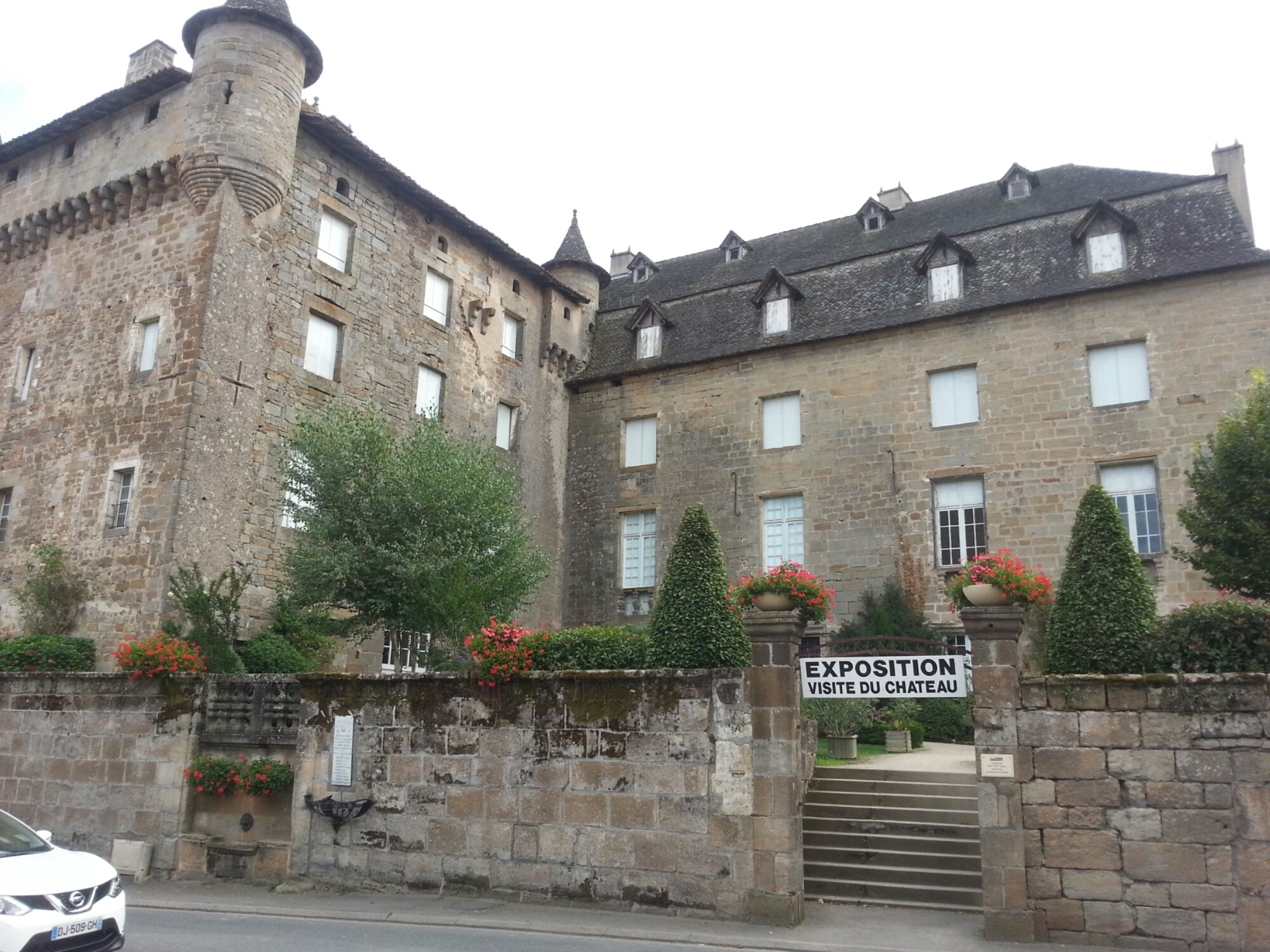
The sleepy town of Lacapelle-Marival boasts a chateau!
I realized also that evening that the pilgrim hostels I thought would be available on my walk out of Rocamadour, as they were everywhere else, were well beyond my budget. I had almost no French skills, no companion, and no guide for this section. The women at the tourist office spoke no English and knew of nothing beyond their town. I had every right to feel deserted.
Everything about the walk to Rocamadour reminded me of my grandmother. Perhaps I willed it out of sheer desire to find her. Perhaps I saw her there because I was walking to a place she loved. Regardless, it was what I needed. When I left the Camino route to start on the variant to Rocamadour, I was escorted to the turn by an eighty-six-year-old woman—the exact age my grandmother would have been. In the mornings, walking through misty pastures of sheep enclosed in old stone walls, I saw into the photographs of the same scenes she hung in her house.

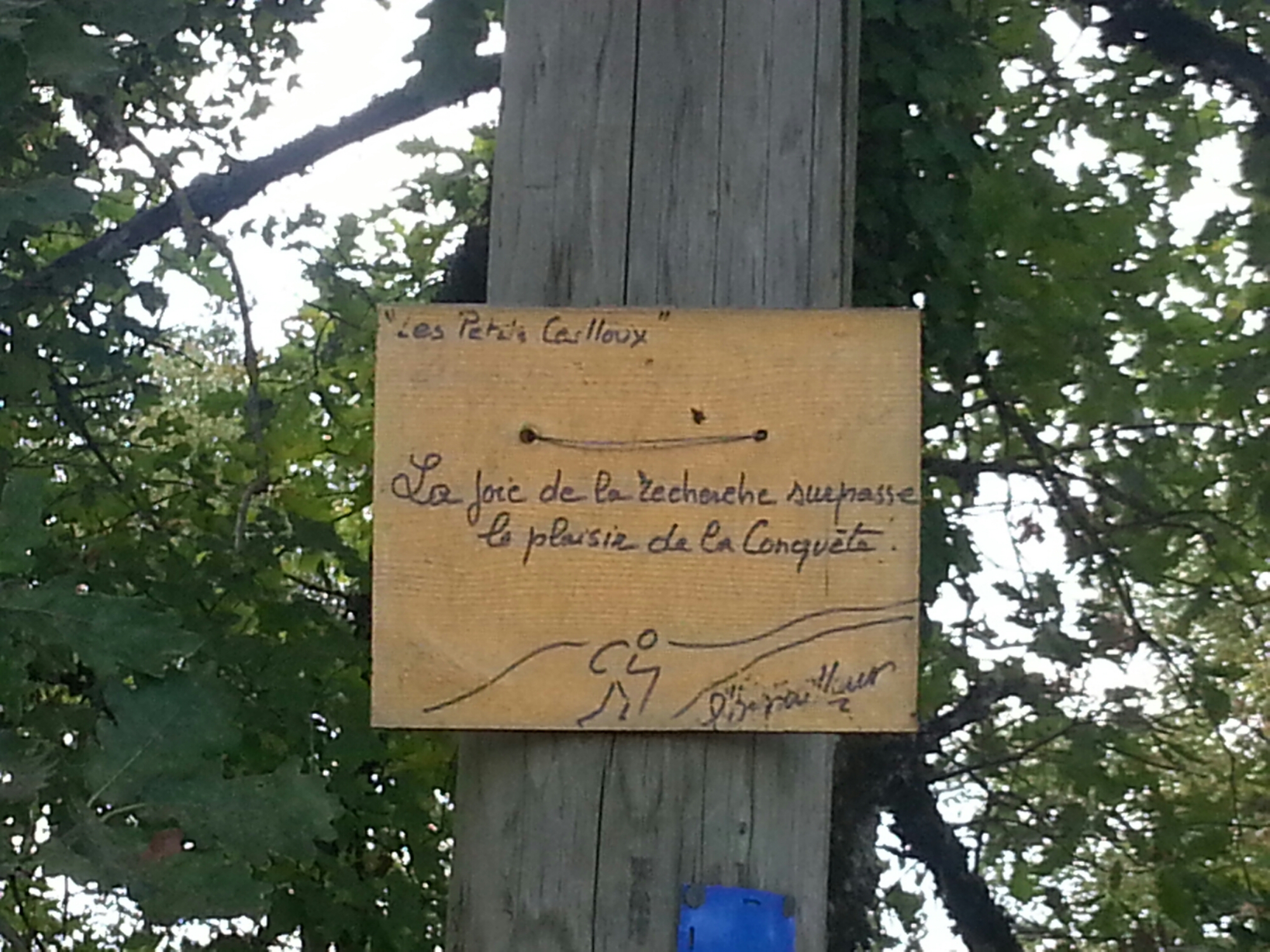
On the walk to the next town, the owner of the donation-only pilgrim hostel where I was headed had hung little signs on the Camino beckoning us to his place. One read, “the joy of the search surpasses the pleasure of the conquest.” I imagined Grammie Lu meditating, collecting the peace that had met her in those final days, led her through the ultimate transition. I thought of my own search, looking for that same peace. When I arrived at the hostel, I was greeted by opera music and violin concertos. I imagined my grandmother in a seat at a concert hall, binoculars aimed at the silk-clad and cashmere-voiced soloist with singular attention.
The next day, on the final short walk to Rocamadour, I left excited and humming, walking alone, waving to the cows and horses and sheep that stared at me on the side of the path. I did not expect the descent. That’s the only way I can describe it—a descent. As I went farther into the canyon outside Rocamadour, the route started to feel longer. I walked alone, shrouded by trees from the sky, past old abandoned mills and caves where early pilgrims might have slept. “Your grandmother is dead.” That is what the canyon told me.
I climbed out of the desolation and into the bustling park at the foot of the Rocamadour canyon. A crowd of motorcyclists revved their engines. Hordes of children ran from picnic tables to lawns. I climbed the stairs up into Rocamadour, staring at tourists from everywhere in Europe who in turn stared into leatherware and pottery and soap shops. My grandmother would have gone into every one of those shops, but I just sat down to eat. Some British tourists sat nearby as I took out my pear and Rocamadour cheese and salami and chocolate–treats, to celebrate my Grammie Lu day. I wanted to speak to them, to finally speak a language fluently, but I could not bring myself to speak. I had been silent and terrified for too many hours.
It was hours before I could check into my hostel. I wandered around the town, toting my backpack like the vagabond I was, images of abandoned windmills and the shaded canyon seared into my head. I collapsed onto the bed in my rare single room at the hostel and turned straight to the WiFi connection, breaking the three days of no contact from home that I thought I would find empowering. I shook as I recounted the story over the phone, and listened as it sounded more and more abstract. “Nobody will get it,” I told myself. “You’re just alone in Europe, and scared, and freaking yourself out, and nobody will ever understand this.” I looked out the tiny skylight window.
Denis, from the night before, rapped lightly on the door. “Would you like to have dinner with me and my wife?” He asked. “We are preparing dinner here in the kitchen.” I was not invisible. We settled into a slow evening, Denis and Agnes and I, I with little French, they with a bit more English, and inaugurated a friendship that lasted past our destinatuon point of Santiago de Compostela and continues in email inboxes. Staring out the skylights at hot air balloons crossing the canyon, cooking spaghetti on an old match-lit gas stove, I came home for the night.
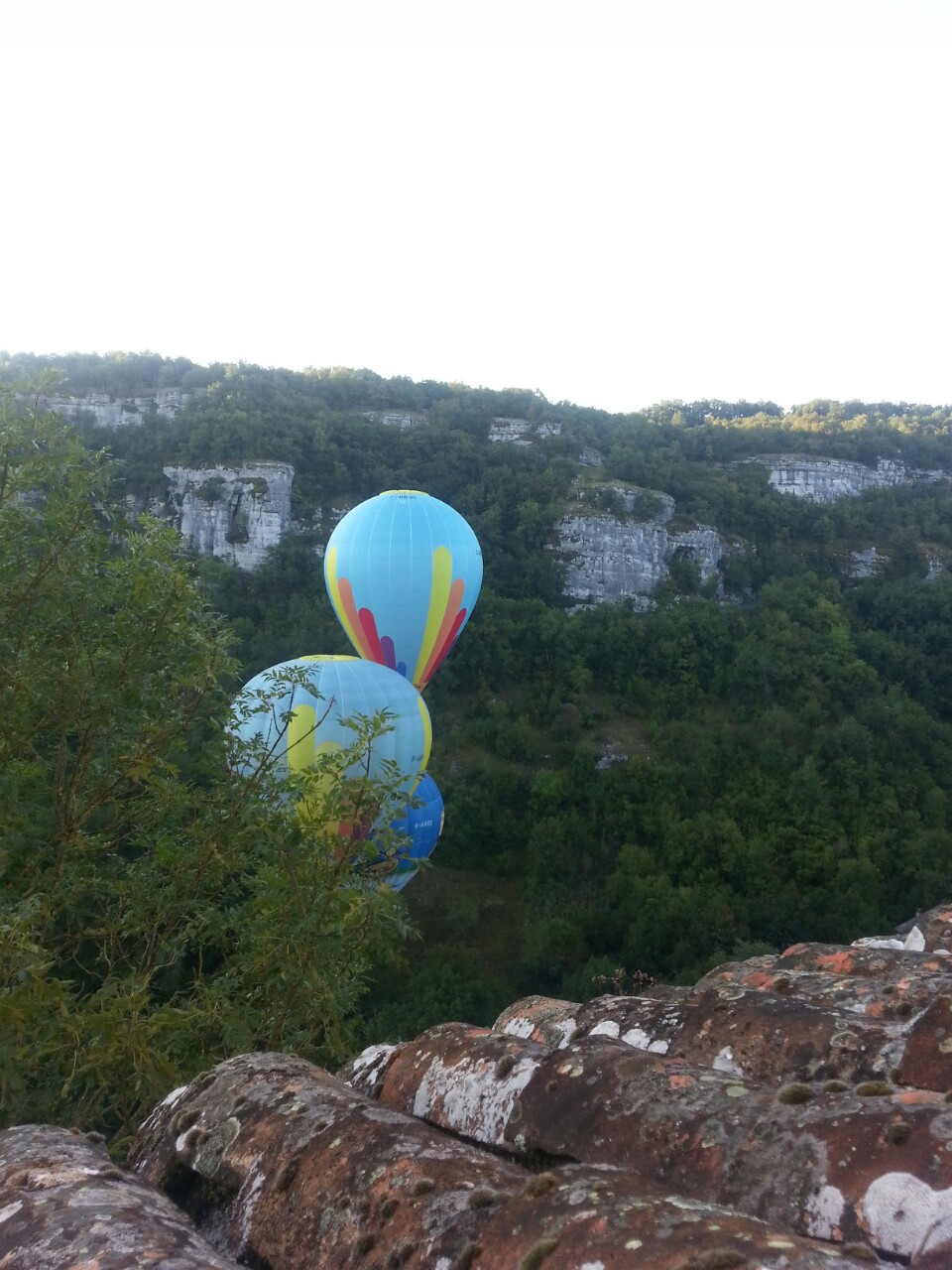
I woke up late the next day and put on the one light dress I had snuck into my pack. I sat through a French mass in the sanctuary that seemed vaguely to be about Mary and yearned to play the violin I heard in the back. I ate an omelette slowly, trying to write something meaningful at the table, and ended up just writing about loneliness. I tried to shop like Grammie Lu would have. I tried to people watch like Grammie Lu, find something interesting to observe in the crowds. But everybody around me just sat there, smoking and eating, lost in their own conversations. I tried to find my grandmother, but all I saw was an empty plate and two tired legs.
So I walked out of the town, just a little bit. I walked up a footpath, intending to see the view from the castle at the top, but stopped a hundred feet up to walk into the ruins of an old stone house, impelled to sit. From it, you could look across the canyon at two caves high in the rock. I started to breathe, then started to write. I wrote about Amadour, the man who loved the world by sitting in a cave and cooking meager meals alone. I wrote about my grandmother, the woman who loved and loved and loved and then left the world, left nine children and their children. I wrote about her absence from me now, and her absence in her life–from bad events, from fully comprehending the struggles of a scary marriage and nine children. I wrote about idealism, how sometimes it wrecks your legs and leaves you defenseless in a canyon after days of smiling at sheep pastures in the hopes that the smiles will wipe out your isolation and anxiety. I wrote about how love sometimes makes you reckless. I wrote out my anger. I wrote fragments. I wrote entire paragraphs. I wrote words into circles. I drew stars. I wrote about the disillusionment of love. I wrote about being bereft. I wrote about a grandfather I never met, an angry one, who wrote poetry in secret late at night as my mother watched under a table.
I decided in the ruins of that house to remain an idealist and a lover, despite the shade that drowns us, that seems so all-encompassing and enclosing, in the canyons of our lives.
I stepped out of the still-intact doorway, breathing more deeply now, and walked slowly to the sanctuary with the Black Madonna. I sat down in front of the wall of flickering candles set against the actual wall of the cliff, lit as a prayer to a mother, and thought about my own grandmother. In the main sanctuary, an organ played one of her favorite Bach pieces–Sleepers Awake. I had awakened, left the canyon and, for a moment, found her.
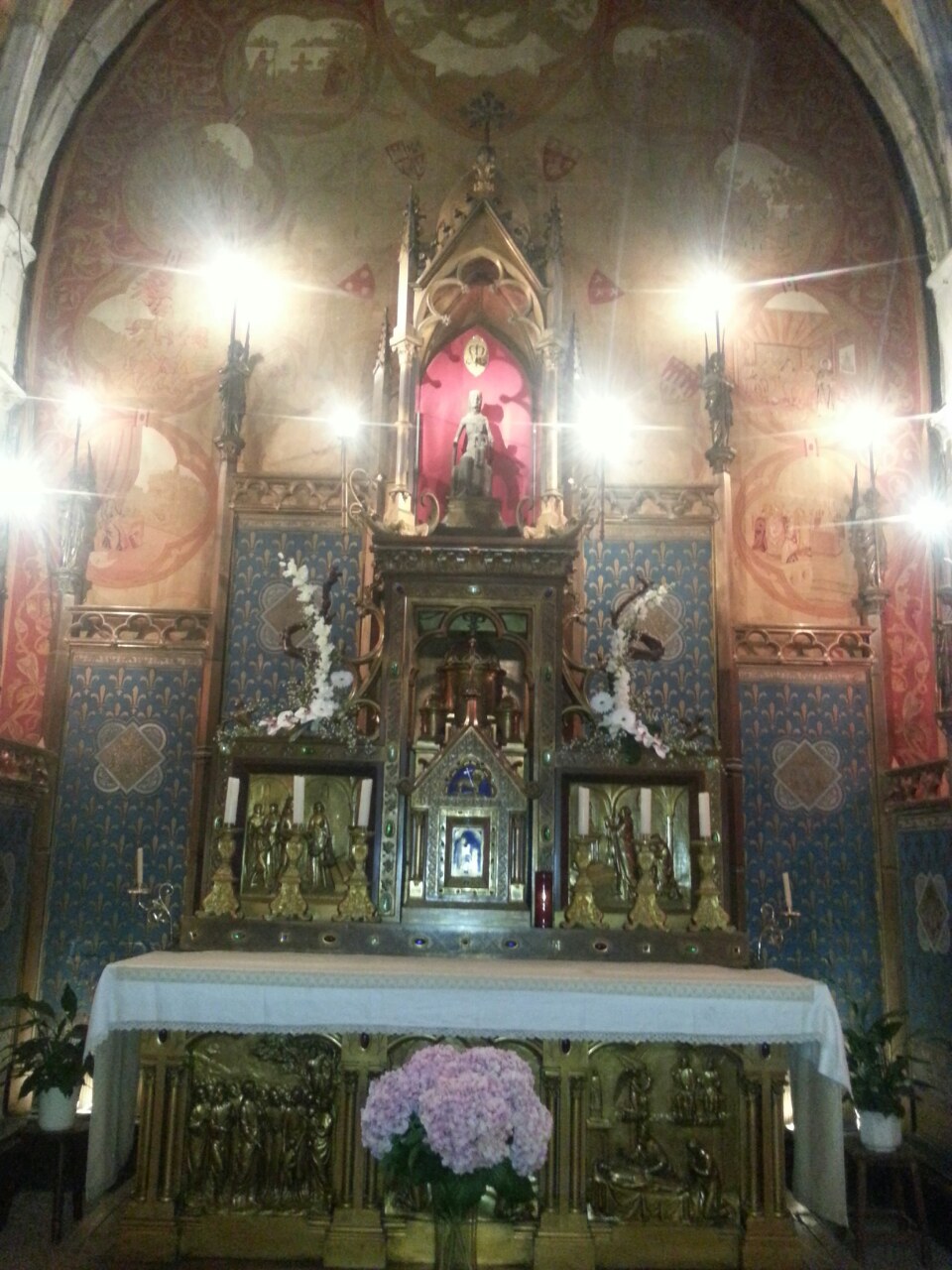
The ornate but tiny chapel of the Black Madonna (Vierge Noire). The Black Madonna is the tiny figurine at the top of the altarpiece.
Works Referenced:
MacFarlane, Robert. The Wild Places. New York: Penguin, 2008. Print.
Kempe, Margery. “The Book of Margery Kempe.” The Book of Margery Kempe: A New Translation, Contexts, Criticism. Ed. Lynn Staley. New York: Norton, 2001. Print.
The Poem of the Cid. Ed. Ian Michael. Trans. Hamilton, Rita and Janet Perry. London: Penguin, 1975. Print.
de Troyes, Chrétien. “The Story of the Grail.” The Complete Romances of Chrétien de Troyes. Trans. David Staines. Bloomingdale: Indiana UP, 1990. Print.
Hello from Braunschweig, Germany!
I still can’t believe this is really happening. I’m studying computer science in the historic city of Braunschweig. I even get to live directly downtown, where I can nearly hear the noise from the nearby Christmas market.
When I first arrived, I was tired, shocked, and then it hit me… no amount of language courses could have prepared me to live abroad. I had applied for a peer student before I left, and she was (and still is) so welcoming. She and her friend picked me up by car from the train station, and took me to her place where I could stay the night, as I wasn’t able to get the keys for my apartment for the following 2 days.
I thought I was arriving early, about 15 days before classes started, but I discovered this was the perfect amount of time to get everything in order. The university system in Germany is completely different than in the US. This along with the language barrier made my first time in Braunschweig pretty stressful. I had to apply for health insurance, open a bank account, sign in at the University, get everything sorted with housing, sign in to the city, and get phone service all without getting lost. I only got lost a few times.
One thing was clear. My main focus was to be able to understand people when they talk., All my lectures are all held in German, and it is exciting for me to say that this past week I have reached the point of understanding most everything everyone is saying. I write this on the 15th of December- 2 months and 6 days and 20 hours after my arrival.
Lectures are all in German, but as I am studying computer science, many of the diagrams on the powerpoints, as well as the code, are all in English. This really helps my understanding. I have been taking classes, which all seem to be focused on algorithms currently. In addition, I am taking an English course titled “Scientific Writing.” Most of the students in this course are master students, and as I am a bachelor student, I feel the most under-qualified to take this course. This says a lot, as I am the only native speaker in this course (excluding the teacher, of course). For most of my classmates, this course is to help them learn english, but I have learned equally as much in this course from them.
One of the current tasks is to perform a piece of research in my field. I have chosen the same (or similar) topic as my capstone project, and it excites me that I get to explore a little in that area before I go home and perform the capstone project.
The German culture is really interesting. I have already mentioned the Christmas Market near my apartment. I have gone 3 times, and it has been amazing each time. It is dark, the square in front of city hall is wall-to-wall people. There are cookies, Gluehwein (Mulled Wine- the traditional Christmas market drink), Bratwurst in any form imaginable, many cabbage type food, fries, and many more tasty things! I definitely believe I will be gaining weight while abroad. I have also made some German friends here, and I spend a fair amount of time at their house. In this manner I have also experienced German cuisine. One thing that I’m told I really need to try is called a mettbrötchen. This is a roll with raw seasoned ground pork on top. I’ve heard it described as “German Sushi”
This week is the last week of classes before Christmas. I can’t wait to have 14 days off. I’m going to get to travel, see friends, and experience lots of new things. Thank you GLI for helping all this happen!
-Greg Arno
 Beyond the Classroom