Hjort Fest

Bring on the sunshine!

This weekend (and past few days) the sun came out to stay and warm our winter bones. Perfect timing as it was the weekend of Hjort fest–a small outdoor festival held at one of the eco communities I am writing about. The community itself, Andelssamfundet (yea, i know…), is of about 150 people in all age ranges. Houses or apartments are either owned, partially owned, or rented so it’s pretty accessible to all financial capacities. There’s a lot to say about the history of it but I’ll probably bore you geeking out on it….

What’s really special though is its program for mentally handicapped people. One of the housing groups is dedicated for young men with varied abilities who are able to live and work in the community. The goal is to provide social interaction and participation for the men while finding them jobs that they are happy and successful in doing. Though the festival started so the community could raise money to buy a pice of land, Hjort fest is now held yearly to raise money for this housing group (also its super fun and Danes love any reason to party).

It was a bit unfortunate that I was totally exhausted from exams/moving out/Distortion (a festival I went to in Copenhagen that’s called distortion for a very good reason…ay). Most of the weekend I just enjoyed the music and sunshine while trying to give my brain a rest. I volunteered cooking with Folkenkoken—this vegetarian “people’s kitchen” some friends and I go to in Aarhus. A lot of the food was donated and everyone was really creative in making some awesome meals! There was also homemade ice cream made there at the community…damn.

But the best part of course was the music…because when Danes drink, they dance, and all the different ages/types of people made for a beautiful mess of happy, groovin’ people. For as small as the festival was, there were 3 stages with totally unique atmospheres and a bit of something for everyone. I really have to hand it to all the people who planned Hjort fest for creating a small little paradise in their backyard. EVERYTHING was decorated and given life in some way. Colorful crochets wrapped around the trees, fairly lights in the forest, paintings hug on the fence in front of the cows, flowers planted in old shoes, anything funky and fun you could imagine was there.

If anyone is interested in learning about the community itself please ask! In many ways, the Danes do it right and we could take a few notes from them 🙂

Image


ImageImageImageImage

Dane-ish

A little late on the blog posts…but here it goes. Time here in Denmark has gone so quickly! I would say it’s been a whirlwind adventure, but Denmark is too relaxed for that. It’s been more of a cozy–or hygge–time. For those of you who don’t know anything about Denmark, hygge is probably the most important thing to learn. Like most Danish words, it sounds nothing like it is spelled and is pronounced “who-gae”, or “hue-gah”.  There’s no real translation for it in English, but basically its spending a really intimate, cozy time with friends or family that involves a lot of candles. Or really just enjoying the pleasure of doing things not matter how simple they are. Which is probably one of the reasons Denmark is considered the happiest country on Earth.

Soooo…is Denmark the happiest country in the world? That’s what we’re all wondering here, isn’t it? Well yes, and no…I think. It’s hard to say really because my experience has been surprising and rewarding in so many ways that I, of course, have been very happy here. But to say that everyone in Denmark is “happier” would be an oversimplification of how it got that reputation in the first place.

It seems that every Dane is eager to talk about how I perceive them. Every conversation—and I mean EVERY conversation—I have had with a Danish person( which is a lot) we always get around to why Denmark is so different. Honestly, the reasons are quite obvious.

  1. There is a standard level of equality for everyone. Everyone. No ifs, ands, or buts.
  2. Education is free for everyone. Everyone. No ifs, ands, or buts.
  3. Health care is free for everyone. Everyone. No ifs, ands, or buts.
  4. It is, for the most part, completely safe (parents just leave their babies in strollers outside coffee shops…)
  5. There is a strong amount of pride in being Danish

Of course, the country has its issues, but as a whole, it is an extremely livable place. And paying almost half your income in taxes? No biggie. Because taxes go back to the people and the welfare state will take care of you.

So it really depends on how happiness is measured. I would say that Denmark is one of the most content and peaceful places in the world. Prescription drug usage is a semi-big problem here and a lot of people I know are not what most people deem as “happy”. There’s a lot of cultural and societal reasons to this that we could talk hours about–the psychology of Scandinavian culture as a whole is extremely interesting and worth experiencing. But at the end of the day, Denmark is a comfortable, hygge place to live.

Aarhus, the city I live in and the second largest in Denmark, is always alive with art openings and music festivals. Never a shortage of cool things to do here! One of my favorite experiences has been volunteering at a non-profit bar downtown called Fairbar. Lots of local beers to taste and Danish people to meet. The Danes are a unique kind who have a reputation for seeming stand-offish, but are very kind and super awesome once they get comfortable with you! (or drunk…)

There’s so so much more to talk about but then I would be writing forever. It will be sad to leave this cozy little place. Next two posts will be about a sustainable living community I have been visiting and something called Folkekøkken (folke-kooken…?).

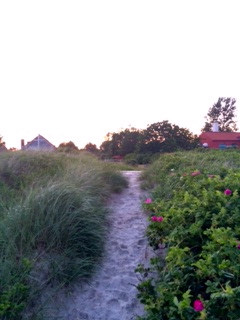
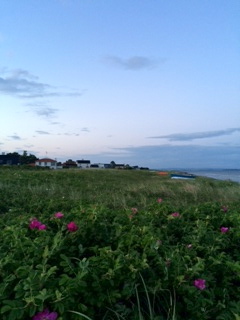
it's like a postcard...

photo 2 photo 3 photo 4

Hope all you GLI-ers are having a happy summer!

Poisoning one bird to save another

This spring, the Idaho Department of Fish and Game will spend $100,000 to poison Ravens with “strategically placed” chicken eggs. The poison will only affect Corvids (Ravens, Crows, Magpies, etc.). Ravens are the biggest contributor to egg predation of Sage Grouse nests and the department claims Ravens have expanded their territory due to “human-related activities.” Structures such as power lines, houses, windmills, and water towers are results from human-related activities and provide nesting sites for Ravens.

In the attached article, the department states they are not sure Ravens are a cause for sage grouse population decline. They also say they are sure that once a pair of territorial Ravens is poisoned and killed it will immediately be replaced by another pair. Already, this sounds like a bad idea. Not only is the department releasing poison into the environment, they also don’t know if it will work!

Also in the article, Katie Fite, the biodiversity director for the Western Watersheds Project, says if there is a problem with egg predation, it isn’t because of the predator, but lack of cover for the nest. Sagebrush provides most of this cover for Sage Grouse and its depletion is caused mostly by cattle grazing. Fite believes poisoning Ravens is a project that dances around improving cattle grazing practices.

Cattle grazing is a sensitive topic between the government and ranchers. Some organizations such as the Sage Grouse Initiative and Pheasants Forever are already successfully working with ranchers to improve grazing practices, even in Idaho! These organizations are working with ranchers to prevent listing Sage Grouse under the Endangered Species Act by improving their population numbers. Preventing listing will help ranchers by preventing more regulation on public lands and sage grouse by improving their habitats.

While working with the BLM and interacting with ranchers in Oregon this past summer, I learned if you provide logical reasons and benefits to the public, the public will support and comply with government decisions. Also, I think when people don’t understand why a government agency is using a lot of money to implement an action they are less likely to obey regulations. Poisoning Ravens doesn’t seem logical and I don’t see a reason for why the Idaho Department of Fish and Game needs to implement this project or ignore combating cattle grazing. I think conducting such a project with tax dollars without further studies is very irresponsible for a government agency.

http://magicvalley.com/news/local/officials-to-spend-k-to-poison-ravens-to-protect-sage/article_4cd847e4-bbae-11e3-82ee-001a4bcf887a.html

My Great Indian Adventure

I’m finally back in the United States, and I feel like I have changed. I look at things a little bit differently and appreciate the things I have a lot more. India is a beautiful country. The people, the culture and everything about it was new and exciting, and I tried to soak it all in.

But after a month of being there, I was ready to come back. I had seen enough of the pollution and poverty to have a newly found appreciation for  Montana, my home.  The clean air and clean streets of Montana are something I cherish.

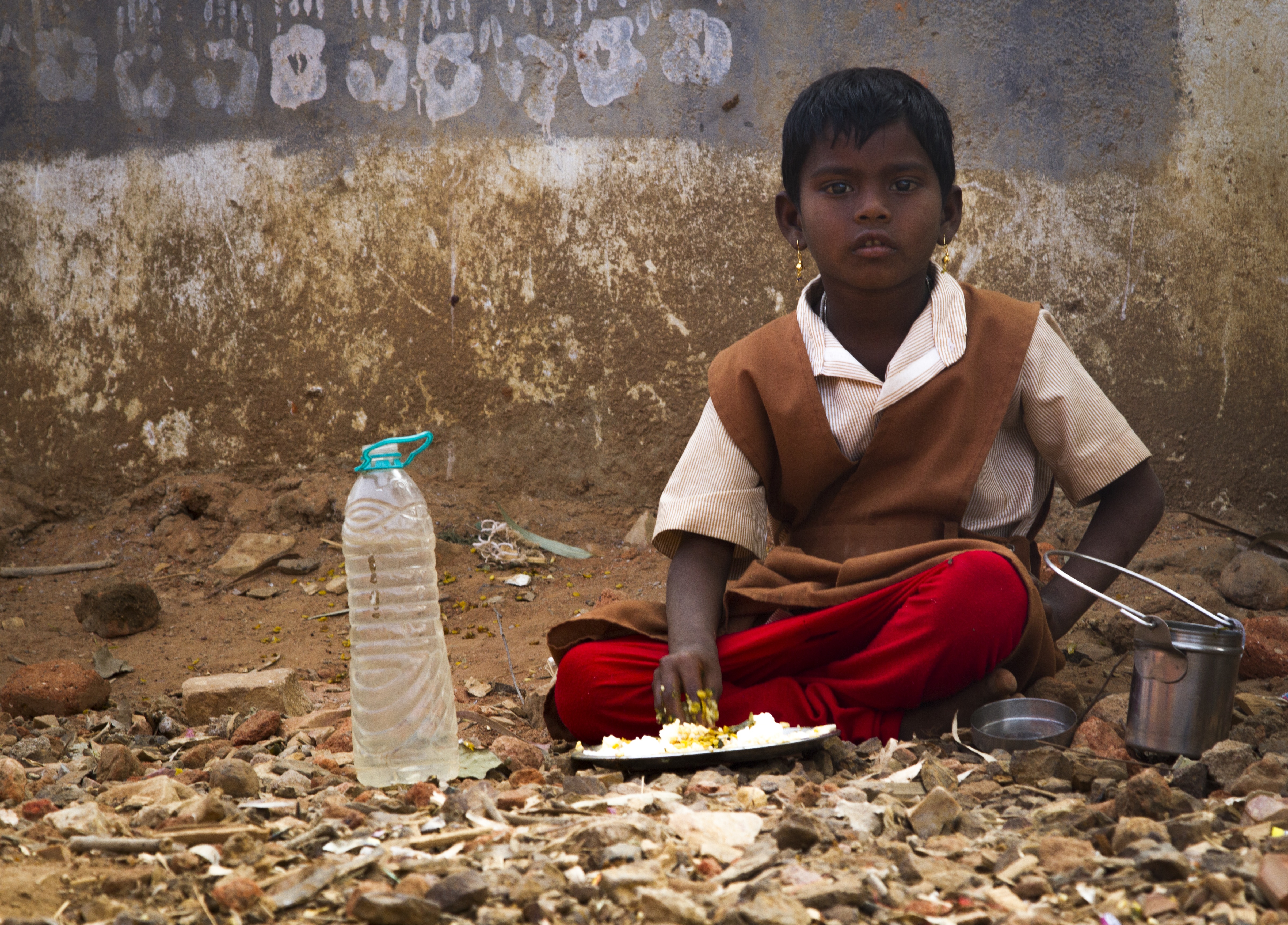
It was almost like a dream to see a country so different from the one I grew up in. It was eye opening. When people say you better eat all of your food because there is some starving kid in the developing world that would be grateful for it, I can now put a face to that. I have seen the starving kids and the pain of less fortunate people in India. I have been to the slums and seen the environmental degradation of over population.

But along with all the bad, I have seen the beauty of the Indian culture. They are passionate and they have so many interesting things that we can learn from them.

My favorite part of the experience was going to the tiger reserve by Moharli. I felt that it was the place where we got to experience the Indian culture the most. We were immersed in an Indian village for a week and I wouldn’t give that experience up for anything. The other reason that the tiger reserve was my favorite experience is because it was the most positive environmental thing I saw. The Indian government is really devoted to protecting the tigers and doesn’t sacrifice the tiger’s well-being for tourism dollars and I was happy to see some positive environmental decisions amongst so many environmental issues.

_MG_5509-1

On the last day we went to Mumbai and it was so polluted and there were so many people. It seems unreal and unlike anything in America. When you dropped into the city it was instantly polluted and stuffy. I think that the rapid increase in population across India has made it impossible for the country to keep up with infrastructure and the pollution and that’s why the country is in the state it is. There are groups throughout India who are aware of these problems and are trying to fix them, but gaining traction in the country has proven to be an issue.

Overall, I am grateful to have had the opportunity to study abroad and I think it’s something that every student should do.

Here are the links to the two stories that I contributed to while in India. One is the story the whole group contributed to about the tiger reserve, and the other is the story I worked on with Alexander Deedy about the clean water access in the slums of Pune.

Tiger Story

Pune Water Story


Water in the slums: not what you would expect

This past week we have been back in Pune at the FLAME campus. FLAME is the most expensive college in India and is the only liberal arts college in the country.

Since it is such a nice college, it makes sense that the campus would be drastically different from the other places we visit. This week we were reporting on various stories though out Pune, most of them dealing with tied to the environment. Some of the stories include: rickshaws and the air pollution they are  causing, cycling and it’s presence in Pune, migratory bird habitats, tribal displacement  because of dams being built, the stray dog problem in Pune, and access to clean water in the slums.

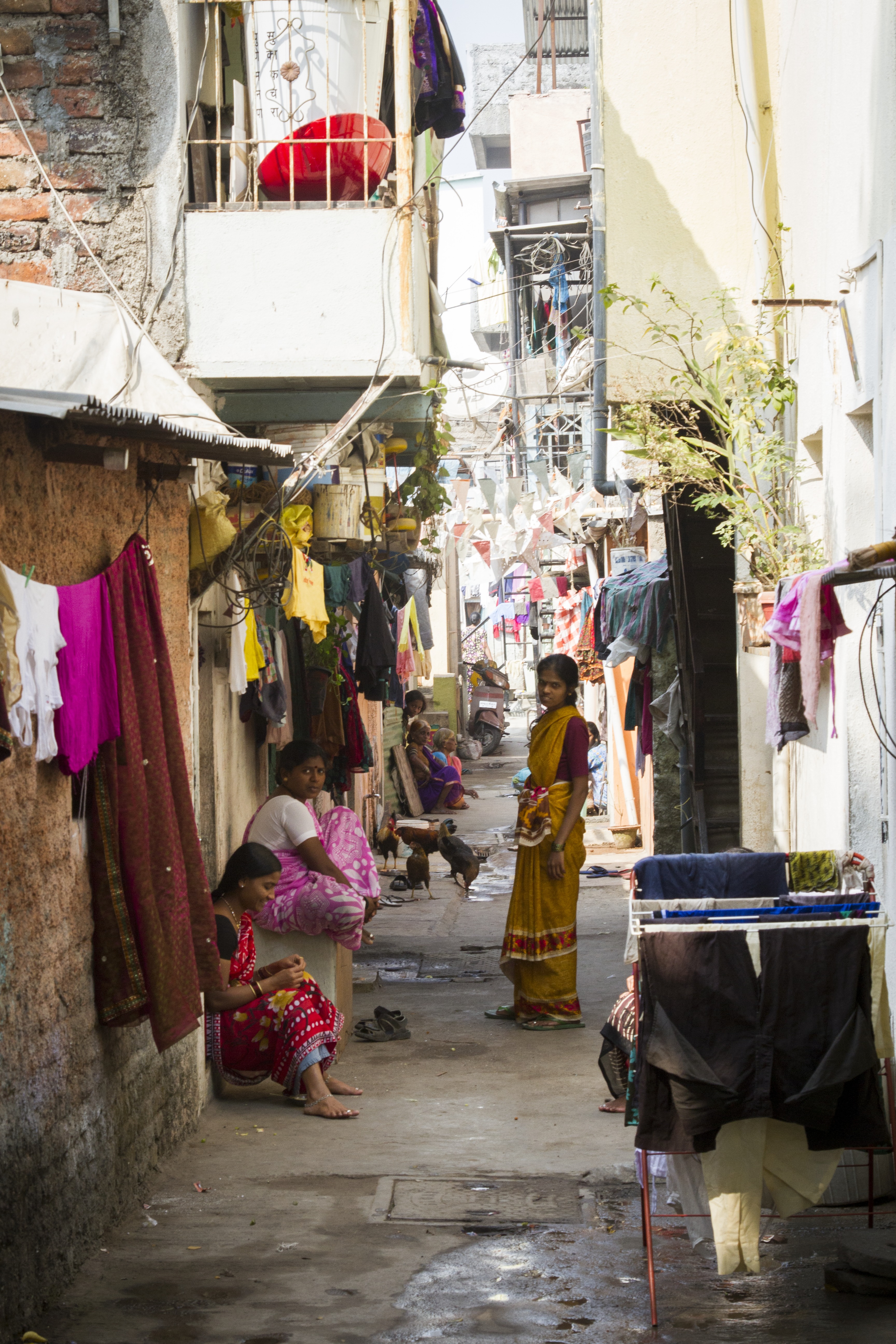
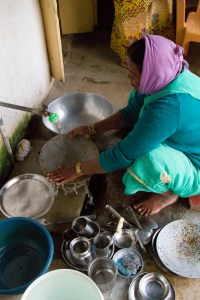
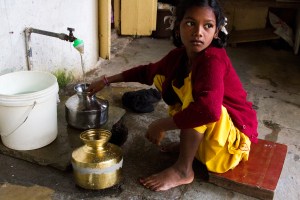
This is Wadarvadi, a slum in Pune.

This is Wadarvadi, a slum in Pune.

My group did the story about clean water access in the slums, and what we ended up finding was much different than what we expected. We all expected some sort of “Slumdog Millionaire” situation with people in complete poverty; something that was going to shock us. We expected that people in the slums would have to carry the water from really far away and that it would be dirty water that they didn’t have a choice to drink.We didn’t goto the worst slum, because of safety reasons, but the slums we did go to had an outside faucetthat pumped out filtered water during certain hours of the day. The water is very clean although sometimes they get throat infections in the winter months from the water. Even though they are living in the slums, Pune has set up a system where they drink the same filtered water that we do at our fancy college campus.

When we figured out that all the slums in Pune would be like this we were confused, a little bummed, but mostly impressed. We were confused because we never would have guessed that Pune could have built the infrastructure to provide everyone with clean water. The journalists inside of us were bummed because we didn’t get the sensational and shocking story we wanted and expected. We had prepared ourselves for the worst and gotten pleasantly surprised.

In India you can’t go a block without seeing a building that looks like it’s going to fall over, garbage covered streets, or homeless children asking for food. Their roads are quite awful, compared to roads in America, and their rivers are filled with mountains of trash. It’s a sad sight, but knowing that Pune can provide clean water for its residents gives me hope that they can eventually clean itself up and lower the amount of pollution in the city.

There are islands of trash floating down the rivers through Pune.

There are islands of trash floating down the rivers through Pune.

Everywhere on the walls are advertisements saying “Keep Pune green and clean. Green Pune. Clean Pune.” They are trying and I think that’s all anyone can ask for.

slumIi copy

Are the Troubles Really Over?

By: Mercedes Becker

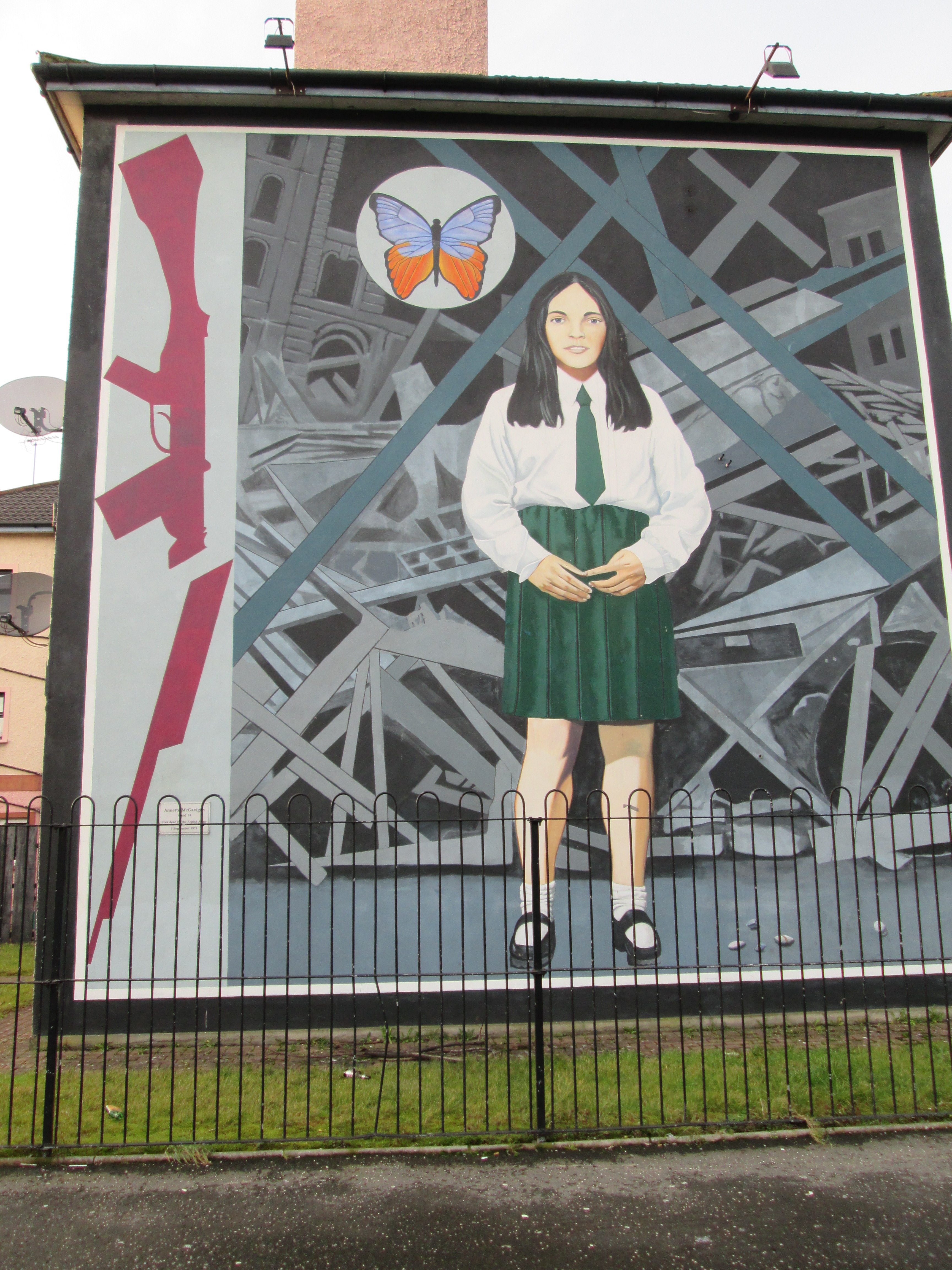
While traveling through Northern Ireland, I was deeply touched and even a bit disturbed by the lasting influence I could feel still lingering from the Troubles. Peace was finally established with the St. Andrews Agreement in 2006, but tension still exists in places like Belfast and Derry, where murals dedicated to the Nationalists and Loyalists cover the walls and “IRA” is graffitied on the street signs. I wrote a sestina-style poem describing my experiences in this part of the country. This is it:

Our gazes shift to the infamous walls
Block letters and portraited figures painted in blue and green and red
Some faces heated, enraged, some cold
They have picket signs, and weapons, and nothing in their hands
My eyes fixate on the guns
A symbol of violence in a time of peace

Politicians create pen-and-ink peace
But paper treaties aren’t castle walls
In 1998 the IRA still had their guns
And continued paint-splattering these walls red
The blood of innocents on their hands
Children suffering bombs in cold blood, their blood cold

I hide my hands in my pockets from the cold
Remember a conversation the day before about peace
I met a man in Belfast, we shook hands
And I asked him what it would take to tear down the walls
“Integrate the schools!” he shouted, his face red
But he wasn’t angry with me. He was angry with politicians, separation, and guns

In Derry, there is a painting of a broken gun
Placed next to a girl who long since turned cold
The girl wears green, the gun is red
One the symbol of tragedy, the other peace
How can Derry find peace with tragedy written on her walls?
When will the communities of Belfast be able to shake hands?

Funny, how when you unfurl your fists they turn back to hands
How handshakes are easier when you drop your guns
How people have always felt safer behind walls
But skin is warm and mortar cold
The people of Ulster have just tasted peace
But the city walls still turn their vision red

We’re but travelers here, trying to experience the things we’ve read
Trying to paint Ireland on the backs of our hands
Trying to understand a place that hasn’t always known peace
We’re told the Irish aren’t fond of guns
I’m apt to believe, but don’t tell me their spirits don’t turn cold
When they’refacing the murals on these walls

These days, the Republicans and the Loyalists have holstered their guns –
The Troubles have nearly passed and the streets are grey, not red

I walk these curving streets of Derry eager to place my cold hands in front of a pub fire,
But I don’t know if it will do much for my chilled spirit

There is sadness here in Ulster; even a traveler can sense the tension. May I offer my opinion on peace?
Paint over the walls.

Image

The Land of Saints and Scholars

By: Mercedes Becker

Ireland is often referred to lovingly as “the land of saints and scholars,” a name I’ve come to learn fits the country very well. Ireland has a long history of religious and scholarly influences and after traveling there I’d say these themes remain still. Although there are many religious figures I could and probably should talk about, for this post I’d like to focus on one of my favorite Irish scholars, national poet William Butler Yeats.

I listened to a recording of Yeats reading one of his poems in the Irish National Library in Dublin and was so inspired I decided to look up more of his work. I found the poem titled, “The Heart of the Woman,” a sweet, thoughtful poem written from the perspective of a young woman and wrote a responding poem mimicking Yeats’ style from the perspective of the man. Here are the two poems:

The Heart of the Woman
W.B. Yeats

O what to me the little room
That was brimmed up with prayer and rest;
He bade me out into the gloom,
And my breast lies upon his breast.

O what to me my mother’s care
The house where I was safe and warm;
The shadowy blossom of my hair
Will hide us from the bitter storm.

O hiding hair and dewy eyes,
I am no more with life and death,
My heart upon his warm heart lies,
My breath is mixed into his breath.

The Heart of the Man
Mercedes Becker

O what to me the midnight chimes
Twisting the knob to her bedroom door;
Hands clasped in mine, from bed she climbs,
Bedclothes dragged to heaps upon the floor.

O what to me her father’s estate
For now she’s safe within my care;
A Dublin drizzle deems us immaculate,
I bury my face within her hair.

O buried faces and blushing cheeks,
I am young as Celtic gold,
If only this night were days and weeks,
Our breath, two mists, mixing in the cold.

Research Abroad: Interviews with Homelessness and Mental Health Professionals in Ireland

By: Mercedes Becker

Hello Everyone!

It feels as if it was just yesterday that I was cruising the Irish countryside, exploring castle ruins and monasteries, eating pub “toasties” (toasted sandwiches), and listening to my fabulous tour guide Tom Quinn explain the ins and outs of Irish history. I’ve been back in the states for a few weeks now, but Ireland is still very much on my mind. In fact, just this morning I had to listen to some Johnny Cash because I missed the emerald isle so much (I heard Johnny Cash covers in three different pubs while on my trip. He seems to be very popular over there). My out-of-the-classroom experience was the trip of a lifetime; I feel so lucky to have been able to go.

I realize it may not be obvious how my trip to Ireland fits into my global theme and question, but I hope to explain here how the two tied together. I hope to discover the impact of the global phenomenon of deinstitutionalization of the mentally ill on homelessness throughout the world. Beginning in the 1950’s mental patients in the US and many parts of Europe were released from hospitals to be cared for in the community, but as previous research in the US suggests, many of these patients were returned to lives on the streets instead. My questions are: did this effect occur in other places? How did different countries approach this policy change? What were the effects? How do countries address mental illness and homelessness now?

Ireland turns out to be a perfect place to start answering some of these questions. Throughout Ireland, deinstitutionalization is still occurring, as patients are being moved out of many of the outdated mental hospitals. In conjunction with this, the country is seeing an overall cut to mental health care funding for fiscal year 2014. I can foresee these two events being harmful to the community mental health care system, and potentially influencing homelessness in Ireland, but I thought conducting some interviews with professionals might give me more insight. While abroad I interviewed Louise Lennon, director of the Dublin branch of the  Simon Community which runs the homeless shelters in Ireland, and Orla Barry, CEO of Mental Health Ireland. I was very grateful to have the opportunity to talk with them, and surprised by some of the things they had to say.

I won’t copy my whole interviews here (I’ll be using the information for my GLI capstone senior year) but I will share some of the highlights.

1. According to Louise, 45% of people at the Simon Community shelter have a diagnosable mental illness.

2. Deinstitutionalization does not tend to contribute significantly to homelessness in Ireland, because mental hospitals may not release patients without a permanent address, although some people do fall through the cracks.

3. Only certain homeless shelters in Ireland collaborate with the mental hospitals.

4. Orla pointed out people with dual diagnoses (suffering from substance abuse and mental illness) are some of the most difficult people to provide services for and also are at greater risk for being homeless.

I talked about these things with Louise and Orla, and so much more. I’m really excited about where this information is going to take my research, and for my capstone project in general. The Irish perspective on this topic is so different from that of the US, which means I have a lot to contrast and compare, which can only mean good things for my project senior year.

Life Changing Days

By: Mackenzie Enich

June 12, 2013

A persistent rooster calls me to wake up from outside my window. It is 5:30 am. I lay in bed for several minutes, my weight dents the thin mattress and my head is cradled by a slice of yellow foam. I can see the sun peeking through the thick green curtains. The buzzing fan and sticky air reminds me that I am not home. I am halfway across the world, staying with a family in Ghana.
I am writing these last few posts after I have come home, for I have not been able to write about my experiences in Ghana until now. It was all too much to process. My experiences in Ghana changed my

life and are difficult to convey in words. As for what I did, I spent all my days in villages in Ghana living and learning with local people.
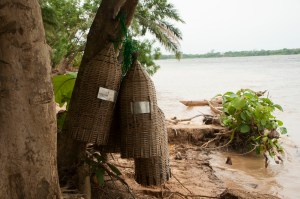
FishingbasketsI have done my fair share of traveling, and this is the way I like to see the places I go: by living with the people. When I arrange a “home-stay” experience I get to meet local people and through their eyes I gain an appreciation for a new culture that is different from my own. Instead of seeing the country as a tourist, I get a local, personal experience.
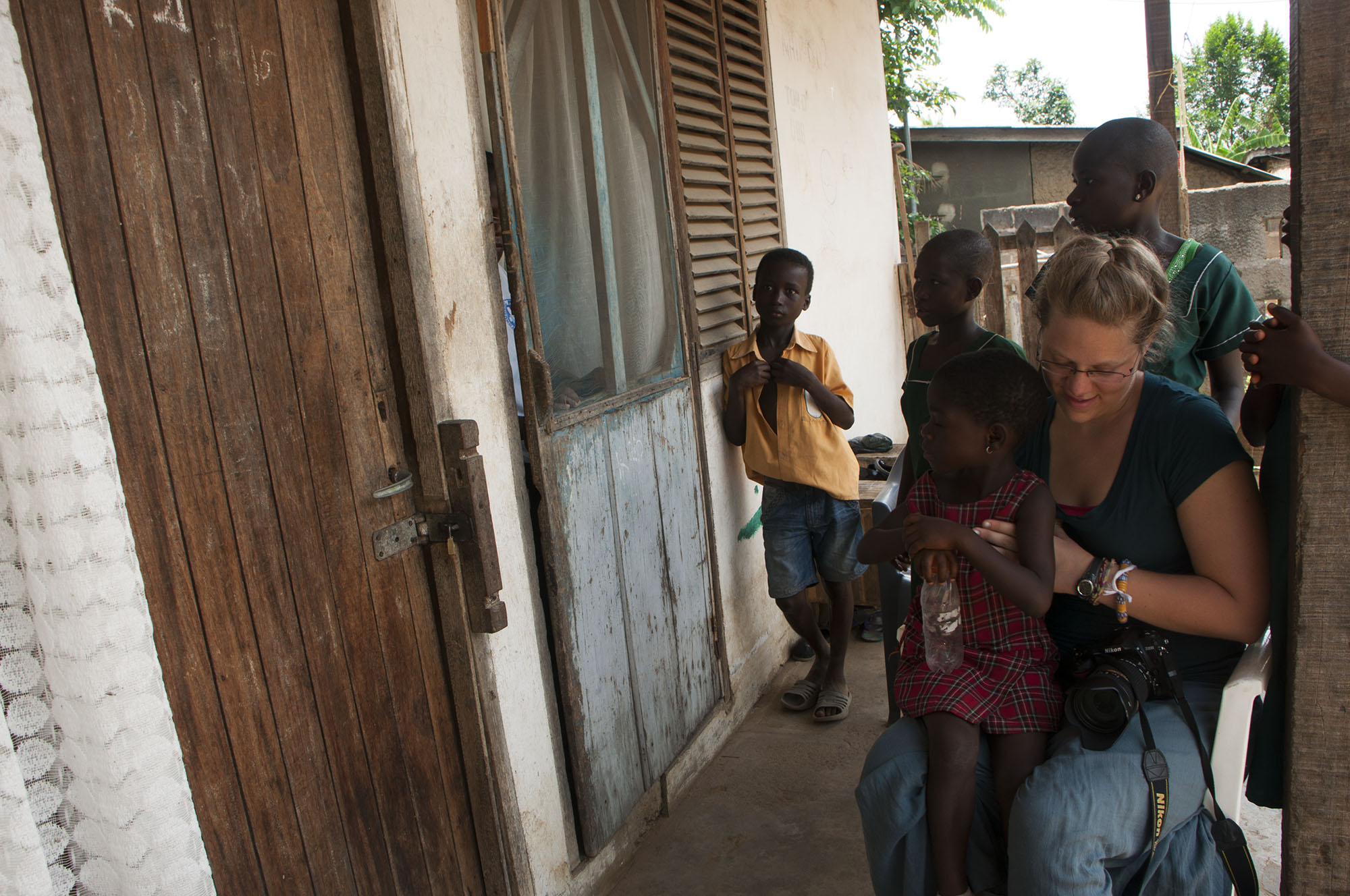
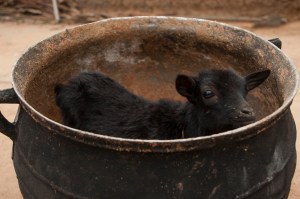
During this voyage with Semester at Sea I have been a part of three home stays – one in South Africa and two in Ghana. They have been some of my most memorable experiences on this trip. The people welcome you into their homes with such enthusiasm it is hard to not feel excepted. The energy of the people in the village is as vibrant as the women’s dresses and the children’s dancing.Goat In my first home stay in Ghana I had one experience that I will never forget. I spent the afternoon talking with a group of girls as we watched the boys play football. While talking I realized I had become a confidante for a short time. Having older women to talk to, to learn about themselves, is not a privilege young girls have in their village culture. When they finally opened up, their smiles grew and I realized that human connection is one of the most important things in life.
Some of these connections I find when I listen people’s stories and learn how different our lives are. I spent an overnight in Atonkwa village with the head master of the primary school. This was one of the most remote places I have ever been in the world. The village was so untouched by global influences. This was one of the things that shocked me the most. At this point in my life I am lucky enough to say I have seen many different places around the world, but I have never visited a place or met people who have little knowledge outside of their village.

That night I was sitting with my host mother, host sister, and host brother while I was watching them do homework.

grasshopperhouse Soon we all got distracted asking each other questions. The reaction that stopped me was when my 15 year old host sister asked me what my favorite food was. I told her things like pizza and hamburgers, different foods that people commonly know whether they have eaten them or not. She looked at me blankly. I tried to explain the foods and she just shook her head. She then asked how many goats I owned and how we got our food when we ate beef. I answered quickly with “well we buy it at the supermarket.” That stopped me. I sat for a moment, reflected on this life I am so fortunate to have and then said to myself, “stupid Mackenzie that is not how this works here, that was very inconsiderate and selfish.”
I tried to explain it as best as I could to her, but we come from very different ways of life. Even though we have such different lives, myself and my host family, we spent a fantastic evening listening to each other and explaining the different things that make up our livelihood. We laughed for half an hour while I tried to explain to them what a bear looks like and what snow feels like. Then I was


In both my home stays in Ghana I was lucky enough to be staying with teachers in the village. With my journalistic nature I like to ask questions, but there I was out questioned. My hosts had been endlessly curious about me and my life back home. One important thing I learned while staying with them is that not only am I interested in their lives, but they are equally interested in mine.
captivated by their stories, so interested in how they lived their day to day lives realizing that the world is enormous and everyone lives in it differently.

HandprintI spent a good portion of that afternoon sitting in the house talking to one of the teachers about how school works, what the neighbors are like, what church services are like, and how they feel about technology and media. He returned the questioning to me, curious to know how their village was different from my home. I could only say it is a simpler way of life here, not better or worse, it is just calmer in the village.

In all the conversations we shared, my host family was never looking for pity, only understanding, exchange, and connection.  I’ve found that being able to live with people all around the world makes it easier to understand them. In the first month of our voyage I wrote in my blog, “I love to travel, and it is always going to be a part of me. Whether I am at home or on the other side of the world, I am at my best when I try to understand somebody else.” I will continue to seek out home-stay opportunities because I believe it’s the best way to experience a new culture when you’re seeing it through a local’s eyes.

While I was gone someone told me I was “a pretentious little girl, swooping in as the hero pretending to save third world countries.” After this woman had read what I wrote about my experience in Ghana this is the opinion she formed of me. I certainly know, and hope others can see, that traveling has not made me into this person that was portrayed to be. I know that my experience in Ghana will be one of the most memorable experiences in all of my travels. Living with these people and hearing their stories made me respect and admire their values, morals, and way of life. Everyone I met in my time in Ghana was fantastically happy, open minded, and humble. The day I left Ghana I chose to lead my life like those strong women I met. I want to live happily, embrace every day with an open mind, and I have been humbled by the people I met around the world.HomeagainHomeagain

When I woke up that morning I was greeted by the smiling face of my host mother and a “Good morning.”  I promised them photos, thanked them for all that they had given me, and hugged them goodbye. As I walked down the dirt road I knew I witnessed something special, and will never forget what I learned.

We will never really see the world unless we leave our comfort zone, but that is what I fully intend to do. Only through breaching the uncomfortable will you be able to have the moments that change you the most.

Neptune Day

By: Mackenzie Enich

March 23, 2013 ·

Neptune Day is the day a ship crosses the equator and there are many traditions that happen. Those of us who have not crossed the equator by water are known as pollywogs and when we cross over we transformed into shellbacks. The night before this is the email we received:

“Tomorrow marks our sail across the equator and King Neptune usually pays us a visit. We will celebrate his arrival with Neptune Day! Around 07:00, the festivities will begin and you will take the journey from pollywog to shellback by paying your respects to his highness and his royal court. Participation is not mandatory but highly encouraged – participate to your level of comfort! Wear a bathing suit and clothes you don’t mind getting a bit dirty and get ready for a once-in-a-lifetime experience!”

At 7:00am the crew came through the halls as a parade banging drums and ringing bells to get us all up to eat breakfast and get on to the seventh deck. We all crowded around the pool as the royal procession walked into the crowed. Many of the faculty became royalty like the queen, the royal shaver, and King Neptune himself (our captain painted green).

The traditions go in this order (at least for me). I stood in the side pool with my friends and we had fish guts poured on us. It was cold, red, and smelly. Then we turned around, held hands, screamed, and jumped into the pool. When we climbed out we had to kiss a fish and then King Neptune’s ring. If we didn’t, he would push us back into the pool. The last, most drastic, tradition is shaving your head as tribute to King Neptune. Of course all these traditions are optional. Of course I participated in all of it. Yes, I shaved my head.

Many people have assumed I planned to shave my head and they are shocked when I say it was spur of the moment. I won’t keep it this way, but no regrets.

dsc_0706 dsc_0768 dsc_0795 dsc_0816