“The Argentinian Melting Pot”

While abroad, our group is taking two classes at the University of Belgrano with two professors there.  One of our classes is related to culture of Latin America and within Argentina specifically.  Another aspect of discrimination she had discussed with us was the way that Argentinians behave around all the foreigners that live around them in the city.  There is a large population of Chinese who own many of the supermarkets, a lot of Italian influence, and also a neighborhood named after the amount of Jewish people that have immigrated to the area.  She spent a class discussing how these different cultures are referred to by many as slang terms like Chinos or Jews.

As we’ve spent much time in all different parts of the city, these areas of certainly distinct and carry their own value within the culture of Buenos Aires and even Argentina.  These areas are unique to the city with the kinds of foods that are sold, the people that live there, the way the neighborhood is designed, and sometimes even the language spoken within the corners of the streets.  These districts have their own identity and after hearing about these areas from locals like our host families, discrimination can and is present among fellow Argentinians with different original backgrounds.

I think because of what I have learned from my host family and around the city, I am becoming more interested in the idea of discrimination between groups that may not necessarily be “indigenous,” but rather groups that are considered “minorities” within such a large city.  This other aspect of discrimination is something I never thought about before arriving abroad, but I think it is another important part of racism and discrimination within places that contain more than one different culture.  We like to the think of the United States as “The Melting Pot,” but while abroad, my eyes were definitely opened to how much influence all countries have on one another and the kind of changes they create.

When thinking about my final project, I am wondering if there is a way I am able to combine some of my ideas with what I have experienced.  With three weeks left in the semester and in Argentina, I’m hoping to visit more distinct neighborhoods to learn more about the diversity of Buenos Aires and all that it has to offer.


Thoughts…

I have been in Spain now for about 10 months, and things are finally beginning to wind down as the end of my study abroad draws nearer. Exams are over (phew!) and most of the other international students are leaving sunny Málaga to return to their home countries and continue with their normal lives. I, however, have extended my stay until the middle of August, which leaves me with a fair amount of time on my own, as most of the people I have come to know are already gone. The thought of returning home is bittersweet for me…I love it here. This year has been a whirlwind adventure of travel, new people, new experiences, etc. Not all of it has been great, of course. But these are the things you learn from the most. But I also long for the mountains, nature, and the freedom of Montana. What they say is true–you never really know what you have until it’s gone.

I really feel like I have changed as a person over the course of my study abroad here. Arriving as one of the only Americans studying at the University of Málaga, I was forced so far out of my comfort zone. I consider myself an introvert and I have never been extremely outgoing nor exceedingly social. But being thrust into an entirely new society and culture surrounded by people I didn’t know really doesn’t give you the option of sticking to old habits. And I am so thankful for this. I made lifelong friends with people from all over the world, learned new languages, and truly gained a more broadened and global perspective on things. Not to mention the level of independence I feel I have acquired here. I came to Spain 19 years old and a little intimidated as I didn’t know anybody studying in the same city as me! The longest I had gone without seeing my family was about 5 months in high school when I participated in an exchange program in Argentina, but even then I was living with a host family. This was something entirely different. I found myself a flat with a few other international students, opened a bank account, and got myself a phone contract. These things may seem insignificant, but they are things I never had to do on my own before. I was truly living on my own and supporting myself for the first time (not counting the dorms) and in a foreign country! Not having a car was rough for the first couple of weeks, but I soon worked out how to navigate the bus and metro system. I think the thing that really made me feel like I was becoming my own person, though, was the travel I did. I took trips all over Europe (and technically Africa) on my own or with friends. I visited Gibraltar, Morocco, Sweden, Portugal, England, Scotland, and countless cities all over Spain. My favorite, however, had to be the England and Scotland trip, as I went completely alone. I was a little scared to travel alone, but I am so glad I did. It was so liberating! I planned my trip according to my interests, I could do things at my own pace, eat whatever I wanted, whenever I wanted, and it gave me the opportunity to meet new people and do things that I would not likely have done had I been traveling with others. My favorite memory has to be of the night I met a Scottish guy staying in my hostel in the highlands and we ended up going to hear some traditional Scottish music. It turned out to be one of the best nights of the whole trip, and it was spent with complete strangers! I definitely recommend solo travel to anyone and I will be going again for sure! I think it is incredibly beneficial and everyone should try it at least once in their lives.

Over the next month and a half I will be mostly alone, something that made me a little uneasy before, but now I know that I can make the most of my short time left here in this wonderful country! Ya falta poco.

Hasta luego,

Annalea

Kia Ora!

Kia Ora! (Hello!)

Ko Rehana tōku ingoa. He tauira o te whare wānanga o te ūpoko o te ika a Māui. Kei te pēhea koe? (My name is Rehana. I am a student at Victoria University. How are you?)

Te reo Māori may seem like a strange thing to learn while studying abroad, but I found it incredibly useful–especially when taking a Māori culture and society class alongside it!

The Māori language was an oral language before missionaries started creating a writing system in their schools in the early 1800s. Kaumātua (elders) passed down their knowledge and traditions with stories about the atua (gods) like Māui who fished up the North Island with his hook, or Ranginui (Sky Father) and Papatūānuku (Earth Mother.) These myths shape the worldview in Māori culture and also provided examples for what is tikanga (the right way.)

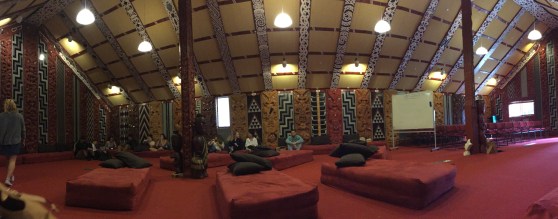

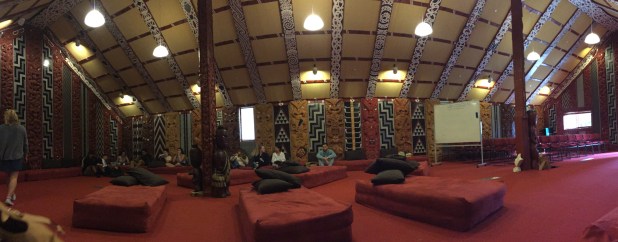
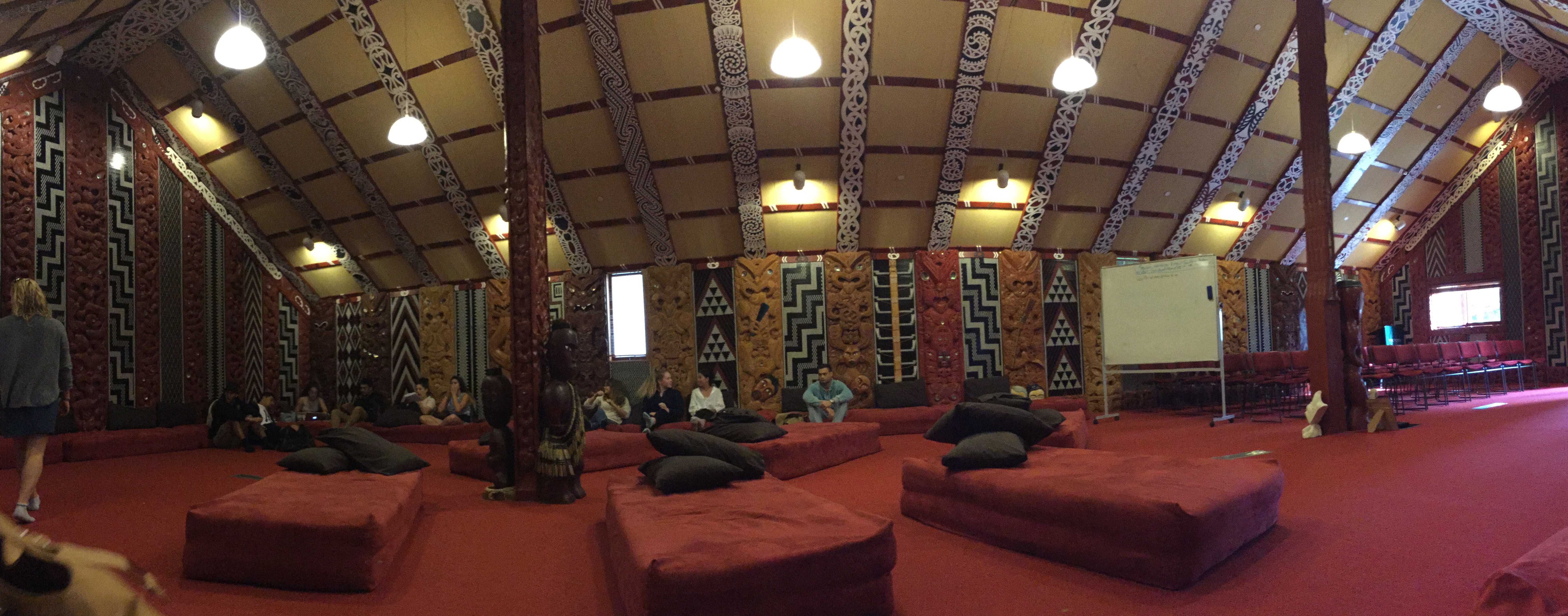
Some of the coolest experiences I had in my Māori classes were at the Te Herenga Waka Marae. A Marae served as a communal space to celebrate the Māori culture and language and can be used for religious and social events. My Māori 123 Class (Culture and Society) had the opportunity to participate in a Pōwhiri, basically a welcoming ceremony for guests onto the Marae. My lecturer responded to the tangata whenua (people of the land, the hosts of the Marae) Karanga calls. Then we listened to the whaikōrero (speeches) and waiata (songs) before proceeding to the Hongi greeting where two people close their eyes and press their noses together to share the “breath of life” (coming from the myth where Tāne, the forest god, created Hineahuone out of clay.) I do apologize to anyone I headbutted during the Hongi!

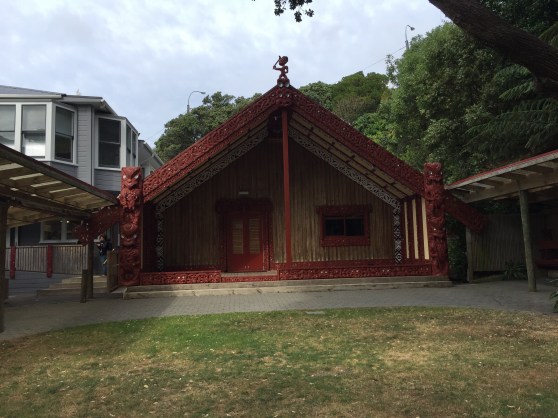

A few weeks later I was back at the Marae for my Māori 101 (Language) class, where we would stand up and recite, from memory, our mihimihi to the Marae. A mihimihi is an introductory speech, starting with where you are from, including landmarks such as mountains and rivers, and then naming some of your family members before finally saying your name. In the Māori tradition, knowing where you’re from and who your relatives are was more helpful to figure out who a stranger was than simply learning their name.

My mihimihi went something like:

Nō Seattle ahau. Ko Rainier tōku maunga. Ko Sammamish tōku awa. Ko Yasser rāua ko Johanna ōku mātua…

Even the language has cultural significance. As you can see, I use ōku and tōku to describe possession of my parents, mountains and rivers. These are in the “o” category because they are important (elders, immovable landmarks, etc.) Also, nō Seattle ahau literally translates to “I belong to Seattle” rather than just “I am from Seattle.”

I am continuously surprised with the Māori language’s integration within Pākehā (Non-Māori, European Kiwi) New Zealand. It could be the simple “Kia Ora!” greeting on Air New Zealand flights, the Haka chant by the All Blacks, and the Māori half of the national anthem.

Bilingual signage is also common, such as Victoria University’s logo. In Māori, the school’s name is “Te whare wānanga o te ūpoko o te ika a Māui” which translates to “the school on the head of the fish of Māui”


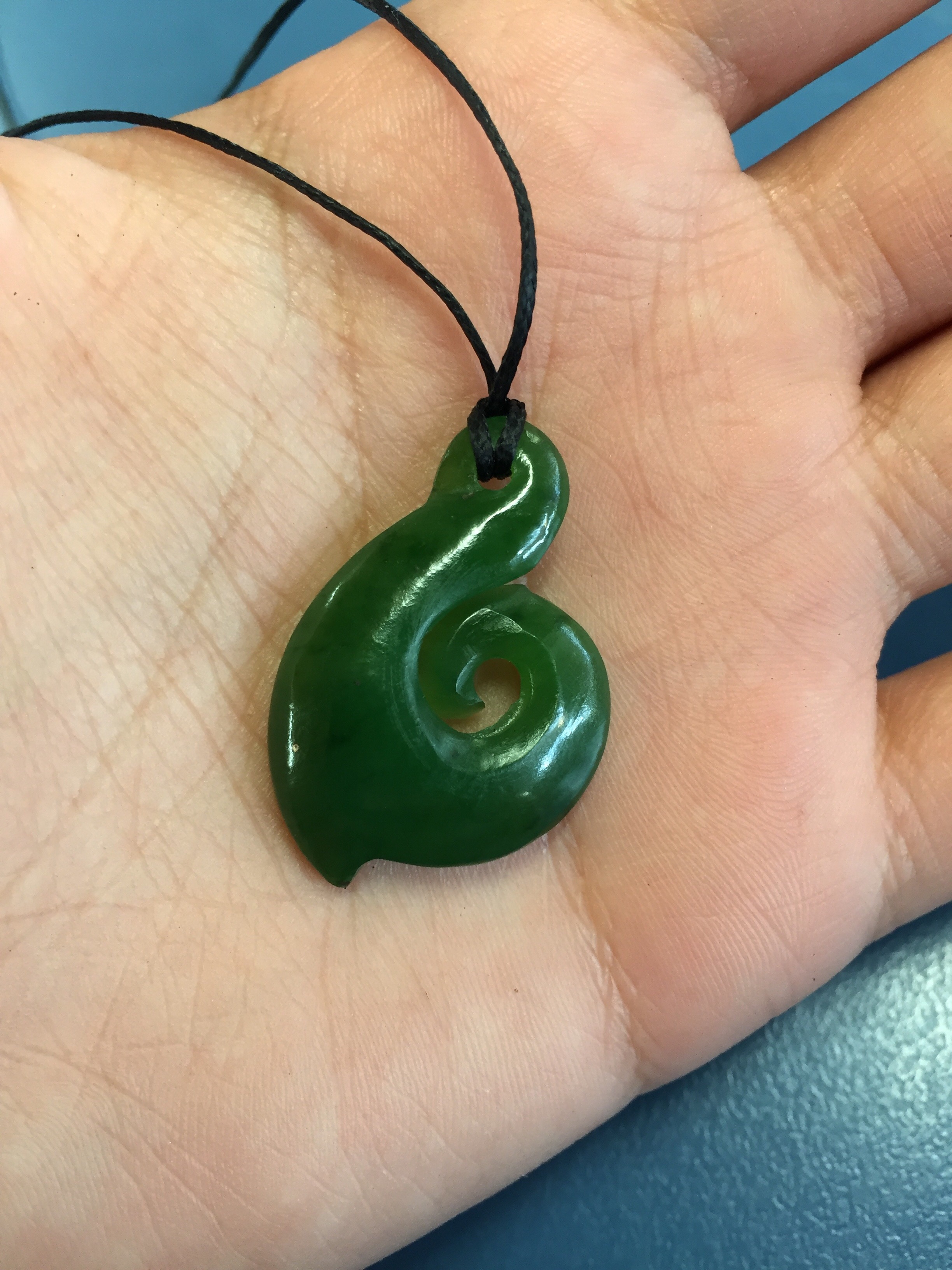
As you can tell, Māui is a pretty important demigod here. Victoria Uni has a sculpture of his hei matau (fish hook) out in the main court yard. Pounamu (New Zealans jade) amulets with Māui’s hook are also common, said to give the wearer good luck and protection when traveling across water.


All of the Māori culture and language that I’ve experienced has been a treat. As student minoring in anthropology, I soaked up the new words and the cultural significance of the Haka or Pōwhiri, the difference between tapu and noa, the patterns of intricate jade and bone amulets that were worn by Māori and Pākeha alike.

But by taking classes at Vic, I learned this was hard earned and it’s still a process to protect and promote Māori culture and language. Language revitalization movements surged in the 1970s and 80s when Māori realized they were losing their language. More political activism followed, including the creation of the Waitangi Tribunal to deal with historic land claims and breaches of the 1840 Treaty of Waitangi with the Crown (a treaty with very different translations of sovereignty between the English and Māori versions.)

It’s not all stuffy academics, either. New Zealand also has Māori radio and Māori TV that was launched in 2004, and then a te reo channel in 2008 thanks to the Waitangi Trib declaring te reo a “taonga” or “sacred treasure” that is protected under Māori sovereignty in the Treaty of Waitangi.

As a journalism student, and someone hoping to get a career in media, this also fascinated me. Early Māori newspapers like Te Hokioi were important to communication and coordination of activism, and now modern media is continuing the fight to make sure Māori narratives stay on air.

So it all connects. Te reo and Māori history, history and language revitalization,  Māori and media representation…

If you’re ever planning on visiting New Zealand, of course go to Queenstown and bungy jump. Of course take a kayak for a spin out in Abel Tasman and go visit Hobbiton. But also take a moment to learn some Māori, take a moment to learn the main characters in their mythology and why the rituals are they way they are. You won’t regret it!

Ka kite! (See you later!)

La primera semana

I’ve only been in Chile for a week, and I’ve already learned so much.

One of the most important things I’ve learned (or realized) is how well I know the Spanish language. Before I left, friends cautioned me that Chileans speak very quickly, use words unique to their dialect, and sometimes don’t pronounce the ‘s’ sounds that end words. All of these factors tend to confuse foreigners, they told me. So I arrived in Chile worrying that I wouldn’t be able to understand anybody, I wouldn’t be able to say anything anyone would understand, et cetera.

All of those fears proved to be unfounded. Since arriving in Valparaíso, I’ve discovered new levels of competence: I’ve gotten to know my host family on a personal level, ordered food and drinks, asked for directions several times, and engaged in complex conversations about abstract topics. For example, the second day I was here I talked to my host mother about the environmental toxicity caused by lead and copper mining, which exists both in Butte, MT and some parts of Chile. It’s exciting and satisfying to apply my prior knowledge from three years of Spanish classes at UM in these real-world contexts.

Through this language learning by immersion, my understanding of Spanish grammar has developed significantly. I’ve observed a change in the way I mentally organize my knowledge of Spanish verb morphology.

In every class or educational software that I’ve encountered, Spanish verbs are taught in their tenses, in order of increasing complexity: first students learn to conjugate verbs in the present tense, then the two aspects of the past tense, and from there on to more tricky conjugations, like the present subjunctive or past perfect.

This is the way I’ve become accustomed to conceptualizing Spanish verbs. But after a week of speaking almost entirely in Spanish, I notice I tend to think of verb endings in groups based on person: first person conjugations I use to speak about myself, second person conjugations for asking about my conversation partner, first person plural conjugations to express something about me and my friends, and so on.

I imagine this is because in actual conversation, I’m far more likely to need to switch between thinking of different tenses within the same person, than to call to mind the different forms of a certain tense for different persons. This type of metacognitive learning will no doubt prove useful when I am teaching these grammatical and linguistic concepts one day.

This is just one particularly interesting thing I’ve noticed about the process of learning a language in an immersive environment. I’m sure that as I spend more time with Chileans, I will gain more insights into their language and culture.

20160620_063728

I took this right before landing at the airport in Santiago.

20160625_152525

A view of Valparaíso.

Learning Māori

Māori to New Zealand are like Native Americans to the U.S. they differ however in their languages. The Native Americans have many different languages and more space to move around. Māori only have one language, te reo Māori. Since the relationship between the Māori and Britain has allowed this language to be taught at my uni (university), I thought why not. So I took and completed MAOR 101 – Introduction to te reo Māori.


Like any other introductory language course, it incorporated listening (whakarongo), speaking (kōrero), writing (tuhi), and reading (rīti). For me the hardest part was whakarongo because there are so many little articles and minor difference in sentence structure, it was difficult to discern. To work on this, our instructor would describe a scene and whoever’s picture came out the same, did a good job of listening.


The most challenging assignment was having to write an essay in te reo Māori about my family. It had a minimum of 280 words and could not go over 400. Here is what I turned in.


Ko Koenig te ingoa o tō mātou whānau. (The name of my family is Koenig) Kei Washinton tōku whānau. (My family live in Washington) Ko Rāwiri tōku matua ā ko Julie tōku whaea. (My father’s name is David[Rāwiri] and my mother’s name is Julie) Kei Washington rāua, enagri nō California rāua. (They live in Washington but are from California) Ko William tōku tungāne. (William in my younger brother) Kei Washington ia. (He is in Washington) Ko whaea pai a Julia. (Julie is a good mom) He wahine tino ātaahua tōku whaea. (My mother is very beautiful) Ko whakarīrā whakamahi a Rāwiri. (David is a hard worker) E maha ōna waka. (He has many cars) He roa ko Rāwiri rāua ko William. (David and William are tall) He rima tekau mā rima a Rāwiri ā he rima tekau mā toru a Julie. (David is 55 and Julie is 53) He tekau mā whā a William ā he rua tekau mā tahi ahau. (William is 14 and I am 21) Kāore ōku tuāhine. (I don’t have any sisters) E mau ana māua ko Julie i ngā mōhiti. (Julie and I wear glasses) Kaore ko Rāwiri raua ko Willliam ana I nga mōhiti. (David and William do not wear glasses)


He nēhi tōku whaea. (My mother is a nurse) He kaiaka mīhini tōku matua. (My father is a mechanic) E mahi ana ia mō Ford. (He works for Ford) E haere ana tōku tungāne ki te kura. (My brother goes to school) Ehara ia i tino pai tauira enagri he koi te hinengaro ia. (He is not a good student but he has a sharp mind)

E tunu ana maha tōku whaea ā ko ia tunu tino pai.  (My mother cooks a lot and she makes good food) E aroha ana ia ki te tunu ā e aroha ana ia ki te rīti. (She loves to cook and she loves to read) Me whakatika a William i tāna rūma moe, nā te mea i te nuinga o te wa he porohe tāna ruma. (William should tidy his room because most of the time his room is a mess) He tungāne pai ia, engari i ētahi wā ehara ia i te tama pai. (He is a good brother but sometimes not a good son. Engari e aroha ana mātou ki ia. (But we love him) He tino hoa maua ko William. (William and I are good friends)


E maha mātou mōkai. (We have many pets) E toru mātou ngeru, e rua mātou hurī ā e maha mātou ika. (We have three cats, two dogs and many fish) Kei Washington ngā mōkai. (The pets are in Washington) E rua mātou hurī, engari kaua e hīkoi I ngā hurī. (We have two dogs but we don’t walk the dogs) Me hīkoi rātou I ngā hurī nā te mea kei Aotearoa ahau. (They should walk the dogs because I am in New Zealand) Kotahi tōku mātua ngeru. (My parents have one cat) Kotahi tōku tungāne ngeru ā kotahi tāku ngeru. (My brother has one cat and I have one cat) Ko Cole te ingoa i te ngeru o William a ko Hippie to ingoa i te ngeru o mātua. (Cole is the name of William’s cat and Hippie is the name of my parent’s cat) Ko Starla raua ko Twilla te ingoa i nga huri o matua. (Starla and Twilla are the names of our dogs) Kaore ika nga ingoa. (The fish don’t have names)


Basically it describes who my family is, where they are from and what they do.

I must have done well because my grade back was a B.


Learning the language really helped me understand more of the culture and appreciate the diversity we have in this world. I suggest to those going somewhere new, learn the language!

Palmerston North

New Zealand is probably one of the most beautiful places on Earth. That being said, I probably went to one of the least beautiful cities in New Zealand.

I chose to do my time abroad in Palmerston North where Massey University’s main campus is. It is the only vet school in New Zealand and is surrounded by farms. When I got to the town it was already dark out and I was so exhausted from the flights, four in total, I did not really pay attention to my surroundings. When I did get up the next morning I found myself not doing much because I had just travelled all day before, but I was invited to hang out with some Chinese exchange students who were staying in the same dorm complex as I. When we were walking around the campus, that was when I noticed that it was not as spectacular as I was expecting. The University of Montana’s campus is more beautiful than Massey’s.

As I was hanging with the other students, they were telling me how they had already been into town and that there was not much there. That was a little disappointing, but if it was the worst thing to happen on this experience then I was fine with it. While hanging out with these other students, I was the only native English speaker so many times they would all start speaking Chinese for a good amount of time. I understood that it was easier and more comforting for them to speak in their native language, but I did feel a bit left out. They did, however, invite me to eat dinner with them and I really appreciated it because no one else was in my dorm yet.

When I got back from dinner with the other exchange students, two of my roommates had shown up and they were both from South Dakota and unexpectedly male. It was then we realized that they mainly roomed people by where they were coming from and at orientation we realized that most of the people living in our dorm complex were from China. Even though I am in New Zealand, I was experience another culture by living with many Chinese exchange students. It was during orientation that I saw that even though Palmerston North, or Palmy, is not as beautiful as the rest of New Zealand it does have its moments. IMG_0835.JPG

IMG_0833.JPG

Patagonia and the Role of Women

I have spent this entire spring semester in the beautiful country of Argentina.  On this faculty led study abroad program, we have spent time in Bariloche, Patagonia and Buenos Aires.  The things I have learned being abroad is extremely life-changing and totally gives you a new view on life as a whole.  One thing that really interests me in this country is the different cultures and social aspects of being a member of a Latin American society.  I am focusing my global theme on the idea of social inequality with a focus on discrimination of indigenous groups.  This aspect of my studies has been mainly relevant among Argentinians in Patagonia.

One of the really interesting ideas that I have been really thinking about lately is the role that women play within these groups.  In the indigenous cultures of Patagonia, the Mapuches and the Tehuelches, the role of women was very clear: take care of the family and home.  However, women were also responsible for making goods of materials that were hunted by the men.  We had the opportunity of visiting a store in Patagonia called El Mercado de la Estapa.  This was a store of hand-crafted goods made by women who are ancestors of these indigenous tribes.  They make products including gloves, ponchos, hats, sweaters, socks, and more with wool from the sheep.  They also have pelts from rabbits and other animals.  These women continue to live in their native land and obey their responsibilities held by their ancestors who were in their same positions.

Seeing this kind of place really put my topic into play and how the social aspects of certain members of indigenous cultures are all important for different reasons.  I think it is important to include all roles present in native groups because they all play a part in the kind of community the natives have.  I think the specific role of women within these groups could be something I can focus on within my final project because I think their role is just as important as any others.

Small but Mighty

My internship at the Wilds began at the start of June and every week I surveyed butterflies and flowering plants in various restored prairies. The first few weeks were a very steep learning curve where all I could think about was trying to figure out what species each butterfly was before it flitted out of sight. It was stressful and the surveys took a lot of concentration.

As the summer continued, I became familiar with the common species, my surveys became much more enjoyable, and I began to look forward to seeing my favorite species. I loved seeing the tiny eastern tailed blue butterflies that would flutter around my feet and the silver spotted skippers that would cluster on purple bergamot flowers. The butterfly I wanted to see the most though, was a Monarch. Monarchs are the one species that everyone (including myself) is familiar with. I knew they were an iconic species and all I wanted was to see just a single one fly past.

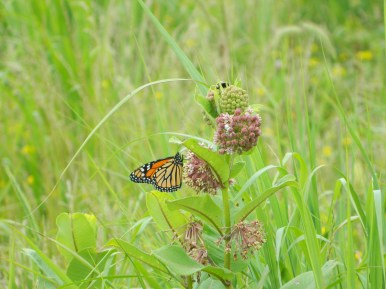
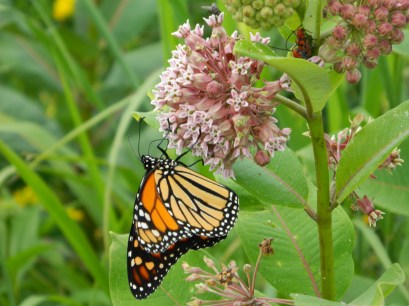
Therefore, I will never forget the day I saw my first Monarch butterfly. I was trekking through the prairies as usual when I saw a beautiful and magnificent monarch glide over my head. It was absolutely beautiful and I remember whipping out my camera when I saw it land on a milkweed. It was amazing. Not only did I finally see a Monarch but I saw it land on a milkweed—the infamous plant essential for their survival.

DSCN4117

When I got back to the office, I told all my fellow interns about the Monarch and I showed them the video I took of it feeding. However, when my director heard that today—in the middle of July—was the first day I saw a Monarch, she was sad rather than happy.

The summer I was at the Wilds had the lowest number of Monarch butterflies recorded for a summer so far. Over the previous five years, the number of Monarchs recorded had been steadily declining. My happiest moment had become one of the most heart-wrenching.

DSCN4120

Butterflies are so small that they are often overlooked. They are creatures that we all recognize yet care very little about. Many people see them flutter through their yard or through fields and although they see them as beautiful, they do not see them as essential.

Butterflies are essential keystone species. They are key pollinators in many habitats such as prairies, savannas, wetlands, and even forests. Butterflies are also indicators of the health of an ecosystem because they are very sensitive to pollutants and toxins. Also, butterflies are very good indicators of the floral diversity in an ecosystem. The results of my study clearly showed that areas with a larger number of flowering plants will have more butterflies. It’s as simple as that.

I began my internship at the Wilds completely ignorant of how important and amazing butterflies truly are. Like many people, I hardly even acknowledged butterflies. I thought they were pretty but I never thought any deeper than that. Over the summer, I gained a deep appreciation for these tiny critters and I realized that I had so much left to learn. However, I am proud to say that now when I see a butterfly flit past while I am out in the field I don’t just see a pretty insect–I see a creature that is essential. I see a creature that is small but mighty.

DSCN4121


Hunting Butterflies

If you are a biologist and you visit Yellowstone National Park, you often wake up before even the smallest sliver of light has broken across the horizon. You head out and get into position just as a golden edge of light begins to creep into the sky, and you wait. If you are lucky and patient you will notice a faint puff of silver fog on the edge of a tree line. Then a sleek grey muzzle will emerge followed by the slender graceful body of a wolf.

During the summer, most animals will be active at dusk and dawn. These are the coolest hours of the day and when it will cost the least amount of energy for them to forage or hunt. At the peak of the day, sensible creatures will lie down and wait out the heat. Butterflies are one of the exceptions.

Butterflies love the heat. They sit in the sun and slowly open and close their wings as they soak up the warmth. The longer they sit in the light, the more energy their muscles have and the more they can fly. Butterflies also love still windless days. They are small, fragile creatures and they have a very hard time battling any wind without being blown off course. So, I spent my summer trekking through prairies on the hottest, driest, sunniest, windless days in the baking sun in search of butterflies. Despite that, I have rarely seen so many beautiful sights or had so much fun in my life.

The Wilds is located on lands that were once heavily strip-mined. This is a mining practice where huge roving factories dig up the top few feet of the earth over vast landscapes in search of minerals. Then they throw down the seeds for whatever plant will grow the fastest and they leave. Over the years since the Wilds was established, it has worked to remove the resilient invasive plants and restore the native prairies.

The oldest restored prairies on the property are now over fifteen years old and they are absolutely beautiful. Imagine a sea of green interspersed with flowers of all colors: red, yellow, blue, purple, orange, and pink. Then imagine lush green bunches of grass that stretch above your head. Finally, imagine lovely, iridescent, fluttering, creatures that swim through the air dancing from one flower to the next. This was my summer. Of course it was hot and I was very familiar with ticks, but these are very small trade-offs for such an amazing experience.

“I’m going to be studying…”

For as long as I can remember I have loved animals. There are so many beautiful creatures on this earth and even from a young age I knew I wanted to work with them when I grew up. So, when I got to college I started studying some amazing creatures. I learned so much about grizzlies, wolves, elk, and pronghorn and all the challenges they faced. I learned just how much of a negative impact humans are having on these wonderful creatures and my resolve to help them strengthened.

After, a full year of college I thought I had a solid grasp on the key species in most ecosystems and I was ready to get out in the field and put some of my new-found knowledge to the test. So, I began an internship at the Wilds in Cumberland, Ohio. I remember hoping I would get to work on the research project focused on bison. I imagined myself in the middle of rolling green prairies observing bison and recording their every movement.

On the first day of the internship, I sat chatting shyly with my fellow interns. There was a hushed anticipation that seemed to hover in the room as we waited for the clock to hit 8:00 am. At the time I was so confident that I would get to work on the bison project but looking back now I know that my hopes were much higher than my actual experience level. I was as green as a tulip stem back then and I had no true idea what a field project would be like. Anyway, the directors for the internship finally arrived and they began announcing the projects to which we would be assigned for the summer. When they announced my project, all I remember thinking was, “I’m going to be studying . . . butterflies?”