Bridge River Field School

Today was my first day at the excavation site and my first coating of Bridge River dirt. I wasn’t allowed into the pit house yet because I have to be smudged by the spiritual leader of the community. This has been explained to me as an introduction to the ancestors. So I stayed on the rim and sharpened my trowel. Which sucks. It takes FOREVER. I still haven’t finished and my fingers have blisters. However the first sharpening is the worst and it won’t be like this every time. When I wasn’t sharpening my trowel I got to try my hand at sifting. I got covered in dirt and found lithics, fish bones and the most exciting being a large canine tooth! It was kind of an initiation! While sifting, I learned a quick review of how to recognize different elements and the procedure of recording everything. As well as the spit test. Pretty much as gross as it sounds. You spit in your hand and grab a little bit of the dirt that you sifted and try to roll it into a worm. The purpose being to determine the ratio of silt, sand and clay. I also got a run down on the site and the work that has been done there previously. A lot of information, that only added to my excitement about starting my first excavation!

Once back at camp, I got to shower! which is quite the luxury for only one day’s worth of dirt. We have shower rotations that only give us a shower every three days…yikes!! We also rotate laundry, cleaning, and cooking. Dinner followed by a group meeting for the four incoming students/TA’s rounded out the evening. It’s a little intimidating because I’m one of only two undergrads, but that just exposes me to more people with more experience in the field. And that can’t be bad!
I won’t be posting any pictures of the site or the artifacts because they belong to the Bridge River Community. I will try to post pictures of camp and other aspects of this adventure!

20140615_100254

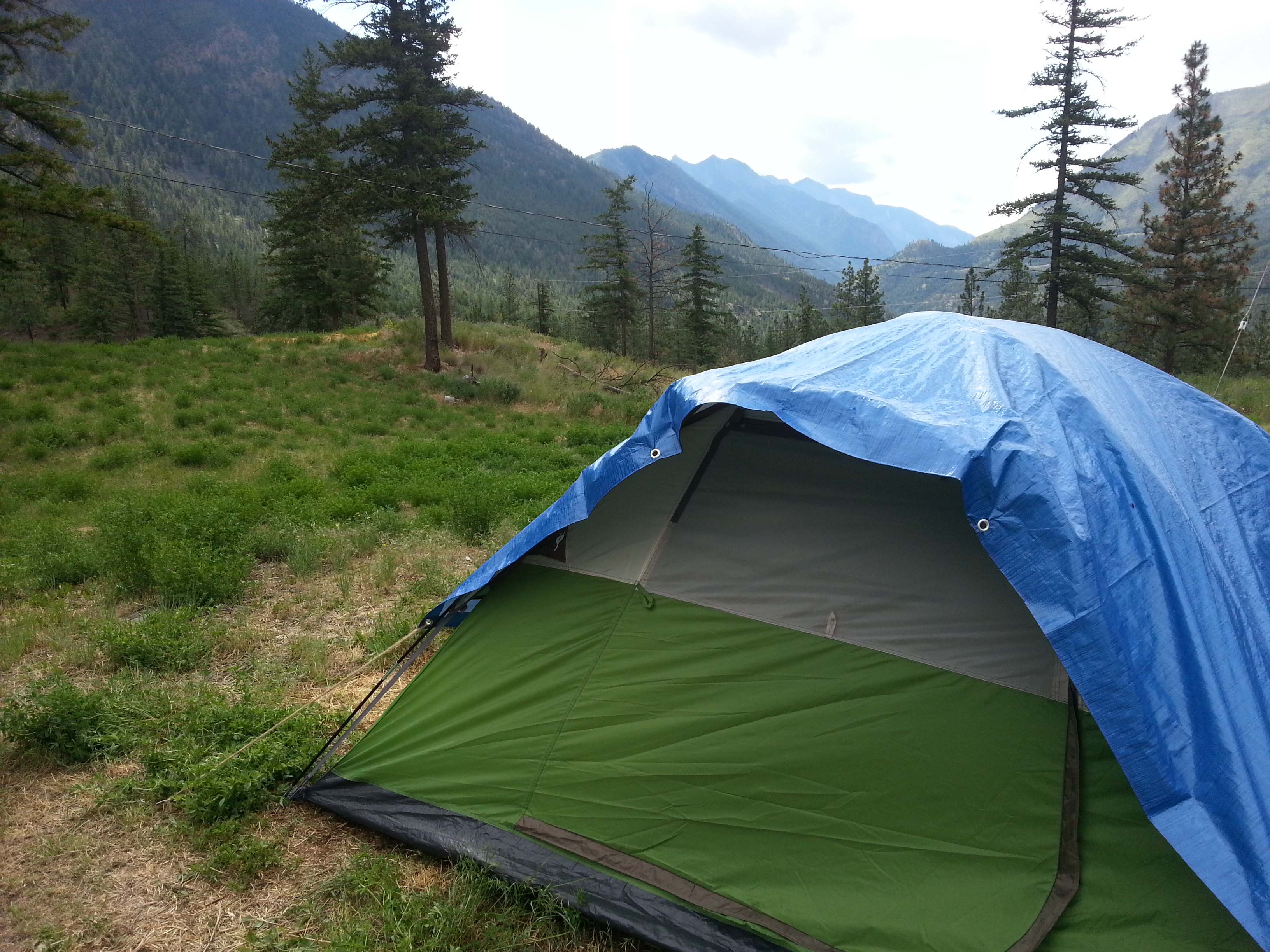
Home Sweet Home for the next 3 and 1/2 weeks! 

**I blogged regularly during the field school on a separate blog. I will be posting three of them on this one, but if anyone is interested in reading some more click here **

A Westerner’s walk through Oman


Students from my school walk through a beautiful ancient village near Nizwa, Oman.

I finally let my Nikon’s screen go black as our bus chugged toward the mountainous village of Misfat Al-Abreyeen.

The distraction of the radio had pulled me away from looking at the simple photo of a boy, his father and grandfather, which had morphed into a symbol of the generational shift I see in Oman.  (click here for photo from previous blog)

“Ramadan Kareem,” the radio host said to his listeners.

It wouldn’t be strange for the host to wish every a happy holiday, other than the fact Oman is an Islamic Republic and Muslims aren’t supposed to listen to music during the Holy Month. Simplified to the extreme, Muslims use this month of fasting during the day to focus on their relationship with god and tune out worldly distractions.

(Check out a favorite song of the summer in Oman. I first heard Enty while eating spicy corn and ice cream, a gift from my local friend, as we made our way though chaotic Omani traffic to a wadi just outside of Muscat. Apparently it is about a women who would rather her man not talk when she does something wrong.)

The radio went static as we drove higher. It was as if we were escaping the changes seeping into Oman.

The bus, with more than 20 Americans, one Australian and a Spaniard, was unusually silent. It was probably out of fear that our beloved bus would finally die like it seemed to threaten to do at each switchback that led to the village.

I had no idea we were about to explore one of the few places Westerners can see that feels nearly untouched by Oman’s recent modernization.

The ancient village that gives a hint into Oman before the 1970s.

In the quietness, my mind replayed a conversation with an elderly woman at an Islamic Informational Center a few days before.

She described the man who had “brought Oman back to life” – Sultan Qaboos bin Said al-Said.

Before the sultan overthrew his isolationist father, Said bin Taimur, in a palace coup in 1970, the people of Oman had no idea Qaboos even existed.

“He was the surprise to Oman,” she said.

As she talked, the sultan seemed to be watching our conversation from the position of a wooden frame that hung within the Islamic Informational Center. To be honest, I would be surprised not to see the sultan’s picture hanging in any building I enter by now.

His sudden appearance in the 1970s was just a foreshadowing of the changes he would bring to Oman. He began his reign with a promise – “Oman will transform into a modern country.”

He told this to a people who had no electricity, faced death somewhere within their forties and had only two hospitals to rely on when disaster struck.

Forty four years later, the image has changed. Health has improved, wealth has spread, education has been stressed and the floodgates to the western world have been opened.


Omani society then and now

  1970 2008
Life expectancy at birth (years) 49.4 75.9
Fertility rate (births per woman) 7.20 3.05
Hospitals
2 58
Schools 3 1,283
Students 900 623,389
Telephone subscribers 557 3,493,527
Sources: World Bank; National Economy Ministry
       

This explains why the Islamic country has a radio host who will wish his listeners a Happy Ramadan. Or why I am able to buy food in public even though eating in the open is against the law during the Holy Month (Though I have had a meal or two in bathroom stalls).

Billboards have English words bolder than Arabic. My teachers tell me not to stress out “too much” about being modest – after all I’m “a westerner” and therefore am somehow excused if I want to show my elbows or ankles.

The product is Oman and the buyers are foreigners.

(Oman continues the push for tourism, and it is working).

As our bus parked among brick homes built into a mountainside I realized we, our bus full of westerners, were yet another example of this change as more than 20 foreigners entered the quite village of Misfat Al-Abreyeen.

 ***

For more photos and posts, check me out at http://katherynhoughton.wordpress.com/

For updates on my trip or other fun facts, follow me at @UMHoughton

Myself and other Arabic students flock around a donkey of Misfat Al-Abreyeen while the rest of the village continues with their routine.

We explore the village.

The Fourth Largest City in North America

I’m spending the entire summer in a suburb located just outside Toronto, Ontario, Canada. Mississauga, it’s called, has everything you could ever need to thrive: a good transit system, plenty of clothing shops and grocery stores, and so many houses that I get lost easily in the sea of driveways and grass. Mississauga’s most famous buildings decorating its skyline are two condos with hourglass-like shapes, commonly known as the “Man” and “Woman” for their likeness to human bodies.

I came here for the university, located quaintly on the edge of Mississauga and buried in all the deciduous, leafy trees found so commonly in the east. The University of Toronto – Mississauga is a satellite campus of the renowned University of Toronto, known for its research and position as arguably the top university in Canada. After a few emails, the help of many, and a lot of luck, I found myself accepted into the Chemical Sensors Group for the entire summer, focusing on the cutting-edge research of nanoparticles.

With plane delays, I didn’t arrive to the campus until 1AM. However, with the help of some friendly campus police, I was able to break my way into the room I would be calling my home for the next three months.

“If I get fired for this, I hope they’re hiring in Montana, eh?” one of them said.

On my first day, I was picked up in a sleek black BMW. Its driver was Matt, one of the best teachers and scientists I’ve ever had the pleasure to meet, and my boss and guide through my lab work this summer. While showing me around Mississauga, he explained his research project.

The goal, he said, was to cover a nanoparticle with a certain molecule on one side, and a different molecule on the other. That is, to find a way to cover each face of a sphere with something different. This could in theory be useful in something like drug delivery – have molecules that detect a sickness on one side, and the drug to treat that sickness on the other. Give these nanoparticles to a patient, and the drug will only be released where the ailment can be found.

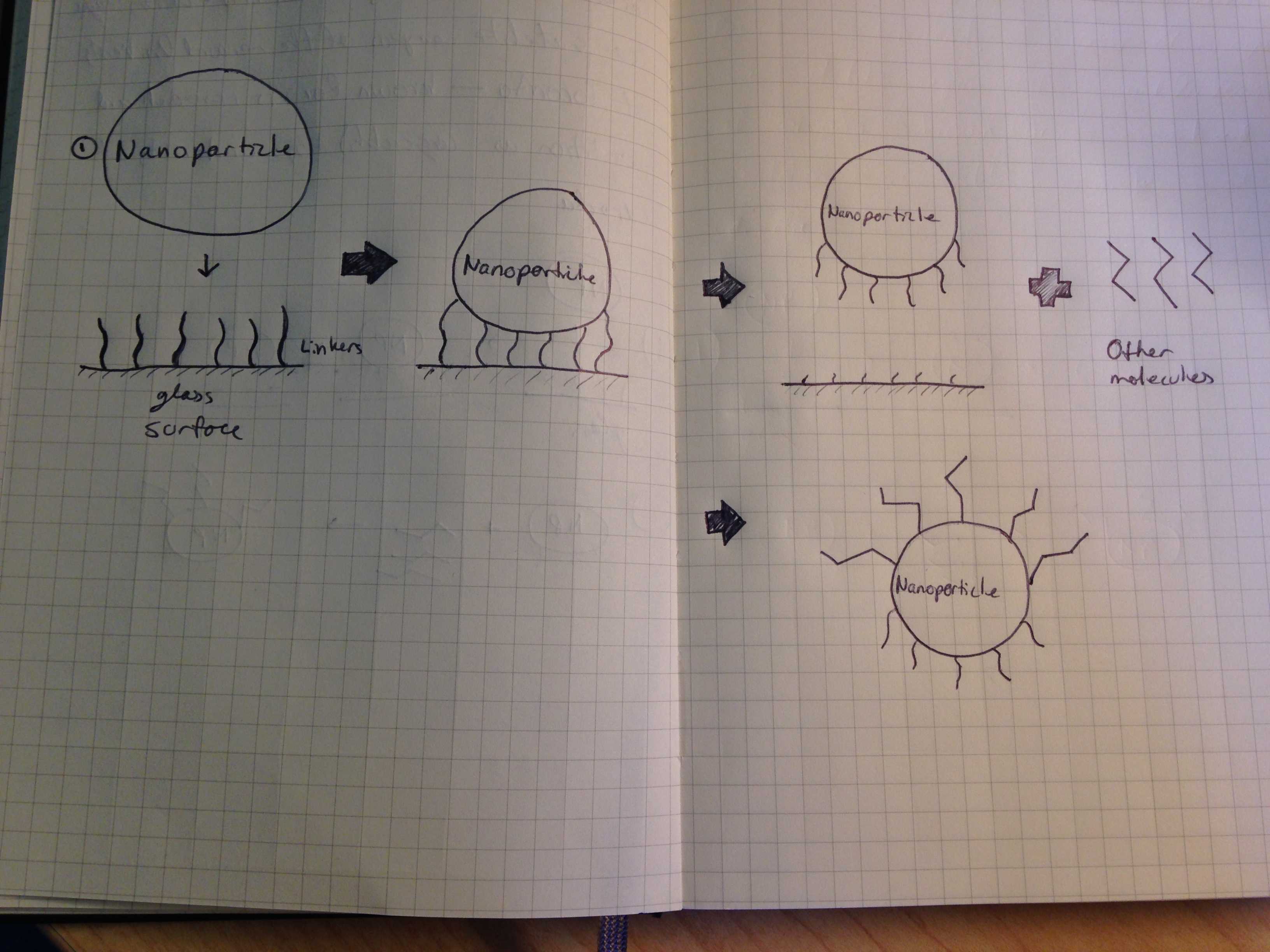
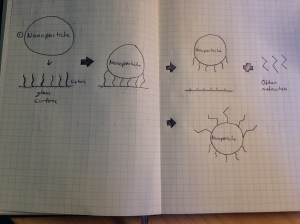
But first, this has to be proven to be possible. On particles so small, chemistry does not always work so easily. At the bottom of the page  is a diagram of Matt’s strategy:

A nanoparticle is first immobilized on a flat surface by the attachment made through a “linker” molecule. By virtue of geometry, given short enough lengths of the linker, only some of the surface of the sphere can be covered. The linker can then be cut to free the nanoparticle into solution. The nanoparticle retains its bareness on the opposite side, allowing for a separate reaction to occur to decorate that opposite face.

You could even cover more or less of the sphere by varying the linker lengths:

Matt and the rest of the people I work alongside in the lab never cease to amaze me. They’re super hardworking in the lab, and often I can’t fathom how they can keep up with eachother. No matter how many failures they have, or weird results they can’t explain, they always put their heads together and help eachother out. It’s the best work environment I could ever dream of. I find myself hanging around the lab even hours after I’m done working, just to see if I can help them with any work and get to know them better.

Equally as fascinating was my first roommate, Anjana. If it weren’t for her and her boyfriend, it would have taken me weeks to even locate all the best grocery stores. Or heck, even the mall.

Anjana wasn’t given any notice that I would be showing up as her roommate. She had started her summer business classes nearly a month earlier, and simply assumed the second bed in her apartment would remain empty. I woke up the first morning to the sound of her voice on the phone, in perfect English but tainted with a Tamil accent that I would come to love.

“I have no idea, I just came home and the door was open and there’s stuff everywhere!”

Even though she hardly knew me, she shared her food, took me out with her friends, and taught me all about her culture and her former life in Sri Lanka. No matter if it was planning a surprise birthday party, going to a Hindu temple, or dealing with the inevitable drama of relationships, she always welcomed me into her life.

She finished classes and moved back home a couple weeks ago, leaving nothing behind but a bag of roti and a rose in a blue wine bottle.
IMG_1220 IMG_0566


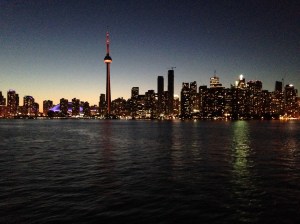
A diagram of the research I’m involved in (described above), and a shot of the famous CN tower taken on Lake Ontario.

All Good Things Must End Eventually

This is it. My last day in Australia. It’s bittersweet to say the least. I’m surprised I’m not crying like a baby writing this. I guess I’ll save that for tomorrow morning on the plane.

My last few days in Perth went very fast. One minute I was at Monday night training, the next I’m hugging the other trainers goodbye. All the boys were surprised we were leaving so soon; they thought we were staying the whole season. I wish! It was sad listening to them joke around with each other and us, knowing that in just a week I wouldn’t have that to look forward to each day anymore.

The last week passed fairly uneventfully. West Perth played in Melbourne for the Foxtel Cup Grand Finals on Tuesday, but sadly lost in the lowest scoring game in the Cup’s history. The players who didn’t go got together at Branchy and Trent’s place to watch the game and chow down on pizza. It was entertaining watching them placing bets on their friends and yelling at the TV like they were down on the field too.

After the game Myelle and I went salsa dancing again. It is such a blast! I need to find a place I can salsa back home. We brought our gym manager Mel with us this time. She’s so adorable when she dances. There was one guy who refused to let her go, even though she didn’t know what she was doing. He was surprisingly a good dancer. We went to the Moon like usual when the dance shut down and got our traditional nachos. I’m definitely going to miss those. And Good Times Jackson von Smith, Toby Basco, and Jimothy (all the waiters we made up names for). Missoula needs a place like that.

We visited the US Consulate, which we honestly should have done the first week. Good information, but not too helpful when we were about to leave. I didn’t think we would actually be meeting with the Consul General because we were told we were just meeting with staff, but she came in and talked to us for a good hour. Tip: when you travel to a different country, register with the US Consulate for the area you will be in. They put on events sometimes for Americans and it also allows them to notify your family if something has happened to you.

Friday night we went out with the Jetts employees after their work dinner. Such a fun-filled night. We ended up in a little bar in Subiaco with not very many people in it. Their boss kept thanking us for helping out in Dianella. We tried to go karaoke afterwards but they wanted to charge us $53 an hour to sit in a little room with just us and sing to each other. No thanks.

Saturday’s game was a mess. Literally. It had rained hard the night before and the Leederville oval isn’t the best in terms of turf. There were large sections of pure mud throughout the field, which developed into small ponds of muddy water during the seniors’ games. It was entertaining watching the boys slide around on the field, almost like a slip ‘n slide. Their white shorts were definitely not so white by the end of the game. I ditched my tennis shoes in Perth they were so destroyed from running water.

Happily the mud didn’t sway our boys too much in the way of injuries. Benny pulled his hamstring, but that’s the only major injury I can remember. When they came into the change rooms at halftime, everyone was covered head to toe in mud. They looked like vicious warriors returning from battle. Then again, they kind of are. The Colts ended in a tie, the Reserves won, and the League sadly lost, losing our hopes of getting into finals for a second year.

Saturday night we went out again, and boy were we feeling the sleep deprivation. I think over those two days I got a total of about five hours of sleep. Great idea. But hey I’m only going to be here once. We headed over to Leederville and met up with Branchy and Jordy. No idea where everyone else was; supposedly they were at the place next door. I’m still not too happy with most of the guys: they were supposed to come out with us so we could say goodbye. Looks like I’ll just have to come back someday!

Now I’m sitting in my hostel in Cairns, reflecting on this whole summer. It really has been amazing. I won’t go into all that now, but stay tuned for another post when I get back to Montana. Cairns is definitely a tourist town. Barely anyone I’ve met has actually been Aussie. Our first day Myelle and I went on a jet ski crocodile tour of the mangroves. We only saw two crocs, but the scenery made it all worth it.

Tuesday we got to snorkel the Great Barrier Reef! Super impressive. So many fishies to see, and awesome coral beds. I managed to duck dive down while snorkeling (never done that before) and got to touch one of the huge fish that was swimming around us. I named him Jeffrey. In the process though I think I messed up one of my eardrums, even though I tried to equalize on my way down.

Yesterday we did a waterfall and wildlife tour which was fantastic. We saw the Babinda Boulders, Josephine’s Falls, Dinner Falls, two crater lakes, Millaa Millaa Falls, and my favorite, a platypus! I was so excited about the platypus. He was cute, but he was quite a ways away to see properly. We swam in two of the falls, and boy were they freezing! It was still fun though. And, as a Richards, it is standard for me to go looking for waterfalls. Just glad I wasn’t in a rental car this time.

A Whole New Ball Game

So far I have seen practically every level of footy there is: everything from the pee-wees up to the big dogs in the AFL. I would say it’s comparable to playing YMCA soccer back in the states. The little guys are just learning the rules, while the upper levels are going hard at the ball. This post will be all about the differences in the levels of footy, because believe it or not there actually are some major differences.

Let’s start off with the little guys. Usually they play during the breaks of the bigger games, so their matches only last about 15 minutes. They have basically the same rules as the other levels, just more basic. But man can those little kids tackle! They are still allowed to hit each other just like the big guys do, and they sure take that to heart. Some of the marks these kids take are pretty incredible too for their age. It’s mostly just adorable to watch them all scramble around for the ball.

Next up is the amateur leagues. These are the community teams that lead up to the WAFL teams. They have all levels like the WAFL: Colts, Reserves, and League, and some also have a team called the Thirds (what I like to call the “beer league” team. Mostly older guys just coming out to get a kick on goal). These games aren’t nearly as serious as others I’ve seen. The coach doesn’t yell so much, and the players are definitely more relaxed. They care if they win of course, but they don’t make a huge fuss about it if they don’t. The boys who do exceptionally well in their amateur league get recruited by the bigger WAFL teams and go from there.

The hits in amateur footy aren’t that big, so not very many injuries thankfully. I worked with an amateur team out in Ballajura for two weekends. Their kicks aren’t super accurate, nor are their handballs. But they mostly are there to have fun so nothing else really matters.

This past week I worked a little bit with a country team for country week. A lot of the surrounding suburbs have footy teams that fall under each WAFL league; West Perth’s area is the Eastern Districts. They needed help with trainers, I needed the hours. Boom problem solved. I would say these teams are a tad bit more serious than the amateur teams. The ages range from 18 to 35 or sometimes older, but you definitely have to know what you’re doing.

What I noticed about the country boys was their kicks were more accurate, but still not amazing, and the hits were a little harder. We even had a guy blow out his ACL, LCL, lateral meniscus, and fracture the head of his fibula off of a hit. One of the more gnarly injuries I’ve seen. Again the coach doesn’t yell much, but it definitely is taken more seriously than the amateur teams as some of those players get recruited to WAFL teams as well.

Finally my favorites. My WAFL boys. There is such a huge difference between this level and the others. The Western Australia Football League (WAFL) is comprised of three levels: Colts, Reserves, and Leagues. The Colts feed into the Reserves, and Reserves into League. From League some of the players get picked up by AFL teams (Colts players can get picked up too if they’re really really good. West Perth actually had two I think in the past couple years get taken up). More on that in a bit.

This is the level that everything starts getting very serious. The coaches and players yell. The players also fight. People get hurt (concussion anyone?). The hits are big. There’s danger of being put out for an entire season from one mark gone wrong. If your jersey isn’t grass stained with dots of blood by the end of the game, you didn’t play hard enough.

As brutal as I just tried to make that sound, it is an incredible thing to watch. It’s a very fun game to watch, especially when a team works really well together. The kicks and handballs are far more accurate than any other level below WAFL. Training is far more serious. But the injuries are also more serious. This past weekend alone we had a strained hamstring, two blown shoulders, a broken nose, multiple corks, and a partially torn bicep. And on top of all that, all of those injured players will insist on playing in the next game (Jess will kill them before they try though).

The final level a footy player can reach is the AFL. The difference between this level and WAFL is that not only do these players get paid, they play teams from all over Australia, not just in Western Australia. These are the stars that all little Aussie kids look up to. They become fans from before they can walk and know the words to the chants by heart.

The two teams here in WA are the Freo Dockers and the West Coast Eagles. We got to go to the Dockers v. Sydney Giants game yesterday. That stadium is huge!!! It’s comparable to one of our NFL stadiums, and every seat was sold out. At this level, every kick could possibly lead to a goal, and every hit is vital. The players have reached the peak, the best of the best, but they still strive to prove their worth. They still play together as a team instead of just looking out for their own interests.

That’s one thing I appreciate about the players here compared to the US: in our professional sports, the players don’t really have anything to play for anymore besides money. All they care about is getting a championship ring to get the money, and they are willing to leave a team in the dust to get there. The players here seem to have a little more heart than that. You can tell from the way they play that they know how to work as a team, and aren’t just trying to up their personal goal tally. It’s just an intriguing difference to me.

So that’s footy just about summed up! I know it’s not the most interesting in the world to you guys back home, but footy has become my life down here (literally every Saturday is devoted to footy in some way or another). I definitely need to find a way to watch it back home or I might die of footy deprivation. Going back to watching football just won’t be the same after this summer.


Addio Italia! Last week in Italy, last week in Europe

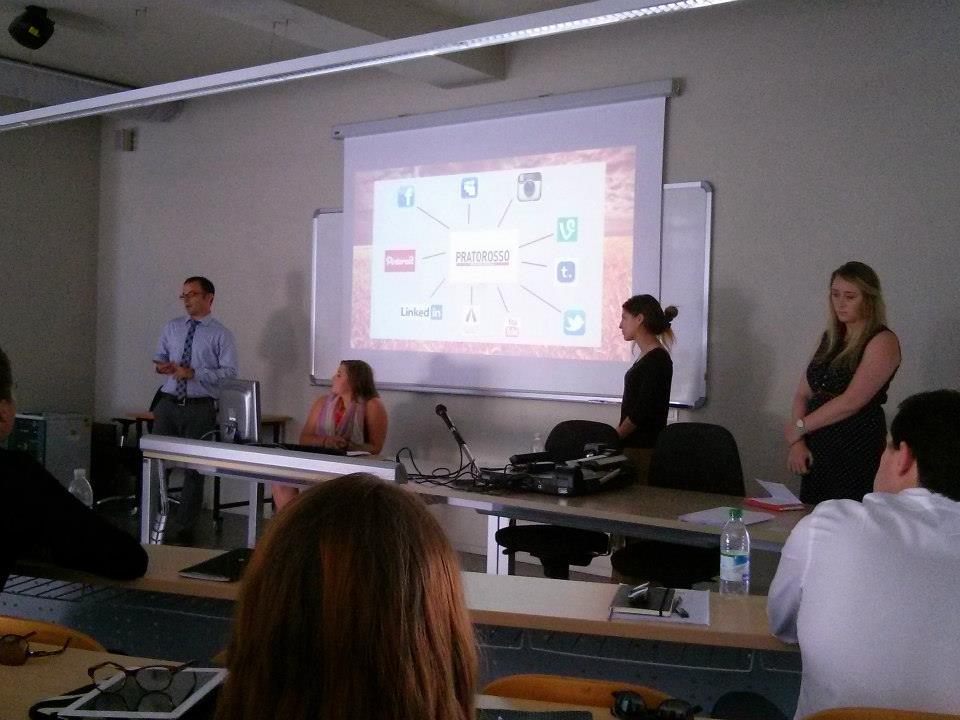
Our last week in Italy was spent with morning lectures and afternoon group work. It was more stressing in finalizing our presentation during the last few days. Our group members, including myself, were faced with conflict and chaos at times. Most members’ work, in the end, was eliminated from the presentation all together. This meant for many, three months of hard work going down the drain. However, the main lesson from this experience was learning to put at top priority what the customer or consumer wanted and to accept change and make amendments as the project progressed. Fortunately, we were able to finalize and present on Friday, the last day of the program. The presentation was a success and PratoRosso was happy with the recommendations given.

In between group meeting and lectures, we were able to visit for an afternoon at Verona and at Lake Garda, and make one last site visit at Lonati, a sock manufacturer. Apparently, Verona was not as packed with tourists as it was in Venice. Also, according to my taste buds, I had the best Margarita pizza during my whole stay in Italy, in Verona. Best of all, my pizza was on fire when it was served. Our trip ended with a last dinner with our Italian classmates and professors.

These three weeks in Europe, one week in Germany and two weeks in Italy were one in a life-time experience I will cherish forever. With all its ups and downs during the trip, I learned much not only from a business aspect, but also from an international perspective. Doing business with a country is not at all easy, and in fact it is a challenge. Being able to learn a country’s culture and integrate it in a business proposal is important. Also respecting and being conscious of the differences in cultures is vital in doing business abroad. The world of business is not limited to the U.S.; it is international, in result making it even more important to learn how to do international business.

I also learned that both Italy and Germany have similar values regarding recycling. For instance, the Germans find it very important to recycle both plastic and glass bottles. In fact, they serve their beer in glass and charge an extra fee on customers for the deposit, which they can get back if the glass is returned. The Italians are the same. Coffee is never served in to go cups and in fact must be sipped at the cafe. The U.S. has such a fast paced culture that our food consumption is revolved around this aspect. Everything is to go: paper cups, plates, silverware, etc. All of which create unneeded waste that cannot be recycled. I am assuming this is why recycling is a part of the German and Italian way of living, because their lifestyle does not revolve around a fast-paced lifestyle.

IMG_0837 IMG_0841 IMG_0843 IMG_0853 IMG_0891 Prato Rosso all who presented pratorosso pres PratoRosso Presentation

Ciao Italia! First Week in Brescia

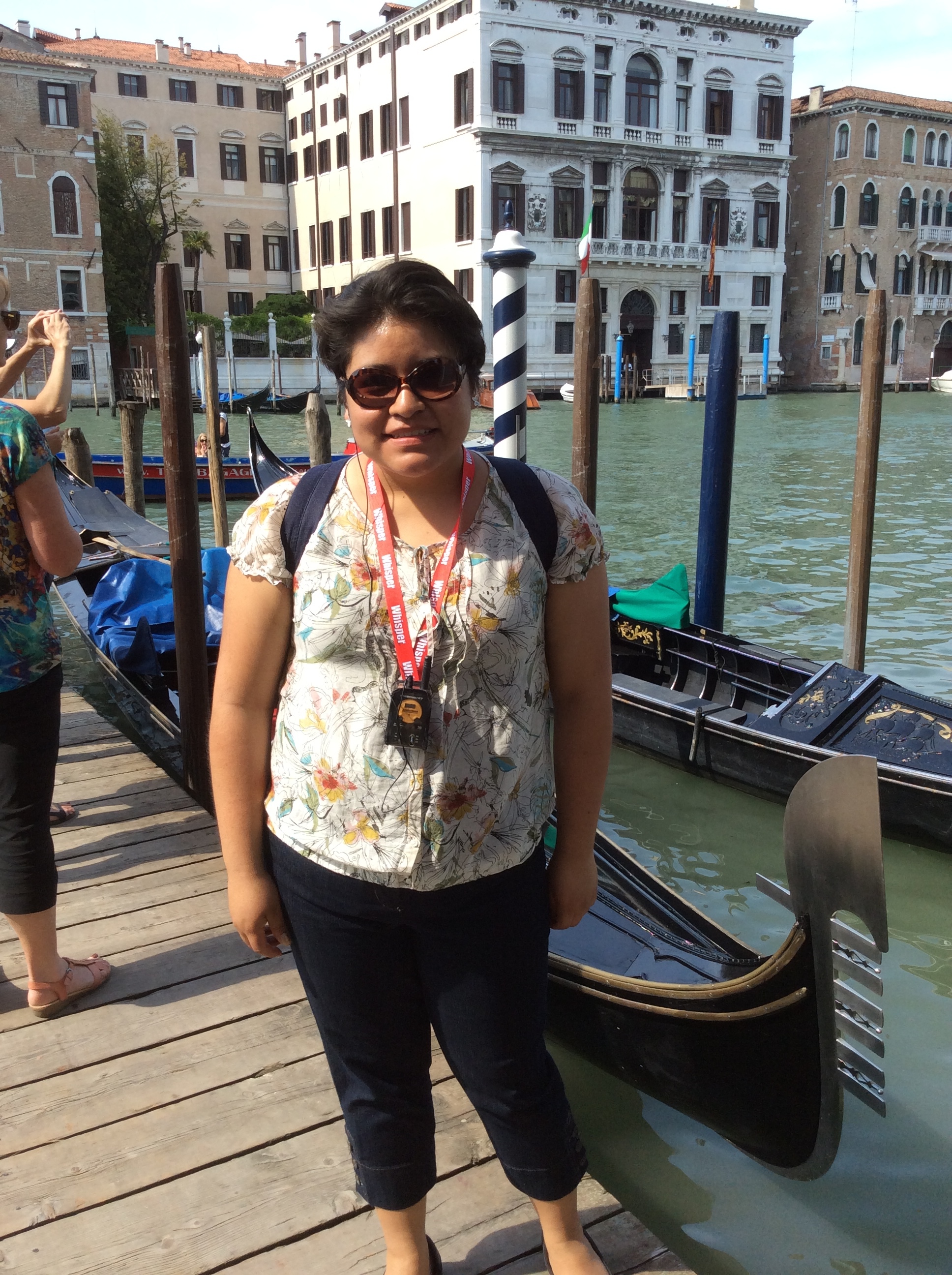
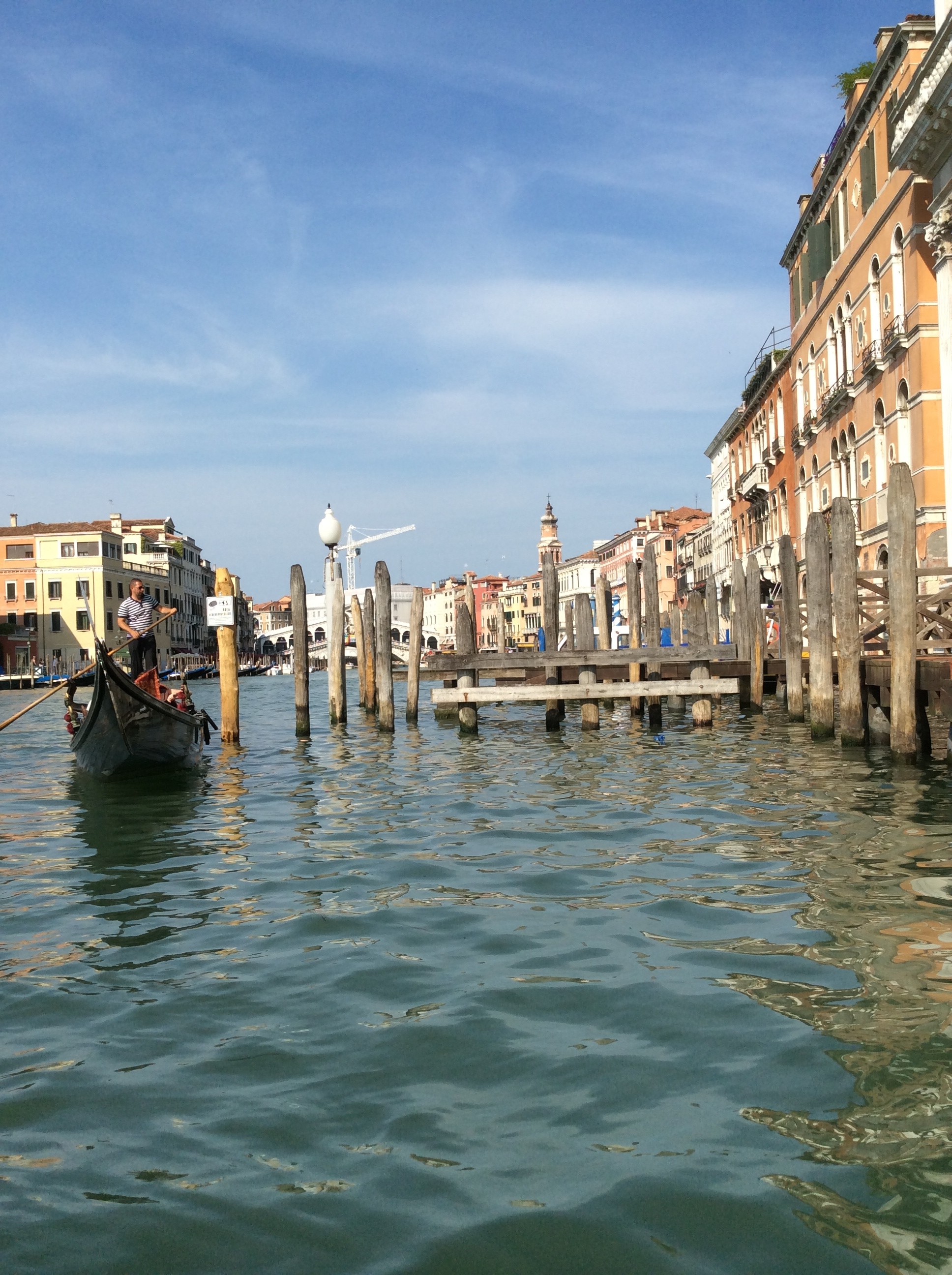
My first week in Italy was filled with both excitement and anxieties. I traveled along with a group of other students from Wiesbaden, Germany to Brescia, Italy. It was an 8 hour long train ride with a stop in Switzerland to check passports and a stop in Milan, Italy to switch trains. However, one of the students realized she had lost her passport once we arrived in Switzerland. It was an excruciating few hours waiting for our passports to be checked and to see what would happen to our friend. Fortunately, it wasn’t until crossing the border and getting close to Milan that our passports were checked by the Italian police. I guess they couldn’t really send her back to Switzerland on Italian soil for not having a passport (because Italy is part of the European Union, there is no need for a passport if you travel between member countries). In the end she was able to cross with us.

Our first day was spent on our own, however, I couldn’t spend it how I wanted it for the first part of the day. It would have been helpful to know that Italian restrooms have the tendency to get stuck, thus locking the occupant in, which happened to me. My prison time in the restroom would not have lasted two hours if I would have been told that a tiny red ball tied to the ceiling was a switch to call for help (which, anyways, would not have worked for someone as short as me to grab and pull). However, the day ended well when I was finally able to jam the door open and was able to get on time to the walking tour of Brescia.

The rest of the week consisted of lectures in the morning and group project meetings in the afternoons. Our main assignment during the whole two weeks in Italy was to prepare a presentation for PratoRosso, an Italian Brewery, on how to use social media to their advantage by offering them recommendations. We had in advance finalized our presentation, but at our client meeting with PratoRosso we realized how wrong we were in our assumption of Italian culture and business. Our recommendations were too advanced and irrelevant at the stage the business was at that moment. During our two weeks in Italy we spent most of the afternoons restructuring our presentations and changing our content. It was truly a real life scenario of how working for an “international” business is more complicated than it seemed.

During the first week we made two site visits to Beretta, an Italian international weapons manufacturer and Ca del Bosco, a Prosecco (champagne) producer. FYI: The Italians take serious offense if you consider Prosecco as champagne (although it obviously is the same in taste and texture, my professors and all the students agreed privately), and according to the Italians, the French stole their idea and renamed it champagne.

The week ended with a team building activity at Lake Iseo and a day trip to Venice. At Lake Iseo we were taught team building through learning how to sail. Sailing in a small boat is truly team work. All members had an assigned task to oversee and execute when the captain (leader) commanded an order. If not all members cooperated, the result was the capsizing the boat. The last section of the team building activity was to get the sail boat back into sailing position if the boat did capsize.

I noticed that the Italians organize their waste according to categories. The food goes to the food waste, the styrofoam and plastic goes in another bin, carton in another, and so forth. However, the Italians are not as enthusiastic as the Germans in regard to recycling bottles. That does not mean they don’t recycle bottles, just that they are not as verbal to foreigners about leaving behind empty water bottles to be recycled. They do, however, have many beautiful water fountains that are safe to drink from, which my be the reason why not many natives purchase water bottles.

IMG_0555 IMG_0565 IMG_0567 IMG_0600 IMG_0604IMG_0653 IMG_0660 IMG_0664 IMG_0666 IMG_0782 IMG_0809 IMG_0709

Faith Restored in Humanity

I thought people in Montana were friendly, but they might be rivaled by the Australians. Everyone is so incredibly friendly here. Back home, we will smile at each other when passing in the street, offer directions if someone looks lost, or occasionally pay for someone’s ice cream at Big Dipper. Here, they go above and beyond any people I’ve met in all my travels.

The people I work with are especially great. They immediately took Myelle and me in, treating us like we’ve been here for years. The players took a little bit more time, but they’re warming up to us pretty quickly. On our very first day, the other trainers offered to drive us back to the train station so we wouldn’t have to take the bus. They’ve continued to do so ever since. One night Lou Lou, one of the physio students, even drove us all the way back to the city.

Our first day we were trying to get to Joondalup, we got horribly lost with the buses. Luckily a girl at the station took an interest in us and helped get us all the way to the arena. She even came on the bus with us to make sure we got there ok even though it wasn’t the bus she needed. A selfless stranger.

A similar thing happened on the train home one night. We kept going out what we thought was the wrong exit (found out a week later it actually was the right one), and a guy we met on the train pointed us in the right direction. We thought it was still the wrong exit, but later figured out it was right. Again, selfless stranger.

The past two nights have been the icing on the cake. Last night, Sam asked if we wanted a ride to the station. Like usual, we accepted. Then she decided she might as well take us to the Edgewater station, which is closer to the city. In the car, she asked if we wanted to come over to meet her two super fluffy huskies. Then we could see what a “real” Australian house is like. Ummm… of course!!!

At Sam’s house we met her gorgeous poofy dogs, during which she asked if we wanted to try Milo, a Nesquick-type mix that we had been talking about at training. We would love to! The Milo was delicious, like a milky type of hot chocolate. While we enjoyed our drinks, Sam and her boyfriend were making dinner. Then she asked if we wanted to join for dinner! Gah! Too nice!

After dinner, on our way out the door, Sam even asked if we wanted to borrow any movies or some of her training books. We happily obliged; her books will be really helpful in the future. On the way to the station, Sam decided to drive us to Warwick instead of Edgewater, which is even closer to the city. When we got there, she even asked if we had money for the train.

Ridiculous! I can’t believe we’ve only known her for three weeks, and Sam is already treating us like we’ve been friends for years. I love it. I feel so at home here and it’s all thanks to people like her and the other trainers.

Today was also pretty great in terms of fantastic people. The Falcons had a bye week; our next game is the Foxtel Cup on Tuesday, then South Freo next Sunday. Instead, today I was the trainer for two amateur teams. First was the colts, and happily we didn’t have any injuries! The other team managed to have one player possibly strain his Achilles, and another knocked out his front tooth. Glad I wasn’t with them.

On a side note, it was so incredibly cold out today. It was raining cats and dogs, and on top of that it was windy. Not a good day to be standing outside as a trainer. I’m pretty sure I had as much water in my shoes as there was on the field.

The second game was for a group called the Thirds. They are older guys, so a lot of strapping was needed. I taped my first shoulder! I was shaking the whole time (maybe that was just because I was freezing). Later in the game, we even had a concussion! It was exciting, minus the player asking the same questions over and over. Stupid memory loss.

Anyway. Back to awesome people. The other girl who was a trainer for the teams today was Jade. She’s my age, and has about the same level of experience as me, so we were both a little freaked out by the huge amount of memory loss of the concussed guy. Jade gave me a ride not only to the second game, but also all the way back to my apartment in the city. Quite the trek. The two players she gave a ride to too were also great and fun to hang out with.

I think we could learn a lot from this sort of behavior. Everyone in America is so wrapped up in their own business that we don’t bother with anyone else. It’s little things like driving someone to the station that build a relationship that will last once the person leaves. It really does make a difference in that person’s life. We just need to start noticing the people around us, and take an interest in them as an actual person, not just what they can do for us.


A Word on Aussies

I decided I would dedicate a post to Aussies. Very interesting people. They speak English, so you would think they wouldn’t be too difficult to understand.

WRONG!

Not only do they have a thick accent that sounds like mumbling a lot of the time, they have different names for things. They shorten all words possible. And they talk really fast. Happily I’ve had some experience with thick accents (Ireland got my brain working on that wavelength) so I’ve been able to pick up the lingo a bit; Myelle… not so much. We’ve kind of just left the talking to me.

First the naming things. Australians are very similar to the English in some ways: they call the car trunk the boot, fries are chips, the TV the tele, soccer cleats are boots, and sweaters and jackets are jumpers. The accent here in Perth is also strongly influenced by the British accent. It’s nothing like what you hear in those Outback Steakhouse commercials. They actually call that a “bogan” accent, which is comparable to our hick accent.

A hard one for us to learn was the difference between an arcade, a mall, and a shopping centre. An arcade is like an alleyway that branches off from a main shopping street with more shops, not a place to play Pac Man. A mall is a large grassy area like a park, not somewhere middle school kids hang out to look cool. And a shopping centre is where you actually do your shopping. I kept wanting to say we were headed to the mall after work, but I really wanted to go to the shopping centre. Myelle also keeps saying fries instead of chips.

Another weird one I’ve found is bell peppers. They don’t call them that here. I found some in the grocery store, but they were labeled capsicans. I thought it was some fancy type of bell pepper. Turns out that’s what they call them here. My head trainer Jess giggled when I said bell pepper.

A big one I had to pick up is the word hey. They don’t use it like we do, or not nearly as much. When they say hey, they actually are asking what, like I didn’t hear you. I could be talking to Jess, and if she didn’t quite hear what I said, she would look up and go “Hey?” I was completely confused by that for the longest time.

A huge thing here is to shorten words. This has been the hardest thing to get over. Australian accents are said to be lazy: they use a slackened jaw, and parse all their words. One of the first places we saw this was at our first footy match last weekend. There was a guy in the crowd that kept yelling “Con West.” Jess explained after the game that it was a shortened version of “Come on West Perth.” Completely different.

They call McDonald’s mackers. Even in the commercials! The Reserves Falcons team are called the ressies. A presentation is a preso. They shorten devastated to devo. They also shorten Australia all the way down to ‘strala. There’s a lot more that I can’t think of right now; might update later on.

It’s been fun getting to learn all the different ways people speak. From Kenya to Ireland to Australia, everyone is so different, yet a little bit the same all at once. I’ve noticed I’ll start slipping into a little bit of an Aussie accent when I’m around a lot of them. Maybe I’ll have a good one by the time I leave! (fingers crossed)


Guten Tag! A week in South-West Germany

One week in Germany seemed to short of a trip to explore its cities, yet it was long enough for me to appreciate the amalgam of both old world features and 21st century characteristics. With a thriving economy and one of the founding members of the European Union, Germany was the perfect place to visit and learn about how businesses thrive in Germany, in comparison with the U.S. Our stay and travels were limited to the south-western part of Germany, staying in Wiesbaden and visiting cities such as Frankfurt, Neckarsulm, Rhineland-Palatinate, Baden-Wurttemberg, and many other small towns in between.      IMG_0158      IMG_0148

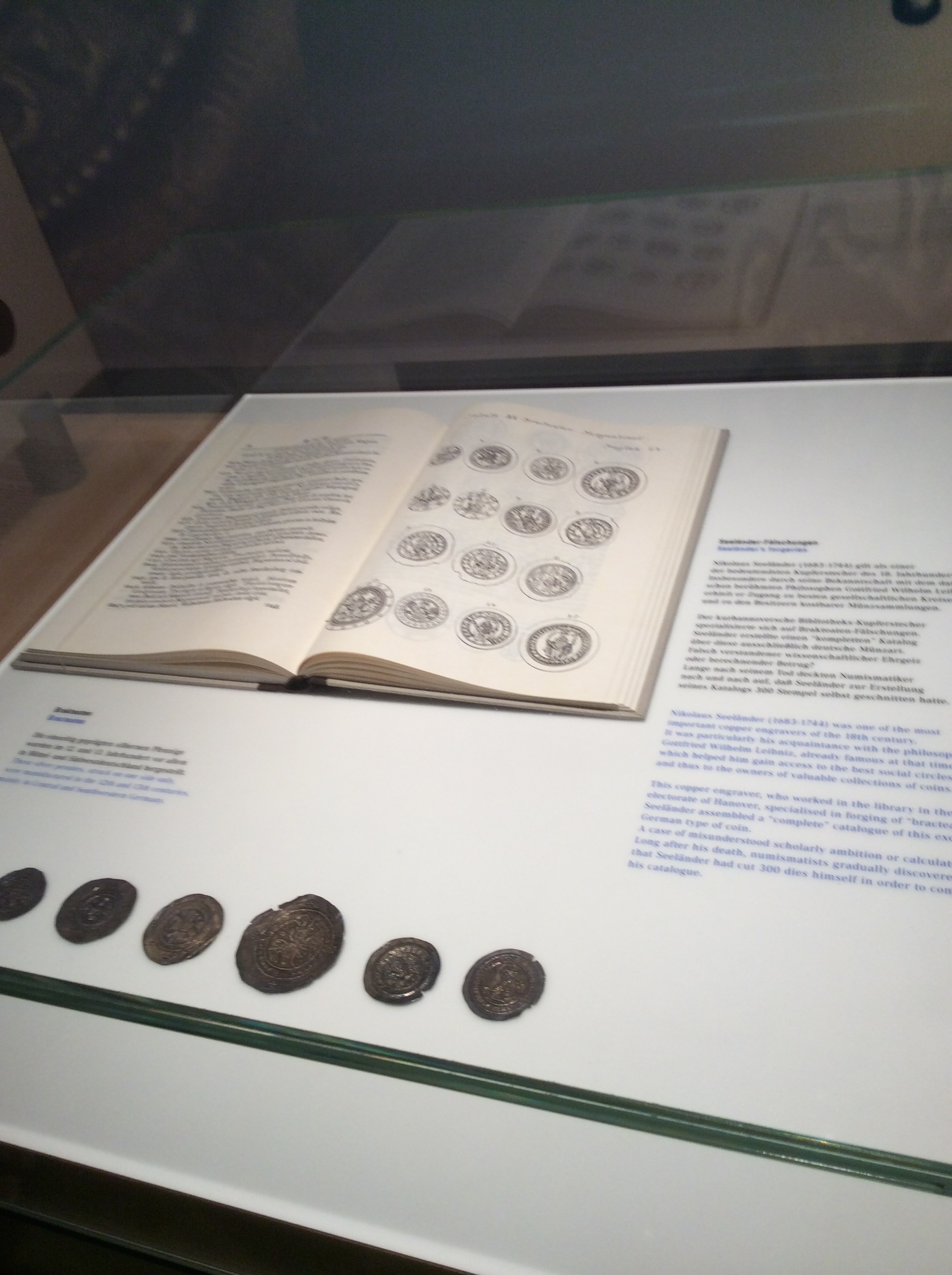
Our host, the EBS Universität Business School, meticulously organized a one week schedule packed with company tours, site visits, lectures taught by German professors, and plenty of travel and sight-seeing in between. Day one was started off with an intense German survival course from 10 am to 1pm, and with less than 30 minutes to eat and hop on the train towards Frankfurt to visit Deutsche Bundesbank, the Central Bank of the Federal Republic of Germany for a speech and a tour of its Money Museum. Afterwards we were able to sight-see most of Frankfurt with our professor as our guide.  IMG_0220            Heidelberg2

Day two started with a one hour bus ride to Neckarsulm to visit the Audi car manufacturer. It was amazing to see how clean and organized the AUDI plant was and how efficient they were in manufacturing these luxury cars in a timely manner. Afterwards we were transferred to Heidelberg for some free time exploring of the castle and town.

Day three was an all lecture day focused on supply chain management methodology used in Germany. We also participated in a “Beer Game” simulation where we played the parts of distributors, wholesalers, manufacturers, and retailers. After an all-day lecture we were treated with dinner at a well-known microbrewery and pub in Eisgrub in Mainz.

IMG_0395       Small Castle     IMG_0467

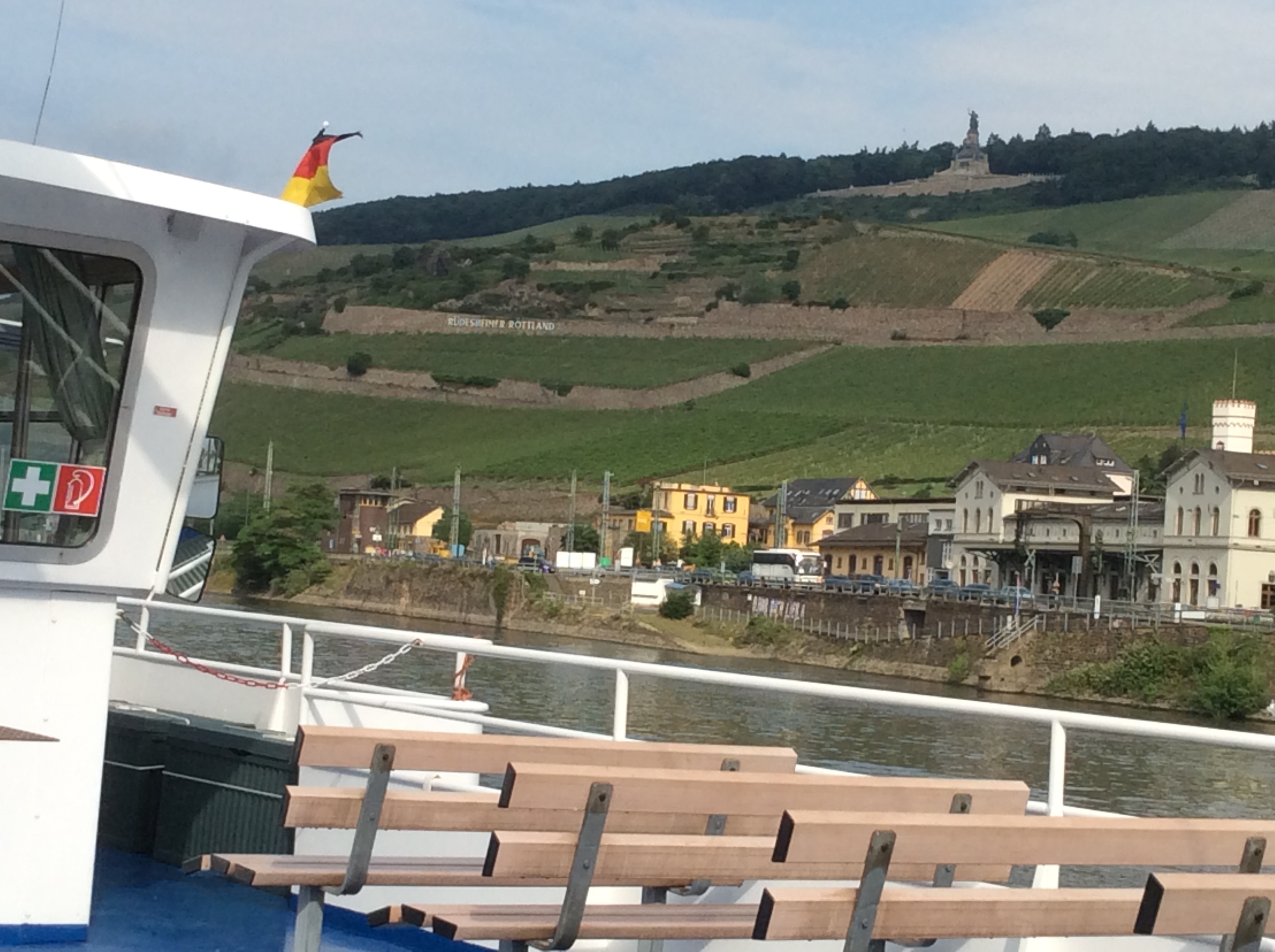
Day four was a public holiday, Christi Himmelfahrt, which according to our professor is the equivalent to the U.S.’s Father’s Day. That day was spent on a Rüdesheim Boat tour that took us sightseeing of all the small castles located along the river. Our last location was hiking to Burg Rheinstein castle for lunch and a tour of the castle.

Day five, the last day, was spent with a half day lecture of Retailing in Europe. Case studies such as Wal-Mart and Euro Disneyland were used as main examples of the troubles U.S. companies have had trying to grow in Europe. Some were not as successful, such as Wal-Mart in Germany, due to various factors that were discussed during class. Lastly the day was spent visiting Eberbach Abbey with a tour of the monetary and wine tasting. The tour was focused on the business aspect of the monetary and how through the centuries it had survived financially, such as being a wine cellar business for the monks to now being a location for wedding or business receptions along with hosting wine tastings.

All in all, this experience was full of activity and a lot of learning of just how different Germany is from the U.S. Cultural differences and different methods of operation were the main focus of this trip, which opened my perspective on international business to a whole different level. I learned that these differences are so important to consider that if disregarded, companies can fail in these international markets due to avoidable ignorance. I also noticed throughout this week that there was not a single empty bottle lying around the streets. The Germans have a thing for recycling both plastic and glass bottles. According to our professor, there is a deposit fee paid for each bottle purchased. So, if businesses want to keep that deposit, they have to return it to their distributor. I am assuming that fee must be high if it gets many to recycle.

IMG_0198     IMG_0125     IMG_0356