The Smaller Details

Back in the comfortable swing of my closest friends and oldest habits, everyday I feel like I lose another memory I promised I would never forget about my time abroad. It is so easy to go on with things and never give a lot of second look back. If I think about my most memorable moments stateside even,  the ones that stick aren’t necessarily the most vivid or intense, just the ones that my friends and I have recounted again and again and set them into a collective story. That’s is one of the ways that this experience is different than life stages of the past. When I arrived in Finland, I didn’t have anyone to remind and be reminded by, all of my stories where just abstract tales, and that’s is exactly what I have now, a bunch of stories filled with textures and sensations I can’t really explain and can’t expect anyone around me know to just intuitively understand.

I tried to explain the time I spent at Varrio Subartic Research Center to a friend recently. I described the night Laura ran inside screaming about the northern lights see caught on her long hike up the snow covered stairs from the lake and the sauna nested on its shore. She didn’t even say ‘northern lights’ just ‘lights’  and ‘now’ and ‘outside’ all while skipping down the log sided hallway from the kitchen to the library. I ran out the front door, which up to that point I never even knew opened, in my loose wool socks and fell knee deep in the snow bank. I pointed up and said, “Wow, they are gorgeous!”, waited a moment and then said, “Ummm.. actually where are they exactly?” The lights were so faint near the cabin that I could hardly make them out. At midnight, we all looked at each other and decided that we had no choice but to bundle up and head to the research tower on the top of the nearest fell. We hiked to the top and climbed the tower stairs. The metal ladders were sticky with frost and we all paused to let each other pass underneath, so as to avoid sprinkling snow down each others necks. It was Laura, who was afraid of heights “a little”, on the 5th floor, and Aleksi on the 6th floor, who watched nervously as I climbed timidly past them to the second floor from the top. We all sat there watching the lights tower over the Russian border (3 km East) as the tower swayed and shook in the cold dry wind. I remember thinking then, I will never forget this. And I never will. I just hope I never lose the smaller details: the dusty smell of the red wool bunk beds and green canvas curtains, the stacks of evening newspapers the station staff cast aside after the  20 year tradition of 4:30 pm sharp dinner, the wordless bond between cook and guest over reindeer jerky aged on the roof for months with “only salt”, that graceful lull around 9pm in the library each night that overcomes a group of busy people set into a breadth of complete stillness, which can take your breath away even in the short amount of time it takes to make it back from the outhouse.

First Days in Finland: Running Backwards

Finlanfd

Early in the morning, I arrived in Finland with bags of expectation, desire, and fear. I didn’t realize it at the time, though, because I made it very, very clear in my head that no matter what I would be at the whims of fate in this new country and that I would have to focus my energy on adaption. I missed my bus connection, so I calmly walked to a nearby gas station and asked the attendant if she could call me a cab and bought some salty licorice. ‘First problem averted, no biggie, I’m doing great’, I thought. Looking back, it’s funny how wisdom can act like a safety blanket, as though if we expect something or call it out it stings a little bit less. This is true, in the long term, but I held this abstract concept of going-with-the-flow like a shield and it turned into a prism in a room of mirrors, compounding every string of worry, loss, and sadness into anxious cycle of ‘holding it together’.

I remember my first week being so so so hard. I had a lot of free time and free space, because I moved in on a holiday into an unfurnished studio apartment. The first few days were great, but this strange tinge started to build, like there was layer of eggshells between my spine and skin. I realized once I arrived how I’d never really been alone before by circumstance, instead of choice, and that feeling was a lot to handle. I knew consciously that it was all OK and that this would pass, but it was the incongruence between the worry that I felt and this peace which I grasped intellectually that pushed me deeper and deeper into panic. Scary thoughts and images would flood in and I would try to blot them out with better ones, thinking, ‘You’re in a brand new country, stop feeling worried, and appreciate this opportunity’. Soon enough, I pushed my body into a kind of numbness and this ambivalent fear engulfed the images of the people I loved and my own future, and terror seemed to follow me everywhere.

I want to write about the lesson I learned from this. I want to call out the silver lining. I want to remind myself why this doesn’t have to happen again in the future. But, I know I’m writing from the edge of the storm. I’m in a lot easier position now, but I won’t always be. If there’s anything Finland has taught me about myself it’s that the storm is what keeps me alive. The wind underneath all the stability we associate with ourselves, family, and circumstance doesn’t have a resolution or harness. Ever. It’s the wind which rubs me raw, and if I’m honest with myself, it’s the only thing which compels me to act. I don’t need to be calm, I don’t need to be confident, I don’t need to be collected. The fuel of life as I see it is a vitality which comes from the rawness of doubt, not the comfort of trust. Again, I wish I could stand by something which I’ve learned here to help me ride this energy with grace and awareness, but the truth is we are all running backwards. You can be mindful of this condition, but it doesn’t help it go away or change the fundamental condition. You can fall or you can jump, but don’t expect either to feel like standing.

Waiting: Observations on the Refugee Crisis

America suffers from a severe case of Macrophobia.

Don’t panic. It’s not fatal, but it does have a huge effect on the way we live our lives. Macrophobia is the fear of waiting. Waiting at Starbucks. Waiting in traffic. Waiting for a table at a restaurant.

“Fear leads to anger. Anger leads to hate. Hate leads to suffering.”

– Yoda, Star Wars Episode II: Attack of the Clones

“Fear” may be an exaggeration of the condition, but Yoda does have a point. What I feel is the majority of Americans equate waiting with suffering. They think, I could be doing this or that, but woe is me I am stuck in this line at Costco. Perhaps it’s our focus on productivity from which this fear stems. It’s not that we hate waiting. We just hate missing out on alternatives. It’s the same thinking that drove the success of overnight shipping, HOV lanes, and the Disneyland FastPass. We put so much effort and so many resources into alleviating our fear.

Now, unless you’ve been living under a rock, you’ve probably heard of the massive refugee crisis happening in Europe right now. This is a crazy time to be studying abroad in Denmark, to see the European nations struggle to control influxes of refugees first-hand and to see the reaction of locals, all while trying to understand the complexities of this crisis.

The Danish government has more or less turned a cold shoulder to the refugees. Even rumors of a Danish anti-refugee campaign have been circulating. However, Denmark’s largest refugee problem is actually the vast number trying to pass through to Sweden. Sweden was the first European country to offer refugees permanent residency and therefore has a welcoming reputation throughout the refugee community. Many have family members already settled in Sweden and are hoping to reunite with them. Not to mention, Sweden is offering asylum to almost five times as many people as Denmark and offers far better social benefits to refugees. But getting there is much easier said than done.

Denmark is considered the bridge between Northern Europe and the Nordic countries, which makes it the best route to Sweden. The Danish-German border has been under increasing pressure to document refugees and back in September stopped vetting them altogether in response to the overwhelming traffic. Since then, the Danish, German, and Swedish governments have developed a vetting system that requires all persons traveling between these countries to present a passport. This may not sound like a big deal to Americans, since we must always show our passports whenever we leave the county, but Europeans pride themselves on the Schengen area’s open borders and are concerned about the travel restrictions imposed by this new policy. It would be like needing a passport to cross from Montana into Idaho; a reasonable frustration.

The relevancy of the crisis to my host country has kept me fascinated enough to pay attention. I’ve read articles and I’ve seen the news, but I am by no means an expert on all the causes and effects of the crisis. My experience with the refugees has been mostly passive, so in my recent travels between Denmark and Sweden I was taken aback by the very real refugees I saw in the train stations and cities.

Just waiting.

The red cross had donations stations set up in both the Copenhagen and Stockholm Central Stations. I managed to snap a picture of the heap of clothes, toys, and food that awaited the refugees that managed to make it to Copenhagen.

Gathered in groups and surrounded by giant IKEA bags full of food and clothes, you would never know how long they’ve been traveling. Unlike the silent stone-cold faces of those hurrying past them, the refugees were talking, laughing, and simply enjoying eachother’s company. For everyone else in the train station waiting was an inconvenience, but to them it looked more like a relief, an opportunity.

Walking out of Stockholm Central Station we made our way through lines and lines of excited refugees, anxiously looking past us in hopes of making eye contact with their newly arrived loved ones. Who knows how long they’ve been waiting. Days, weeks, maybe even months.

The journey is still long for those waiting across Europe; their losses are immeasurable. Each refugee carries a different story. Some traveled by boat, by car, by foot, by train. Some have even seen their loved ones perish. Some are alone. Some are young, some are old, some are somewhere in between, but they are all survivors of horror. Of true fear. Of experiences we Americans cannot fathom. When our biggest frustrations stem from long lines at Costco.

If anyone is so desperate to escape anything that they are willing to risk their lives in inflatable boats, walk hundreds of miles through unfamiliar countryside, and wait for days at train stations and borders, then they have my full and unconditional support. Waiting can be hard, but leaving everything you know and risking your life is harder.

Appreciate the moments you have to rest. Appreciate the moments you have to reflect and to take in your surroundings. If you’re sitting in traffic, turn on the radio, listen to some new music. Call your family, tell them you love them. Do something nice for someone. Waiting gives us a chance to do all the thing we sometimes forget to do in our busy lives.

Just don’t forget, we are all human.

xx

To read more about my experiences, check out my personal blog: www.tessatakesatrip.wordpress.com


Winding Down

My partner and I have made some headway with our program, but it is true that we are very much in the preliminary stages of development. The PowerPoint has helped with guiding the transfer from draft to reality, but the programming aspect of this project is certainly the most challenging. Professor Laskin has been out of town for the past several weeks tending to a family member, something we needed to consider whilst attempting to contact him and establish meeting times.

Although meetings were sporadic and e-mail communication was not very frequent, my partner and I have been able to reach out for some extra materials we felt we needed. This included a copy of the preliminary research Professor Laskin conducted, the basis for our application creation. This would include several equations we required in order to establish a working fitness calculation.

Another aspect we sought out was the disability categories if you will. Each patient who will make use of our product must select a category or degree paralysis. This designation will allow for the program to account for this input information and tailor the fitness result to the patient. For example, someone who is paralyzed just below the waist may be able to exert greater force when conducting the fitness test than someone who is paralyzed just below the ribs.

Professor Laskin, despite his travels has been keeping in contact with my partner concerning these elements, and they have been critical in our development of the application.

Those in healthcare frequently complain of issues concerning patient records. My partner and I have deliberated whether we view our product as a home use program or one that can be used within a greater medical setting. This will dictate how the database of the program will be created. For instance, if one individual is using the app on his/her phone for self-monitoring and improvement, then a large database accessible by others through cloud technology or other servers may not be necessary. Yet if we believe that this app can be applied in a greater clinical setting, then a larger database is required. This step may not seem critical within the grand scheme of development, but in fact it is perhaps the most pivotal decision to make going forward. Establishing the database will dictate the workability of the application as well as determine several menu options that I have already integrated into several flow charts.

Let’s say a caretaker needs to view the results of a fitness test of patient A from three months ago. That data should be accessible to the professional for such cases. On top of that, he/she should be able to conduct such actions for his/her entire clientele. Where does our decision fall in this? If we don’t establish a compatible server, then we limit ourselves to the home-use of this application. It means that only one profile can be created within the application, and only one user will be able to view the history of his/her fitness progression.

As the semester looms and coursework finds its way back into our lives, we will be able to make more time to meet with Professor Laskin and Professor Cassens over the next several weeks to determine the best course of action. The programming aspect of the project is still the largest component to tackle, and we believe that comfort with the language will result in more advancement. This process has made it clear that although we have a design and layout, the usability of it may be determined by the simple decision to either use the application on a large scale, or bring the program to the individual devices of those who seek its services.

Personally, I hope to establish a larger usage for our product. I want it be something that healthcare providers, coaches, and individuals alike can use. But in order to have the greatest spectrum of audiences, it must be able to support just that.

On to the next semester.

Moving Forward

The past couple of weeks have been spent reviewing the necessary steps to take in order to get our app up and running. What is the best layout? What does each slide need to contain in order to flow for the user? In order to better understand the product we are designing, my partner and I have connected with Professor Laskin with our rough draft.

Now, the rough draft design was in my hands. I understood that a flow chart of some sort would be most beneficial in this scenario, but what medium would be most effective? I decided to start up a PowerPoint presentation, as this allowed me to flick through slides in a fashion similar to its presentation on an Android device. The menu would be the first panel the viewer interfaces with, and each button within this menu would have separate maps leading to unique user options. This experience has taught me how to think in a linear fashion, a mind frame that would most closely align with that of the user. Our previous meetings with Professor Laskin and Professor Cassens provided me with a framework to build within, so I ensured that the essential options were included and accounted for (ie. sound preferences, language compatibility, large buttons, timers, patient menus and user information input options).

It was now time to present this rough draft to Professor Laskin. I presented the slides in a fashion similarly to how a user might encounter the application. Any number of user scenarios were presented to Laskin in order to demonstrate the workability of the design. Of course, like any larger endeavor, revisions needed to be made fairly quickly. Some of the layout options needed to be changed, and Professor Laskin noted several aspects that he wished to be included in the next iteration of the presentation. This primarily included slide flow. What panel would come next after pressing this button? What pops up here after this task has been completed? The difficult aspect of working on a computer rather than on the intended device is that it becomes more difficult to convey the true nature of the operations of my design. But that was a minor obstacle that was simply inevitable.

In the meantime my partner considered the design options from a programming point of view. Sometimes ideas on paper, much like any concept, are easier proposed than completed. Not to mention that the coding language was still somewhat foreign. The platform on her laptop did not run smoothly the past several days, so any advancement was simply in the knowledge of how to complete certain tasks if presented with the opportunity. For now, my design would be limited to the PowerPoint. From there, I have already made several improvements and ensured that the final copy was sent to both Laskin and my partner. I’m sure that once the technical aspects of the programming are taken care of, great headway can be made in initiating the first set of panel coding. It does turn out that the program my partner is using is frequently used by application designers worldwide. Information concerning anything from troubleshooting to the creation of text boxes on action buttons could easily be found on YouTube.

I have somewhat lost sight of the end goal as we get bogged down by an overwhelming amount of minute details that need to be taken care of. The task is great, but at times I lose sight of its purpose. Dedication is key, but is certainly something more difficult to come by during the great summer months. Yet I am positive that with some more structure and headway in the realm of coding/programming, we can develop our Beta for UMove.

UMove

Physical Therapy is a field that enables individuals to attain an improved state of being by way of physical activity, manipulation and development. My partner and I have paired up to achieve just that, but for individuals who are wheelchair-bound. Towards the end of the Spring semester, Professor James Laskin from the Physical Therapy Department sought out assistance with the development of a mobile application that would allow wheelchair users to track their fitness enhancement  and maintenance. What demographic? Almost any. Professor Laskin has worked with wheelchair athletes in his colorful past, and noticed a great need for applications we are currently developing.

Wheelchair users are frequently deemed handicapped and severely impaired. Although medical conditions or a prior accident may have caused their current states, it most certainly does not mean that physical fitness should and will suffer. Those capable and inspired enough to pursue a healthy lifestyle can certainly do so, within the realm of their realistic fitness capacity/potential. Those who are so inclined require methods of measurement and comparison in order to observe and track their progress. The purpose of our application is to allow wheelchair users to calculate their fitness level after conducting a standardized track test. The individual will push him/herself around a regulation size court (be it basketball, tennis, volleyball, track, soccer field) to the beat of a metronome for five fully sustained minutes. As the test concludes, a fitness score will be displayed. This score is determined by a combination of the severity of the patients’ disability level as well as the distance covered in the allotted test time.

Initially such a task does seem overwhelming, and initial meetings with Professor Laskin and Computer Science professor Mr. Cassens have proven that the programming involved and considerations that must be dealt with are not simple. First of all, the Android coding language must be mastered. The design must be applicable to a handheld device. Layouts must flow and panels should contain all the vital information necessary to make the product as user-friendly as possible. But the best approach may be to get things down on paper first.

The initial step of development is simple brainstorming, and that is exactly what our team has done. Professor Laskin has provided us with a list of essential requirements that should be found within the application in some form. It was then up to us to determine how best to integrate the elements. So we’ll head to the drawing board soon and determine what we want in and what is out.

We have been given the research that Laskin has conducted several years ago, and the information has helped us realize that the work we are attempting to accomplish will certainly serve our target population well. But it also has given us a framework to work within. It establishes the necessary components we must incorporate within the program, and facilitates our knowledge of the population we serve. The various levels of ‘disability’ are distinctly classified, an area of expertise we would have lacked without Laskin’s contribution and prior initiative.

My partner and I have everything we need and the guidance exists to support us throughout the summer. Our scholarships will be used to purchase coding textbooks and new equipment that can handle the computing power required to run design applications. We look forward to the challenges ahead and the necessary collaboration necessary to tackle such a large task. Our project will be on display (hopefully) in April of 2016 in Tacoma, where we hope our work will be accepted by those who the product is meant to assist.

Thank God for Polish Families and Spanish Grandmas

I made it to Malaga, Spain and my next move was to get to Granada where I would be living for the next six months. After spending the night in Malaga because my plane got in so late, I was trying to figure out how to get a city bus to the main bus station to get another bus to Granada. After eating breakfast with a nice Polish family who spoke perfect English and telling them I had to cross the highway with two suitcases to get to the bus stop, they were kind enough to offer me a ride. After they dropped me off I knew I would be speaking Spanish from there on out and that I was on my own until I got to Granada where a lady named Vickie, also from the University of Montana, was going to meet me. After talking to the bus driver (in Spanish) and him not responding to me and just shrugging his shoulders, I thought to myself maybe it would just be obvious where I needed to get off. At one point I saw a bunch of bus stops and what looked like to be a city center so I got off. I ask some different people at newsstands where I could find a bus to Granada and they all told me I was in the wrong place. When I asked what bus I could take to get to the main bus station most people ignored me or just didn’t say anything. I felt invisible but stood out like a sore thumb. I was wearing a white Nike hat, a sweatshirt, black yoga pants, and sneakers that day with a backpack and two suitcases; apparently looking like a complete tourist and speaking Spanish with a semi American accent wasn’t working in my favor. I started crying in the middle of this “city center” already feeling defeated my very first day in Spain. Then not too long after this little old lady came up to me and asked me if I needed help. After I told her where I needed to go, she grabbed one of my suitcases grabbed my arm and we headed onto a bus. She rode all the way with me to the real city center of Malaga, got off the bus with me and pointed to exactly where I needed to go to get a bus to Granada. She told me she had a granddaughter and hoped someone would do the same for her if she were ever in this kind of situation. I thank her and grabbed a bus to Granada. I showed up without having a place to live and without knowing anyone except Vickie. Vickie helped me find a place to live after a week, showed me the bus routes, the city, and all the things I needed to know before starting school in February. I realized at this point that even though self-reliance was so important to me on my trip, I needed others along the way to guide me and help me. I wanted complete independence when moving to Spain but without the few connections I made with Vickie, my Russian roommate Elina, my Mexican American friend Crystal, and my German friend Christina, I would have been even more lost and alone than I already was at times.11042946_10205957188916391_5328061108517214668_n

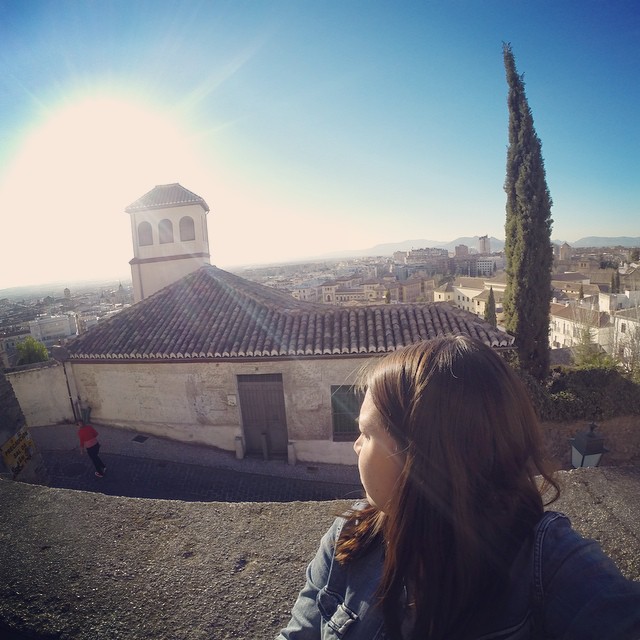
One of my first weeks in Granada in the Albayzín district

I Wonder What it’s Going to Be Like…

Writing about my experiences abroad has proven to be far more challenging than I thought. I keep typing then deleting my thoughts, and I have had trouble reflecting on some of my thoughts and emotions since I have been back in Montana. My experience studying abroad in Spain for 6 months contained some of the highest of highs, and the lowest of lows of my life thus far. When I first started applying to study abroad programs I thought I was completely ready. I had already been to Spain 3 times (twice with my grandma to visit family when I was little, and once with my Spanish class in high school) and had a good amount of other travels underneath my belt. Once I bought my one way ticket to Iceland though and then another one-way from Iceland to Spain, I had a melt-down. This was about 2 months before I left in January of 2015. I was sad to be leaving my friends and family let alone my comfort zone behind for 6 months. I felt vulnerable and felt so much anxiety I went to Curry Health Center to talk to a doctor. I talked to Dr. Bell and told him I wanted anxiety medication in case I had an anxiety attack while abroad. Dr. Bell told me medicine wasn’t going to solve what I was going through, and that it was okay to feel the way I was feeling. He told me I had to think to myself “I wonder what it’s going to be like…” and be okay with the unknown and not have too many expectations set in place. After that I really started working on myself and now realize my journey began before I even left for Europe.

10933725_10202654747564585_1281919664537699959_n

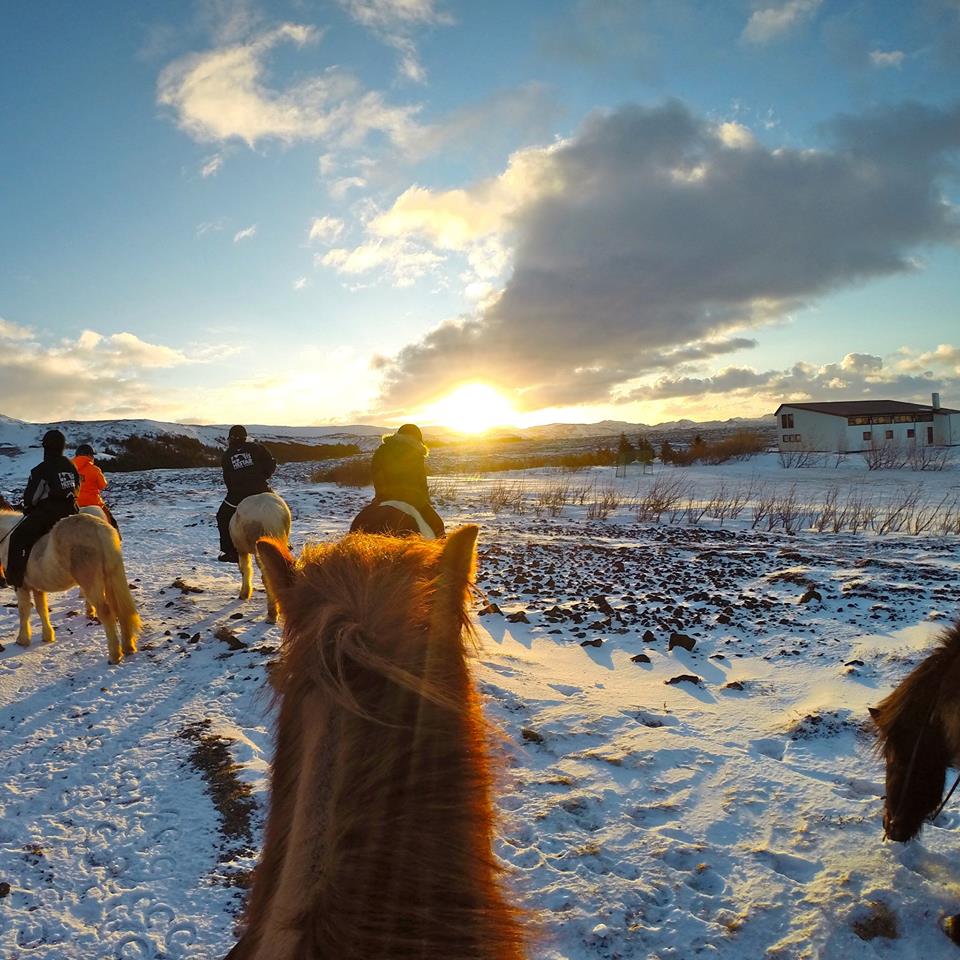
Iceland was my first stop on my adventures. It was my first time doing solo travel. I really wanted to push myself and get out of my comfort zone when starting my trip. I think I wanted to prove to myself that I didn’t need anyone and that I was self-reliant. I decided to couch surf and stay in Iceland for four days. Couch surfing is a website you can join to stay at other people’s homes while traveling, host people, or meet up with other travelers all for free. I completely got out of my comfort zone by couch surfing for the first time alone and stayed with a man named Petur, and his little boy named Snori. It was a humbling experience to have someone let you into their home and host you as a traveler. Petur drove me into the center of Reykjavik everyday on his way to work, gave me a house key, and even took me outside of the city one night where we tried to chase down the northern lights. It really opened my heart seeing the kindness of people and how much more an experience means seeing somewhere new from a local’s perspective. Iceland was honestly a magical time for me and made me feel like I could do anything. It was a little lonely to experience such a beautiful place by myself and not to have anyone to really share those memories with, but it was the solo trip I wanted. My favorite day was when I did a horseback riding tour and rode an Icelandic Pony named Garpur. I was with a good, kind group of people and felt really alive that day. After a blissful time in Iceland, I was off to my big move to Spain where I immediately received my first dose of reality.

10968360_10205694940040333_7490366189769590867_n

“Mexican” isn’t a Dirty Word

When I first approached my family and friends about traveling to Mexico most thought I was basically asking for a death sentence.


Danielle, what about the drug cartels?

I heard they kill babies to smuggle drugs across the border.

The news said Americans are targets.

The U.S. Embassy has travel warnings in Mexico due to violence.

Even the police are corrupt in Mexico, no one is there to protect you.

Do they even have internet?

Why do you think they all want to come to America? Because Mexico is a mess.

Why do you want to go to “real” Mexico? Just go to Cabo or something.


All of these concerns were voiced at some point leading up to my departure. In all honesty, some of these concerns are very much a reality. However, the entire country of Mexico does not deserve general stereotypes as different parts bring different political and social environments. I stayed in the state of Michoacan, supposedly the most dangerous state in Mexico; what most like to refer to as “hot country”. In reality, the city I lived in was extremely tranquil and safe. Yes, there were certain regions of the state I was strongly advised not to travel to, but it isn’t dangerous in every inch of the state. 

One of the best parts of my experience was being able to breakdown the stereotypes people back in the U.S. (and even I) believed about the Mexican people. Many Americans are not aware or don’t want to think it, but they live very much like us. Mexico has a growing middle class and their cities are filled with stores, theaters, the movies, designer shopping and restaurants. I saw more McDonalds than I could count, Walmart, Applebees, Olive Garden, and Chili’s (an American Mexican restaurant).They drive BMWs, Mercedes, and are often very well dressed. To say everyone in Mexico lives this way is ignorant, of course. Mexico still has about 55 million people living on less than 99 cents per day. There are still many poor areas in the country with little economic opportunity. But Mexico is not by any means uncivilized, chaotic, and undeveloped. People are not begging for money everywhere you go. They have structure and order, even if many distrust the government.

Sadly, I cannot even count the number of times I have heard someone in the United States use Mexican as an insult. They are extremely hardworking people, and strong beyond belief. They are generous, friendly, passionate and extremely kind people. I would go back in a heartbeat.


Strong Women and the Justice System

My host mother is an amazing person. What makes all of her accomplishments even more impressive is the obstacles she had to overcome to get there. She became pregnant at age 20, but continued to work her way through college. She worked full time, was a full time law student, all the while being a single parent with NO financial help from her family members or her child’s father. Is there another word to describe that other than amazing?

She graduated with a law degree and went to work for the government in Mexico City.

*It is important to note that the Mexican judicial system does not include a jury to help decide the fate of the accused; it is the judge’s decision. Also, in Mexico, you are guilty until you can prove your innocence; the opposite of the United States. This causes issues for obvious reasons. After talking to many people about the system, most believe this system hurts the poor and helps the rich. The wealthy mexicans can simply pay off the judge or police officers to avoid trouble, but the poor cannot often do so. Then, the poor cannot afford proper representation to prove their innocence so they may spend years in jail for petty offenses.

Back to my host mom. One day she was writing a guilty verdict of a man who murdered someone, all of the evidence proved so. However, the day before the hearing she watched the accused walk into the judge’s office with his attorney. He walked out smiling thirty minutes later. The judge told her to change his conviction to innocent. When she refused to change the verdict, she had to flee the region for her and her daughter’s safety. She stopped practicing law and became an accountant and a Spanish/English teacher instead.

Samantha became a lawyer in hopes of helping people, but the current judicial system in Mexico challenges any attorney’s ability to do so. Luckily, Mexico has been working on a series of judicial reforms to be completed and implemented by 2016. I took a Politics of Mexico class while I was living abroad, and we spent a lot of time focusing on the Mexican judicial system.

As a hopeful law student, the stories I listened to surrounding the system were frustrating, but they reminded me why I want to enter the discipline; to help people. The American judicial system is by no means perfect either, but we do have certain freedoms and rights many other countries do not in our system.

IMG_2309


Another strong woman that I had the opportunity to meet while I was in Mexico was my Spanish teacher Alicia. Alicia was hands down the most positive person I have ever met in my life. She was constantly smiling and laughing and worked really hard to challenge my language skills. As I got to know Alicia better I found out more about some of the amazing things she has done. Alicia was raised in an indigenous village a few minutes outside of Patzcuaro. When she was about to enter high school, she had to work to get the elders in her community to let her go to high school. After months of meetings and hard work, she was able to get them to agree. Alicia went to Patzcuaro for high school, being the first girl from her community to do so. After high school, she knew that she wanted to go to the university. She fought for seven years for permission from her community to do so. Her husband helped fight for her right to go too. Eventually they let her, and she has since become a teacher. She has three children and is married. On top of all of that, she has also started a small loan program in her community that gives money to women who need assistance or want to start a business. However, it is common in Mexico that the husband does not work a steady job, and that the wife does. Women are still expected to do all of the cleaning and cooking too. With all of the things Alicia had to overcome, and how hard she fought to get where she is, it is hard to argue against the fact that Alicia is one strong woman.

IMG_1478