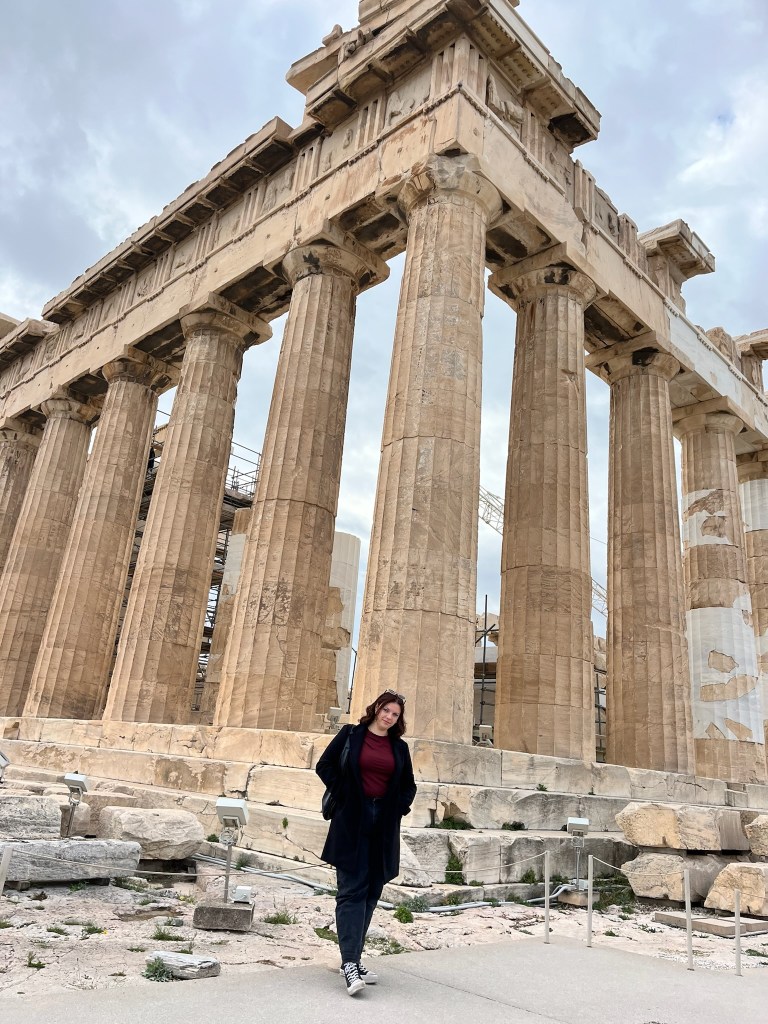
My name is Sophie, and I was able to study abroad in Athens, Greece at the American College of Greece last year.
While I was there I was able to look into my GLI theme of culture and politics and my global challenge of public access to the arts. Ancient Greece was a space of access, specifically when it came to theater. Theaters were open air and accessible from the ground. Examples of ancient architecture and artistry were displayed in every metro station. Access to historical and archeological sites as well as museums are free to the public every Sunday during the ‘off season,’ and the Greek people are incredibly proud of their history and heritage and are proud to show it. The United States has a different perspective. Most museums are ticketed, with ticket prices ranging in the $20s on average, and most theatrical performances are the same.
Now, one thing that I am very passionate about is bringing about a return of classical theater pieces. Plays from Sophocles, Euripides, Aristophanes, and more. I think that theater has always been political, and frequently been used as a tool to display the wrongdoings of a society in an effort to change people’s views. I think that bringing these back into the sphere of modern society would be incredibly beneficial and even modern retellings and reimaginings could do great things.
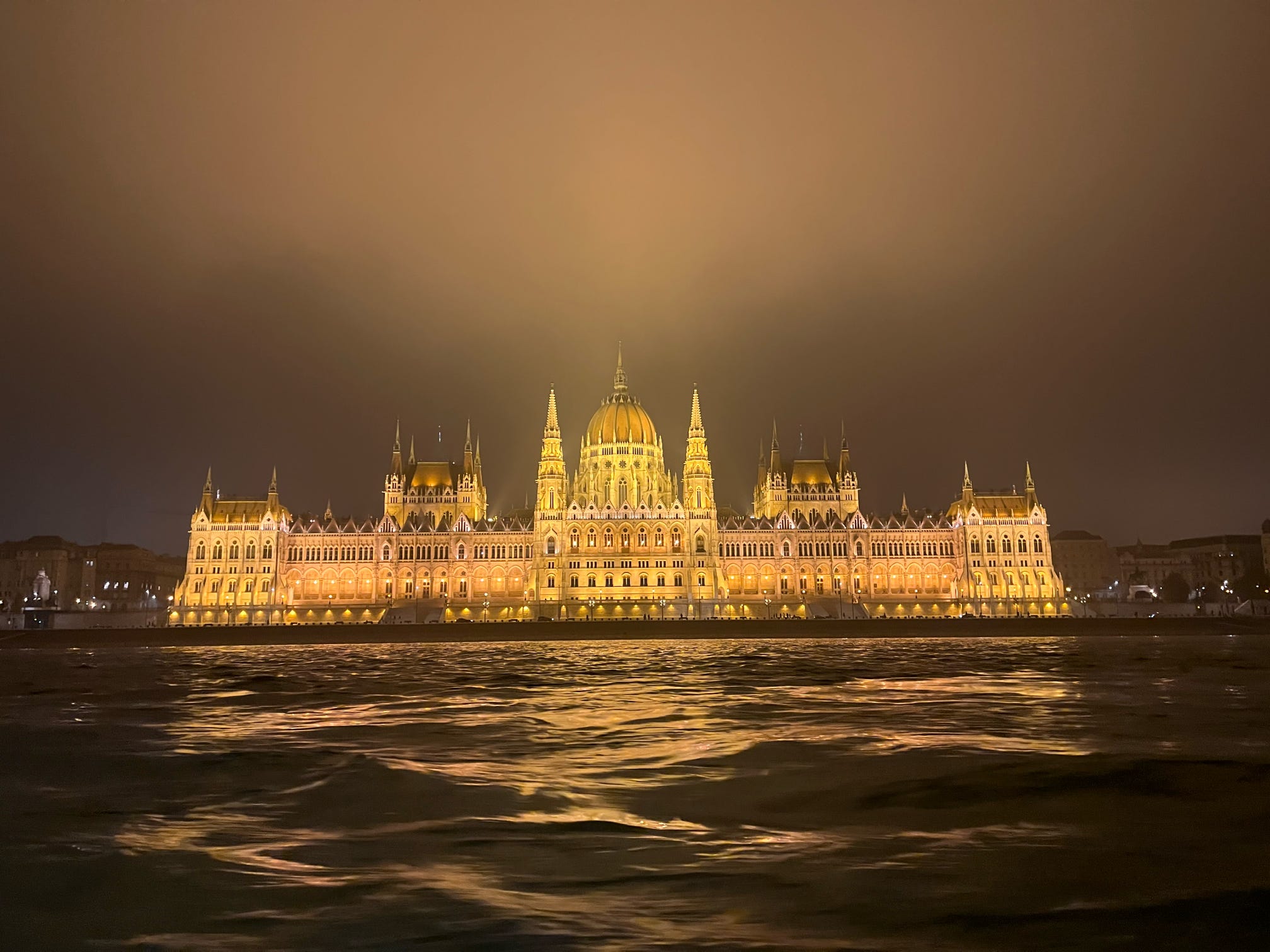
I think one of the things I will remember most from my time are my roommates. I had 9 roommates, which was a huge jump from 1. But they quickly became my friends and I still talk to the few who became some of my best friends. We did everything together. Every grocery run, every vacation or weekend away. One of my most memorable experiences was actually not in Athens itself, but on a long weekend to Budapest. It was a city and people that I quickly fell in love with and already have plans to return to.
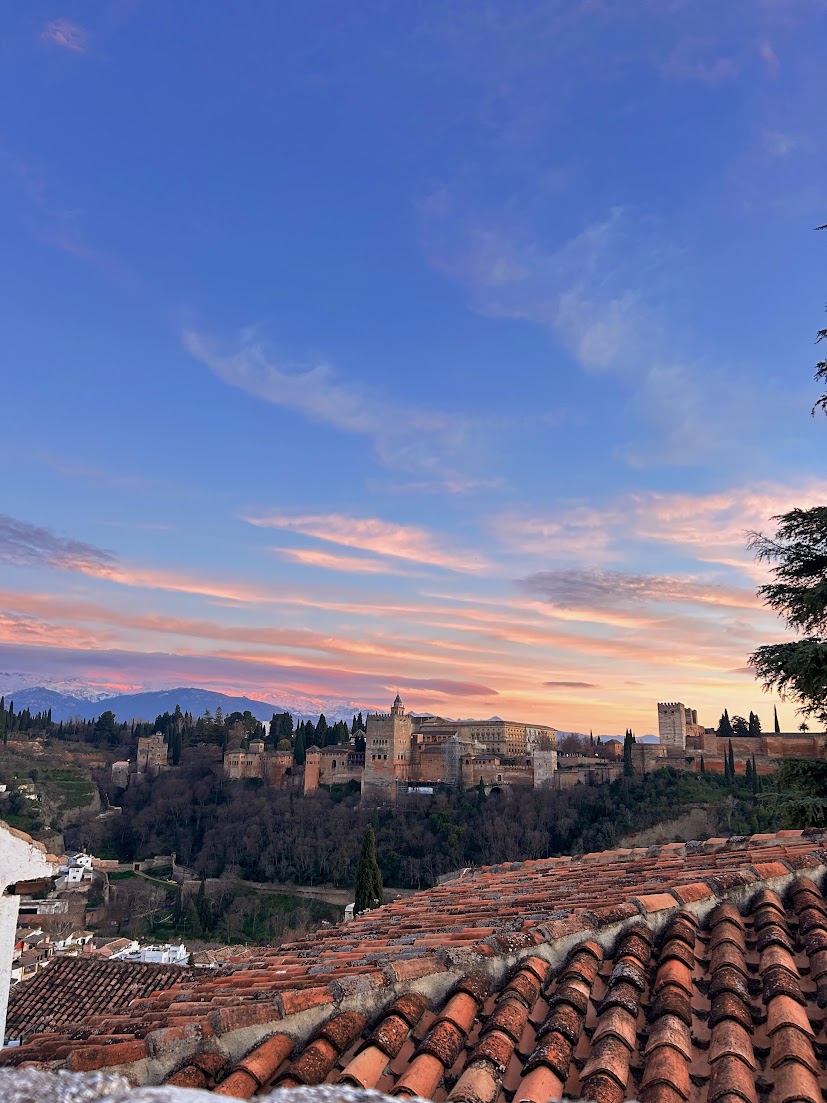
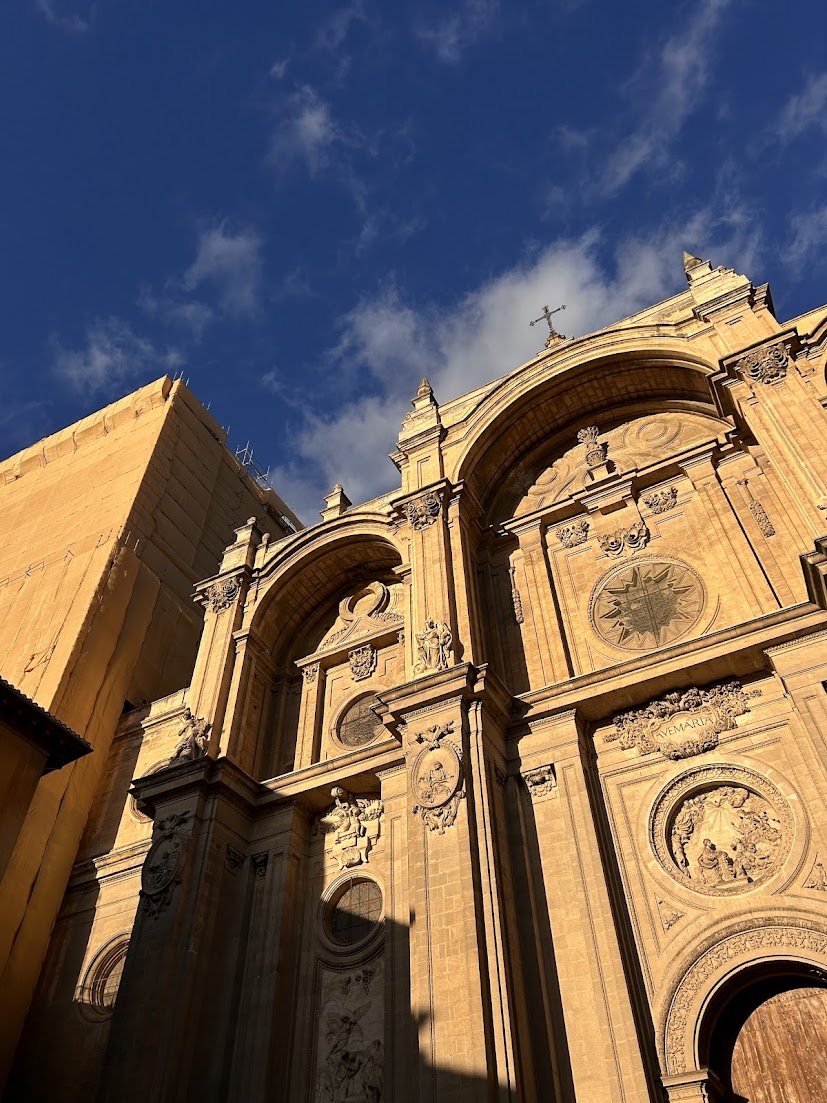
The Alhambra at sunset — a Moorish palace and fortress overlooking Granada.
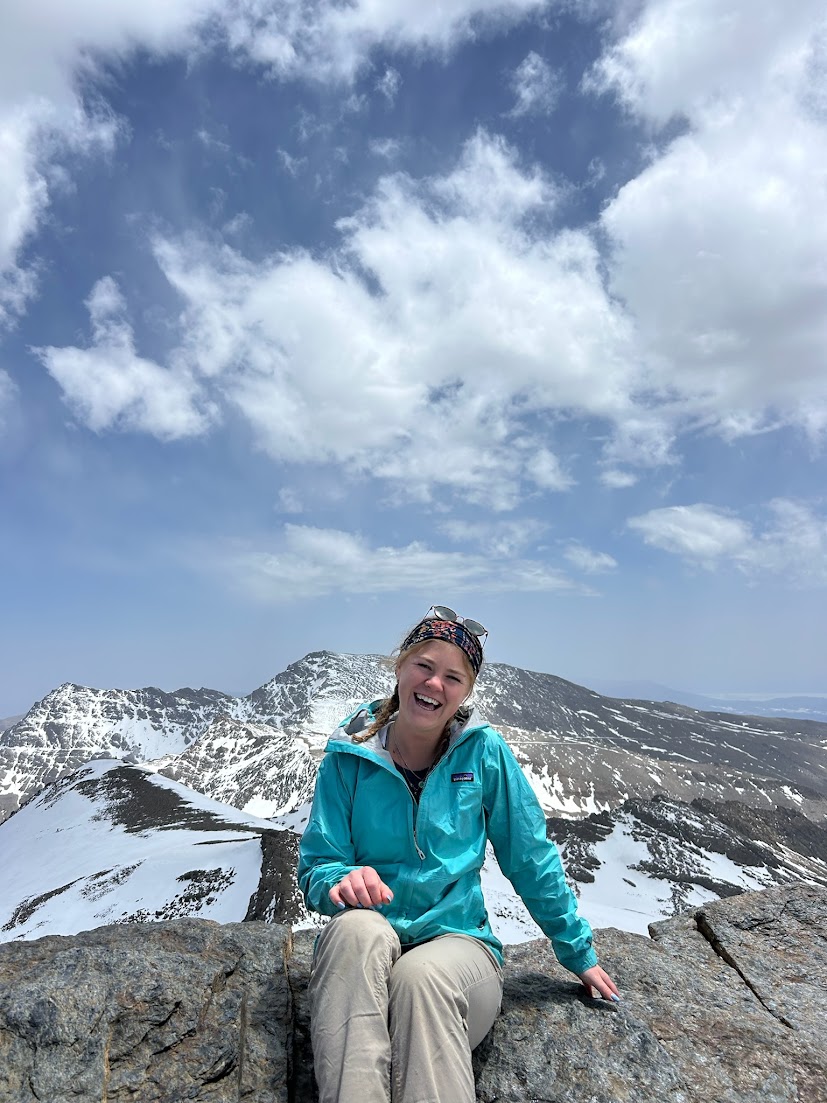
Hi, my name is Katie LaBuda and I had the opportunity to live and study in Granada, Spain! Granada is a beautiful, colorful, and lively city in southern Spain, part of the autonomous community of Andalusia. The city is nestled in the Sierra Nevada Mountains, something that immediately caught my attention. I study environmental science here at the University of Montana and I initially chose Granada because I loved the idea of being in a city surrounded by nature. The Sierra Nevada even has a ski resort where, from the top, you can see the ocean. Meaning that you can ski and swim in the Mediterranean on the same day. One weekend, I did exactly that — climbing a snowy peak in bitter winds on Saturday, and then less than 24 hours later, spending a Sunday relaxing with my host family on the sunny beaches of southern Spain!
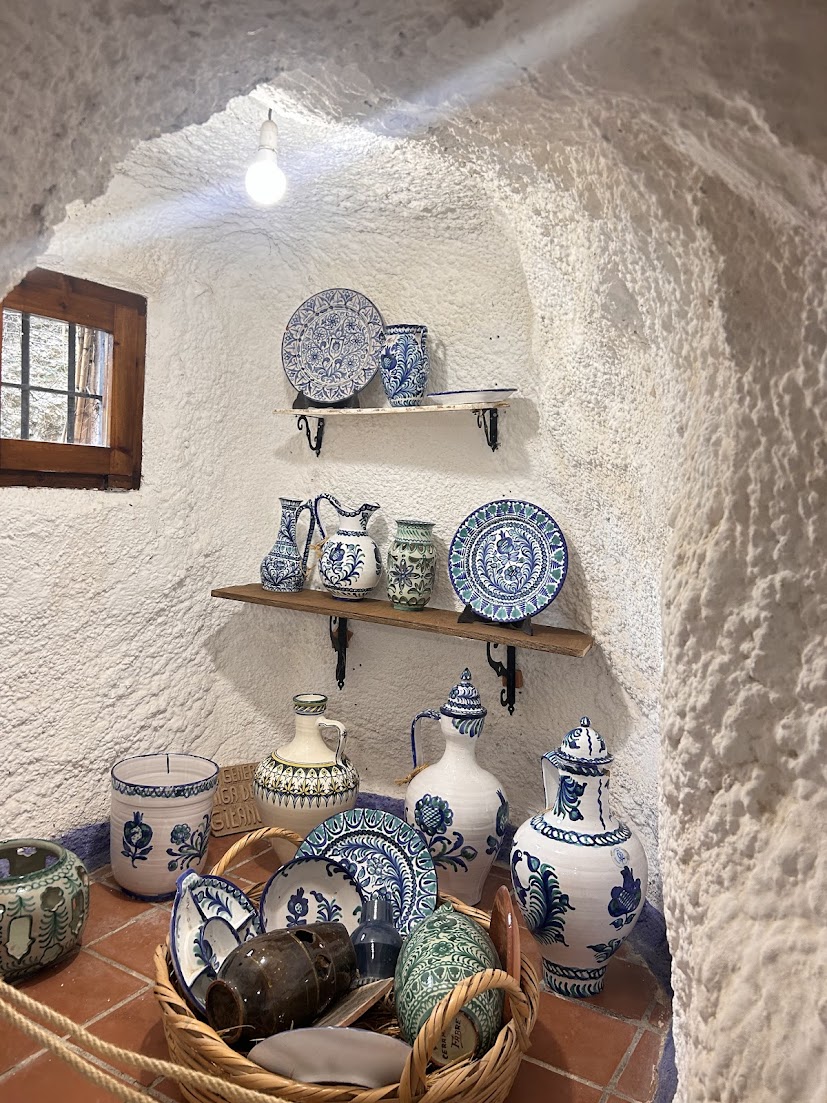
At first, it was the outdoors that drew me to Granada, but in the end, it’s the culture, traditions, and people of Andalusia that I’ll remember forever. They created the perfect atmosphere for me to dive into my global theme of culture and politics. Granada itself is full of vibrant culture. There was flamenco music and dance constantly filling the tiny quarters of the historic city sections. Art and intricate ceramic tiles filled homes and public spaces. Meals were a time to enjoy with friends and family, spanning for hours on end. It was a place where individuals truly took their time to live and enjoy.
In addition to general culture, I specifically wanted to learn more about the Spanish language and dialects within the country. Learning a new language has been a dream of mine for as long as I can remember. So to prepare for this incredible experience I minored in Spanish here in Montana so that in Granada I could be fully immersed. I took all my courses in Spanish and opted into living with a host family, one of the best decisions I’ve ever made. I had the goal of not only studying Spanish but living it. Through this, I was surrounded daily by the food, music and conversations that locals actually enjoy. On the flip side, I also got a real insight into the economical and political struggles that the country faces. I watched the news daily with my host mom and our conversations forced me to consider new perspectives and ideas.
As for my global challenge, I focused on how dialects are changing within our modern world. While I still have so much to learn about this topic, I was able to hear many different dialects and accents throughout Spain as I traveled the country. Adjusting to each person’s accent was one of the most difficult yet rewarding parts of my time abroad. My host dad, for example, spoke with a very thick Andalusian accent, which I struggled to understand for much of my stay. Those conversations led to plenty of awkward moments, but just as many laughs. In addition, I took a course that explored the dialects of Spanish around the world, which gave me a deeper understanding of how and why regions within Spain speak so differently, even while sharing the same language.
This experience helped me grow not only as a student, but also as a person and a leader. I immersed myself in a completely new environment where nothing felt familiar, and instead of shying away, I leaned into the discomfort. As a result, I gained greater confidence in myself and in my ability to navigate the unknown. Now that I am back in a familiar environment, I feel optimistic and prepared to face any personal or professional challenges that come my way. I also know this will not be the last time I travel abroad, and for that, I am deeply grateful to GLI and to this life-changing experience.
Hello! I am Sarah, I am pursuing a BS in Environmental Science and Sustainability with a double major in Parks, Tourism, and Recreation Management. For my beyond the classroom experience I chose to do a semester abroad in Valparaíso, Chile in the spring of 2025. My main goal for going abroad was to focus on my global theme of Resources and Sustainability and my global challenge of wondering how do we preserve cultural values while also focusing on sustainable development.
I found that my global challenge related to my experience because Chile is still a developing country. While it has strong infrastructure and a growing economy, they have a prime opportunity for sustainable development, but Chile also has indigenous populations that have slowly being losing their cultural identity and values since the 1880’s.
While in Chile I took 2 courses that related to my global challenge. One class was on Cross Cultural Interactions with the Mapuche People (One of the indigenous groups in Chile), the other was Sustainability in Latin America.
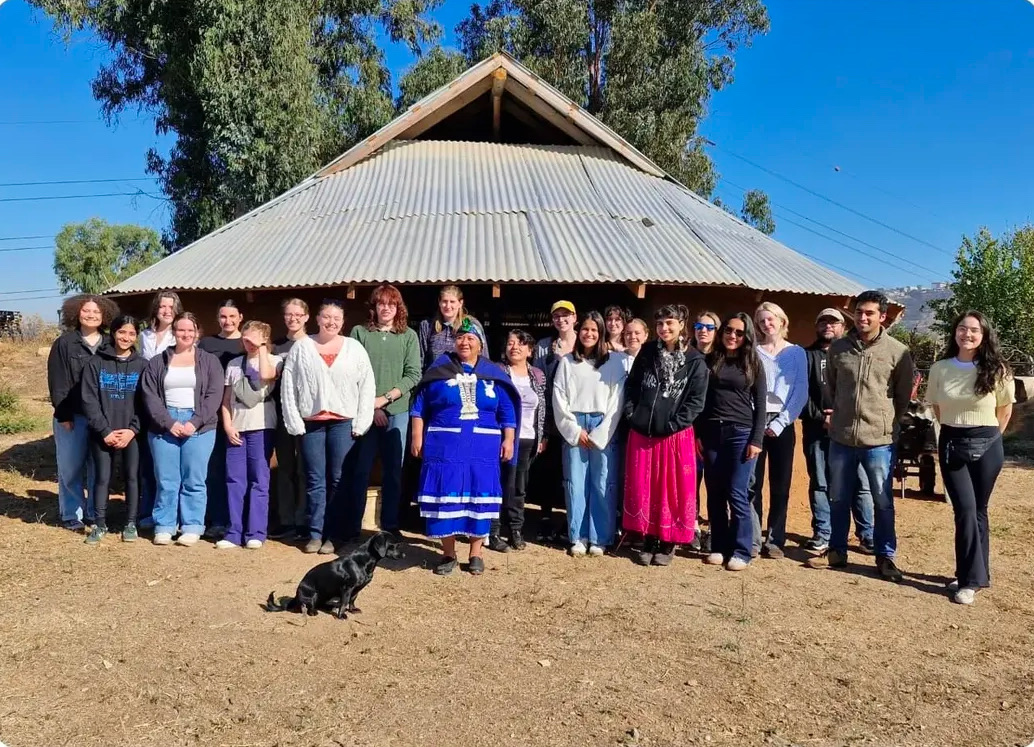
Due to the fact that my global challenge directly involves other cultures I not only spent time in the local Chilean culture, but also spent a fair amount of time learning and experiencing the Mapuche culture and customs. These interactions gave me a wider lens on how we can interact with different cultures and how dominating a western ideal can overpower a more traditional native way of life. Many Mapuche communities are nearly self-sustainable, don’t often use modern day medical treatment, live in houses they built themselves and are not a big apartment building. The Mapuche have different values of how they want to live life, and are more spiritually connected than most Americans and I am. They have rituals that they partake in year after year, some rituals reunite communities from all over the country.
From a sustainability aspect, I learned more about how these developing countries are struggling to keep up with the growing economy of the U.S. while not sacrificing their natural environment. There are these areas called sacrifice zones, and they are areas that a factory, mine, extraction site are to harvest or sequester materials needed to make different items to help the country grow in its infrastructure. Some areas in the north of Chile mine copper and lithium which are essential materials for the Green Energy Revolution. However the mining of these materials is actual on indigenous lands and the runoff from these factories is negatively impacting the health of the indigenous people in these areas. This harm directly has an effect on the indigenous population.
In a conversation I had with a Mapuche community, the daughter of the Lonko (chief), mentioned that with less Mapuche people it is harder to maintain their rituals, and with a lack of regular rituals that ultimately makes it harder for her family and community to maintain their cultural values. She also mentioned that there are some efforts to implement education programs to teach their language which also hold so much value in their culture. These teaching programs also include Mapuche practices and knowledge. The issue is that many of these programs are at the University level and are not easily accessible to much of the populations.
These conversations with Mapuche people and experience with sustainable efforts in Chile gave me a better perspective on my global theme and challenge because cultural values and sustainable development are clearly both trying to be improved but it seems as if they are ultimately competing with each other. In my opinion they should be working together rather than against each other. If the Mapuche or really any indigenous population had a say in how their community or city should develop, I think that would make all the difference in protecting the environment, but this would also prioritize the indigenous values because they would be the underlying force for the motivations of development.
After going through this experience not only impacted how I thought about my global challenge but also aided in my leadership skills. I put myself in an uncomfortable situation, I barely knew spanish, had never immersed myself in a brand new culture, moved in with a host family. All of these things led me to be a better leader, I had to adapt and learn quick in order to survive. I also found an aspect of confidence within myself, I often stuck out like a sore thumb in public and Chile. Eventually I realized that if I am already being noticed then why not be proud of it. Moving in with my host family and having to learn a new language helped with my communication. I can’t say it was easy at first to learn and communicate with not only my host mom but other Chileans, but over the 4 months and a lot of spanish class I am able to hold a conversation and could talk fluently with my host mom.
Learning so much about myself from this experience really put me in a position to question what is next, in all aspects of my life. What else am I going to do to grow in leadership? What am I going to do help support sustainable development? How can I help other cultures maintain and grow strength with their values?
Class Photo with the Lonko of a Mapuche Tribe in front of a Ruka (Ruka translate from the Mapuche language into home)Photo from a sacrifice zone on Native land in central coast of ChileBirds-eye view of lithium mines in the Atacama Desert sacrifice zone
Sleeping in a tent for three months is not everyone’s cup of tea, but I drank the whole pot as a research student for Round River Conservation Studies in Chilean Patagonia and loved every second. Being my first time out of the United States, my experiences in Chile were nothing short of amazing– even life changing. From our basecamp in the town of Cochrane to deep in the backcountry of Patagonia National Park, I learned so much about conservation science, Patagonian culture, and myself.
View of Monte San Lorenzo from Valle San Lorenzo. This was taken on our first backpacking trip. On the otherside of those peaks on the far left is Argentina!
I was a part of several ongoing and new research projects including population surveys of Guanacos, the home range and habitat quality of the Magellanic Woodpecker, presence and habitat indicators of Vizcacha, and trail condition and visitor satisfaction research to inform management plants. These projects greatly deepen my understanding of my Global Theme of Resources and Sustainability and my Global Challenge of how to curb biodiversity loss through means of ecological restoration and conservation. Conducting this research entailed week or even two-week long stints backpacking in the three main sectors of Patagonia National Park: Chacabuco, Jeinimeni, and Tamango. Not only did I learn about specific research methods, I gained invaluable local perspectives on the importance of sustainability and conservation.
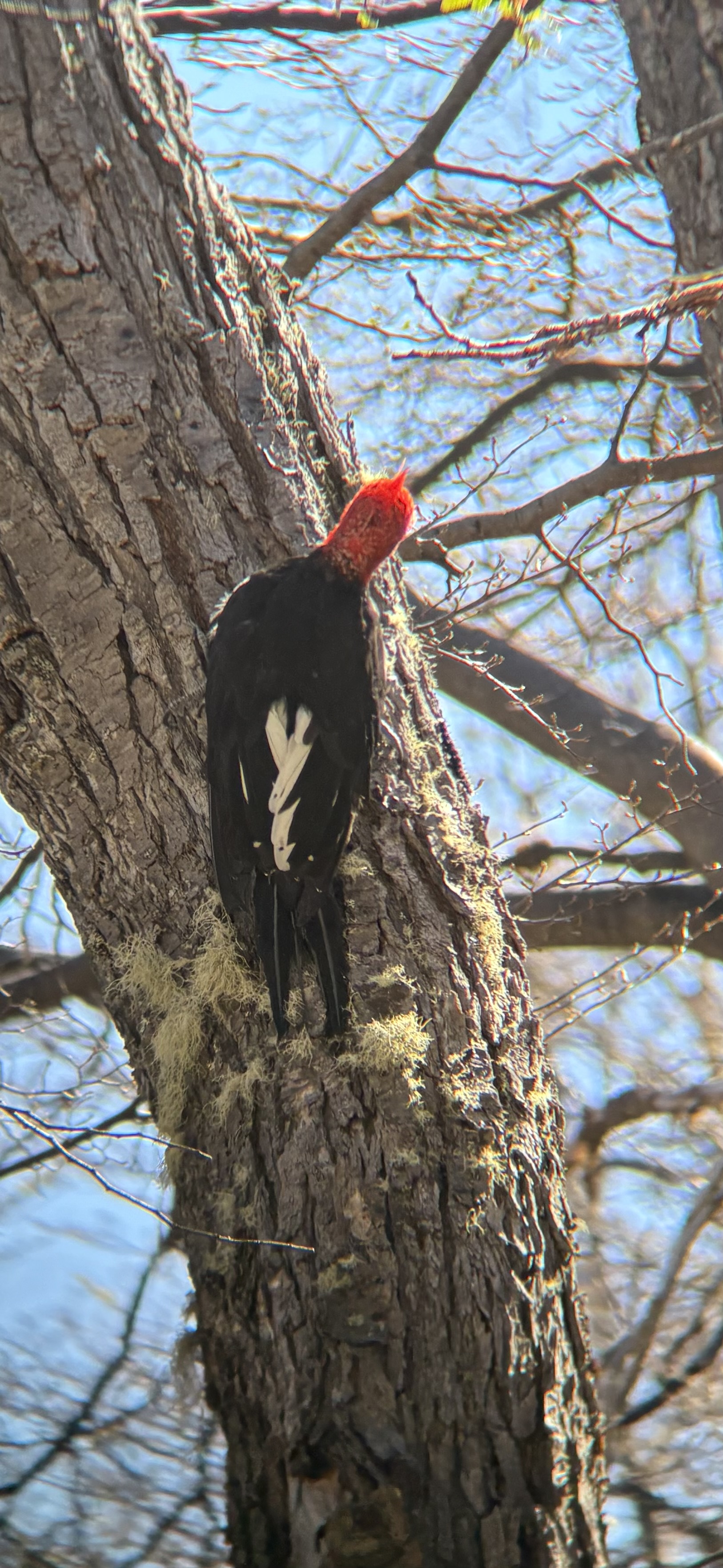
My favorite project was on the Magellanic Woodpecker, and I got to write a report on it which was translated and presented to the Corporacion Nacional Forestal (CONAF), the government body which manages all of their protected areas. For two days, in two research teams, we observed two family groups of the birds following them from the moment they left their cavity in the morning until they went to sleep in the evening, marking a GPS point every 20 minutes.
We used this data to map their home ranges in conjunction to habitat quality data to continue the scientific understanding of the preferences of the species. I was quite literally running through the forest and up mountain sides following these woodpeckers every move. The family group I followed consisted of an adult male, female, and two juvenile males (one yearling and one fledgling). I remember one moment when the three older birds flew off leaving the youngest male by himself. While I cannot say for sure, I think both of us were nervous– where are the others?! After 15 minutes of calling for his mom, I followed the baby until his reunion. Throughout the day, we observed the woodpeckers spending quite a bit more time foraging on the ground! Which is interesting, because previous research has found that the Magellanic Woodpecker spends a majority of their time foraging on the trees.
When not in the field, I had the great opportunity to connect and learn about the local culture including the traditional dance, Chamamè, drinking mate, and staying with a rural family for a week on their campo. Speaking with and learning from locals, I gained a distinct understanding of their values of living sustainably and the importance of community. It was so refreshing to live among a community who truly cares for one another and where they live. When was the last time you walked down the street and everyone, I mean everyone, smiled and said hello…well… hola! While this seems simple, it is one part of what made living here so special.
Me drinking mate in the snow while attempting to do trail condition research. Kind of hard when you cannot see the trail. I built a snowman and we even had a snowball fight!
I will carry these memories for the rest of my life and continue to share my new global perspective and practices into my community in the United States. I am forever grateful to my fellow students on the program, Round River, and all of my support within the Franke Global Leadership Initiative and the University of Montana.
Group picture ontop of Tamanguito, Tamango Sector, Patagonia National Park, Chile. We had perfect visibility at 1,485 meters and could see the Northern and Southern Patagonian Ice Fields.
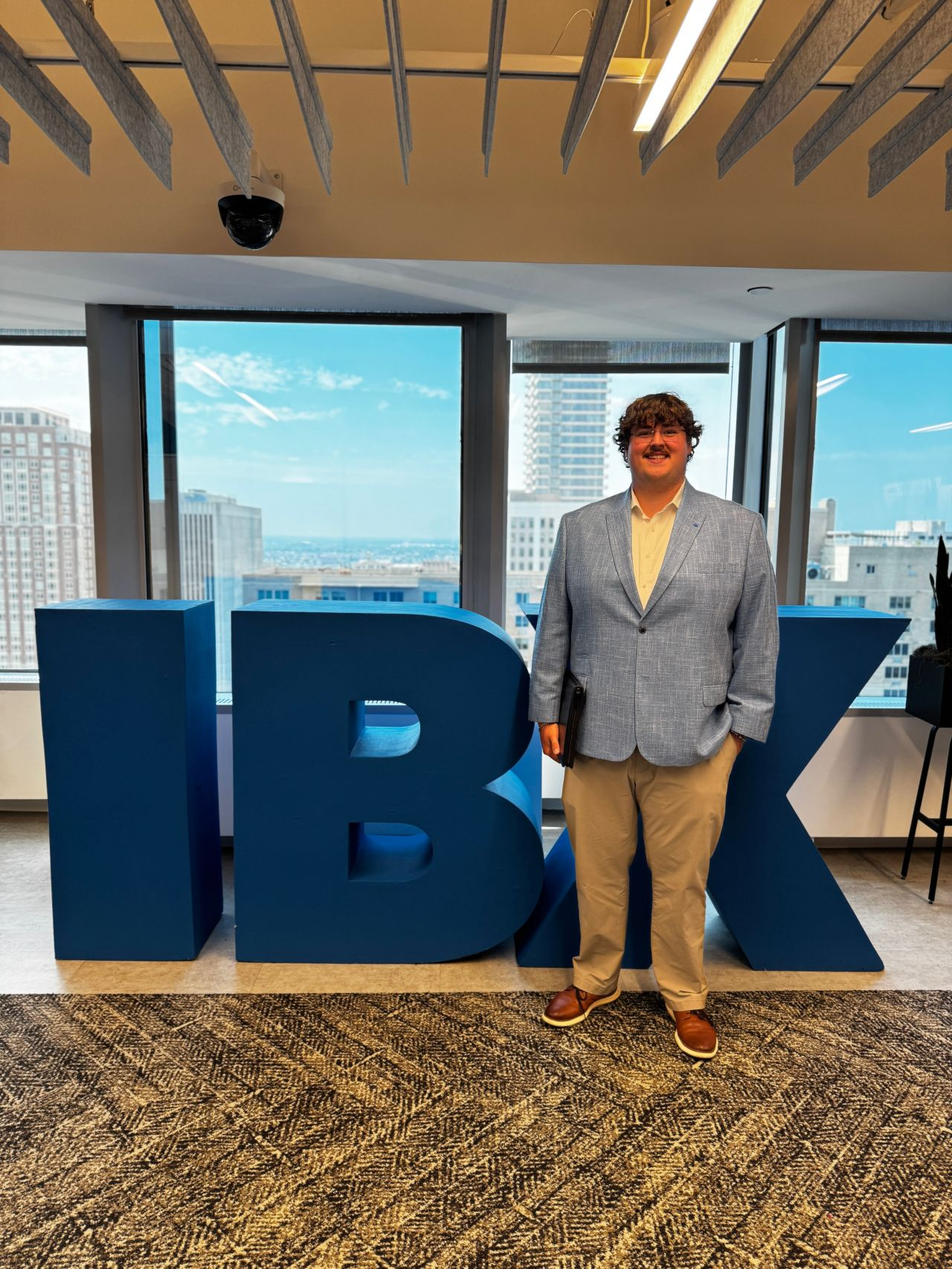
Over the past ten weeks, my internship with the Behavioral Health sector at Independence Blue Cross (IBX) has been an eye-opening experience, one that connected deeply with my GLI Global Theme of Technology and Society. While my initial expectation was that technology would drive much of my work, I quickly realized that our Medicare-focused project required us to step back from a purely technological approach. Because this population is less likely to engage with digital tools, our challenge was rooted in the societal side of the theme: how do we improve behavioral health access and reduce stigma without relying on technology? To answer this, my team designed postcards that communicated support in a non-stigmatizing way, carefully avoiding behavioral health language while still ensuring accessibility, clarity, and impact. By working around technology, rather than centering it, we were able to meet the unique needs of this population and demonstrate the importance of adapting solutions to the communities they serve.
Beyond this group project, I also contributed to IBX through two additional initiatives. First, I created and managed repositories to improve provider-member matching, which involved extensive outreach and meetings with providers. Second, I used IBX data to prepare quarterly reviews for Connect to Care virtual providers, ensuring timely therapeutic care for members. These tasks not only sharpened my understanding of behavioral health operations but also highlighted the importance of collaboration in creating real-world impact.
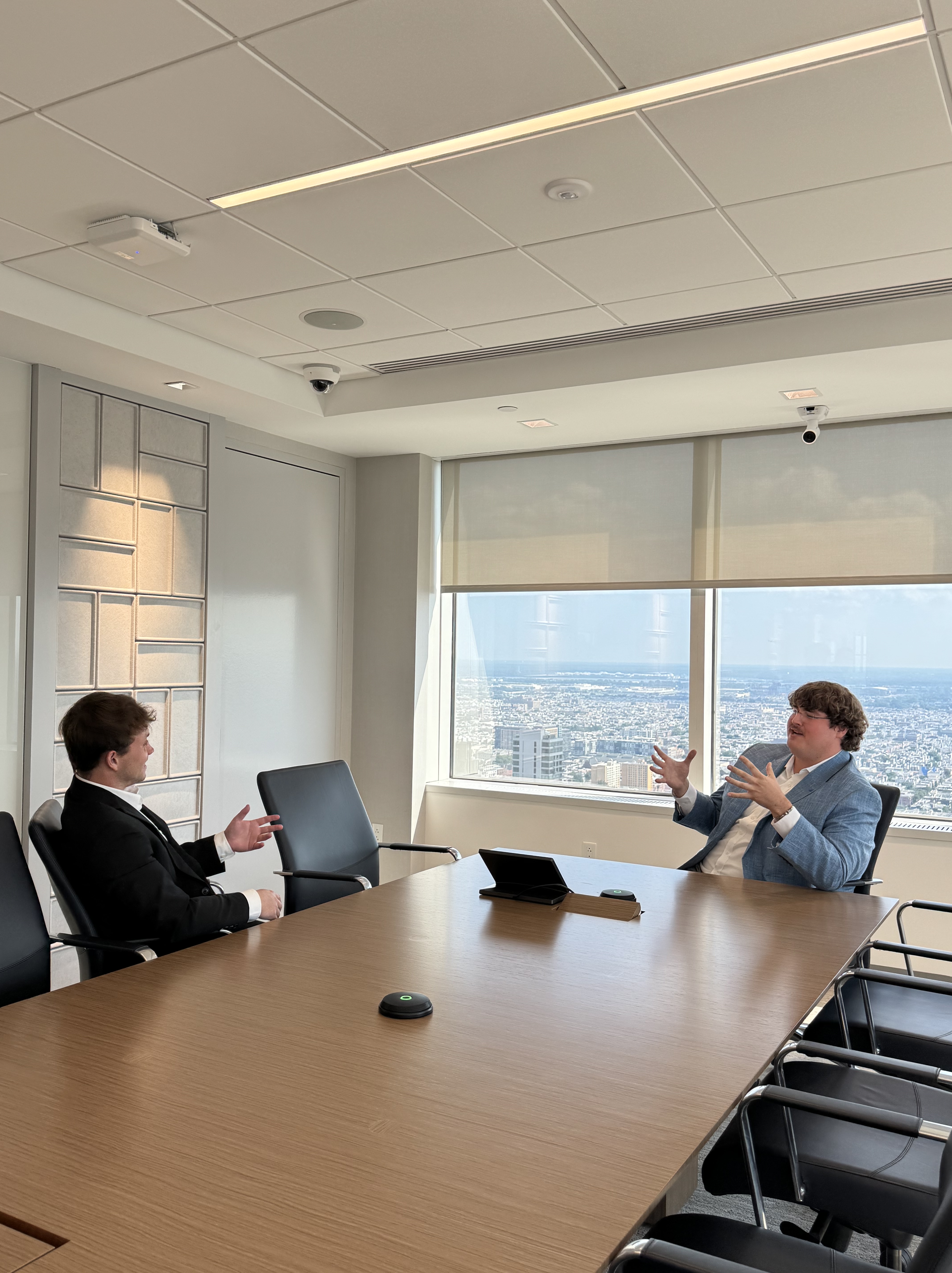
From these experiences, I gained valuable leadership and teamwork skills. Working with seven fellow interns on the Medicare stigma-reduction project pushed me to balance leading with listening. I learned how to contribute ideas while also supporting others, how to delegate tasks effectively, and how to ensure that each teammate’s perspective shaped our final product. Winning first place against three other groups was a proud moment, but more importantly, it reflected the strength of our teamwork and the trust we built with one another.
This experience has also raised new questions for me. How can healthcare organizations continue adapting their approaches to reach populations that may not have access to or feel comfortable with technology? How do we balance innovation with accessibility to ensure that no group is left behind? At IBX, I began to see how these questions can be addressed. Their commitment to improving behavioral health access, whether through data-driven solutions, provider outreach, or non-technological approaches like our Medicare project, demonstrates how an organization can innovate while still centering accessibility. In many ways, IBX sets an example for other Blue Cross Blue Shield companies across the nation, showing that progress in healthcare must be both technologically forward-thinking and socially inclusive.
Ultimately, this internship was more than just a professional milestone; it was a journey of growth. I am immensely grateful for the opportunity, for the incredible team I worked alongside, and for the chance to connect my GLI Global Theme of Technology and Society to meaningful, real-world impact.
When I began college, I had many different interests and wasn’t sure which path I would ultimately take. The one certainty was that I wanted to spend a semester abroad. That dream came true this past year. While my time abroad brought its fair share of challenges, it was also one of the most rewarding experiences of my life.
My original GLI Global Theme was Public and Global Health. However, once I arrived in Chile, I realized that the courses I had planned on taking either didn’t match my Spanish level or required prerequisites I hadn’t met. Because of this, I decided to pivot and change my global theme to Resources and Sustainability, which aligned much more seamlessly with the Biology classes available to me. This change opened up new perspectives that I hadn’t anticipated, and I became curious about the ways the U.S. and Chile approach sustainability topics, as well as the cultural or societal norms that inform those differences.
Living in Concepción was a huge adjustment. I was in a house with 11 other people from all over Europe and South America, and I quickly noticed how flexible things were compared to what I was used to. Punctuality wasn’t treated as rigidly as it is in the U.S., and classes often began 15–30 minutes past the hour. Scheduling conflicts weren’t resolved through an advisor, but rather directly with professors, which often meant classes could change from their original schedule. What first seemed disorganized eventually began to feel like part of the charm of life in Latin America—there was a kind of beauty and magic in the chaos.
It was also a big change to live in a coastal port city. Having grown up in the desert of New Mexico and studied in Montana’s mountains, I had always been landlocked. Suddenly, I was in a place with ocean air, San Francisco–style weather, and the beach only a short drive away. On the surface, this might not sound life-changing, but it shaped both of the Biology classes I took: one on plant diversity (which focused heavily on algae) and another on the genetics of marine organisms. Aquaculture plays a huge role in how Chile thinks about natural resources, and it was fascinating to learn about research on algae or vaccine development for salmonids, which nearly always came back to the importance of marine organisms as both a source of revenue and a local food staple.
This perspective was striking when compared to most of my Biology education in the U.S., which has emphasized conservation and protecting species from habitat loss and climate change. While aquaculture is certainly present in the U.S., the focus often leans more toward land and wildlife conservation. Observing this difference made me grateful for the education I’ve received, even though I am no longer a Wildlife Biology major, because I still hope to work in that realm. Conversations with Chilean students also revealed that their opportunities for research in wildlife biology are much more limited, often requiring a veterinary track first or pushing students toward fisheries and aquaculture. Still, Concepción is becoming a hub for cutting-edge research on how the environment affects genomes, and I had the privilege of learning from one of the leading experts in that field.
My semester abroad was also one of the most challenging things I have ever done. Beyond language immersion and academic differences, I navigated setbacks that tested my independence and resilience, including a two-month student strike and even a dislocated elbow. These experiences forced me to adapt in ways I never expected and gave me a new sense of confidence in what I am capable of.
Looking back, my time in Chile taught me more than I ever anticipated. It gave me new perspectives on sustainability, pushed me to grow as a student and as a person, and helped me discover my passion for education, advocacy, and community engagement. While I am still shaping my career path, I know I want to be a lifelong learner, an educator, and a voice for the environment. My semester abroad was a dream come true—but more than that, it was a turning point in how I see the world and my place in it.
I spent the summer in Accra, Ghana, as a student at the University of Ghana’s main campus. It’s a pretty large campus, with about 30,000 students taking classes in person. Accra is a city of around 6 million people, which means there’s no shortage of excitement and high energy at any point of the day. My favorite part of living in the city was taking the public transportation. They drive these old rickety minibuses called trotros, and a ride usually costs about 50 cents. Everything is manual, meaning there is a guy hanging outside the window shouting the destination to anyone on the side of the road who wants to board. I used trotros to get around to many destinations within the city but also around the country. I was told you can take them all the way north to Burkina Faso, but I stayed in the south of the country during my time there. My friends and I used our weekends to explore rainforests, mountains, waterfalls, beaches, and all the destinations in between. There’s no shortage of things to do in Ghana if you’re willing to ask, and maybe spend some time waiting.
My studies in Ghana consisted of African politics and the continent’s relationship to the global system, as well as French, drumming, and a local language (Twi) class. My classes reshaped my understanding of African political perspectives. Much of the current ideology is shaped around attaining self sufficiency, using African solutions for African problems. It was inspiring to hear these ideas bounced around between professors, local students, and international students during my time at the University.
I connected with a local rollerblading influencer, which allowed me some opportunities to find the city’s best skate spots and connect with skaters from the area. Weekday nights I would often find myself on the back of a motorcycle charging through tight lanes of traffic while holding a pair of skates. Skate culture is growing rapidly not just in Ghana, but across the African continent. I feel extremely lucky to have been able to make friends with some of the people at the front lines of growing the sport.
For the fun of it I decided to spend some time each week helping out at the local zoo, specifically in the primate center. This meant that I got to spend a lot of time hanging out one on one with mangabey monkeys. I was fascinated by most everything they did, like their wide range of different calls, their social structure, and their impressive parkour skills.
Easily my favorite part of the trip was the friends I made. Our dorm was a mix of local Ghanaians, people from around West Africa, and international students from all over the world. Most nights some assortment of us would have dinner together, sharing details about wherever it was we were coming from. This meant that at a single table you could have someone from Nigeria, Finland, Canada, France, Togo, and Reunion Island debriefing their day over local Ghanaian food. If I learned anything on my trip it’s that people are all fundamentally the same no matter our origins. The similarities between the way we laugh, cry, and work through our stages of life far outweigh the differences between us.
Sláinte! My name is Sophia Mahoney, and I am a junior majoring in Earth, Water and Climate Sciences, with a minor in Wilderness Studies. For my Beyond the Classroom Experience, I spent part of my sophomore year studying at the University of College Cork (UCC), in southern Ireland. My global theme is Resources and Sustainability, which I was able to study in a past ecological context. Rather than look at resources and sustainability from a current perspective, I took classes focused on paleoecology, palynology and paleoclimatology. Here I studied the ecology and past abundance of vegetative species across Ireland, past climatic events and how they impacted resources without human influence, and how those resources were then managed as human settlers arrived. We looked at vegetative composition dating back to the last glacial maximum, the distribution of trees in comparison to shrubs and grasses, and how that composition shifted as human settlements spread. By studying how these shifts occurred in the past, we gained insight into how resource management could progress and be managed in the present.
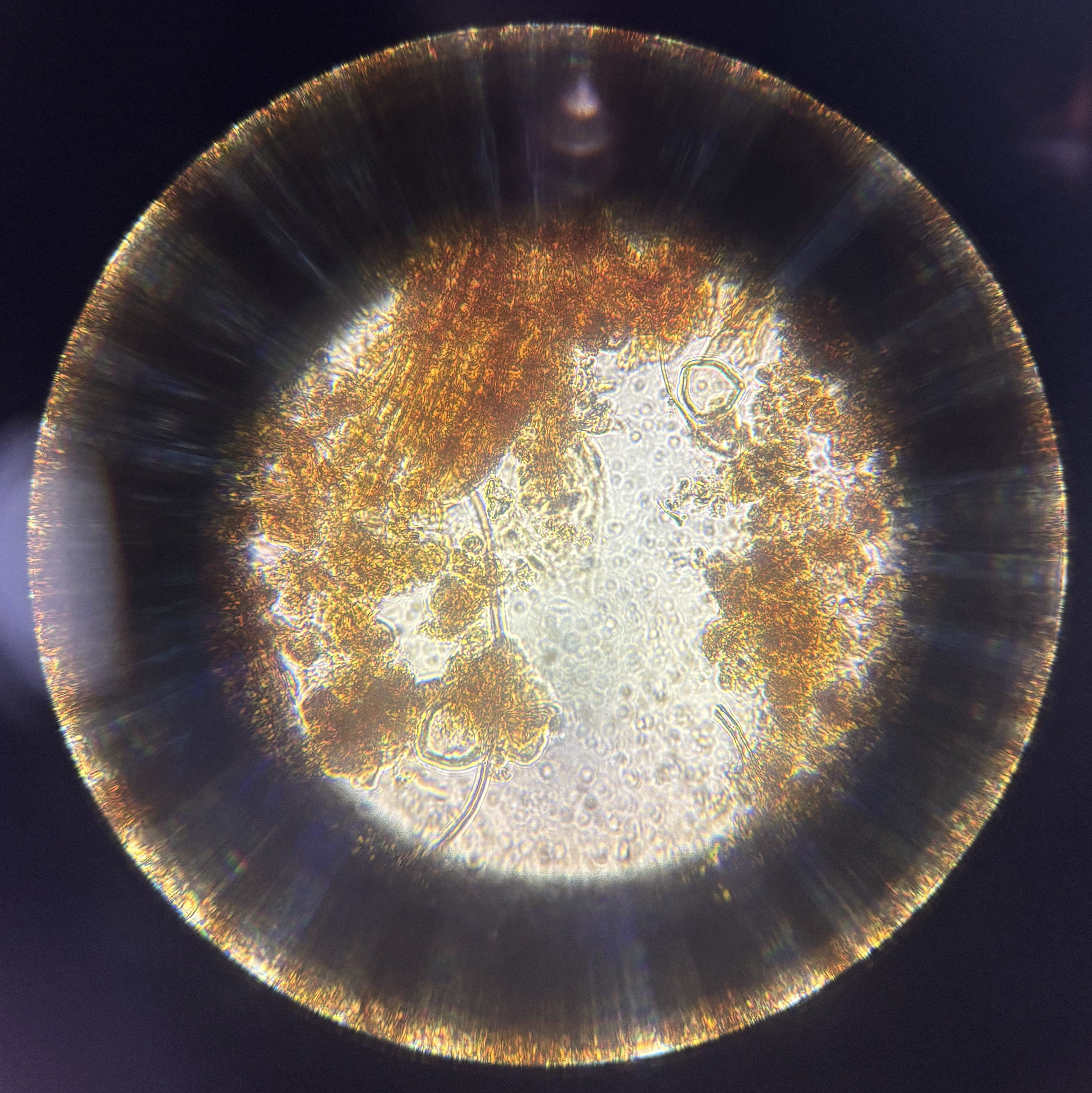
A live sample from Irish peat, when doing pollen count analysis for historic native vegetation composition in the area. Two betula (birch) grains are visible.
In addition to the courses I took at UCC, I spent a lot of my time traveling and hiking, to see less traveled parts of the country. One of the most interesting things for me was learning what was considered to be native, or “wild”, from an environmental standpoint. I had completed my Wilderness Studies minor the semester before, which focused on wildland management in the States. In the case of Ireland, the strawberry tree is considered both an introduced species and a native one due to how long it has existed on the island. It is believed to have been brought over about 4,000 years ago from the Iberian Peninsula. Likewise, hazel is considered a wild native plant, but is nowadays more commonly found almost exclusively in hedgerows, as a large amount of it was harvested by early settlers. Ireland is called the Emerald Isle, a name earned from its extensive coverage of grass fields. Though pre-settlement Ireland was around 80% covered by native trees and woodland, now less than 1% of the island is wooded, most of which is a non-native species that have been planted for timber production.
Over 70% of the country of Ireland is now farmland; you can see cleared farmland bordered on the upper left by homogeneous conifer plantations.
I spent half of my spring break backpacking through the Scottish Highlands in Cairngorm National Park, considered to be one of the last wild places in the British Isles. Everywhere I turned, I saw that the park had been stripped and hunted of most of its natural resources, from the trees that were removed during the world wars, to the native deer populations hunted for sport by local communities and nobility alike. In both cases, it allowed me to take a step back and look at how historic resource removal became so commonplace that now that these places lack most of their resources, it is considered normal, wild, and beautiful. What does this mean for other places natural resource extraction? Is the reasoning that something else will replace it, like in the case of Irish woodlands to farm land, an acceptable answer? These are some questions that I wish to explore further.
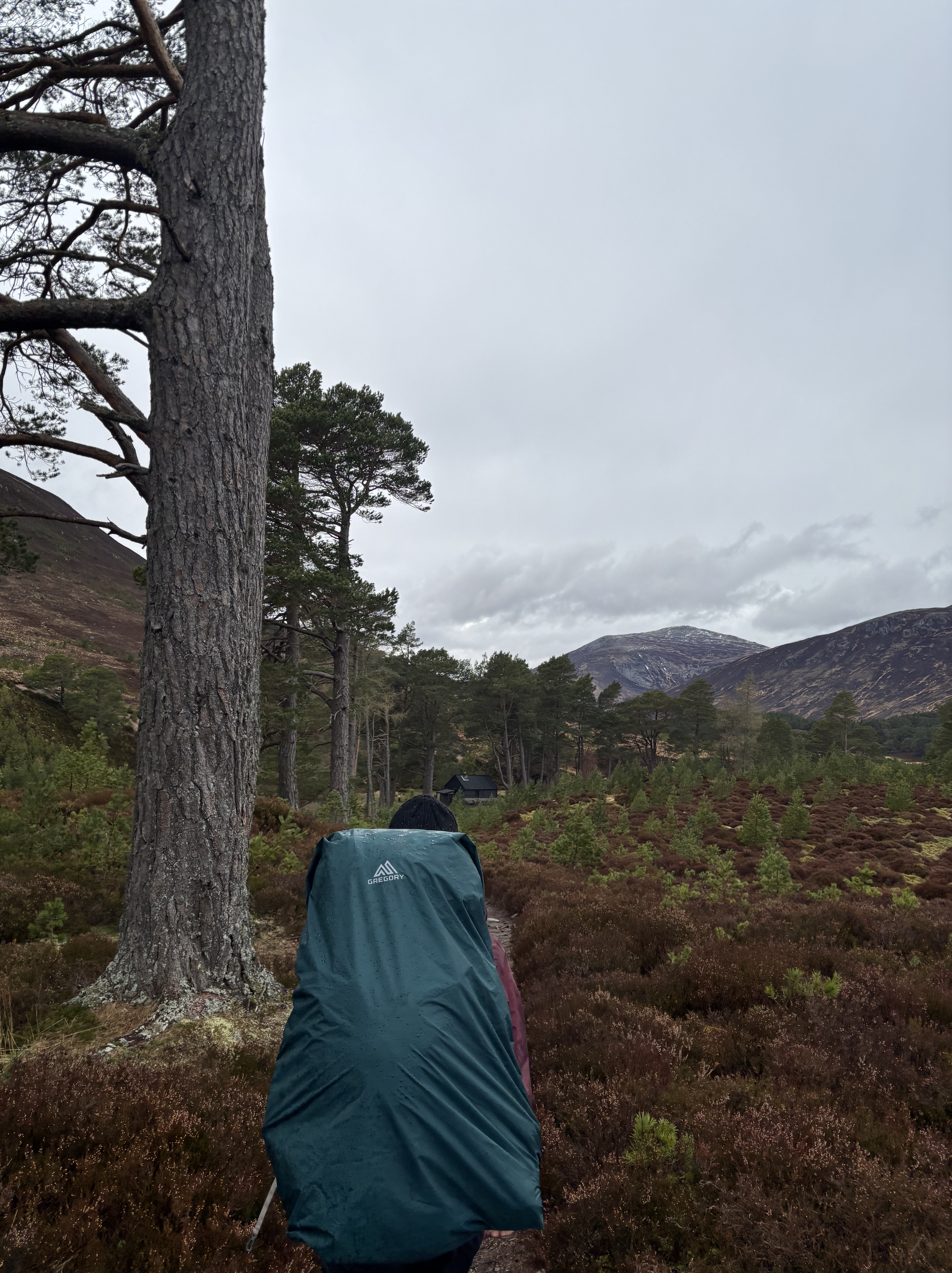
Hiking through a few remaining trees along the valley floor, with many smaller saplings starting to become established, you can see the bare hills in the background. Historically this would have all been forested by the tall trees on our left.
Looking down on the valley where a few lone trees can be spotted along the valley floor that have started to regenerate following the mass logging of the world wars and over consumption of natural resources. Historically, woodlands would have spanned up the majority of the hillside before the conditions would have become too hostile.
These questions and my learnings are building blocks of the whole of my education that I will carry with me forever. As I think back on the time I spent in Ireland, I think back on everything I experienced, all the people I met, and all the things I learned, and how I will carry every moment of it forward with me.
Bonjour, grüezi, ciao, hello! My name is Hannah Halvorson, and I spent 5 months this spring studying at the University of Fribourg in Fribourg, Switzerland. Fribourg (or, for the Swiss Germans, Freiburg) is located just 20 minutes from the Swiss capital of Bern by train. It is a medium-sized city with an old town dating back to the medieval era, on the border of French and German speaking Switzerland. Switzerland is an incredible country for many reasons, but its four national languages and small size contribute to its unique culture. My Global Theme is Culture and Politics, and I found Fribourg to be a perfect place to dive into that.
I explored my Global Theme in many ways. Most clearly, I focused on my Global Challenge. I wanted to find out what the global perception was of the USA, and specifically, of the American people, in this turbulent time. I took a class called “American Self-Deception and Self-Renewal,” and this was a fascinating starting point to answer my question. This was a literature class, so explored the ways Americans were presented in stories. Yet it also offered interesting commentary on the American lifestyle, and through conversations with my professor, I started to understand the impact that recent political events have had on the people of Switzerland. Another way I learned about global perception was through the friends I made, coming from countries all over Europe. I encountered several stereotypes about Americans through these relationships, some positive and others less so. The final way I explored my Global Challenge was by continuing my studies in French, both through classes at the university and immersion in the language in daily life. Learning about a different culture in their language deepened my experience in an unforgettable way, and I know already that I want to do it again. While studying abroad, I had the opportunity to experience other cultures as well, traveling to many surrounding countries throughout the semester. By visiting friends in their home countries, I got to see how families lived outside of the US, and hear their input on global events. Below are a few photos of these travels!
The cultural perspective I gained by exploring my Global Challenge will stay with me forever. Learning French and hearing about global events from my home country was valuable, but experiencing them in a new environment was something I think everyone should have the opportunity to do. Thank you, GLI, for helping make this experience happen!
Bonġu, jiena jisimni Fiona! Let me tell you about my experience studying in Malta!
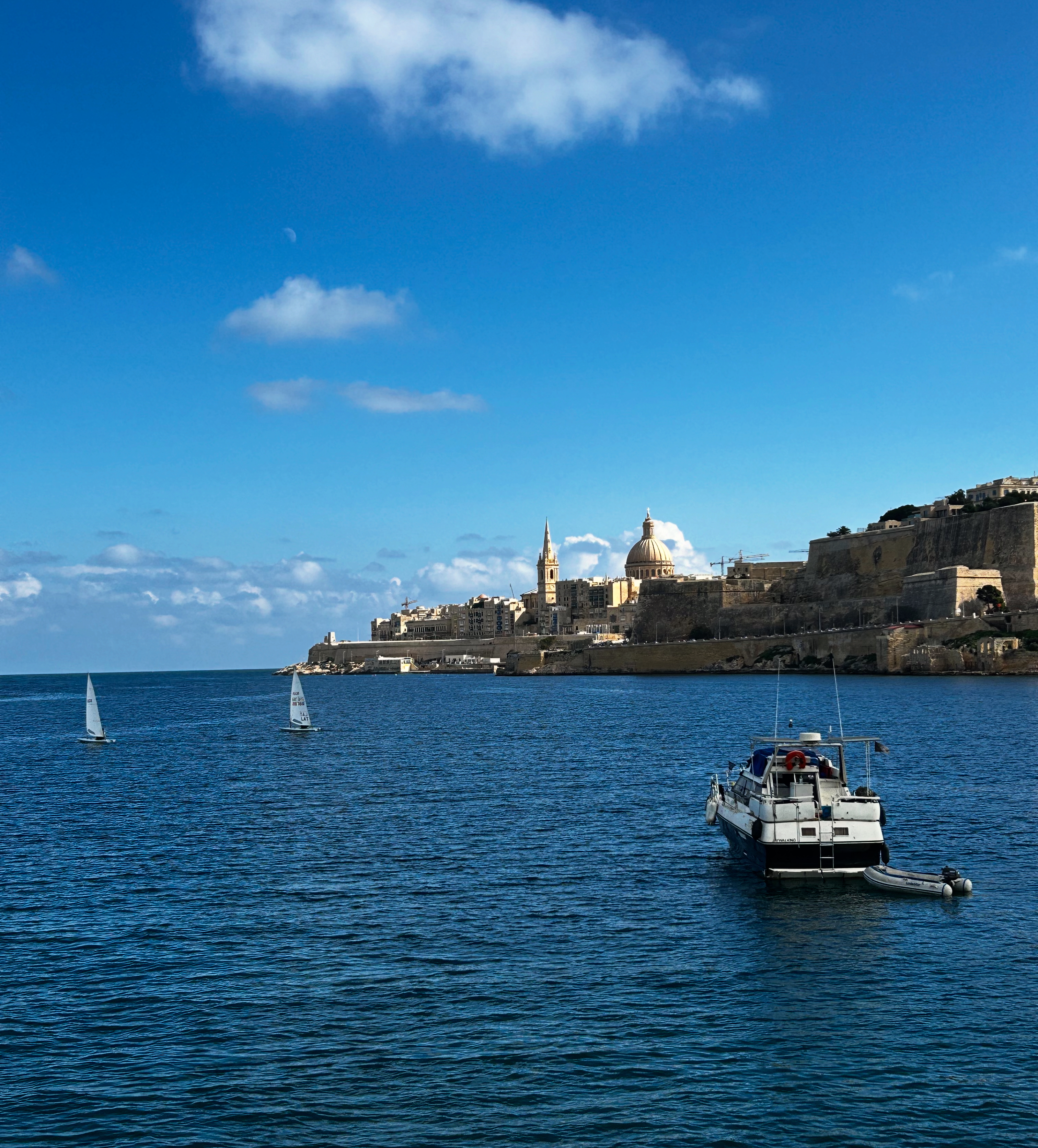
A semester of studying and living in Malta turned out to be different from how I had expected. After doing my research on the country, my expectations consisted of Italian cultural influence, a large Catholic population, lots of old architecture, and after that, just the beach. But it turns out Malta, though it’s just a small island south of Sicily in the heart of the Mediterranean, has stayed rich in its culture, practices, and language, which lent well to my theme of Culture and Politics. Starting with the language, the culture in Malta is alive and well protected/practiced. The Maltese language is a fascinating, partially Semitic language born from a lot of influence from different countries and empires across history. First Arabic, then Italian, and later English, all left their impressions on Maltese. The language is used quite frequently and hasn’t changed much in the past century.
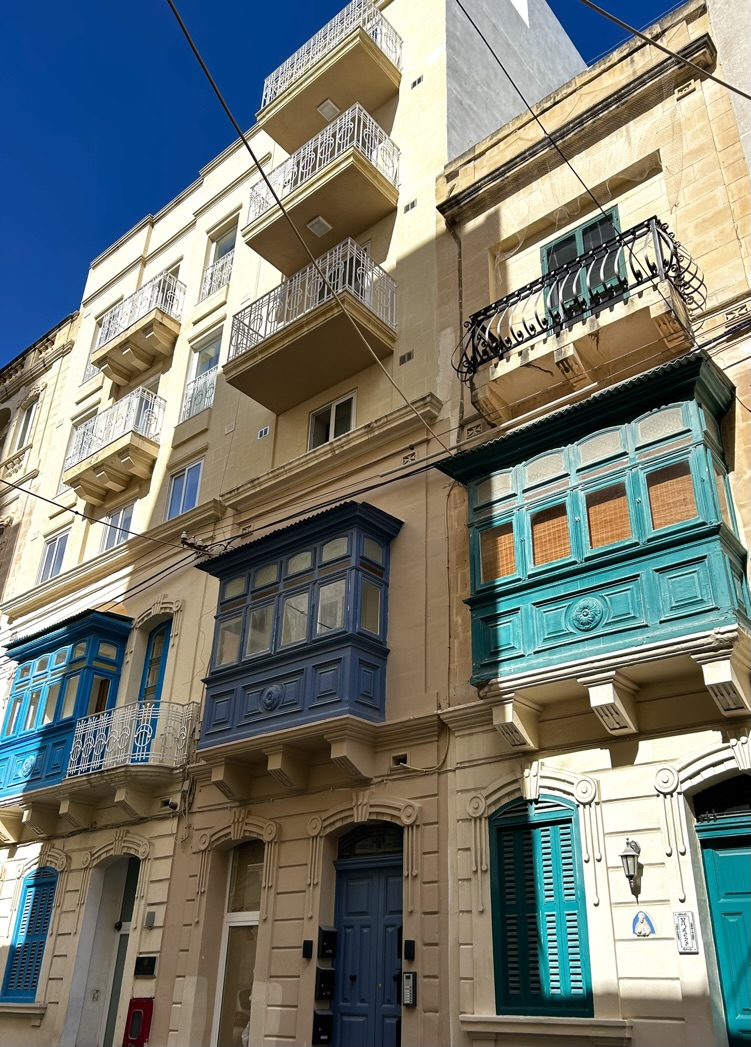
These are a few pictures of Malta. The architecture was so unique, and a lot of buildings had these lights that were used for any special occasion. A good example is in the second photo. Malta loves a party. About every other week, there would be a national holiday where no school in the country was in session, and everyone would meet in a town or a few to have a festival. Bands like in the picture would walk the streets playing music, confetti was thrown from the top stories of buildings, and there were lots of tents with food or small shops. This was one of my favorite unexpected parts of Malta, and it became a frequent tradition for my friends and me.
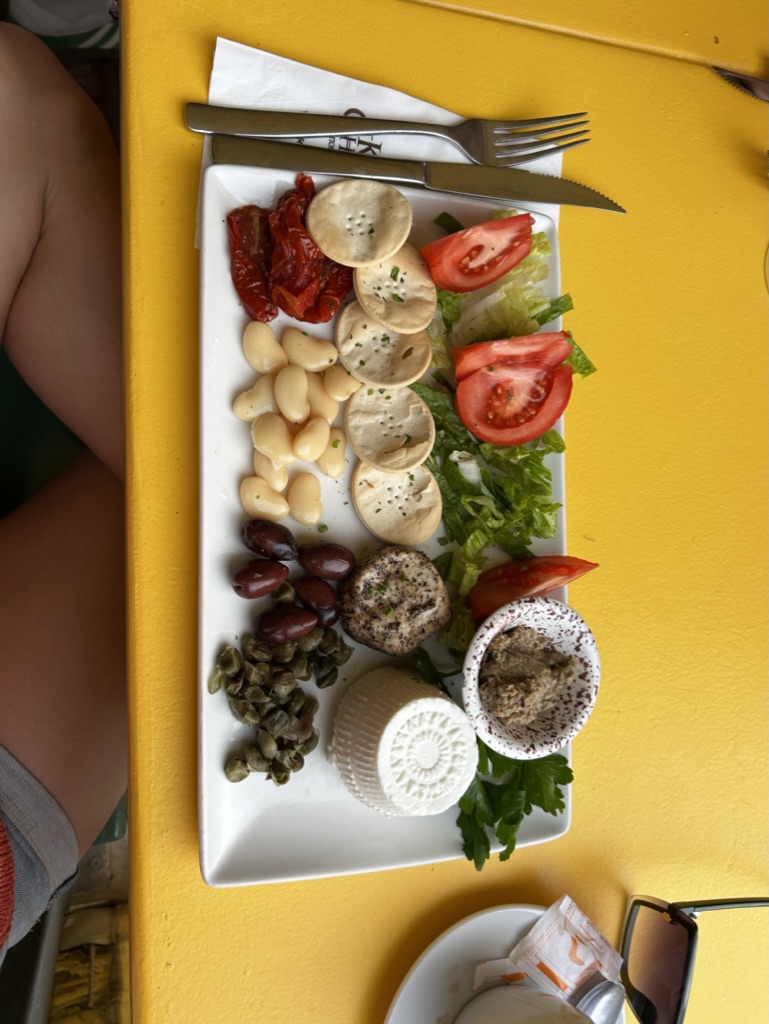
This is a Maltese dinner, kind of like charcuterie. There are butter beans, capers, kidney beans, water crackers, sundried and fresh tomatoes, goat cheese, a cheese made on the Maltese island Gozo, and a Maltese blended bean dip. The dip was one of my favorite Maltese foods. It tastes almost like refried beans, but thinner and with more salt and fresh garlic. Sometimes it would be served with vegetables or crackers, and it was good every time.
Malta is so colorful in both a physical sense and a cultural sense. Live music and dancing can be found anywhere on the island, on any given evening. The beaches were serene, and the towns were filled with welcoming communities and hidden gems of restaurants. The university was tricky to work with sometimes, but my professors were all masters of their subjects and such incredible people to talk to. I met so many great people in the international student housing, and I wouldn’t trade those memories or connections for anything.
I will see you soon, Malta! Because I will surely be back!











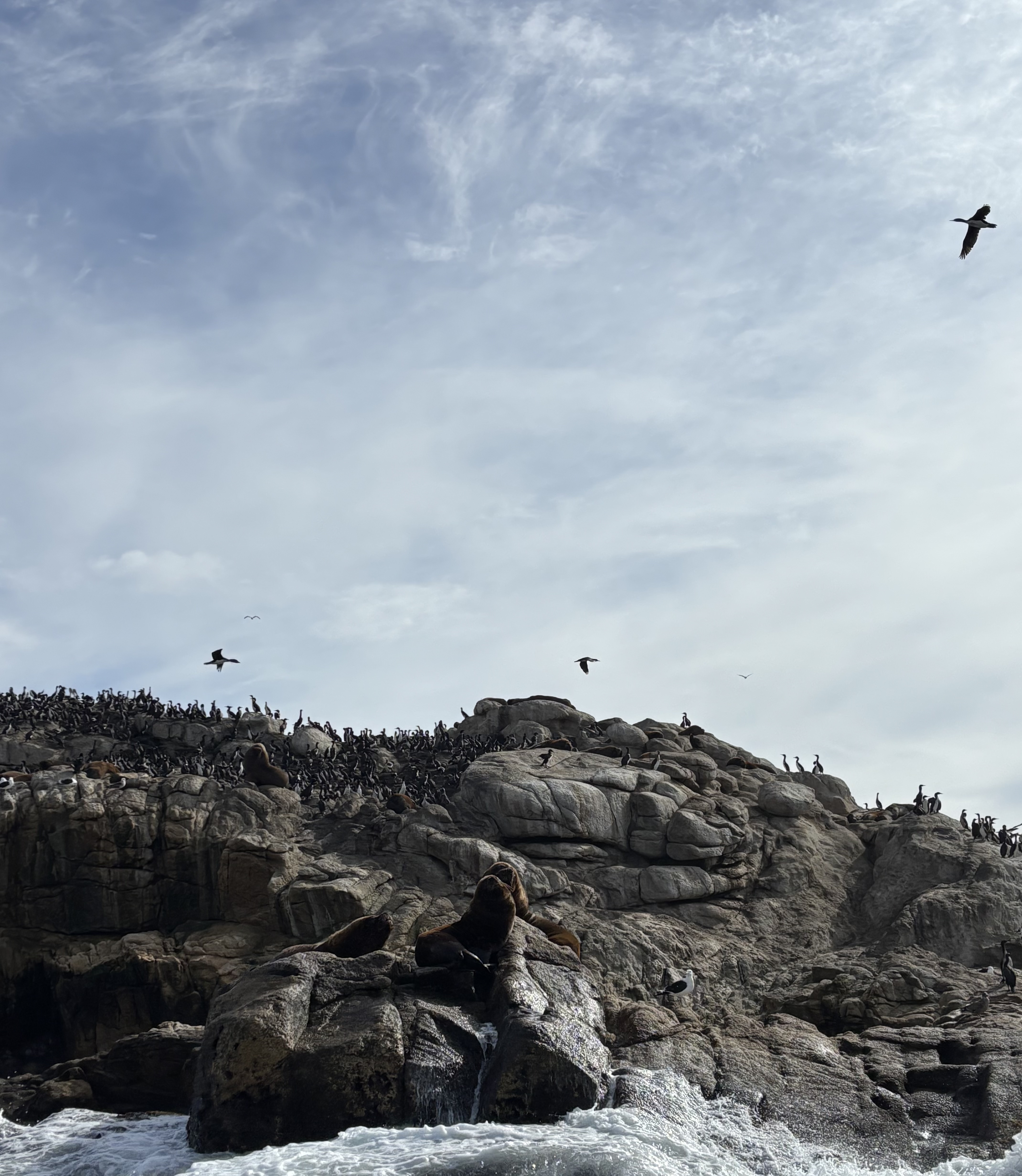





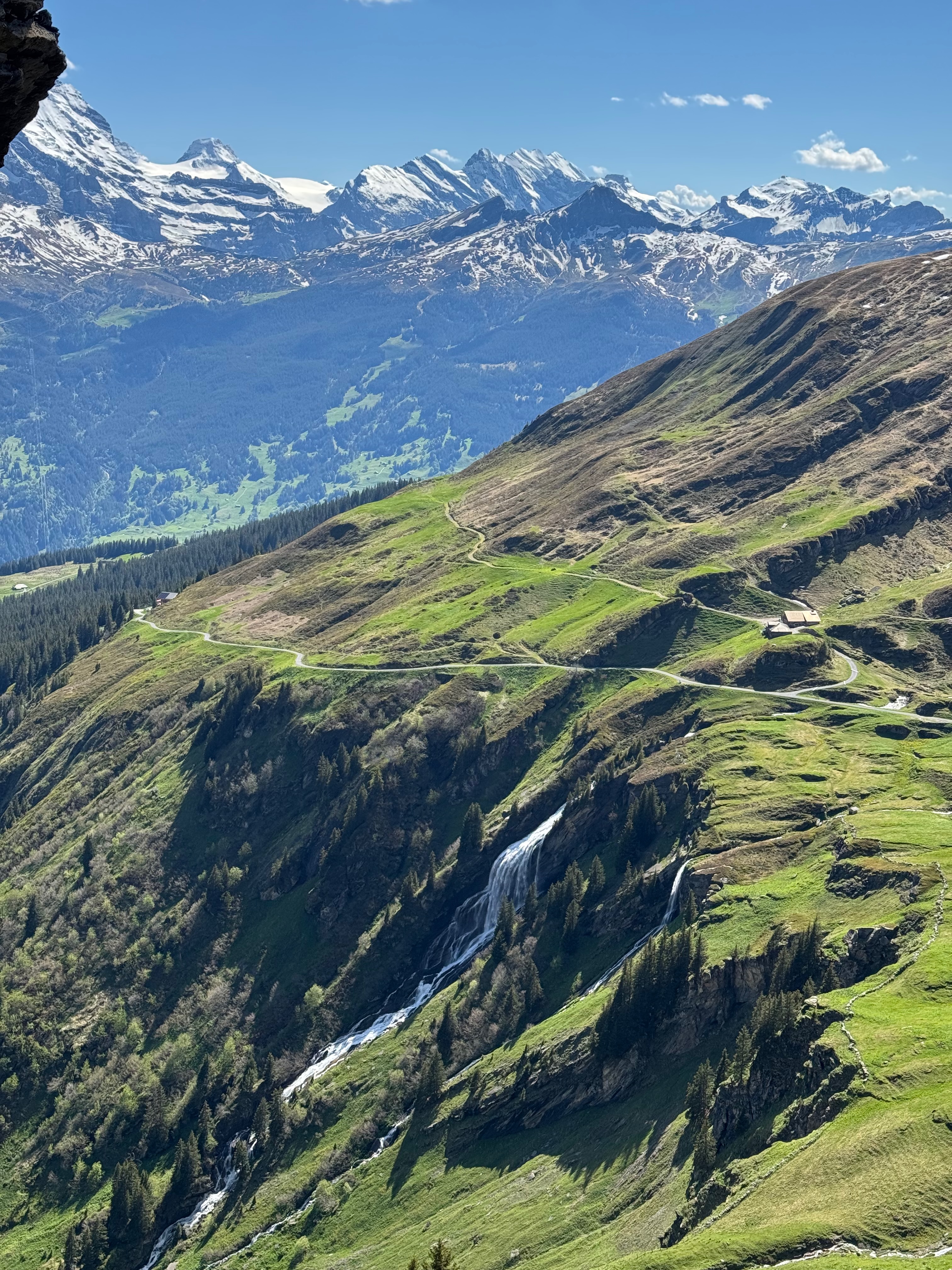



 Beyond the Classroom