Tracks, Scat, and Snowmobiles

Although I have been fortunate enough to travel and work abroad, there is something very unique about intimately learning about the place you are from. I think place-based, experiential education is key to the success of students, and now more than ever I hold that to be true.

We spent our first week of the project going through an in-depth training, where we traveled to Seeley to coordinate with the Forest Service who are our partners on this project. We covered the basics- the purpose of the project as well as the history and data that has been collected over the past four years. We learned the protocol for bait station set-ups, the importance of winter-tracking, snow-mobile mechanics, avalanche safety and first-aid as well as our emergency response procedure.

The content of our first week was extremely important, but the anticipation to get in the field was building, and I couldn’t wait to get on our sleds and head into the field. We had long days ahead of us, but the payoff is big.

We set out on Monday, and although we usually head out in groups of two, we went out as a group of four to make sure everyone was on the same page. Immediately the trails were inundated with tracks, and we had our GPS units out marking waypoints for wolves, bobcats, and mountain lions (below is a picture of us taking measurements on a track to identify the species).
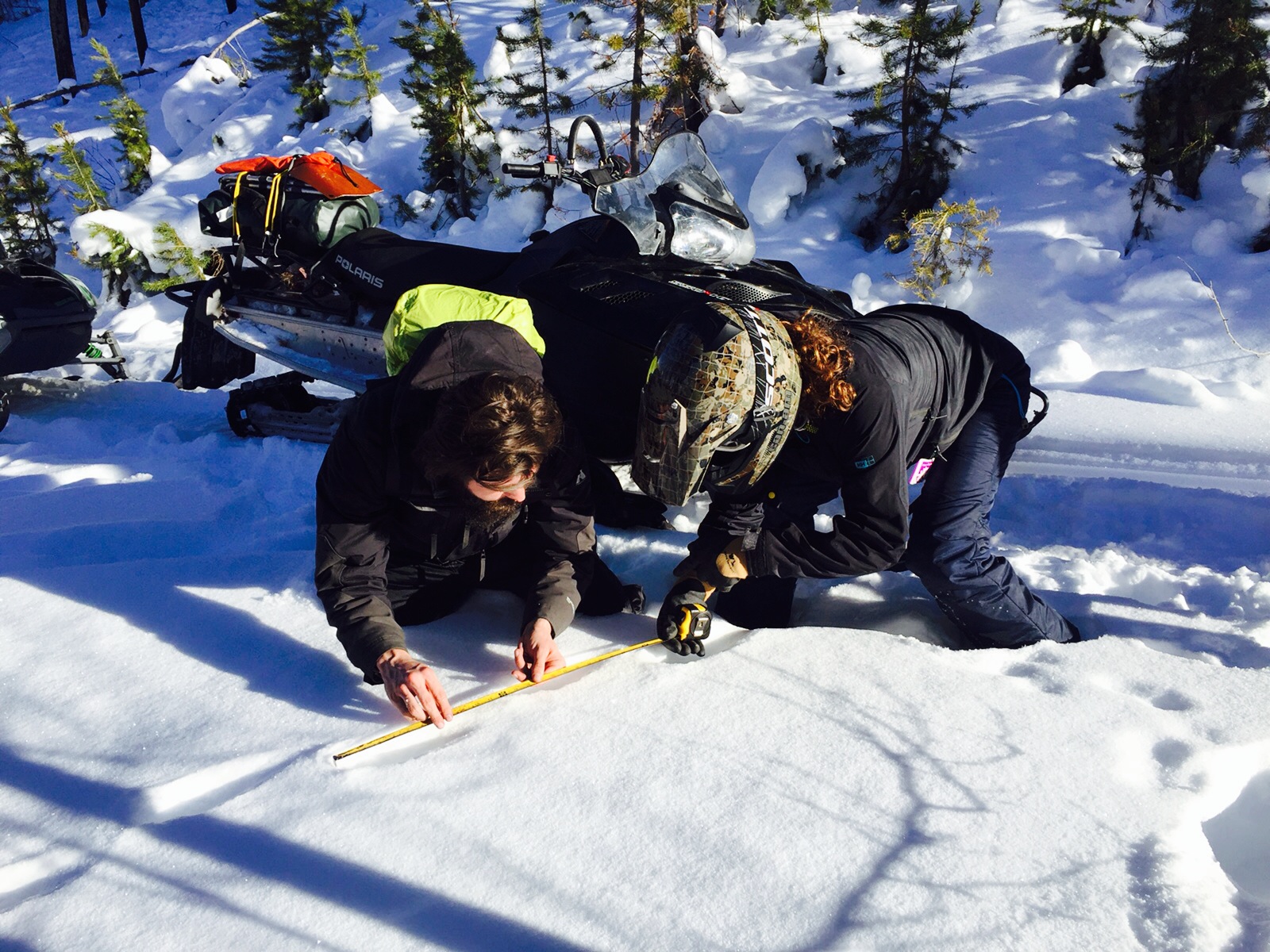
photo 3


We made it about 5 miles in before we broke for lunch; over-looking the Swan Valley where we enjoyed the views and were greeted by two soaring golden eagles (lunch spot is pictured below).
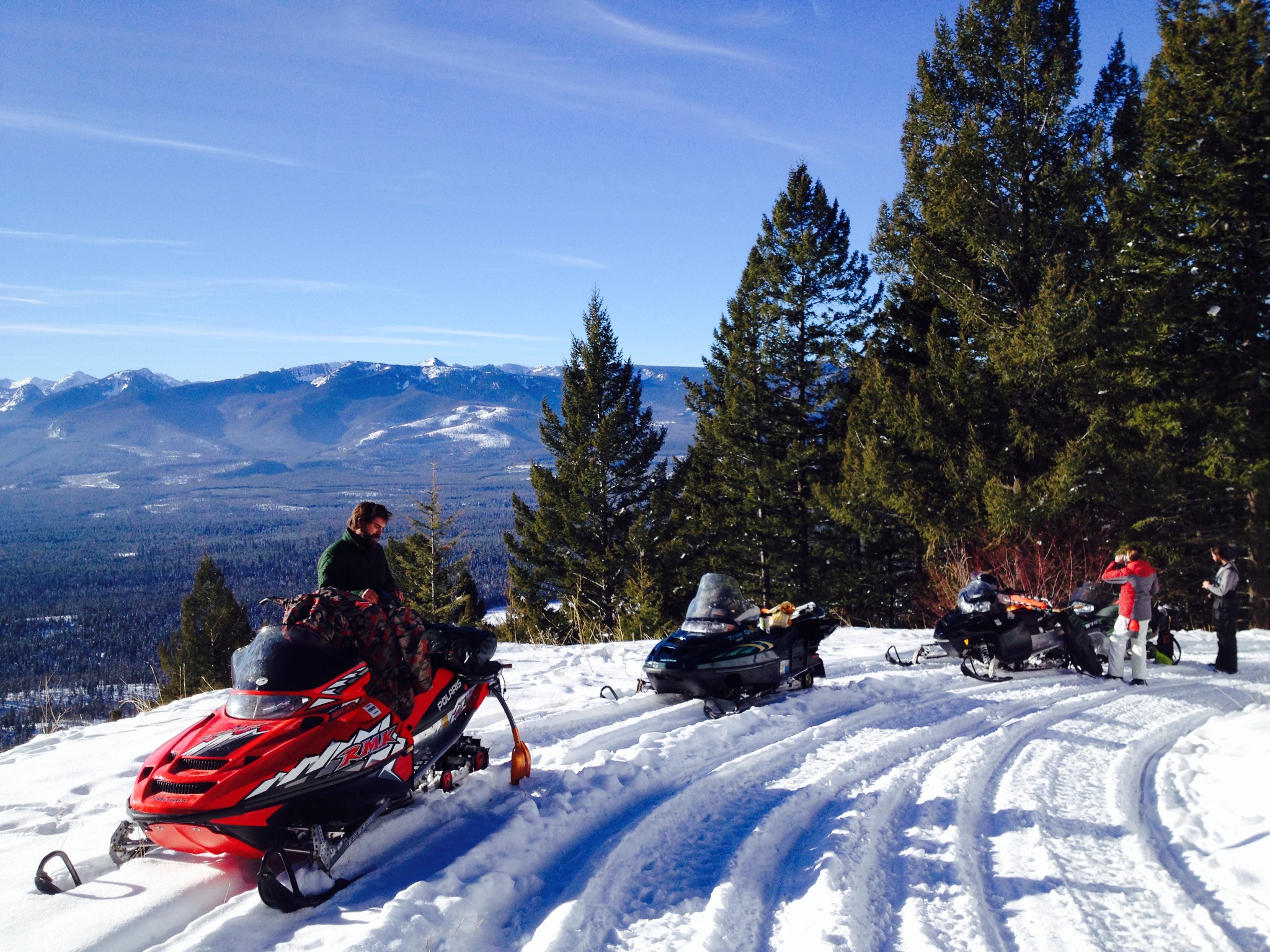
photo 1

We continued on, where we would set up our first official bait station. I included a link in my last post but I will post the map here of our grid system, 5×5 mile cell units that draw on research from Squires that states in an 8×8 mile grid cell if lynx are present you will detect tracks in that cell. The reason the cell unit is smaller is to account for the distribution of Fisher, whose home range is smaller.

Southwestern-Crown-Carnivore-Monitoring-Project-Bait-Stations-2014

The bait stations we set up use a combination of bait and lure to draw in our target species, we have gun brushes positioned on the tree to grab any fur from suspected species (this is an extremely non-intrusive DNA extraction technique). Pictured below are two field-techs setting up our bait station.

photo 4

The following day we split into our designated groups and set out into the field in pairs. After snowmobiling into our unit we soon found lynx tracks, we hopped off our snowmobiles to take some measurements- a female lynx was suspected. We set off on snowshoes to backtrack and attempt to find DNA samples (either urine, feces, or even vomit). We were surprised to find multiple individuals- we had discovered a mother lynx with two yearlings! We spent the next three hours backtracking through wetlands, up mountainsides, across the road and back through the woods, collecting 9 genetic samples.
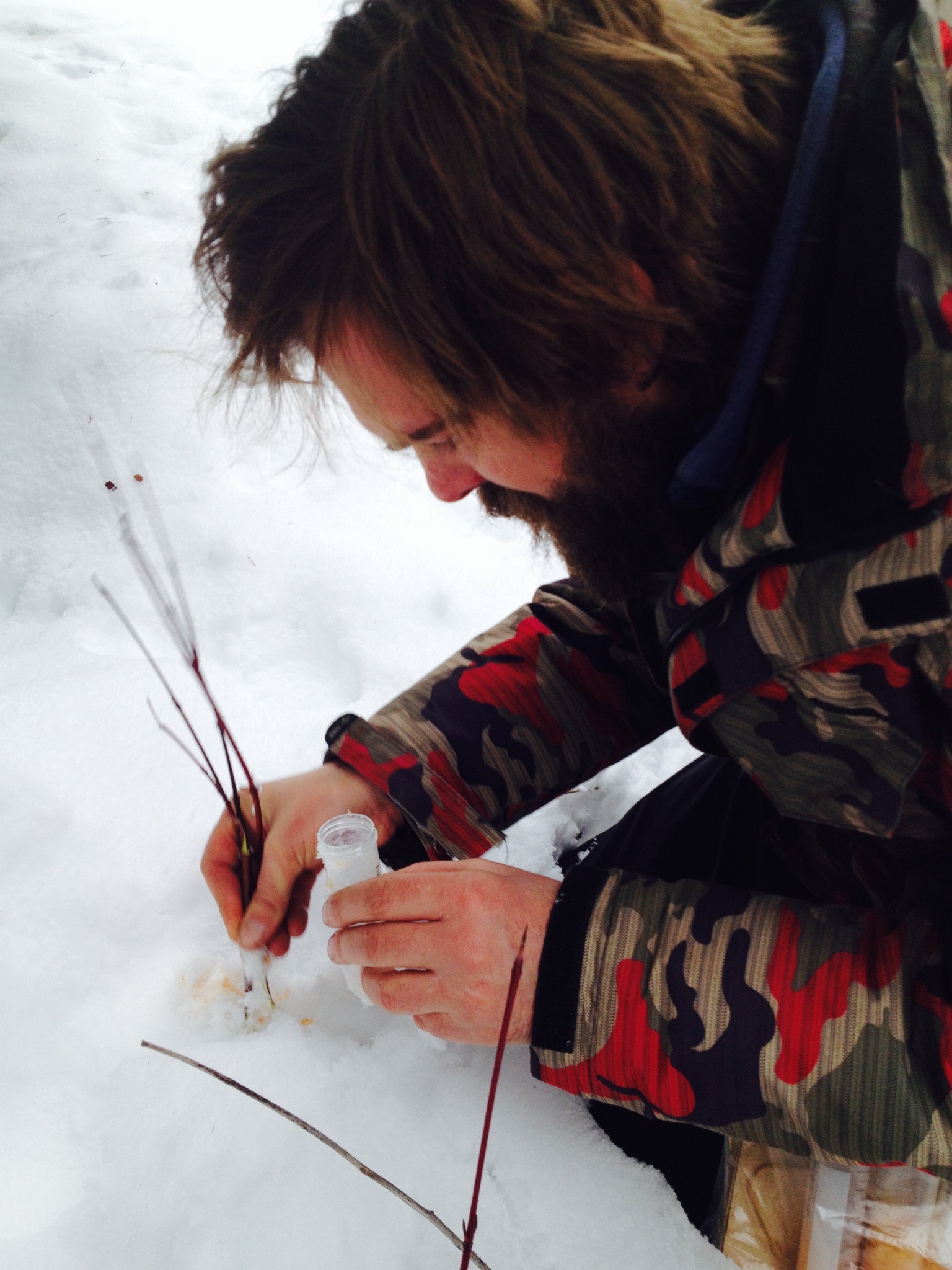
photo 1 (1) photo 2 (1)

We returned home later than anticipated but elated with our findings. We headed into the field the next morning where we set up three more bait stations, and a few game cameras. The game cameras help us to confirm our track surveys and genetic samples, and can help guide the lab to detect individuals.

photo 2 (2)

We returned home after we were hit with an intense snow that left us soaking wet and tired after digging out the sleds. Although we still were referencing our maps through it all.

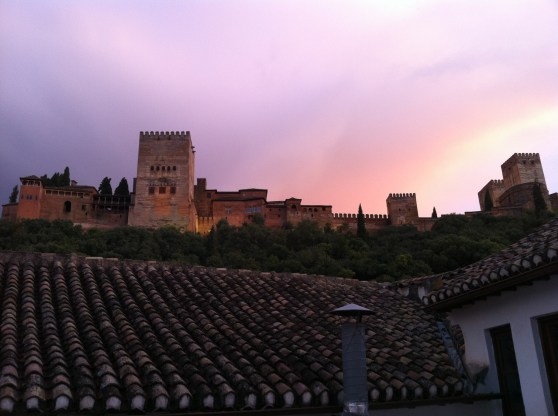
photo 3 (2)


An Old Path, A New Direction

As I read through past blog posts I find a unique, eloquent, voice that radiates through each passage. Individuals that have traveled to different countries, experiencing new cultures, and are faced with adjusting to a new way of life. I am confronted with a much different experience.

I was raised in the Swan Valley, which is located in Montana’s Crown of the Continent. I moved to Missoula in 2006 and although I had returned to the valley over the years I didn’t feel connected to the place like I had as a young child. In the fall of 2014 I returned to the Valley to participate in Northwest Connection’s field semester- Landscape and Livelihood. Prior to this program I had lost the appreciation for the unique culture and beauty that has been bestowed upon this small town. It re-kindled that sense of belonging- the pride and responsibility that develops around a place that you love and care for.

I kept in contact with Connections over the past year and looked for an opportunity to return and work with the organization. My wish was granted when a position as a field technician on their winter Rare Carnivore Monitoring Project opened up. I was elated to have the opportunity to join the crew and be a part of on the ground monitoring efforts that will help to inform management decisions and conservation strategies in the area as well as gather invaluable information on the distribution and abundance of three target species: Canada lynx, Wolverine and Fisher.

When I looked for a Beyond the Classroom Experience, I wanted to do something unique, something that would connect me to my theme and allow me to explore the concept of sustainable “rural” growth and development through education. The Rare Carnivore Project did just that, and I look forward to the coming weeks and the opportunity this internship presents.

I included a video below that was taken from Northwest Connection’s website on the field work we are doing. The second link is on the project itself.

https://youtu.be/a5hoPudWNxY

http://www.northwestconnections.org/forest-carnivores/


Re-Learning Creativity

Ten years ago, the most popular, most watched Ted Talk by Sir Ken Robinson was released. Even though an avid Ted Talk fan, I had actually never seen this speech until my new Finnish friend and I bonded over our love for the nonprofit, and he introduced me to this video — his favorite. Out of all varieties that Ted Talks cover, from abstract concepts such as leadership and motivation, to vital educational disciplines such as communication and business, to even random objects like cars, water, or robots, with animals everywhere and in between, it is interesting that the most attention grossing Ted Talk is titled, “Do Schools Kill Creativity?” I find this to be ‘interesting’ because, out of all things that unite people around the world, it would seem that the strongest connection we share as intellectual humans (as to be assumed from this Ted Talk’s success in the abundance of other topics) is education.

After watching this video, I had to watch it again. I would reflect on the topics Robinson covers, and then I would watch it yet again. Although I recommend for you reading this to watch his speech and absorb his style of approaching this information, I will explain Robinson’s opinion in brief. Robinson introduced his personal understanding of the definition of creativity to be “the process of having original ideas that have value [resulting] through the interaction of different disciplinary ways of seeing things.” With both humbling humor and fierce intelligence, Robinson informed his audience that school systems, as we know them to be today, were the initial consequence of meeting industrialism demands in the 19th century, but they have since become a universal hierarchy accepted as a “protracted process of university entrance.” In a nutshell, the Ted Talk revolved around Robinson’s claim that “We do not grow into creativity; we grow out of it. Or rather, we get educated out of it.”

This Ted Talk, like all of the other videos provided by the nonprofit organization, offers profound insight into a taken-for-granted and blindly accepted area on a large scale. It is undeniable that our schools prioritize certain academics over others, and whether in America or in Germany, we naturally find academic systems that favor theories over theater and calculations above color charts. Not surprisingly, though, scholars know that learning enhancement can be measured when students have the ability to express themselves through music, dance, and art; and likewise, any school can see the negative effects on students when the arts are cut from curriculums. While I understand the social ranking of mathematics over Mozart in academics, I also see how the strict standards of our school systems unintentionally implant the stigma that, in Robinson’s words, “mistakes are the worst thing [a student] can make.”

Luckily for us students, there is an opportunity that encourages, inspires, and ultimately instills creativity back into our schooling systems: studying abroad. Robinson saw education systems as mine shafts, digging around until finding the commodity that is deemed socially worthy and then exploiting the resource. But, studying abroad has shown me a world where the worth of such commodities are defined differently by every culture and the exploitation of knowledge is a positive human interaction. Studying abroad has introduced me to an education outside of a classroom’s borders, a place where mistakes are actually my best teachers. 

In the end, I do believe that creativity is indeed affected by our education; but, it isn’t a trait that is completely masked by our school systems. Instead, creativity fades when we become so comfortable in our systems of discipline that we lose the ability to react to the unknown.

Granada, Spain and The Whirlwind of the New

Tuesday, September 23, 2014

I have now been in Granada for about a week and a half, and today was my first day that was “just okay.” My entire first week went by in a flash of new sights, smells, people, and words. It was exciting and educational. Spaniards are crazy about night life. It is normal here to stay out at the clubs or bars until 4, 5, 6 in the morning! The accent is still difficult for me to get used to. Everyone in my house is incredibly warm and friendly- like a big family- and many are foreigners so we are constantly learning together. There are 6 French; 5 Americans including myself, an Englishman; 3 German; an Italian, an Ecuadorian, a Colombian, and 5 Spanish.  I can’t believe how lucky I got with housing.  We live in Albayzín, the oldest neighborhood, and we have an incredible view of the Alhambra, the last Moorish fort before the Christians reconquered Spain in 1492! I have a view of this castle-like fort from all of my windows! There is so much history here.  The Arabic influence persists on every street.  There’s even a street filled with tea rooms (teterías)!

IMG_0979view of the Alhambra from my apartment in Albayzín bajo 😀

Classes started today. I didn’t understand very much, which was very discouraging. I don’t know how I will get good grades, or more importantly, learn anything. It turns out that most Americans who study abroad here attend the Centro de Lenguas Modernas, a school for foreigners that has language and culture classes.  I really want to stay at the Facultad de Filosofia y Letras, so that I am surrounded by the Spanish, but I also don’t want to bite off more than I can chew, and I have no way of telling from which I will gain the most knowledge of Spanish life at this point.  I’m feeling pretty humble today, after being sent from office to office trying to register for classes, and failing to understand most of what my professors said. I’m wishing that I had just entered the Centro de Lenguas Modernas, so that I would actually be with other lost folk. I feel very clumsy.

My assessment of Spanish young adults, based only on today and not on the past week of good-humored Spaniards, is that they are not as warm and smiley as I had imagined. They are more attached to their phones and dressed much fancier than my classmates in Missoula. But this could be attributed to the big city life.

I’ve been pretty overstimulated with everything new and everything seems to grasp my attention and generate enthusiasm for my future.  I’m trying to just soak in the present experience, but I keep thinking about future adventures!

Habré aprendido 5 idiomas
Habré dado la vuelta del mundo en velero
Habré dominado el tango, Judo, y Chi Kung
Habré sido profesora, doctora, y psicóloga
Habré salvado vidas y mejorado mas
Habré subido las montañas mas altas del mundo
Habré habido éxito con agricultura sostenible
Habré hecho queso de cordera
cuando echaré de menos este momento

Friends Across the Globe and the Bug

I’d say one of the most special things about my study abroad experience is the group of close friends I developed over the course of my stay. The experience of packing up and starting new in a foreign place is a profoundly unique recipe for friendships that enter strange and visceral pathways in the heart. When I think about my closest friends and what they are most likely up to these days I am overcome with a profound sense of connection and compassion. It brings me so much pleasure to imagine the ongoing story lines of each my peers and how many other stops and stories they have ahead of them. I love the way that the details of their stories are far away, but the love I have for them is alive and well and makes me feel as though a part of me is still with them as they move through life and a part of them is definitely still with me. I let a lot of people into my life and I’ll never be fully rid of them. All of the small newness that they displayed has been swallowed by my concept of what is possible in this world and so I take them along to every new excitement and adventure.

My best friend back home recently offered to take me along with him to visit his siblings in Myanmar. People have warned me that the bug for travel is stubborn and hearty. I definitely felt that pesky addiction fire up when I got that invitation. I can’t even begin to imagine all of the small sensations and emotions that I could be signing up for. All of the people and moments I will be letting into my life, for good, makes the 1000 dollar round trip ticket rather hard to turn down. I might be hooked!

The Smaller Details

Back in the comfortable swing of my closest friends and oldest habits, everyday I feel like I lose another memory I promised I would never forget about my time abroad. It is so easy to go on with things and never give a lot of second look back. If I think about my most memorable moments stateside even,  the ones that stick aren’t necessarily the most vivid or intense, just the ones that my friends and I have recounted again and again and set them into a collective story. That’s is one of the ways that this experience is different than life stages of the past. When I arrived in Finland, I didn’t have anyone to remind and be reminded by, all of my stories where just abstract tales, and that’s is exactly what I have now, a bunch of stories filled with textures and sensations I can’t really explain and can’t expect anyone around me know to just intuitively understand.

I tried to explain the time I spent at Varrio Subartic Research Center to a friend recently. I described the night Laura ran inside screaming about the northern lights see caught on her long hike up the snow covered stairs from the lake and the sauna nested on its shore. She didn’t even say ‘northern lights’ just ‘lights’  and ‘now’ and ‘outside’ all while skipping down the log sided hallway from the kitchen to the library. I ran out the front door, which up to that point I never even knew opened, in my loose wool socks and fell knee deep in the snow bank. I pointed up and said, “Wow, they are gorgeous!”, waited a moment and then said, “Ummm.. actually where are they exactly?” The lights were so faint near the cabin that I could hardly make them out. At midnight, we all looked at each other and decided that we had no choice but to bundle up and head to the research tower on the top of the nearest fell. We hiked to the top and climbed the tower stairs. The metal ladders were sticky with frost and we all paused to let each other pass underneath, so as to avoid sprinkling snow down each others necks. It was Laura, who was afraid of heights “a little”, on the 5th floor, and Aleksi on the 6th floor, who watched nervously as I climbed timidly past them to the second floor from the top. We all sat there watching the lights tower over the Russian border (3 km East) as the tower swayed and shook in the cold dry wind. I remember thinking then, I will never forget this. And I never will. I just hope I never lose the smaller details: the dusty smell of the red wool bunk beds and green canvas curtains, the stacks of evening newspapers the station staff cast aside after the  20 year tradition of 4:30 pm sharp dinner, the wordless bond between cook and guest over reindeer jerky aged on the roof for months with “only salt”, that graceful lull around 9pm in the library each night that overcomes a group of busy people set into a breadth of complete stillness, which can take your breath away even in the short amount of time it takes to make it back from the outhouse.

First Days in Finland: Running Backwards

Finlanfd

Early in the morning, I arrived in Finland with bags of expectation, desire, and fear. I didn’t realize it at the time, though, because I made it very, very clear in my head that no matter what I would be at the whims of fate in this new country and that I would have to focus my energy on adaption. I missed my bus connection, so I calmly walked to a nearby gas station and asked the attendant if she could call me a cab and bought some salty licorice. ‘First problem averted, no biggie, I’m doing great’, I thought. Looking back, it’s funny how wisdom can act like a safety blanket, as though if we expect something or call it out it stings a little bit less. This is true, in the long term, but I held this abstract concept of going-with-the-flow like a shield and it turned into a prism in a room of mirrors, compounding every string of worry, loss, and sadness into anxious cycle of ‘holding it together’.

I remember my first week being so so so hard. I had a lot of free time and free space, because I moved in on a holiday into an unfurnished studio apartment. The first few days were great, but this strange tinge started to build, like there was layer of eggshells between my spine and skin. I realized once I arrived how I’d never really been alone before by circumstance, instead of choice, and that feeling was a lot to handle. I knew consciously that it was all OK and that this would pass, but it was the incongruence between the worry that I felt and this peace which I grasped intellectually that pushed me deeper and deeper into panic. Scary thoughts and images would flood in and I would try to blot them out with better ones, thinking, ‘You’re in a brand new country, stop feeling worried, and appreciate this opportunity’. Soon enough, I pushed my body into a kind of numbness and this ambivalent fear engulfed the images of the people I loved and my own future, and terror seemed to follow me everywhere.

I want to write about the lesson I learned from this. I want to call out the silver lining. I want to remind myself why this doesn’t have to happen again in the future. But, I know I’m writing from the edge of the storm. I’m in a lot easier position now, but I won’t always be. If there’s anything Finland has taught me about myself it’s that the storm is what keeps me alive. The wind underneath all the stability we associate with ourselves, family, and circumstance doesn’t have a resolution or harness. Ever. It’s the wind which rubs me raw, and if I’m honest with myself, it’s the only thing which compels me to act. I don’t need to be calm, I don’t need to be confident, I don’t need to be collected. The fuel of life as I see it is a vitality which comes from the rawness of doubt, not the comfort of trust. Again, I wish I could stand by something which I’ve learned here to help me ride this energy with grace and awareness, but the truth is we are all running backwards. You can be mindful of this condition, but it doesn’t help it go away or change the fundamental condition. You can fall or you can jump, but don’t expect either to feel like standing.

Waiting: Observations on the Refugee Crisis

America suffers from a severe case of Macrophobia.

Don’t panic. It’s not fatal, but it does have a huge effect on the way we live our lives. Macrophobia is the fear of waiting. Waiting at Starbucks. Waiting in traffic. Waiting for a table at a restaurant.

“Fear leads to anger. Anger leads to hate. Hate leads to suffering.”

– Yoda, Star Wars Episode II: Attack of the Clones

“Fear” may be an exaggeration of the condition, but Yoda does have a point. What I feel is the majority of Americans equate waiting with suffering. They think, I could be doing this or that, but woe is me I am stuck in this line at Costco. Perhaps it’s our focus on productivity from which this fear stems. It’s not that we hate waiting. We just hate missing out on alternatives. It’s the same thinking that drove the success of overnight shipping, HOV lanes, and the Disneyland FastPass. We put so much effort and so many resources into alleviating our fear.

Now, unless you’ve been living under a rock, you’ve probably heard of the massive refugee crisis happening in Europe right now. This is a crazy time to be studying abroad in Denmark, to see the European nations struggle to control influxes of refugees first-hand and to see the reaction of locals, all while trying to understand the complexities of this crisis.

The Danish government has more or less turned a cold shoulder to the refugees. Even rumors of a Danish anti-refugee campaign have been circulating. However, Denmark’s largest refugee problem is actually the vast number trying to pass through to Sweden. Sweden was the first European country to offer refugees permanent residency and therefore has a welcoming reputation throughout the refugee community. Many have family members already settled in Sweden and are hoping to reunite with them. Not to mention, Sweden is offering asylum to almost five times as many people as Denmark and offers far better social benefits to refugees. But getting there is much easier said than done.

Denmark is considered the bridge between Northern Europe and the Nordic countries, which makes it the best route to Sweden. The Danish-German border has been under increasing pressure to document refugees and back in September stopped vetting them altogether in response to the overwhelming traffic. Since then, the Danish, German, and Swedish governments have developed a vetting system that requires all persons traveling between these countries to present a passport. This may not sound like a big deal to Americans, since we must always show our passports whenever we leave the county, but Europeans pride themselves on the Schengen area’s open borders and are concerned about the travel restrictions imposed by this new policy. It would be like needing a passport to cross from Montana into Idaho; a reasonable frustration.

The relevancy of the crisis to my host country has kept me fascinated enough to pay attention. I’ve read articles and I’ve seen the news, but I am by no means an expert on all the causes and effects of the crisis. My experience with the refugees has been mostly passive, so in my recent travels between Denmark and Sweden I was taken aback by the very real refugees I saw in the train stations and cities.

Just waiting.

The red cross had donations stations set up in both the Copenhagen and Stockholm Central Stations. I managed to snap a picture of the heap of clothes, toys, and food that awaited the refugees that managed to make it to Copenhagen.

Gathered in groups and surrounded by giant IKEA bags full of food and clothes, you would never know how long they’ve been traveling. Unlike the silent stone-cold faces of those hurrying past them, the refugees were talking, laughing, and simply enjoying eachother’s company. For everyone else in the train station waiting was an inconvenience, but to them it looked more like a relief, an opportunity.

Walking out of Stockholm Central Station we made our way through lines and lines of excited refugees, anxiously looking past us in hopes of making eye contact with their newly arrived loved ones. Who knows how long they’ve been waiting. Days, weeks, maybe even months.

The journey is still long for those waiting across Europe; their losses are immeasurable. Each refugee carries a different story. Some traveled by boat, by car, by foot, by train. Some have even seen their loved ones perish. Some are alone. Some are young, some are old, some are somewhere in between, but they are all survivors of horror. Of true fear. Of experiences we Americans cannot fathom. When our biggest frustrations stem from long lines at Costco.

If anyone is so desperate to escape anything that they are willing to risk their lives in inflatable boats, walk hundreds of miles through unfamiliar countryside, and wait for days at train stations and borders, then they have my full and unconditional support. Waiting can be hard, but leaving everything you know and risking your life is harder.

Appreciate the moments you have to rest. Appreciate the moments you have to reflect and to take in your surroundings. If you’re sitting in traffic, turn on the radio, listen to some new music. Call your family, tell them you love them. Do something nice for someone. Waiting gives us a chance to do all the thing we sometimes forget to do in our busy lives.

Just don’t forget, we are all human.

xx

To read more about my experiences, check out my personal blog: www.tessatakesatrip.wordpress.com


Winding Down

My partner and I have made some headway with our program, but it is true that we are very much in the preliminary stages of development. The PowerPoint has helped with guiding the transfer from draft to reality, but the programming aspect of this project is certainly the most challenging. Professor Laskin has been out of town for the past several weeks tending to a family member, something we needed to consider whilst attempting to contact him and establish meeting times.

Although meetings were sporadic and e-mail communication was not very frequent, my partner and I have been able to reach out for some extra materials we felt we needed. This included a copy of the preliminary research Professor Laskin conducted, the basis for our application creation. This would include several equations we required in order to establish a working fitness calculation.

Another aspect we sought out was the disability categories if you will. Each patient who will make use of our product must select a category or degree paralysis. This designation will allow for the program to account for this input information and tailor the fitness result to the patient. For example, someone who is paralyzed just below the waist may be able to exert greater force when conducting the fitness test than someone who is paralyzed just below the ribs.

Professor Laskin, despite his travels has been keeping in contact with my partner concerning these elements, and they have been critical in our development of the application.

Those in healthcare frequently complain of issues concerning patient records. My partner and I have deliberated whether we view our product as a home use program or one that can be used within a greater medical setting. This will dictate how the database of the program will be created. For instance, if one individual is using the app on his/her phone for self-monitoring and improvement, then a large database accessible by others through cloud technology or other servers may not be necessary. Yet if we believe that this app can be applied in a greater clinical setting, then a larger database is required. This step may not seem critical within the grand scheme of development, but in fact it is perhaps the most pivotal decision to make going forward. Establishing the database will dictate the workability of the application as well as determine several menu options that I have already integrated into several flow charts.

Let’s say a caretaker needs to view the results of a fitness test of patient A from three months ago. That data should be accessible to the professional for such cases. On top of that, he/she should be able to conduct such actions for his/her entire clientele. Where does our decision fall in this? If we don’t establish a compatible server, then we limit ourselves to the home-use of this application. It means that only one profile can be created within the application, and only one user will be able to view the history of his/her fitness progression.

As the semester looms and coursework finds its way back into our lives, we will be able to make more time to meet with Professor Laskin and Professor Cassens over the next several weeks to determine the best course of action. The programming aspect of the project is still the largest component to tackle, and we believe that comfort with the language will result in more advancement. This process has made it clear that although we have a design and layout, the usability of it may be determined by the simple decision to either use the application on a large scale, or bring the program to the individual devices of those who seek its services.

Personally, I hope to establish a larger usage for our product. I want it be something that healthcare providers, coaches, and individuals alike can use. But in order to have the greatest spectrum of audiences, it must be able to support just that.

On to the next semester.

Moving Forward

The past couple of weeks have been spent reviewing the necessary steps to take in order to get our app up and running. What is the best layout? What does each slide need to contain in order to flow for the user? In order to better understand the product we are designing, my partner and I have connected with Professor Laskin with our rough draft.

Now, the rough draft design was in my hands. I understood that a flow chart of some sort would be most beneficial in this scenario, but what medium would be most effective? I decided to start up a PowerPoint presentation, as this allowed me to flick through slides in a fashion similar to its presentation on an Android device. The menu would be the first panel the viewer interfaces with, and each button within this menu would have separate maps leading to unique user options. This experience has taught me how to think in a linear fashion, a mind frame that would most closely align with that of the user. Our previous meetings with Professor Laskin and Professor Cassens provided me with a framework to build within, so I ensured that the essential options were included and accounted for (ie. sound preferences, language compatibility, large buttons, timers, patient menus and user information input options).

It was now time to present this rough draft to Professor Laskin. I presented the slides in a fashion similarly to how a user might encounter the application. Any number of user scenarios were presented to Laskin in order to demonstrate the workability of the design. Of course, like any larger endeavor, revisions needed to be made fairly quickly. Some of the layout options needed to be changed, and Professor Laskin noted several aspects that he wished to be included in the next iteration of the presentation. This primarily included slide flow. What panel would come next after pressing this button? What pops up here after this task has been completed? The difficult aspect of working on a computer rather than on the intended device is that it becomes more difficult to convey the true nature of the operations of my design. But that was a minor obstacle that was simply inevitable.

In the meantime my partner considered the design options from a programming point of view. Sometimes ideas on paper, much like any concept, are easier proposed than completed. Not to mention that the coding language was still somewhat foreign. The platform on her laptop did not run smoothly the past several days, so any advancement was simply in the knowledge of how to complete certain tasks if presented with the opportunity. For now, my design would be limited to the PowerPoint. From there, I have already made several improvements and ensured that the final copy was sent to both Laskin and my partner. I’m sure that once the technical aspects of the programming are taken care of, great headway can be made in initiating the first set of panel coding. It does turn out that the program my partner is using is frequently used by application designers worldwide. Information concerning anything from troubleshooting to the creation of text boxes on action buttons could easily be found on YouTube.

I have somewhat lost sight of the end goal as we get bogged down by an overwhelming amount of minute details that need to be taken care of. The task is great, but at times I lose sight of its purpose. Dedication is key, but is certainly something more difficult to come by during the great summer months. Yet I am positive that with some more structure and headway in the realm of coding/programming, we can develop our Beta for UMove.