Reconstructing Past Climates in Ireland

Sláinte! My name is Sophia Mahoney, and I am a junior majoring in Earth, Water and Climate Sciences, with a minor in Wilderness Studies. For my Beyond the Classroom Experience, I spent part of my sophomore year studying at the University of College Cork (UCC), in southern Ireland. My global theme is Resources and Sustainability, which I was able to study in a past ecological context. Rather than look at resources and sustainability from a current perspective, I took classes focused on paleoecology, palynology and paleoclimatology. Here I studied the ecology and past abundance of vegetative species across Ireland, past climatic events and how they impacted resources without human influence, and how those resources were then managed as human settlers arrived. We looked at vegetative composition dating back to the last glacial maximum, the distribution of trees in comparison to shrubs and grasses, and how that composition shifted as human settlements spread. By studying how these shifts occurred in the past, we gained insight into how resource management could progress and be managed in the present.
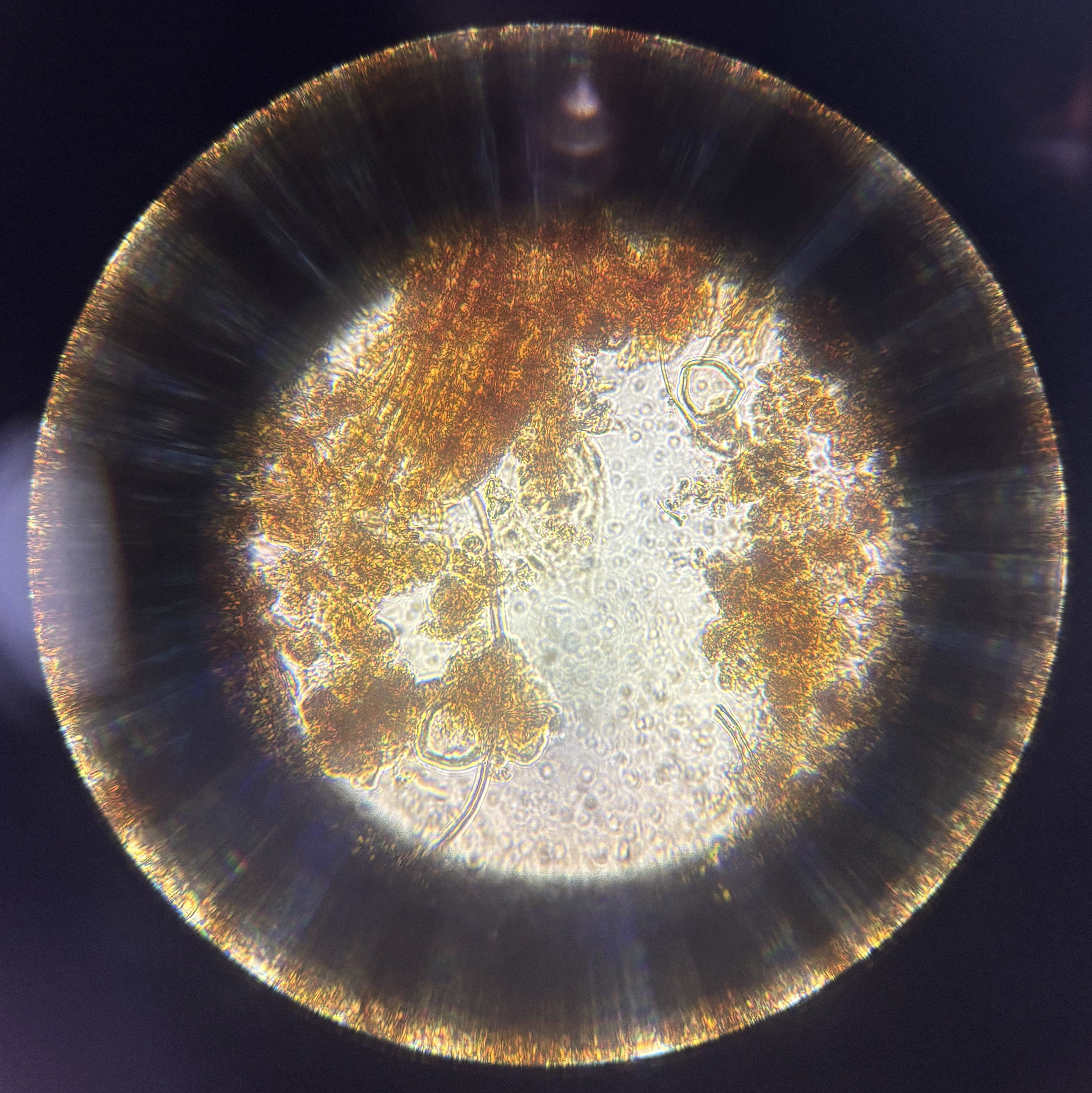
A live sample from Irish peat, when doing pollen count analysis for historic native vegetation composition in the area. Two betula (birch) grains are visible.

In addition to the courses I took at UCC, I spent a lot of my time traveling and hiking, to see less traveled parts of the country. One of the most interesting things for me was learning what was considered to be native, or “wild”, from an environmental standpoint. I had completed my Wilderness Studies minor the semester before, which focused on wildland management in the States. In the case of Ireland, the strawberry tree is considered both an introduced species and a native one due to how long it has existed on the island. It is believed to have been brought over about 4,000 years ago from the Iberian Peninsula. Likewise, hazel is considered a wild native plant, but is nowadays more commonly found almost exclusively in hedgerows, as a large amount of it was harvested by early settlers. Ireland is called the Emerald Isle, a name earned from its extensive coverage of grass fields. Though pre-settlement Ireland was around 80% covered by native trees and woodland, now less than 1% of the island is wooded, most of which is a non-native species that have been planted for timber production.

Over 70% of the country of Ireland is now farmland; you can see cleared farmland bordered on the upper left by homogeneous conifer plantations.

I spent half of my spring break backpacking through the Scottish Highlands in Cairngorm National Park, considered to be one of the last wild places in the British Isles. Everywhere I turned, I saw that the park had been stripped and hunted of most of its natural resources, from the trees that were removed during the world wars, to the native deer populations hunted for sport by local communities and nobility alike. In both cases, it allowed me to take a step back and look at how historic resource removal became so commonplace that now that these places lack most of their resources, it is considered normal, wild, and beautiful. What does this mean for other places natural resource extraction? Is the reasoning that something else will replace it, like in the case of Irish woodlands to farm land, an acceptable answer? These are some questions that I wish to explore further.
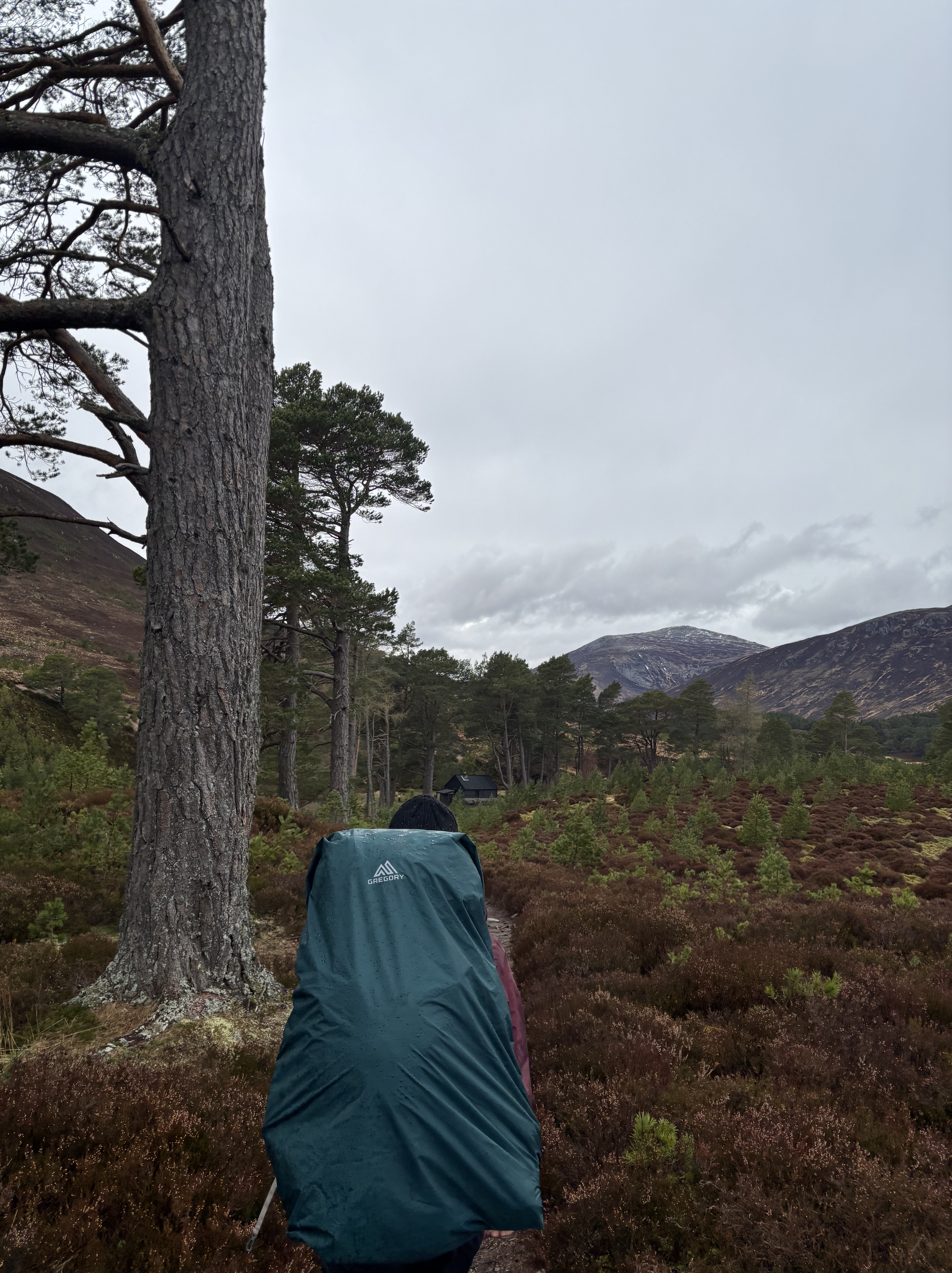
Hiking through a few remaining trees along the valley floor, with many smaller saplings starting to become established, you can see the bare hills in the background. Historically this would have all been forested by the tall trees on our left.

Looking down on the valley where a few lone trees can be spotted along the valley floor that have started to regenerate following the mass logging of the world wars and over consumption of natural resources. Historically, woodlands would have spanned up the majority of the hillside before the conditions would have become too hostile.

These questions and my learnings are building blocks of the whole of my education that I will carry with me forever. As I think back on the time I spent in Ireland, I think back on everything I experienced, all the people I met, and all the things I learned, and how I will carry every moment of it forward with me.

A Semester Of Good Craic!

In Gaelic, ‘craic’ pronounced like the English word, ‘crack’ means ‘a good time’ and let me tell you, Ireland did not disappoint! I’m Brooklyn Grimm, a third year student at The University of Montana studying Elementary Education! I joined the Franke Global Leadership Initiative as an incoming freshman because I have always wanted to learn more about the world and explore other places besides The United States. My theme, Public Global Health, covers the different factors that play into the variety of approaches to Public Health and the varying challenges that may need to be overcome in order to promote Public Health in different parts of the world. For my Beyond The Classroom experience I chose to explore the Public Global Health theme further by spending my Spring 2025 semester in Cork, Ireland! There I had the privilege of taking several relative courses including ‘Intro to Public Health’ and ‘Public Health Issues’ which focused on Public Health problems specific to Ireland such as the over-consumption of alcohol and the way smoking tobacco has been normalized in most public spaces throughout the country.

University College Cork where I attended my classes!

Learning about the thoughtful ways in which Ireland has attempted to minimize alcohol consumption and unhealthy habits throughout the population was an eye-opening experience for me. One concept that really stuck with me throughout the semester was the importance of brainstorming ways to promote health without causing a larger social divide between differing demographics. For example, one approach to minimizing alcohol consumption was to raise the price of alcohol, however, some concern is shown now for those who may be experiencing an addiction to alcohol. Realistically, these individuals are going to find a way to drink it and raising the price of alcohol may only lead them to a darker financial place than before.

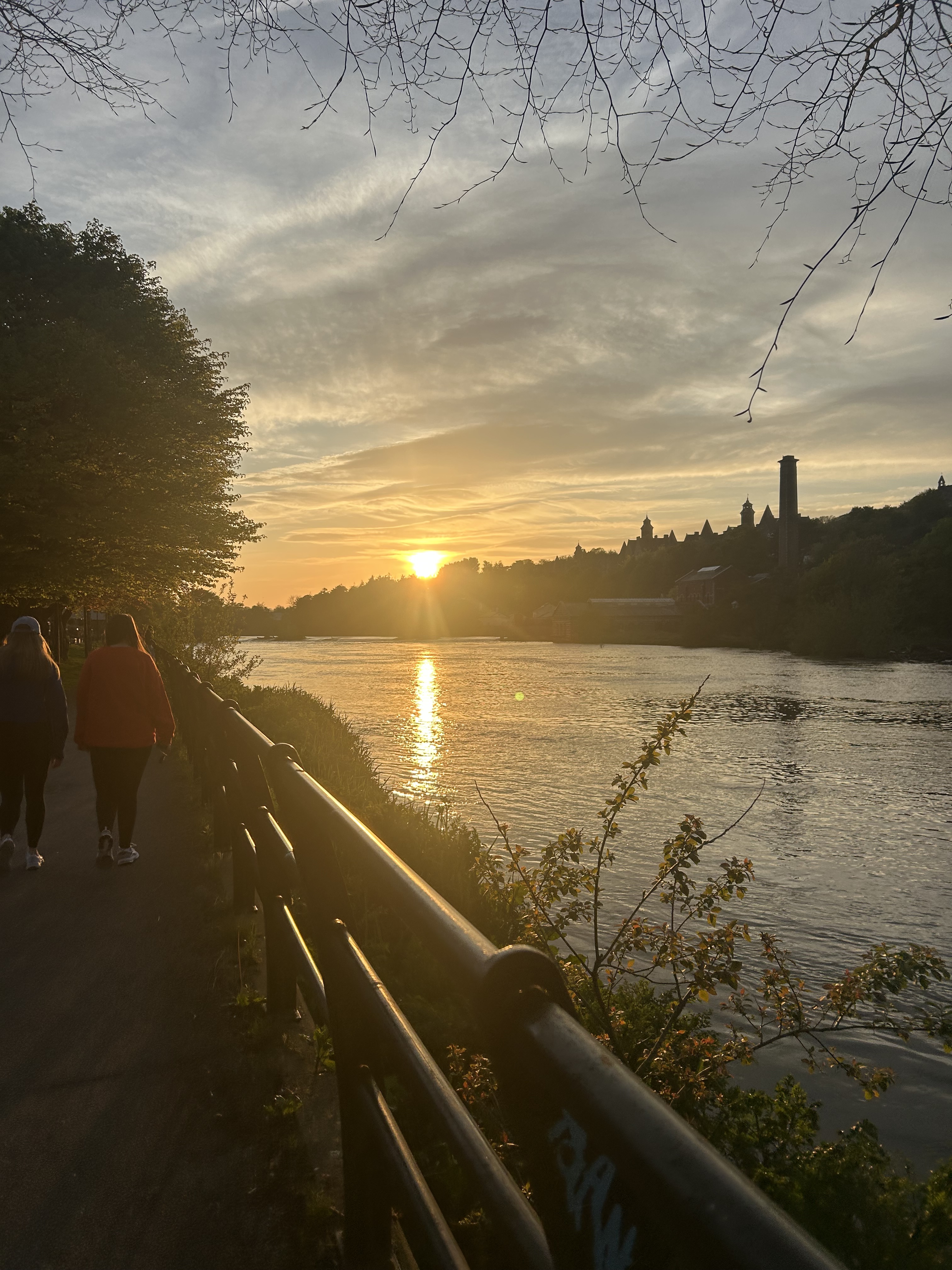
The River Lee I got to walk every morning with one of my closest abroad friends!

Aside from broadening my perspective on the Public Global Health theme, this study abroad experience altered my perspective on life as a whole. I had the opportunity to meet loads of people from diverse upbringings and cultural norms and learn more about how these things impacted them and their worldview. I made friends with other fellow Americans and in addition, I met people from Argentina, France, Germany, The Netherlands, Finland, Canada, and of course, Ireland! I would not trade the sunset picnics, coffee runs, beach days, craft and cooking nights, Irish roadtrips, and insightful conversations I had with these new friends for the world! Cork, Ireland is truly a sweet place with a mix of city and small town vibes and I loved getting to live there for those short four months of my life. I am simply overwhelmed with gratitude for this incredible opportunity and the fact that I have so many reasons to hopefully visit Cork and Europe as a whole again!

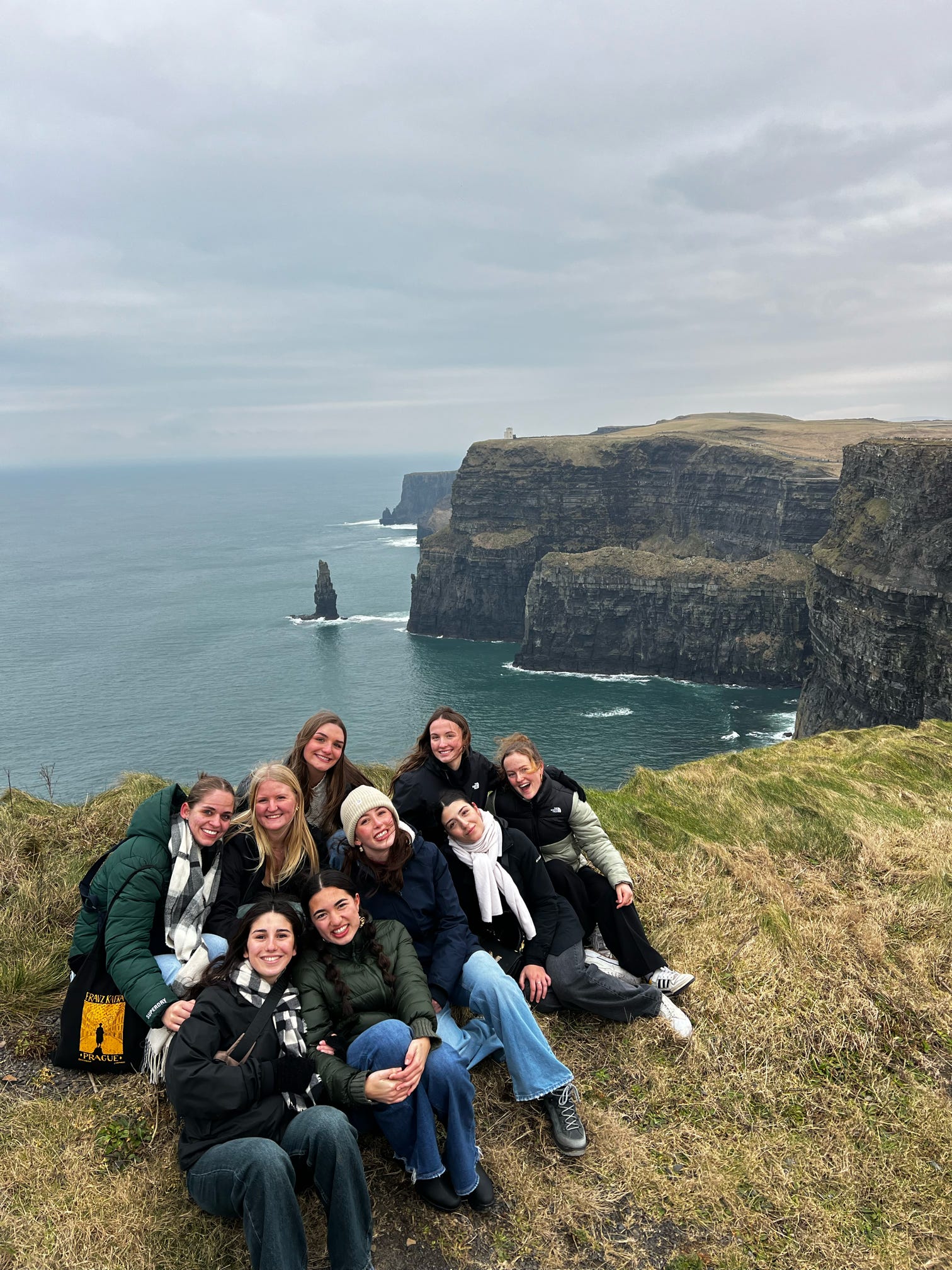
A portion of my new international friends at the Cliffs of Moher!

Studying Abroad in Cork, Ireland

Hello! My name is Daniel Martin, and from September to December 2024 I studied abroad in Cork, Ireland at University College Cork (UCC). My global theme is Resources and Sustainability, and my global challenge is how to use governmental policy to solve environmental problems such as climate change, especially in rural states like Montana. I used my experience to better understand and work towards the resolution of my challenge because Ireland is a vastly different place than Montana, and by understanding its environment, people, and issues, I could prepare for similar analysis back home in Montana. A key part of my experience was a class I took at UCC called People, Places, & Politics: Ireland 1660-1960. In this class, we took a deep dive into understanding Ireland’s past and present through the lens of the country’s relationship between environment and people. In one particular lesson we looked at how land was used by various groups throughout Ireland’s history to control populations and how those policies were able to enact, or failed to enact, lasting change in Irish history. 

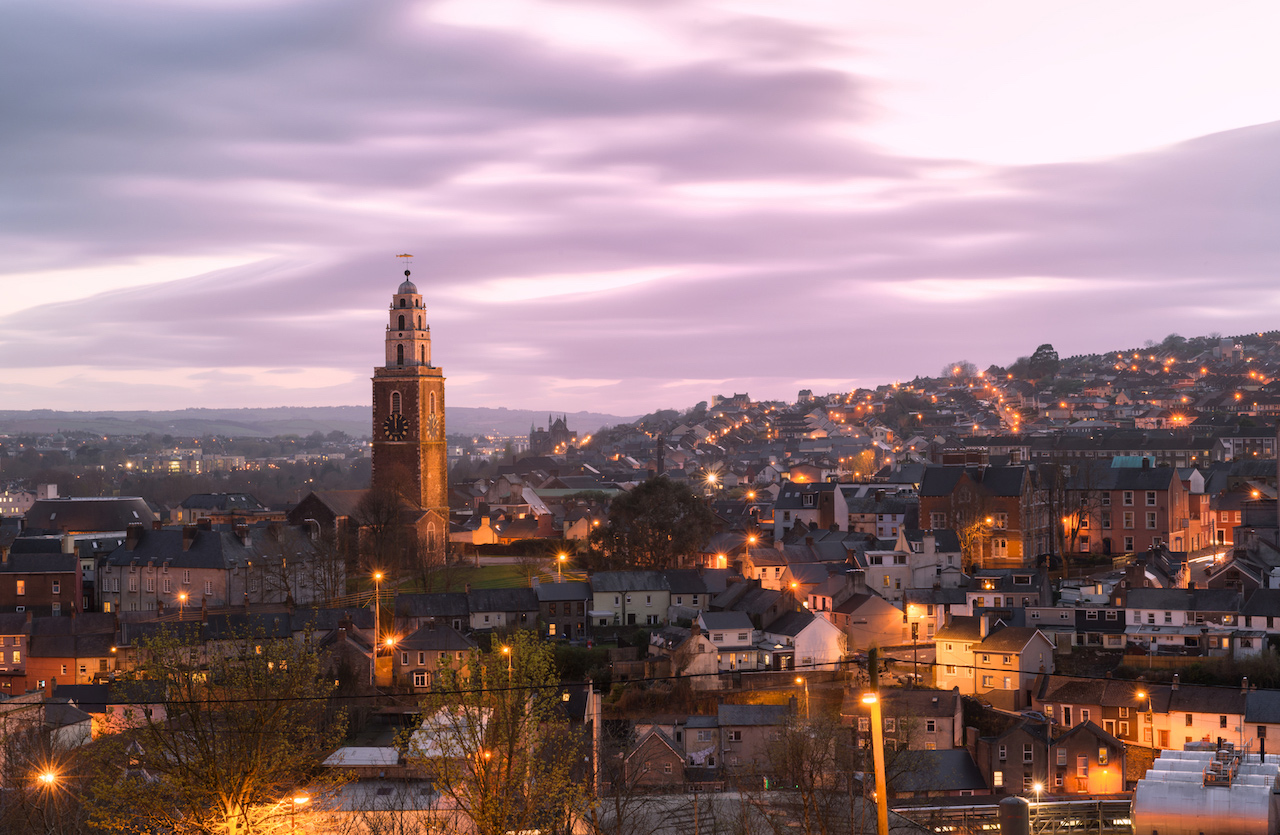
Cork City at Dusk

Alongside the courses I took at UCC, I also learned innumerable things from travelling throughout the country and experiencing the environments and communities that existed in Ireland. From the rocky coasts of County Sligo to the hilly farmland of County of Meath and from the distinctively British culture of Northern Ireland to the Irish-speaking areas such as the Dingle Peninsula, I was able to take my learning outside the classroom for an even more amazing experience. I was also fortunate enough to travel throughout Europe, where I expanded my cultural immersion. On one particular trip I visited Brussels and visited the headquarters of the EU, an organization whose climate and environmental policies, including their Net Zero plans, were key to understanding Europe and Ireland’s approach to climate change and sustainability.

One of the coolest things about Ireland I learned while on my semester abroad is that Ireland’s nickname, the Emerald Isle, is partially due to its prime environment for growing grasses. All this grass allows Ireland to be a world leader in wool production, which it uses for its famous sweaters, and butter production, thanks to the especially productive dairy cows on the island.

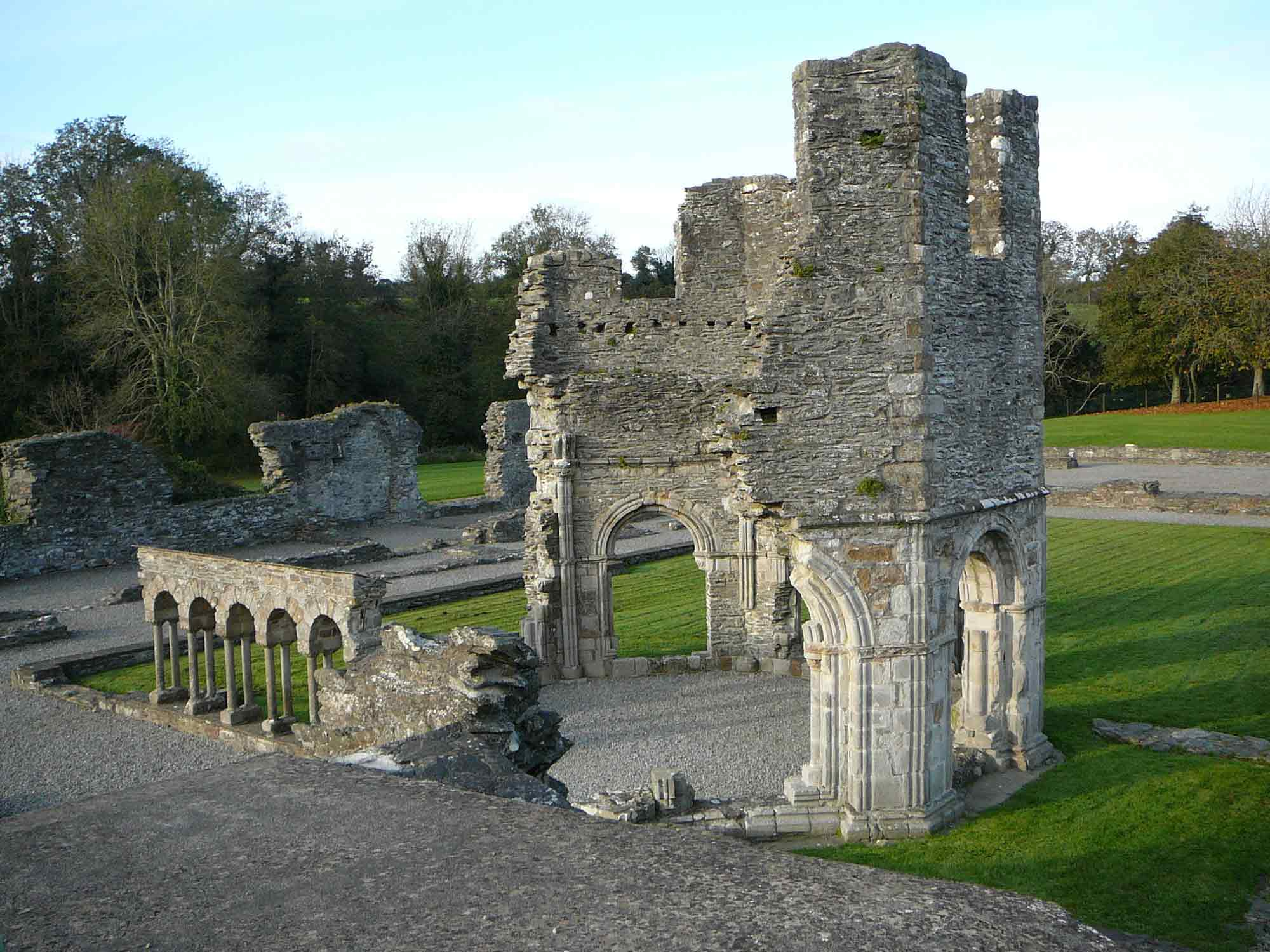
My favorite part of the semester in Ireland was exploring the incredible outdoor opportunities the country offered. In one of my favorite trips, I took the train from Cork to a city north of Dublin called Drogheda, not far from the border with Northern Ireland. Beginning in Drogheda is a long-distance hiking trail called the Boyne Valley Camino, which is part of the larger Camino de Santiago in northern Spain. I spent an entire day hiking this trail, which took me through lush farmlands, ancient battlefields, and finished at a Cistercian Abbey from 1142. This hike allowed me to truly experience the Irish outdoors while also exploring the rich history of Ireland.

The Ruins of Old Mellifont Abbey near Drogheda, Ireland

Me on a trip to the Aran Islands, off the coast of Galway

As I reflect on the 16 weeks I spent in Ireland, it is amazing to reminisce about everything I experienced, all the people I met, and the things I learned. I highly recommend a semester abroad for anyone who may be interested, it truly is a life changing experience. Of course, I could not have done it without the generous support of the Franke Global Leadership Initiative, of whom I am very grateful.

For the love of language

People always ask me why I’m studying a language like Irish. “You mean Gaelic?” they say. “I didn’t even know that was still a thing.” One particular professor asked why I didn’t want to study a “useful” language, like Chinese. Usually when I’m talking to someone like this who just doesn’t understand, I don’t bother wasting my time to explain. I just shrug my shoulders and smile, and they seem to let it go. I haven’t yet perfected my persuasive argument on why studying languages that aren’t “useful” is so important to me. But I’m working on it. It started with Latin. I took “the dead language” in high school because I wanted to be different – I didn’t want to be like everyone else who took Spanish and French. And sure, no one really speaks Latin anymore. Less than 100,000 people speak Irish. But these languages are NOT dead – not so long as there is someone like me around who wants to study them and learn from them. A language is so much more than a set of grammar rules, a lexicon, and an alphabet. It’s a complex compilation of a culture. It holds history, values, and perspectives. If we let a language die, we let those components of a culture die. And with each fewer language, each fewer culture, our world becomes all that more homogeneous. And I don’t want that. I think one of the most beautiful things about humanity is our diversity, and more importantly, our ability to learn from each other. We have to preserve other ideals and ways of life in order to be able to learn from them. And we can preserve those ideals by preserving languages. I love Irish, not because it’s “useful,” but because it holds so much history and sacrifice and love within its words.

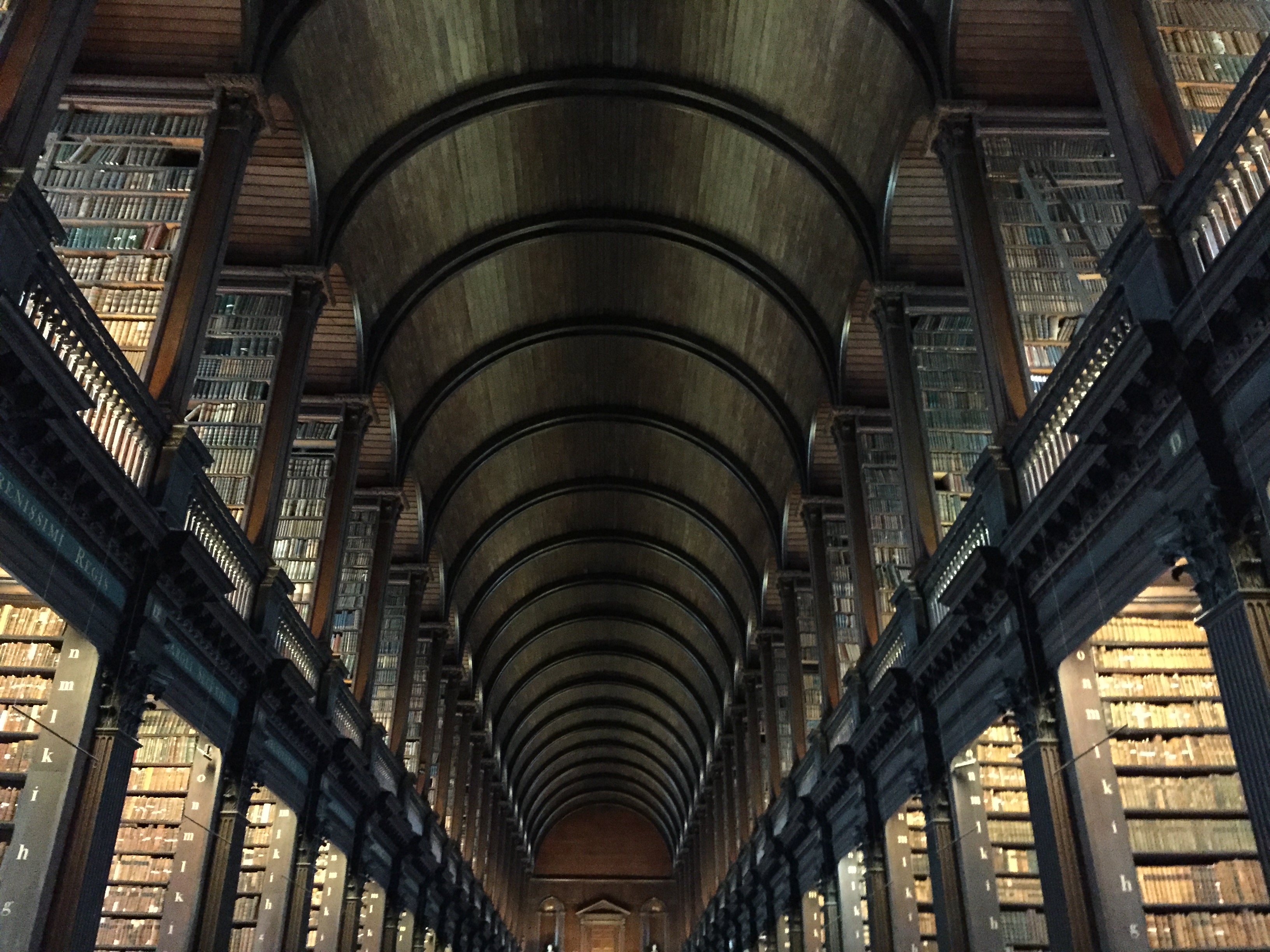
IMG_2254Old Library, Trinity College, Dublin, Republic of Ireland

IMG_2249Trinity College, Dublin, Republic of Ireland

Terror from within

Terrorism. Today, when we say that word, it conjures up all kinds of images and feelings. Growing up, I’ve developed my own connotations of the word. In an unintentionally self-absorbed way, I assumed terrorism was an entirely American thing, and that it all started here with us. But Ireland has made me realize a different story. Merriam-Webster defines terrorism as the use of violent acts to frighten the people in an area as a way of trying to achieve a political goal. If you know anything about Irish history in the last hundred years or so, then you know this definition fits the conflict in Ireland to a T. A few years ago, I would have said that Ireland’s form of terrorism was very different than ours, in the sense that our fear is of a foreign enemy, and Ireland’s of a domestic one. However, I now believe we can somewhat better understand Ireland’s form of terrorism. With our present and ongoing domestic mass shootings and bombings, more and more often in the name of ISIS, we are becoming less afraid of an enemy outside our borders and more terrified of one within. I’m not making any assertions on which form is better, as they are both obviously atrocious and unbearable, I’m just making an observation on what I see as a developing similarity. What is particularly interesting to me, however, is the fact that I can almost empathize with the motivations for Irish terrorism. I get it. Almost. I understand why they were willing to go so far, after so many centuries of being ignored. But I just do not comprehend ISIS’s rationale. I find it impossible to fathom how they really think mass murder will lead to a better world. You could say Ireland is now a better place, but only once terror was primarily discarded. Violence doesn’t create peace – it only creates more violence. How many more times will the world be shown this before we finally pay attention?

IMG_2978Belfast, Northern Ireland

IMG_3513Derry, Northern Ireland

I’m from Montana

During my time in Ireland, I realized that whenever someone asked me where I was from, my instinctive response was “I’m from Montana.” Not once did I ever say that I was from the United States. Once I noticed this, I couldn’t stop thinking about it. I began to understand that this was an expression of my personal identity. I don’t identify myself as an American. I know that I am, but it isn’t how I see myself. I’m first and foremost and always and forever a Montanan. My pride and my affection are for my state more so than for my country. Once I acknowledged this, I started thinking about the Irish identity – one so very different from my own. My Montana pride stems from the state’s beauty and way of life and the simple fact that it’s my home. Irish pride, if I may say so, is a lot more complex – so complex that I don’t believe I can accurately explain it or ever fully understand it. Of course it varies for every person, but it’s rooted in centuries of conflict and poverty and oppression. If you ask any American when they think their history starts, they will most likely say somewhere around 1776. If you ask any Irishman, you’ll get a lot of different answers – but all of them will be a lot longer ago than some measly 200 years. This is one of the things that most fascinates me about the Irish. Their history spans such a greater time period, and all of it remains so central to their modern identity. History is a common topic of conversation in a very different way than it is here. Because I don’t have this immense frame of history, I don’t believe I’ll ever be able to really understand what it is to be Irish. But even as I lack that understanding, I know what it means to be a Montanan, and that’s enough for me.

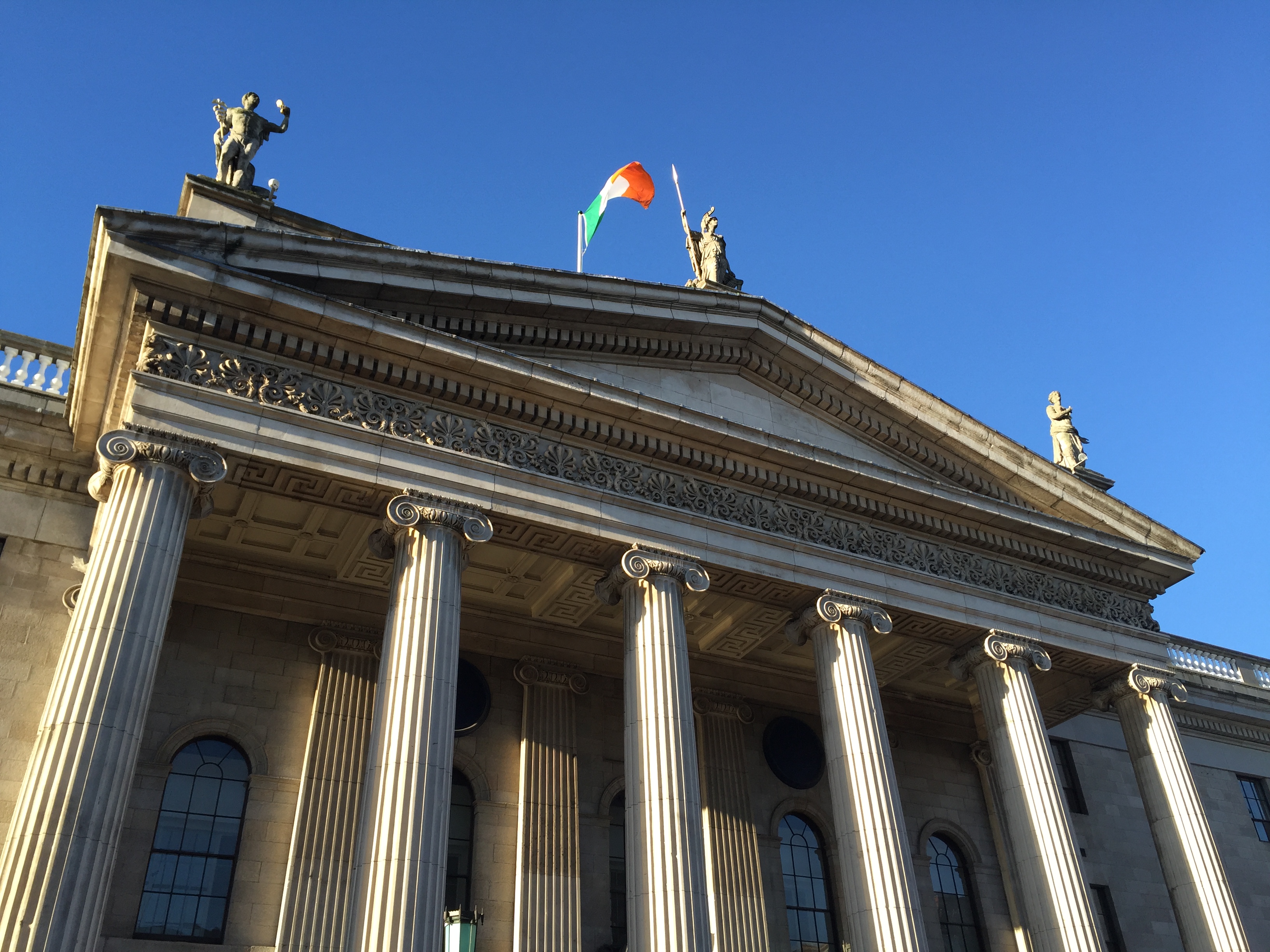
IMG_2332General Post Office, Dublin, Republic of Ireland
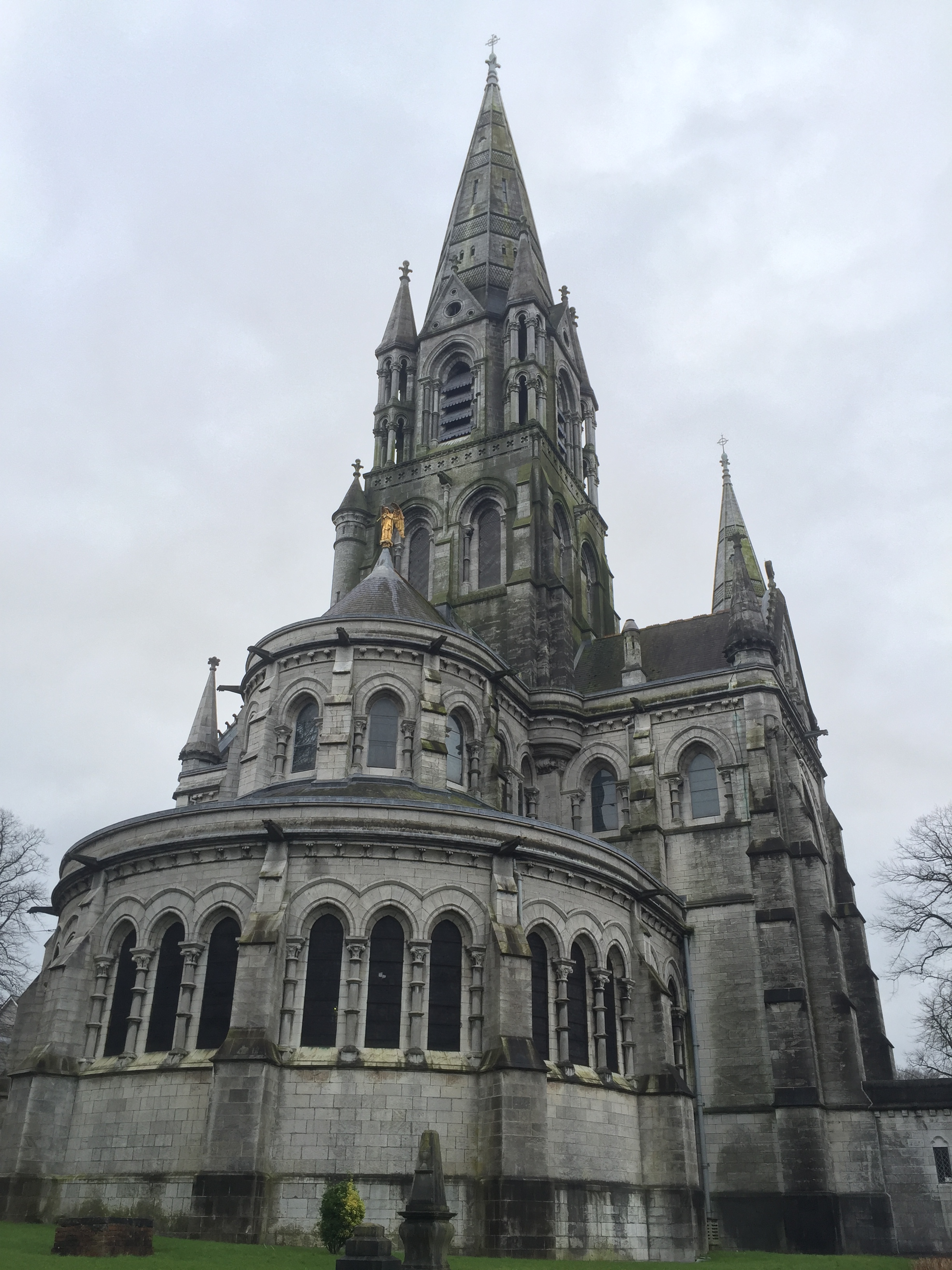
IMG_4439St. Finbarr’s Cathedral, Cork, Republic of Ireland

Ireland at a Glance

Greetings all!

My first impression of Ireland is ‘wild’. Not wild as in cool, but almost feral, though that might be a bit too strong. Everything man-made in Ireland, from its buildings, to its sidewalks, to its urban landscape is constantly being reclaimed by nature. Reclaimed, or maybe absorbed is the right word. There’s a harmony in effect, between humanity and this vast land that it has inhabited for thousands of years. I completely understand why myth and cultural knowledge is so prevalent here. And it is beautiful. If Montana is ‘untamed’ then Ireland is ‘wild’.

But metaphysical ramblings aside, Ireland is grand. They say that here – grand, instead of good or great. For all that they say Western Europe is similar to America in terms of world view, there are some noticeable differences. Not that that’s a bad thing, its just fun to stop and realize once in a while that you’re in a foreign country. For me, who, before this, had never been outside the United States and Canada, I like to be reminded everyday that I’m a world away. It puts things in perspective.

University College Cork is still a college though. I still go to classes, meet up with friends, study, write essays. But there are some fun differences. For one, the student government is a lot more present here. Apparently campaigns are really big. Not just elections, but campaigns to get things changed. It can be something serious like the fight for marriage equality to something silly, like trying to get the Cadbury Wispa candybar reinstated (they succeeded by the way and everyone here is really proud of that fact). In Montana, no matter how much Americans are very proud of their 1st Amendment right to assemble and petition however they like, we don’t do things like that. I remember one instance in my time at UM when there was an actual assembly to students to protest something. Maybe it says something about our attitudes towards protesters. I don’t know and I cannot judge on this, but I think the difference is something that might be worth looking into, especially for us in GLI.

I really love it here though, especially the archaeology. There’s just so much of it! And the Archaeology Department is grand with good people. All in all, I’m really glad I’m in Cork, Ireland.