My Summer in the Nation’s Capital

Hello! My name is Zachery Craig, and I am entering my final year studying Social Studies and Secondary Education. For my Beyond the Classroom experience this summer, I interned on Capitol Hill in Washington, D.C. for Senator Jon Tester. My internship was three months long, where I’d work 40 hours a week answering phone calls, giving tours of the Capitol Building, and doing projects. I got to meet amazing people I will call my friends for the rest of my life while in the internship. The staff I worked under were very kind and taught me a lot about how politics works behind the scenes. It was amazing to see all of these important figures daily, even getting to talk to a few!

This is the photo of me with Senator Tester. We got to talk to him a lot, more than most interns get to talk to the Senator they work for.

I’ve never had an extensive period of living in a large city by myself until this experience. It was a little frightening at first, but I felt like I was able to adapt to the city. Washington D.C. has a really good public transportation system that I was able to master pretty quickly. I stayed in an Airbnb that was about a 40-minute commute from the office building I worked in. I got to explore most of the city, going to most of the museums and all of the monuments except for the Jefferson. As a Social Studies major, it was truly awe-inspiring to see both the history and politics of the city. Some of my favorite things I did this summer was go to Baltimore to see the National Aquarium, tour the White House and watch fireworks during the Fourth of July from the steps of the Capitol Building!

In this picture, I’m standing next to the first-ever Congresswoman in the nation, Montana’s own Jeannette Rankin. Each state sends two statues to be displayed in the Capitol, the other one from MT is of Charlie Russell.

I was placed with the Judiciary and Indian Affairs team during my time in the office. As a result, I attended a lot of hearings throughout the summer focusing on those areas. I’d research judges who were sent to the floor to be voted on, look at water rights and Homeland Security bills, and write memos that summarized what a bill did and who supported it. As a result, I got to learn about the bill process and judiciary nomination process, which I think will prove invaluable to me as a future educator. I also went to the Senate floor a lot to see Senators speak on issues. I made it a goal of mine to see every single Senator, and I managed to see 99 out of 100. I ran into some while eating lunch, saw some in committee hearings, or walked by them while in the office building. I even talked to a few, if even for a second. It was truly amazing to get to walk among these figures.

I took this picture of the Reflecting Pool and Washington Monument while I visited the Lincoln Memorial.

My GLI Global Theme and Challenge is Inequality & Human Rights. I made it a point to focus on Indian Affairs issues because of my theme. I attended hearings on issues that face the Indigenous community, mainly focusing on water rights issues. I also attended a panel from the staff of the Indian Affairs Committee. It is one of the most bipartisan committees as the issues facing the Indigenous community aren’t too political or controversial in nature.

Overall, I’ve learned a lot during this experience. My leadership skills improved throughout because I took risks in the office, taking on projects to keep me busy, and also because I was surrounded by the political leaders of America. The staff I worked under had a great leadership mentality that I will look to mimic in my career. I think an internship on Capitol Hill could be for anyone, regardless of political beliefs or area of study! There are so many broad opportunities in Washington, D.C. and I’ll forever be grateful to GLI for giving me the ability to experience some of those opportunities.
Semester in our Sister City Palmerston North, New Zealand

My name is Sadie, I’m a Parks, Tourism, and Recreation Management major at UM. For my beyond the classroom experience, I studied abroad in New Zealand. My semester in the North Island was unforgettable to say the least! Within the Culture and Politics theme, I chose to study in Aotearoa because of the country’s reputation for outdoor recreation and care for the environment. I was interested in the ways they managed land for recreation while honoring the use capacity of the land. I took environmental planning courses that allowed me to gain a small glimpse into the planning processes that manage sustainable land use on the North Island. There are many key players when it comes to sustainable land and water usage, and learning about the ways in which they conflict or collaborate in this realm gave me the tools to more effectively work with others to find common ground solutions to complex environmental issues.

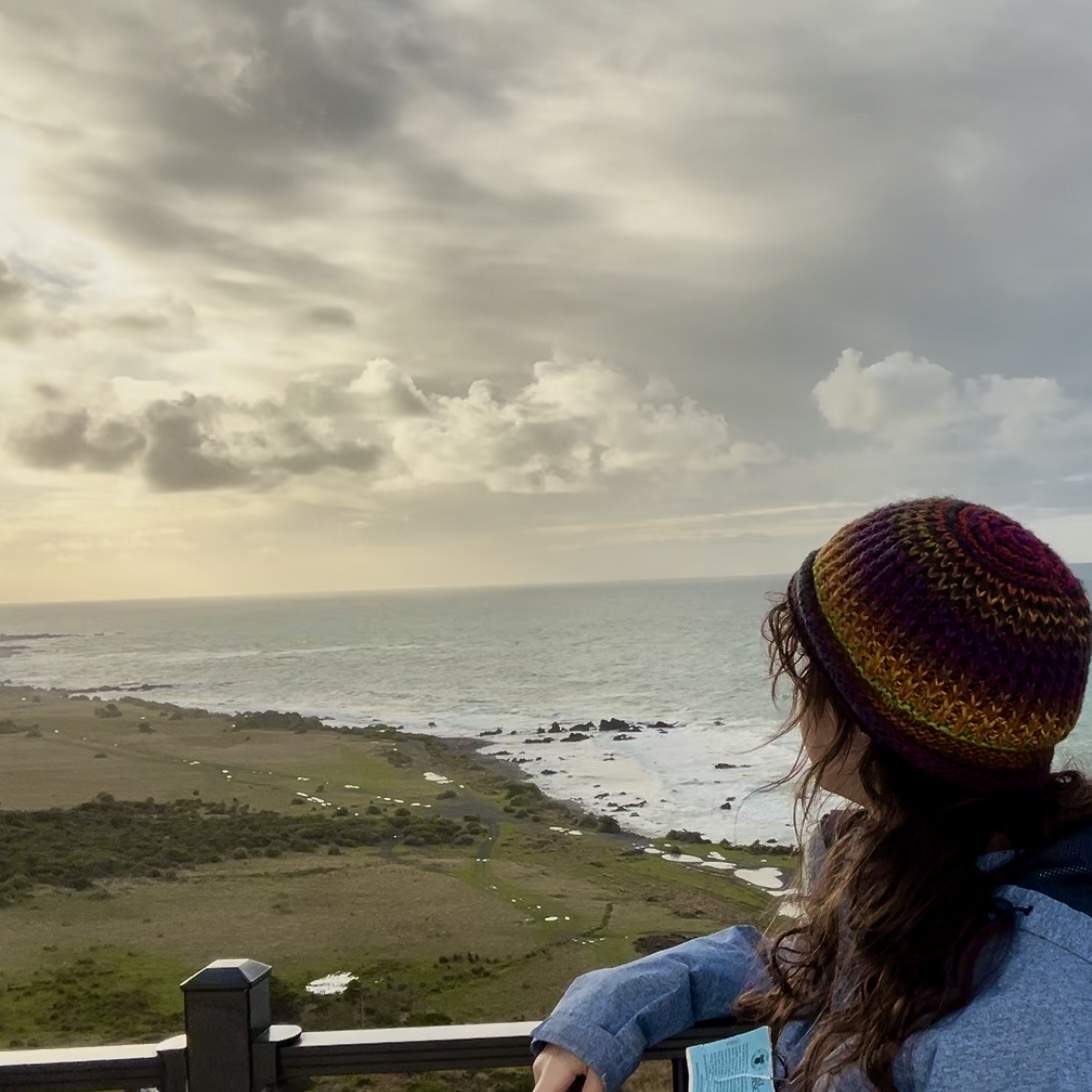
Looking out over the southern edge of the North Island in Cape Palliser

During my stay, and in these classes, I came to realize that New Zealand has a complicated relationship with sustainable land use, much like the US. Many of the waterways are exhausted with pollutants from the agricultural industries supporting the economy in the North. It was challenging and a shock to see rivers I could not swim in, unlike what I was used to in Missoula. It reminded me of how lucky I am to live in a community like Montana where clean water island public lands are a value shared by most. 

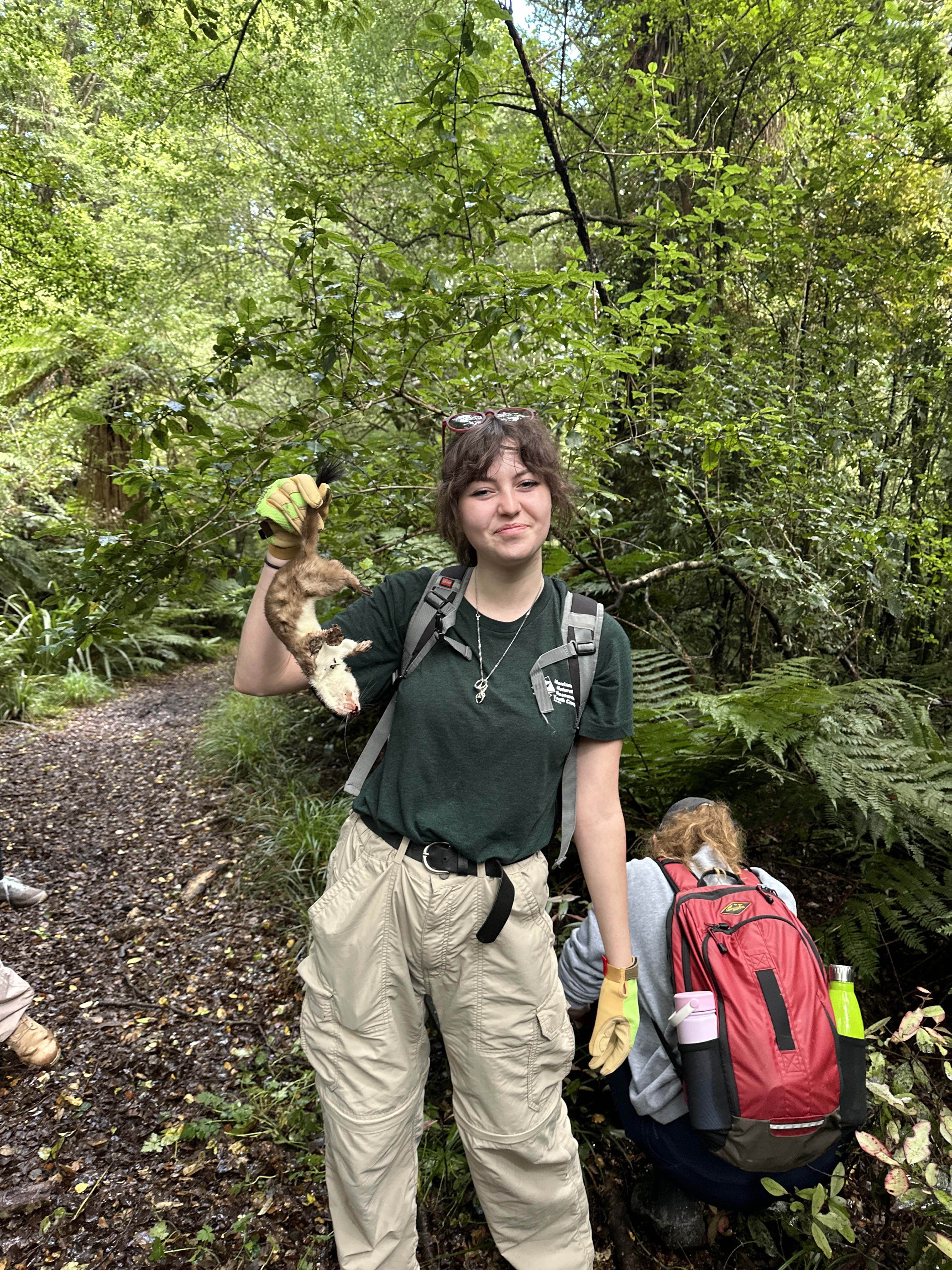
While there, I tried my best to seek out new experiences and push the boundaries of my knowledge. One of the ways I did this was to become involved with the Wildlife Club on campus, where I learned about the aggressive invasive species elimination tactics across the country, set on eliminating non-native species like stoats and hedgehogs, which are decimating native species of plants and animals. The tactics used were far more intense than what I had seen in the US. To further educate myself on this, I maintained trap lines in the Ruahine Range, got involved in native swamp and riparian area reconstruction, and I volunteered with the Wildbase Recovery Suite aimed at rehabilitating indigenous bird species and educating the public on their importance. These experiences allowed me to familiarize myself with the land, plants, and animals of Aotearoa in a way that far exceeded classroom learning. In these activities, I gained important leadership skills like collaboration and critical thinking, as I was often on an isolated team of volunteers that needed to make important decisions in the moment.

Holding a stoat found in one of the traps in the Ruahine Range

When I left home, I was incredibly worried that I wouldn’t make friends with people or fit into the campus environment. An important aspect of my lifestyle in Missoula was participating in local music, which I was anxious about leaving behind. To fix this, I got in touch with the Student Radio Network on my new university campus, Radio Control. Immediately, they took me in and became my family throughout the semester. I began hosting my own radio show “Missing Montana” focused on linking Montana artists with New Zealand, and participating in the local scene in Palmerston North by DJing and going to shows. I gained important conversational skills though interviewing artists live on air, and learned how to foster collaboration between global communities. 

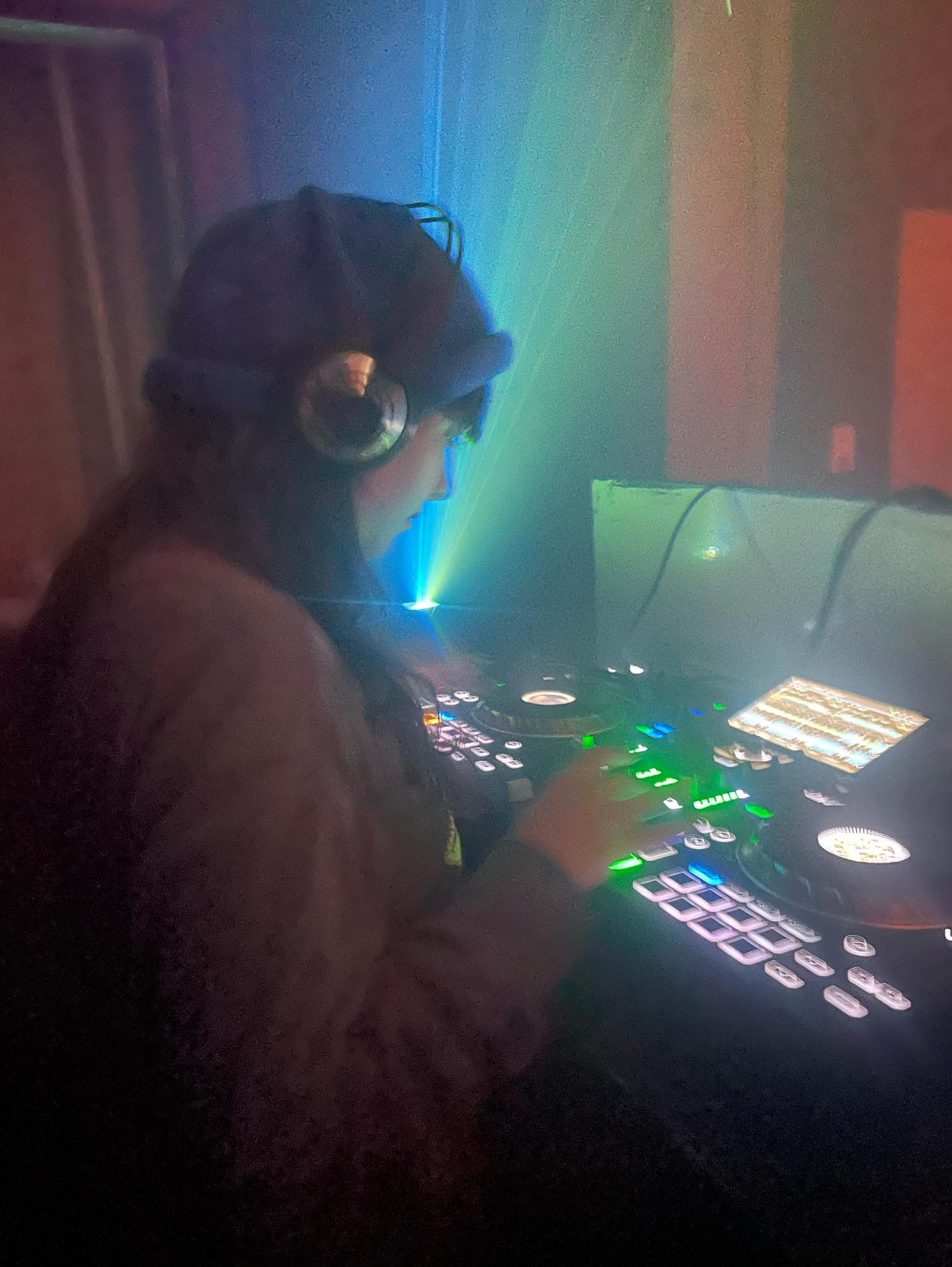
Working the deck in Tiny Club Inside the sound booth during my radio show

Overall, my experience in Aotearoa was incredible and I’ve grown so much as an individual. I’ve been inspired to find more ways to connect my love for music with my passion for outdoor recreation. I hope to visit Palmy again soon and continue my work with Radio Control!

My friends during my Michael Cera themed goodbye party

Living and Learning on Flathead Lake

Hi all! My name is Maya Gritzner and I am a senior studying Biology with a concentration in Ecology and Organismal Biology with a minor in International Development Studies. For my Out of Classroom Experience I chose to take a Field Ecology class at Flathead Lake Biological Station, which is located about an hour and a half north of Missoula on the shores of Flathead Lake. I spent four weeks living and studying at the bio station where I met many amazing and inspirational people, spent my time in some truly spectacular landscapes, and learned a great deal about ecological principles, components, and research methods.

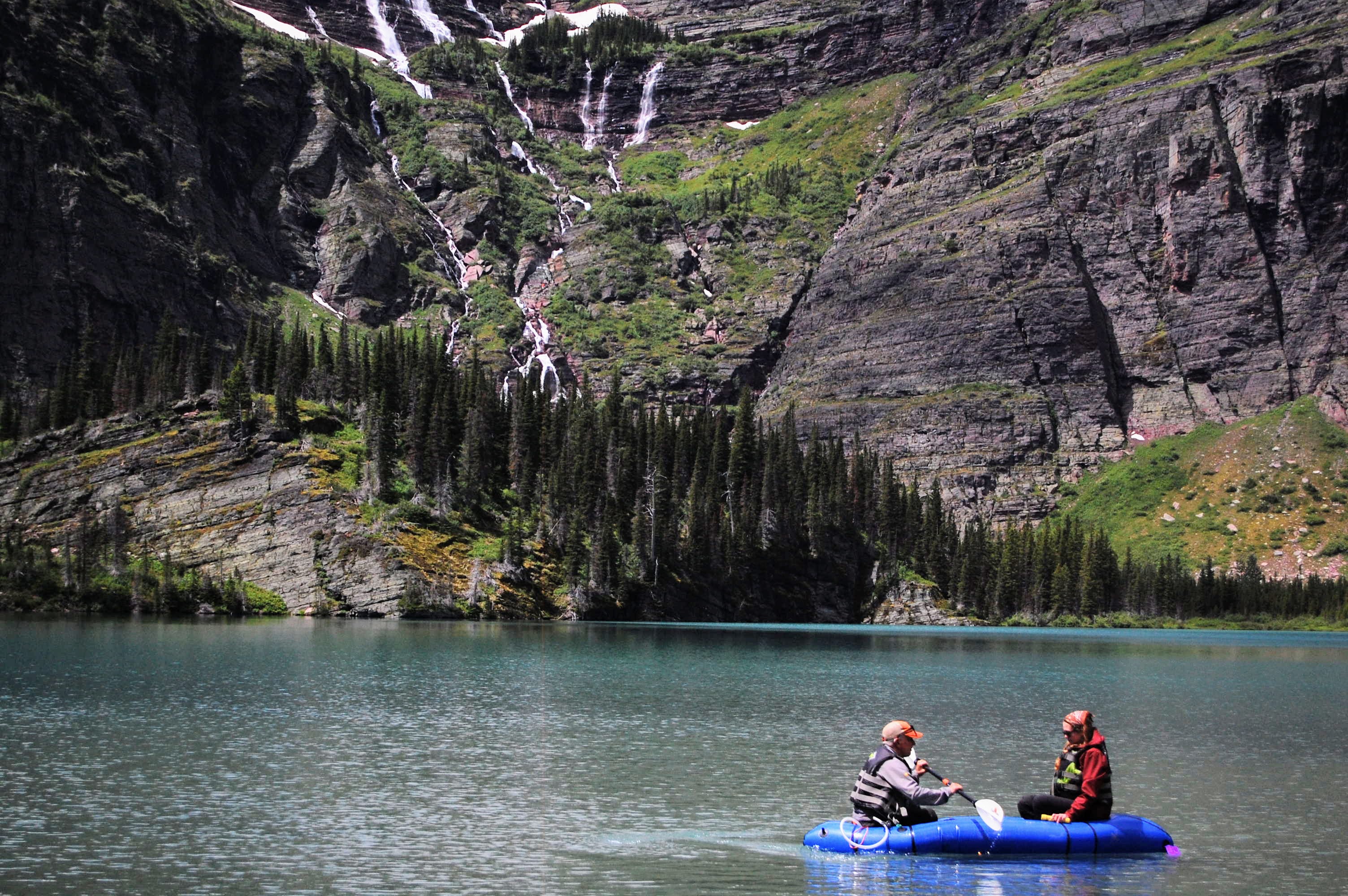
In this photo, I am collecting water samples with my professor on Grinnell Lake in Glacier National Park. We used these samples to measure nutrient levels and phytoplankton biomass within the lake. During this sampling trip, our raft started deflating as the air within it cooled and I was pretty concerned we might end up in the lake while we were measuring just how cold it was, which I can assure you was very cold.

During my time in the GLI, I’ve chosen to focus on the Global Theme of Resources and Sustainability. I have always been very passionate about the well-being of the natural world. Through my exploration of this theme, I’ve come to understand just how entangled and reliant society is on nature and the resources it provides. Healthy ecosystems have intrinsic value outside of what they provide to people, but it is undeniable that the state of our planet dictates the state of humanity. My experience at the Flathead Biological Station reinforced this perspective and gave me a greater understanding of what can be done to counter the degradation and dysfunction afflicting most of our world’s ecosystems due to human influence.

Another incredible part of this course was getting to participate in a Classroom-based Undergraduate Research Experience (CURE). My team of three students conceptualized, planned, implemented, and completed a research project in just four weeks. Our experiment sought to investigate the impacts of wildfire ash on phytoplankton biomass. This experience provided me with an opportunity to learn more about the research process and practice leadership skills. My team was well-balanced and we were able to collaborate and communicate well once we learned to recognize each other’s strengths. As with all good science, our results left us with more questions than answers, but the station plans to continue our research next season and I’m very excited to see what the next team discovers.

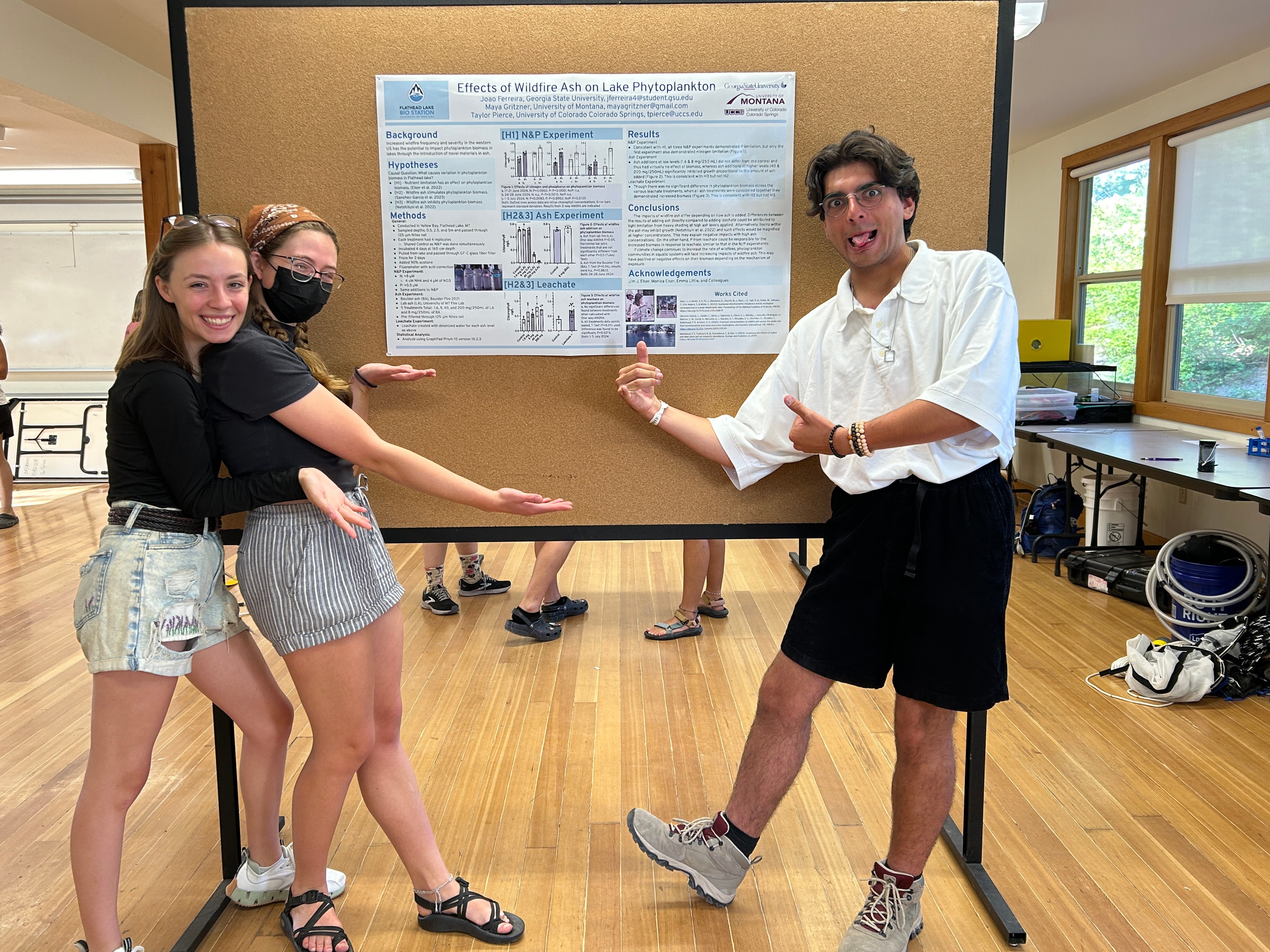
Our end-of-class poster session, where we presented the results of our study to the other researchers, interns, and students of the bio station. It was a bit nerve-wracking to speak to such accomplished scientists about this little research project, but my teammates Taylor and João, did a great job of explaining the parts I had a difficult time articulating.

I am incredibly grateful for this experience, and I only wish it had been longer. I would love to learn more about restoration ecology as, now that I have a strong foundational understanding of the current issues facing many ecosystems, I want to know what must be done to restore them and how I can be an active participant in those efforts to better our world on a global scale.

A Summer in the Amazon Rainforest

Hi all! My name is Hattie Ransom, and I am a Wildlife Biology major with the GLI theme of Resources and Sustainability. I spent this past summer interning under Fauna Forever, an organization that collects important ecological data about the wildlife in the Peruvian Amazon to support the conservation of its resources, landscapes, and plant and animal populations. 

Tucked away in the rainforest of the Madre de Dios region of Peru, getting to the Secret Forest Ranger Station was no easy feat. My 48 hour travel day consisted of a layover in LA, a night spent in Lima, a plane to Puerto Maldonado, a tuk tuk to a hostel, an hour long bus ride, and a 30 minute boat ride. Upon my arrival at the station, I was pretty exhausted to say the least. This exhaustion was quickly forgotten as I took in my surroundings. Located just off of the Madre de Dios River, the Secret Forest Station is a biodiversity hotspot with trees towering overhead and birds darting across the canopy. My crew’s arrival was welcomed by the call of oropendolas and the chatter of Tamarin monkeys. 

Views of the canopy from a tower near Secret Forest.

After dropping luggage off and settling in a bit, we met for a two hour safety briefing. The presentation warned of us wandering spiders, bullet ants, coral snakes, dengue, tree falls, electric eels, and other dangers we may face while living in the rainforest. After this briefing, I found myself contemplating my life decisions. But after living in the Amazon for 3 months, I can safely say that, despite the many challenges I faced, it was all worth it. 

My primary focus during my stay was to help conduct bird research in the form of bird banding. With almost 2,000 species recorded in the country, Peru is one of the most biodiverse places in the world when it comes to birds. In the areas surrounding our field sites alone, upwards of 600 species could be observed. It was incredible and honestly, a bit overwhelming. Between trying to learn names, calls, and life strategies, I sometimes felt like my brain might overheat and shut off. 

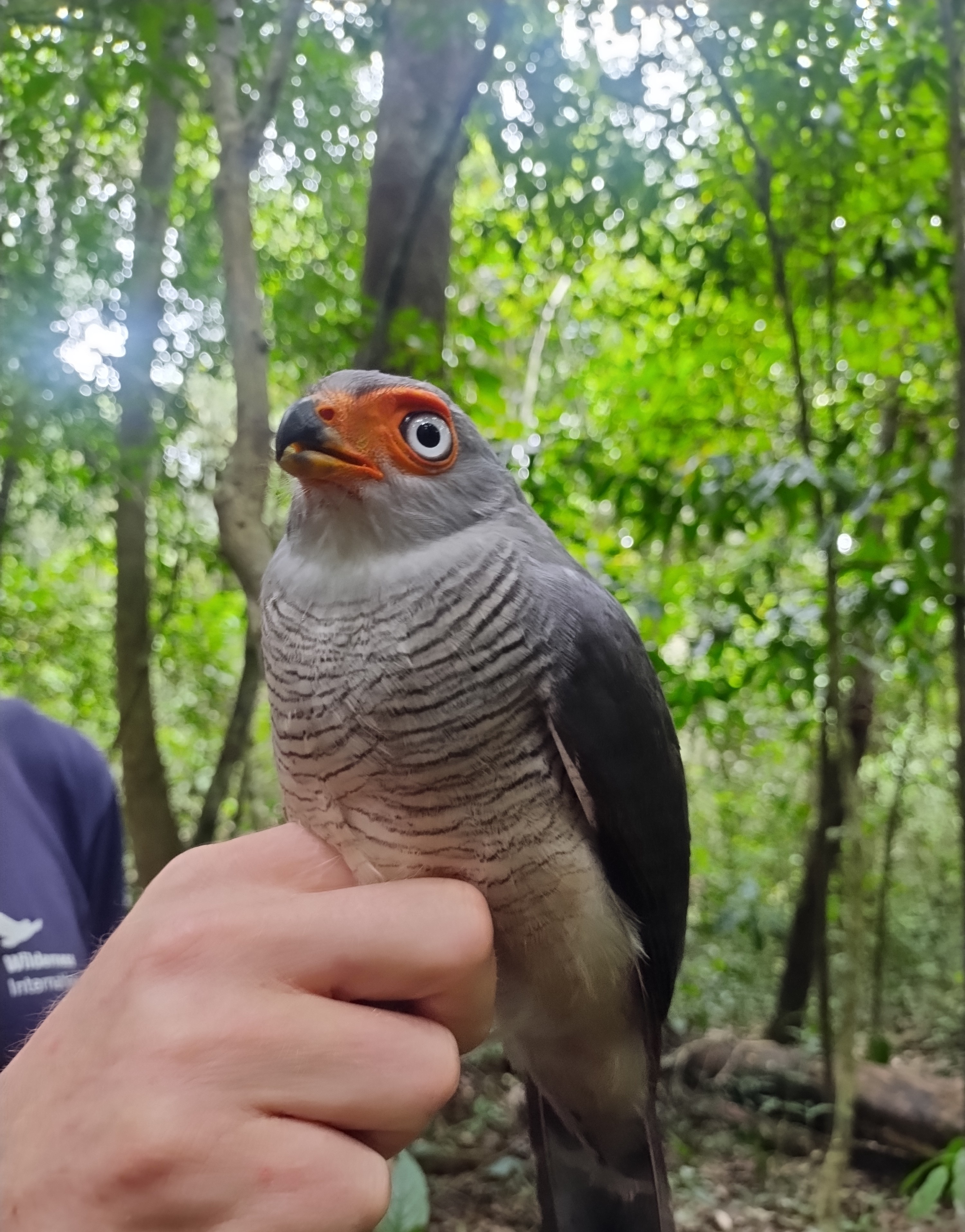
Lined Forest-Falcon

“The early bird catches the worm” and the early biologist catches the bird. On an average day, I was up at 4:30 am, eating breakfast at 5:00, and ready to go out into the rainforest by 5:30. Birds forage and are most active in the cooler morning hours and therefore, this is the best time to study them. Each morning, we set up 6-10 mist nets, checking them every 40 minutes to ensure that no bird had been left in the net for too long. After carefully extracting these birds, they were taken back to our banding station where they were given a unique band number in the form of a small, aluminum bracelet (used to track the bird in the event of a recapture). The birds were aged, sexed, weighed, and measured in a timely manner. They were then safely released with a little bit of ankle bling. This whole process was quite technical, and I spent much of my summer learning how to properly take measurements, and id and age each bird correctly. Because I had worked with birds prior to this experience, I had a lot of opportunities to lead and teach other interns which helped me to refine my own techniques and feel more confident in my abilities.

Banding a Royal Flycatcher. This bird does an elaborate mating and defense display in which it reveals a feather crown while rotating its head and opening its mouth.

Not only did I learn an incredible amount about wildlife research, but I also feel like I learned a lot about the world. My research team members were from all over the globe, and I had a lot of interactions in which I learned about their cultural values and wildlife management approaches. I was also taught a lot by the Peruvians as they educated me about many of the challenges to conservation that are faced on a local level and shared some of the work that they are doing to protect the rainforests of the Amazon.

Band-tailed Manakin

This experience was life-changing, and it would not have been possible without the Franke GLI Fellowship scholarship. I cannot thank the GLI program enough for guiding me through this experience and helping fulfill a childhood dream of mine.

My Semester Abroad in Athens, Greece

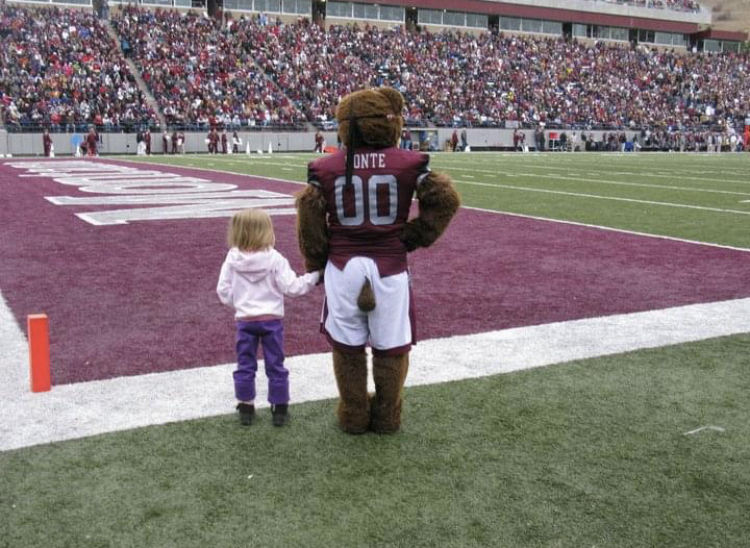
My name is Kalei Smith and I am from a small town in North Idaho. I grew up in Lolo, MT but we moved to Idaho to be closer to family when I was in seventh grade. I am studying Elementary Education here at the University of Montana. I have always loved Missoula and when I was looking at colleges, I originally was going to go to a school in Idaho, but as soon as I toured UM, I knew I wanted to attend. I have never felt homesick or out of place while I have been in Missoula because Montana was home to me for so long that it is just comfortable. Here is a picture of little me and Monte. 🙂

I studied abroad in Athens at The American College of Greece. In high school I always loved the idea of traveling to other countries and experiencing new cultures, so studying abroad was always in the back of my mind. I never thought it would actually be possible though, until I found out about GLI and decided to apply. The only country that I had been to before studying abroad was Mexico, and I loved getting to meet new people and see their culture, so I knew I would enjoy being in a new country. When I originally started planning my study abroad experience, I was thinking about going to Spain or Italy, but the schools I was looking at in those countries did not have many classes that interested me and it wasn’t guaranteed that those classes would be taught in English. The American College of Greece was appealing because everything is taught in English.

Once I was accepted to ACG, the process for getting my visa began. This was probably the most stressful part of the whole experience, because there were so many things that you had to have before you went to your appointment. Once I had my visa, the rest of the process was pretty simple. I browsed the course catalog to plan what classes I wanted to take and I had to set an alarm to register for classes at 2 a.m. I was able to register for classes that only took place on Tuesdays and Thursdays, because I wanted to be able to travel to other countries in Europe while I was studying abroad.

This is the Panathenaic Olympic Stadium. We visited this our first weekend in Athens and it was a trip we could sign up for through ACG. At the end of my semester in April, I had the opportunity to watch the Olympic Flame handover ceremony to France for the Paris 2024 Olympics.

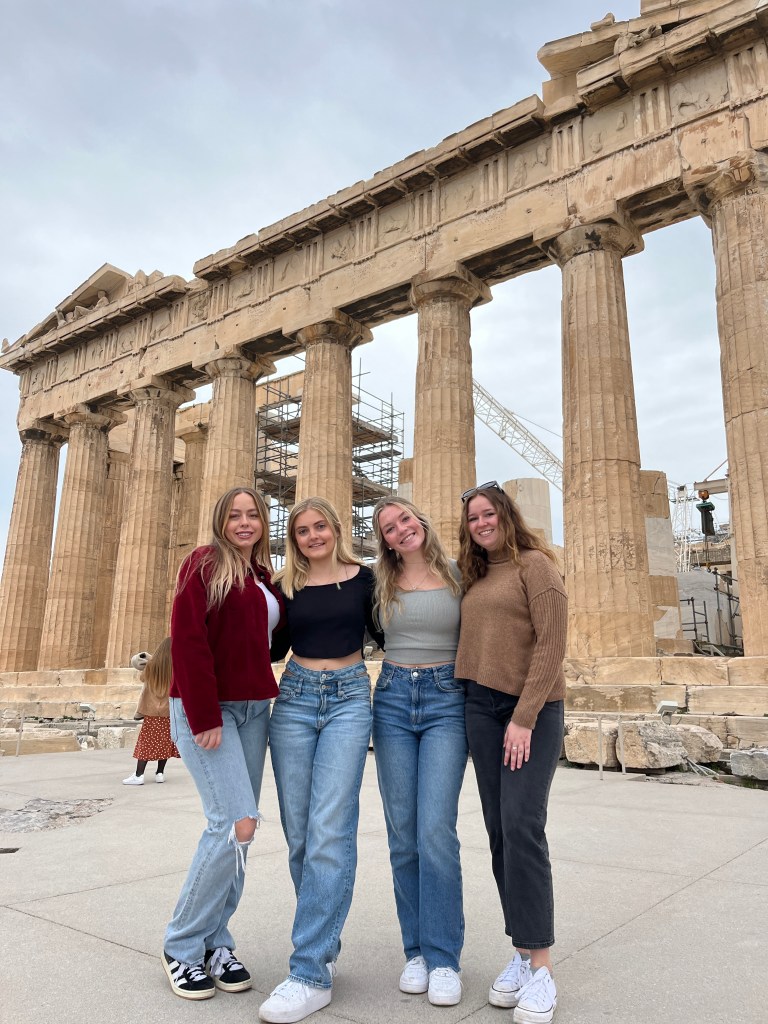
January came around and thus my adventure in Greece started. I enjoyed my time in Athens so much. While abroad I could explore the city of Athens, learn more about its history, and meet many amazing people. I loved being able to see the historical parts of the city as well as the more modern parts. Seeing the Acropolis has always been on my bucket list and it was amazing to see it in person.

While at ACG I took four classes, Greece: The Birth of a Modern Nation, Modern Greek I, Infancy and the Preschool Years, and Myth in the Ancient Greek and Roman World. My GLI theme is culture and politics and my class Greece: The Birth of a Modern Nation served as my connection to my theme. The class talked about the politics at play when the Ottomans occupied Greece and what their government looked like after the Ottomans were defeated. Modern Greek I was a great way for me to introduce myself to the Greek language and learn some basic conversational phrases.

One thing that I also wanted to do while I was abroad was travel to other countries and I was actually able to visit four other countries as well as a few different Greek Islands. The different countries I traveled to were the United Kingdom, France, Hungary, and Malta. Out of these four, I think the UK and Malta were my favorites. I also traveled to Santorini, Aegina, and Hydra, which are all Greek Islands. It was super helpful to not have classes on Mondays and Fridays because we were able to have longer trips to each of these places. I am super thankful to have had the opportunity to visit other places as well as the experience of studying abroad. I had such an amazing time and I keep telling everyone that I talk to that they should think about studying abroad because it is such a great way to learn not only about yourself but also about a new culture and new people. I never thought that I would actually have the chance to study abroad but I am extremely happy that I did and I would do it again if I could.

A Computational Summer: Interning with UMIT

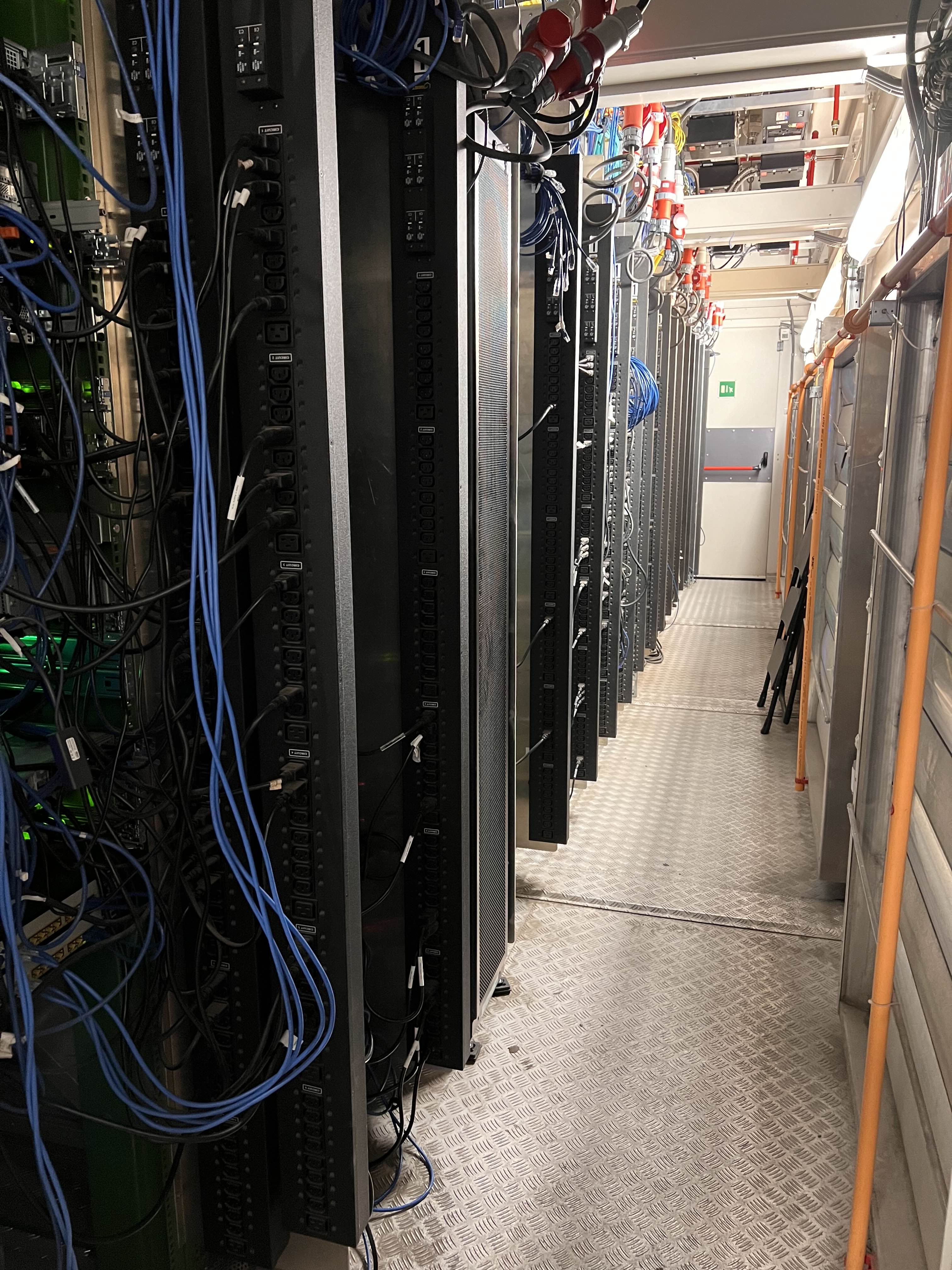
Hello! My name is Nate Adams and I am a Computer Science – Mathematical Sciences major and my theme is Technology in Society. During the summer I was able to experience so many things technology related while working with UM Information Technology. Working around the Help Desk and working on various campus projects I got to see many implementations of technology that is used to run campus, and see the many professors and staff that use different programs and other applications of computers. I have been able to use these experiences to learn more about how and where people use technology, whether with research or accessing internet.

Being able to work on various projects means I was also able to experience the backbone of campus cyberinfrastructure, I have been able to learn from so many people across the wide range of IT. Hearing from these people about current and past experience made me realize that this is something I wish to continue to do, I want to be able to help out others with issues and allow many people to have access to computing technology. Although I stayed within the state, I was able to hear from many others that have taken their campus work to research and explore abroad and I saw how beneficial these resources were. I think that more people should be able to have access and understanding of technology, and eventually I want to see people have secure and reliable access to technology. I think being able to work with others in the field of IT and learn from them has helped me be able to lead others not just with technology. Like all things, you need to be able to lead others, as well as yourself, and I was able to see that very clearly this summer by working with others that lead their areas of IT. Having to manage projects that can only happen during the summer, and being able to be a part of classroom updates, computer inventory, and other projects that go on taught me time management as well as effective communication and effective work balance.

I was also able to participate in the RMACC conference hosted by UM this year, a meetup of System Administrators from all over the United States that work in High Power Computing. They came from many different Universities and companies to talk about what they do and enjoy, as well as chat with students in IT like me to get passions fired up in college. Having conversation with people that work with researchers closely to help them do computational research is so cool, it is something I will never forget.

I find myself still asking questions, What other areas of Information Technology can I continue to work in? How does IT work in other places, and can I learn more if I speak to even more people in the field? How else can I explore this topic and get others to use technology in their lives? These next 2 years before I graduate and throughout my GLI Capstone I am going to work on answering these questions. I am also going to pursue conversation with those around me to see what I can accomplish with technology and having people from all over accomplish so many things with it.

Eat, Write, Love: Arts and Culture Reporting in Italy

Hi everyone! My name is Katy McCumber and I am a Journalism major in the Culture and Politics theme of GLI. Although I was born and raised in Seattle, Washington, my father’s job in journalism offered many diverse cultural experiences as my family moved to different states across the country. My childhood was filled with museum trips and bustling city streets, but that all drastically changed when we moved to Butte, Montana when I was 12. Initially, I was fearful of such a drastically different cultural atmosphere, but my experience in moving from place to place helped me adapt quickly. Although I fell in love with the sprawling mountains and quiet calmness of Montana, I always dreamed of returning to a metropolis filled with artistic influence and historical impact. That’s why when the time to pursue my beyond-the-classroom experience arrived, I made plans to stay in Florence, Italy for twelve weeks working for an arts and culture magazine named Romeing. 

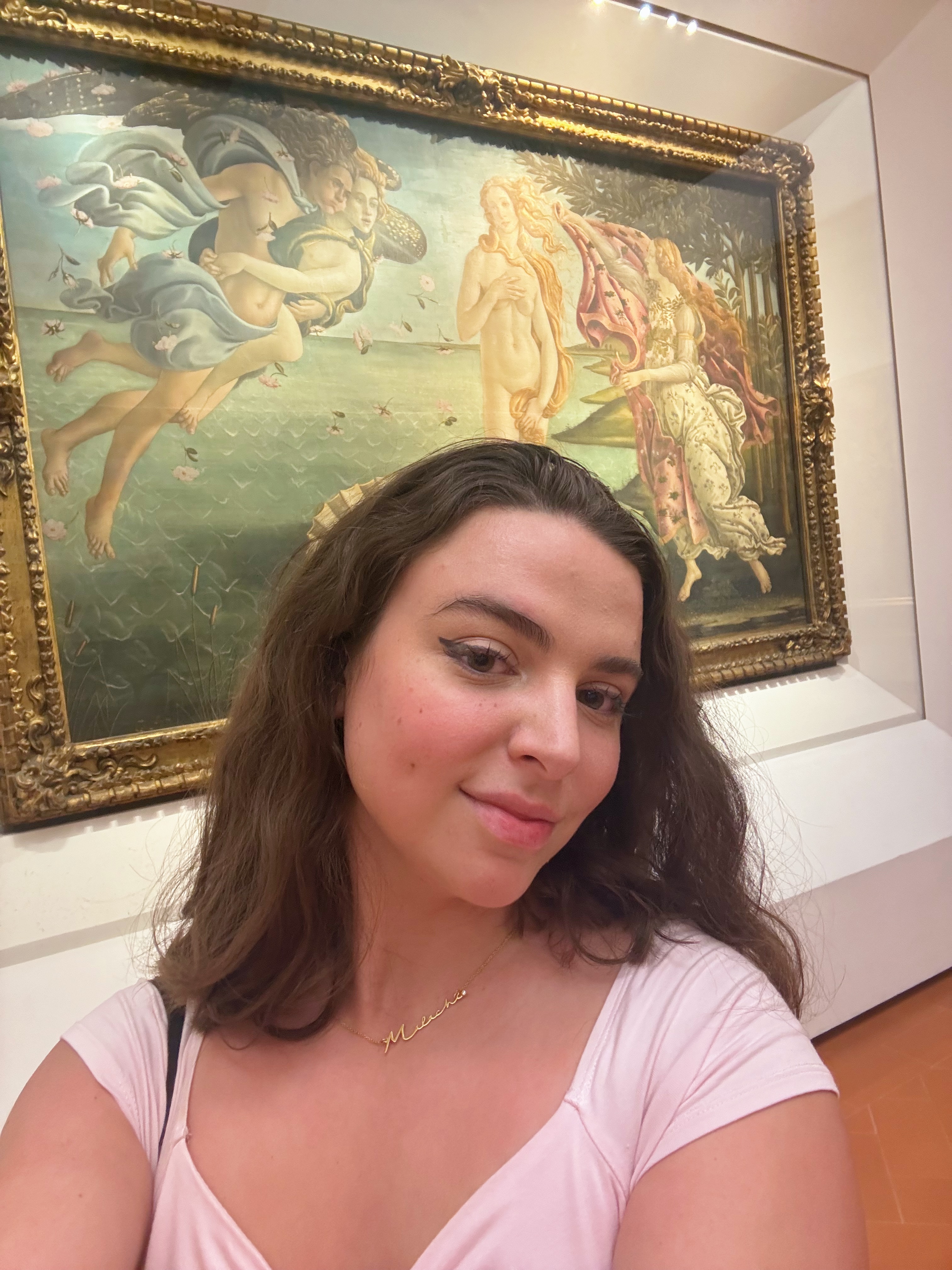
The name “Romeing” is exactly what you think it is. Headquartered in Rome, this online magazine caters to English-speaking tourists who wish to dive deep into the events and lifestyle of Italy’s iconic capital, so when they arrive they can “roam” around like a local! In the past year the site has expanded to cover not only Rome, but Florence as well, to offer updates on its renowned museums, musical events, and best restaurants. Home to Michelangelo’s David, Botticelli’s Birth of Venus, and the reign of the Medici family, Florence is an essential city to immerse yourself in la dolce vita. 

Beyond the aesthetic beauty of Florence and the insurmountable amount of creative inspiration available at every corner of the city (seriously, even the narrow alleys feature stunning renaissance-era murals and statues), working here as a journalist expanded my skills in communication, time management, and understanding of different perspectives, three attributes that I believe are vital to being an effective leader.

Each week, my editor and I would meet over Zoom (as he was in Rome). We would review my articles from the previous week, with topics ranging from museum exhibits to community conservation efforts that showed how Florence is not just a tourist destination, but an ancient town with generations of Italian heritage and tradition. Upon reviewing the completed assignments, we would brainstorm on different ideas for the next pieces. These meetings were incredibly helpful in my reporting process, as I wouldn’t have been able to even scratch the surface on the lesser known happenings without my Italian boss’s native knowledge.Of course I wasn’t a local, but I felt respected in the local community for caring about Florence as a place that people live in, not just a place foreigners fly into. 

Italy, unlike the United States, offers accessible public transportation that can take you all across the country in a matter of hours. Being able to hop onto trains and flights from place to place, including Rome, Venice, Milan, and even Paris, France, (That’s me pictured above in the Louvre!) allowed me to delve into different cultures totally unique to that area. For example, I took Italian lessons for the first two weeks of my internship so I could gain a simple understanding of how to get around and communicate. This instruction was based on Florentine Italian, or the dialect that most of the country speaks. But, when I traveled to different regions and tiny towns within them, I was surprised to learn new accents, words, and even ways of moving your tongue and lips that were customary to each background. This experience strengthened my cultural knowledge, as it not only improved my small foundation of the Italian language, but showed appreciation and respect for each Italian that I met when I spoke with dedication to their mother tongue. As a journalist, communicating with sources and understanding their unique life stories is essential to productive reporting, something you can’t do if there is a restrictive language barrier. 

Overall, my internship in Italy was a once in a lifetime experience that I didn’t know would ever be possible, but with the help of the Franke Family and the Global Leadership Initiative, my dreams have become reality and prepared me for the news industry not just in the U.S., but internationally as well. 

Nourishing Community: Internship with Missoula Food Bank & Community Center

Hello friends! My name is Cana Odegaard and I am a Sociology student with a concentration in Inequality and Social Justice in addition to an Arabic Studies minor. As a born-and-raised Missoulian, I have always been exposed to the incredible culture here. I grew up with the incredible privilege of traveling the world, and though I was hoping to continue these adventures through my beyond-the-classroom experience, health concerns kept me in Missoula. However, I learned to rework my narrative as my appreciation and love for this one-of-a-kind community abundantly grew by my summer internship with Missoula Food Bank & Community Center.

With a Global Theme of Inequality and Human Rights, I identified my Global Challenge as combatting resource insecurity and providing equitable access to necessary resources for all. When recognizing this passion within myself, I was discouraged by how daunting a task it would be to represent in my Beyond-the-Classroom experience. But then I was reminded of the nearly 2,000 nonprofit organizations in the greater Missoula area and how I didn’t need to go far in order to practice turning my goals into actions. After contacting a few of my favorite organizations, I heard that Missoula Food Bank & Community Center had three AmeriCorps positions open that two others and I would fill. And so began the summer!

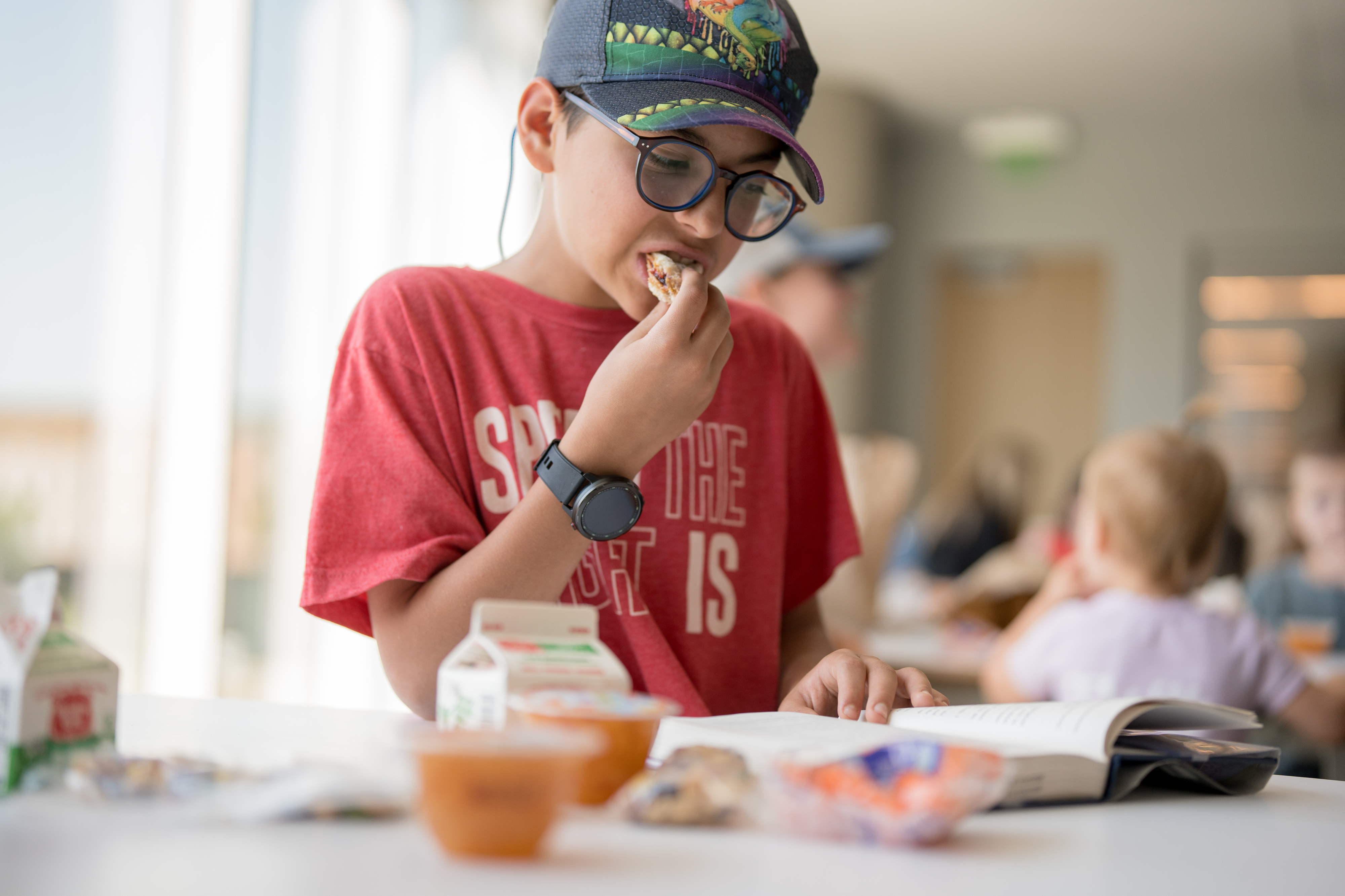
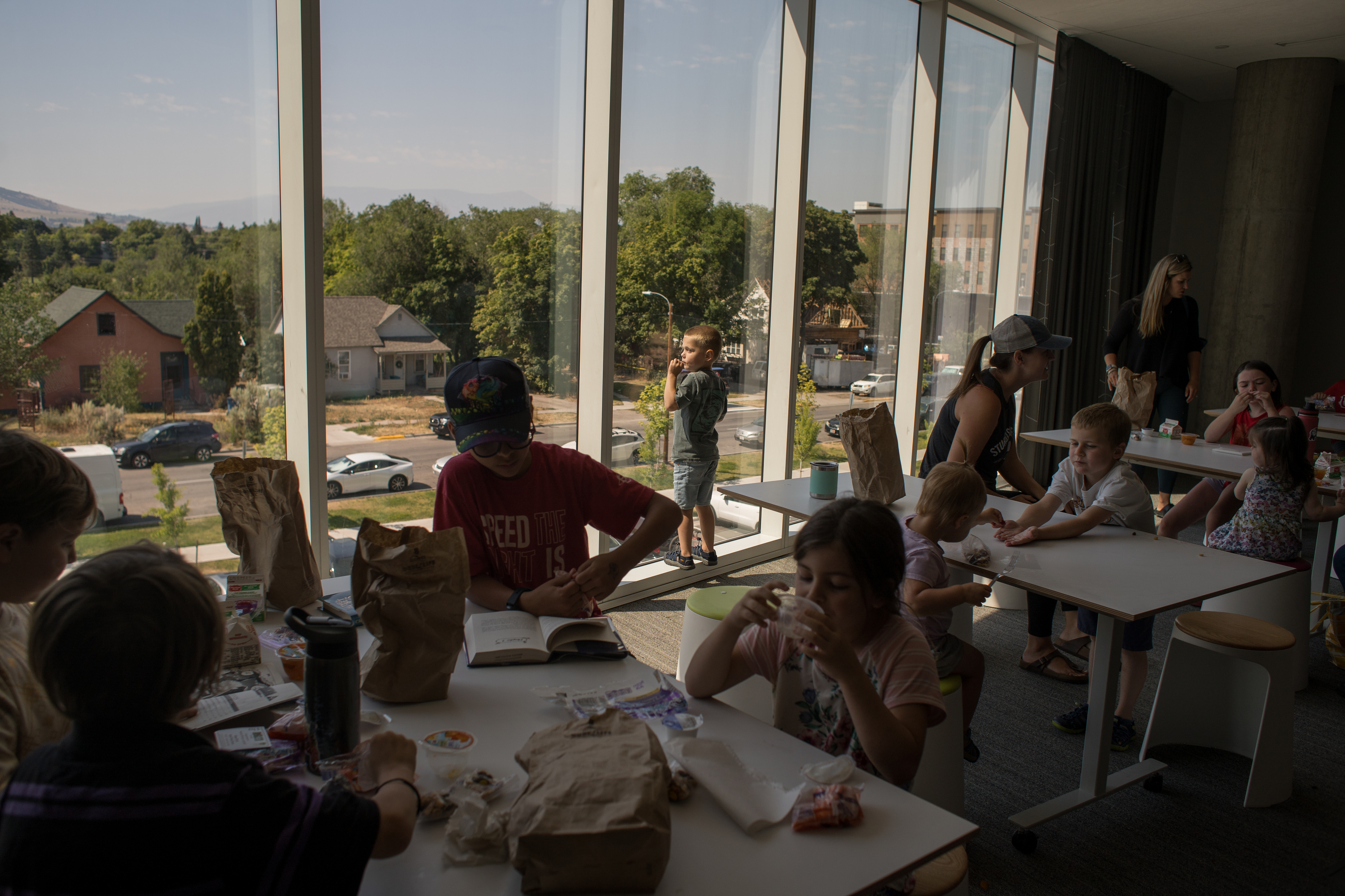
In this fulltime position, every morning was spent leading a volunteer team in making between 500-900 sandwiches, and packing these into sack-lunches with local produce, snacks, and milk. These meals were then distributed all around Missoula to summer camps, other nonprofits, low-income apartment complexes, public schools, and several other local distribution sites. Through the summer, I managed the Kids Eat Free lunch distribution site at Missoula Public Library. This involved taking around 80 lunches and setting up a lunchroom in the second floor Imaginarium. I practiced following state guidelines by tallying the distributed meals for reimbursement which turned out to be a great way to learn the multi-faceted ways a non-profit is funded and managed. In this process, I was also able to befriend and interact with countless community members. I listened and learned from people experiencing resource insecurity and gained perspectives I wouldn’t have encountered without this face-to-face involvement.

I could go on for hours about how this internship opportunity impacted my worldview. As someone who has never had personal struggle with resource insecurity, I am inherently sheltered from that experience. When approaching the topic, I don’t want to approach it with pride and solutions that may not be helpful. I entered this opportunity knowing that, in this realm, I know nothing. Therefore, I need to observe, learn, and listen before acting. This was difficult as a solutions-oriented person, but I left this summer with more knowledge about resource insecurity than I could have imagined. I also learned the importance of respect, and what a trusting community feels like. I learned to share the joys and sorrows of life with those I was serving. I know it’s cliché, but this opportunity gave me more than I could ever give in return. It gave my passions direction and reignited my love for the humankind.

Study Abroad in New Zealand

Kia Ora! My name is Alena Flocchini, and I am a senior at UM, majoring in Environmental Studies and Sustainability Science & Practice. For my Beyond the Classroom Experience, I studied abroad last spring semester in New Zealand, at the Victoria University of Wellington. During my time there, I took classes that supported my major and global theme, including learning about the how global climate change is impacting various biological habitats and how other countries are tackling sustainability issues. I also learned about the colonization of New Zealand, gaining a new perspective on how indigenous Māori communities have been historically displaced and the social, human rights, and environmental implications of that, both past and present.

The friendships I made were truly valuable and close connections that I will cherish for a long time. Most of my friends, interestingly enough, were from all over the globe and only a few actually from New Zealand. Despite that, I still did learn some fun kiwi slang (“sweet as” and “keen” are common words heard in most New Zealander’s daily convos) and Māori phrases (such as “kia ora” which means hello, and “Aotearoa” which is the native word for New Zealand in Te Reo Māori language). Being a pretty “modern” Western society, I found the social culture was pretty easy to fit into for the most part, and my friends could relate over common trends, movies, music, internet memes and the like — although there were certainly less cowboys and bear stories going around than Montana! Wellington and the university I was at both have very global populations. It was fun getting to interact with people on a daily basis from various backgrounds, both New Zealanders and internationals, and the relationships I developed really helped to broaden my view on many topics and social issues that different societies are facing today. 

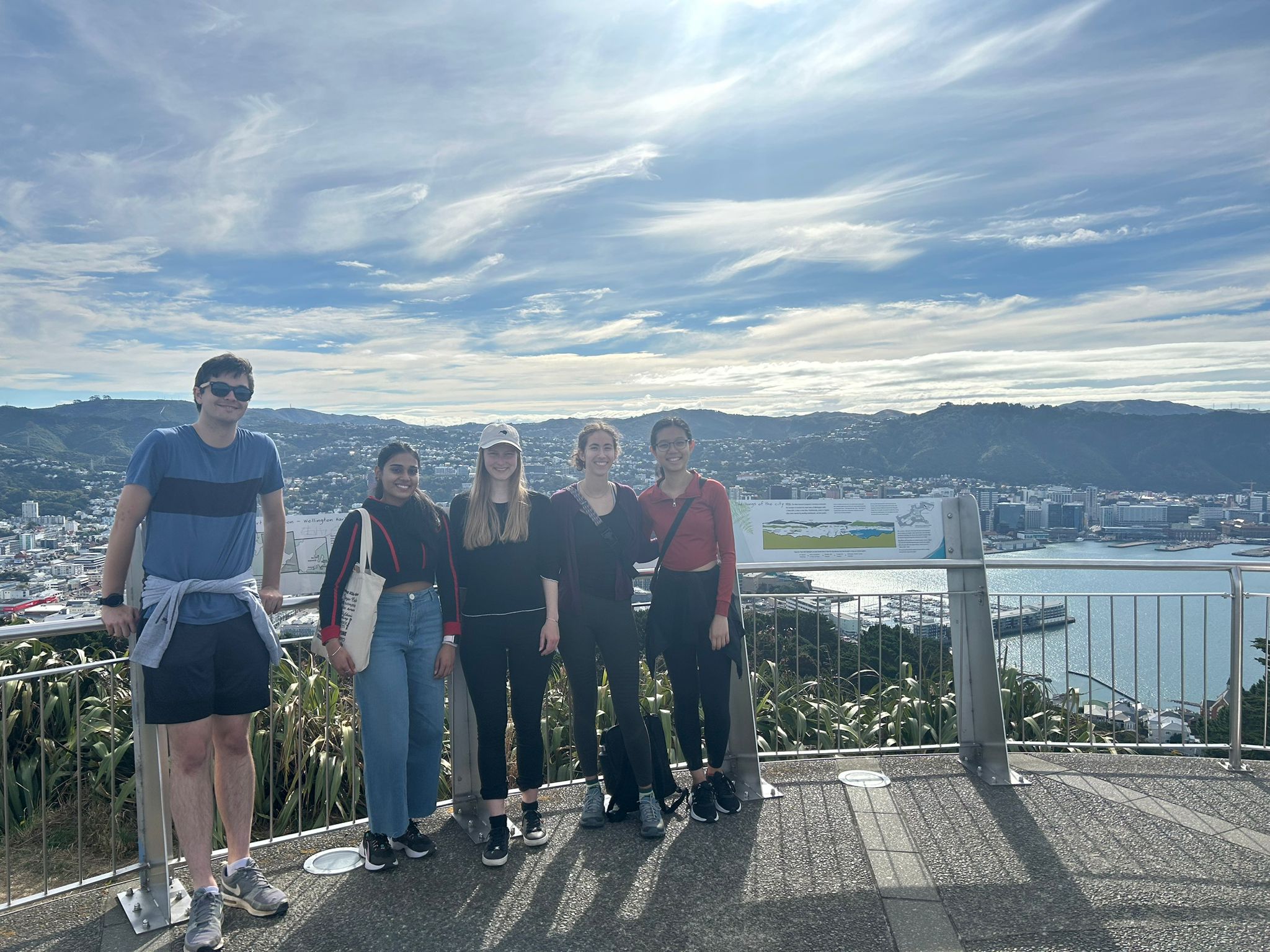
celebrating my birthday with new friends on Mt. Wellington

Beyond my academic studies, I also had the opportunity to travel around New Zealand and explore for myself many of the diverse ecosystems and amazing landmarks the country has to offer. During my last two weeks there, I took a road trip around both the North and South islands of New Zealand, trying to squeeze every ounce of adventure that I could out of my remaining time. This was probably my favorite experience, as I got to check off a few long-time bucket-list items (like going to Hobbiton, swimming with dolphins, and seeing a real live Kiwi bird!) and travel around with a few friends. I even got to hike the famous Fox Glacier — enduring a very nerve-wracking and windy helicopter ride. The blustery wind (Wellington is known as “Windy Welly” for a reason), the extremely twisty-turny narrow roads (and driving on the opposite side of the road!), the long travel times were all made worth it by the truly amazing views and experiences. I mean, some places are just jaw-droopingly gorgeous and I had to pinch myself to believe that I was actually standing on Earth and not in some fantasy world. There’s a reason Narnia, Lord of the Rings, The Hobbit, and so many more movies have been filmed in New Zealand!

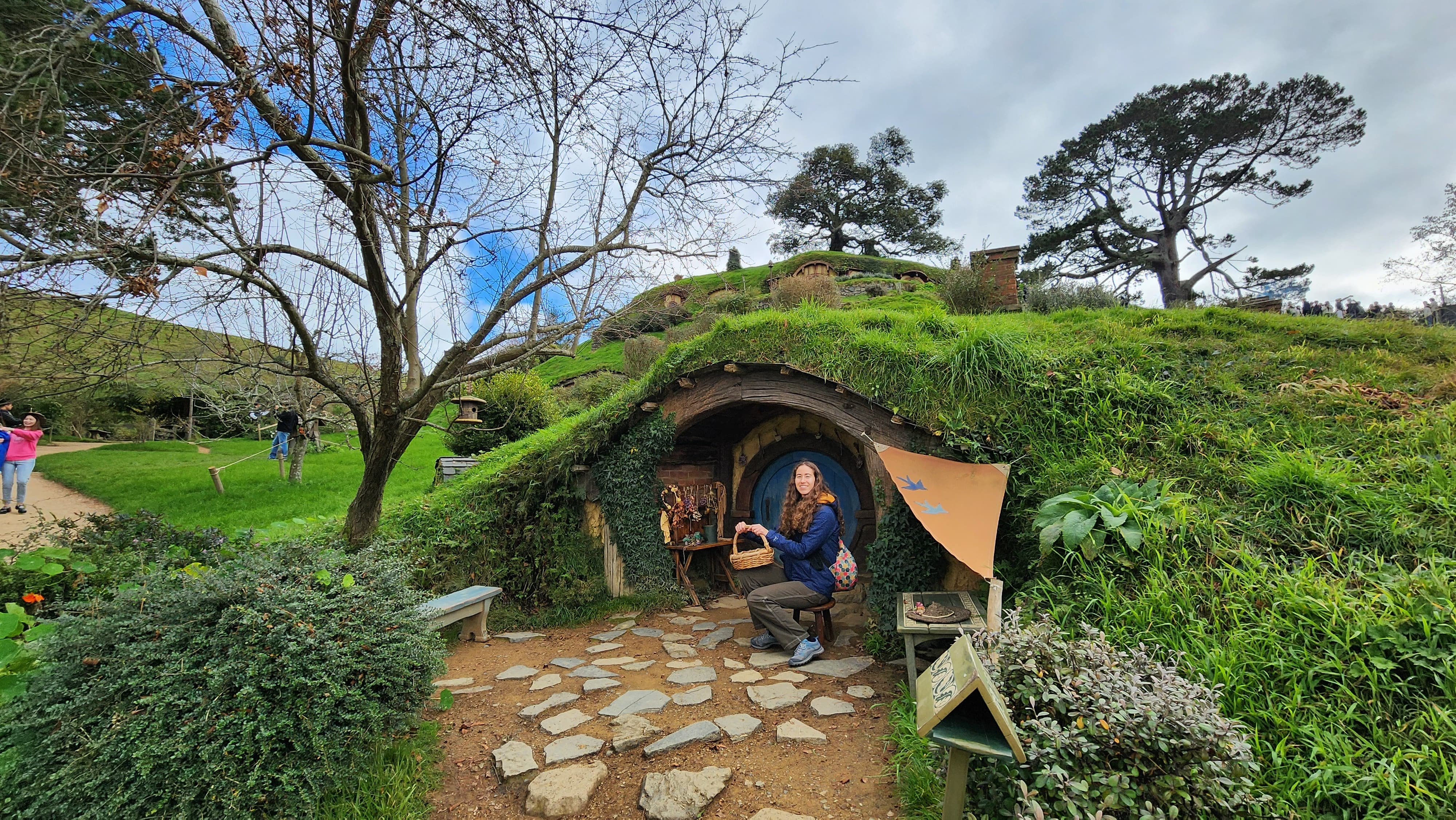
living out my little Hobbit dreams
the view on top of Fox Glacier

To be honest, it was a bit of a struggle for me at the end, leaving New Zealand and all the great friends that I made. Although I was only there 4 1/2 months, the people and places I met were all so wonderful that I did not want to leave. Friends who had been strangers only months before became like family, and it was certainly a teary goodbye with which I departed on my long plane ride back to the states. Certainly, there were some rough moments for me personally, such as stressing about final exams and moments of feeling scared to be so far from my family and everything I am familiar with, but I feel that this experience has helped me gain so much more confidence in myself and prove to myself that I can be okay anywhere in the world; that there are kind people all over the world who will help you out in times of need; that sometimes you need to go beyond your comfort zone to grow; that people are just people, no matter what country or culture; and that the world is truly less foreign and scary than I thought. And I can’t wait for my next adventure!

“Pancake Rocks” on the coast of the South Island

Back to the Homeland

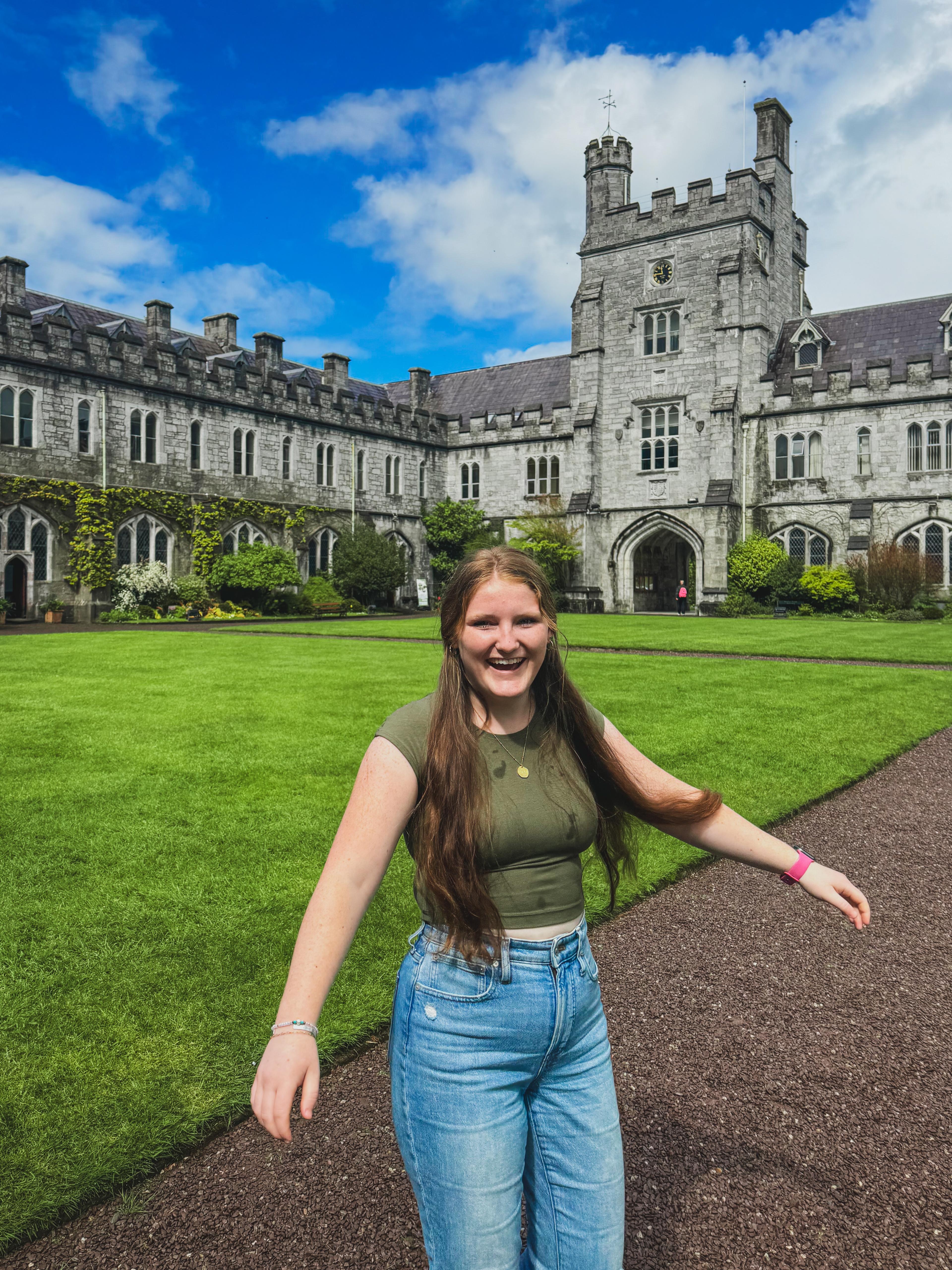
Hi there! My name is Annie McLaverty and I am from Missoula and study elementary education at UM. I studied abroad in Cork, Ireland for spring semester of my sophomore year. I took a variety of classes as this was my chance to expand my horizons and knowledge. Those classes included topics such as the Great Famine, Modern Ireland, Women in European history after 1800, Pedagogical foundations, and Irish Folklore. I would have to say the most interesting class was folklore as I learned many stories in which the Irish use to believe and how silly they seem now. One of these stories said if no one said “God bless you” after you sneezed three times, then the fairies would come and bring you into their world. The class that related back to my GLI theme of culture and politics was the Great Famine. This time period in Ireland showed a rise of community, media, and different economic classes succeeding or being targeted. When mentioning media the biggest source was newspapers. Hundreds and thousands of newspaper companies rose in the height of the famine, but the problem was the poor were the subjects but could not read or afford these papers.

From my time in Cork, I learned about myself as well as a new culture. I have never been more independent in my life than these five months abroad. Managing my way around an airport alone was the scariest, but other experiences were having my parents nowhere in sight, knowing nothing or no one around, overcoming a little language barrier, walking as my main form of transportation, managing money as there was no income coming back in, and managing fun and schoolwork. Going to college in my hometown meant that I never left, but this was my time away from home, family, and friends. It was a whole new world for me. Thankfully, the Irish speak English as their primary, but their accent makes it feel like a whole new language. West Cork, where I was, has the thickest accent of all of Ireland and I can attest to that. Instead of “three” they say “tree”. Hearing my professors speak at a fast pace was hard the first couple weeks as I truly scraped by with context clues. Along with growing my sense of independence this experience also grew my leadership skills. Having to navigate through many unfamiliar places I took a role in directions after the group was getting lost. Instead of being a follower I took out my tools and information to get us home. If I would have kept following the scenario would have been very different. Instead, I used my voice and what I had on hand to lead us back on the path.

Growing up in Montana there is a lack of diversity and rain in comparison to Ireland. I traveled over to Ireland two years previous of my study abroad to visit my brother who was doing the same exact thing. That first time was eye opening as not just Irish people lived in Ireland. I am used to seeing a majority race of white and two minority. That was not the case in Ireland. Different cultures and ethnicities are intertwined into Ireland making it even more unique. This corelates back to my theme of culture and politics. I experienced many different cultures within a city block. On the other side of this theme is politics. I went over at a very peaceful time in Ireland. Northern and main Ireland are not at war, but still see differently. The parties are using words and laws rather than bombs and guns to express their political opinion.

Another note to be made about being outside Montana is how different Ireland’s pace of life is. It is okay when they take vacation time or as they say “holiday”. It is okay to take a year off when having a baby. It is okay to not rush your day away. It is encouraged you take the day to complete a task to its best potential and then move onto the next. I am used to go go go.

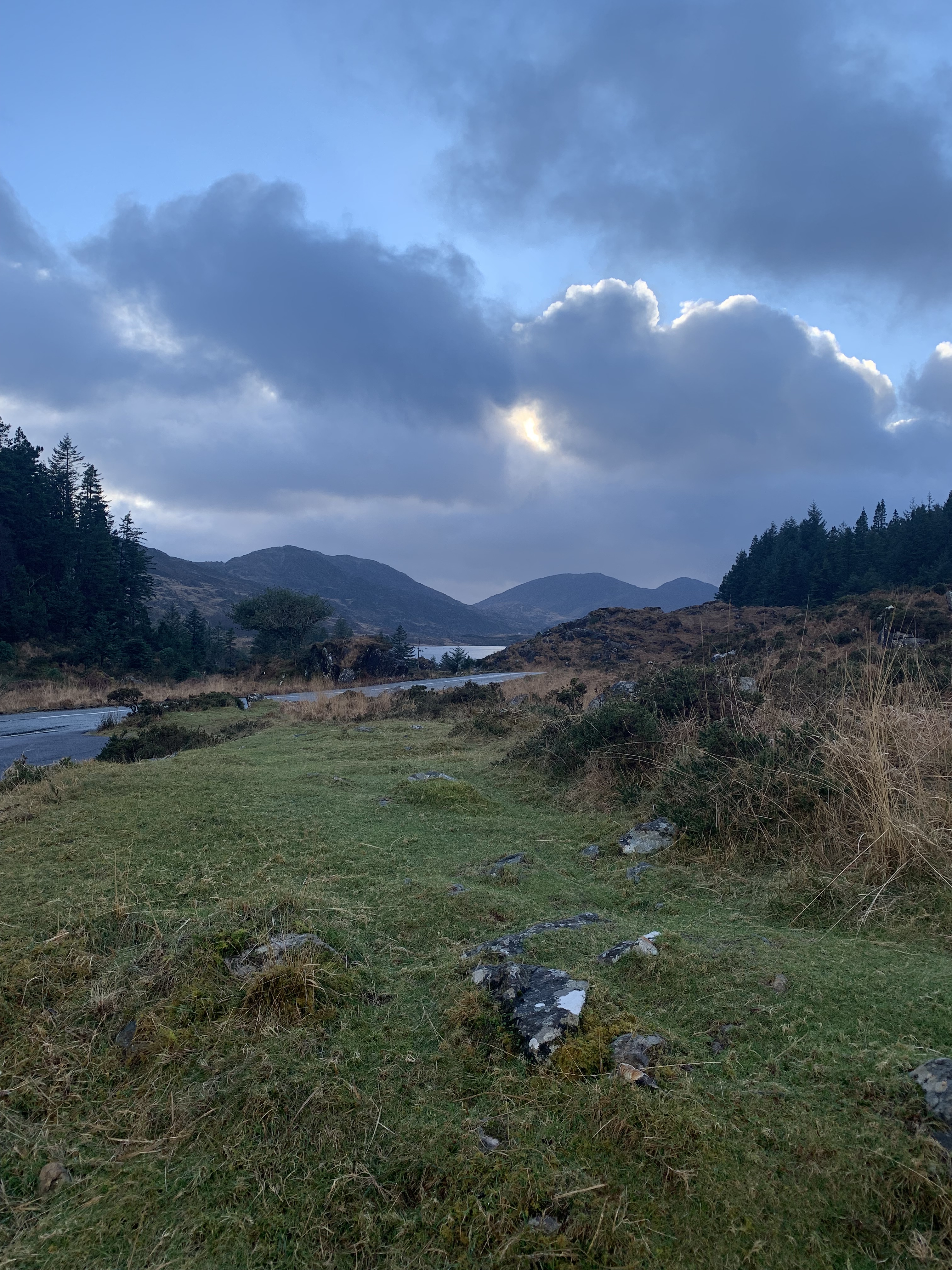
One of the coolest experiences I had while over in Ireland was meeting some of my family on my mom’s side. Both sides of my family come from West Cork near the Beara Peninsula, but my mom still has some family living right outside of Cork city. This would be my fourth cousin, but we spent a day together at his house with wife and two dogs. I heard stories about my grandpa, the history of how my family ended up in Butte, MT and stories about them living in Ireland, especially when the country was not in political or cultural unison.

I now have the travel bug and cannot wait for my next adventure.