Simulated Galaxies

I am not a leader in the sense that most people think of when they hear the word. I do not make speeches. I do not do outreach. I am not on the front lines of some political movement. I code. I do not even code for purpose that many of you would deem worthy of your interest; not even something many have heard of.

For the summer, I get the opportunity to spend the summer in Piscataway, New Jersey. I am simulating galaxies with Professor Alyson Brooks with the hopes of discovering something about galactic evolution. I was offered this position out of 368 applicants. In that sense, I am leader. I got this position, not because I can talk to people, but because I can solve problems.

Aside from the work, I have been able to go on several day trips with others in the program. I have visited the Hayden Planetarium in NYC and the Liberty Bell, Independence Hall, Reading Terminal Market, and the Philadelphia Museum of Art in Philadelphia. Through these visits, I have been making connections that will last a lifetime. My roommates and I plan to go to Asbury Park this weekend.

All of the trips make it sound like I have a lot of freetime, but I work 40 hours a week on simulating galaxies. The cover photo for this post is an example of one. I have been spending long hours trying to use this information to determine information about galactic evolution.

Along with work, we have been doing Physics GRE prep and having many discussions on Graduate School, Collaboration, and Scientific Ethics. I am confident that these “courses” will help me succeed later on as a scientist. I am hoping to take the Physics GRE this fall and begin applications to Graduate School for Astrophysics, specializing in either Observational Planetary Science and/or the Origin of Magnetic Field lines in M Dwarf Stars. Both of these topics are very “hot” in Astronomy right now.

I am incredibly happy about my field choice both because of the people and the amount of open research questions. I am glad I found my passion so early in life.

Palmerston North

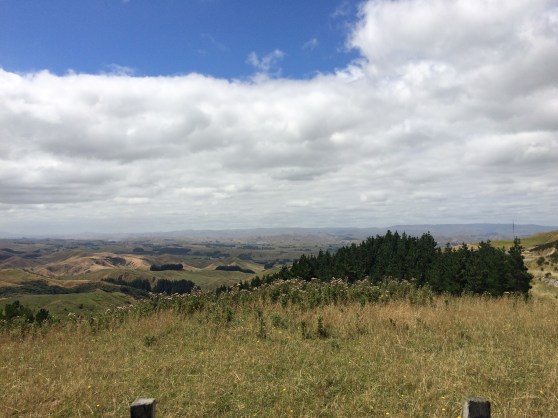
New Zealand is probably one of the most beautiful places on Earth. That being said, I probably went to one of the least beautiful cities in New Zealand.

I chose to do my time abroad in Palmerston North where Massey University’s main campus is. It is the only vet school in New Zealand and is surrounded by farms. When I got to the town it was already dark out and I was so exhausted from the flights, four in total, I did not really pay attention to my surroundings. When I did get up the next morning I found myself not doing much because I had just travelled all day before, but I was invited to hang out with some Chinese exchange students who were staying in the same dorm complex as I. When we were walking around the campus, that was when I noticed that it was not as spectacular as I was expecting. The University of Montana’s campus is more beautiful than Massey’s.

As I was hanging with the other students, they were telling me how they had already been into town and that there was not much there. That was a little disappointing, but if it was the worst thing to happen on this experience then I was fine with it. While hanging out with these other students, I was the only native English speaker so many times they would all start speaking Chinese for a good amount of time. I understood that it was easier and more comforting for them to speak in their native language, but I did feel a bit left out. They did, however, invite me to eat dinner with them and I really appreciated it because no one else was in my dorm yet.

When I got back from dinner with the other exchange students, two of my roommates had shown up and they were both from South Dakota and unexpectedly male. It was then we realized that they mainly roomed people by where they were coming from and at orientation we realized that most of the people living in our dorm complex were from China. Even though I am in New Zealand, I was experience another culture by living with many Chinese exchange students. It was during orientation that I saw that even though Palmerston North, or Palmy, is not as beautiful as the rest of New Zealand it does have its moments. IMG_0835.JPG

IMG_0833.JPG

Milford Sound April 25th 2016

April 25, 2016

First off, my feet stink so badly! I can’t even begin to describe, so I’m going to go wash them real quick.

Now that I feel better let’s begin with how today started and I have a feeling that this entry will take some time to finish. Hopefully I have the patience to do so.

Sleeping was easy, easier than the first night.

Breakfast was quick and walking, a breeze.

I was worried I would miss the bus but turned up there early anyways.

The bus driver was funny and enjoyable. But what I really want to do is write a story about today. How to start is still uncertain but one thing I do know for certain, today was a Mountain Top experience. Milford was beautiful as I thought it would be, however, the ride in and out was the best part.


On the way in, the bus driver stopped many times and gave wonderful commentary. Albeit, some were a little inaccurate but I wasn’t there to correct him, I was there to enjoy myself.


The road into Milford Sound is spectacular and some scenery was even used in the Hobbit films. There was one peak that jutted out from the others and that’s the peak that Peter Jackson used.


How can words describe today? How can words describe any day??


Upon leaving Milford Sound, you witness giants carrying out their day. Some are adorned with mist, others with dew. Their presences in all encompassing. You realize how small you really are, but these giants don’t scrutinize you. Instead they bring comfort. Comfort very similar to another powerful force, one even stronger. God. God’s majesty consumes you beneath these creatures’ feet. Yet you know they won’t step on you. They are the guardians to these waters, these trees, these birds. Their power isn’t controlled by humans. Their power is much more than what mere humans have, however, these giants have come to an understanding with humans. This understanding didn’t come right away but these giants were patience. The humans have this way of thinking that they’re the top of the world, but is it the humans that reach for the sky? Is it the humans that continue to grow? Do the humans have the power to live for thousands, even millions of years? No. It is because of their longevity that the guardians waited. They waited until the day came where humans realized how important they are. So now the humans work hard to aid the mountains; aid the livelihood of the coat that surrounds them, the life they support and the majesty they carry.


While leaving Milford sound, I became a dwarf. But instead of being crushed by these giants, I was cradled. I felt more cherished and loved, than frightened. These mountains contain the power of fear but during those moments, I felt none.


The bus driver made a point to mention how infectious mountains can be to the human species and then when surround by them, you feel spiritually connected to them. I connected to these mountains spiritually but what stands out more is that I connected to them emotionally.


These past two months have been hard, emotionally and spiritually. Moving away from home is not something new for me, but moving to a new country, even for four months, is still a big change. I feel different. I process things differently and I speak differently. I have changed.


Change isn’t something to be afraid of, it’s something to strive for.

“To improve is to change; to be perfect is to change often” Winston Churchill.


Because I have changed I needed to discover who this new person was, so I took advantage of the mid-trimester break and left. Alone.


It is by far, the gutsiest thing I have ever done but I wouldn’t change a thing. I have begun to understand this new person and how she feels. Today, one piece fell into place.


I love giants.

For the love of language

People always ask me why I’m studying a language like Irish. “You mean Gaelic?” they say. “I didn’t even know that was still a thing.” One particular professor asked why I didn’t want to study a “useful” language, like Chinese. Usually when I’m talking to someone like this who just doesn’t understand, I don’t bother wasting my time to explain. I just shrug my shoulders and smile, and they seem to let it go. I haven’t yet perfected my persuasive argument on why studying languages that aren’t “useful” is so important to me. But I’m working on it. It started with Latin. I took “the dead language” in high school because I wanted to be different – I didn’t want to be like everyone else who took Spanish and French. And sure, no one really speaks Latin anymore. Less than 100,000 people speak Irish. But these languages are NOT dead – not so long as there is someone like me around who wants to study them and learn from them. A language is so much more than a set of grammar rules, a lexicon, and an alphabet. It’s a complex compilation of a culture. It holds history, values, and perspectives. If we let a language die, we let those components of a culture die. And with each fewer language, each fewer culture, our world becomes all that more homogeneous. And I don’t want that. I think one of the most beautiful things about humanity is our diversity, and more importantly, our ability to learn from each other. We have to preserve other ideals and ways of life in order to be able to learn from them. And we can preserve those ideals by preserving languages. I love Irish, not because it’s “useful,” but because it holds so much history and sacrifice and love within its words.

IMG_2254Old Library, Trinity College, Dublin, Republic of Ireland
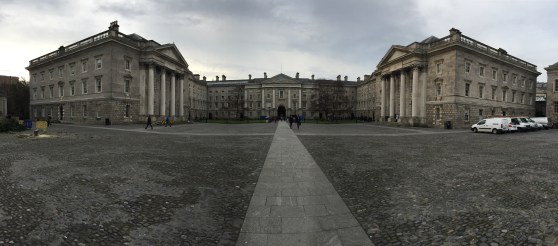
IMG_2249Trinity College, Dublin, Republic of Ireland
Terror from within

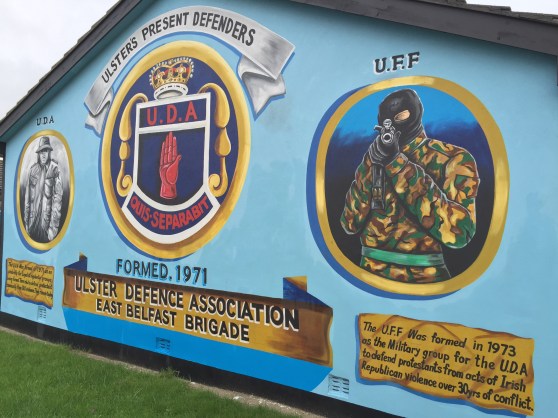
Terrorism. Today, when we say that word, it conjures up all kinds of images and feelings. Growing up, I’ve developed my own connotations of the word. In an unintentionally self-absorbed way, I assumed terrorism was an entirely American thing, and that it all started here with us. But Ireland has made me realize a different story. Merriam-Webster defines terrorism as the use of violent acts to frighten the people in an area as a way of trying to achieve a political goal. If you know anything about Irish history in the last hundred years or so, then you know this definition fits the conflict in Ireland to a T. A few years ago, I would have said that Ireland’s form of terrorism was very different than ours, in the sense that our fear is of a foreign enemy, and Ireland’s of a domestic one. However, I now believe we can somewhat better understand Ireland’s form of terrorism. With our present and ongoing domestic mass shootings and bombings, more and more often in the name of ISIS, we are becoming less afraid of an enemy outside our borders and more terrified of one within. I’m not making any assertions on which form is better, as they are both obviously atrocious and unbearable, I’m just making an observation on what I see as a developing similarity. What is particularly interesting to me, however, is the fact that I can almost empathize with the motivations for Irish terrorism. I get it. Almost. I understand why they were willing to go so far, after so many centuries of being ignored. But I just do not comprehend ISIS’s rationale. I find it impossible to fathom how they really think mass murder will lead to a better world. You could say Ireland is now a better place, but only once terror was primarily discarded. Violence doesn’t create peace – it only creates more violence. How many more times will the world be shown this before we finally pay attention?

IMG_2978Belfast, Northern Ireland

IMG_3513Derry, Northern Ireland

I’m from Montana

During my time in Ireland, I realized that whenever someone asked me where I was from, my instinctive response was “I’m from Montana.” Not once did I ever say that I was from the United States. Once I noticed this, I couldn’t stop thinking about it. I began to understand that this was an expression of my personal identity. I don’t identify myself as an American. I know that I am, but it isn’t how I see myself. I’m first and foremost and always and forever a Montanan. My pride and my affection are for my state more so than for my country. Once I acknowledged this, I started thinking about the Irish identity – one so very different from my own. My Montana pride stems from the state’s beauty and way of life and the simple fact that it’s my home. Irish pride, if I may say so, is a lot more complex – so complex that I don’t believe I can accurately explain it or ever fully understand it. Of course it varies for every person, but it’s rooted in centuries of conflict and poverty and oppression. If you ask any American when they think their history starts, they will most likely say somewhere around 1776. If you ask any Irishman, you’ll get a lot of different answers – but all of them will be a lot longer ago than some measly 200 years. This is one of the things that most fascinates me about the Irish. Their history spans such a greater time period, and all of it remains so central to their modern identity. History is a common topic of conversation in a very different way than it is here. Because I don’t have this immense frame of history, I don’t believe I’ll ever be able to really understand what it is to be Irish. But even as I lack that understanding, I know what it means to be a Montanan, and that’s enough for me.

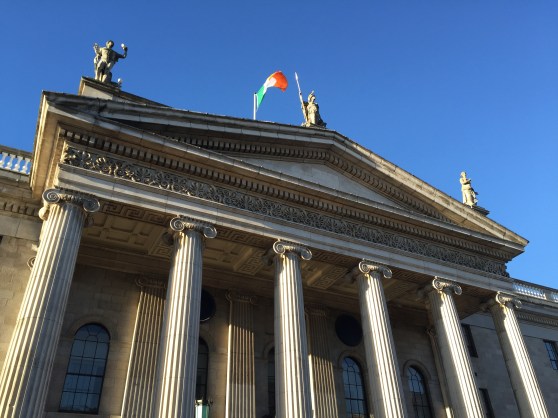
IMG_2332General Post Office, Dublin, Republic of Ireland

IMG_4439St. Finbarr’s Cathedral, Cork, Republic of Ireland
Patagonia and the Role of Women

I have spent this entire spring semester in the beautiful country of Argentina.  On this faculty led study abroad program, we have spent time in Bariloche, Patagonia and Buenos Aires.  The things I have learned being abroad is extremely life-changing and totally gives you a new view on life as a whole.  One thing that really interests me in this country is the different cultures and social aspects of being a member of a Latin American society.  I am focusing my global theme on the idea of social inequality with a focus on discrimination of indigenous groups.  This aspect of my studies has been mainly relevant among Argentinians in Patagonia.

One of the really interesting ideas that I have been really thinking about lately is the role that women play within these groups.  In the indigenous cultures of Patagonia, the Mapuches and the Tehuelches, the role of women was very clear: take care of the family and home.  However, women were also responsible for making goods of materials that were hunted by the men.  We had the opportunity of visiting a store in Patagonia called El Mercado de la Estapa.  This was a store of hand-crafted goods made by women who are ancestors of these indigenous tribes.  They make products including gloves, ponchos, hats, sweaters, socks, and more with wool from the sheep.  They also have pelts from rabbits and other animals.  These women continue to live in their native land and obey their responsibilities held by their ancestors who were in their same positions.

Seeing this kind of place really put my topic into play and how the social aspects of certain members of indigenous cultures are all important for different reasons.  I think it is important to include all roles present in native groups because they all play a part in the kind of community the natives have.  I think the specific role of women within these groups could be something I can focus on within my final project because I think their role is just as important as any others.

Small but Mighty

My internship at the Wilds began at the start of June and every week I surveyed butterflies and flowering plants in various restored prairies. The first few weeks were a very steep learning curve where all I could think about was trying to figure out what species each butterfly was before it flitted out of sight. It was stressful and the surveys took a lot of concentration.

As the summer continued, I became familiar with the common species, my surveys became much more enjoyable, and I began to look forward to seeing my favorite species. I loved seeing the tiny eastern tailed blue butterflies that would flutter around my feet and the silver spotted skippers that would cluster on purple bergamot flowers. The butterfly I wanted to see the most though, was a Monarch. Monarchs are the one species that everyone (including myself) is familiar with. I knew they were an iconic species and all I wanted was to see just a single one fly past.

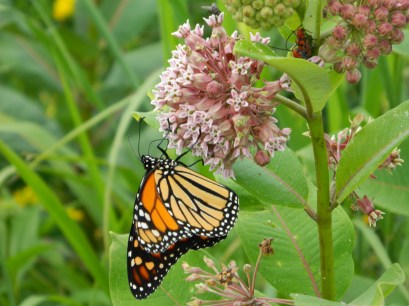
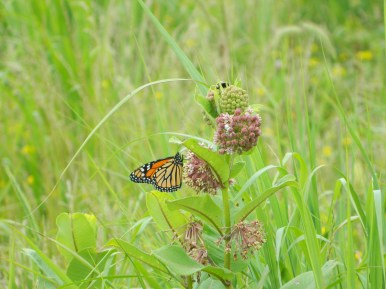
Therefore, I will never forget the day I saw my first Monarch butterfly. I was trekking through the prairies as usual when I saw a beautiful and magnificent monarch glide over my head. It was absolutely beautiful and I remember whipping out my camera when I saw it land on a milkweed. It was amazing. Not only did I finally see a Monarch but I saw it land on a milkweed—the infamous plant essential for their survival.

DSCN4117

When I got back to the office, I told all my fellow interns about the Monarch and I showed them the video I took of it feeding. However, when my director heard that today—in the middle of July—was the first day I saw a Monarch, she was sad rather than happy.

The summer I was at the Wilds had the lowest number of Monarch butterflies recorded for a summer so far. Over the previous five years, the number of Monarchs recorded had been steadily declining. My happiest moment had become one of the most heart-wrenching.

DSCN4120

Butterflies are so small that they are often overlooked. They are creatures that we all recognize yet care very little about. Many people see them flutter through their yard or through fields and although they see them as beautiful, they do not see them as essential.

Butterflies are essential keystone species. They are key pollinators in many habitats such as prairies, savannas, wetlands, and even forests. Butterflies are also indicators of the health of an ecosystem because they are very sensitive to pollutants and toxins. Also, butterflies are very good indicators of the floral diversity in an ecosystem. The results of my study clearly showed that areas with a larger number of flowering plants will have more butterflies. It’s as simple as that.

I began my internship at the Wilds completely ignorant of how important and amazing butterflies truly are. Like many people, I hardly even acknowledged butterflies. I thought they were pretty but I never thought any deeper than that. Over the summer, I gained a deep appreciation for these tiny critters and I realized that I had so much left to learn. However, I am proud to say that now when I see a butterfly flit past while I am out in the field I don’t just see a pretty insect–I see a creature that is essential. I see a creature that is small but mighty.

DSCN4121


Hunting Butterflies

If you are a biologist and you visit Yellowstone National Park, you often wake up before even the smallest sliver of light has broken across the horizon. You head out and get into position just as a golden edge of light begins to creep into the sky, and you wait. If you are lucky and patient you will notice a faint puff of silver fog on the edge of a tree line. Then a sleek grey muzzle will emerge followed by the slender graceful body of a wolf.

During the summer, most animals will be active at dusk and dawn. These are the coolest hours of the day and when it will cost the least amount of energy for them to forage or hunt. At the peak of the day, sensible creatures will lie down and wait out the heat. Butterflies are one of the exceptions.

Butterflies love the heat. They sit in the sun and slowly open and close their wings as they soak up the warmth. The longer they sit in the light, the more energy their muscles have and the more they can fly. Butterflies also love still windless days. They are small, fragile creatures and they have a very hard time battling any wind without being blown off course. So, I spent my summer trekking through prairies on the hottest, driest, sunniest, windless days in the baking sun in search of butterflies. Despite that, I have rarely seen so many beautiful sights or had so much fun in my life.

The Wilds is located on lands that were once heavily strip-mined. This is a mining practice where huge roving factories dig up the top few feet of the earth over vast landscapes in search of minerals. Then they throw down the seeds for whatever plant will grow the fastest and they leave. Over the years since the Wilds was established, it has worked to remove the resilient invasive plants and restore the native prairies.

The oldest restored prairies on the property are now over fifteen years old and they are absolutely beautiful. Imagine a sea of green interspersed with flowers of all colors: red, yellow, blue, purple, orange, and pink. Then imagine lush green bunches of grass that stretch above your head. Finally, imagine lovely, iridescent, fluttering, creatures that swim through the air dancing from one flower to the next. This was my summer. Of course it was hot and I was very familiar with ticks, but these are very small trade-offs for such an amazing experience.

“I’m going to be studying…”

For as long as I can remember I have loved animals. There are so many beautiful creatures on this earth and even from a young age I knew I wanted to work with them when I grew up. So, when I got to college I started studying some amazing creatures. I learned so much about grizzlies, wolves, elk, and pronghorn and all the challenges they faced. I learned just how much of a negative impact humans are having on these wonderful creatures and my resolve to help them strengthened.

After, a full year of college I thought I had a solid grasp on the key species in most ecosystems and I was ready to get out in the field and put some of my new-found knowledge to the test. So, I began an internship at the Wilds in Cumberland, Ohio. I remember hoping I would get to work on the research project focused on bison. I imagined myself in the middle of rolling green prairies observing bison and recording their every movement.

On the first day of the internship, I sat chatting shyly with my fellow interns. There was a hushed anticipation that seemed to hover in the room as we waited for the clock to hit 8:00 am. At the time I was so confident that I would get to work on the bison project but looking back now I know that my hopes were much higher than my actual experience level. I was as green as a tulip stem back then and I had no true idea what a field project would be like. Anyway, the directors for the internship finally arrived and they began announcing the projects to which we would be assigned for the summer. When they announced my project, all I remember thinking was, “I’m going to be studying . . . butterflies?”