Often times, people view research as clean and precise- a group of scientists standing around in lab coats peering through microscopes. However, I’ve found through the course of my research that science can be messy and unclear. It isn’t always about finding the answers, but instead, learning which questions to ask next.
Hi, my name is Kian Speck and I am a senior studying Ecosystem Science and Restoration at the University of Montana. My capstone experience was a research project in partnership with Ylva Lekberg at MPG Ranch and built upon work done in collaboration with Min Sheng at Northwest A&F University in China. The research involved an important organism in plant ecology called arbuscular mycorrhizal fungi, or AMF. AMF is a type of microscopic fungus that lives in soil and forms relationships with the roots of most land plants. Put simply, the plant provides AMF a food source (carbon) as well as a place to live and reproduce. In return, the AMF offers a plethora of services for the plant, such as increased nutrient uptake, herbivory defense, and possible increased drought tolerance.
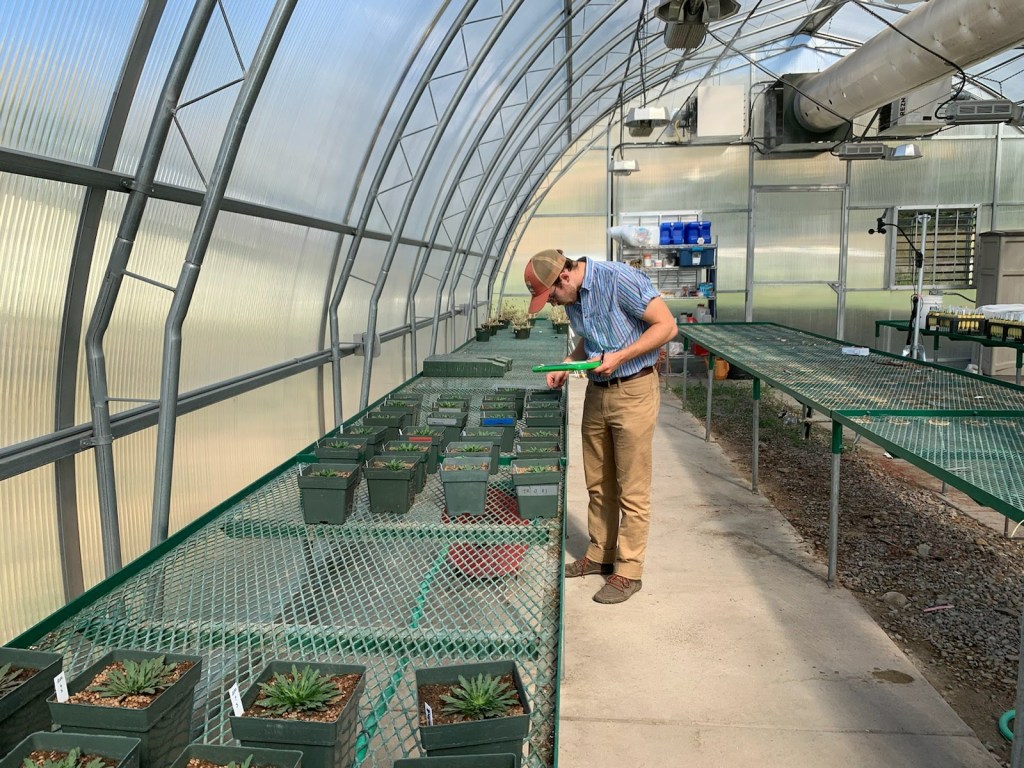
The ASUM greenhouse where my research was conducted. This is prior to drought, and I’m checking for any differences in plant growth between the two treatments.
The goal of my research was to determine if, and how, AMF help plants mitigate drought stress. The plant I used was Canadian horseweed, due to its prevalence in drought prone areas and documented association with AMF. Furthermore, Canadian horseweed is invasive in much of China and the Middle East and having a better understanding of its ecology could help restoration efforts overseas. The results of my research won’t be available until later this year, but the lessons I learned while conducting this research are clear.
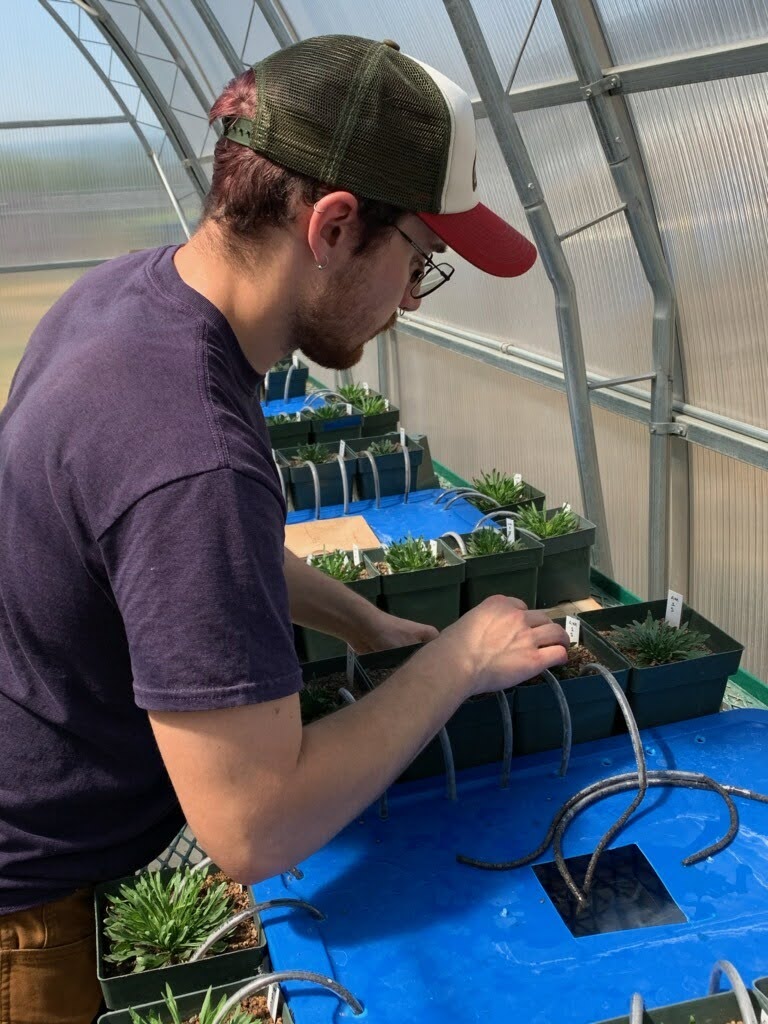
Setting up the drought conditions using a wick system to manipulate soil moisture. This was arguably the hardest part of the experiment to get right.
A major takeaway from my capstone experience is understanding the importance of scientific integrity. Although I faced my fair share of challenges and setbacks, it was important to correct mistakes properly to ensure that the data we were gathering would be accurate and unbiased. At times, these setbacks may have taken a couple weeks to correctly fix. In the end, having integrity is better than having a “clean” or “perfect” study.
Overall, this capstone experience has been extremely eye-opening. It has shown me how difficult science can be, and how rare it is to get everything right. It has caused me to ask more questions than I originally had, and to reanalyze assumptions I had made. I look forward to taking a closer look at our data and writing up the manuscript for publication in the coming months.
Hi there, my name is Trevor Finney and I am currently a senior at the University of Montana!
I spent this past semester studying abroad in Nottingham, England with the goal of learning more about green business and sustainability within supply chains. I wanted to better understand how businesses can evolve in the face of climate change and operate more efficiently and environmentally friendly. I was able to take courses in logistics, business strategy, and China’s global economy, all of which had elements discussing the steps companies are taking to innovate in the name of sustainability. Furthermore, guest lecturers in my courses were able to provide insight on European trade
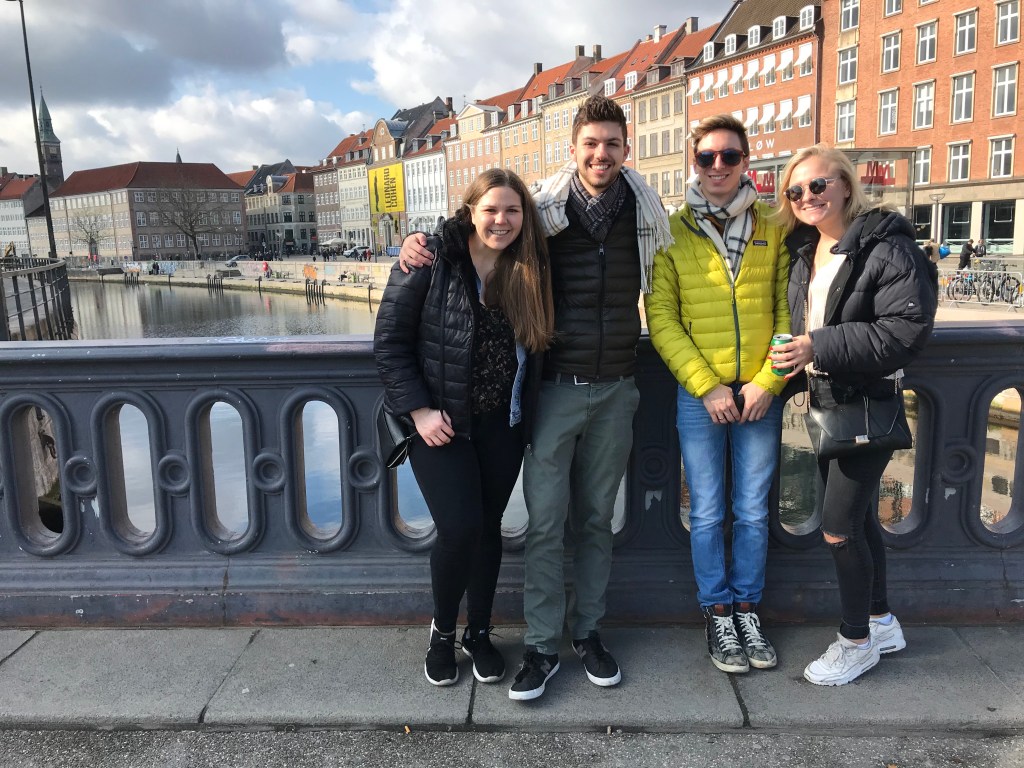
I was also lucky enough to travel to several countries such as Denmark, France, and Ireland to explore all the wonders that Europe has to offer.
My experience abroad and engagement with the different cultures of students who lived in the residence hall with me has given me a new perspective on how culture shapes our relationship with the environment as well as the importance of learning from people outside one’s bubble. For example, there is more social pressure to be environmentally responsible in the U.K. and Sweden, it is a social contract like waiting in queue. A good example is how when you go grocery shopping in downtown Nottingham (or Dublin), most people bring reusable bags as it costs ten pence for each plastic one you have to buy. Furthermore, many people walk to the grocery store, so your bags have to be durable enough for the trek home. I really appreciated the bag tax as an economics major as it is a proven incentive to get people to engage in more socially and environmentally responsible behavior, and the shame of noncompliance does not hurt either.
It is also easier to live greener in Europe as public transport is everywhere, affordable, and accessible. In Nottingham there is an electric tram that runs through all of town daily, connecting city to suburb. Talking with my fellow flat mates, I confirmed what I had suspected, most cities in Europe have incredible public transit whether it is HamburgHamburg or Copenhagen. I think Americans like myself can learn a lot from talking with people from diverse perspectives when it comes to sustainability as we clearly don’t need to reinvent the wheel, rather just look at what has been proven to be an effective solution. I also found that the students I met from Italy live greener lives, but it isn’t with great effort, it’s simply apart of their lifestyle and culture. For example, they spoke of how some apartments do not have clothes dryers, air conditioning, or limitless amounts of hot water and thus you live a more practical, energy conserving life. With smaller fridges and cars that get double the mileage of even the best hybrid, Italians carb footprints are much smaller than those of Americans, and even the Brits. When it comes to the Netherlands, my Dutch friend told me about how as a small country there is a lack of space for new landfills, implying the need to be conservative and efficient with waste management, instilling in the culture a sensibility when it comes to disposables like single use plastics, one that I find we often lack in the U.S.
In terms of leadership skills, you might be shocked to know that absolutely no one participates in class discussions in the U.K. My American friend Cole and I would sit in a lecture hall of a hundred students and watch as everyone said nothing until we felt compelled to give the lecturer an answer just to break the silence. It may’ve just been my three courses, but I definitely had to get used to feeling weird for speaking up. Participation isn’t necessarily “leadership” but I also led group discussions and group projects. I did not mind it because it gave me a chance to ask questions about attending university in England and what it’s like to not have to pay hardly anything for school. I did develop in my ability to independently plan a trip and navigate French cities with only two semesters of classes.
One cultural difference that may be attributed to being in a city instead of a small town like Missoula is that every night of the week is a party night. Nottingham has a vibrant nightlife with dozens of clubs, and I’d always head home around midnight only to be awoken at three in the morning by the drunken chatter of inebriated lads. One of the best nights I had in the U.K. was a trip to Scotland where we went on a bar crawl, and for the sake of embracing the local culture, we drank a fair amount of local scotch. I also enjoyed Scotland for the beautiful architecture of Glasgow, Edinburgh, and the stunning landscape.
P.S: News flash to me, an American, Trevor is not a common English name; it is actually considered antiquated.
My name is Rachel Brosten, and for my study abroad experience I went to the University of Bergen in Norway this past spring semester. Going in, my plan for my Global Challenge was to analyze the American education system and its approach to teaching students. Norway has one of the highest rates of education so I wanted to see if I could understand why and how the US could improve its own. So for me, the very act of studying abroad supported my challenge and Theme of Culture and Politics.
My brother and I on a night hike to the top of one of the surrounding mountains overlooking Bergen lit up below
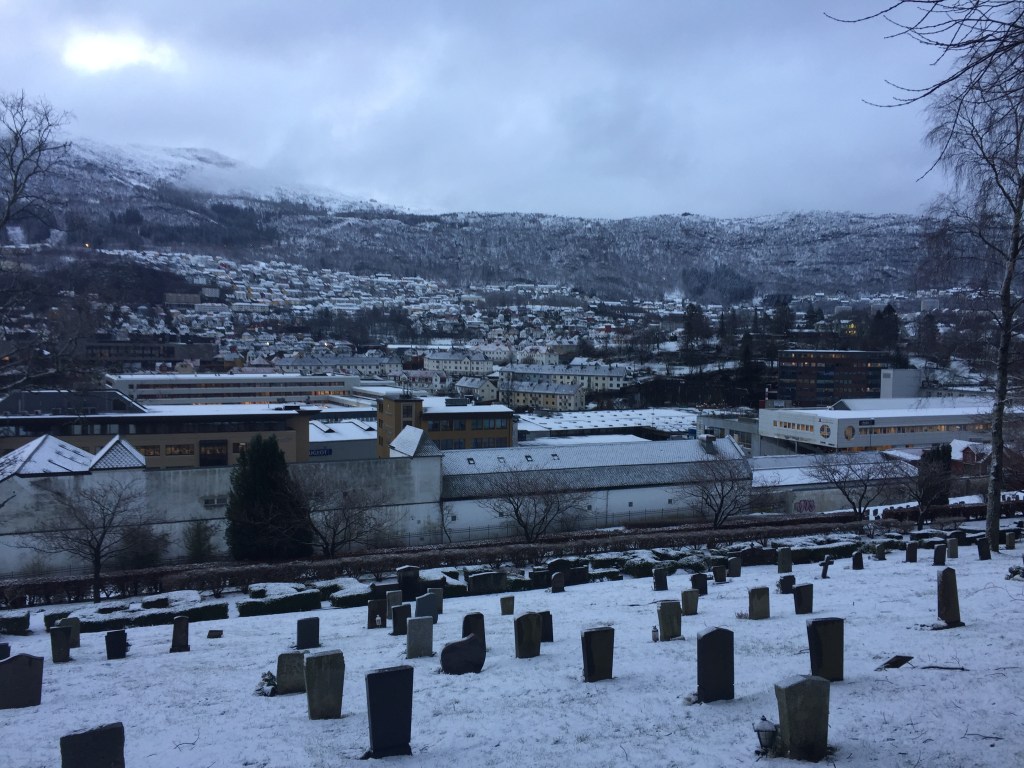
Coincidentally enough, my older brother was also attending the University of Bergen and pursuing his Master’s in mathematics, so it was exciting to be going to the same school again for the first time in 5 years. Bergen was an absolutely stunning place, with so many opportunities to get outdoors and hike and explore. The student housing I lived in was surrounded by graveyards so that was pretty cool and a lot less creepy than I thought it would be. Also, the public transportation system was amazing and that enabled me to go into the city center and look around and shop too. One of the things I miss the most is how absolutely safe and stress free it felt to walk about. I even felt comfortable walking alone at night!
One of the graveyards around where I lived
While there, I got to attend a Black Lives Matter rally which was a super interesting experience because about 2/3 of the speeches were in Norwegian so I could understand very little. The rest was in English and those were ones I was able to really get into. It really was such an amazing and surreal experience, to be attending a rally of a group formed in the US as protest against the killing of innocent black Americans by police…all the way over in Norway. And have almost as much energy as if I was back in the US (given, introverted Norwegian high energy, but still high)
Norwegian signs reading “Racism is also a pandemic” and “If you don’t see the problem, you are the problem”
At the University, I took two courses; one on world education and society and the other on indigenous arctic governance. One thing that was super different was how each class was structured. They only met once a week for 2-3 hours with a 15 min break in the middle and the only homework was to read the assigned material. No essays, no quizzes, just one final exam at the end of the semester which would be the only determiner of your grade. So, your entire grade rode on one 6-10 hour long sit-in written essay. I learned later with my expectations and experience in the US education system, I was woefully unprepared.
And then of course, the pandemic hit and everything immediately and completely shut down. Unfortunately, I was only able to attend about 4 weeks of classes which meant 8 individual classes (4 for each subject) and it didn’t allow a lot of time to make friendships. Luckily I was able to make one friend from Poland and we’re still in touch and wanting to visit each others’ home country when this is all over (aka when other countries actually allow any Americans to come in.) That time was super hard. I was essentially completely by myself for 3 months in a small dorm room where I was within 6 feet from my “kitchen” and bathroom when lying in bed. All I can say is thank god my brother was there. We made sure to check in on each other and socialize and make sure to get out of the building as much as possible. There was never a time we each needed family more and we were lucky to live in the same building.
My friend Dominika momentarily stuck in a telephone booth library
As an outlet and release of sorts, I even created a blog for myself where I could write out any deep introspective thoughts I was having, work/talk through difficult emotions, as well as just continuously journal about what it was like to live through the entire experience. It was very therapeutic for me and helped a lot with any mental or emotional strain. And man oh man was I glad to be an introvert because I had inadvertently been training for this prolonged period of solitude for 21 years. I actually had my birthday in March while I was there. Big deal in America, meaningless age in Norway.
The biggest thing I learned was just how different the expectations and approach to learning are in Norway. I actually learned this the most in my own failure.
This all came to a head during my finals. When the time came, I found that I actually had very little idea on how to even approach studying because it didn’t rely on pure memorization of facts and dates. I had total access to all the notes and readings and all resources provided during the course of the term. So I legitimately didn’t know how to prepare and that made me feel really frustrated at the limited skills my past schooling had provided me. Was the only thing encouraged/taught just different ways of memorization and not actually how to critically think and articulate what you’d learned? It sure felt that way.
It was especially hard because I had never before in all my 16 years of schooling, ever failed a class. It was almost debilitating and I was so angry at myself for not preparing more, at my past schooling for not preparing and teaching me, and just at the fact that I knew I was 100% able of doing it and yet, couldn’t. Also, for the prior 2 days leading up to my last final, knowing how unprepared I was for the first, I didn’t sleep at all with anxiety at what was coming. So there I was, staring at prompts I couldn’t answer well, stressed, absurdly sleep deprived, and calling my mom every hour to cry.
But as it tends to do, time continued on unwaveringly and I got through it. They say you tend to learn the most from your failures, and I would definitely agree (as terrible it seems while you’re in it).
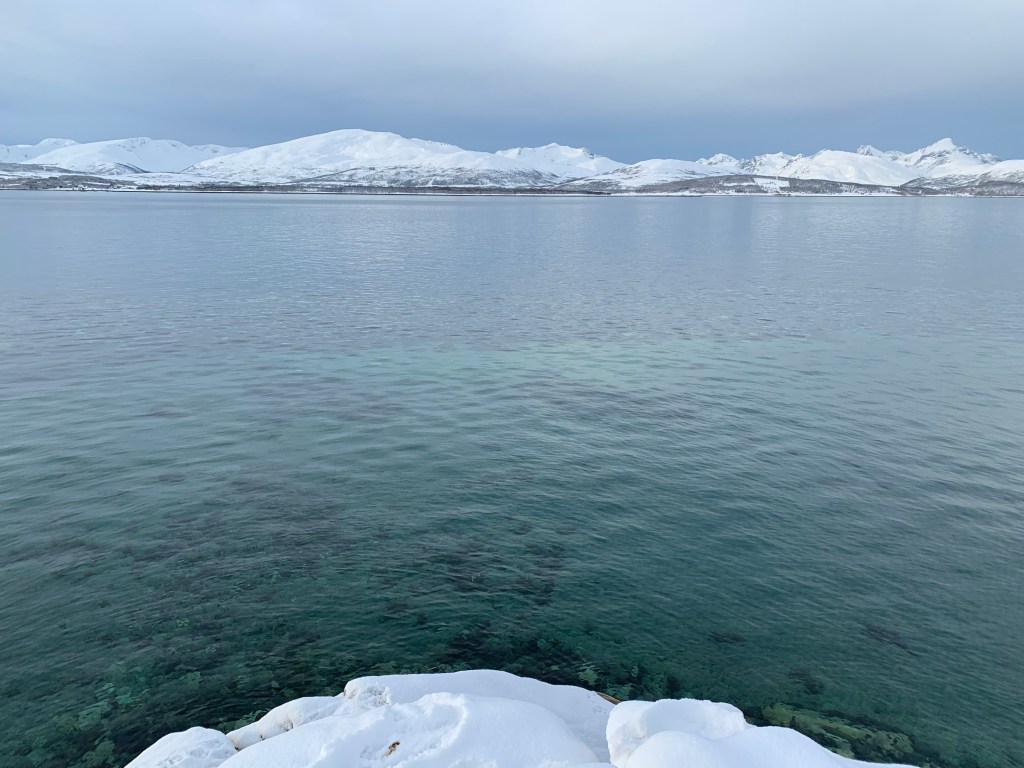
This image was taken standing on the edge of the Tromso island looking at the mainland. The body of water is the North Pacific ocean and is called a fjord.
Hi! My name is Madi Kohls and I am a junior at the University of Montana majoring in Biology and in my third year of the Army ROTC program.
My trip abroad took place in Tromso Norway, above the Arctic Circle! While I was there I was observing the effects of twenty-four hours of darkness on mental health. I was also observing how a more progressive government affects mental health and what personal and governmental mitigators are put in place to benefit the physical and mental well being of citizens. Along with observations I took arctic marine biology and a Sami Nation course (the indigenous people of Scandinavia) to provide further evidence for the climatic physical changes.
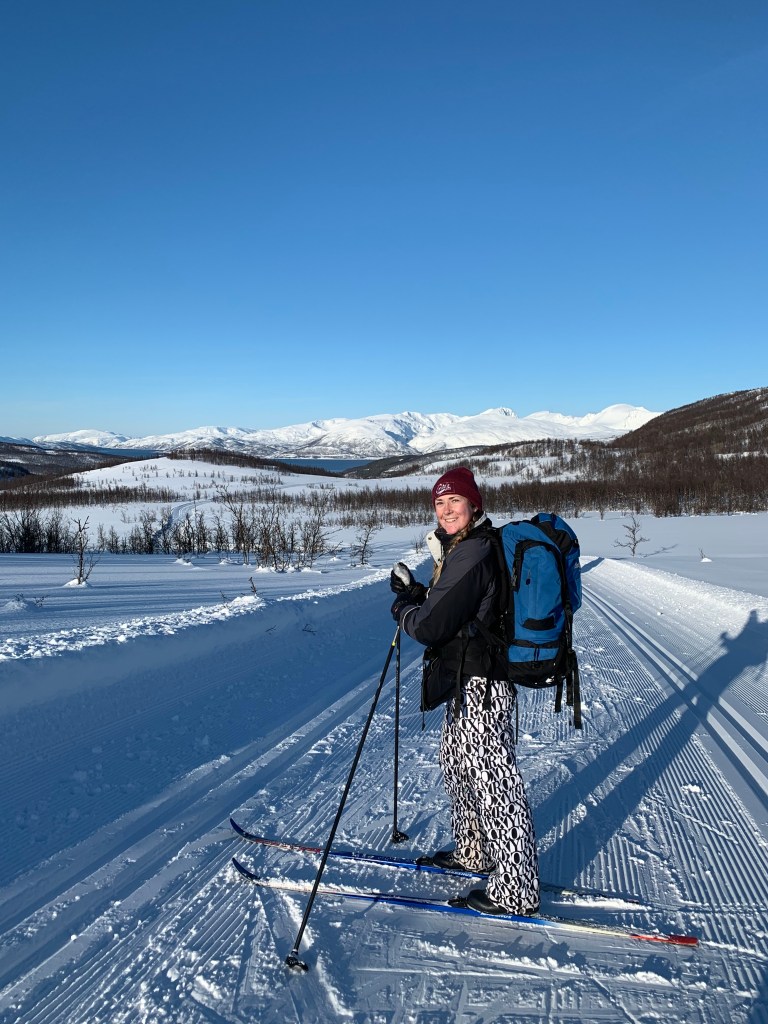
During my time there I was almost never inside. On the island of Tromso, there are several cross country skiing trails, backcountry skiing trails, snowshoeing trails, ice skating rinks, and outdoor festivals. This helped me truly figure out that being physically active is something that benefits me in many ways, it puts me in a better headspace and helps me find motivation for the mandatory things that need to get done before the fun.
My friends and I would often go on cross country skiing backpack trips to cabins in the area where we would camp and head back the next day.
I interacted with people from all over the world. Due to the wide variety of different cultures, a lot of patience and understanding was needed to interact on a daily basis. Patience and understanding are two of the character qualities, and leadership qualities, I had not developed very well. Coming out of my time abroad I can confidently say I have improved on them greatly and without too much struggle.
During my time abroad I truly found a better version of myself. I made friendships that will last a lifetime. I found hobbies that I will never get bored of and I found classes that piqued my interest and made me rethink my future plans. While Tromso developed my Global theme, my character, and my leadership it also helped me find a feeling of inner peace and comfortability within myself, and for that, I will always be grateful.
Kia Ora! I’m Brianna, a senior in the wildlife biology, GLI, and honors college programs. I truly was not prepared for the semester I had while studying abroad at the University of Waikato in New Zealand. From a global pandemic, personal loss, new insights, and irreplaceable friendships, Aotearoa gave me a completely unique and unpredictable experience.
View of downtown Wellington and their famous cable car.
My global theme is social inequality and human rights. I chose to go to New Zealand because of the seemingly well-mended relationships they have. Overall, New Zealand seems to be a peaceful place full of righteousness and equality. That can be observed from the praise they received over handling COVID-19. I wanted to study there to find out why that is and to learn what is working for them.
Two of my flatmates and I, JT (a fellow GLI pal) and Lillian, on a tour of Hamilton, New Zealand.
While in New Zealand I learned a lot about the Māori people, who are the indigenous people. I took a class on their history and their culture. I took an anthropology class on ethnicity, and I took a class on intersectionalities. In all these classes I learned that New Zealand often uses the U.S. as a model and sometimes uses policies from the U.S. to shape their laws. Schoolchildren even learn U.S. history in school. This led me to wonder how the U.S. seems to have so much more inequality and human rights issues than New Zealand does. I learned that New Zealand has its issues as well. I learned about the long persecution and land taking of Māori iwi (tribes) and the persistent systemic racism they still face today. People in New Zealand are also fighting for justice in their own communities, but because in an effort to mend broken relationships, they implemented peacemaking actions such as performing haka at rugby games and using Māori greetings such as “Kia ora!” in their day to day life, their relationship to their indigenous people comes across as mended.
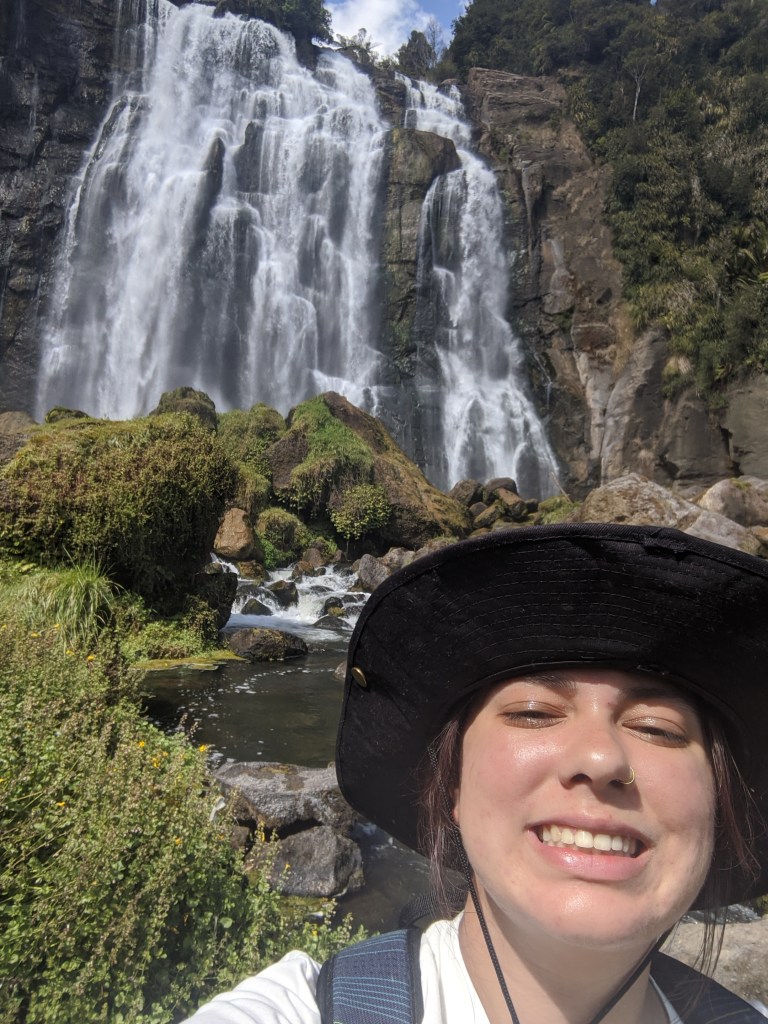
Marokopa Falls
Overall, I learned that it is not that New Zealand is better at solving human rights and social inequality issues, it is mostly that they are just better at covering up their issues with a bandage. However, they do seem to have more active politicians working to mend the issues surrounding inequality. In my classes I was also provided with a sort of social toolbox to approach some of the issues I want to look at and begin to break them down.
Watching the local rugby game, go Chiefs!
It was not all work all the time either. I was fortunate enough to be placed with wonderful flatmates and form meaningful friendships. My flatmates and I often had nacho and “sofa bed” nights where we made nachos and pushed our couches together and watch movies, did face masks, and “had a yarn.” Not only did I learn a lot about New Zealand, but my flatmates Lillian and Kristine also taught me a lot about Norway. My small friend group took a while to form due to quarantine measures, but after, we took it upon ourselves to make the best of our time there. I will never forget my time on the land of the long white cloud and the people I met there. I hope to make my way back some time to explore the areas I did not get a chance to while I was there, but for now, all I can do is share my memories and video call my new long-distance whānau (family).
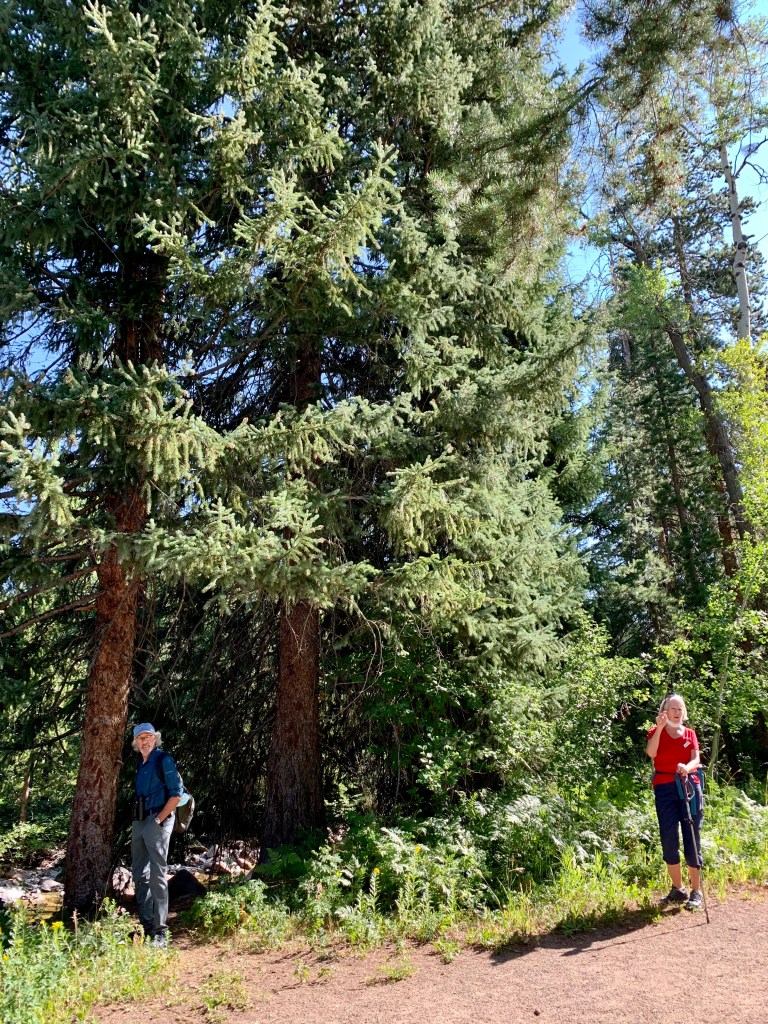
Mary O’Brien, the leader of the Wildflower Wanders, teaches hikers about different ways to distinguish pines, firs, and spruces from one another – most notably by touching their needles.
This summer I had the opportunity to work with Yampatika, an environmental education organization, as an intern, assisting naturalists in weekly hikes throughout the summer. I was especially lucky to find an organization that aligned with my values in my hometown of Steamboat Springs, Colorado, which turned out to be amazing as the COVID-19 pandemic took over shortly after my internship was finalized in March. As an organization, Yampatika aims “to inspire environmental stewardship through education,” providing educational programs for citizens of northwest Colorado aged five to 85. Learning is a lifelong process that changes as we grow and mature, which Yampatika recognizes when organizing different programs for children, students, adults, and senior citizens. My GLI global theme is natural resources and sustainability, so finding the opportunity to work with a group of people with a similar mindset was a rewarding and impactful experience. Although we shared many particular views, my coworkers at Yampatika urged me to look at issues from other perspectives, which proved to be insightful in my understanding of environmental education. My GLI global challenge relates to bringing awareness to the preservation of ecosystems and biodiversity, as well as combating climate change as our societies continue to grow.
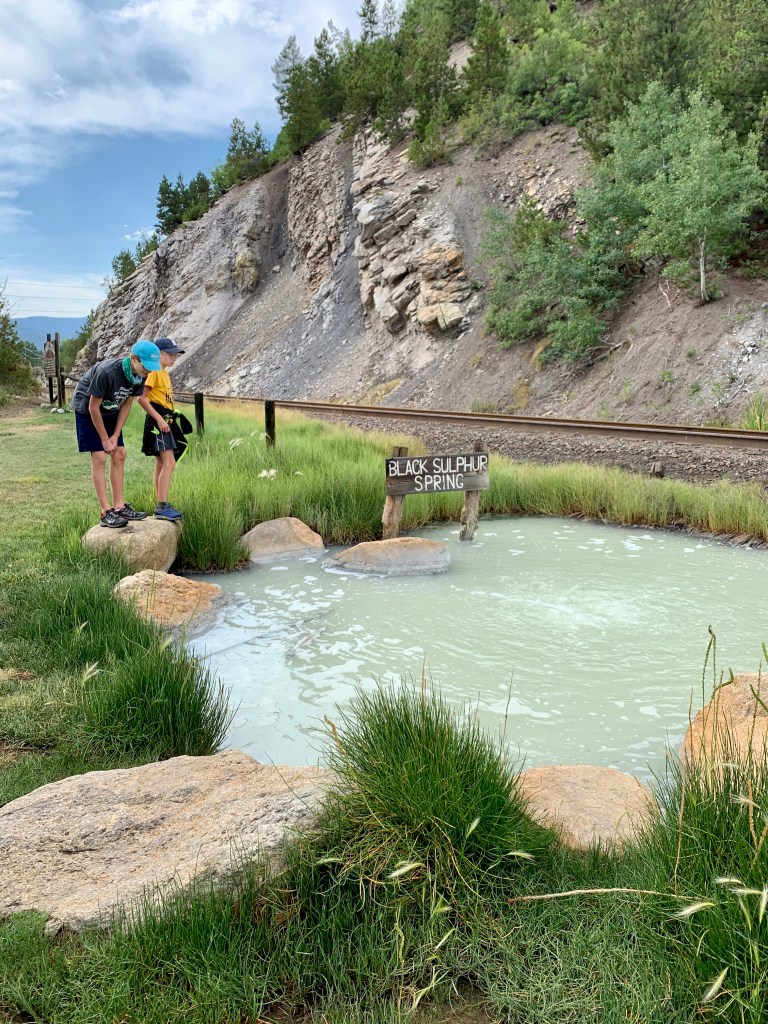
Two of our younger hikers learn more about one of the town’s 12 mineral springs, Black Sulphur Spring, which is known for its changing color, depending on its chemical composition. At this point in the year it is a beautiful bluish green.
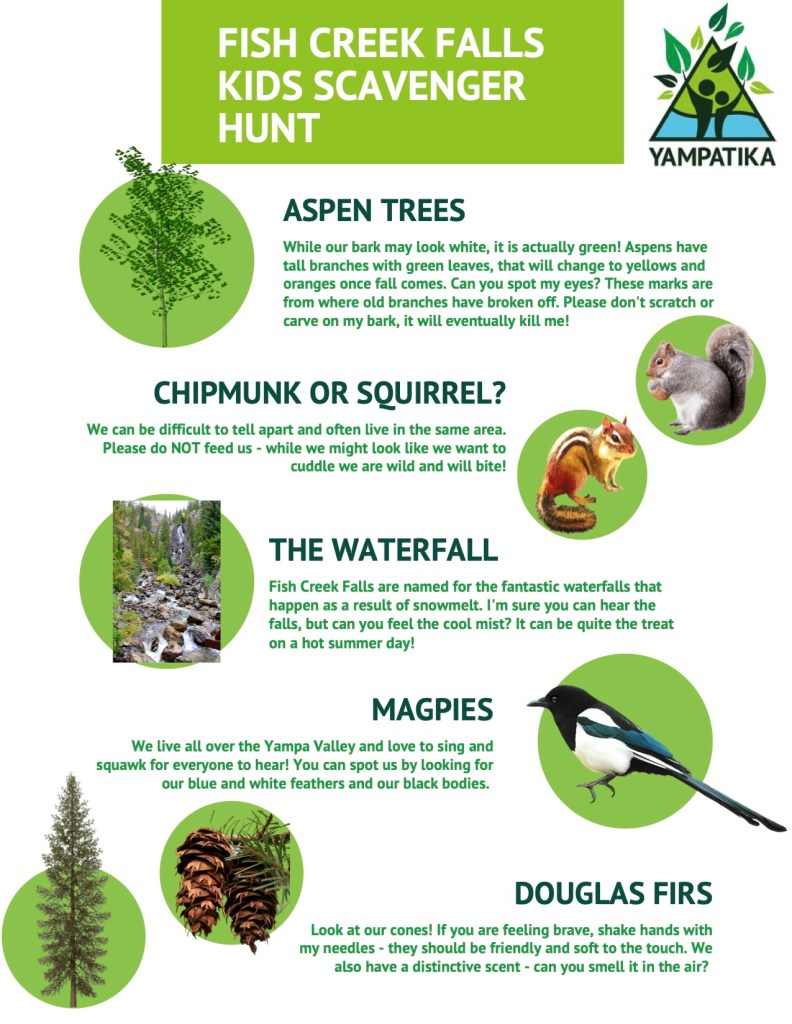
On Mondays this summer I assisted Mary O’Brien, a medicinal herbalist, on her weekly Wildflower Wanders. During these morning hikes, participants had the opportunity to learn about more than 50 species of plants, from the most poisonous ones, such as western water hemlock, to essential plants, like yarrow, which can stop bleeding, help with coughs and colds, and aid in pain relief. It was amazing to watch people learn about and gain an appreciation for the medicinal uses of these plants, ones they had hiked, biked, or driven by without previously noticing. On Wednesdays I helped to lead a mineral springs tour around the town with a naturalist, where we educated hikers on the hydrothermal and geothermal processes taking place in the underground systems beneath us. The town of Steamboat Springs has over 12 different hot springs sprinkled throughout it and its surrounding mountains, with its namesake having been established after 19th century French fur trappers traveled to the town and believed that they heard the chugging of a steamboat just upstream, later realizing that it was a natural mineral spring, bubbling and gurgling with water instead. As an intern, I also designed a scavenger hunt activity for hikers on a heavily trafficked trail that I was supposed to be stationed at, called Fish Creek Falls, but was unable to do so because of COVID-19.
An important realization I came to this summer is that each individual has their own style of learning, which is oftentimes forgotten. In the case of my internship, we had an interactive based learning style, where we took participants on hikes where they could experience exactly what naturalists were describing: the stinky sulphur smell coming from one of the mineral springs or the sweet taste of a ripe serviceberry that some black bears had missed. Education and leadership are two critical things that I believe are linked together. Continual growth in these fields are important but can be intimidating, as they emphasize change, which, while natural, can be uncomfortable. Along with being a part of the GLI and minoring in art history, I am working towards applying to the Bachelor of Fine Arts (BFA) program in the University’s School of Art, with an emphasis on photography and sculpture. Upon graduating, my goal is to create art that draws awareness to the environment.
This is a serviceberry bush, which locals and wildlife alike love. Although it is spelled “service” there is a debate within the Yampa Valley as to whether or not it is pronounced “service” or “sarvice”. The plant tastes similar to common blueberries. We had been waiting for weeks for these plants to ripen and by the time we did, they had nearly been finished off by other creatures!
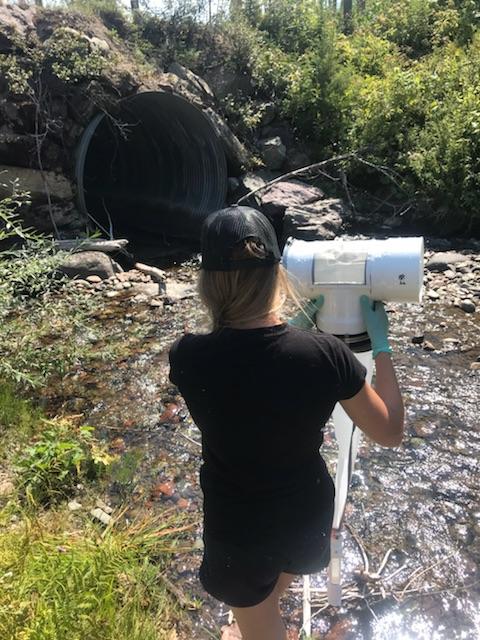
My name is Katie Graybeal and this summer I interned at the Environmental DNA genomics lab to study aquatic invasive species. My Global Leadership theme is Natural Resources and Sustainability so I focused this internship on Montana’s river and lake systems. I chose this focus because I believe that rivers and lakes holds significant economic and intrinsic value for us all. For this experience, I researched invasive species specifically Zebra Mussels, and monitored their progress and provide early detection before they could endanger our waterways. I learned how to sample Environmental DNA which is cellular material shed by organisms into aquatic environments that can be sampled and monitored using a new molecular method called qPCR. QPCR also known as quantitative Polymerase Chain Reaction monitors and amplifies targeted DNA molecules to detect a match between sample DNA and the DNA it is encoded to search for. During this internship, I found that eDNA can be used to not only find invasive species but also endangered or rare species opening up many options to conserve or protect natural resources in the future. Since this is a new and developing technology, improvements in protocols and procedures are very common giving me the skills to pitch and enact new ideas. With this technology rapidly improving some hope to develop it for other purposes like virus detection. I find myself wondering how eDNA can help us with other non aquatic tasks and make the jump to a more terrestrial setting.
Some of my roommates and I in the town center of Graz.
Upon learning that I would be spending my semester aboard in Graz, Austria I had no reaction other than surprise. Frankly, I had forgot I even put it on my application for study aboard locations. Looking back, it’s astounding that a city in which I never would have considered visiting is now one that fostered friendships, independence and holds great significance to me. Located in southern Austria, a country nestled between European hotspots like Italy and Switzerland and lesser-known countries like Slovenia and Croatia it brings an interesting and unexpected mix of people together. I think this is exemplified in the various nationalities of my roommates. I shared a wall with a 26-year-old Boasian woman who was working in a pharmaceutical lab developing a drug and finishing her PhD. On the other side of me a 23-year-old Finish civil engineering master’s student resided. Lastly, down the hall was a newly 18-year-old from Kazakhstan, who was getting her undergraduate degree in world economics. Then there’s me a 21-year-old American majoring in finance and management information systems. I think it’s fair to say we were a diverse group of girls all coming from places none of us were familiar with. Though I came away from my study aboard experience with a fair amount of knowledge regarding Austrian culture I feel more well versed in daily life of a Finish student and the structure of a Kazakhstani family. Now being connected with them on social media I still am learning things and find their different use of the technology interesting and refreshing. This lends itself perfectly to my GLI theme of technology and society. Prior to my departure to Austria I set intentions to relate my experience back to my GLI theme and was interested in how social media and technology is used in different cultures. I didn’t realize this would be so easy to do, but in hindsight I should have seen it coming. I quickly learned that it’s not just Americans who are obsessed with social media and that for many people giving them your Instagram handle is akin to giving them your phone number. These online connections create real meaning when you actually talk to someone and hear about their life and culture. From my Kazakhstani roommate, Aru, I learned that from the outside her country may put on a good show and appear to be a democracy, but this performance is just that, a performance. In reality she and many other citizens are frustrated by rigged elections that keep the same men in power for years. Along with that she has watched her qualified and educated father continuously get demoted over time, not due to a lack of skill, but because he is not a member of the ruling party. Had I not learned of this background I would have viewed Aru’s Instagram posts that praise American politicians like AOC and just thought she was a fan and interested in politics, however since I’m familiar with her concerns I know these Instagram posts are fueled by frustration and a legitimate longing to be a part of a different system. While some may think of social media as a hindrance in learning about new cultures and making sincere friends, I found it to be a useful tool that puts new friends’ backgrounds and stories into media and words. When social media is paired with an eagerness to learn and in depth conversations more is revealed and can be reflected upon.
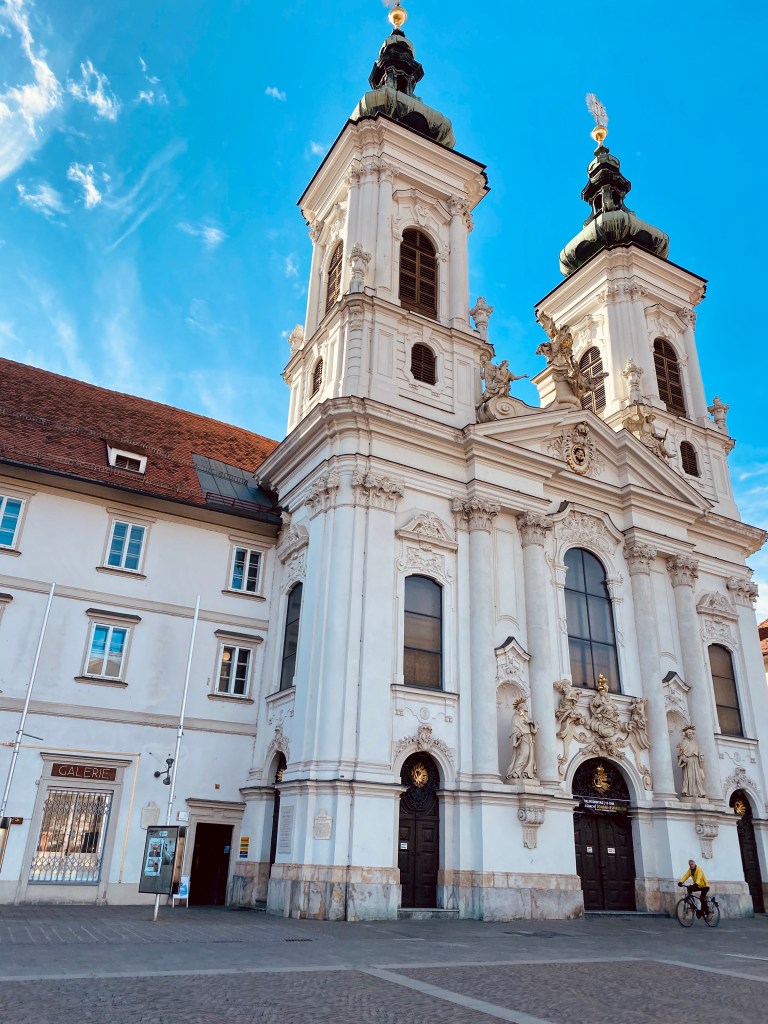
A church that I got to walk by everyday on my way to school.
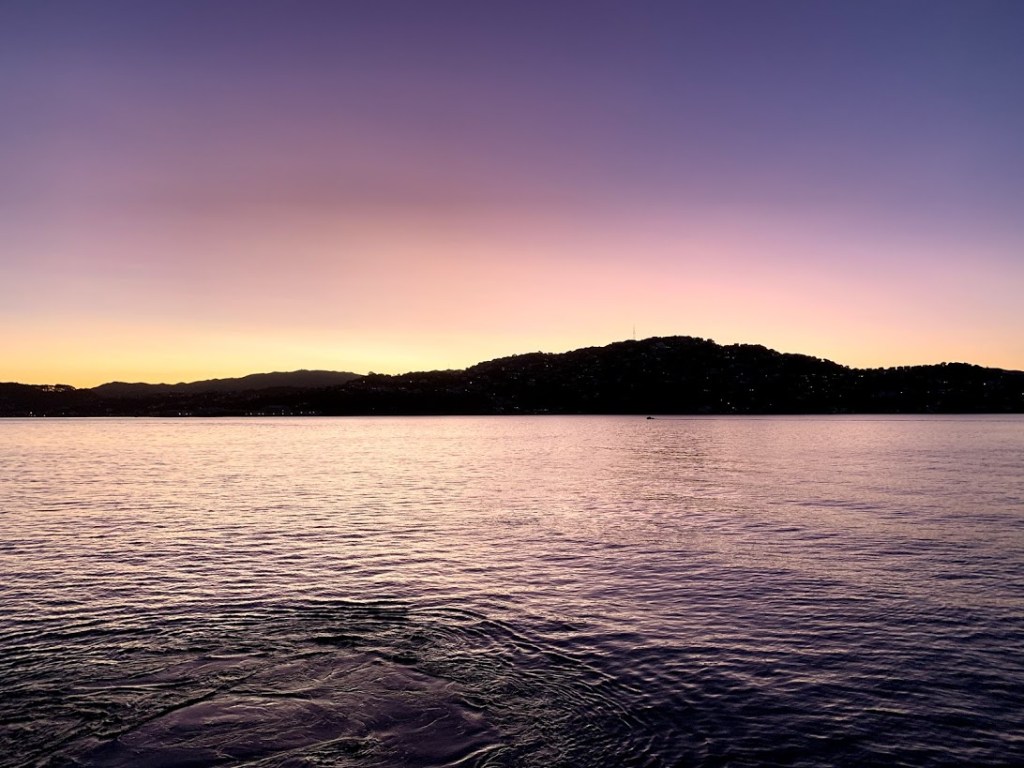
How unreal is this view from the Wellington Harbour!?!? I would come here almost everyday as it was about 7 minutes from my dorm.
Hi there, my name is Liza Donier and I am currently a senior at the University of Montana!
Thanks to the Franke GLI, this past spring semester I studied abroad in Wellington, New Zealand. My experience in New Zealand directly related to my global theme of Social Inequality and Human Rights. While abroad, I took a course titled Māori Society and Culture. Māori are the indigenous people of mainland New Zealand, compared to Pākehā who are white New Zealanders. This course allowed me to learn a significant amount of information including, Māori beliefs, and concepts and structures that were important to the development of Māori society and culture. I also learned a significant amount about pre-European Māori society, cultural change, present-day developments as well as visions the future. This course allowed me to learn about a group of individuals that I knew nothing about beforehand. This course and my study abroad experience in general gave me a better understanding of the diverse perspectives related to my global theme. Often, when I think about social inequality and human rights, I think about the examples that I see in the United States. It is so important to take a global perspective in order to fully understand the theme.
Something that I learned about that I found extremely interesting was the integration of both Māori history and language in New Zealand. While it is no means perfect, I believe that it can serve as an example for other countries such as the United States. By engaging with a culture different from my own, I was able to understand that the United States could be doing significantly more in order to better integrate Native American language and culture. For example, in New Zealand instead of saying hi or hello, they say “Kia Ora” which is the Māori word for hello. This is such a normal thing that individuals say, regardless of whether they are Māori or not. The integration of both the Māori language and the cultural traditions was truly inspiring to see.
While I was only in New Zealand for about month (thanks COVID-19), I was still able to learn a significant amount both about myself and the world around me. This experience forced me to leave the comfort zone of my friends and family in the US and pushed me to meet new people from all around the world. I learned about the importance of fully immersing myself in the New Zealand culture and lifestyle. I would often talk with my Kiwi peers about everything New Zealand related. I was given lessons on rugby so that when I was watching a match I (somewhat) knew what was going on. They taught me about the education system there, as well as the local politics. I loved this experience because previous times I have travelled I never really had this opportunity to learn about a country in depth. My friends and I would go to all the cultural sites in the city, to better understand the area we were in. While my time in New Zealand was short-lived, it will have a lasting impact on me, and I can’t wait to return to New Zealand.
An exhibit at the Te Papa Museum focused on New Zealand’s involvement in World War 1. Who knew? I sure didn’t!An exhibit at the Wellington Museum celebrating the women’s suffrage movement in New Zealand. Fun fact: NZ was the first self-governing country in the world to give all women the right to vote!A photo from when I went to Zealandia, the world’s first fully-fenced urban ecosanctuary. Every direction you looked you would seen greenery, it was hard to believe the city of Wellington was so close!
My GLI Global Theme is Inequality and Human Rights and my Challenge is Access to Education. I was hoping to study this challenge abroad in Africa but ended up learning more about this right here in Missoula! I had the wonderful opportunity of interning with The Flagship Program for six weeks over the summer at Hawthorne Elementary School. I was one of two people running a summer camp for kindergarten through sixth grade. I was not sure what I was going to learn about access to education in a place where I grew up so close to. However, I learned more than I ever imagined.
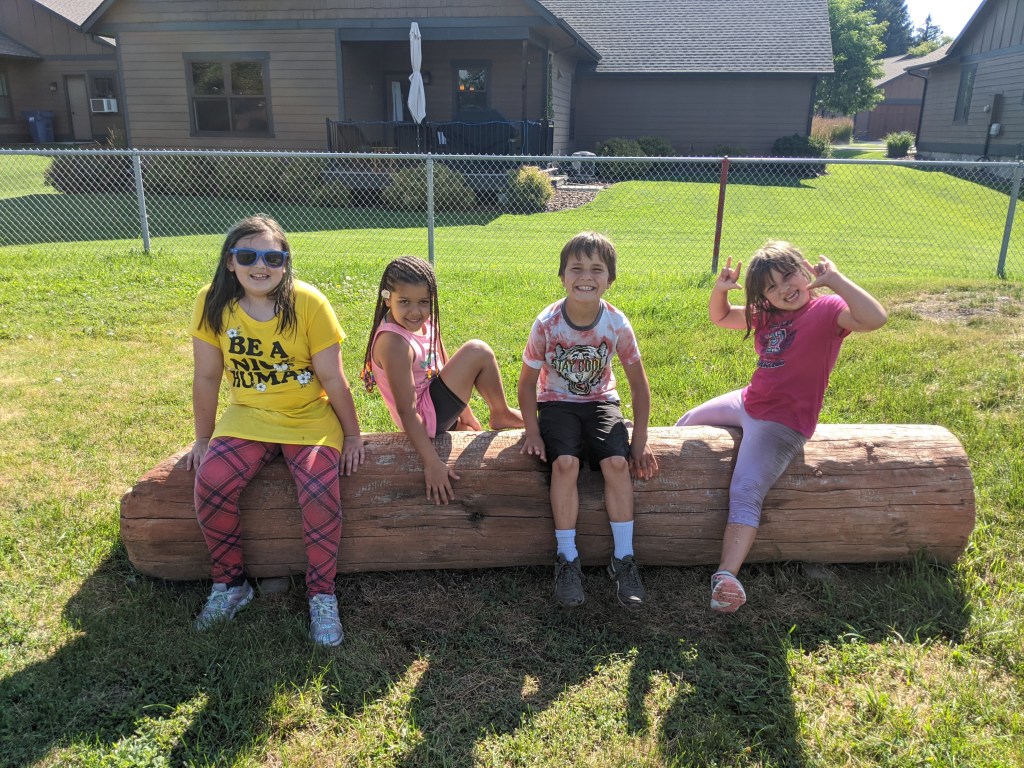
These are the campers from our last week of camp.
My experience with Flagship helped me to be on the inside of a program that provides access to education, particularly to subjects and extracurriculars that many students do not usually have access to. As the Flagship Program is free to students, many of the kids I worked with are from low-income families. A few of the students talked to me about how they love art, but only get to do it a few times a month during the school year. The Flagship Program is one of the only free summer camps in Missoula. Many other camps cost $200 or more. Children deserve to be able to have fun, even if they cannot afford a traditional summer camp. I am so grateful for the work The Flagship Program does in the Missoula community and that I was able to be a part of it for six weeks!
Tie-dye!
I have to tell the story of the poor moth. While we were outside, the girls found a moth because it landed on one of them. She freaked out and brushed it off her and it fell to the ground, injuring one of its wings. They found a container inside and made it a new home and promised to take care of it for the rest of their lives. When they brought it inside, a group of kids was coloring. They took the markers and colored the poor moth’s wings. They also gave it part of the cupcakes I made for my birthday. It actually picked up the cake and appeared to be eating it. One of the girls took the moth home, and it died a few days later. It was both hilarious, a little sad, and very sweet.
The moth…
My internship with Flagship helped me to develop so many different skills. I was able to work on communication, time management, empathy, creativity, flexibility, and so many more ways. Leading the kids in various games and activities helped me to become a better leader. I look forward to being able to implement the skills I got to work on this summer when I graduate and become a public school teacher.
Working with Flagship was one of the most fun “jobs” I have ever had. I loved the small number of children and being able to let them decide what they wanted to do. Many of the kids said this was the most fun they have had since school ended back in March. I was so glad to be able to bring fun to the kids and provide opportunities for them to make friends and have fun together, even in the midst of a pandemic.
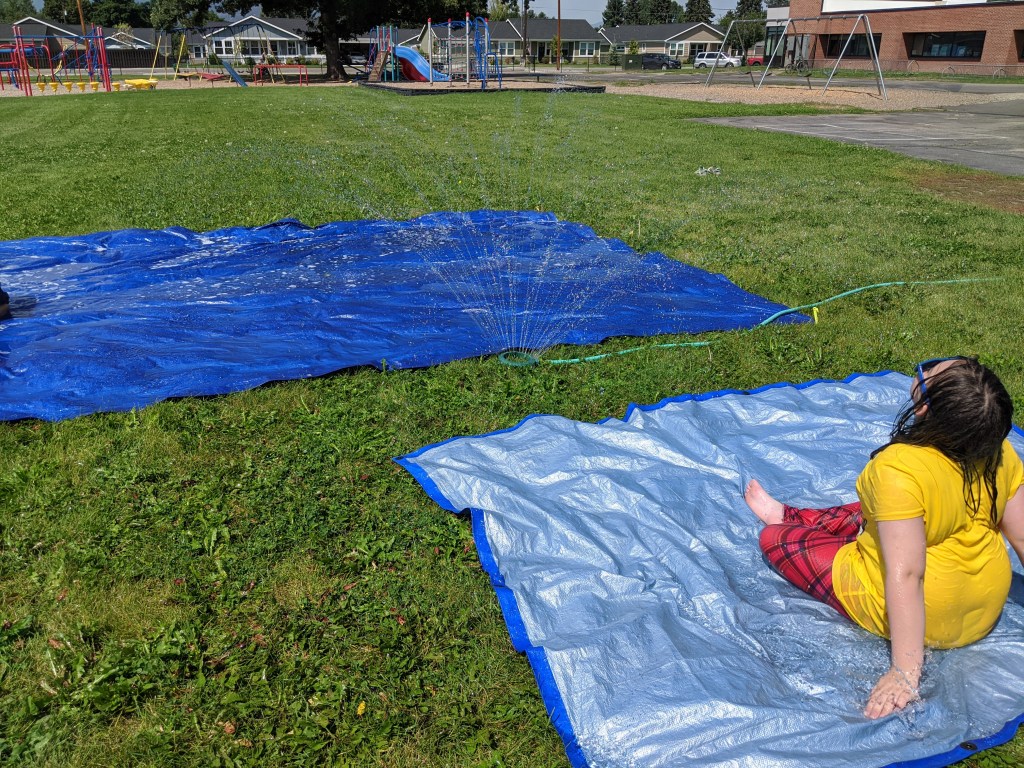
One camper basks in the sun next to our homemade slip-n-slide.
I would also like to tell future GLI students that a Beyond the Classroom Experience in Missoula or elsewhere in the US can be just as rewarding as one in another country. I am extremely grateful for my experience with The Flagship Program!
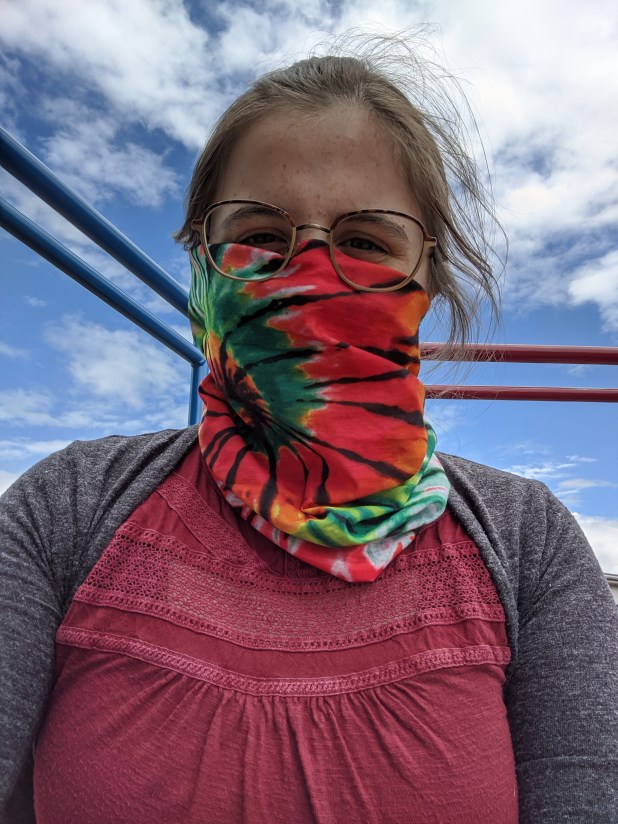
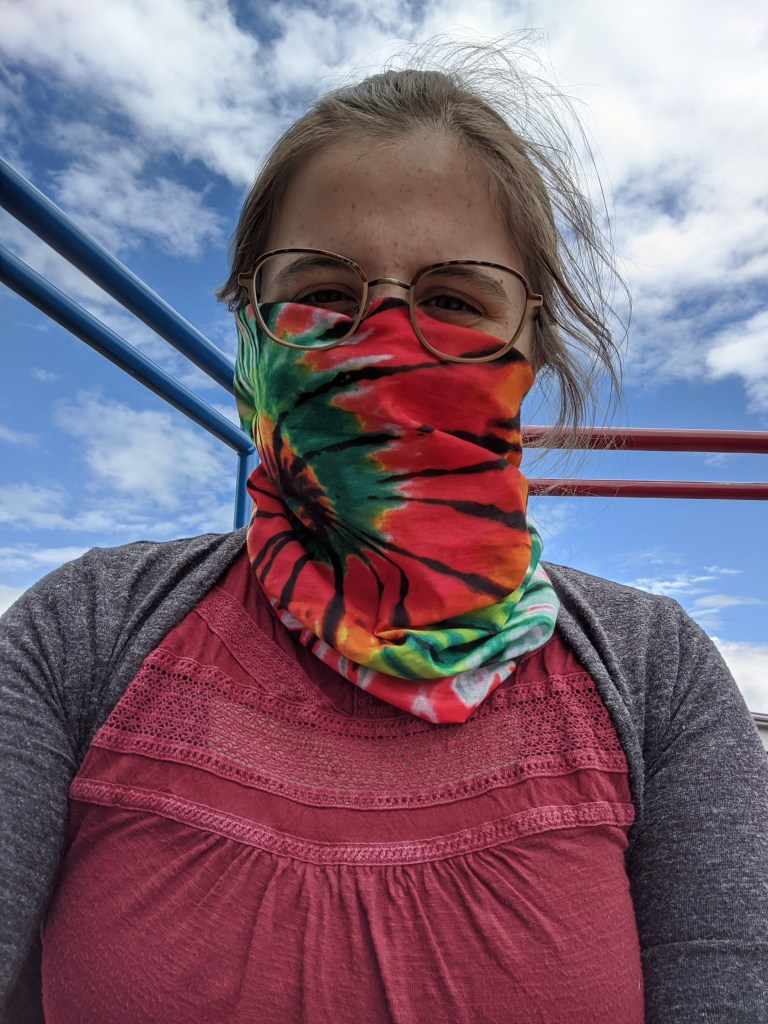
Here I am in one of the masks we handed out for our campers. COVID made summer camp very interesting, but we still had lots of fun!














 Beyond the Classroom