My name is Tristan Clifford, and I’m a Management Information Systems major with a minor in Spanish. My Beyond the Classroom Experience was to Barcelona, Spain. My theme was Culture and Politics, and this experience changed my life in many ways and reframed my ideas of what Europe and Spain was and the people that existed inside of it. Being in one of the more radical regions of Spain, Catalonia, I learned a lot about the cultures, attitudes, history, and beliefs that Catalonians have.
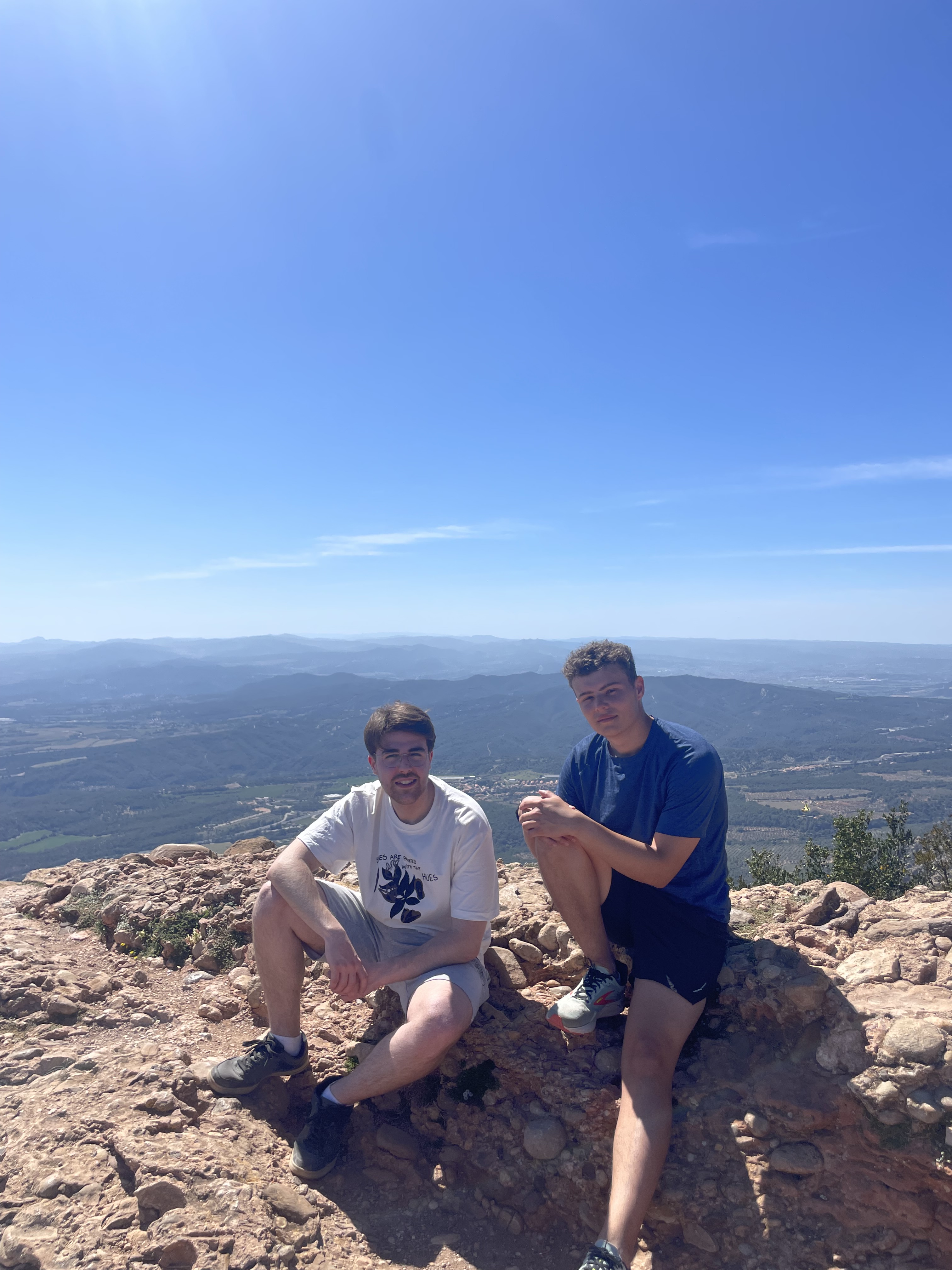
My friend Jaume and I on one of the peaks of Montserrat
Taking two of my classes in Spanish at the Universitat Autónoma de Barcelona (UAB) really challenged my Spanish and social skills. I needed to find friends in my Spanish classes that would help me with note-taking since native Spanish speakers speak way faster than I could possibly comprehend. This challenge needed me to leverage my, quite frankly mediocre, Spanish skills and become more outgoing in an unknown environment. One of my Spanish classes was on the Modern and Contemporary History of Spain which taught up from the late 1400s to Francisco Franco’s Reign in the 1930s. In that class I learned many things about the reunification of Spain and specifically about the very independent thinking of Catalonia, Basque Country, and Navarra throughout these time period. Catalonia today has regained its sense of individuality since the fall of Franco’s regime, and has wanted to separate from Spain for years now, often having protests for its independence. In the election for EU parliament this year, right-wing parties have gained more seats meaning that the social-democrat party, Spanish Socialist Workers’ Party, has to make a coalition government with these more radical left-wing separatist groups, including Catalonian independence parties.
A few friends from Erasmus in my and Jessica’s (another UM student) classes on the beach
While I did learn a lot about Spain, I would also say I’ve learned a lot about people from Europe in general. For some reason, I’ve always had the ideas in my head that Europeans were so far away, foreign, and different from me and that they seemed to live in some fairy tale world with advanced transportation, healthcare, and mental well being. In reality, it was nearly all of those things except the people were really really cool and not that different at all. I’ve met people from all around Europe in the many events I went to in the Erasmus organization that was at UAB. I’ve met people from Poland, Italy, Mexico, Germany, France, Ireland, Austria, Holland, and England, and they all had super fascinating views on policy, interesting, but mostly questionable, opinions about food, and had a very interesting way of seeing their identity that is very different to the United States. For example, if you have a pale skin color in the United States, you would just be considered “white” with maybe strong ethnic ties to Ireland or something, but in Europe everything is based on their ethnicity, their country of origin. It makes sense when I say it out loud, but it’s a very big deal over there. People from Southern Europe (e.g. Spain, Italy, Greece) are considered way different than people from Eastern Europe (e.g. Romania, Ukraine, Poland), even though in the US they would all be considered as “white.” However, even saying that would be controversial because I knew some Poles that don’t consider Poland a Eastern European country and would instead argue that its a Central European country since they don’t want to be associated with the poor, and stereotypically socially conservative Eastern European countries. Talking to my new friends about these random things really uncovered a microcosm in varying European values that I truly had no idea existed just several months before.
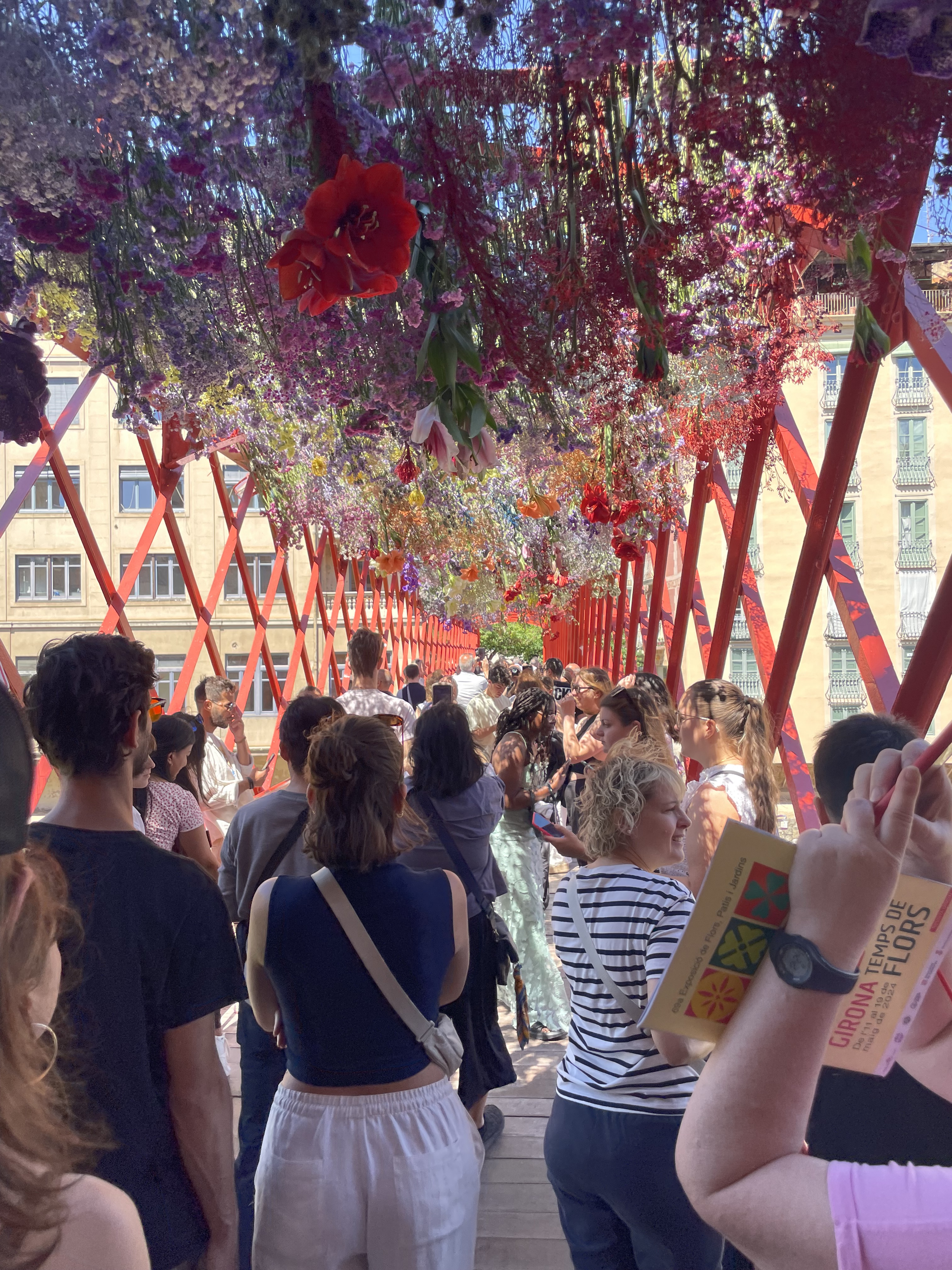
One of the bridges in Girona during the Flower Festival
Studying Abroad was one of the best things that has ever happened to me, and I recommend it to anyone that even has a slightest desire to do so, since these experiences have become so valuable to me. Being able to network with other people while in another country where the national language is not English definitely needed me to be more assertive in introducing myself, being sociable, and it made me better solve the problems that would be constantly thrown at me, which really helped me improve my leadership skills. Taking a Spanish history class, going to landmarks and museums, and making friends from Spain and the rest of Europe really exposed me to the many different facets of European values and culture that I think is super important to understand in our interconnected world and I hope to use these experiences to help shape the solutions to problems the world has been struggling with for decades.
My Internship Experience in the U.S. Senate with Senator Mike Crapo
This summer, I had the incredible opportunity to intern in the U.S. Senate, working for Senator Mike Crapo of Idaho. This experience was not only transformative but also provided me with a deep understanding of the legislative process and the inner workings of the federal government. I was able to secure this internship through the Baucus Institute, a program dedicated to providing students with opportunities to engage in public service and gain hands-on experience in government.
The Beginning of My Journey
Walking into Senator Crapo’s office for the first time was a surreal moment. The office was a hub of activity, filled with staff members dedicated to serving the people of Idaho. As an intern, I was quickly introduced to the day-to-day operations, which included answering phones, and assisting with administrative tasks. Although these responsibilities might seem routine, they were vital to the efficient functioning of the office. They also gave me a strong foundation in understanding how constituent services are managed, which is a critical part of a Senator’s duties.
Montana Coffee: A Memorable Highlight
While every day brought new learning opportunities, the highlight of my internship was attending Montana Coffee with the Montana Congressional Delegation. This weekly event is a tradition where Montanans visiting Washington, D.C., can meet with their elected leaders over a cup of coffee. It was an incredible experience to interact with fellow Montanans, hear about the issues they care about, and discuss their perspectives on current events. Engaging with Montana’s elected leaders and fellow Montana interns in this informal setting was both inspiring and grounding. It reminded me of the importance of staying connected to your roots and the people you serve, no matter how far you are from home.
A Glimpse into the Legislative Process
One of the other highlights of my internship was attending a Senate hearing on the state of the economy. The hearing featured testimony from the Chairman of the Federal Reserve offering his perspective on the nation’s economic challenges was very cool! Witnessing the legislative process in action—how a bill is debated, amended, and sometimes stalled—was both fascinating and eye-opening. It underscored the complexities of governance and the careful consideration that goes into crafting effective legislation. The experience gave me a new appreciation for the work that goes into policymaking and the impact it has on the lives of everyday Americans.
Networking and Professional Growth
Another significant aspect of my internship was the opportunity to network with professionals from various backgrounds. I met interns from across the country, each bringing their unique perspectives and aspirations to the table. Additionally, I had the chance to interact with experienced staffers who were generous with their time and advice. These interactions were invaluable, providing me with insights into potential career paths in public service and the skills needed to succeed in this field. The relationships I built during my internship are connections I will cherish as I move forward in my career.
Reflection
As I reflect on my time in the Senate, I realize how much I have grown. This internship taught me the importance of attention to detail, the value of persistence, and the need for collaboration in achieving common goals. It also reinforced my belief in the power of public service and the significant impact that dedicated individuals can have on their communities and the nation as a whole.
My name is Bella Wengappuly, and I am a wildlife biology/computer science dual major pursuing a career in wildlife research. I am a student in the Davidson Honors College, Global Leadership Initiative Certificate Program, and a third-year Resident Assistant for the University of Montana. My GLI Global Theme is Natural Resources and Sustainability and my Global Challenge is “How to conserve ecosystems and biodiversity through sound research, ethical data collection and community collaboration”. This summer I had the opportunity to spend three months in the Limpopo Province of South Africa exploring different conservation efforts and gaining practical field experience. The first two months of my experience were spent working at a wildlife rehabilitation center, a wildlife monitoring program and a captive breeding program for cheetah conservation with other interns and volunteers from around the world. The final month of my stay was spent studying at a field guide college on the Marataba private wildlife reserve adjoining the Marakele, a South African National Park.
Now to dive into what I learned! After deboarding the airplane in Johannesburg, finding out that my luggage was still in Dallas, Texas, and finding my internship supervisor, we drove to the Johannesburg Wildlife Veterinarian to pick up a banded mongoose (formerly a pet, which is fairly common) for transport to the Umoya Khulula Wildlife [rehabilitation] Centre. I spent three weeks at the Centre preparing food for the animals, cleaning and refurbishing enclosures, and creating enrichment items. I learned about the workflow of wildlife rehabilitation, how to sew medical stitches, and discussed conservation ethics and the effects of animal trafficking with other interns. We worked with many smaller animals (bushbabies, three species of mongoose, baby wildebeest, baby hippo, owls, warthogs, caracals, tree squirrels) and with pangolins, which are the most trafficked mammals in the world. This was my second favorite part of the three-month trip. I was inspired by the other interns’ past experiences and appreciated the excellent management.
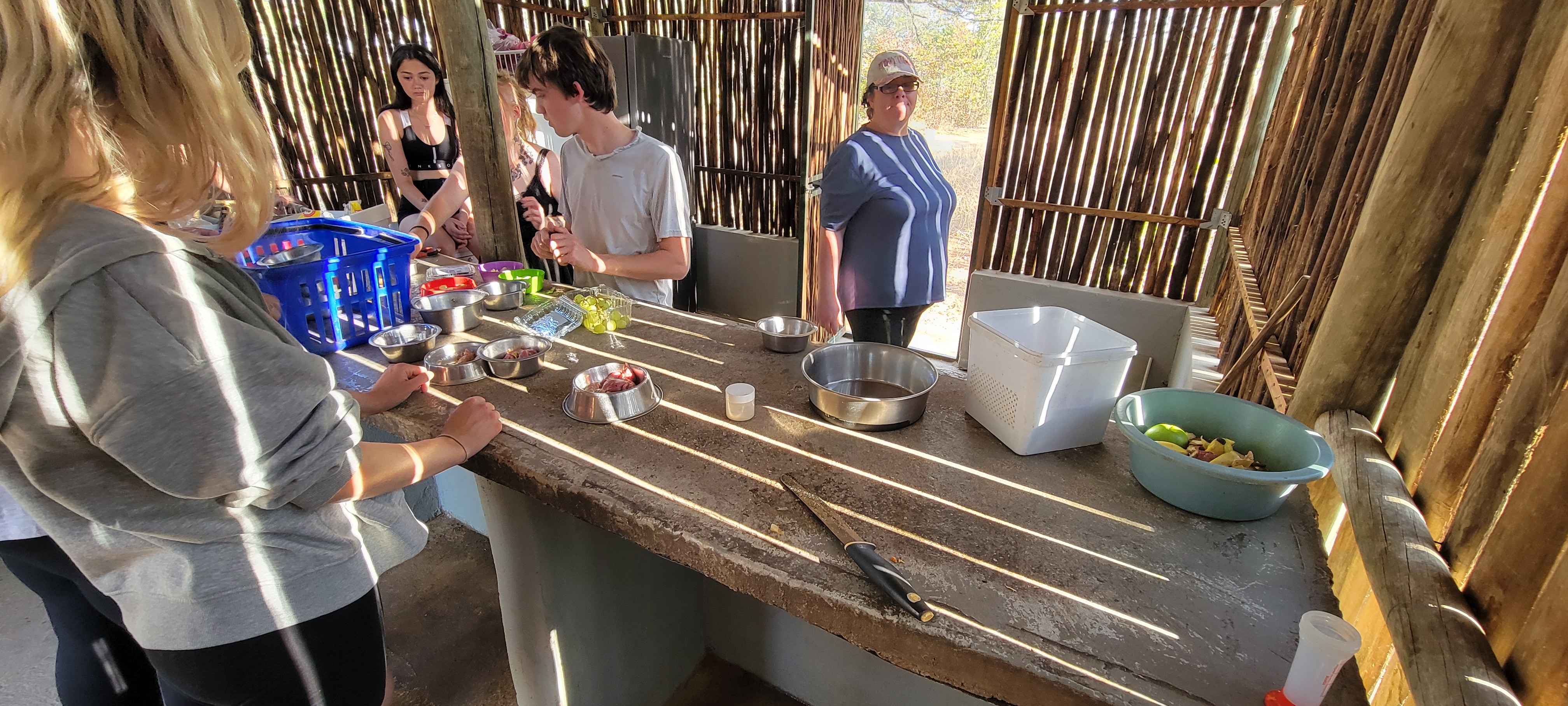
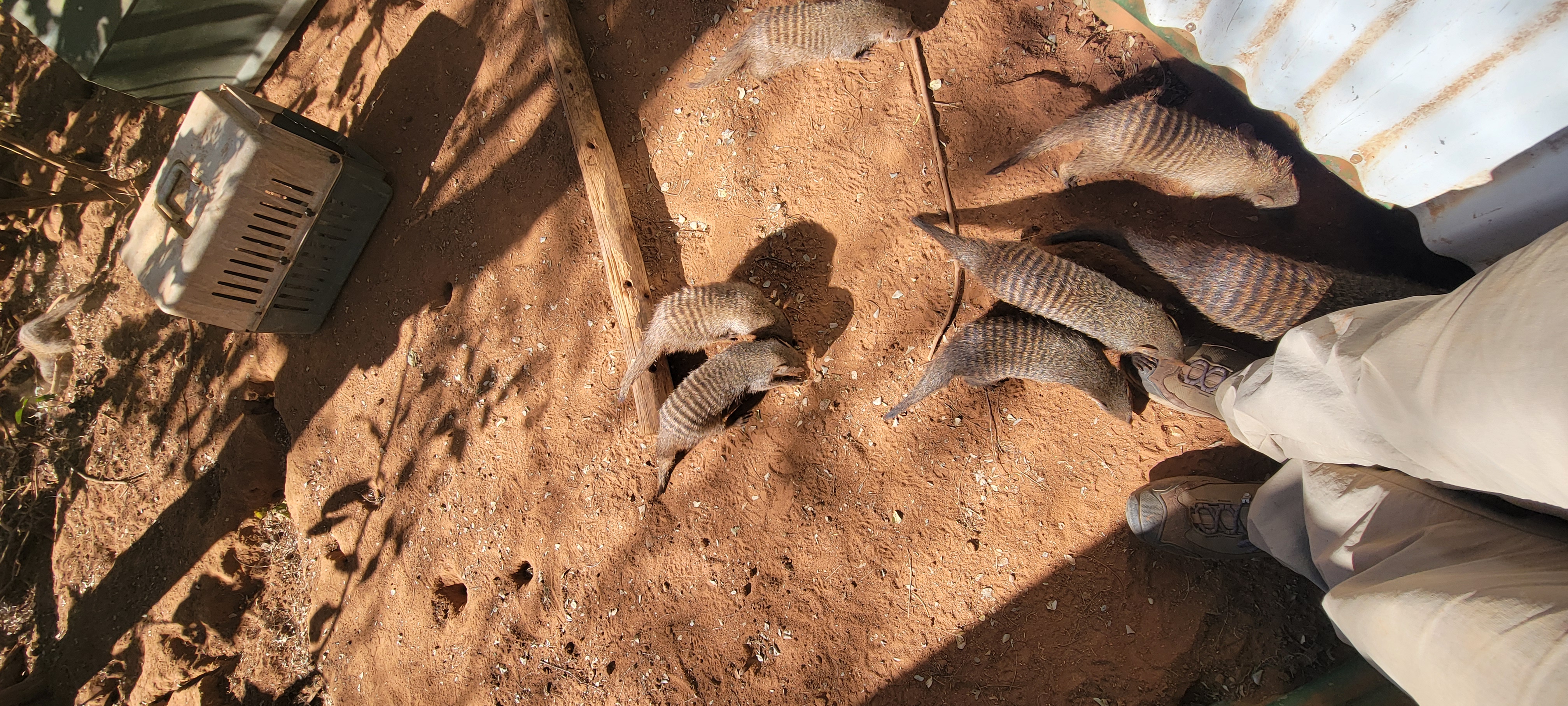
Preparing food for the animals with the other volunteers! 4 feedings per day, the nocturnal animals are fed during the morning and night feed, while the diurnal animals are fed at lunch and afternoon feed. Food consists of fruits, veggies, beetle larvae, chicken (hearts, gizzards, necks, whole chicks).Our laundry ‘room’ as we are finishing up with washing animal blankets. The dogs (all rescues) are unwisely harassing a cow in the background. All laundry/blankets are hung on the property’s fence. All our water comes from a borehole/well. The girls’ bathroom (on the fore left) is being expanded, so all four of us had to use the staff bathroom for a couple weeks. I’m workin’ here! Not that the banded mongoose care…They love to try to climb onto you while you’re scooping their poop. I got my thigh workout in from squatting to keep them from climbing up my back. I usually had three of them on me at any one time: one on my knee, one on my boot, one climbing up my leg/back.
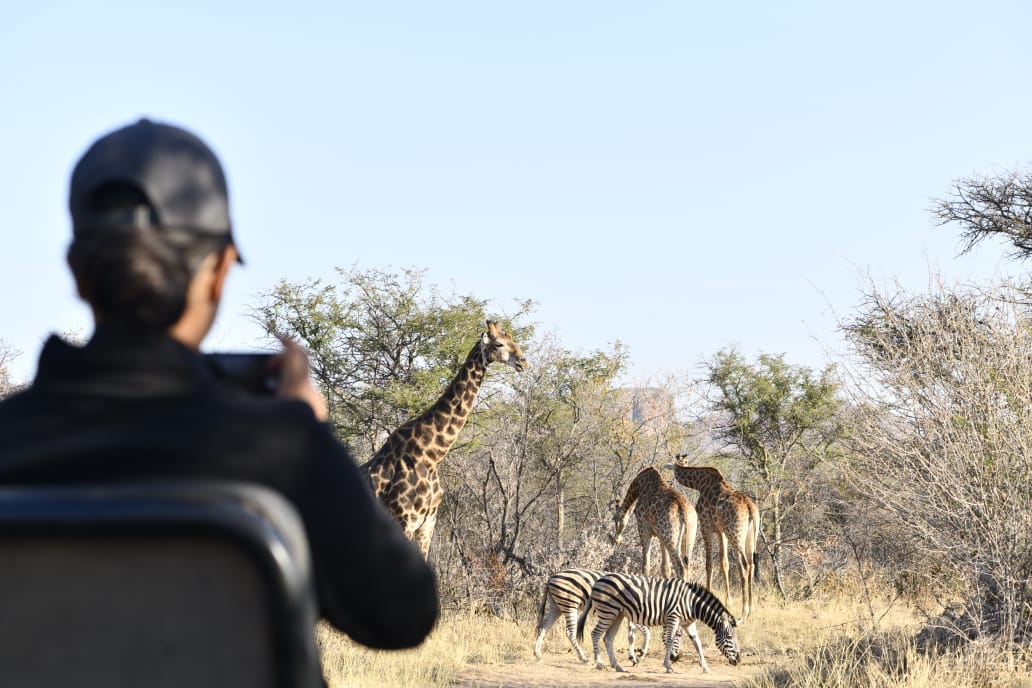
Next, I learned about wildlife monitoring, research, and management from Siyafunda, a wildlife monitoring group based in the Greater Makalali Private Game Reserve. Siyafunda works with many international conservation organizations and with reserve management to combat poaching and inform wildlife management decisions. Siyafunda has recently begun assisting a National Park in Zimbabwe to establish their own wildlife monitoring program. We would go out on two drives daily and log data on every animal we saw, then return to camp and process trail camera photos from the water holes within the reserve. We also assisted with road clearing and river cleanup weekly. This project reinforced the importance of being informed about the ecosystem of managed areas to make educated management decisions and understanding the effects of those decisions.
Quite the fun sighting. We had to log all wildlife sightings in the ‘data phone’: species, number, location, activity, male/female. Extra information was included for high profile species (large carnivores and endangered species): Stomach Content Index, weather, habitat type, direction of travel, etc.
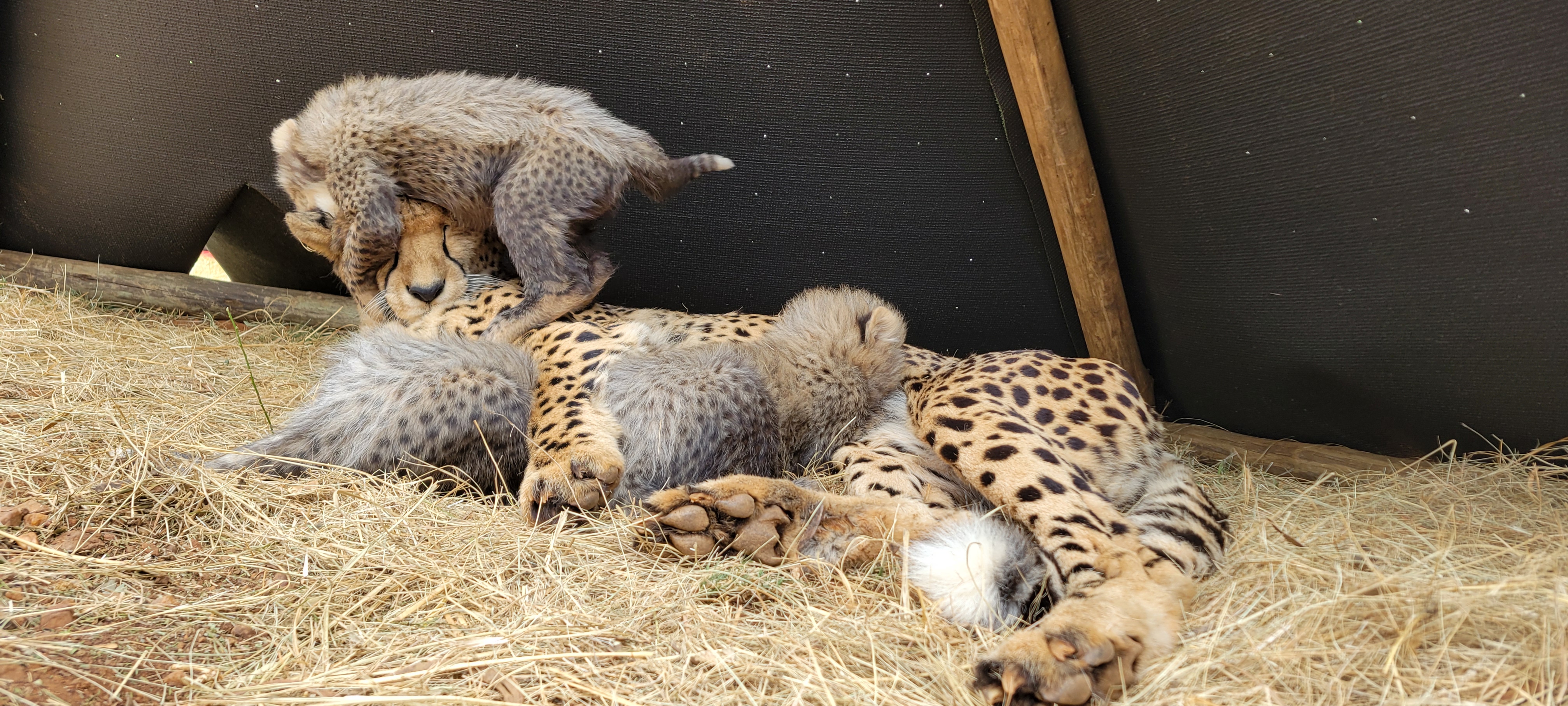
After that, I learned about endangered species conservation at Running Wild Cheetah Conservation, the only facility in the world that breeds cheetahs for reintroduction to the wild and has their cheetahs consistently succeed and breed with wild populations. Over three percent of South Africa’s wild cheetah population can be traced back to Running Wild’s efforts. I was again exposed to the effects of the exotic pet trade and profit-centric safari industry. Cheetah cubs are sought after within illegal markets, which is a driving force behind their low numbers in the wild, as well as habitat infringement. Private reserves maintain high lion populations to cater to international guests’ preferences, and lions drive out or kill cheetahs in their territory. This makes it difficult to find suitable habitat for cheetahs to be released. I had seen this happen on the Makalali reserve, where the three resident cheetahs were forced to live along the fenced edges of the reserve due to the extremely high lion density. The patterns were coming full circle.
Kudu meat for the cheetahs. They loved it!Mama Abby and her cubs. They were nursing and playing. Cheetah cubs’ fur resembles a honey badger patterning as a way of deterring predators. Cheetahs retain a small part of their mane into adulthood, but the black and white coloring fades with age.
The last month was my favorite, largely because it was spent learning about the nature around us and about life in South Africa from locals. I studied at a field guide college with South African students and staff in a truly immersive experience. These students from various backgrounds (law, IT, tracking, adventure guiding, university) were on a six-month course to become certified safari field guides. Most of the people I had interacted with in the last two months were American or European, so this new cohort was a breath of fresh air. I ate local cultural food, learned a few words of greeting in various local languages, watched rugby (practically a religion for South Africans), and even learned a traditional victory dance.
Our days were packed with game drives, lectures, and studying to teach us how to identify the plants, animals, and signs of animals within the reserve. I loved it. I learned to identify wildlife tracks and signs from our two students who were professional trackers at every opportunity. I asked endless questions and took more notes during drives than I do in university classes. Every moment was a new learning experience, even more so because the flora and fauna were all different from anything I had ever seen before. One of our instructors would often say, “Bella is thrashing you. All the way from America and she knows more than you,” to which the students would reply jokingly, “That’s that first-world education for you.” We all became wonderful friends and I am looking forward to hearing about where they go in life from here (as well as going back to visit).
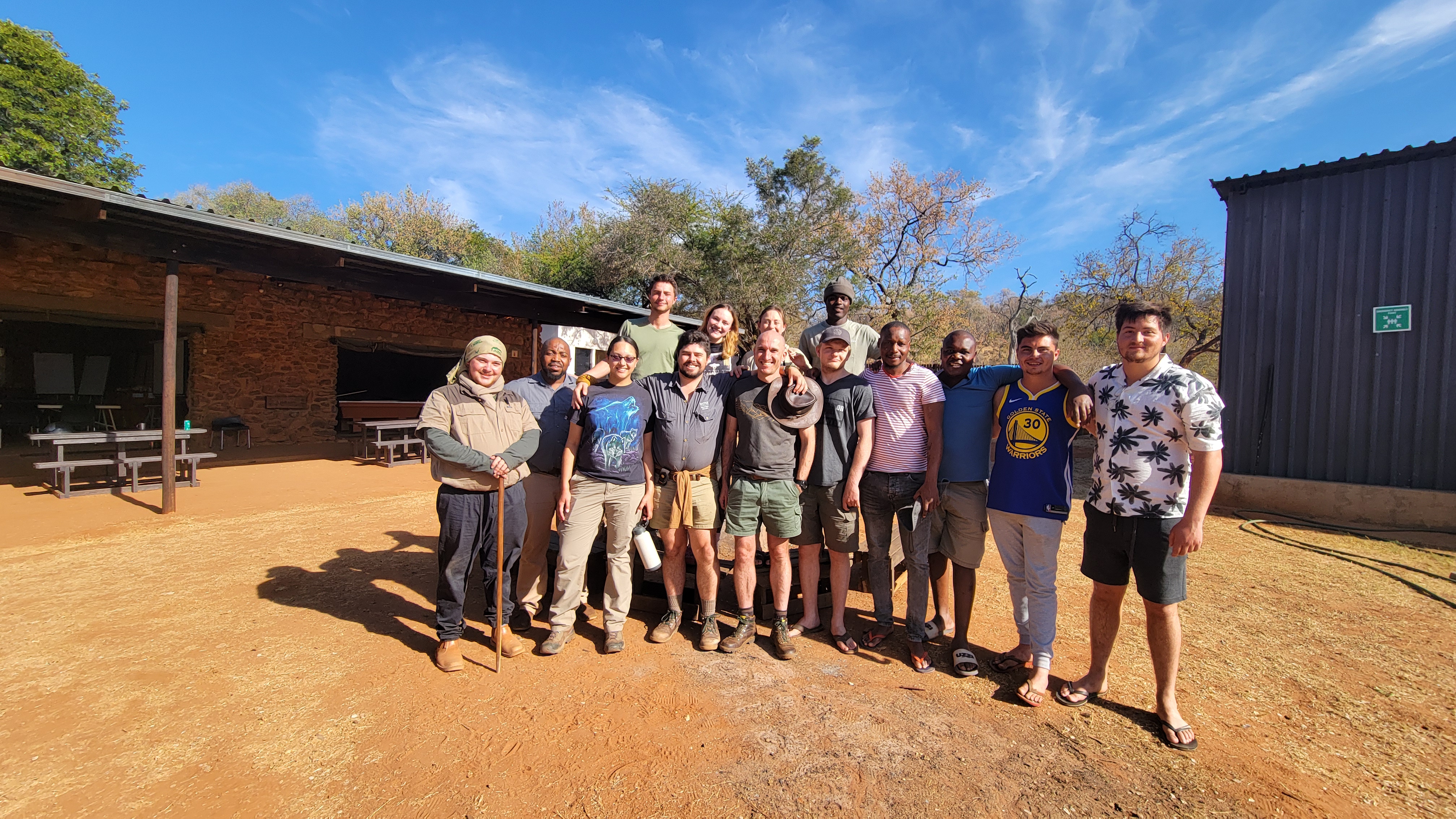
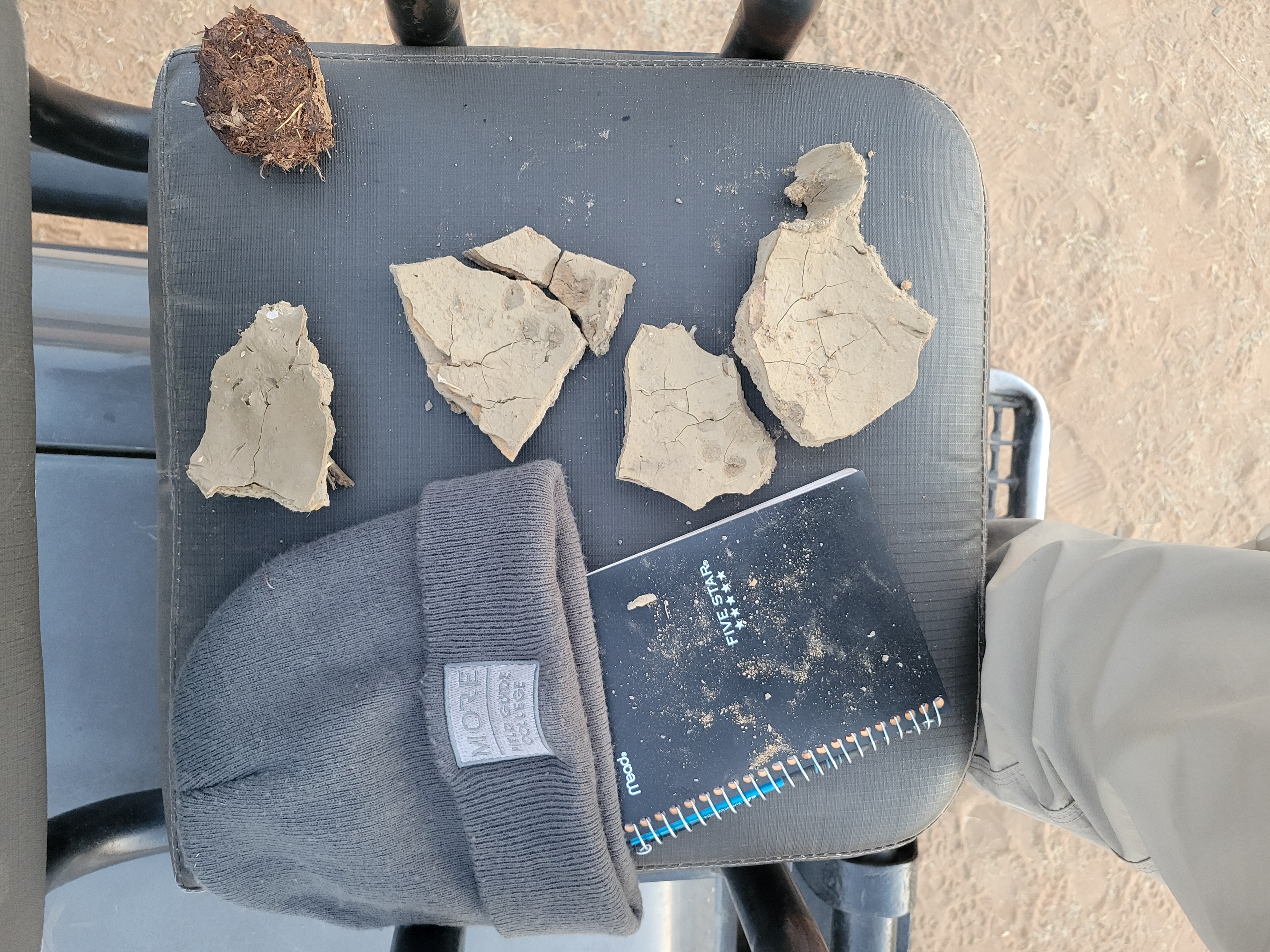
Group photo as I was leaving! So sad to leave, but so happy to have spent time with some wonderful friends. I am envious of all the insanely cool photos they send from South Africa. Baby elephant dung, tracks in caked mud (far left: slender mongoose, the rest are civet), my field journal, beanie. Stopped the game viewing vehicle to talk about the young bull elephant that is walking off. We would go on two game drives daily to practice guiding and learn species identification. Students would drive on rotation and our instructors would provide information and critique of our guided experience. Hugh (pictured here) is into plants while Obi is an avid birder, but they are both incredibly knowledgeable.
The most important thing I learned during my GLI Out of Classroom experience was how to approach the multitude of people and interests involved in natural resources, wildlife in particular. Conservation decisions must be examined from the perspectives of each demographic involved and thorough communication and education must be employed to ensure the decision carries through as intended. We must get to know one another despite our differences and form a bond as fellow humans before we come to the meeting table. Forging personal connections first leads to much more meaningful and productive discussion, which in turn yields well-rounded, robust answers to multifaceted problems. We must be human first before we are anything else.
Words and pictures cannot express how much those three months in South Africa, particularly the final month, impacted me and the people I met along the way. I believe that the friends I made in South Africa came away just as changed as I did, which is a wonderful thing. This internship has painted issues such as the exotic pet trade, poaching, corruption, and wildlife rehabilitation in painfully vibrant color. It has also shown me the ways in which people are working to make their world a better place in their own way, by cultivating community and educating others. I have learned so much: wildlife rehabilitation, wildlife monitoring, data processing and research, wilderness first aid, wildlife photography, wildlife management with local communities, and wildlife tracking. This experience really has been a life-changer on my journey to become a globally-minded wildlife researcher working in conservation. This well-rounded experience would not have been possible without the support of the Franke Global Leadership Initiative Fellowship, other scholarships and our University of Montana community. Thank you.
My name is Maggie Gibbons, and I study psychology at UM with a minor in studio art. During the 2023-2024 academic year, I had the incredible opportunity to study abroad in Almería, a small coastal city in Spain. Relaxing on the beach, enjoying tapas, and exploring a new country—what’s not to love? In short, I was just doing life in another place.
My time in Almería was fabulous. Amidst my beachside downtime, I set a personal goal to improve my Spanish language skills and fully immerse myself in the local culture. I took all my courses in Spanish alongside native speakers, making this the most academically challenging year of my life. Though it wasn’t always easy, this immersion significantly advanced my journey toward fluency. In Spain, I deepened my understanding of Andalusian culture and also gained new insights into U.S. culture, especially how it varies from state to state.
Living in Almería offered a unique and authentic Spanish experience. With a population of under 200,000, speaking Spanish was essential in daily life, pushing me to continually improve. The food in Almería is nothing short of fantastic, and in my opinion, it offers the best tapas in all of Spain.
While at university in Spain, I focused on psychology courses, not only to fulfill my major requirements but also to deepen my understanding of my GLI theme, public and global health. I explored how Spain approaches mental health, particularly their preventive measures. I’m interested in how culture influences mental health issues, and how U.S. and Spanish approaches differ. This comparison is something I’m continuing to explore even after returning to the U.S.
In terms of leadership, my time in Spain was invaluable. Taking courses in a second language boosted my confidence and self-efficacy. I gained experience in navigating group work and leadership within a different culture and community, building on my existing leadership skills and teaching me to continue developing them in all aspects of my life.
Study abroad was incredible, but it did not cure the travel bug! I’m eager to embark on another adventure abroad whenever possible. In Almería, I built a rich life full of incredible people and experiences. This year, I visited five countries, two continents, and many cities and towns—from major cities like Paris and Lisbon to a tiny Spanish village with just 30 residents. I am deeply grateful for every experience I had over the past year. I encourage everyone to study or live abroad and to seek opportunities wherever you are—whether in the U.S. or beyond. I live to explore new places, but don’t forget about the magic in your own backyard!
Before I even left Denmark, I was trying to find the words to put to this experience. What would I say when I received the inevitable question, “How was it?” How was I supposed to sum up 6 months and 17 countries into a single response?
It was normal. I talked to people just as I do in the US, except they were a bit more intrigued by the fact I am American. I went to the doctor twice and never paid or filled out insurance information. In Finland, there are more saunas than there are people; I would like a sauna in my future backyard. I’d like to have more dinners and game nights with my friends, channeling the comfort and community found in the Danish word hygge. That I did in fact miss the US, or, at the very least, the lack of expectations that come with it. That I will say sköl instead of cheers. That my referring university as ‘school’ is apparently very weird. I will remember that Europeans have watched Michael Moore documentaries and if you put a ton of Americans in Denmark, Danish trust would disintegrate and the system wouldn’t work. It is less about the formal system and more about the embedded culture that holds it up. My brain is always going to figure out a way to make me live in chaos. I would like to get a flip phone when I get home. That I think it was more about how I changed, regardless of the places I visited. That I wish things stuck more than they did. Visiting cities is cool, but probably not worth being the focus of my travels because I prefer nature. That I did the ‘things’ – I stayed in hostels, took my share of Ryanair flights and overnight Flix buses. Or was my takeaway the fact that my British friend would rather raise his kids in an American city than an American suburb, and that I think American suburbs are decently walkable. That italians will tell you they could have a whole conversation with their hands, and that Spanish people love the community around cooking, whereas I get frustrated when anyone else walks into the kitchen. That I stayed on an Airbnb boat in Barcelona, that people say the German public transport system is bad and I can attest they are right, that I minded the gap?
It is fairly impossible for me to think about my six months abroad as a cohesive experience, but I do believe I will be unpacking the experiences I had and things I learned for a long time to come.
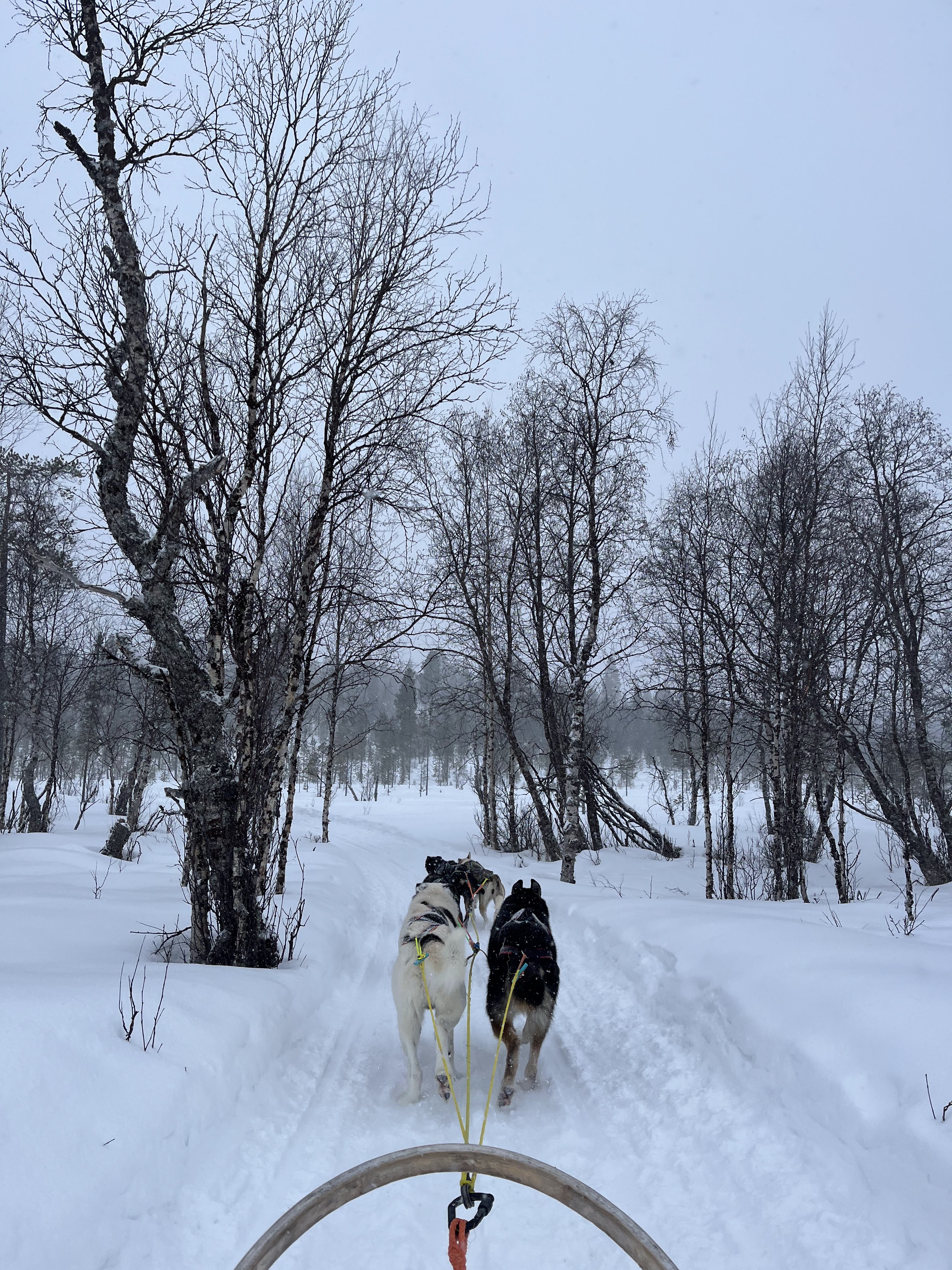
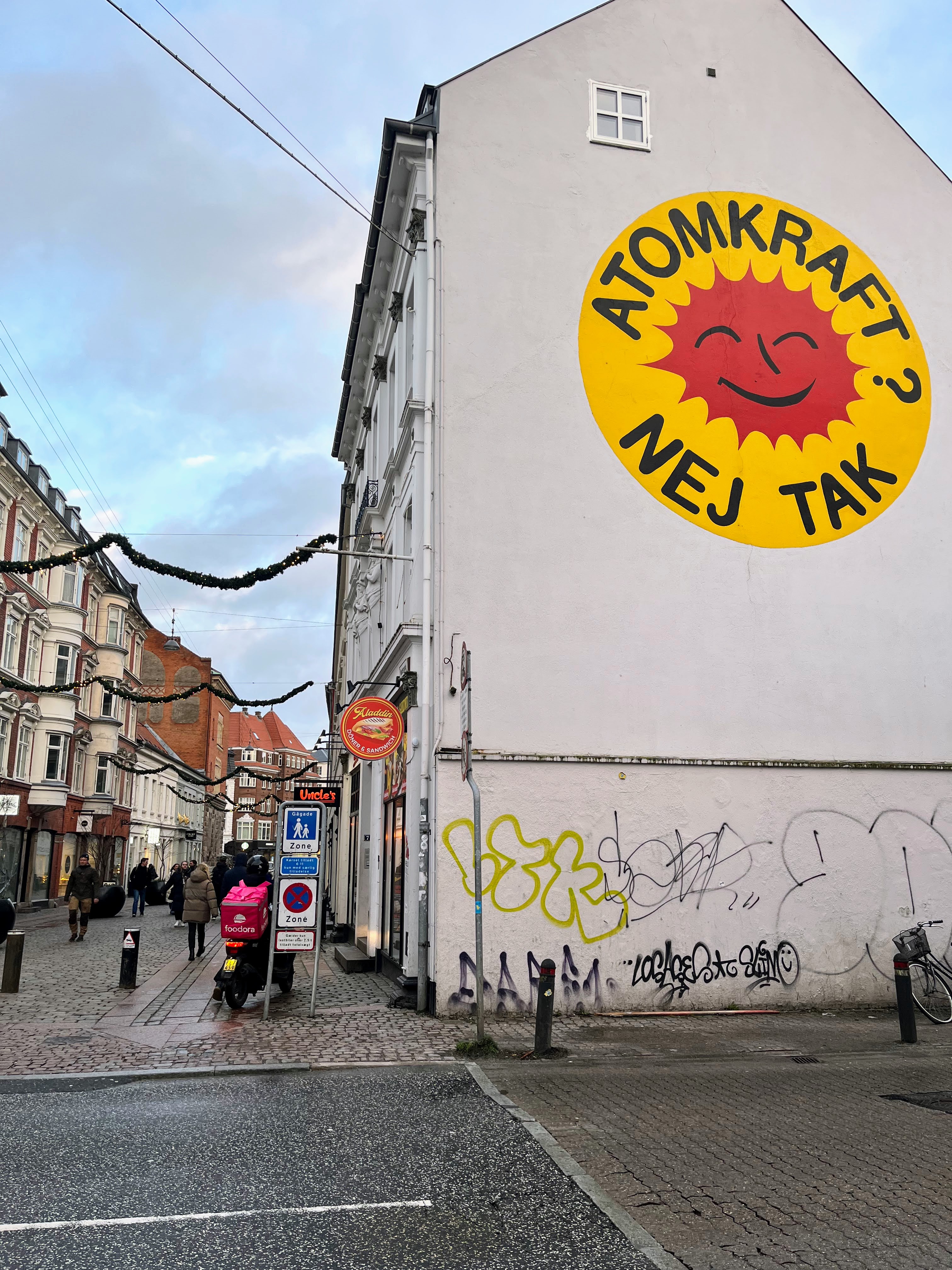
Dog sledding in Finnish Lapland A 1983 “Smiling Sun” mural from the anti-nuclear power movement in downtown Aarhus.
G’day, mate! My name is Sophia Boughey and I am a senior studying Communicative Sciences and Disorders with a GLI theme of Inequality and Human Rights. My childhood was spent in a cabin in the woods in Red Lodge, MT, where my sister and I spent much of our time playing in the dirt and frolicking in the forest. I was a voracious reader – my first journeys to foreign places were through the pages of Alice in Wonderland, The Wizard of Oz, and Gulliver’s Travels. In fifth grade, my father pinned up a world map in my bedroom and my sister and I stuck thumbtacks on all of the places we wanted to visit. No continent was left untouched. I think that my younger self would be proud of how much of the world I have visited since then.
Kissing my sis goodbye before my flight to Sydney
I spent last spring semester studying abroad in Sydney, Australia. Choosing to study in Australia was a bit of a spontaneous decision – I believe strongly in gut feelings, and this was one of those. So much of my life has been meticulously planned, so I wanted this adventure to be as surprising and unconstrained as possible. Choosing to study abroad was always an easy decision for me. I knew that leaving Montana would be difficult, but that I was prepared for the challenge.
My favorite walk along Bondi Beach
While in Sydney, I took classes that revolved around my global theme of Inequality and Human Rights, including Politics of Sex and Gender, Contextualizing Indigenous Australia, and Cultural and Social Geographies. Though I had no background in geography or planning, Cultural and Social Geographies ended up being my favorite course. We spent a lot of time discussing city planning for various groups of people, such as young people, people with disabilities, single people, and other populations. I became a leader in my classroom and encouraged my classmates to use a global lens to think critically and problem solve. I learned so much about the ins and outs of social planning and plan to implement these practices into my life so that I can create spaces that are inclusive of all people.
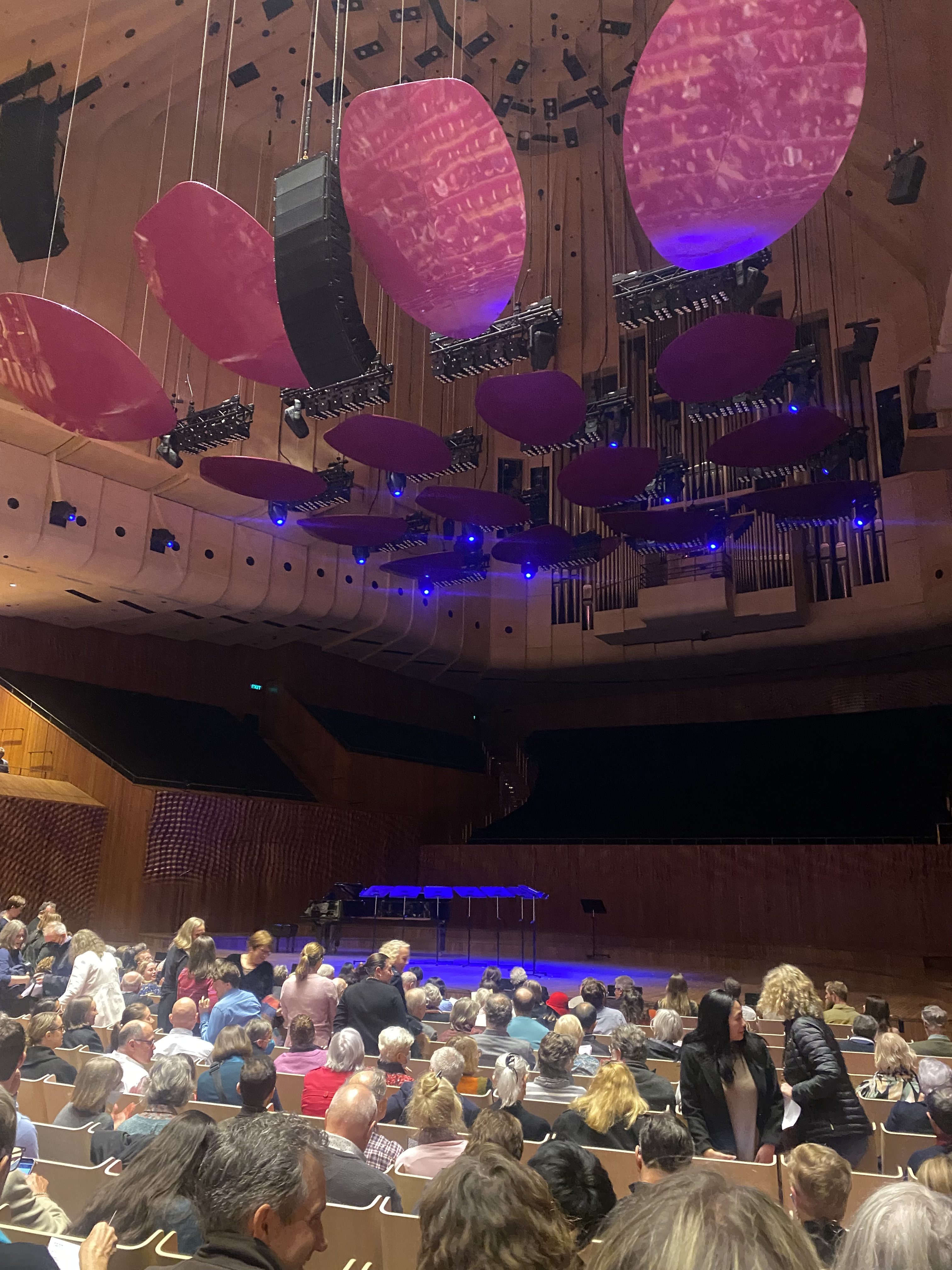
As a singer, visiting the Sydney Opera House was a huge highlight of my trip
I lived in an eight-person co-ed apartment, which came with its own set of gifts and challenges. I met three of my closest friends there – one from Germany, another from the Netherlands, and the other from Australia. We traveled around Sydney and across Australia together, taking in the stunning scenery and enjoying the bountiful kindness of the Australians. I also joined a choir, where I met dozens of friendly college-aged Australians who shared their traditions and customs with me. I’ll never forget my first Tim Tam Slam or footy game.
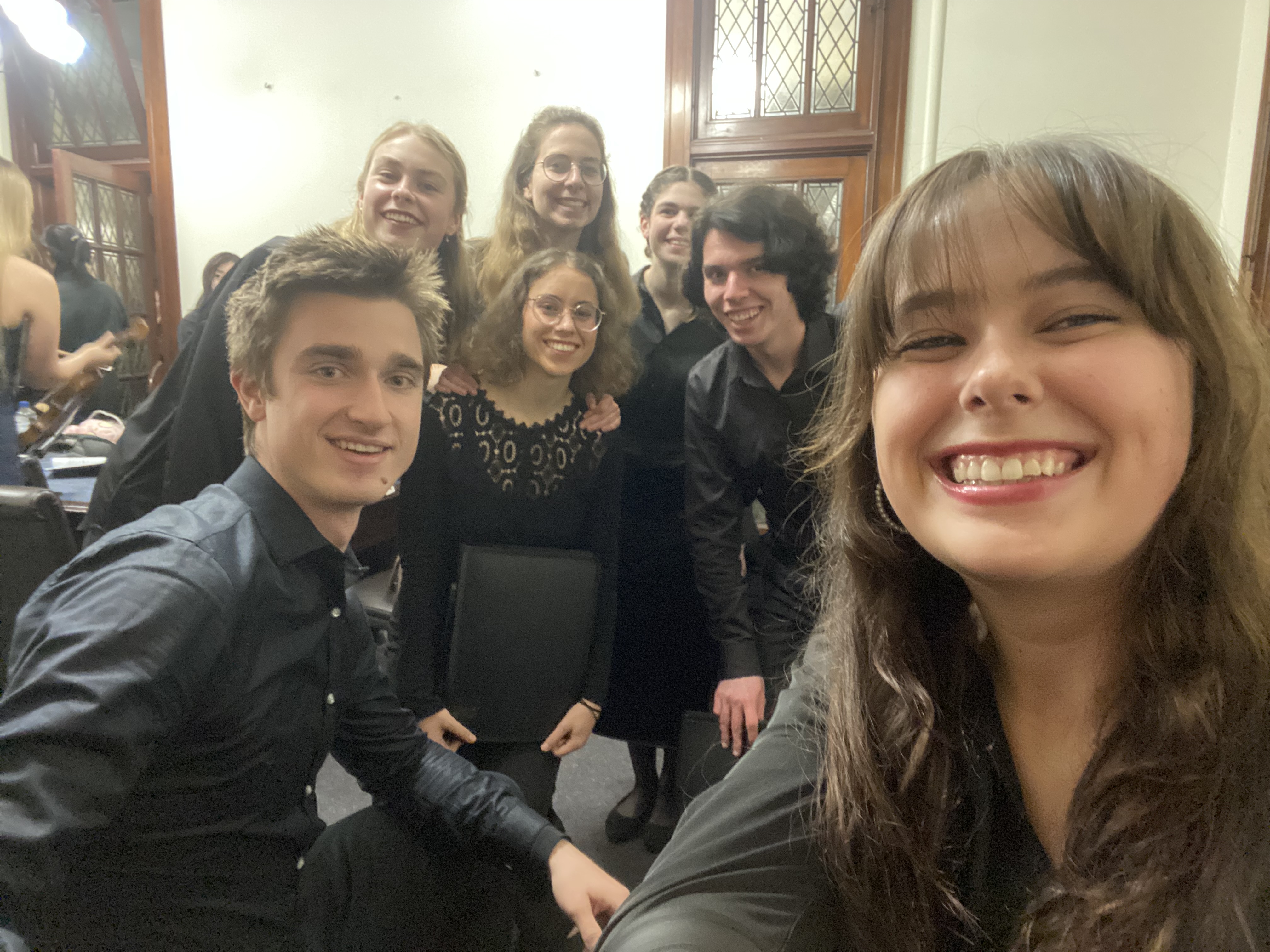
My choir friends, post-concert
When my friends or family ask about my favorite memory from Australia, I always tell them about a Ramadan Night Market that I visited with my friends. People from so many different cultures gathered to break their fast, share food, and enjoy each others’ company. It was amazing to see such a strong display of multiculturalism and unity. A close second favorite memory was visiting the Australia Zoo and petting a kangaroo!
Omg! Kangaroo!
My biggest takeaway from my study abroad trip was the necessity of practicing gratitude. Although my travels were sometimes lonely and difficult, I cannot believe how lucky I am to have experienced such an amazing, once-in-a-lifetime adventure. I grew in love and patience and became more brave than I could have ever imagined. None of this would have been possible without the assistance of the UM community and especially the Franke Global Leadership Initiative. In my three years at UM, I have traveled to three new continents, six new countries, and made countless friends across the globe. With certainty and great enthusiasm, I would encourage anyone and everyone to take part in the Franke Global Leadership Initiative!
My experience studying abroad in Spring 2024 at the Universitat Autònoma de Barcelona (UAB) through the Global Leadership Initiative (GLI) was nothing short of transformative. As someone who had never encountered such a rich tapestry of cultures before, this journey opened my eyes to the beauty and complexity of diversity, particularly through the lens of art, music, and dance—a central part of Barcelona’s vibrant culture.
My GLI Global Theme focused on “Cultural Integration and Leadership,” with the challenge of understanding how diverse cultural expressions contribute to cohesive communities. In Barcelona, this theme came to life in ways I hadn’t anticipated. The city’s celebration of various forms of art—whether through street performances, festivals, or museum exhibitions—was a daily reminder of the power of creative expression in uniting people across different backgrounds. This experience provided a deeper understanding of my challenge, showing me how cultural diversity, when embraced and celebrated, can lead to a more harmonious society.
Engaging with a culture so different from my own was both exhilarating and humbling. Barcelona’s diversity, with its mix of Catalan, Spanish, and immigrant communities, presented an intricate mosaic of traditions and languages that were entirely new to me. This immersion challenged my understanding of culture and identity, making me realize that culture isn’t a monolith but a living, evolving entity shaped by the people who carry it.
I also gained a greater appreciation for the arts as a universal language. Whether it was Flamenco performances in the Gothic Quarter or contemporary art installations at the MACBA, I saw how art transcends linguistic and cultural barriers, fostering connections among people from diverse backgrounds. This realization made me reflect on the cultural practices I’ve taken for granted in my own life and how they contribute to my identity.
This experience also sharpened my leadership skills in unexpected ways. Navigating a foreign city, communicating across language barriers, and adapting to new cultural norms required resilience and adaptability—qualities essential for any leader. I found myself taking initiative in group projects, leading discussions on cultural differences, and organizing outings to local cultural sites, all of which helped me grow as a leader who can work effectively in diverse environments.
My time in Barcelona has raised important questions about the role of culture in leadership. How can we as leaders better integrate cultural diversity into our decision-making processes? How can we use the arts to bridge gaps between different communities? These are questions I will continue to explore as I move forward in my academic and professional journey.
In conclusion, studying abroad at UAB through GLI has been a pivotal experience that not only deepened my understanding of cultural diversity but also enhanced my leadership capabilities. Barcelona’s vibrant culture and the diversity I encountered there have left an indelible mark on me, shaping the way I view the world and my place in it as a future leader.
Hey y’all! I’m Sam, a Geography student here at UM, and I chose the theme of Global and Public Health within the GLI program. I explored this theme through the multifaceted challenge of access to healthcare- one aspect of which pertains to availability of healthcare resources in rural areas, a topic of relevance to us here in Montana; and another aspect surrounding the accessibility of medical knowledge and preparedness when recreating in the outdoors – another large part of Montana’s way of life. For my Beyond the Classroom experience, I took part in a 10-week Wilderness Medicine course, learning, living, and playing in the jungles of Costa Rica and the mountains of Montana; becoming certified as an EMT and in many other outdoor skills along the way.
In the first half of the program, we spent a month in the San Jose province of Costa Rica, living as a part of the small rural community of Mastatal. We were housed at Rancho Mastatal, a sustainable living, permaculture farm and education center. My class was small compared to previous years, an anomaly the ultimately led itself to a strong and supportive group dynamic, and much success with our learning and comprehension. For three weeks, we studied, practiced hard skills, and ran scenarios as part of our EMT training, before being set loose to go run through the jungles at the end of each day. We spent our evenings playing volleyball or ultimate frisbee with the ranch team and locals from the community or lounging in hammocks to read, before finally sitting down around a long table to share dinner with everyone. Those dinners were a truly special part of the experience; opportunities to connect with people from all over the world over a shared meal in such a fashion are rare and treasured. For our final week in Mastatal we were given the opportunity to participate in a series of community health clinics in Mastatal and the surrounding areas, and it was a pleasure to be able to learn from and work alongside experienced doctors while getting to give back to the community that had welcomed us so warmly. While the healthcare systems of our countries differ vastly, the challenges rural communities face in access to healthcare, whether through availability, economic means, or geographic barriers, have no nationality. The resulting resilience and connectedness of these communities is a special thing and a strength that should be fostered wherever possible.
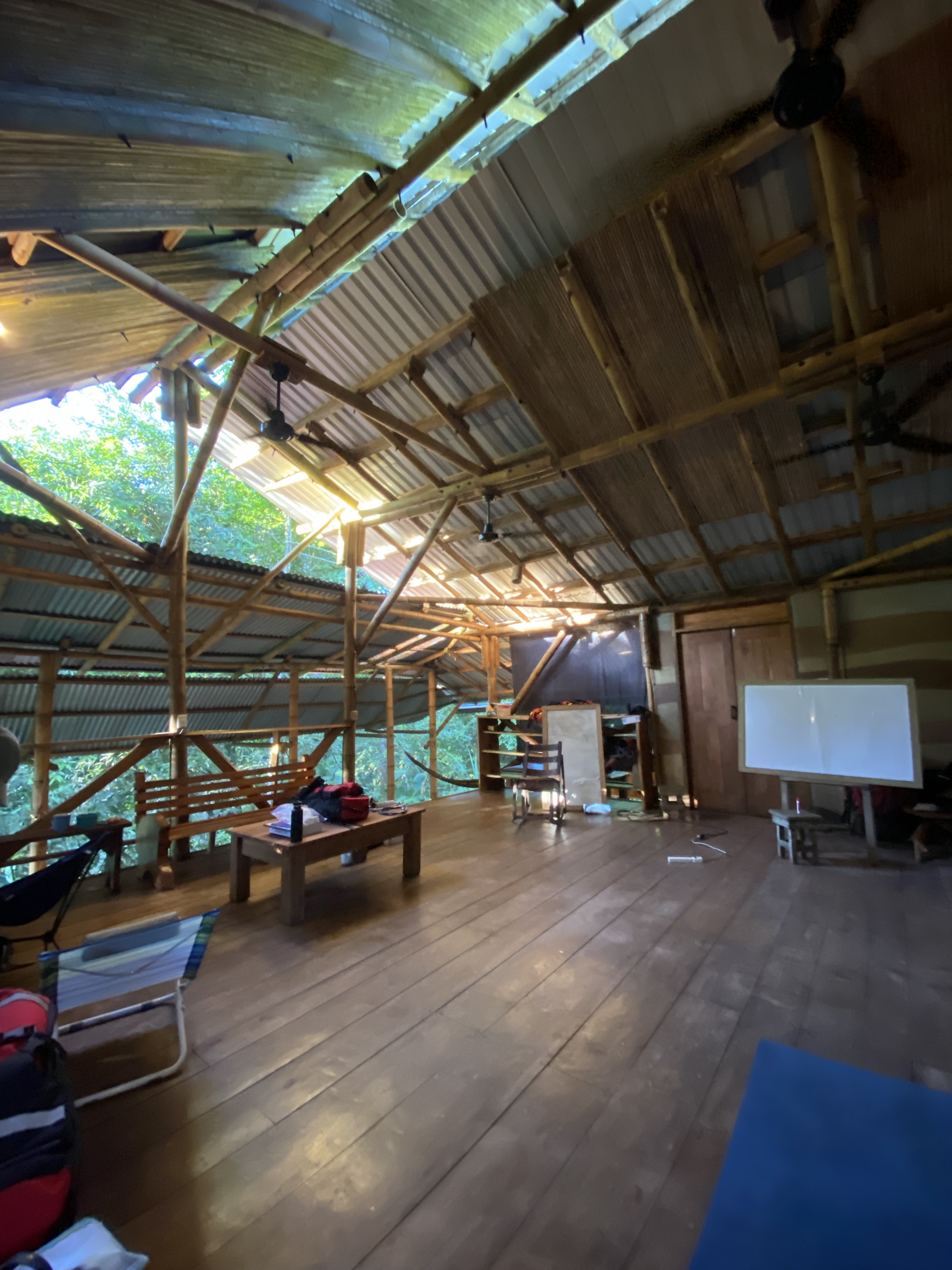
Our classroom in Costa Rica!
Our departure from Mastatal was more bitter than sweet, and I had a tough time saying goodbye to many folks I’d made strong connections with. The adventures certainly continued however, and in the week-long program hiatus for us to return stateside and gear up for the second half of the program, I managed to sneak in a few days on the beaches of Costa Rica, a surf lesson (and a subsequent sprained ankle, whoopsie), and even a passing grade on the written portion of the National Registry EMT exam (Woohoo!).
Back in Montana, we spent a couple days regrouping in Missoula before heading out to roam around the western parts of our state, continuing to develop our medical skills, now in conjunction with outdoor skills and remote wilderness settings. We went through Avalanche Rescue training in the Flathead Valley, then continued on to the Seeley-Swan Valley where we lived for three weeks at the edge of the Bob Marshall Wilderness. Our EMT education continued here, with a strong emphasis on wilderness medical skills, and we paired this with training in wilderness navigation and Search and Rescue.
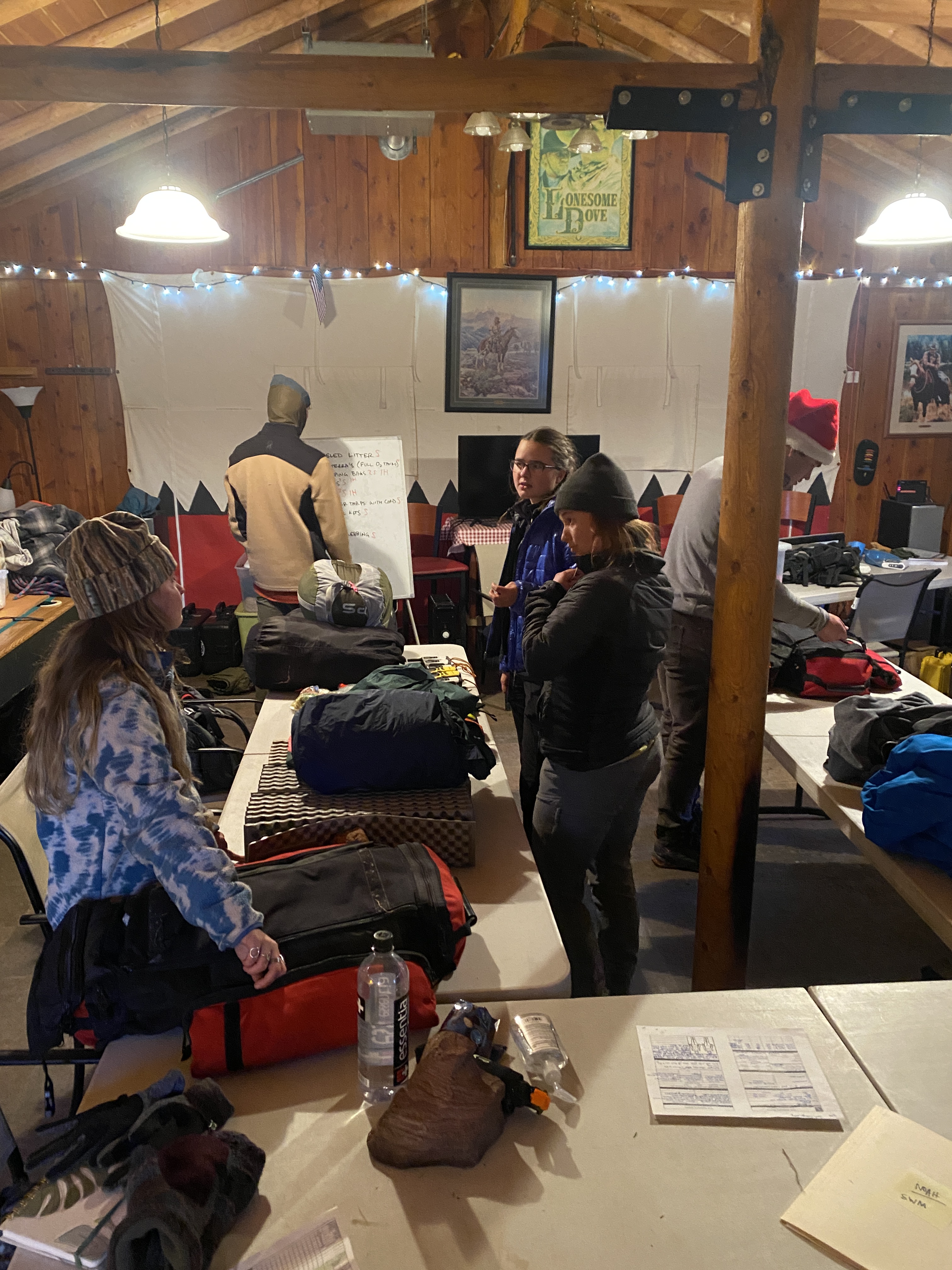
Gearing up for a nighttime scenario
Throughout this entire section, there was ample opportunity for teamwork and collaboration, and thorough development of essential soft skills like communication and leadership. Getting to practice these skills under the added stress of medical scenarios was an exciting challenge, and pushed my class towards a high level of cohesion. This was also when our class took the practical portions of the EMT exam, which everyone passed, completing the final portion of our EMT Certification! Our final week was spent in Alberton along the Clark Fork River, where we completed Swiftwater Rescue training. Overall this course was a transformative experience, affording me with an incredible amount of life experience and personal growth. I feel more confident as a recreator in Montana’s outdoors and am excited about having the skills and knowledge to help introduce others to something I feel so passionate about. I look forward to continuing my personal and professional pursuits within this realm, and working towards making our outdoor spaces accessible for everyone to enjoy safely. My final thoughts are those of gratitude, for the experience, but most importantly for the friendships I made and the people I shared those experiences with.
Hello! My name is Zachery Craig, and I am entering my final year studying Social Studies and Secondary Education. For my Beyond the Classroom experience this summer, I interned on Capitol Hill in Washington, D.C. for Senator Jon Tester. My internship was three months long, where I’d work 40 hours a week answering phone calls, giving tours of the Capitol Building, and doing projects. I got to meet amazing people I will call my friends for the rest of my life while in the internship. The staff I worked under were very kind and taught me a lot about how politics works behind the scenes. It was amazing to see all of these important figures daily, even getting to talk to a few!
This is the photo of me with Senator Tester. We got to talk to him a lot, more than most interns get to talk to the Senator they work for.
I’ve never had an extensive period of living in a large city by myself until this experience. It was a little frightening at first, but I felt like I was able to adapt to the city. Washington D.C. has a really good public transportation system that I was able to master pretty quickly. I stayed in an Airbnb that was about a 40-minute commute from the office building I worked in. I got to explore most of the city, going to most of the museums and all of the monuments except for the Jefferson. As a Social Studies major, it was truly awe-inspiring to see both the history and politics of the city. Some of my favorite things I did this summer was go to Baltimore to see the National Aquarium, tour the White House and watch fireworks during the Fourth of July from the steps of the Capitol Building!
In this picture, I’m standing next to the first-ever Congresswoman in the nation, Montana’s own Jeannette Rankin. Each state sends two statuesto be displayed in the Capitol, the other one from MT is of Charlie Russell.
I was placed with the Judiciary and Indian Affairs team during my time in the office. As a result, I attended a lot of hearings throughout the summer focusing on those areas. I’d research judges who were sent to the floor to be voted on, look at water rights and Homeland Security bills, and write memos that summarized what a bill did and who supported it. As a result, I got to learn about the bill process and judiciary nomination process, which I think will prove invaluable to me as a future educator. I also went to the Senate floor a lot to see Senators speak on issues. I made it a goal of mine to see every single Senator, and I managed to see 99 out of 100. I ran into some while eating lunch, saw some in committee hearings, or walked by them while in the office building. I even talked to a few, if even for a second. It was truly amazing to get to walk among these figures.
I took this picture of the Reflecting Pool and Washington Monument while I visited the Lincoln Memorial.
My GLI Global Theme and Challenge is Inequality & Human Rights. I made it a point to focus on Indian Affairs issues because of my theme. I attended hearings on issues that face the Indigenous community, mainly focusing on water rights issues. I also attended a panel from the staff of the Indian Affairs Committee. It is one of the most bipartisan committees as the issues facing the Indigenous community aren’t too political or controversial in nature.
Overall, I’ve learned a lot during this experience. My leadership skills improved throughout because I took risks in the office, taking on projects to keep me busy, and also because I was surrounded by the political leaders of America. The staff I worked under had a great leadership mentality that I will look to mimic in my career. I think an internship on Capitol Hill could be for anyone, regardless of political beliefs or area of study! There are so many broad opportunities in Washington, D.C. and I’ll forever be grateful to GLI for giving me the ability to experience some of those opportunities.
My name is Sadie, I’m a Parks, Tourism, and Recreation Management major at UM. For my beyond the classroom experience, I studied abroad in New Zealand. My semester in the North Island was unforgettable to say the least! Within the Culture and Politics theme, I chose to study in Aotearoa because of the country’s reputation for outdoor recreation and care for the environment. I was interested in the ways they managed land for recreation while honoring the use capacity of the land. I took environmental planning courses that allowed me to gain a small glimpse into the planning processes that manage sustainable land use on the North Island. There are many key players when it comes to sustainable land and water usage, and learning about the ways in which they conflict or collaborate in this realm gave me the tools to more effectively work with others to find common ground solutions to complex environmental issues.
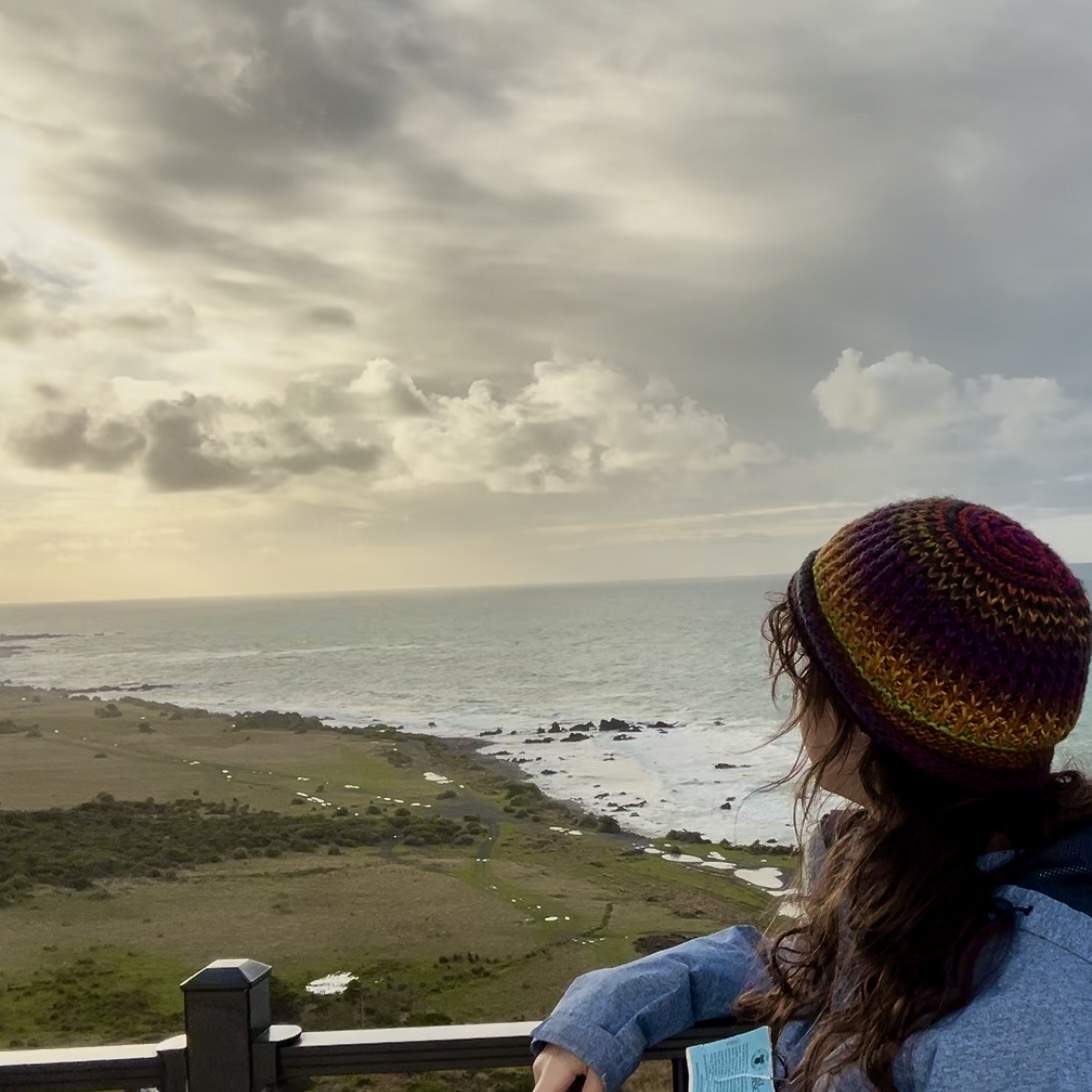
Looking out over the southern edge of the North Island in Cape Palliser
During my stay, and in these classes, I came to realize that New Zealand has a complicated relationship with sustainable land use, much like the US. Many of the waterways are exhausted with pollutants from the agricultural industries supporting the economy in the North. It was challenging and a shock to see rivers I could not swim in, unlike what I was used to in Missoula. It reminded me of how lucky I am to live in a community like Montana where clean water island public lands are a value shared by most.
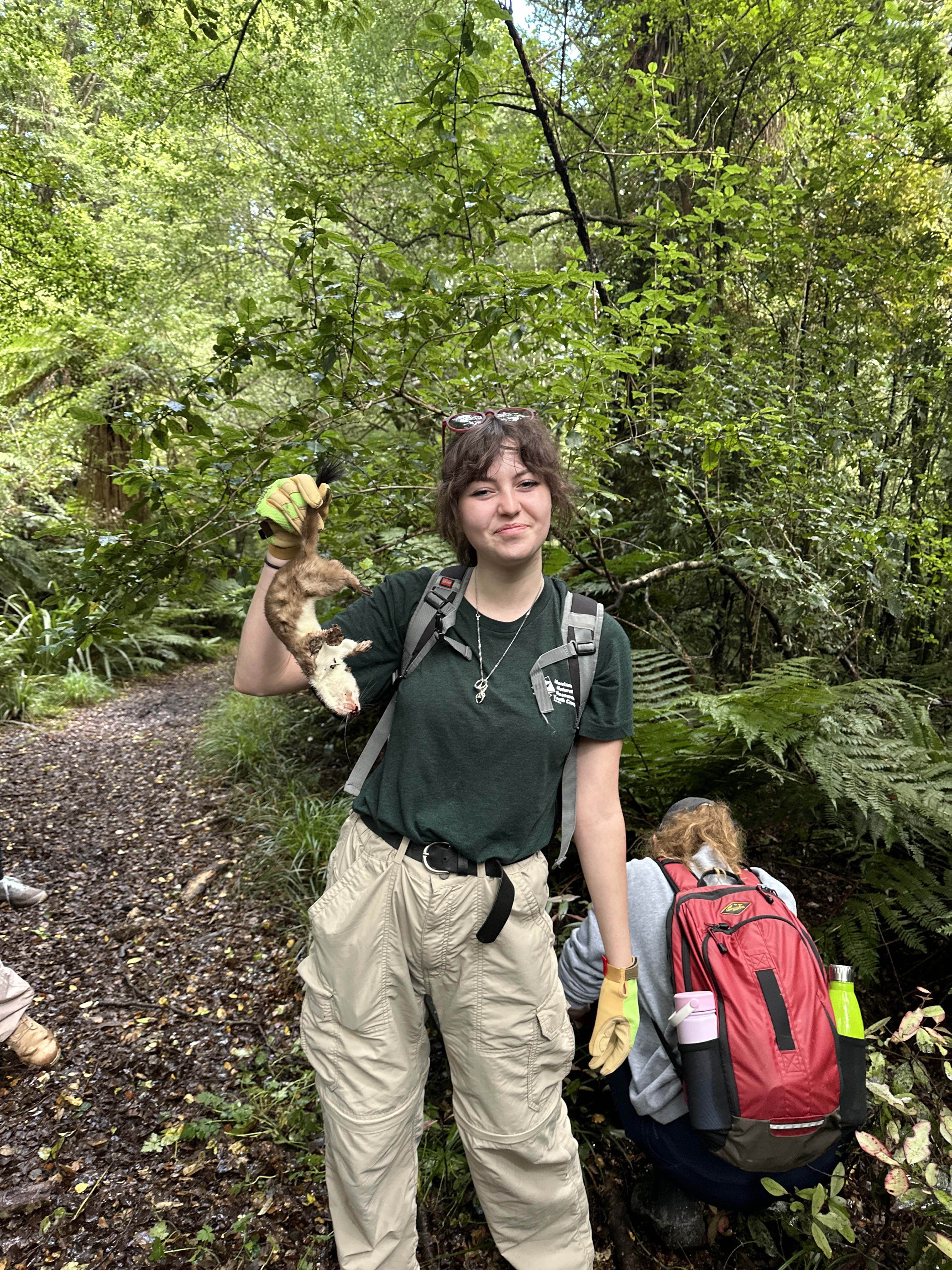
While there, I tried my best to seek out new experiences and push the boundaries of my knowledge. One of the ways I did this was to become involved with the Wildlife Club on campus, where I learned about the aggressive invasive species elimination tactics across the country, set on eliminating non-native species like stoats and hedgehogs, which are decimating native species of plants and animals. The tactics used were far more intense than what I had seen in the US. To further educate myself on this, I maintained trap lines in the Ruahine Range, got involved in native swamp and riparian area reconstruction, and I volunteered with the Wildbase Recovery Suite aimed at rehabilitating indigenous bird species and educating the public on their importance. These experiences allowed me to familiarize myself with the land, plants, and animals of Aotearoa in a way that far exceeded classroom learning. In these activities, I gained important leadership skills like collaboration and critical thinking, as I was often on an isolated team of volunteers that needed to make important decisions in the moment.
Holding a stoat found in one of the traps in the Ruahine Range
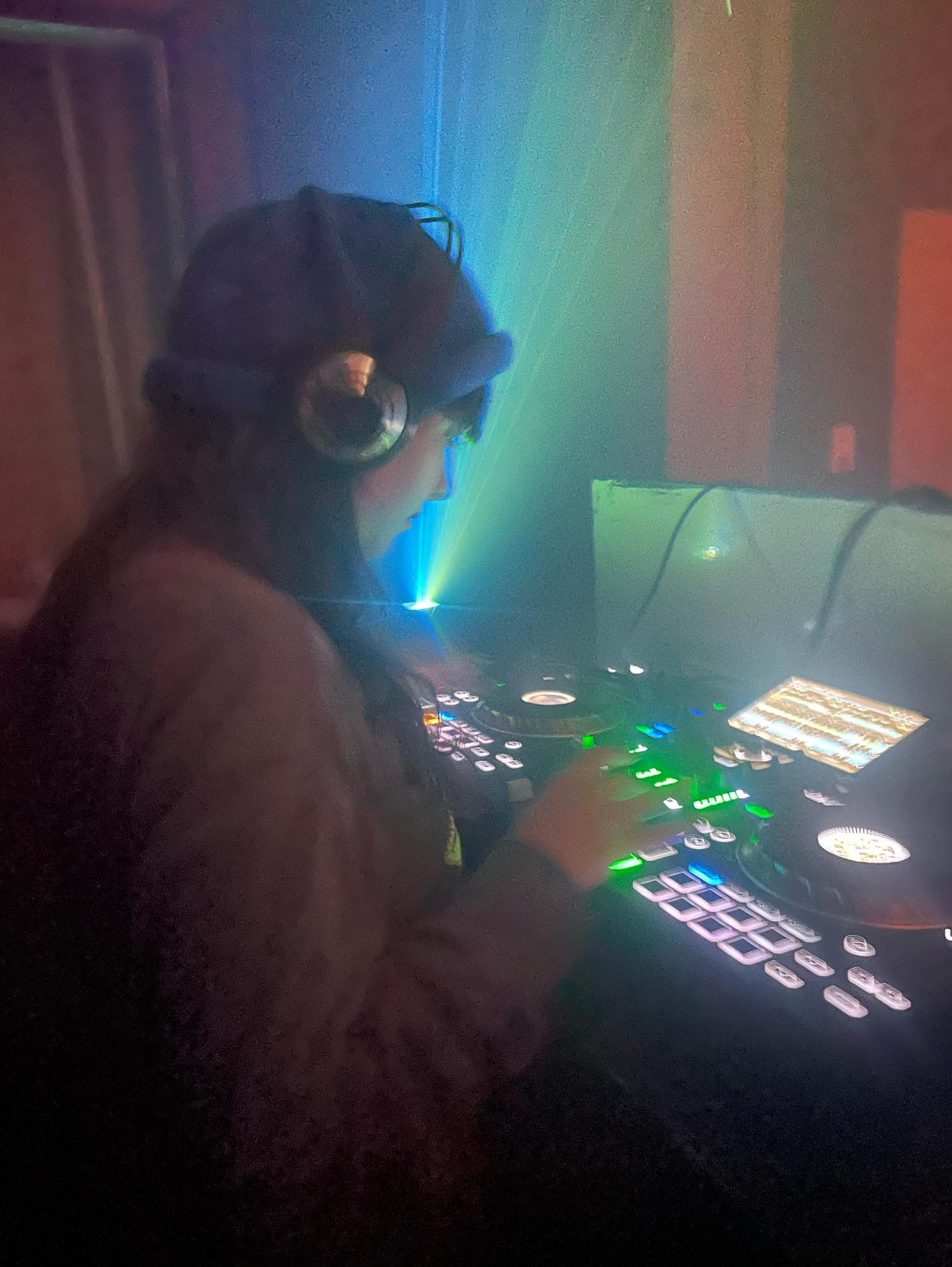
When I left home, I was incredibly worried that I wouldn’t make friends with people or fit into the campus environment. An important aspect of my lifestyle in Missoula was participating in local music, which I was anxious about leaving behind. To fix this, I got in touch with the Student Radio Network on my new university campus, Radio Control. Immediately, they took me in and became my family throughout the semester. I began hosting my own radio show “Missing Montana” focused on linking Montana artists with New Zealand, and participating in the local scene in Palmerston North by DJing and going to shows. I gained important conversational skills though interviewing artists live on air, and learned how to foster collaboration between global communities.
Working the deck in Tiny ClubInside the sound booth during my radio show
Overall, my experience in Aotearoa was incredible and I’ve grown so much as an individual. I’ve been inspired to find more ways to connect my love for music with my passion for outdoor recreation. I hope to visit Palmy again soon and continue my work with Radio Control!
My friends during my Michael Cera themed goodbye party













 Beyond the Classroom