Sage grouse will benefit from Farm Bill provision

This past summer my Beyond the Classroom experience was spent doing an internship helping a PhD student conduct an ongoing research study on the effects of juniper removal on sage grouse distribution in Lake County, Oregon. As part of my Wildlife Biology curriculum, I wrote a ten-page research paper addressing the effects of energy development on sage grouse (which have the potential for listing under the Endangered Species Act) using primary literature. The issue fits into my Global Leadership Initiative theme of sustainability. While my experience and research was helpful, I think continuing to follow the issue is important at a local and national level. I will use these blog entries to share and express my thoughts on some of the articles and information I run across while following the issue.

http://www.greatfallstribune.com/article/20140204/NEWS01/302040006/Farm-bill-discourages-sodbusting

The article above was printed in the Great Falls Tribune on February 4, 2014. It discusses the effects of a proposed “sodsaver” provision in the farm bill. Under the farm bill, the government pays about 62 percent of crop insurance premiums, which helps ensure farmers keep their way of living economically in case of a bad season. In areas where the government pays significantly less of a percentage for insurance premiums, farmers are much more unlikely to cultivate land for crops.

The sodsaver provision is, you could say, an amendment to the farm bill. This amendment will change the farm bill to cover only about 15 percent instead of 65 percent insurance premiums on crops if the crops are cultivated on virgin prairies in six states: Montana, North Dakota, South Dakota, Minnesota, Iowa, and Nebraska. Virgin prairies are those that have never been cultivated. This does not prevent farmers from cultivating these lands, it will only make it more risky because the insurance will be put up privately.

If you read the rest of the article and the following fact sheet you will see why I think the sodsaver provision is a logical move.

sodsaver factsheet _v5 03-07-2013

Even after seeing the economical savings and ecological importance, someone may ask, well, what about the farmers? As the article above also states, the high price of commodities is driving farmers to cultivate more and more land. But, virgin prairies that haven’t been cultivated, haven’t been cultivated for a reason. They aren’t very successful. So, in my mind, I ask: Why get minimal amount of crop while you’re destroying land? I’m sure there are plenty of reasons farmers could give me and I understand. I really do. I’ve seen the amount of work people put in when they live off the land and it isn’t easy and it isn’t pretty. But ruining a habitat for minimal profit doesn’t sound like the moral thing to do. It also isn’t a very efficient use of taxpayer money. With that said, I’ll bring in sage grouse.

Currently, the biggest threat to sage grouse is habitat loss to energy development and crop cultivation. In these states, the revised farm bill will decrease potential cultivation, and in this case sage grouse habitat loss. Not only will the sodsaver provision help sage grouse but also preserve grazing lands for cattle, which helps the ranching community. I think the provision is a great compromise between economics and conservation. It should show as an example for future legislation.

So far, the revised farm bill has passed through the House of Representatives and is on its way to the Senate. I would love to see it passed as a proactive step forward by the federal government.

The Human Aspect

A significant aspect of our course was the interaction with the rural community of Condon, MT population 548.  We spent many afternoons exploring the jobs of these people and learning the skills of the valley.  We toured the sawmill of Pyramid Mountain Lumber, we discussed policy with environmental non-profits, and we visited an active prescribed forest fire.  We explored the ways of ranching, timber harvesting, and value added products.  We tracked bears, debated fisheries health, and studied wolves with wildlife biologists.  For me, it was eye-opening to see the multiple layers of connection between the locals and the land.

Beyond understanding the community members’ beliefs and livelihoods, we had the privilege of listening to their stories, meeting their families, and sharing meals.  The homestead that we lived on had a large garden.  Before the first frost came through the valley, we harvested vegetables (picture below) and prepared dinner for over 30 people from the town of Condon, we spent a day working from sun-up past sun-down chopping and delivering firewood around the community, and we hosted a Halloween party for all ages.  For one weekend, each student was paired up with a valley resident to live as a local.  My peers spent their days with local artisans, young families, retirees, real estate agents, and avid outdoorsmen.  I was able to spend my weekend harvesting firewood, building a porch, and meeting neighbors.  My host was a long time Swan Valley resident who is well known for his animal tracking skills, winter camping adventures, and humility.

My field course allowed me to meet many of the dynamic and goodhearted people of the Swan Valley.  I thank them for opening up to us as students; for sharing their homes, their time, and their company.

Photo taken by Leah Swartz.  Students harvest produce and serve dinner to over 30 community members.  From left to right: Laura Arvidson (Northwest Connections), Madeline Rubida (University of Montana), Chloe Bates (University of Vermont), Cody Dems (University of Montana)

Photo taken by Leah Swartz. Students harvest produce and serve dinner to over 30 community members. From left to right: Laura Arvidson (Northwest Connections), Madeline Rubida (University of Montana), Chloe Bates (University of Vermont), Cody Dems (University of Montana)

A Semester in the Swan

After two months of backpacking the Bob Marshall Wilderness, living with grizzlies, and exploring the beauty of life in a rural community, I have returned to Missoula.  I have spent the past two months living in a refurbished barn with nine other students from UM and around the country.  We lived, learned, and explored as a group.  We continually engaged in conversation amongst ourselves and with community members to understand the complexities of natural resource conservation.  Conservation of the environmental, economic, and social aspects of the human and land interaction.

Condon, Montana is a rural community located in the Swan Valley (North of Missoula).  The Condon community and surrounding landscape adapts to complex and changing issues; issues that challenge ecosystems on a global scale.  Interactions between human and land occur internationally.  Water scarcity, economic growth, population stability, and natural resource extraction are pressing issues around the world.  Rather than approaching these topics from the broad scale, I chose to study a rural community in which the issues are present every day.

As a student at Northwest Connections we explored the water, the mountains, and the fields in an attempt to understand conservation.  We challenged our thinking and collectively worked towards broadening what we see. 

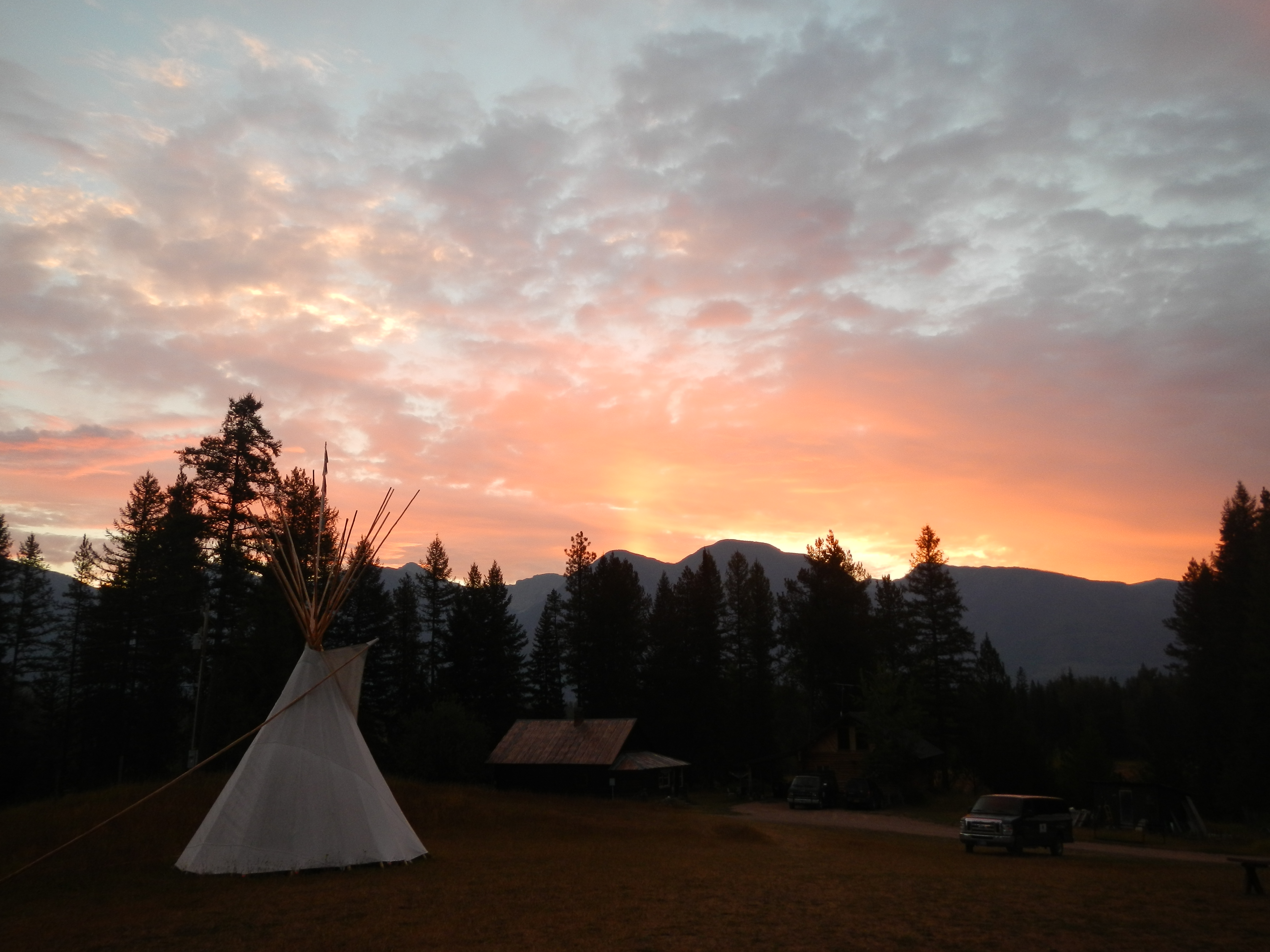
Looking east from my bedroom.

Looking east from my bedroom.