Lessons of Culture Shock

When you imagine your study abroad experience unfolding, you never imagine the drawbacks, the low points…you never imagine that culture shock will happen to you. I am here to tell you that you’re wrong. Listen to Professor Udo Fluck in the Pre-Departure Seminar course, because you will probably go through just about every stage of the Cultural Adjustment curve… Because, if you don’t, you should probably wonder what went wrong.

The first month I was in Greece, I sank into a very dark place. About $400 was stolen from my gym locker, I left a brand new LG Android phone in a taxi, and I was feeling very degraded as a woman, constantly being harassed as I walked to school. Not to mention the fact that every time I went to Carrefour (the grocery store down the block) I was left in an annoying state of perplexity, unable to ask the employees for help to find that jar of peanut butter that I desperately NEEDED. It seemed my only friend in this situation was google translate. At one point, all I wanted was to book the next flight home to Missoula. I felt that in Missoula I would be safe. I could avoid all these potentially threatening situations and no one could take anything more from me. I also felt that I didn’t deserve this opportunity, nor the unconditional love I was shown by my parents. I went to bed every night filled with mindless regret; wondering what life-changing opportunity I could have used that money to finance; or, what quality pictures I could have taken with my fancy new phone. I tried to cut down on money for food, and wouldn’t let myself do anything I considered ‘fun’ for the next month or so.

After considerable time, it began to dawn on me, after the consolation from my parents, new friends, and support circle in Greece. These were all things that I had lost, and I could get them all back if I wanted. However, what I could not get back is the time and memories I was wasting in a country that I may never return to, with friends that I may never see again. I needed to cut myself a break and think pragmatically. When I returned to Montana, I would simply work that much harder to earn the money I had lost and I would live at home to cut down on spending. Beyond that, I had to take a hard look at my values. Anas told me something one day. He said that, “there will be times in your life where you may have nothing, and there will be times in your life where you may have everything. Don’t worry about the times you have nothing, because the point is that you will never truly have nothing in life. It’s all about perspective.” Not only was I letting my mistakes define me, but I was also letting temporary, material things come in the way of experiences and friends that might last a lifetime. I realized a valuable life lesson that day-one that will stay with me for a lifetime. Money and material items are temporary entities that come in the way of happiness. And furthermore, the obstacles I will inevitably encounter in another culture are a good thing. Culture shock sets off an internal transformation of sorts which forced me to realize the value and emptiness of money, and establish faith in my own unconditional worth and ability to persevere.

Simply Thankful

What I learned from my study abroad trip to Aghia Paraskevi, Greece is to sit back and relax a little-to find tranquility withing a tantrum of events beyond my control. Not to settle for complacency, or contentment, but to seek a slice of un-rivaled happiness. I found myself overcome with excitement at the thought of my unfilfilled purpose on this earth. But I also came to terms with the hard truth that I will never be able to do it all or have it all in this world. I don’t want to. I want to live for the small unforgettable meet-cutes with strangers I will probably never see again. I want to spend every waking moment living-truly living. I never want to take a deep friendship for granted, nor can I afford to. I learned that money is replaceable but experiences last a lifetime.

IMG_0685

Here’s a quick look back at the group of the people who made my experience unforgettable.

IMG_1940

And a thank you to the special people who will always remain in my heart.

To Omar: Someone once told me that you are the type of friend that only comes around only once in a lifetime. I think that person was wise beyond their years. You were my rock throughout this journey. Beyond that, you will continue to inspire me with your loving, forgiving nature and the humor and kindness that you show to every stranger, acquaintance and friend that crosses your path. I hope to see you in Egypt soon, my friend.

To Anas: Thank you for instilling in me a new-found sense of pride in my origins, and pushing me to be a better Muslim. I marvel at your dedication to your studies and your knowledge about world history, news, and politics. Although I will never forget the chilling stories you have told me about your home country of Lebanon, I will also never forget the strength and perseverance with which you bore these trials in your lifetime.

To Omiros and his family: Thank you so much for letting me stay with you. Staying with you, I learned the true meaning of Greek hospitality. Someday, I hope to return the favor.

To Alyssa: I hope you will continue to be the powerhouse woman I came to know, love and respect during our wild, Spring Break adventures throughout Europe. I hope you return someday to Paris and live your dream… the city that stole both of our hearts.

To Georgia and Gabriela: You were the best volunteer leaders I could have ever asked for, you taught me that volunteering is simple-it is a way of life and a privilege to those who choose its path. Thank you for putting up with my horrible Greek accent and embodying the true sense of the word: leader.

To Sarah, Elise and Rachel: You may have been my roommates but I consider you family. Deep down inside I hope that our story will echo that of the Sisterhood of the traveling pants, and that we may reunite one day to hear about the beautiful lives that we have all chosen to lead..

Looking back on the trip all I can think is how the time was stolen from me, and incessantly worry if and how anyone will remember me. But this is silly. for It is enough for me to have touched the lives of a few, good people and for them to have touched my life in return.

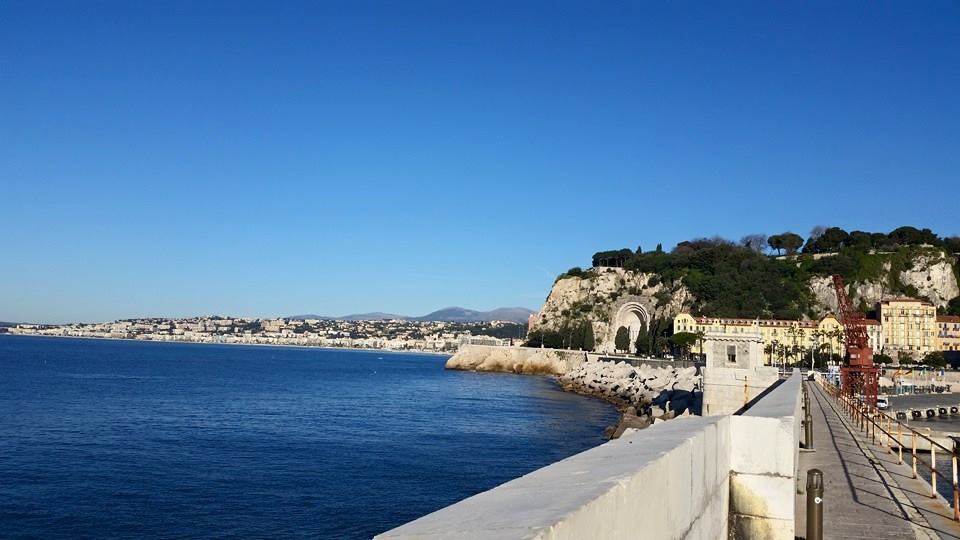
Returning from the French Riviera

Before leaving Europe to return to Montana I was looking forward to return to everything I had left 5 months ago. Upon returning though I realized things were quite different from what I left them. My best friends had made new friends and I felt like an outsider. Reflecting on my experience I have grown a tremendous amount, I have found out that I can travel through Europe alone and make many new friends along the way. France was such a wonderful experience I cannot wait until I get back over there. I have almost come to the point where I want to do an MBA over in Europe for two reasons. First I love the culture and the people over there and second it costs 900 Euros for a two year program. Studying abroad was probably one of the best decisions I ever made in my college career. I would highly recommend studying abroad to anyone who is interested in getting out of Montana. I compare university in France to UM and Missoula just doesn’t come close. But thankfully I only have one year left. FranceSo until I can return I will just have to look and my Facebook pictures and remember all the good times.

Applying My Irish Experience

As a part of the course I have taken, I have to apply what I’ve learned to my life in the form of a project, a paper, or whatever I chose. I’ve read a lot about how reading Literary Fiction can increase empathy, but I guess what I am most interested in is the emotional response my own creative writing can illicit in others. I wanted to copy the experiment done here but with a brand new piece of my own Fiction.

The first step to completing the project was to complete my story (easier said than done). I made sure that, after I had written the story, I selected the passages I thought were most emotional and defined what emotion I intended to illicit in the reader. The next step was to develop a streamlined instructional page. Because many of the subjects I would be using would come from other areas than Missoula, I had to make sure the experiment was easy to interpret from a mere typed text. I included an instruction page that asked the subject to read the passage provided. When they felt an emotion, they would mark or type “E” next to the passage. If they had a memory triggered, they would write or type “M.” Any other thoughts would be marked with a mere “T.” Subjects were told only to provide marks when they felt any of these things strongly, and not to feel that they needed to provide any marks if they felt nothing. They were also encouraged to define the emotion, memory, or thought and to quantify it’s intensity if they felt it was necessary.

I wanted to do this project because I felt it was the perfect combination of Science and the Humanities in a way that will help me with something I truly care about: writing. In the end, I hope to leave with some helpful raw data that surprises me and gives me a new angle to view my own work from.

As I have yet to finish this project, I will update the blog with the results. I predict that women subjects will be more apt to report emotion than men, that the emotional reports will be lower than I anticipate, and that unrelated thoughts will be higher than I anticipate.

Newgrange: Prehistory and The Mind

What do you picture when you think about Neanderthals? Probably something like this: Prominent brow, big nose, lots of hair, and tiny, close set eyes. People think of Neanderthals with stone tools, spearing mammoths, being ambushed by Cro-Magnons. But people hardly think of Neanderthals as having any kind of spiritual inclination. Newgrange was built during the Neolithic period, around 3200 BC, making it older than the pyramids and stonehenge. It is speculated by archeologists that it was built to serve a religious purpose, which for me, is probably the most interesting aspect of Newgrange.

Newgrange

Although pictures inside were not allowed, you can see from the outside on the entrance stone the swirl pattern that was present in much of the chamber. Not much is known about this pattern. It is speculated to mean anything from life to psychedelic mushrooms. What I think is interesting is that, although the meaning remains unknown, everybody acknowledges that it must have some meaning. We think about Neanderthals as being akin to apes: unintelligible. But here we have a complex structure built by them, one that might have been used for spiritual/religious purposes. In order to have religion, one must first have a mind. And so, to me, Newgrange is an amazing example of the fact that the Neanderthals might have had sentience, although we typically do not interpret them that way.

If you are inside of Newgrange on the Winter Solstice, you can see the whole chamber light up for a solid seventeen minutes. Nobody knows what this means. What they do know is that Newgrange was constructed geometrically so that this illumination of the chamber would happen every year during the Winter Solstice. This is consistent with the notion that Newgrange was built for religious purposes. Why else would they construct it so that it would only be fully lit for a mere seventeen minutes out of the year?

To have spiritual beliefs is to have a mind. You can look at bones, you can carbon date them, but you cannot measure the capacity to have consciousness (just yet). Newgrange was a wonderful compliment to the idea that the Sciences and Humanities must diverge to get the whole picture.

A Pilgrimage to Ireland

Going to Ireland is a sort of rite of passage, a pilgrimage, for anybody who takes an interest in Literature and Creative Writing. Ireland is a small place– it could probably fit into the state of Montana twice. Yet Ireland has spawned some of the most prolific figures in Literature: Samuel Beckett, Oscar Wilde, James Joyce, Seamus Heaney, and and W.B. Yeats, just to name a few. One begins to wonder, what is it about Ireland that makes people so prone to write and to write well? And so it seems a natural extension of the person interested in Literature and writing to travel to the country. Lucky for me, I was able to compliment this journey with a course exploring the scientific basis behind the mind. This meant not only did I study pieces of Literature from these important Irish authors, but I also studied the neuroscience behind what separates the mind from the brain and as such, how we can begin to decipher where creativity originates on a biological level.

Ireland

People tend to think about sentience in two ways: 1) That we are just glorified monkeys 2) In a spiritual sense, where we have souls. Both of these are valid perspectives but, in recent years, we have begun to bridge this gap and some people now understand human consciousness as a balance between both of these. The course I took focused heavily on this perspective.

My professor for the course, Dean Comer, had a saying (which I am certain he gleaned from another man who “had a saying”) that the simplest problems go to Physicists and if they can’t solve it, then on to Chemists who pass it on to Biologists who then pass it on to writers. So if you really think about it, Science and the Humanities are not that far from each other. I often have thought about them as separate entities where you either are a “science” person or a “humanity” person, and neither of these people could mix. James Joyce is sometimes known as the father of stream of consciousness, where he attempted to write how somebody might think. His novel Ulysses, showed a single day in the mind of his characters. While many might view this as a venture in the humanities, maybe we need to see it as a venture in science. Doesn’t modern day Neuroscience try and explain how the mind works? And when Neuroscience can’t provide an indefinite explanation, writers take up their pens and to their typewriters to explain it in the best way they know how. What is being human? All these instruments and tools we use to do things are only so we can explain how we feel inside to somebody else. Science and Literature, they aren’t so different in that way.

As time goes on, people seem to invest more of themselves into a scientific perspective than into a humanitarian perspective. People put less value on the humanities and more value on the sciences. Sciences are STEM careers, lots of sciences directly feed into a nice and neat job after college. How many times have I been asked, with an incredulous look, “And what do you plan to do with that major?” I don’t know, I guess. Lots of us don’t know. But we ought to stop thinking about these specialties as such different schools of thought and start thinking of them as diverging on the same.

The Gift of Words

Our bus skidded to a stop and with a sigh of relief I peeled my eyes from the side of the road and the drop off to the valley floor below. As the dust settled on the single, gravel lane I took in our surroundings. To the left a short, barbed wire fence stood guard before the two huts making up another of the homes in the Sontule community. On my right, a second road branched off of our lane and disappeared into the trees. We had just come from a meeting with the women’s coffee cooperative of the UCA Miraflor region after which our group of students had been divided into pairs and sent to stay with different families around the community. Glancing at Modesta, our host mother, for confirmation that this was our stop, my travel partner Emma and I grabbed our bags and exited the bus. Two other pairs of students also followed their hosts off the bus. One group was led through the fence on our left and the rest of us set off along the path to the right.

Modesta was a full foot and a half shorter than me and the wrinkles on her face told me she had seen many years. She seemed small and fragile and I was reluctant to hand her one of my bags when reached out to help. Her thin arms, however, were not as frail as they appeared and she hoisted the duffle with ease. I knew it wasn’t the first time she’d carried heavy objects long distances. As we wound our way along the ridge, the trees often parted, revealing stunning views of the northern Nicaraguan mountains on either sides of us. Though not nearly as extreme as the Montana Rockies, they were beautiful just the same. Skin slick with sweat from the high, twelve o’clock sun and stomach rumbling with hunger, I was grateful to finally arrive at what would be my home for the weekend. Modesta showed us to our room, set my bag on the table, then left to prepare lunch. Emma and I lay down our bags as well then went to explore.

The building our room was in had two other bedrooms and a dining/living room. It was here that we ate lunch with Modesta and two of her grandsons. The other building on her property was the kitchen. Inside, pots, pans, cups, and silverware filled the shelves. A clay stove in the corner sent smoke spiraling up and out through the space between the tin roof and the wooden panels that made up the walls. A stone-lined path led the way down the hill to an outhouse and a view of the far off town of Esteli. Throughout the day, dogs ran in and out of the buildings and a kitten was always darting between feet and around the flower pots. People came and went. Sometimes there was a horse tied up to the fence and sometimes there wasn’t. It was hard for me to tell who actually lived there and who was only visiting. Thinking back on it now I don’t think anybody in the community lived in one house alone, rather the community itself was home and they all shared the buildings with everybody else.

Late that afternoon, Modesta’s grandson Hanir led us back to the first house our group had met at. Along the way we picked up our classmates as we passed their houses. Once all together, we were taught about the process of growing coffee. Afterwards, we hiked to the top of a nearby hill to watch the sunset and hear the story of a local man and his family’s experiences during the Contra war of the 80’s. By the time six o’clock came it was already dark. Hanir brought us back home for dinner and we went to bed early.

The next day, May 30th, was Mother’s Day in Nicaragua. Rumor had it Mother’s Day was a big deal in this part of the world but with that in mind, nothing could have prepared Emma and I for the day we had in store. At breakfast, Emma and I wished Modesta a happy Mother’s Day. Her deep eyes and wrinkled checks exploded into a smile as she gave us hugs and a chorus of “Gracias mis niños!!!” She told us she’d be hosting a mother’s day party that evening and with that we finished breakfast and took off down the road again for the school. There, we learned about how primary and secondary school worked in the community. Three teachers taught all 12 grades. Each teacher had their own, one room building and set of supplies. However, they were extremely lacking in many of the basics. It was amazing to me how they could organize their day in such a way that all the age groups received the attention and lessons they needed and that the children could understand their teachings with such a limited supply of pictures, diagrams, and maps. Nevertheless, Sontule’s children made do with what they had and were happy. They had never known anything different so how could they not be?

With a basic understanding of how the school system operated, our group of students from the University of Montana spent the remainder of the morning preparing a set of geometrical garden beds for the kids to grow vegetables. From there, we left to another community to learn more about the coffee industry and some of the flora in the Miraflor reserve. Back in Sontule, Emma and I hurried up the road to Modesta’s. We were late and worried we’d missed the forewarned party. Upon our arrival, however, we saw the party was just beginning.

The night began with Emma and I being introduced to several of Modesta’s children and grandchildren. Twenty-some people from the community and from Esteli mulled around the yard chatting with each other. Everyone was related to Modesta one way or another. I was delighted to discover one of her grandson’s, Uriel, had gone to university and learned English. At long last I was able to converse with someone other than those in my class! Although Emma was able to translate a bit for me, there was still a lot she couldn’t say and it was frustrating not being able to converse directly with most people. After dinner with Modesta and a few of her relatives, we socialized with the family, and then were herded into the living room with everyone else. I don’t know what I expected was going to happen but the following events surpassed anything I could have imagined.

Once the last of the family had trickled in and claimed a chair in the circle that filled the room, Uriel gave an introductory speech. When he was done he told Emma and I he had thanked everyone for being there to celebrate Mother’s Day and to honor Modesta and that to start things off one of the grandsons wanted to dance for Modesta. A couple guys fiddled with a radio until a local station began to play. The young boy began to dance in the center of the circle. People laughed and cheered and clapped as he moved to the music in the flickering candlelight. After a minute or so he stepped to the side, grabbed my hands, and pulled me into the circle with him. I smiled and laughed with the rest as I tried to mimic his footsteps. We danced for a while and then he grabbed Emma and danced with her too. He finished up with another solo and then the family transitioned to the next event of the night.

One of Modesta’s sons grabbed a guitar while several grandsons clustered around him. He began to play and the boys began to sing. Eventually, those sitting in the circle joined in, their voices ringing together as they sang the praises of Nicaragua. I’m sure if someone had stepped outside in Esteli that night they too would have felt the pride and love poured into those songs flowing out over the mountains. As I listened a grin begin to spread across my face until my cheeks were frozen in a permanent smile. What an experience! To be here, in this little hut with this beautiful family and to be able to listen to them singing the songs of their nation and their culture. When their voices faded Emma and I joined the others in shouts of “Otra! Otra! Otra!” and they came together to sing one last song. I didn’t want the music to end but it was time for the main event, the reason we were gathered here tonight, to begin.

Uriel stood up again and thanked those who performed. He then either gave some instructions or everyone just knew what to do from there, for one by one, each member of the family stood up and gave a short speech to Modesta. I can only guess what they were saying but with putting together their tones of voice, Modesta’s tears of joy at their words, and the fact that it was Mother’s Day I’m pretty sure they were thanking her for everything she did in the family and sharing reasons why they loved her. After each son, daughter, and grandchild spoke they gave Modesta a hug and presented her with a gift to a polite round of applause.

If it was possible for my smile to grow any wider it did. Tears filled the corners of my eyes as I watched and listened. I was in awe of what I was seeing. Here were these people, who lived in the deepest kind of poverty, who slept in huts and baked in clay ovens, who pumped their water from wells and hadn’t a spare penny to spend on themselves. Yet they had all gone out of their way to save up and buy their mother/grandmother a gift for this special day. I suddenly felt very aware that Emma and I hadn’t brought anything to give. I did a quick, mental scan of everything I’d brought with for our weekend in the mountains but none of my belongings seemed fitting as a gift. Yet I wanted to give Modesta something. Suddenly I realized a gift didn’t have to be physical. I could give the gift of words. Leaning over I whispered to Uriel, “If I wanted to say something, could you translate?” He nodded yes and when the last of the relatives had spoken and presented their gifts he stood up and announced that Emma and I would like to speak.

Emma went first and, after saying a few sentences in Spanish, I stood up and faced Modesta. “Hello,” I started. “I’m sorry I cannot say this to you in your own language and I’m sorry Emma and I have brought nothing to give. But we give to you our gratitude for allowing us to stay in your home.” I continued on, thanking her for her hospitality, for sharing the food on her table and the beds under her roof. I thanked her for her kindness and for welcoming us into her family and letting us join in their celebration of Mother’s Day. Uriel, standing a few feet behind me, translated my words after each sentence. When I was done everyone clapped one last time as Modesta gave me a hug and we resumed our seats.

The remainder of the night consisted solely of conversation and the passing of the guitar between one another. Little by little family members wandered out the door and headed down the road. We bade farewell to Uriel and various other relatives we had spoken with over the course of the evening and when all but a few were left, we made our way to bed. As I lay awake beneath my mosquito net that night listening to a baby cry and the fading whispers of the remaining guests, I replayed the last couple hours in my head. I couldn’t believe how lucky I was to have been there for such a special occasion, such a unique, cultural experience. What an amazing experience it had been! Listening to the traditional songs, seeing the kindness and selflessness of the Nicaraguan people and of those who had so little yet gave so much. And perhaps most memorable of all, despite the language barrier, still being able to give a gift myself: the gift of words.

Some Final Thoughts

Here I stand at the end of my time abroad, a day and a wake up from home. I use the term ‘wake up’ loosely; putting a nocturnal person on an early morning flight is like trying to put out a fire with gasoline. However, the crack of dawn struggles of a person for whom the world tends not to exist before nine AM are beside the point. The point here is that I have completed an experience, and that experience needs summing up. So, to sum up some of what I have learned in my time abroad, I present the following list:

1. Anyone who tells you they understand James Joyce is probably lying. It came up in discussion that there are probably only 7 people in the world that truly understand Finnegan’s Wake, and 7,000 that truly understand Ulysses. So, unless they’ve devoted their life to the study of Joyce or are waving a guidebook to Joyce’s work in your face, they’re probably full of it.

2. Going abroad, pay attention to the local speech mannerisms and idioms.There’s nothing quite so effective to getting to know the flavor of a place as listening to people talk, and if you want to be a writer as I do, there is no better way to improve dialogue in stories than learning how people speak. They speak English over here in Ireland, of course, but it is different. For example, ‘thank you’ is ‘cheers’ and ‘no problem’ is ‘no bother.’ I imagine the things one could learn about a language speaking one other than English abroad are even more different. One of the most fascinating aspects of my trip was just listening to conversations and learning how the idioms and slang were different. Unfortunately, I have to spare putting some of the more colorful slang here because a lot of it is words that are considered offensive by some Americans.

3. Ask people about themselves if you get the chance to. As cliche as it sounds, everyone’s got a story, and there’s a diverse range of interesting tales to hear. I got to know some of the most incredible and generous people here simply because I expressed an interest in their stories. Chances are, they’re interested in you, too. I got to compare my background to some Irish backgrounds, and it gave me an appreciation for cultural differences. Sharing stories is the best way to go to develop an appreciation for cultural diversity.

4. See as much as you possibly can, even if you’re tired and all you want to do is crash on the nearest park bench (which I considered while I was in the grips of jet lag). You can sleep when you’re dead. You probably won’t be back for awhile, if at all, so take it in while you have the chance. Get out and experience the area you’re in. You can’t tell anyone about your experiences or use them later in life if you don’t have any experiences. And be sure to take some people along. You’ll probably make some really great friends.

I could extend this list for days, but in the interest of brevity I will end it there. All I can say is that getting to experience Ireland and its literary culture was an amazing experience, and has given me lots of ideas on how to improve my own work. It’s a trip I’m glad I took, and I’d like to say a big, hearty ‘cheers’ to everyone over here that made my experience so memorable.

Storytelling

Talking to some people at home the other night, I mentioned that everyone I met here in Ireland has been incredibly friendly. It is to the point that I can ask any person on the street for directions and they are more than happy to point out the right way to go. I’ve been lost with some of my classmates in the city more than our fair share of times, owing to my horrible sense of direction, and people walking by overhearing our debates on which way we should go will just stop and help us out. Those back home seemed surprised to hear this; they’ve never been to Ireland and they had the assumption that the Irish were a bit standoffish to strangers. I don’t know where this assumption came from, because the Irish are some of the most hospitable people I have ever met. Part of this hospitality comes in the form of sharing stories.

There’s nothing quite like hearing an Irish person tell a story.The Irish have an appreciation for storytelling quite unlike any other culture I’ve experienced; nothing is so well liked as a good storyteller (except maybe for a pint of Guinness, of course). The magic of an Irish story, however, lies not so much in the story itself as in the person telling it. My classmates and I saw a play by the name of “The Gigli Concert” yesterday evening. The play details the story of a severely depressed man seeking the help of a quack psychiatrist who is a proponent of a made-up movement called ‘dynamatology.’ Throughout the course of the play, the two men switch places. The depressed man slowly gets better as the quack doctor loses his mind. The play is touted as a look into the Irish male conscious. As I mentioned, however, the story itself is not so important as the person or people telling it.

I do not think I have seen a more beautifully and masterfully acted play in my entire life. The actors told the story in such a way that it became real for me. I believed the emotions in the play and felt them myself. I watched the two characters struggle against their personal demons to try and just make it through one more day. It was captivating, and it was at the end of it that I realized that the reason it was so captivating was not because of the writing itself, which was brilliant, but because of the humans that brought the writing alive. One can write the most beautiful prose in the world, but if there are no human elements to it, it is going to mean nothing. If there is one thing I learned from watching “The Gigli Concert,” it is that a truly memorable story is that which moves us to emotion, that which evokes a reaction. Watching the Irish actors, I realized why the Irish literary tradition is so strong; they are experts at making a story produce emotion in its readers. They are expert storytellers. As a writer myself, I hope one day I can spin a tale half as well as the hospitable Irishman.

All the pieces of the puzzle

I remember feeling a little impatient with puzzles as a kid. I loved the outcome, but I found it so frustrating that there was always that one tricky piece that looked like it fit perfectly just where I needed it, but it turned out not to be a good fit. Unlike other kids, I wouldn’t force it into the wrong place for the sake of making it fit. Unfortunately, a lot of our world operates like their piece of the puzzle is the most important, and absolutely, positively must fit into this one place this one way.

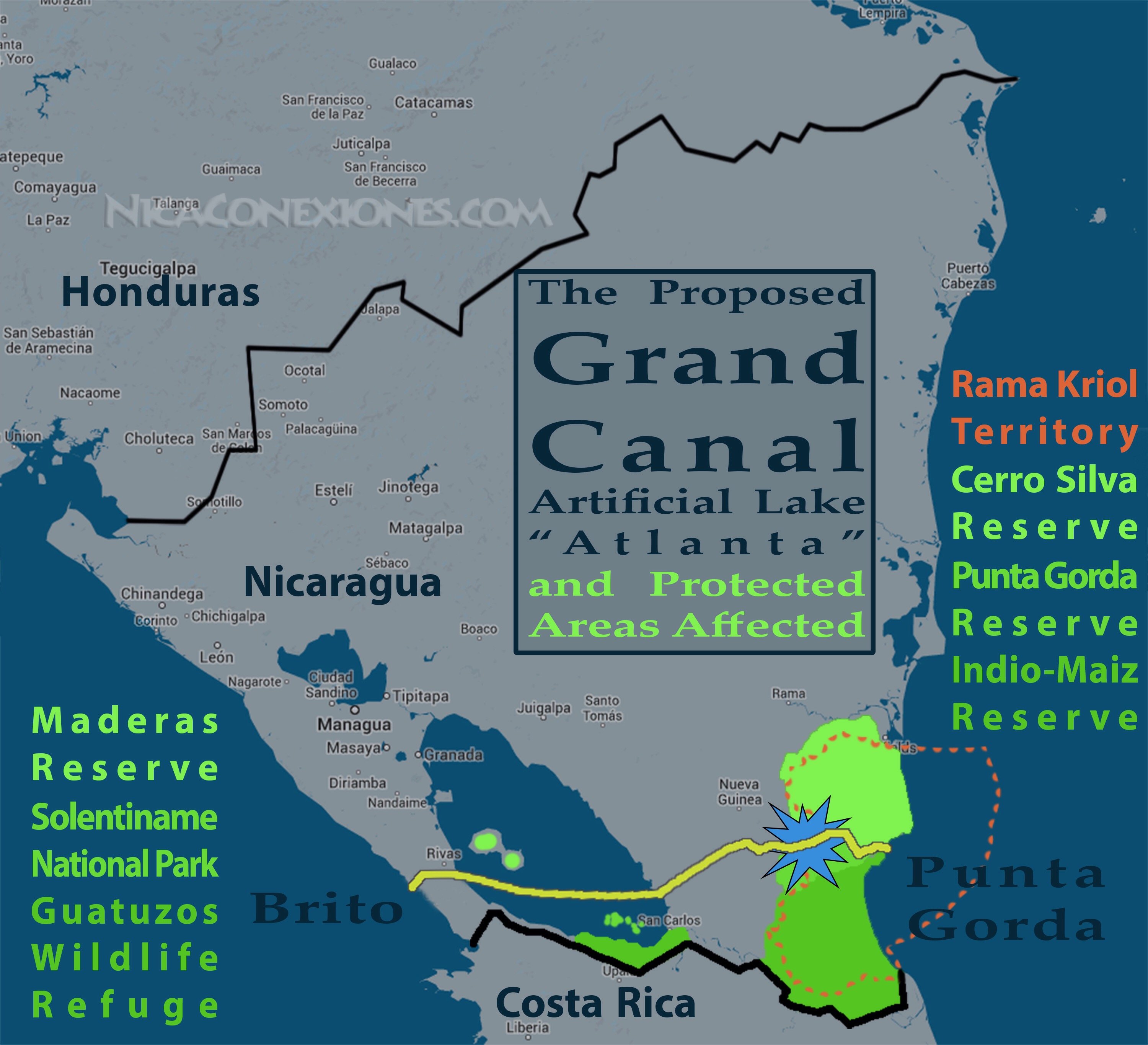
Let me explain something I learned in my two weeks in Nicaragua. It seems like the first thing to get neglected or tossed aside while making big development decisions tends to be the environment. Many of the groups we met with expressed concerns with the proposed canal that would cut across the southern area of Nicaragua. Not only would the proposed project displace thousands of indigenous people, but the proposed canal would also rip apart the biodiverse land, including a few protected areas. In some versions of the developer’s map, the cartographers conveniently erase part of the protected area the canal would effect, making it look like the canal would have no effect on forest reserves. They are literally forcing their canal puzzle piece to fit in a space it’s not meant to be. 

 Accurate map of preserved land that will be effected by the possible canal. 
When asked about how the developers plan to accommodate for animal migration when the canal divides the natural habitat, these researchers said something along the lines of, “well if the animals can’t fly across the canal, they’ll learn to swim.” I’m sorry, what? It’s almost laughable how badly these foreign developers are trying so hard to make this impossible canal work. It’s not entirely laughable because this project was sold to a business in Hong Kong without the vote of the Nicaraguan people, and if the canal takes longer than 100 years to complete or if there are any setbacks during construction (natural disasters, protests, etc.) that cost the developers money, the Nicaraguan people must pay that debt. If the developers start the canal, realize it is not feasible, and have to quit, the Nicaraguan people will have to pay back the expenses.

  
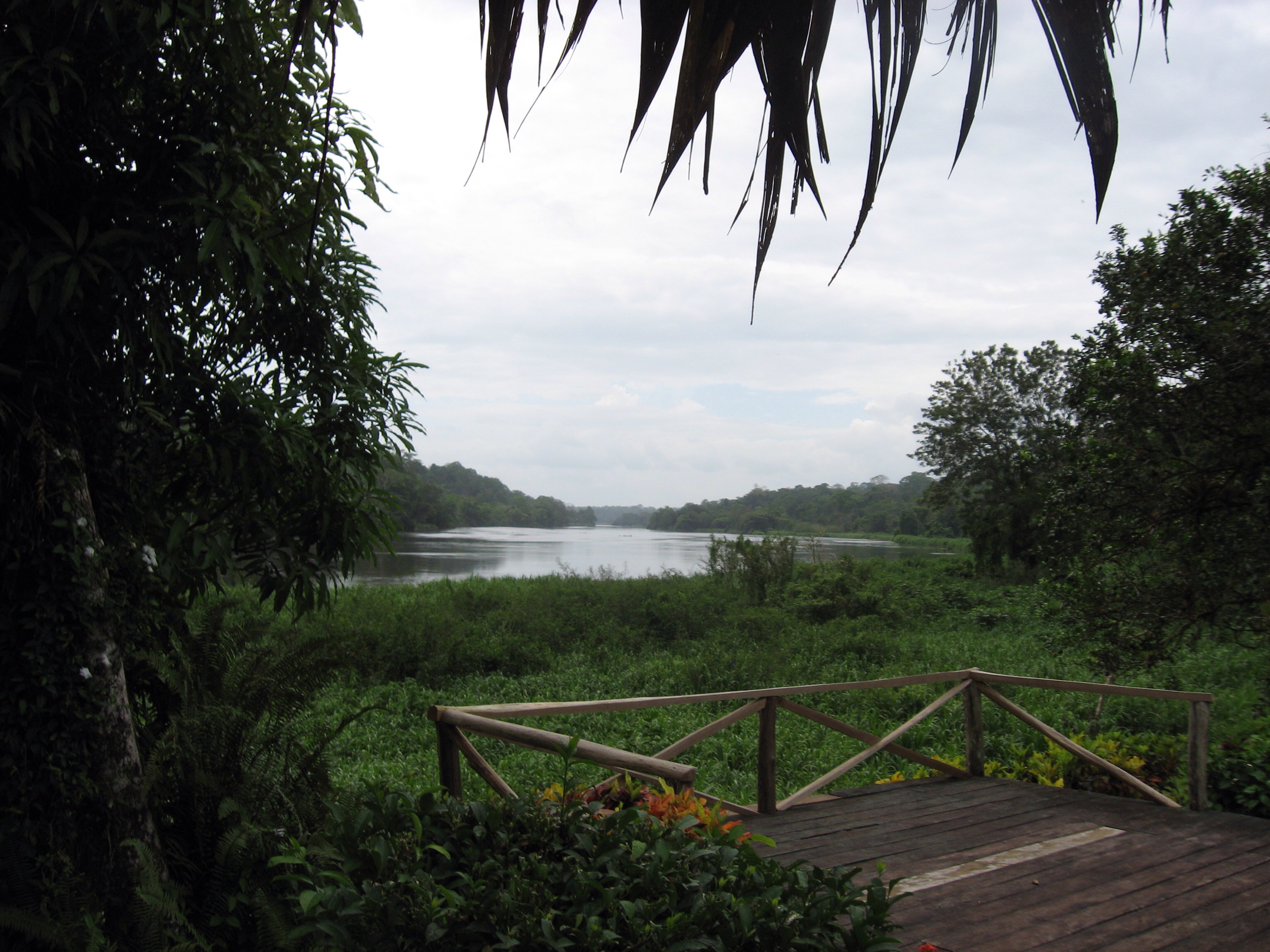
 Lake Nicaragua. Plans for the canal require continual dredging of the lake. To give an idea of how shallow the lake is, our small motor boat got stuck twice, and six people stepped into the knee-high water to push the boat to a deeper area.

Back to the puzzle: I’m going to be cliché for a second. Whether we realize it or not, we are all pieces of the same puzzle. When we try so hard to force what we think is best for the world, we ruin the pieces next to us, the pieces we depend on most. The canal is just one example we encountered. We also had the chance to meet with one of a former sugar cane worker who is leading the charge to fight against pesticide use after seeing thousands of her coworkers and neighbors die from kidney disease related to pesticide contamination. Some big businesses try and try to make their plans of more production and efficiency work that they neglect the health of the two most important resources: the people and the earth.

The biggest lesson I learned on this trip is how we are all connected. It’s easy as a student to get so bogged down in our specific degree programs that we forget the puzzle pieces we touch. I can try with all my might to solve all the health problems of the world with one simple method, but it won’t work without taking a holistic approach and considering all the factors affecting a person. I’ll force my piece to fit and I’ll ruin the big picture. Developers can try to create canals to reduce shipping time by a few days, but will devastate the ecosystem that is necessary for the canal to have enough water. Agricultural chemical companies can spray fields with pesticides and GMOs hoping the higher yield will help feed the world, but will kill the land and the people required to harvest the field. 

Going into my fourth and final year of college, it’s important for me and my peers to keep in mind that we are just pieces of the puzzle, not the entire picture. Like all puzzles, there is a certain way all the pieces fit together to make it work. Our challenge is to be creative, to find how our pieces fit into this world to make the most beautiful, spectacular, fair and equal-to-all picture imaginable.

  One last picture to remind us of the beauty of being apart of this big, crazy puzzle.