New Zealand

riverview

Eating lamb shank in New Zealand is one of the quintessential experiences of that country.  Everyone knows there are more sheep in New Zealand than there are people. However, on my last night in New Zealand, after my Beyond the Classroom Experience studying sustainability there, that lamb shank represented a lot more to me.

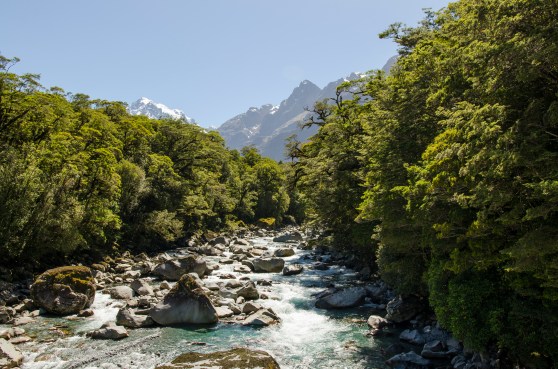
That piece of meat came from a farm in New Zealand, like the one I had visited weeks earlier.  It was raised on the rolling, green hills of the nation, cared for by Kiwis, as New Zealanders affectionately call themselves. That lamb grew up in the shadow of mountains, thrust up by the tectonic forces that shake the islands.  It never knew the factory farms common back in the states.  That lamb came from a place and a people where the environment stands all important.  It came from a place where sustainability is forefront and present.  It was cooked and plated next to local, seasonal vegetables in a restaurant lit by 80% renewable electricity.  The clear, blue water that the heards of sheep drink from is the same water that powers hydro-electric dams and ripples in the wind that turns electric turbines.

To eat lamb shank in New Zealand for me is to recognize all that I had learned in my time there, and all the work that is yet to be done.  What a wonderful time to embrace sustainability as my Global Challenge; it’s time to get to work!

Plant #17: The Perfect Partner

After only three days working in the field I found my favorite fuchsia shrub. Our 22 study plants were spread out over about 6 square kilometers of thick, Valdivian Rainforest. They ranged in habitat from lakeside beach to inland marsh, to shaded riparian forest. I grew to know this forest by heart. Sometimes I would even shut my eyes to see how far my senses could take me. To reach Plant #17 I would turn left on the large path from the research station. I followed the pathway over two small hills and down along the beachside until reaching the giant Coihue tree on my left. There, I turned towards the tree to head up the arroyo (little stream) where plants #14-20 were located. I would continue up the small path past all of my memorized turn offs, through a small gate, and up another hill until I reached a final uphill slope. Four fuchsias would meet me on the right and I would continue along the narrowing pathway. Finally, I would walk through a cut out fallen log and step down a staircase of 7 roots to reach the streamside. From there, I hopped on top of a large moss covered fallen Coihue, where I would perch before jumping down to streamside stones to greet my beloved Plant #17. During my 5 months in the field, I spent countless hours sitting on a moss-covered rock, admiring its spindly branches, and listening to the rush of the stream alongside us. So here is my ode, written one day on the moss covered rock, to Plant #17.img_0230

Ode to Plant #17

You learn towards gurgling creek,

wanting to listen closer to its stories.

You are crooked, but so strong.

Your trunk emerges from rocks

wearing hodgepodge green moss sweaters.

Your base is split, with small arm

reaching towards fallen tree below.

Your trunk rises 3 feet before fracturing

body into 5, reaching out to

gather in sunlight and knowledge

of your surroundings.

You reach out to me and suck away

my worries into saturated green,

aged motely brown, and fuchsia fire.

You make me feel comfortable

with my sadness, for you are strong

but damaged as well.

Your leaves remain green

but are munched by the hunger

of cryptic caterpillars.

Your bark is gnarled, but contains

patterns of beauty-

messages passed from earth

through roots

fueled by creek and sun

only to reach my privileged presence.

You, Plant #17, are the perfect partner.

I am eating a lot

First week in Lyon, France has been an amazing stressful mesh of things. I have experienced so much more than I ever thought in just one week. And I am eating A LOT, but at the same time… nothing at all. I have had at least one baguette everyday since I have been here. That is not a healthy amount of bread, people. I can’t stop and I probably won’t. My apartment inhibits me from cooking anything that doesn’t come in a microwave bag sooo bread and cheese have been my vice. I’m sure as the semester goes on I will get more creative, but for now, I am eating a lot, of bread.

The street shops are not helping my ever growing addiction to bread and various decadent goods. Patisseries here are out-of-this-world delicious. For now it is a free for all. As I am getting comfortable here it is important for me to have those comfort foods. It has been a pretty hard adjustment to set up my life here in Lyon. (The study abroad program did not prepare me for anything.) With any adjustment it’s important to keep yourself sane, and the best way so far has been so eat.

I am not worried about my weight because with every piece of bread I have comes over a mile of walking. I have probably averaged about 5 miles a day at least and boy is my body feeling it. So yeah, I am going to keep eating.

Stay tuned to my adventure in Lyon, I promise it will be exactly like all of the other study abroad blogs you have read.

Au revoir

Melisande

Fall in the Swan


img_4666

Now many weeks into my Beyond the Classroom experience, I have realized that I will not be able to fit all of the things I have learned into this short blog post. I will not be able to tell of the many people I have met with and their views on issues like logging, farming, ranching, forest fires, or water rights; nor will I be able to perfectly explain the way that the Swan Range looks in the morning, the sun creeping slowly up and over the crest while a light powder from the night before glistens against the pink morning sky. I will not be able to show you the changing colors of the larches or the size of the grizzly bear track I found this morning, but I can tell you that it is these moments in particular that have made this semester one of the most enriching, educational and valuable experiences of my life.

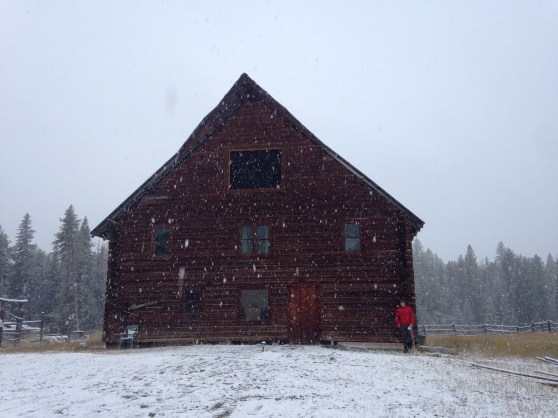
As a third year environmental studies student at the University of Montana, the global challenge that I chose within GLI is to examine the teachings of environmental education through hands on learning techniques, particularly among youth. This semester, I am a student of exactly that. Living in the Swan Valley of Montana with nine other students in an old homestead barn, we are learning to interpret the natural world around us every day in the field. From snorkeling and identifying native fish in the Swan River, to identifying flora and fauna around the valley, we have been interpreting and experiencing first hand what it means to live in rural Montana.

Living in a town of nearly 600 year-round residents, I have witnessed the connectedness of a community formed of sheer numbers. I have understood their rural lifestyles and the needs for hunting and fishing when the closest grocery store is 45 miles away. I have recognized the pride and love that each community member holds for the Swan Valley and their appreciation to be able to live in one of the most beautiful places on earth. Coming from the “big city” of Missoula, it has been interesting to switch places and accept the view that locals have on the environmentalist city slickers that live there, much like myself.

And through this vision, I have learned that there is no right or wrong in any of this. I have agreed with environmentalists and loggers alike, have spent a weekend bear hunting and shooting pistols alongside the yellowing snowberry, while continually being astonished at the Mission Mountains caked in snow.

img_4622

One of the most applicable things I have learned this semester is the idea that “values trump facts.” As I continue down this tract of environmental conservation, desperately searching for some middle ground that people can agree on, I will keep this forever in my mind as a tool to apply to any single person, whole community, or even on a national scale. You cannot try to change people’s beliefs, but you can listen, interpret, and be aware of yourself as well as others in the place that you inhabit.

So as I sit on the back porch of the cabin we call the cookhouse, looking out over the grazed pasture full of horses and deer alike while the Swan Range towers over like the dramatic backdrop to a movie, I know that I am lucky to have these experiences. I know that although I may not be able to explain all of the different viewpoints I have heard and things I have seen through the writing of this small piece, I have learned and will be able to apply these skills and knowledge to other natural resource and sustainability issues around the world.

img_4561

Alone

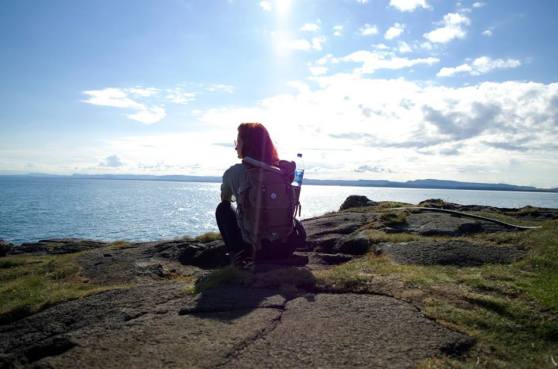
Sitting on the seaside cliffs in the Icelandic town of Keflavik waiting for my connecting flight to whisk me back to the world of the real, I have the chance to reflect on my experiences in Germany and Europe. This is my first time alone in a country and somehow feels like my first time alone ever. I learned how to be alone these past six months, and how to like it. I spent time in churches alone in Marburg sometimes. I would pray. I’m not religious but it just felt right. I would ask God or something what I was supposed to do with my life, for the guidance to be on the right path, for some sign that my impact in this world will be greater than me. I guess it was a time for me to reflect just for me, not for a letter to someone or a Facebook post; just a time to be. It was peaceful and sad and reassuring. I figure at least I am asking the right questions, at least I am asking the questions everyone asks: “Why are we here?”. But sitting on the coast with the chilly sea breeze brushing me with goosebumps while the sun at the same time warms my face in this small fishing town in Iceland, that doesn’t seem to matter. It is a question we have to answer for ourselves. No one is there to tell us what to do or how to live our lives, we just have to do what feels right for us. Being alone always helps me realize how much I do because of other people, and not because of me. Not that this is a bad thing –we are social creatures– I just start to reflect on the ways our fears shape us to be the kind of people we think other people want us to be. I think what I have most taken away from my time here is my appreciation for being alone. I enjoyed lunch today alone at a table at a restaurant. I was amazed by the sympathetic stares –the kind I had always given to every person I have seen travelling or eating alone– and I don’t care. I want to be alone.  I want to travel alone, to feel whole and not lonely or lacking in doing so. I love people. I love family, and friends, and romance, and growing up in a family of twelve never really afforded me time to be alone. I had a twin by my side all 21 years; even in Germany she was there. I was afraid of being alone. I am alone for the first time in my life, really alone, and it feels sweet and warm and real. I feel real.

13939615_10210074040468687_282892953621573247_n

Clichés

I feel like I need to offer up some cliche about my time here in Germany. I need to say something about how much I have developed as a person and the way I am going to change the world because of the things I have seen and done. And it’s not that those things aren’t true, I just feel guilty. I feel like I am supposed to be using this opportunity for something more than self-development. I feel like I am supposed to be doing more. I also know that this is just the first step. I would not be prepared at this point in my life to go on some altruistic mission. I need to learn how to be alone. I need this development period to become more aware of the ways I can be a positive influence in the world. I need to learn about myself and my capacities, and to develop the kind of empathy this experience has begun to give me. I need to shake the American/white saviour complex that compels so many young adults to go on a weeklong volunteer mission to *insert third-world country here* to take pictures of themselves with children and feel better about themselves. I want to work in a way that will actually make an impact in this world, but I know that takes the humility to know that I might not make an impact, and that it might not be my place to try to help where I am not needed. I need the humility of being a foreigner and I need to know that I am not the solution to the problems in this world. All I can do is try. I want to do so much more than just be sitting on the steps next to the University alongside the river and living in a dorm doing what I would be doing in the US, just in a different setting. But this is the first step. This is the beginning.

12932604_10206204044244827_5488305786382738375_n

The Changed Face of Germany?

While most participants the Missoula to Berlin Journalism school program had done some international travel previously, and some had even spent time in Germany, I was afforded the unique perspective of observing Europe immediately before and after the refugee influx of 2015/16. Because I had lived and worked in Bavaria during the summer of 2014 and studied in Austria in the following fall and spring, I perceived the refugee “crisis” as a type of before and after snapshot that is probably uncommon.

While back in the United States last winter, I followed the refugee situation fairly closely, and expected to return to a radically changed Europe. Instead, I found Germans more prone to volunteerism, more politically polarized, but far from expressing the monumental shift in consciousness I had expected.

To the outsider, there were also minor observable differences. An Austrian chain supermarket in the town where I studied had been converted into a Syrian grocery, machine-gun toting police officers now patrol the Kreuzberg district of Berlin, and more women in headscarfs can be seen on the subway system.

Although my original intention in writing this blog post was to highlight some of the superficial and aesthetic differences between Germany of 2014 and today, I realize this over-simplification is inaccurate and dismisses the significance of the situation.

For all their media hype, the immediate and tangible challenges of accommodating refugees pale in comparison to the long-term, intangible difficulties of cultural evolution. While not all asylum seekers plan to stay in Germany permanently, some certainly will. It will be Germany’s ability (or inability) to make these new residents prominent members of their cultural and political identity, that will shape the new face of Europe.

The type of monumental paradigm shift that I had expected upon arrival in Germany this summer, while not yet fully expressed, must come to fruition if the violence of radical islam and nativism are to be avoided in the future. Germany has been superficially, yet undoubtedly changed, but it will be the ability of Germans to change themselves that will  decide the future of the nation. The greatest challenge concerning the refugee crisis is not what has already passed, but what is to come.

The Silver Lining

In addition to the interviews that each member of the Missoula to Berlin reporting team set up in Germany, the group was treated to numerous lectures from various experts on the refugee crisis in Europe. On the third day of our visit, Werner Schiffauer, a professor of cultural studies at Europa Universität, gave an engaging lecture about refugee integration and the social implications of religious diversity that changed my perspective on the european refugee crisis.

Beaming in the brightly lit conference room, Schiffauer’s interest in the topic was infectious. Besides his owl-like eyebrows and Bavarian accent that filtered even into his fluent English, what struck me most was his emphasis on the good that has come from the refugees in Germany.

Schiffauer explained that the media has focused heavily on the negative implications of the refugee situation, such as the financial burden of accommodating refugees, the threat of terrorism and the backlash from right-wing extremists. While this is necessary to the discussion of refugee issues, what Schiffauer highlighted was the unparalleled “Refugees Welcome” movement. Volunteer workers have spearheaded an astonishing number and scope of projects in the last year to address this issue. Refugee shelters were often overwhelmed by the number of donations and many were even forced to stop accepting donated food and clothing items.

It is this grassroots effort that Schiffauer finds so heartening. For many Germans this unprecedented rise in altruism became a partial expression of atonement for their role in the holocaust and the second world war. Unfortunately this movement has been downplayed in the media.  “The media focuses on the rise of the right-wing,” he explained, “but ignores the monumental left-wing momentum since 2015.”

According to Schiffauer, this willingness to give and desire to innovate is the sliver lining of the crisis. While volunteerism and left-wing momentum have decreased in the past six months as fewer refugees have entered Europe, unprecedented numbers of German’s are still engaged. This selflessness in the face of fear and uncertainty is what gives me hope for the future of refugee integration in Germany.

It’s not only Germany which can benefit from the human willingness to give. Even many conservative Germans find the United States’ meager acceptance rate of 10,000 refugees laughable. As someone who has observed the refugee situation in Europe firsthand, I suggest that the United States government reevaluate its minuscule acceptance quotas. My hope is that we, as a nation, can address our fears and uncertainties associated with immigration in a reasoned manner in order to become more selfless and giving to those in need.

The Group

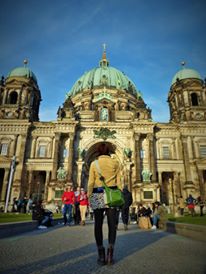
This May, eighteen University of Montana students, including myself, packed up our notepads, recording equipment, and varying degrees of altruistic aspirations and took off for the European continent. We had little in common except for our decision to participate in a faculty-led, journalism-school expedition with the stated goal of “chasing the refugee story all the way to Berlin.” Most group members were journalism students; several, like me, came from a mishmash of related majors from which we could manufacture some vague connection to a reporting trip in Germany.

The differences between the students in the group were about as pronounced as those between our two intrepid leaders: the NPR reporter turned university dean with a voice like a prohibition-era speakeasy doorman, and the formerly punk-rocking Berliner with the blustery demeanor and attire of a threatening (yet motherly) cumulonimbus. After arriving in the once divided, symbolic epicenter of the Cold War tensions, we were joined by a Montana cowpoke turned Fulbright photographer and four translators, all of whom were recent arrivals from various war-torn regions of Afghanistan and Syria.

We were a passionate, if eclectic, group of journalists, who looked somewhat lost while traipsing through Europe’s second largest metropolis. Most of had some apprehension when confronted with the thought of sharing each waking moment for the duration of the project with group members in the cramped, if luxurious, living quarters of the Cat’s Pajamas Hostel. That was before we visited the Emergency Refugee Shelter in Neuköln.

There, hundreds of recently arrived refugees share extremely crowded quarters with complete strangers in a converted factory building. In a place where each person’s tiny living space is separated from the countless others by acoustically unforgiving blankets, privacy is essentially nonexistent and tensions run high. Although the Neuköln shelter was intended as temporary relief housing, the beaurocratic hurdles of obtaining residency status and the German government’s stagnancy in processing asylum applications means that many refugees have been living in these challenging conditions for over a year.

Unlike our “eclectic” group of “intrepid” journalists, refugees living in the Neuköln shelter come from completely differing cultural, linguistic, and socioeconomic backgrounds. Most are confronting the unspeakable traumas associated with fleeing their war-ravaged homelands, witnessing the deaths of loved ones and traveling for thousands of miles through politically unpredictable, and sometimes hostile foreign countries.

Suddenly our own apprehensions seemed trivial, our stresses insignificant, the publication of these people’s stories more important than ever. With the residents of the Neuköln shelter in mind, the group began research on our news stories and embarked on a relatively conflict-free three weeks communal living in Germany’s capital.

Buenos Aires, Argentina

IMG_2417.JPG

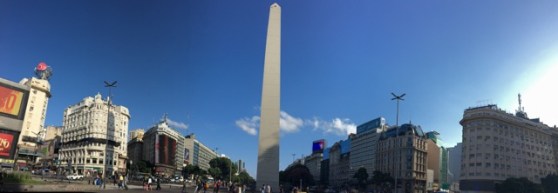
After a month in Patagonia, our UM group headed back to the big city: Buenos Aires. As someone who has never lived in a city of more than a few hundred thousand people, moving to Buenos Aires for two months was a daunting change, especially considering we would be living with a family who spoke little to no English. Luckily, my roommate and I were placed in a house with a kind and inviting house mom, Cecilia, and her two daughters, Clari (19) and Maria (17). While the older sister insisted we go out with her almost every evening with her to see everything that Buenos Aires nightlife has to offer, Maria was more of a homebody who taught us to cook her favorite Argentine dishes and helped us with our homework for the University of Belgrano. They created a perfect mix of activities and down time, and both were incredibly concerned with helping us have the best time in their city.

At the University of Belgrano, we took culture, art, and literature classes from professors who spoke almost no English. While at first this seemed like a negative aspect, it turned out to be one of the best experiences we could have had! I think everyone in the group impressed themselves by learning to take notes and follow along in hour and half classes which were entirely in Spanish! While living among millions of people first seemed daunting, my confidence was boosted through the roof, and I feel more strongly than ever that I could travel to just about any country and learn my way around, with or without language barriers.

Living in the city does have its downsides. After eight weeks constantly surrounded by people rushing to their next location, I realized that I probably am not built to live in such a populated area, but I feel so lucky to have had the chance to experience life in Buenos Aires. We saw some of our favorite bands, watched impressive tango dancers, ate the best food I’ve ever had, and visited museums with art by Frida Kahlo and Antonio Berni. I wouldn’t trade my experience for anything, but I learned a lot about myself and my likes and dislikes and preferences for a good quality of life. I missed the mountains, the small-town feel, and bike-friendly city. With that knowledge about what works for me and work doesn’t, I think I will be able to choose my next move/job more wisely because I’ve had these experiences.