Implementation of Prescribed Fire in Fire-Prone Ecosystems of the Southeastern United States

Hello! My name is Koson Verkler, and I am a forestry major entering my junior year at the University of Montana. In addition to my main course of study, I am also a student in the Franke Global Leadership Initiative, where my global theme is Resources and Sustainability. The Beyond the Classroom Experience that I took part in this May was held at the Moody Forest Preserve outside of the small town of Baxley, Georgia. During my 10-day trip, I was part of a group made up of several UM students and faculty that helped land managers from The Nature Conservancy (TNC) perform several large-scale prescribed burn operations. This experience was not only very valuable in terms of improving my education and professional skillset, but it also aligned perfectly with my global challenge of spreading awareness of the benefits of prescribed fire.
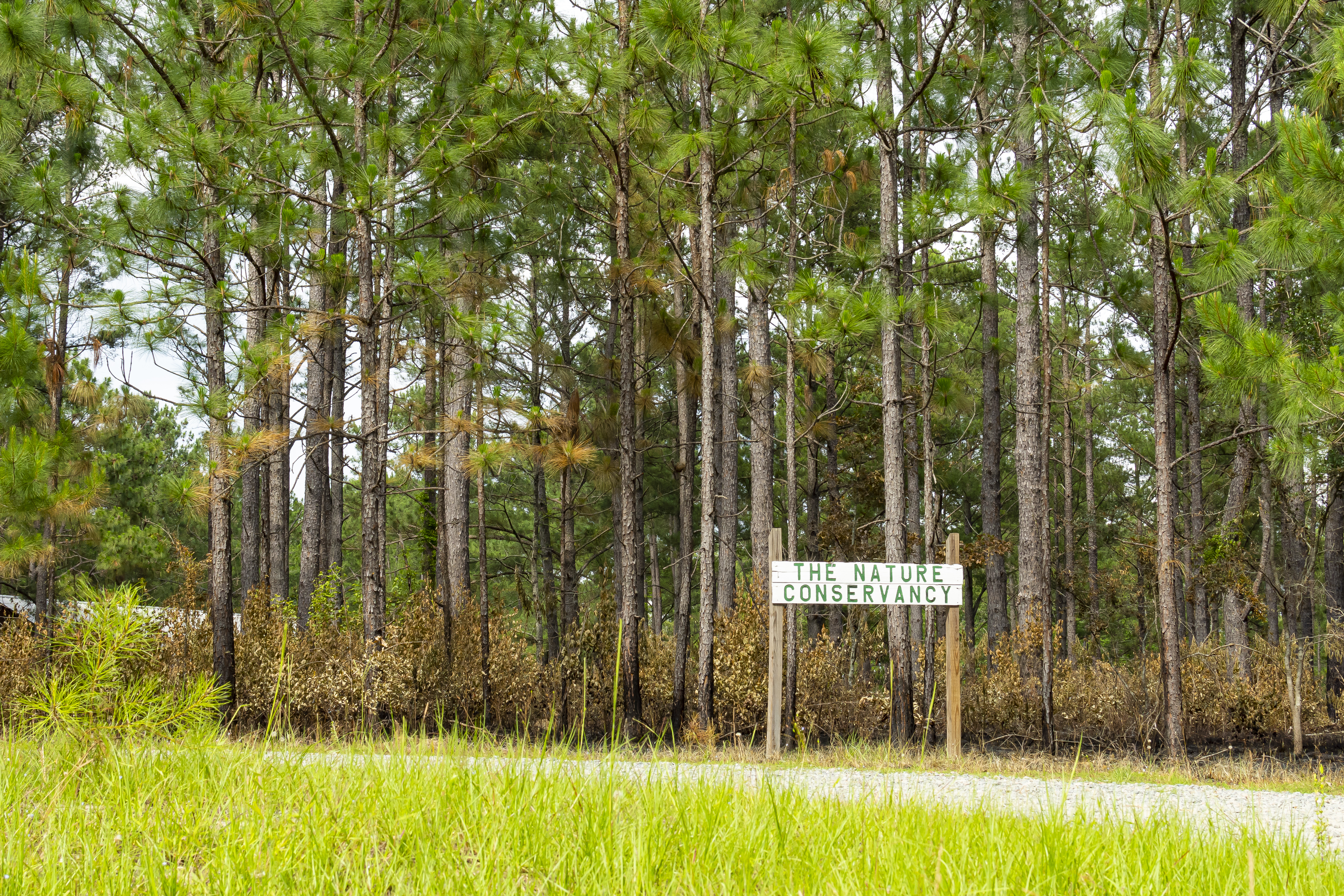
Throughout my time in Georgia, I learned about the major role that natural and prescribed fires play in southern forest ecosystems, not only for the benefit of natural resources but also for the habitats of wildlife. Species that have experienced a dramatic decrease in their population such as the longleaf pine (Pinus palustris), gopher tortoise (Gopherus polyphemus), and the red-cockaded woodpecker (Leuconotopicus borealis) all benefit greatly from a consistent fire return interval. When these keystone species suffer due to a lack of fire and resulting overstocking of the forest understory, the rest of the ecosystem begins to falter, but when these species thrive, their ecosystems do as well.

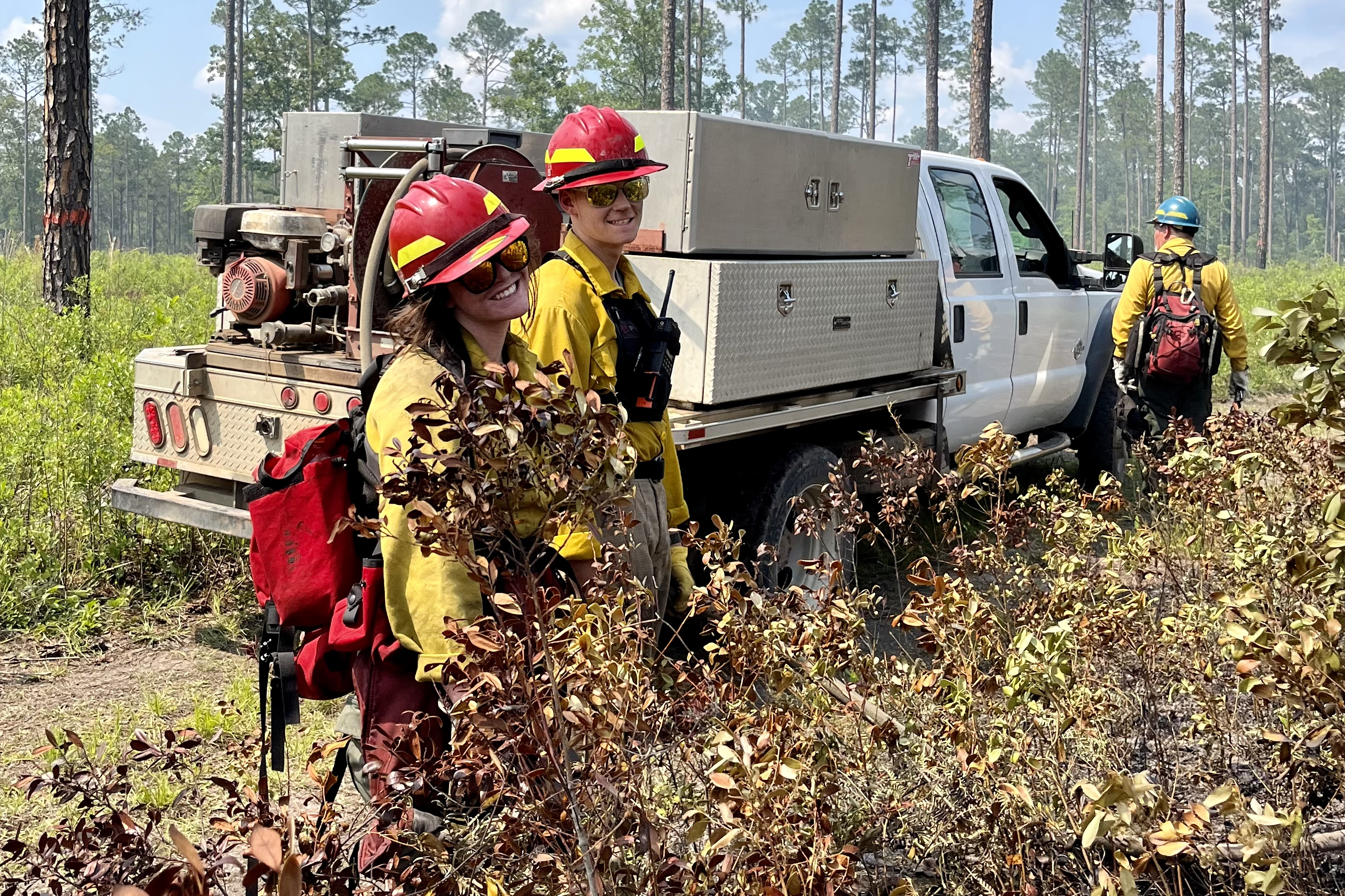
In addition to the educational benefits provided by this program, another goal is to get students and young firefighters more fire line leadership and operational experience. Due to our small crew size and the number of burns we performed, there were ample opportunities to focus on different aspects of prescribed fire, from acting as a squad boss and division, to lighting the fire with drip torches, and even working on an engine or ATV to ensure the fire stays within its designated perimeters. Besides the TNC land managers, we also worked with a crew of firefighters from the Georgia Department of Natural Resources and students from the Abraham Baldwin Agricultural College who were participating in a similar field experience program.

In all, our crew helped burn five separate units totaling roughly 575 acres of land across two TNC-managed parcels, the Moody Forest and Broxton Rocks preserves.

While all the burns were successful and a blast to be a part of, the two that stood out to me most were the 227-acre Unit 3 and the 29-acre Unit 10 North burns, both of which were held at the Moody Forest Preserve.

The Unit 3 burn is notable because it was the first time I had ever acted as a squad boss (someone who is in direct command of a group of firefighters on an incident). While I had four of my crew members working under me, we all worked together and executed our plans perfectly to complete our assigned tasks. Not only did I feel supported by both my squad and the burn boss, but I was proud that my first day “in charge” of a small group of personnel on a fire had gone smoothly.
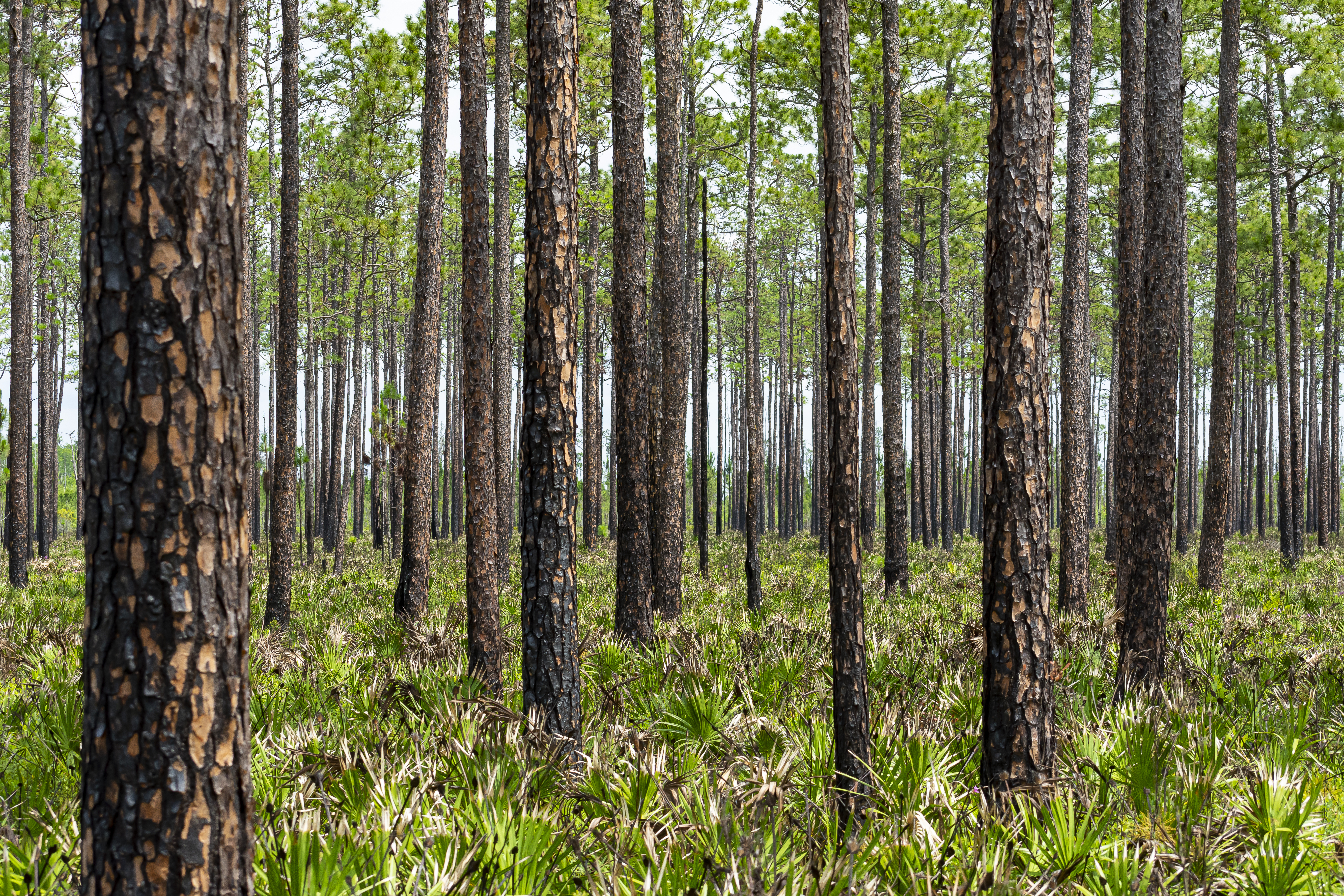
The reasons that the Unit 10 North burn stands out to me are because of its complexity and excitement. Even though the unit was less than 30 acres, we were burning around the Moody Forest headquarters buildings (the buildings we were stationed in during the trip) which almost made it feel like we were fighting a real wildfire with structures threatened. In addition to this, several TNC Georgia board members and the Executive Director, Monica Thornton, were on site learning about the burn and prescribed fire in general. I was impressed to see the leader of Georgia’s branch of the TNC getting involved with the boots-on-the-ground side of land management and it made me happy that prescribed fire is being showcased to more decision-makers and executives in large organizations that have a very far-reaching influence. Burns like this one should be used to inform the public about the necessity of having fire in an ecosystem that relies on it and I was happy to be a part of one in a location that supports the practice as much as Georgia does.

By using many of the techniques that I learned in Georgia, I am looking forward to lending my skills on more successful prescribed burns here in Western Montana. As a UM student, I am extremely lucky to have access to the Lubrecht Experimental Forest outside of Greenough, where we try to burn 25 to 100 acres every semester. The one downside of burning at Lubrecht is that it’s often hidden from the public view. While having inexperienced people on every burn isn’t feasible or safe, I think that having one or two showcase burns every year could be helpful in changing minds and showing people what proper forest management looks like.

People focus on the dangers of fire and complain about the impacts of smoke, and while I understand these fears and grievances, the damage, danger, and inconvenience that large wildfires cause every year is much worse than the low-impact and well-managed prescribed burns that are used to save our incredible forest ecosystems. By focusing and investing in prescribed fire, we can change from a reactionary to a proactive management mindset, which will result in improvements for the environment, safer and healthier conditions in our forests, and less of a burden on the taxpayer and their wallet.

While I could go on and on about the benefits provided by prescribed burning, I would stray far off topic for this simple blog post. I hope you have enjoyed learning about my trip to Georgia, a little bit about how prescribed fire is implemented, and the steps we are taking to combat the destructive wildfires that have become a common sight across the Western United States during the summer months.

Thank you for reading and see you out on the line!

Koson Verkler, UM Franke GLI Student & Fire Club President

Creative Inspiration, Confidence, and the Importance of Nature in Concepción, Chile

My name is Ashley Wilson, and I recently completed a year-long study abroad experience in Concepción, Chile at the Universidad de Concepción. I am currently studying Art, Spanish, and Elementary Education; and while in Concepción, I mainly focused on finalizing my Bachelor of Arts degree along with fine-tuning my Spanish speaking skills.

As someone who was born and raised in a town with a population of a mere 200 people, and then experienced life in Missoula, Montana, I believe that it is safe to say that the initial adjustment to life in a larger city was challenging. Soon after my arrival, I knew that I had taken my previous accessibility to the natural world for granted. Fortunately, it was not long before I began discovering the abundance of nature parks, quaint beach towns, and breathtaking scenery that was only about a 30-minute bus ride away from Concepción’s city center. My desire to learn and experience more of the natural world in central Chile pushed me out of my comfort zone; I had to make connections, be sociable, and ask questions, things that often intimate me, given my shy personality. Ultimately, however, this contributed majorly to my growth as an individual and my self-esteem.

Naturally, as a creative person, I began to feel inspired to create art that represented the beautiful nature and the reality that I was experiencing at the time. Although some of the art classes that I took in Concepción were challenging due to language barriers and inevitable misunderstandings, I felt as if I had finally stepped into my own as an artist while abroad. After all, I was constantly exposed to new elements, opportunities, and ways of thinking. I also had to learn how to improvise, manage my time more effectively, and trust in myself and my capabilities while in such an unfamiliar environment.

This experience ultimately humbled me and made me realize just how vast and abundant the world truly is. I did not realize I was living in such a sheltered bubble until I studied abroad. Although I still have much more to learn and give, I now have a clearer vision of how I want to lead, teach and show up for myself and those around me in the future.

National Student Exchange Semester at the University of Georgia Out of Classroom Experience

Hello and welcome to reading and learning about the many incredible adventures that UM students have the opportunity to experience through the Franke GLI program. My name is Molly Keller, and I just finished my semester studying at the University of Georgia in Athens, Georgia, where I participated in the National Student Exchange Program to continue my studies in Management Information Systems and Marketing through the Terry College of Business! My global theme is technology and society which I was able to expand my knowledge on through my information systems courses and apply through group projects in my marketing classes. 
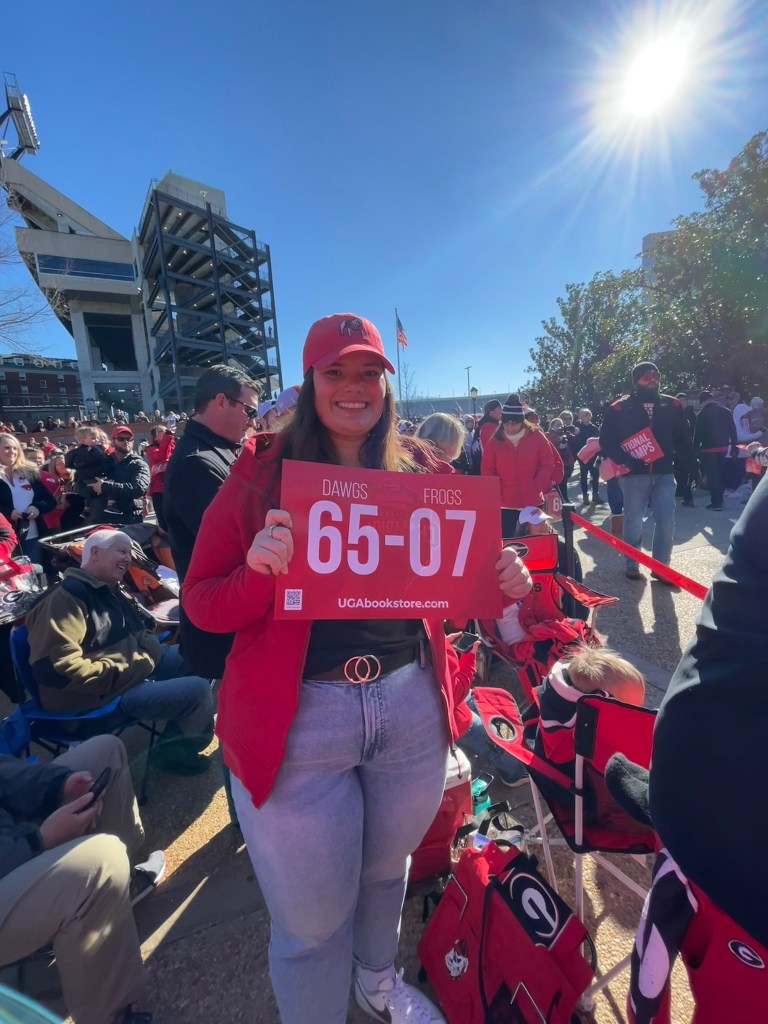
National Championship Celebration

Being in the South, it was a unique cultural change to be surrounded by the different cultures that were shared and respected in their own ways on campus and in the community. This experience helped me to see the differences in how people engage with different cultures in the South in comparison to the exposure to other cultures growing up in a small farming community in Washington state. Through my beyond-the-classroom experience, I was able to gain a better understanding of different perspectives within the information systems realm and how each of us is hoping to make impactful changes within many different communities and cultures through our work within technology for the betterment of society. I was exposed to a lot of new passions that students and faculty are working on to make these changes, such as Automation, Energy consumption, renewables, and many others. 

One of the most influential reasons for choosing to study at UGA was their athletics programs along with their high-ranking college of business, combining two of my favorite things about UM and getting to experience them at a much larger university. On my first day of class in January, UGA was playing in the College Football National Championship in Los Angelos. That evening was spent celebrating both new friendships and getting to be a Georgia Bulldog winning back-to-back national championships and will be one of my favorite memories. During my program, I was able to deepen my interest as an intern for the UGA Athletics Marketing Department in the Fan Engagement department helping to implement and increase fan engagement during sporting events both with students and general fans. One of my biggest passions that allowed me to learn better practices is that I can implement what I’ve learned during my internship with Grizzly Athletics. 

A new place surrounded by countless new opportunities allowed for a lot of growth in my leadership skills through my academic courses, clubs, and outside involvement in Athens. I was able to work on group projects for various US companies, as well as projects learning about different technology that is being implemented in making more sustainable energy. 

Multicultural Marketing Final Project analyzing the effects of Marketing on Interracial couples.

This experience was truly one I will never take for granted! From the friendships made, the opportunities created, and the academic learning I was able to incur, I will forever be so thankful to the GLI program for all the growth and support in making this experience possible!

Tahoe City Public Utility District Beyond the Classroom Experience

Hello Everyone!

My name is Roger Moore. I am a senior at the University of Montana studying Parks Tourism Recreation Management, with a minor in Communication Studies. I performed my Beyond the Classroom Experience and Internship for Tahoe City Public Utility District in Tahoe City, California.

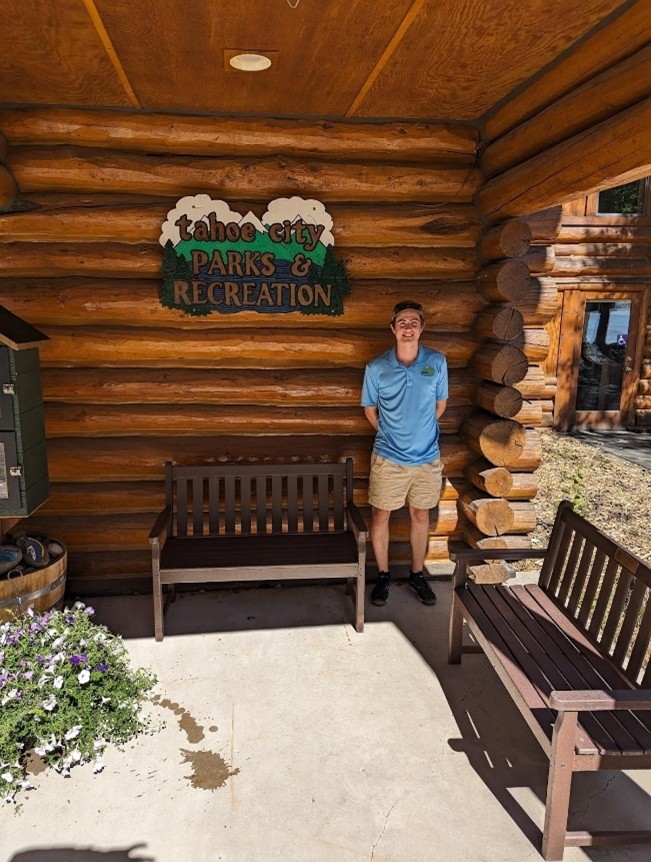
Me in front of 401 West Lake Main Recreation Office.

My Global Theme is Resources and Sustainability, and my Global Challenge was how to effectively educate kids and adults about the importance of the environment in Lake Tahoe? Both my Global Theme and Global Challenge included learning how to educate people on the importance of Tahoe’s beautiful environment and what I can do to better understand the community.

In May, I arrived in Tahoe City and was amazed by the beauty and culture I discovered. Lake Tahoe’s water is the bluest it has ever been in 100 years! I met my bosses and co-workers who were all genuine people teaching me so much about their lives and what Tahoe’s environment means to them. I was excited to be in an environment that was not just task-focused but focused on people enjoying their jobs/lives.

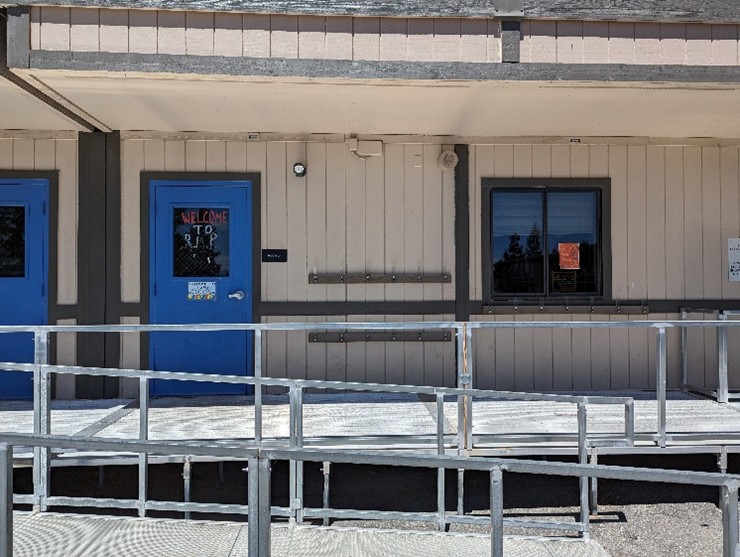
As an intern cohort we were given an open-ended goal of educating children, which began when I collaborated directly with my colleagues to develop a Recreation Afterschool Program, (RAP) and planning the summer’s Camp Skylandia, a day camp for children 6-11.

Tahoe Lake Elementary School, where the RAP program took place.

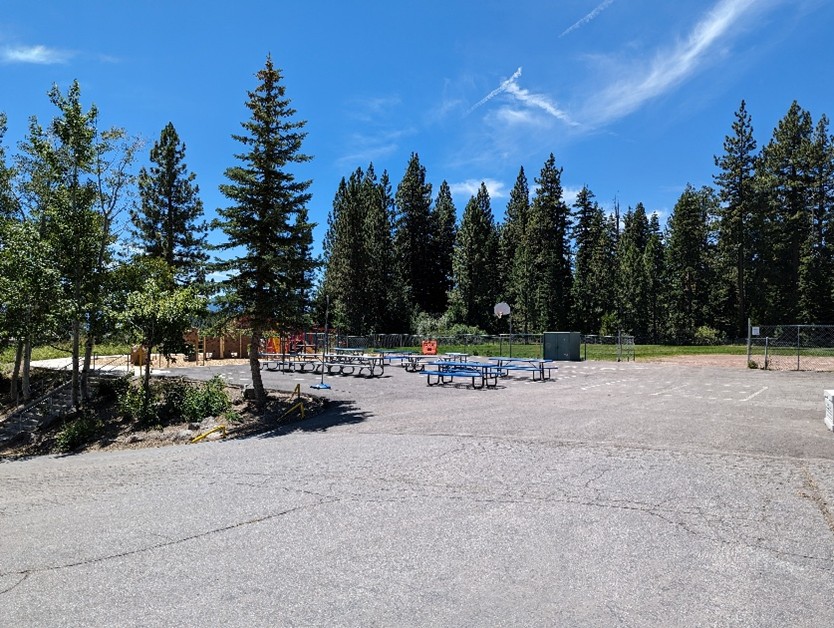
Crafts, homework, movies, and other activities occurred here. The following photos are of the schoolyard where outside games and free time for the kids happened.

In this Recreation Afterschool Program, I supervised the children and taught them how to make outdoor crafts. I led them through outdoor games in the schoolyard of Tahoe City’s elementary school. I mentored them when they faced difficulties from other students in the after-school program and learned how to interact with them effectively.

As the Recreation Afterschool Program was in its final weeks my co-workers and I planned for the rest of the summer for Camp Skylandia, a day camp. We planned games, crafts, and activities for the summer. I was happy to participate in this planning session because it included everyone’s input which made for some great plans for the summer.

Camp Skylandia log circle where campers gathered.

Camp Skylandia for campfire, activity choice, and field trips for each week.

Meeks Bay Field Trip with campers playing volleyball.

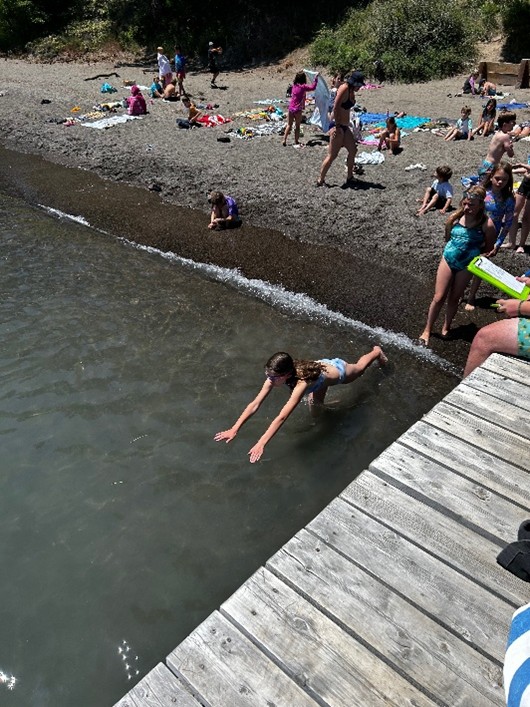
Beach time.

Eventually, the afterschool program came to an end in the second week of my experience as summer was just beginning. During this time, I got to help plan an end of the year party for the kids with awards that were presented to them with their parents and fellow afterschool students. The awards we created were for what we thought the kids best represented in the program. The party included a nacho bar and ice cream sandwiches for all the kids. Overall, this party was quite successful and made everyone happy.

Then the summer camp we planned for began. At Camp Skylandia I helped assist kids from first through fifth grade. I helped lead them through crafts, games, and campfire songs that were associated with each week’s theme. I was glad to learn so much about working with kids while at Camp Skylandia

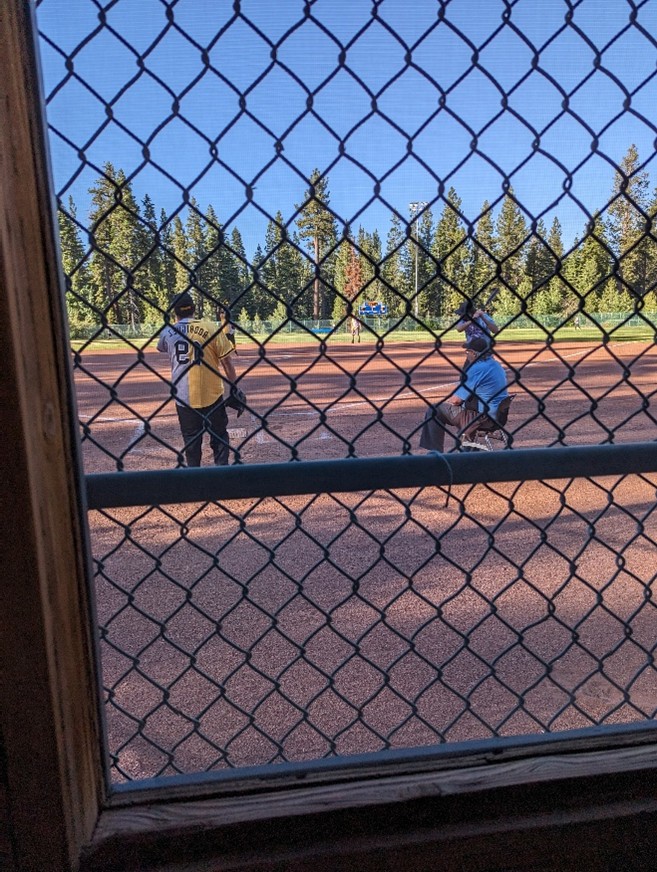
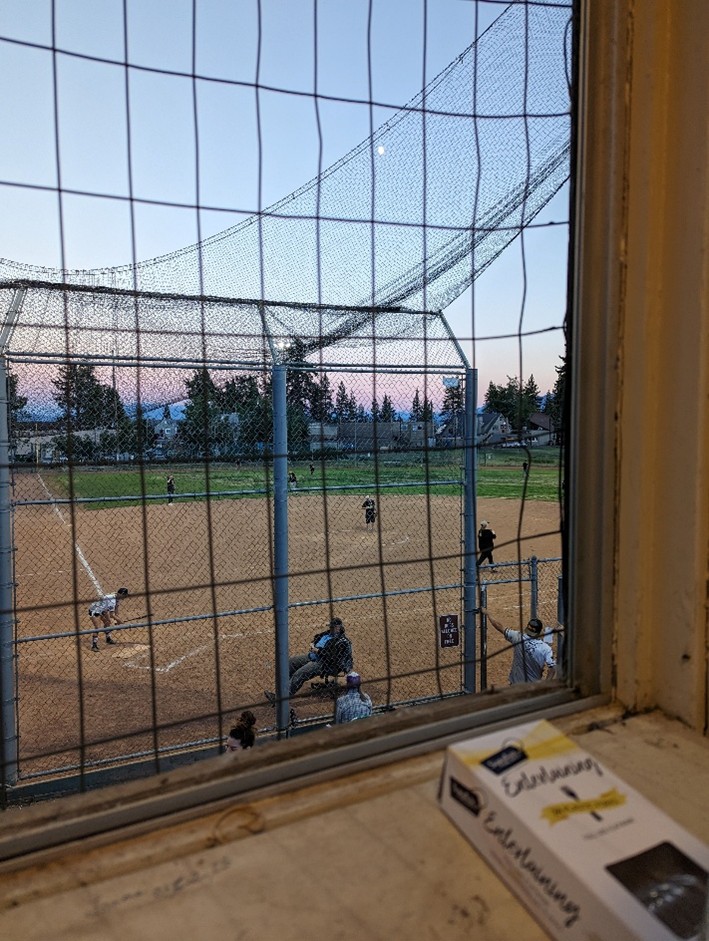
In the evenings I learned even more about the Tahoe City community. During the softball league I learned how to keep score for adult softball leagues of various levels, ranging from Men’s League to D1 CO-ED, to D2 CO-ED and finally D3 CO-ED. This helped me reach out to locals and learn about why they enjoyed softball so much. I even met an alumni of the University of Montana, one of which was an umpire.

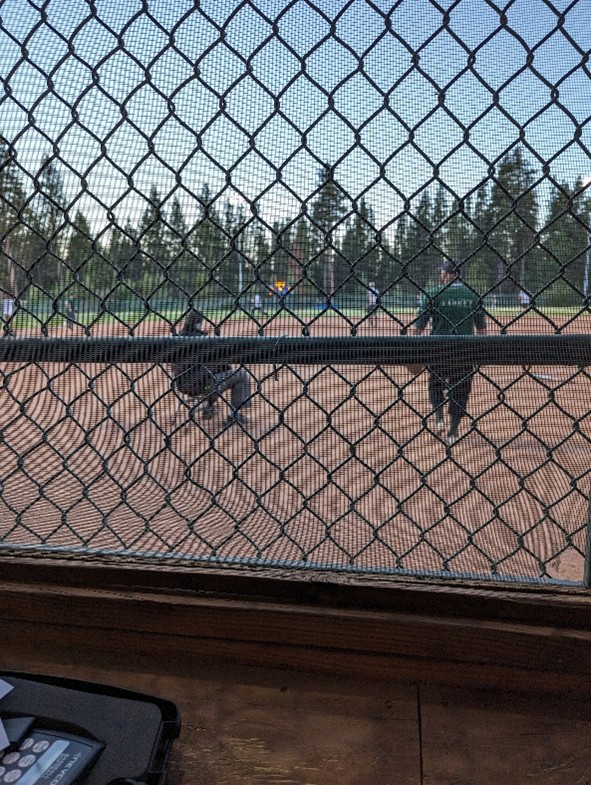
Scorekeeping Men’s League Softball.

Scorekeeping Men’s League Softball.

Scorekeeping D3 Co-Ed Softball.

Towards the end of my internship experience, I expanded my work horizon into learning about utility management. This work taught me skills of how to manage general maintenance that I may need to do in the future as an adult living fully on my own outside of the academic sphere.

In correlation with Camp Skylandia and Utilities management I also, I was able to help assist in sports camp. This involved playing and refereeing games for children. We played sports such as volleyball, soccer, football, wiffle ball, ultimate frisbee, floor hockey, and basketball.

Rideout Community Center where I assisted with sports camp.

As the end of my experience, I was lucky enough to talk and collaborate with several administrators across the Tahoe City Public Utility District. That allowed leadership skills and how to build a better community in Tahoe City.

For my personal reflection, living and working in Tahoe City, I came to better understand my leadership skills. I realized that personally I come at things from a more assertive leadership mentality to get things done. But I remain a deeply emotional person as well. However, through my experience and reflection I realized that taking a step back in life occasionally is just fine. Nothing must be instantaneous but can come instead in a timely manner.

Also, I realized after going through this experience that building a community and better life for everyone is a win-win solution. Taking a step back allows you to deeply involve more than yourself and taking care of what you think is right. It involves thinking about steps to solving a problem. These steps form trust, reliability, and good relationships across a community. Community fails when people cannot seek out diverse opinions in the community and do not feel heard.

That is why Tahoe City may be changing but it is not too late to make it a place for everyone! As there is something here for everyone that I think cannot be seen without this experience.

Some questions that have been raised from my experience are as follows:

How can I better support myself and others in life?

What does going your way look like in the face of helping others?

How can I listen first and then act in a way that is helpful to all?

What steps can I take to better understand more people that I encounter in life?

Marine Conservation in Greece

Hello! My name is Ashlin Slanger, I am going to be a senior at the University of Montana this year. I study molecular biology and biochemistry, and my GLI theme is global and public health. This summer, I took an internship studying marine conservation in Greece. I stayed on several islands during my time there in an archipelagos called Dodecanese. The main locations were in Samos, where I lived the first half of the summer,  and Lipsi, where I moved for the final half of summer. My goal for this experience was to learn more about how the state of the oceans affect the health and wellness of coastal populations. I knew the wellbeing of our oceans was poor, but being from a landlocked state I never truly had to face the issue of pollutants in the sea.

My time in Greece has forever changed the way I will live my life. I have learned so much about plastics in the ocean. The organization I worked for, Archipelagos Institute for Marine Conservation, collects data on the dissections of dead sea life washed ashore. For the past three years, 100% of the sea turtles had plastic in their stomachs. On top of this, microplastics are found in most fish, making their way into human bodies as well. In the Mediterranean Sea, 730 tonnes of plastic enters the waters each day. That is the equivalent of 100 elephants in plastic. In Samos, our team would do beach cleanups every day with the hope to minimize some of the plastics entering the ocean and to collect data on the types of plastic circulating the sea. Single use plastics are the driver of such immense pollution, and must be regulated. Even if a small effort is made to minimize plastic use it could greatly benefit ocean life, and in turn, our own lives. 

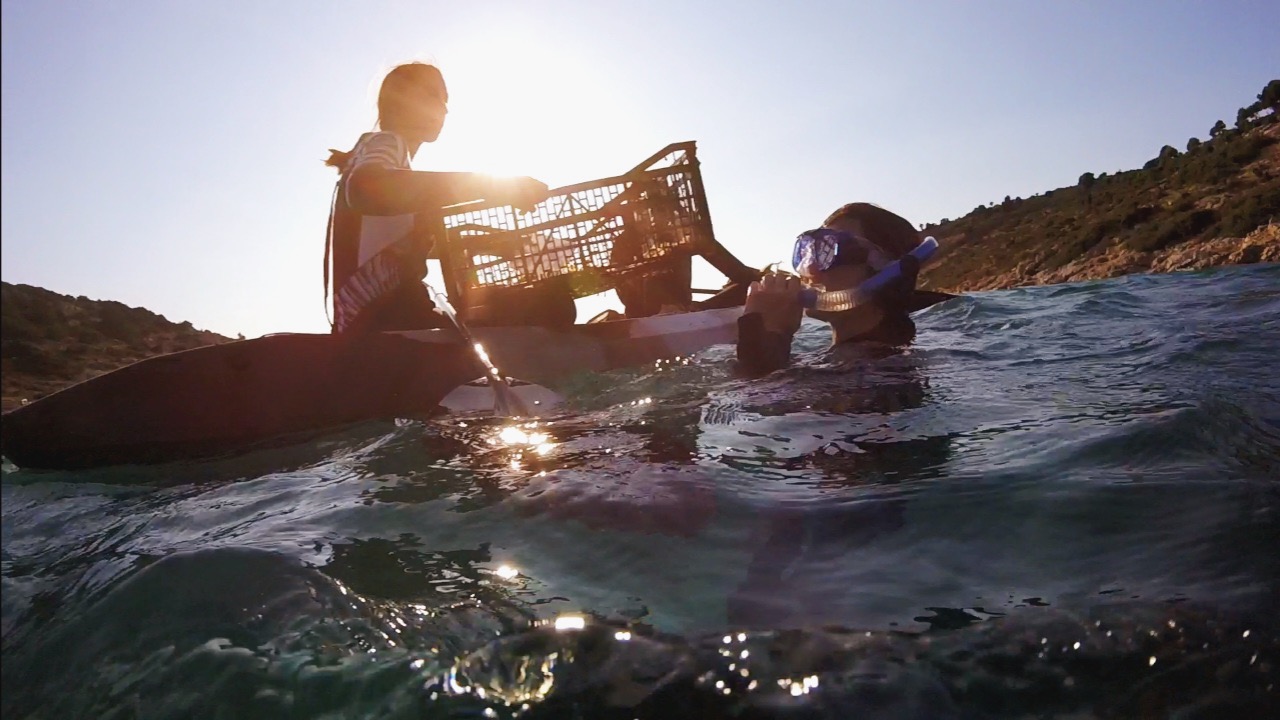
On top of the plastic collection I worked on several other projects this summer. I studied species of the Mediterranean Sea and learned how to properly identify them in the water. We would write down the species we saw with underwater paper and count how many of each to quantify them. We keep data on the abundance of species and also on invasive/alien species. I also helped with efforts to replant seagrass meadows, which have been shrinking due to climate change. This is an extremely arduous process because each seed or fragment must be planted by hand into hand-sewn biodegradable burlap bags. We collect seeds and uprooted fragments during our surveys as well as particular sediment from the ocean floor to use for planting. In total, I have helped plant over 1,000 individual seagrass seeds and fragments!

I have learned a lot about how the environment affects human populations, especially living in Greece during the longest heat wave ever recorded in the country’s history. Fires erupted in surrounding islands, burning many homes and threatening the lives of thousands. I was afraid my time here would be cut short, especially when a small fire popped up on Samos. Fortunately, they were able to put it out quickly and we didn’t have another after that! The shops on every island set up donation bins for families who lost homes in the fires, and interns would give what we could. Even after the fires and the very real threat of ocean plastic to humans and animals alike, so many people fail to practice greener alternatives which may mitigate these issues. I have taken so much from this amazing experience, and I feel fully transformed as a person having completed this internship.

Conservation Across Boundaries

This summer I was fortunate enough to be able to participate in a Wild Rockies Field Institute course titled Conservation Across Boundaries. I am a Sustainability, Science, and Practices major and this course seemed to fit in perfectly with what I am already extremely passionate about and connected to by my global theme of Resources and Sustainability. The course was split into four sections. The first was an 8 day backpacking trip in the Bob Marshall. I have a Wilderness Studies minor and was able to contribute to a lot of the conversations had in this space as we discussed the terminology behind “Wilderness” and what implications that verbiage has.

After this section of the course we spent time in the front country and learned about life on a reservation and different environmental movements occurring in these spaces. We met with tribal elders and discussed the importance of Indigenous place names and what the Blackfeet Confederacy is doing to include more of those in the public sphere. We also had the opportunity to work on a trails crew for a few days, with the Great Divide Trail Association. Here we learned more about how trails are created and the importance of proper construction and maintenance.

In the third section of our course the focus was on a specific case study that occurred in British Columbia. We backpacked the Jumbo Loop Pass and learned all about the proposed glacial ski resort in that area. The Ktunaxa nation ancestrally occupied these lands and the specific piece of land the ski resort would have been put on was the Q’atmuk land, or the sacred grizzly land. A ski resort here would have had a major environmental and cultural effect that sparked a small grassroots movement called “Keep Jumbo Wild”. We met with people who were a part of the organization and discovered how effective this small conglomerate of passionate people were at keep the ski resort off the land.

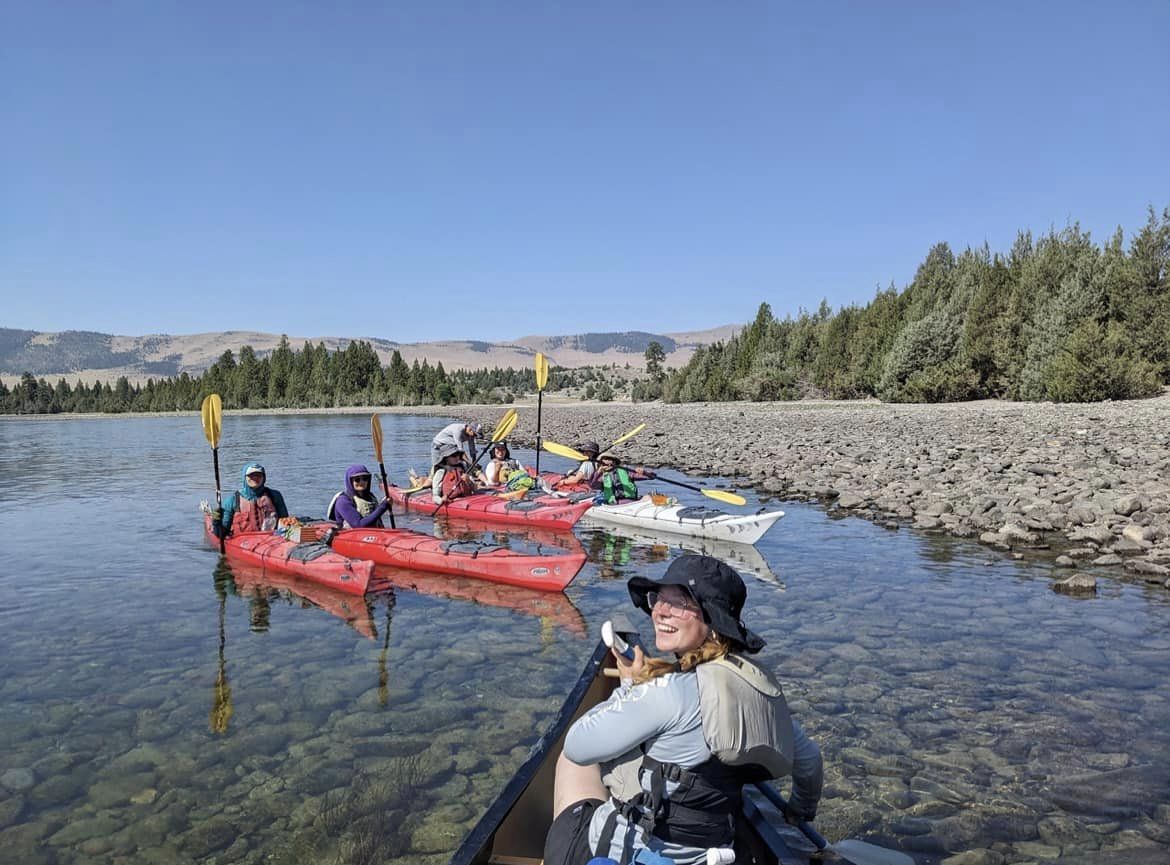
Lastly, we spent the final leg of our six week trip kayaking down the Flathead River. We learned a lot about the Confederated Salish and Kootenai Tribes and the work they did to reacquire the National Bison Range so the land is once again managed by the tribes and not the federal government. This is an example of the positive effects of the Land Back movement and we were able to visit the range and learn first hand how the returning of the bison to the land is vital to our environment.

This experience was one I will never forget. The knowledge I have attained from learning experientially and the people I met along the way are something I will always hold dear to me and will continue to reference in the rest of my education and career to follow.

Studying the Influence of the International Legal System on Human Rights

              My name is John Bazant and I am a senior at the University of Montana majoring in Anthropology and Political Science with a concentration in International Relations. During my time with Franke Global Leadership Initiative I followed the inequality and human rights global theme, this in turn allowed me to study in Morocco at Al Akhawayn University. In addition to all of the usual characteristics that one would likely experience during a study abroad program, I was also able learn and experience the relevance and importance of International Law within human rights and inequality.

One program that I was fortunate enough to take part in looked at the history and role the international legal system through its conception into the modern day.

During this program we further examined the types of hierarchies that can be created throughout such international legal systems and the inequality that can take shape. Because of an unequal concentration of power between states this hierarchy is then incentivized to further perpetuate an imbalance. All of this running in direct contrast to the major benefits that the international legal system accomplished.

One case study that was used for such discussions was Morocco. The geographical placement and history of Morocco illuminates the country at the intersection of many different influences that have in turn interacted in such a way that show the stark differences Idyllic conception and brutal reality that faces the international legal system.

Throughout this program thanks the to the GLI organization and my professors at AUI my overall understanding of international law and the effect that it can have on the human rights and inequality has vastly expanded.  

Wilderness and Civilization Program

My passion for the earth has been a driving force for choosing my college, area of study, and goals post-graduation. When I heard about the Wilderness and Civilization program, I was so excited at the possibility of being able to spend a semester combining my passions with being outdoors, with education and my GLI theme of inequality and human rights. I wanted to explore my own relationship with nature and drive into how to make it accessible to everyone. The outdoors brings people together in way that is hard to match. Combining social work, journalism and my passion for the environment throughout this program has been an amazing opportunity.

Throughout this program I had went on multiple camping trips, filled with art, hikes, conversations and learning. The classroom learning was extremely eye opening in partnership with these adventures. Throughout this semester I dove into my personal ethics surrounding nature. Here is an excerpt from my writing on my code of ethics, “My definition of wilderness and personal ethics surrounding it is constantly evolving and has pushed me to reevaluate my relationship to the lands I take up space on. At the core of my personal ethics is decentering humans from being the main focus of the earth, broadening the scope of wilderness from only capital W wilderness to all forms of connection to the earth and acknowledging that pristine wilderness is an idea of colonialism and doesn’t not accurately represent American under the care of Indigenous peoples.” This exploration of my ethics directly related to my theme in GLI.

Lyon: Culture, Politics, Mice and City Bikes

Salut tout le monde! 

I was fortunate enough to spend fall semester in Lyon, making trips as well to places around France, the UK, Spain, Sweden and Switzerland. My GLI Global Theme is Culture and Politics, with my challenge being to assess the ways in which multilateralism can be channeled into environmental sustainability efforts. I felt privileged to be taking classes on pertinent topics such as fascism, international criminal law, comparative constitutional law and others, the perfect opportunity to explore culture and politics while away. The French are characteristic debaters, with the expressions “in fact”, “but”, “honestly” or “I find” at the start of every other sentence. I felt like I arrived during such a period of flux for the EU; with the war in Ukraine, the death of the Queen, a couple of new UK PMs, and elections around the EU resulting in the rising far-right favor (Sweden, Italy), and of course the World Cup hot off the press in my time in France, there was much to discuss. 

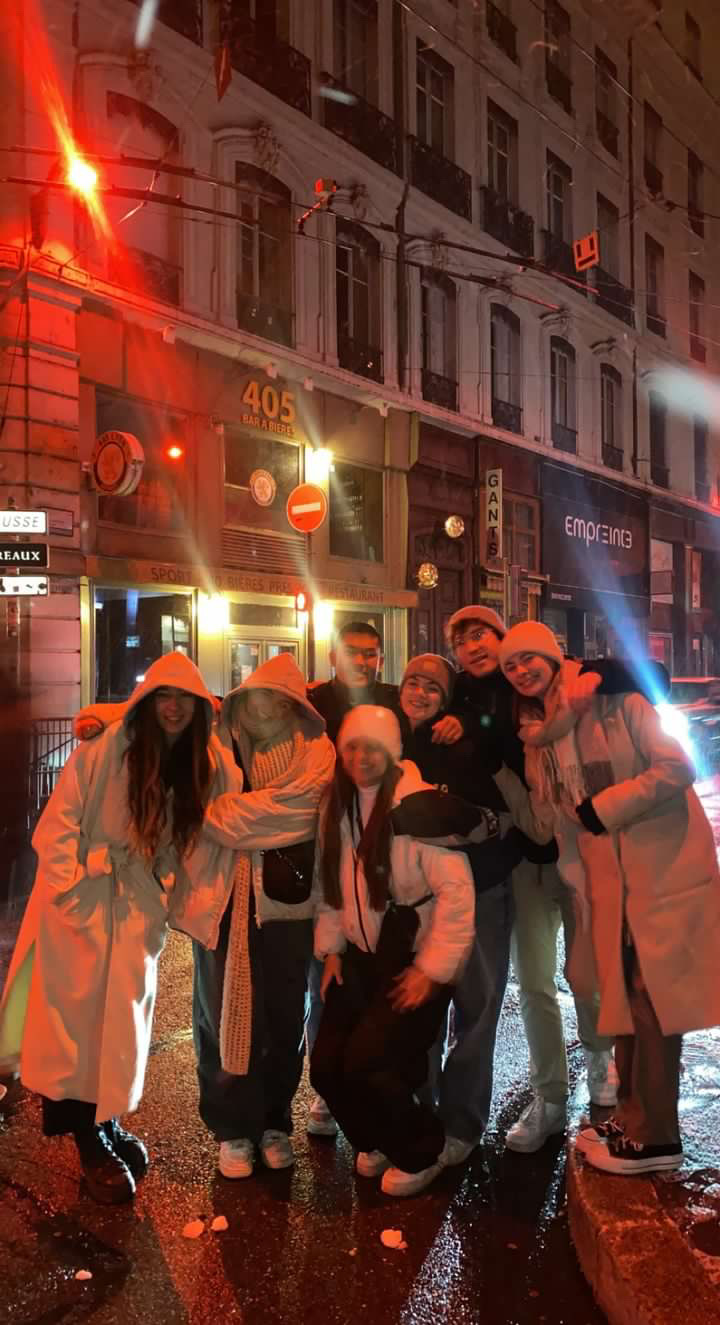
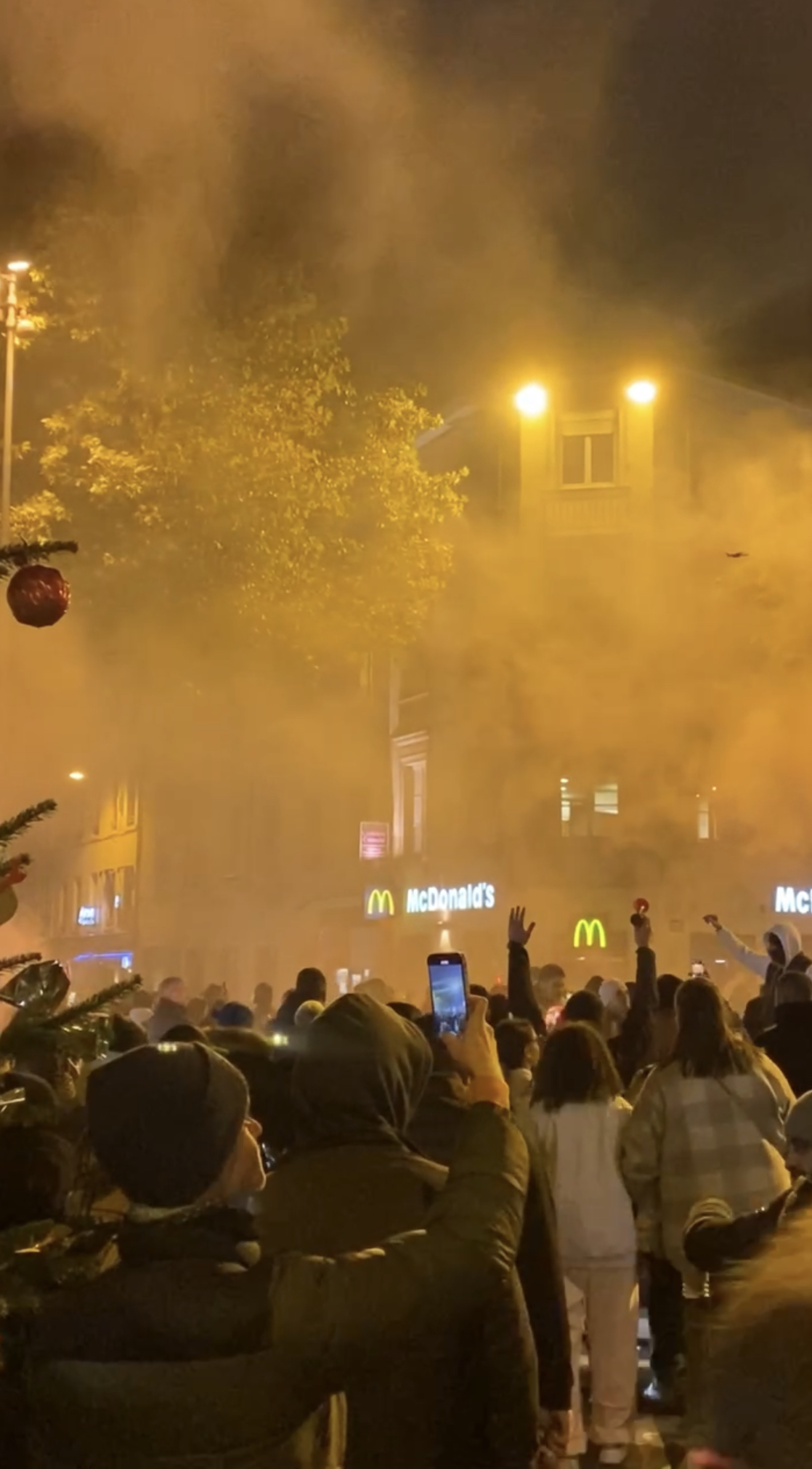
(Buzzing streets after Morocco made it to the semi-finals, widely celebrated in Lyon due to the prevalent Northern African population in France. Such a historic moment, so cool to witness!)

Despite the French being classic debaters, I didn’t find that much was open for discussion in class. A lot of what professors had to say about cultures other than their own seemed broad-brush-y or “cancellable” from my perspective, had the same thing been said by an American professor. I have a few friends who walked out of class one day (in classic French “spirit of resistance” fashion) in the absence of the space for discourse. They left to demonstrate that there are other points of view that might’ve had different and potentially more respectful or informed points to contribute.  I struggled with the fact that there wasn’t room to be Socratic about certain statements that were made. Still, the intriguing subject matter of most of my classes kept me engaged, and feeling fortunate for the opportunity to observe the delivery of such information from a different cultural standpoint or method. 

It was interesting to witness how much better-ingrained issues of sustainability are in daily life in France. The indisputability of climate change, or more specifically, the importance of sustainable practices in transport, food systems and more was refreshing, and spoke to the feasibility of models that could help the United States achieve greater levels of sustainability.  Most of the produce displays in grocery stores listed the product’s origins, with many markets carrying only produce within France, or even the region; a lot of the markets carried exclusively fruits and vegetables in season. You could certainly get your hands on more exotic items like kiwis or avocados, but the simple listing of this information by the producer increases a more sustainable ethic around consumption in France. Not all of the fruit is picture perfect, reducing the amount of food wasted. Public bikes and other modes of transit abound, relieving people of  reliance on cars to get from place to place. There were days each week where you might find the city lights dimmed, part of Emmanuel Macron’s new ‘energy sobriety’ program, which is commendable, given most (69%) of France’s energy grid is powered by nuclear in the first place. 

(My roommate Carlota and I on our way home, via city bike)

Life in France required far more self-advocacy than I was used to in my hometown of Missoula, where I can comfortably bumble through life with my hands tied behind my back and blindfolded. I had been warned of the bureaucratic throes of France, and expected to be challenged. Challenges presented themselves when I’d find mice in my hundreds-of-years- old-apartment, have to tell a French ER doc what happened with my simple language skills, or asking if a menu item contained gluten (everything in France contains gluten). Learning to articulate my needs, whether it be dietary, school-related, interpersonal, or professional in French was an added challenge- but one that made success doubly rewarding when things worked out. To be an effective leader, one that represents and protects others, I believe self-advocacy is a crucial first step which allows us to remain consistent with our beliefs and needs in the face of challenges. I’m grateful to have had the chance to hone this skill! 

Coming out of this experience and during, I’ve wondered  how to translate what I learned into my life at home and onward. I can’t constantly hijack conversations and talk about my study abroad experience, but I can do my best to replicate the moments, practices and experiences I had in France here at home. I hope to continue my language practice, experience and create more art, slow down every once in a while, walk more, consume thoughtfully, congregate and dissect social and political issues with my friends, maybe over a glass of wine.  I read a collection of essays by Umberto Eco for my fascism class in France- in light of the aforementioned rising prevalence of far-right political regimes in Europe and the U.S. alike right now, Eco argues that one of the best prophylaxis is facilitating the international student experience. While we, and other students abroad might think that parties, outings, dinners and what have you are not much deeper than plain fun, they are also cultivating a Europe and a world that will continue to embrace multiculturalism. Eco suspects that we will befriend, marry and remember people from abroad and the ways they’ve impressed upon us. Indeed, it will be impossible to see others and the world in the dimensions you might’ve seen them in previously. The people I spent every day with who started as strangers now fit comfortably in the role of old friends, whose gifts I’ll always carry with me. 

Min tur til Danmark

Hello! My name is Amelia Hawes, and I studied abroad in Aarhus, Denmark for fall 2022. My global theme was culture and politics. My global challenge was, how can criminal justice policy be used to benefit society?

I am interested in the American criminal justice system, and one of the reasons I chose to study in Denmark was that it is ranked as having one of the best, if not the best, criminal justice system in the world. The U.S. criminal justice system is discriminatory, corrupt, and ineffective, and I wanted to learn about the policy differences in a country with a globally acclaimed justice system.

During my time in Denmark, I learned about their criminal justice system, but I also learned about Danish history, culture, language, government, and more. I took a class on restorative justice, and my professor was a victim-offender mediator for the Danish police and a researcher on the South African truth and reconciliation process. Throughout the class, we learned about the relationship between restorative justice and punishment, how restorative justice is practiced in Denmark and other countries, and how to mediate conflicts using the restorative justice approach. It was an incredible privilege to learn from my professor, Christian (students in Denmark call professors by their first names), and gain hands-on experience practicing restorative justice. After taking this class I am more aware of the benefits and drawbacks of incorporating restorative justice into the formal criminal justice system, and I think it is a practice that the U.S. criminal justice system should incorporate.

Me and my Danish friends
A sunrise in downtown Aarhus

I had so many amazing experiences throughout this semester, but a few stand out in particular. I was present in Denmark during a general election, and I got to accompany my Danish friends to the town hall when they submitted their ballots. It was a bit surreal to witness this election because it was so different from presidential elections in the U.S. The candidates in the Danish election are all advertised in the same way, so every candidate had a poster in the same format as the others, but with a different color scheme for the party they belonged to. It was refreshing to see this type of egalitarian advertising, as opposed to the smear campaigns and expensive television and social media advertisements in U.S. elections. Denmark is a multi-party system, so there were many different candidates in the running. While there are heated political debates and tensions between different parties, Danish people tend to be private about their political beliefs and voting choices, and the social atmosphere around the election was very civil–a completely different experience than I am used to as an American.

I also got to celebrate Christmas with my Danish friends, and I cooked a traditional American Thanksgiving feast for them in November. On Christmas, Danes eat a big feast with boiled potatoes, duck, sugar browned potatoes, cabbage, brown gravy, pickles, and sometimes rye bread and fish. There were vegetarians at our Christmas dinner, so we cooked a vegetarian rendition of this traditional feast. Around the holidays Danes love to drink glogg, which is a sweet mulled wine with spices. After Christmas dinner, Danes eat rice pudding with cranberry sauce called risalamande. There is a whole almond hidden somewhere in the risalamande, and everyone competes to find the almond. I was the one to find the almond, which was a fun surprise. Then, after dinner everyone sings songs and dances around the Christmas tree. We didn’t have a Christmas tree, but we all held hands and ran around our apartment complex while we sang a traditional Christmas song. It was a cozy evening that perfectly embodied the Danish idea of hygge, which basically means the practice of coziness and togetherness during the dark winter months.

Me after finding the almond in the risalamande

This experience changed the way I view my own culture as an American. It made me realize how absurd it is that the U.S. has barely any public transportation, because in Denmark I could use a bus, a tram, a train, or a bike to get anywhere inside Denmark or even around Europe. Most Danes don’t own cars, and many don’t even have driver’s licenses. It was such a luxury to have a well-developed network of public transportation at my disposal. In Denmark healthcare is also free, as is university tuition; in fact, college students are paid by the government to go to school. They have to pay this money back over the course of their lifetime through high tax rates, but it means that no one has medical or student loan debt, which drastically improves their quality of life compared to Americans. Danish people find it absurd that getting sick can bankrupt someone, but in the U.S. that is a very real fear we have to live with, and I think that is deeply wrong.

I am so grateful for the memories I made in Denmark, the friends I met, and the perspective I gained on my own culture and identity. I hope to visit Denmark again someday, and I highly recommend it to anyone interested in studying in Europe. The people are kind, there are so many fun things to do, and Danish culture and society are rich and interesting.

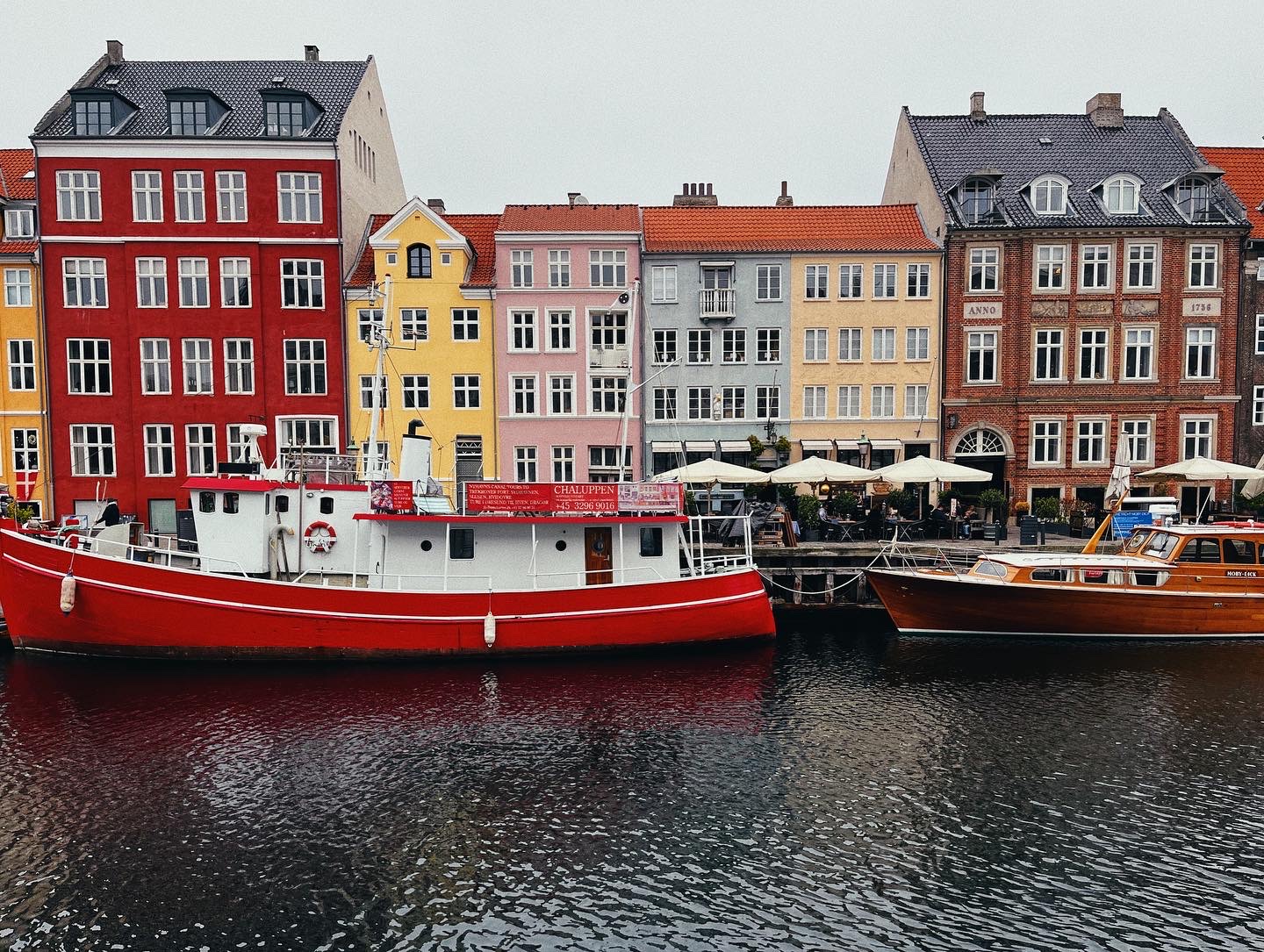
The iconic canals in Copenhagen