Olympic National Park

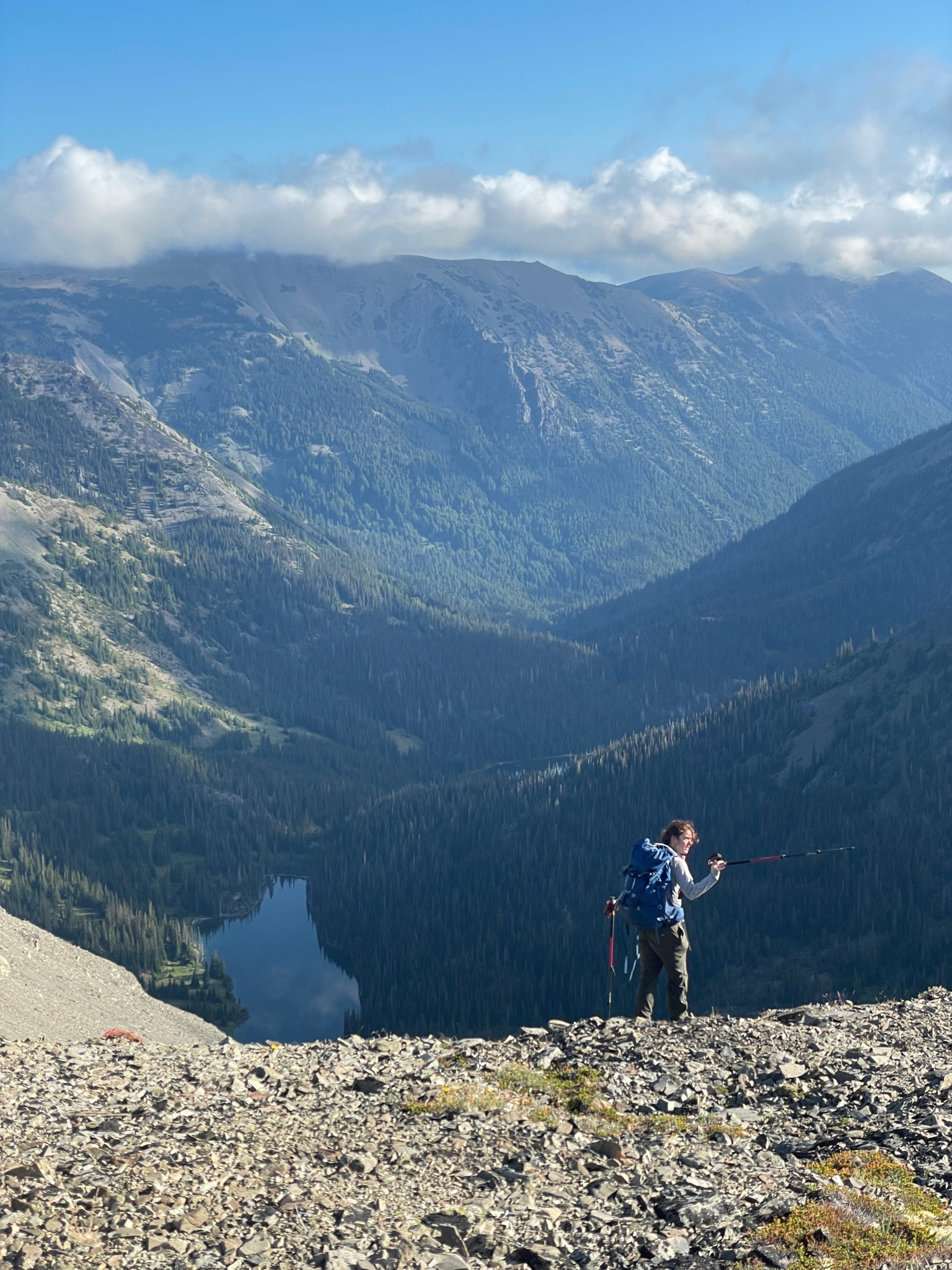
Hello, my name is Jocelyn Stansberry and I am a wildlife biology student at the University of Montana. For my Beyond the Classroom Experience, I conducted research in Olympic National Park. The work was divided between intertidal coastal surveys and high alpine lake surveys. For each area, several different surveys were conducted to add to a long-term data set in order to best understand the impacts of our changing climate. Most of my work consisted of backpacking out to different locations to conduct the harder to reach survey sites. I composed a video of my time hiking, backpacking, and surveying for the coastal time period of my research, which can be found on my Instagram @jocelyn_s__. I have also included photos of the hikes out to our high alpine lakes. In these images, I am standing on a few of the many unmarked ridges my crew and I traveled on to reach the mountain lakes, or in the lakes that we surveyed for fish, frogs, and various physical science elements.

This Beyond the Classroom Experience provided me the opportunity to work in my dream position, collecting climate data for the National Park Service. My day-to-day experience varied with every week but ensured that I was constantly in the field, whether that meant I was wading through tidepools, digging dragonfly larvae out of mud, or backpacking miles into the mountains. During my time at Olympic, I learned vast amounts of knowledge about coastal ecology and limnology from the park’s lead marine biologist which furthered my connections for future positions in the park service. I believe understanding how the ocean is impacted by climate will be one of the most crucial science fields in our contemporary climate condition. My time in the Olympics has only emphasized these ideas and I am beyond grateful for the opportunity to begin my scientific journey with the assistance of the GLI program

Cork & Irish Culture

Hello! I’m Parker Mickel, and for my Beyond the Classroom experience, I spent my spring semester in Cork, Ireland at UCC.

As a history major, I was drawn to Ireland because of its rich culture and history; suitably, my courses focused on history, largely playing into the theme of culture and politics. I took a course titled U.S. Collective Memory; my final paper for it focused on Hollywood’s impact on American collective memory regarding the Vietnam War, and how that impacts votership. I also took a course titled Censorship in 20th Century Ireland, which covered censorship since Ireland’s independence. The erasure of culture (targeting primarily books but also heavily impacting film) not only was informed by the very Catholicized government but was executed to uphold classism.

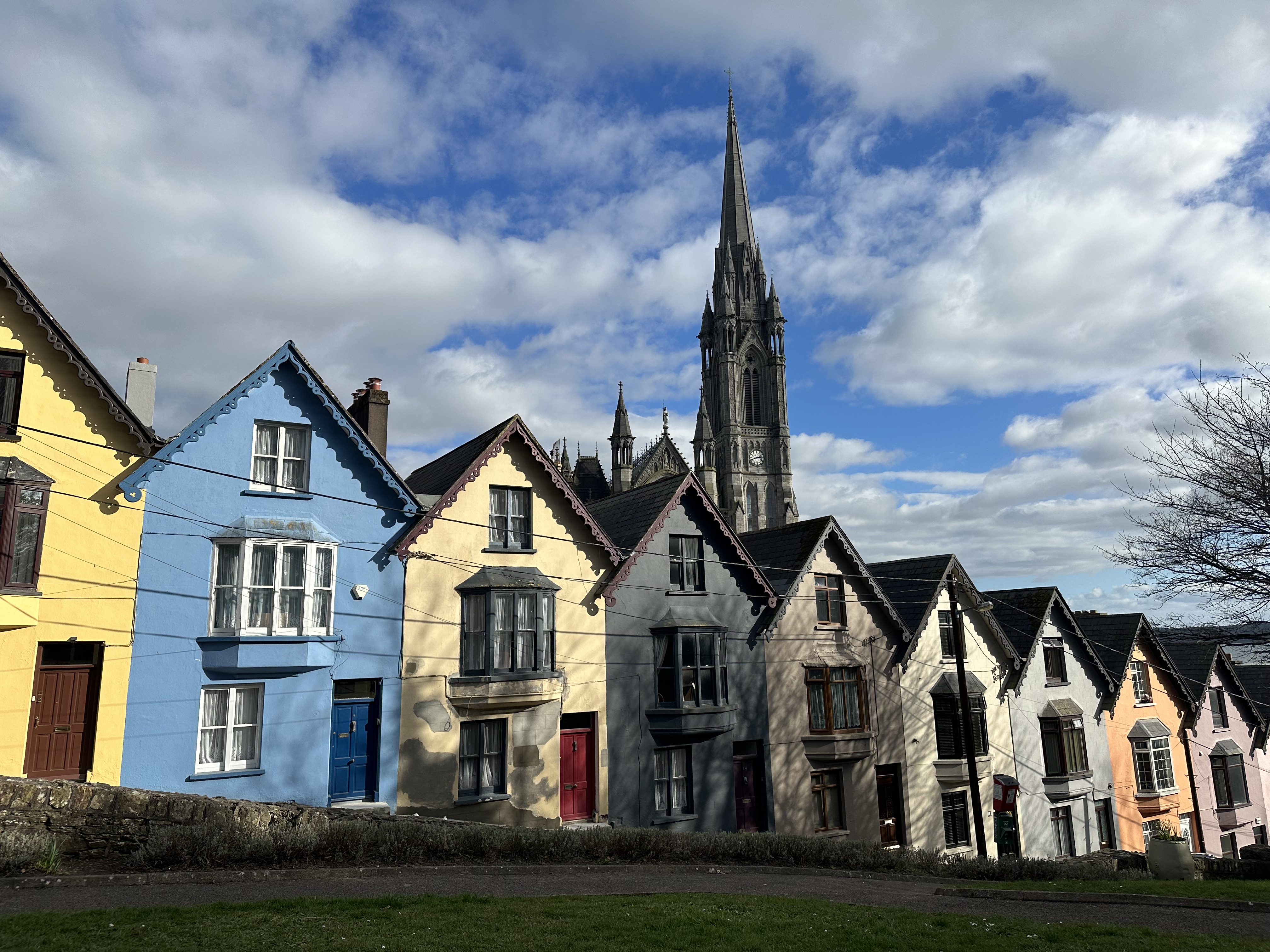
I was lucky enough to have some adventures outside of Cork as well. In May, I went to the small town of Cobh. It holds prominence in Irish history as the port that the majority of emigrants had left through. The Titanic’s last port of call, the origin of the first immigrant through Ellis Island, and the setting of many heart-breaking goodbyes, commemorated by their heritage museum.

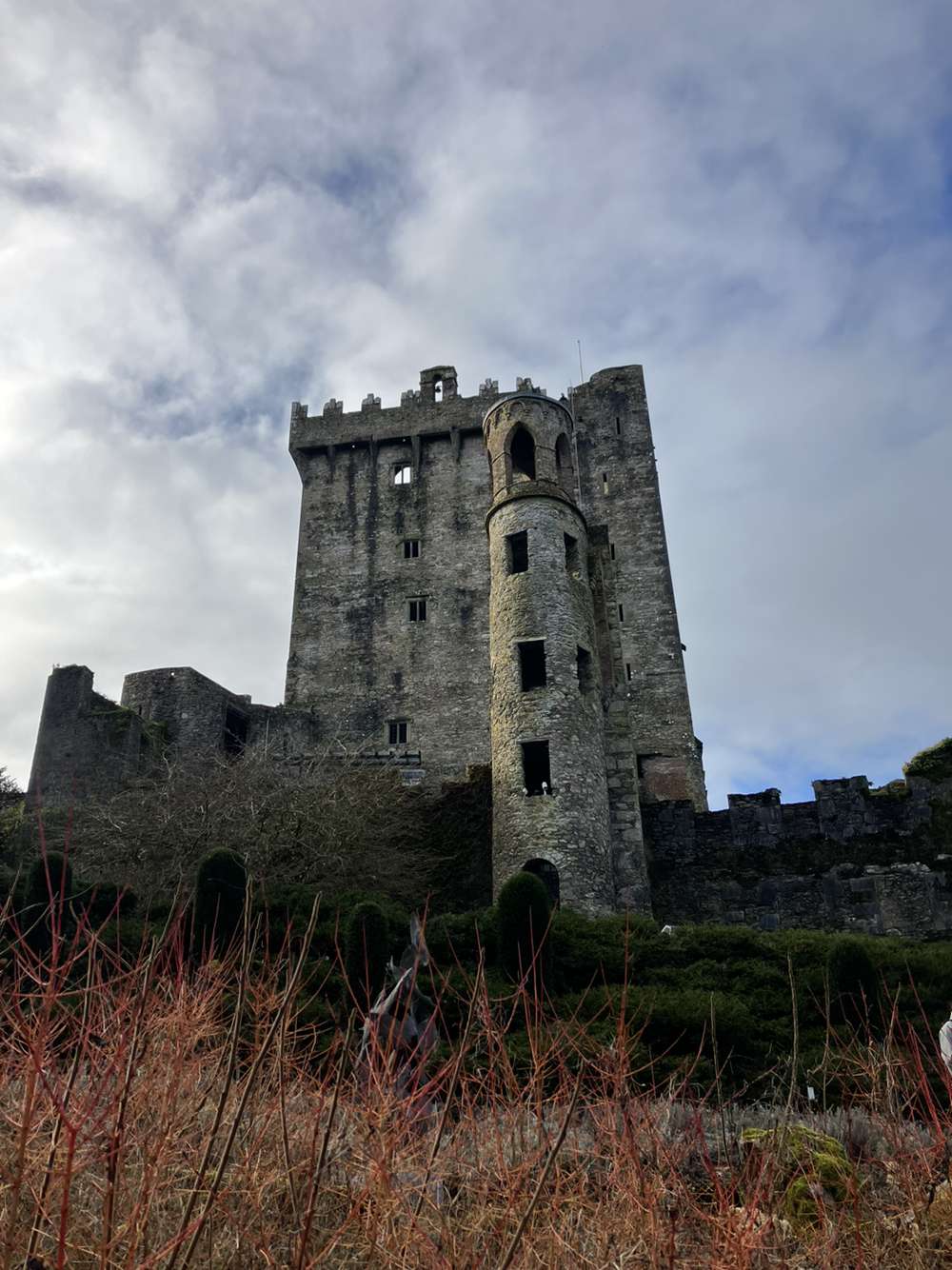
I had also journeyed to Blarney Castle multiple times during the semester. The castle sits on large, stunning grounds, and getting to explore the scenery and iconic piece of Ireland brought me a new feeling of connection to the country I was studying in.

All in all, this experience has been an absolute highlight of my college experience so far. Getting to experience a new culture, and seeing how that shapes their politics and their interpretation of U.S. and global politics, was absolutely fantastic. Putting it into perspective through the lived experiences of the people I talked to, the places around me, and the courses I took allowed me to grow as a person and develop my understanding of the world, and I would heartily recommend studying in Cork, Ireland to anyone.

A semester in Aotearoa, New Zealand

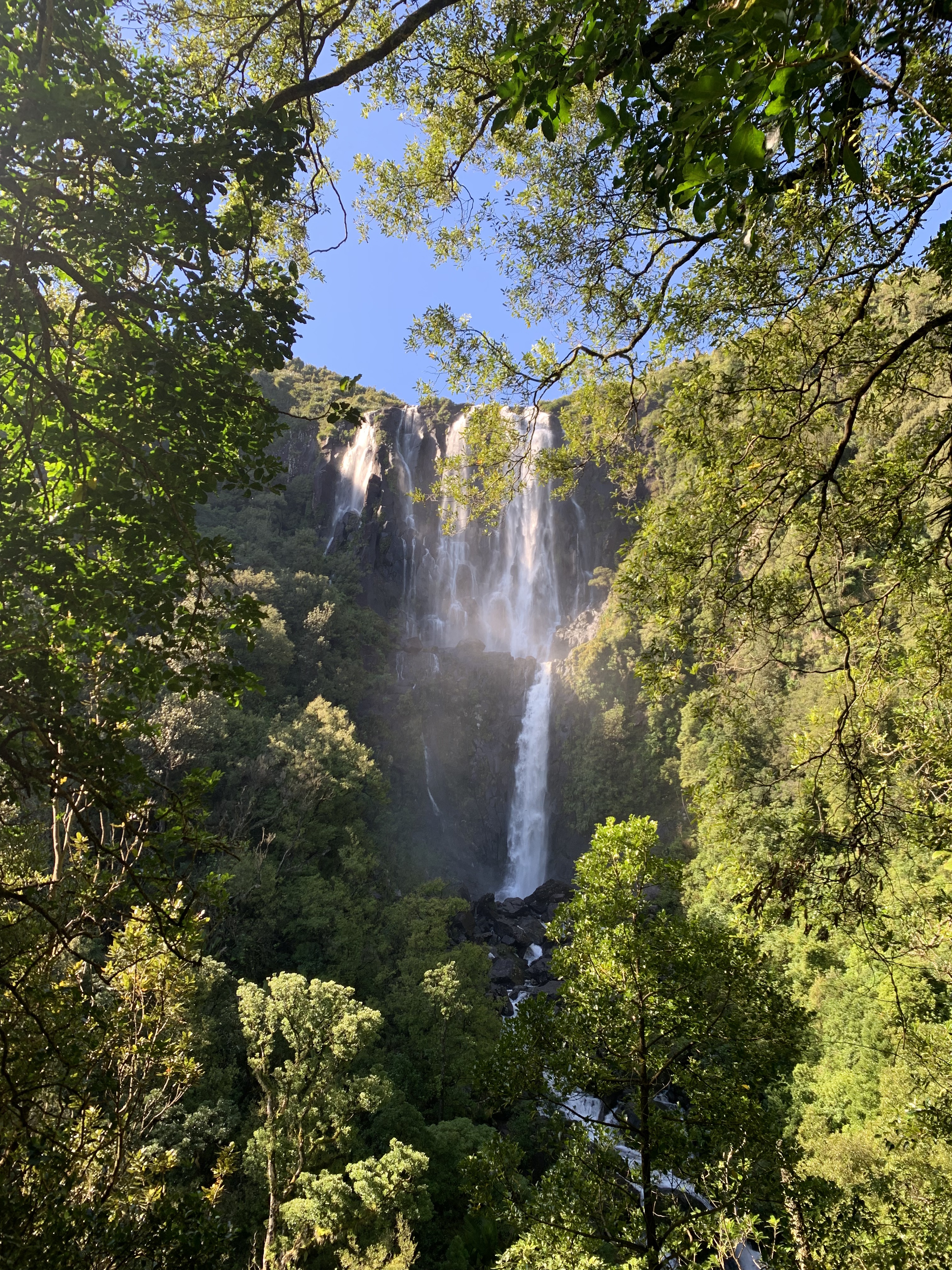
For my study abroad experience I was able to go to Hamilton, New Zealand, a town near the west coast on Te Ika-a-Māui, the North Island. I have always wanted to visit New Zealand, and since I am studying Environmental Science, I thought it would be a great opportunity to see how another country with a lot of biodiversity and many different natural ecosystems approaches that subject. Additionally, I took an introductory class on Māori world view and ways of living, the Indigenous people who originally came to Aotearoa. This knowledge really changed the way I looked at the community around me and taught me unforgettable knowledge. The region I was living and studying in (the Waikato) contains a large proportion of the Māori population in New Zealand, so having a bit more knowledge of their customs and beliefs was very important to me. Some of the friends I made were also Māori, and they taught my other friend and I things that we would never have learned otherwise: raranga (weaving with the harakeke plant), waiata (songs) and introduced us to their culture in a much less academic way. 

A surprising discovery to me was that much of New Zealand’s native forest has been cleared away over time, for agriculture, for grazing, housing, etc. While it was still a beautiful place and had accessible protected land nearby, I expected a much more sustainable approach to have been taken, or at least more progress in resolving the harmful choices made to both the land and Māori people. There were many things that were very different than I expected, as with most traveling I now know. There was also a lot that I learned and loved about the country. For instance, there are no native mammals except the endangered bat species on the north island. Every ecological role was filled previously by birds; instead of having typical vegetation grazers like deer, they had huge flightless birds called moa. They also had giant eagles, called Haast’s eagles, weighing up to 33 lbs that filled a predator role. Because of its unique situation as an island New Zealand was full of incredibly interesting plant life as well. One of my favorites were the giant fern trees that made you feel like you were in Jurassic Park. 

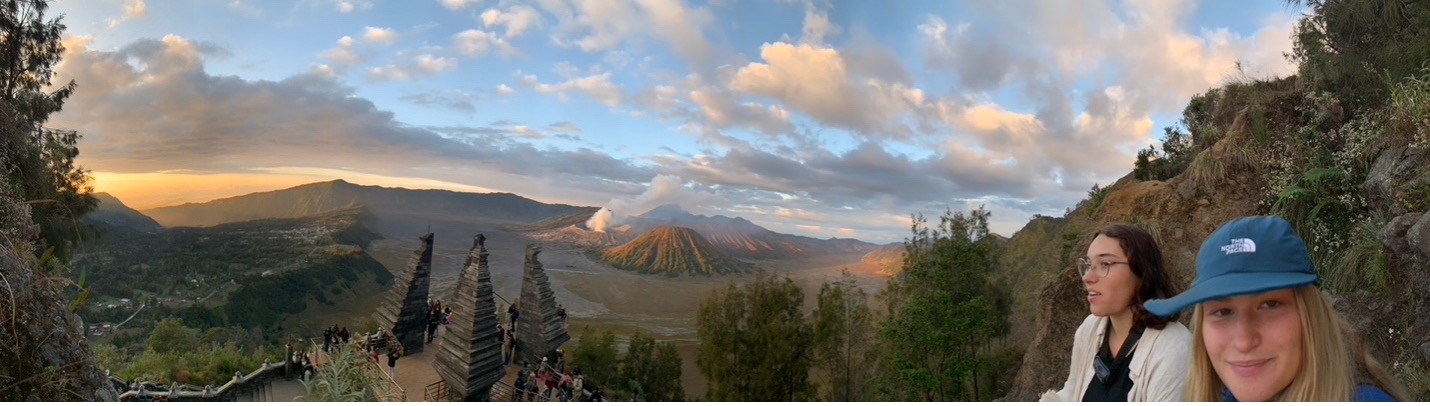
I met some of the most amazing people who came from all over the world and had the opportunity to take a road trip with some of them down from Hamilton to Queenstown in the South Island. The locals I made friends with were all so kind, welcoming, and generally loving people, some of whom I would easily move back for. After traveling around the country a bit, I managed to visit and travel through Indonesia with a friend, which was the first time I’ve done any kind of unplanned, unprompted traveling. It wasn’t all a perfect experience, but looking back I can see clearly how much I’ve changed in such a little time and am so grateful to have gone to this wonderful place, had the experiences I did and meet people that I love and still talk to now.

Colorado Plateau: Desert Canyons and Cultures

Hi, my name is Gabby Adams! 

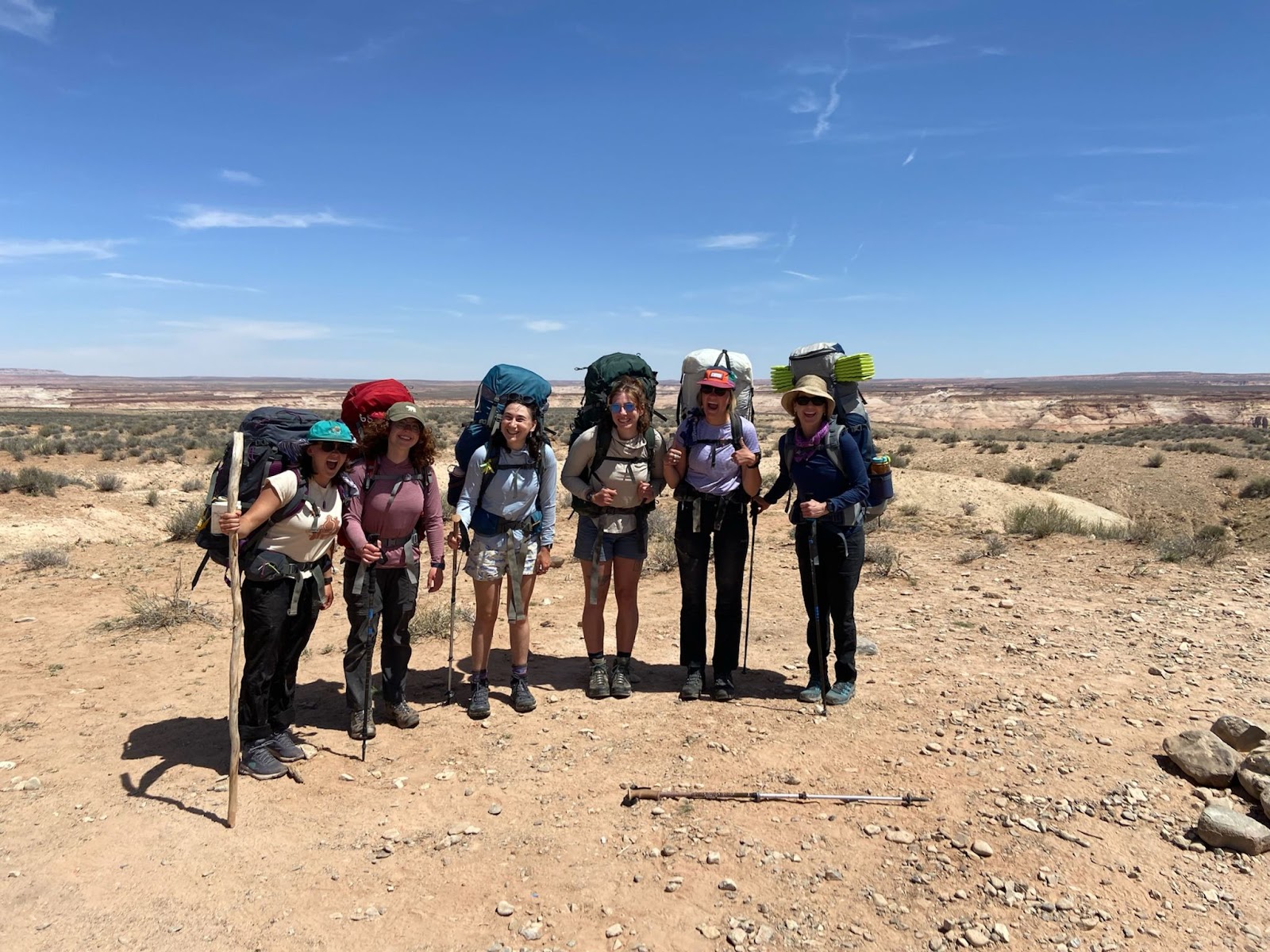
For my Out of Classroom Experience with GLI I had the amazing opportunity to take a course with the Wild Rockies Field Institute. I spent all of April and May backpacking and kayaking through southern Utah, while simultaneously taking classes focused on areas such as natural history, environmental systems, and political and social issues in the Colorado Plateau region. Along with four other women and two instructors, I spent the first two weeks of the course in Horseshoe Canyon. It was still early in spring so there were some freezing nights and cold windy days that quickly woke me up to the fact that a desert does not equate to endless sun and sweltering heat. We spent 13 days backpacking the length of the canyon while learning about plants, adaptations, and natural history in relation to the region. I realized throughout this early stage in the course how truly valuable it is to be living what you are learning. For instance we learned about the history of cattle and grazing in the region, then continuously saw firsthand some of the effects it has had on these canyons. And policies I learned about in past courses that I thought went right over my head suddenly made perfect sense while I laid under the stars in  Bears Ears National Monument. 

After a restock we spent the next 12 days in Dirty Devil Canyon. One which I think I can say challenged all of us. Navigating endless river crossings in our socks and chacos and sinking in quicksand made for some very long days. But to be at the bottom of the canyon with the layers of geology to teach us about the landscape’s long history was priceless. Throughout these two months I gained not only valuable educational knowledge and practical outdoor skills, but also a deeply rooted love and gratitude for the Colorado Plateau Region. Living outdoors for this amount of time away from my phone and even my support system was difficult in some ways, but it really opened up my mind to new perspectives and allowed me to love learning again. I would do this course again in an instant if I could, and I wholeheartedly recommend a Wild Rockies Field Institute course to anyone who loves the outdoors.

My Semester in Barcelona

Hi everybody!

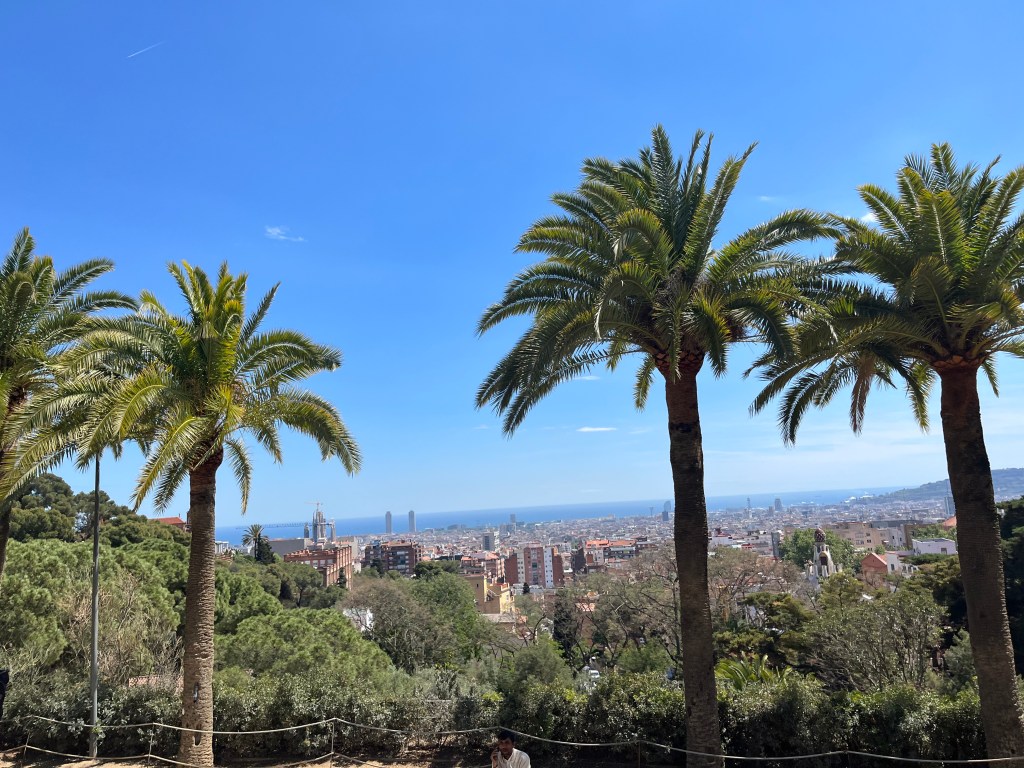
My name is Danielle Heltsley. I spent my spring 2023 semester in Barcelona, Spain. At the time, I was a junior continuing to purse my major in International Business and MIS. In the five month I spent abroad, time few by extremely quick leaving me with a jumbled memory of too many great experiences to recount. To start off, Barcelona is a vibrant city filled with culture and wonderful people. I had the chance to attend local holidays, travel around Europe and expand on my limited skill of speaking Spanish.

My time abroad was truly an unforgettable experience that has helped shape me into the person I am today. I learned a great deal about the European education system and have seen first-hand how different they are. The friends I made while abroad shared in these experiences and will be in my life forever. Together we went from being soaked in Greece’s heave rain to being toasty warm in the Italian sun then being overcome by the beauty of the Austrian architecture.

Finally, I would say that I am better off having had this wonderful life changing experience. Friends and family visited during these five months and firsthand saw me begin to change for the better. Life was pleasant, exciting, and exactly want I needed to kick of my senior year. I am forever grateful to all the people I met during this excursion and all the support I received from my people back at home.

A too short semester in Tokyo, Japan

Hi everyone!

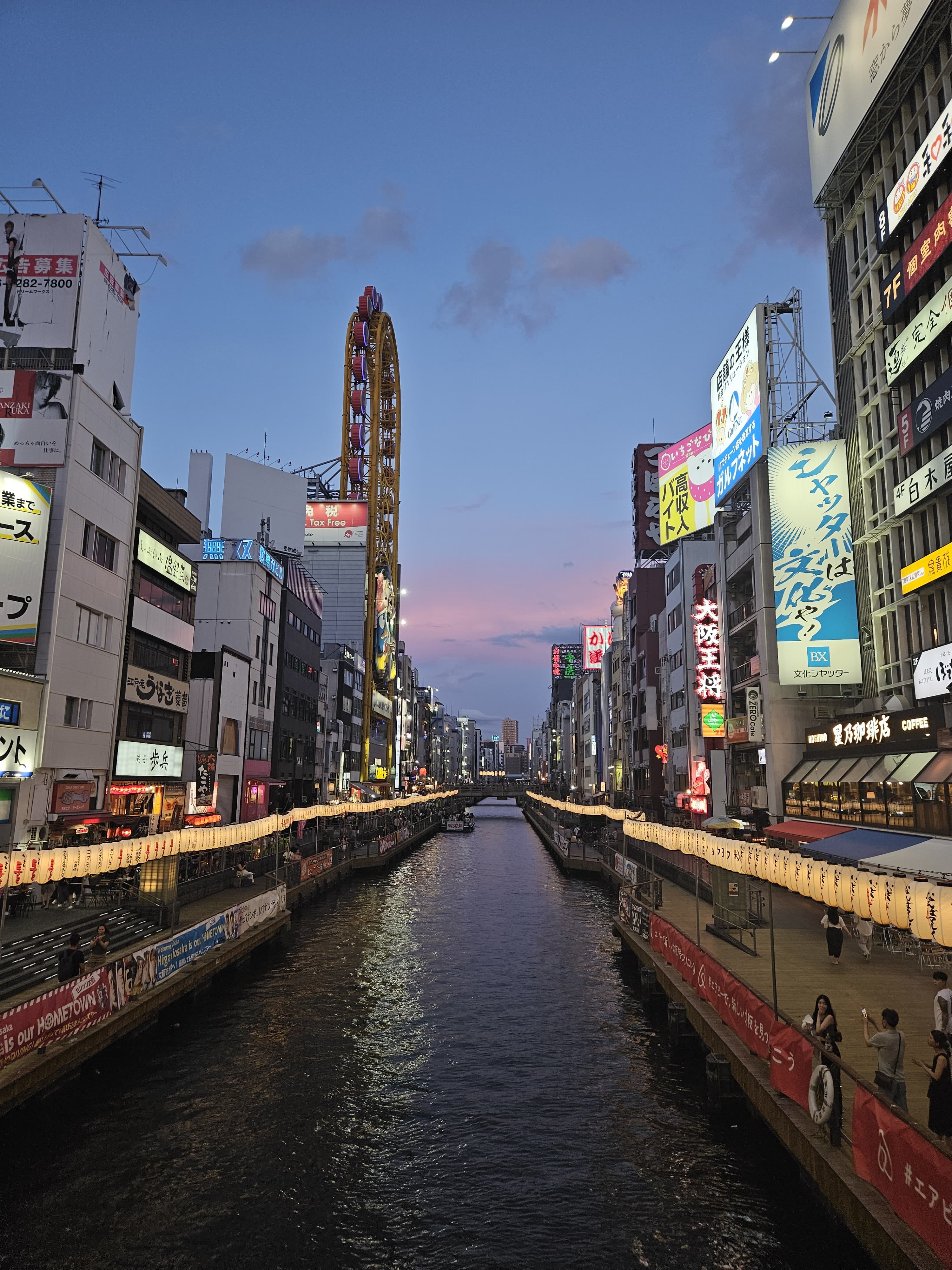
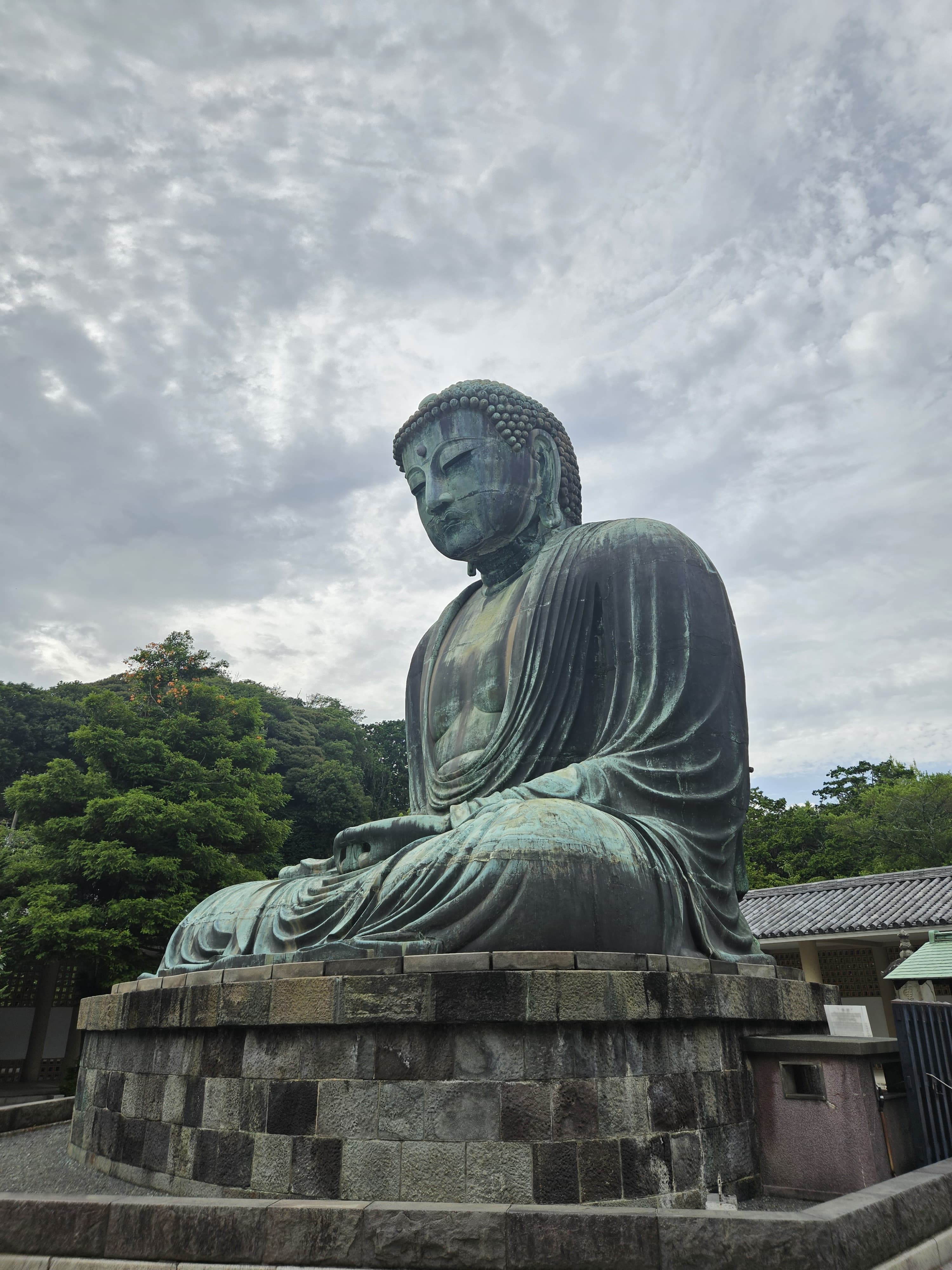
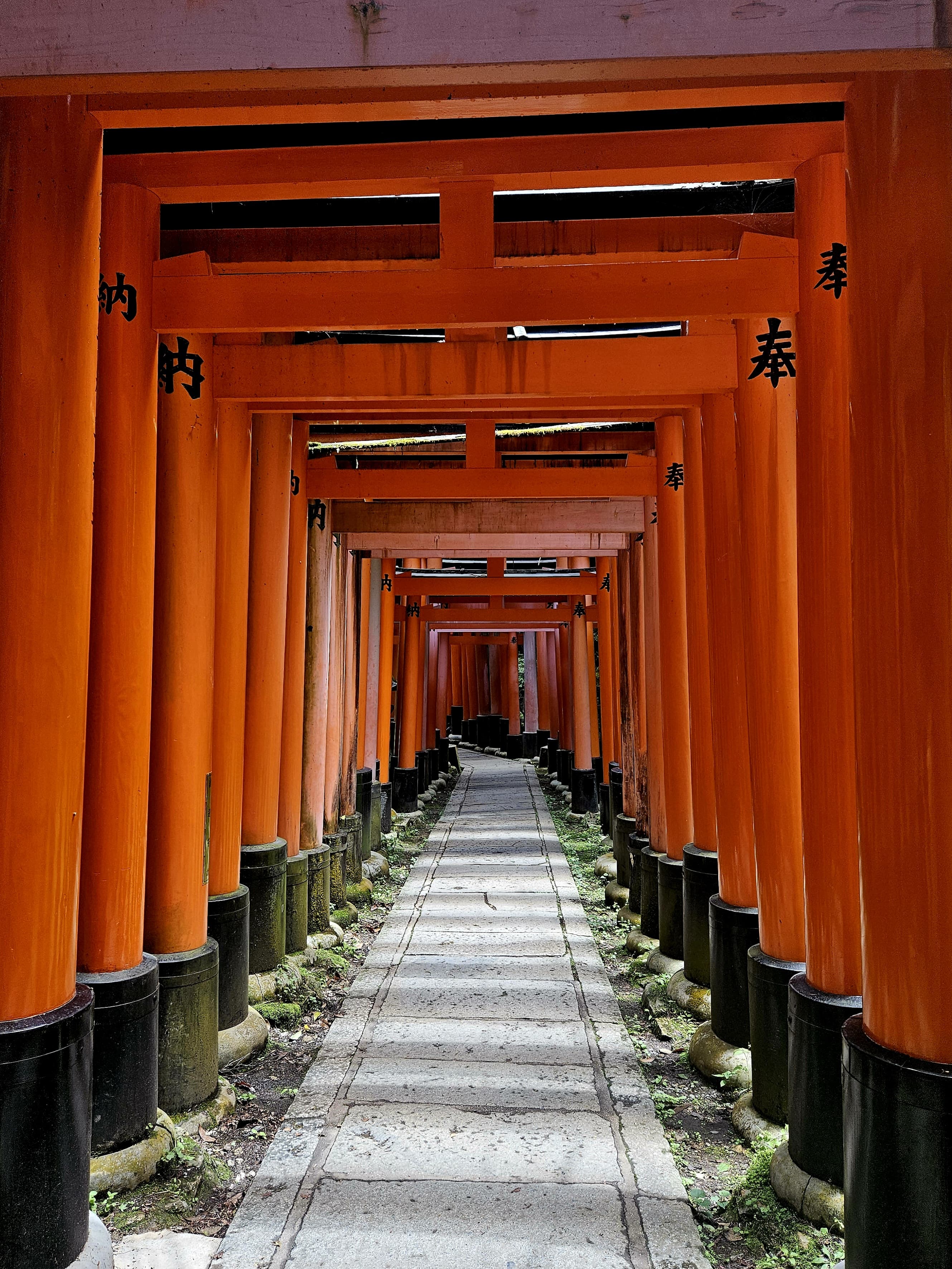
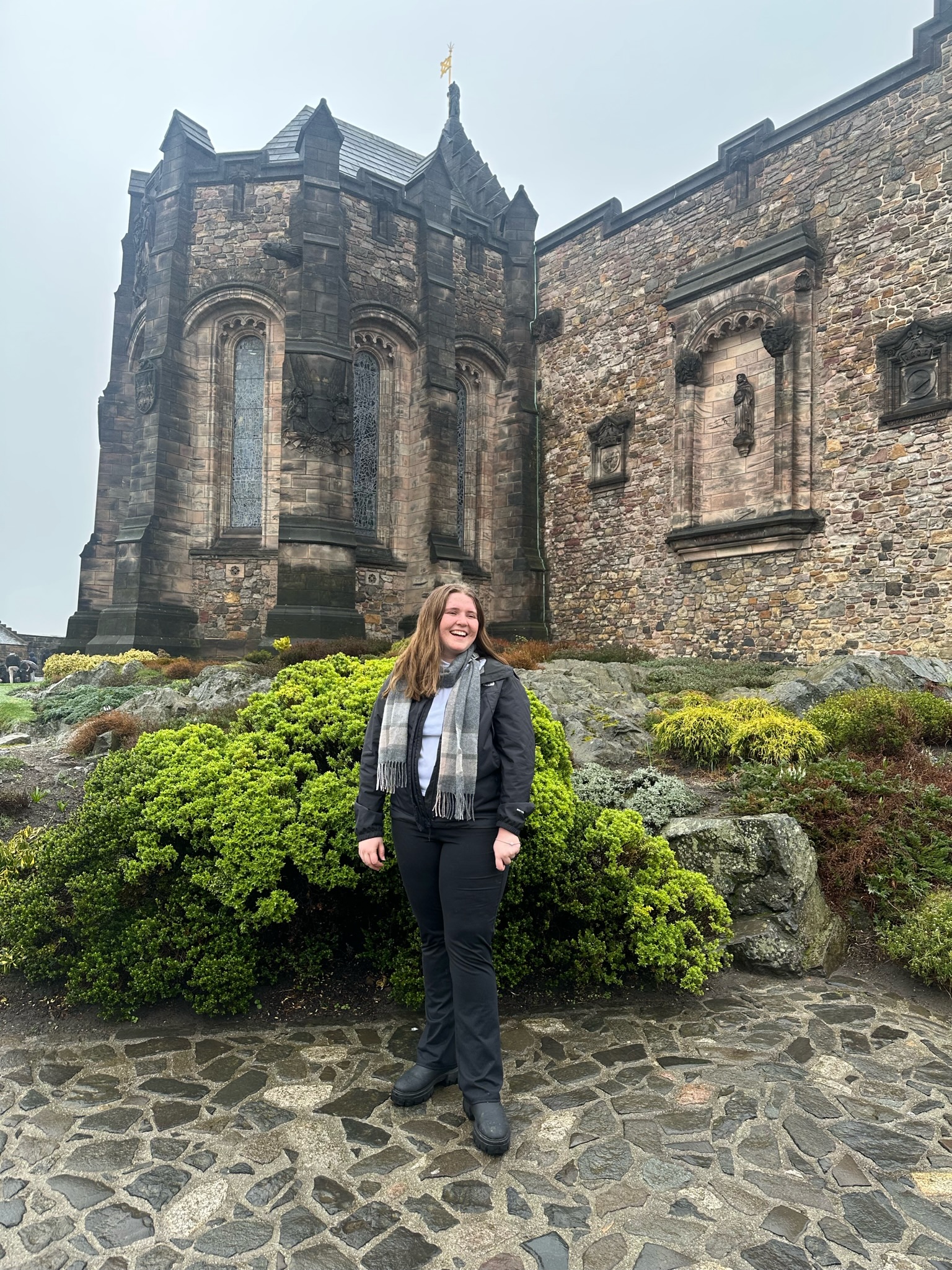
My name is Siobhan Black and my Beyond the Classroom experience was a semester-long study abroad at Waseda University in Tokyo, Japan. Although I have been lucky enough to travel to many different places in the past, living in Tokyo was truly one of the most incredible and unique experiences I have ever had. As a double major in Linguistics and East Asian studies with a minor in Chinese and my Global Theme being Culture and Politics, this experience provided me with the most amazing opportunities to explore my interests. Through courses like Buddhism in Japan and A Critical Understanding of Korean Society Through the Lens of Sexuality, I was able to expand my understanding and knowledge of Japan and other regions in East Asia. Tokyo itself is undoubtedly one of the most fantastic and unique cities that I have ever visited! It truly felt has if there was no end to the delicious food – including innumerable affordably priced Michelin-starred restaurants, endless temples and shrines to explore, and numerous fantastic events and celebrations to enjoy.

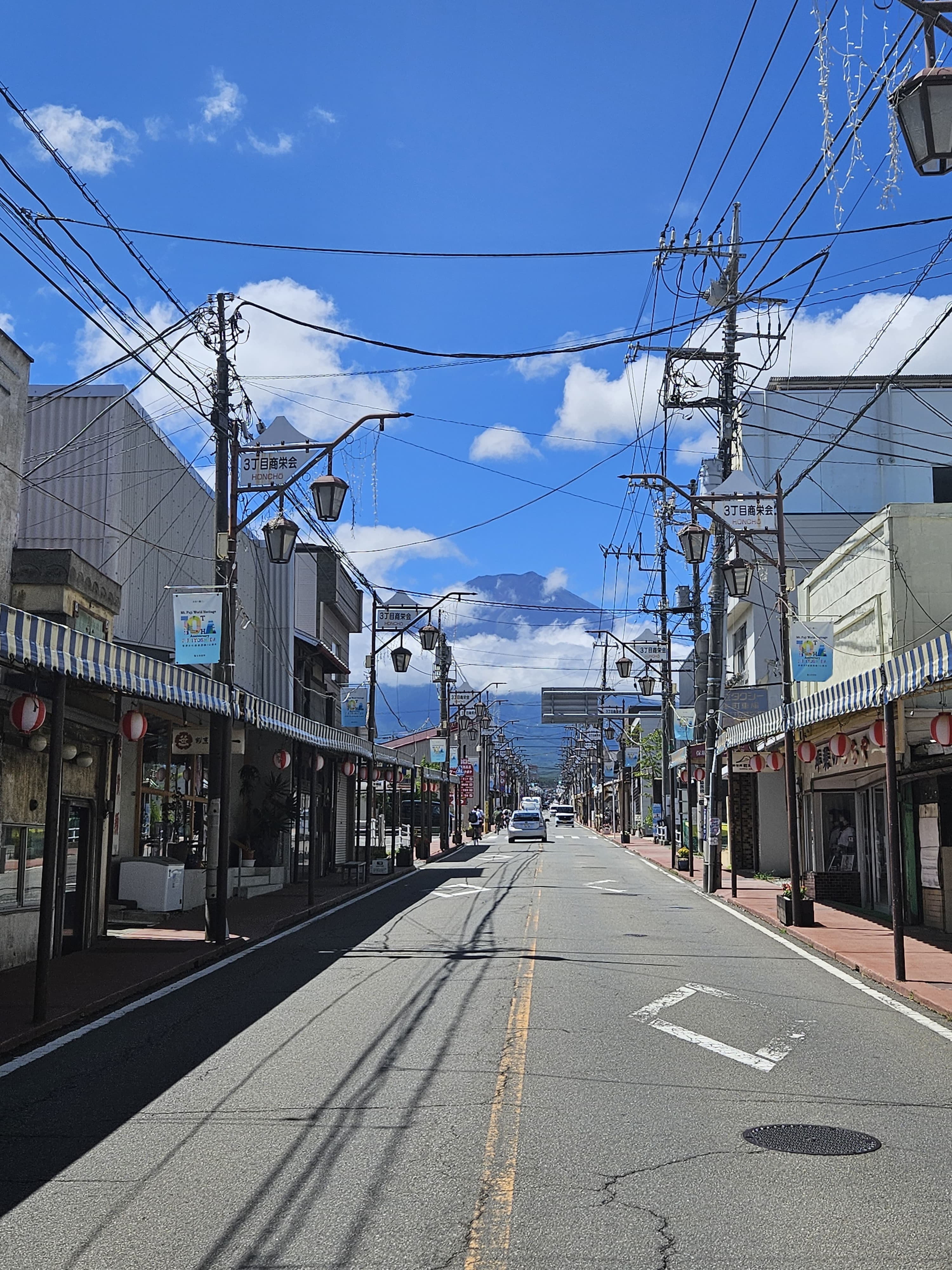
Beyond my time spent studying in Tokyo, I made sure to visit as many other places as I could (and could afford). From the most beautiful wisteria trees I have ever seen in Tochigi prefecture, the incredible temples and history of Kyoto and Nara, the funky and eccentric feel of Osaka, a temple stay at Koyasan in Wakayama prefecture, and the majestic beauty of Mt. Fuji in Yamanashi and Shizuoka prefecture, I experienced and saw some of the most fantastic and awe inspiring adventures and sights of my life.

My Trip to Himeji Castle

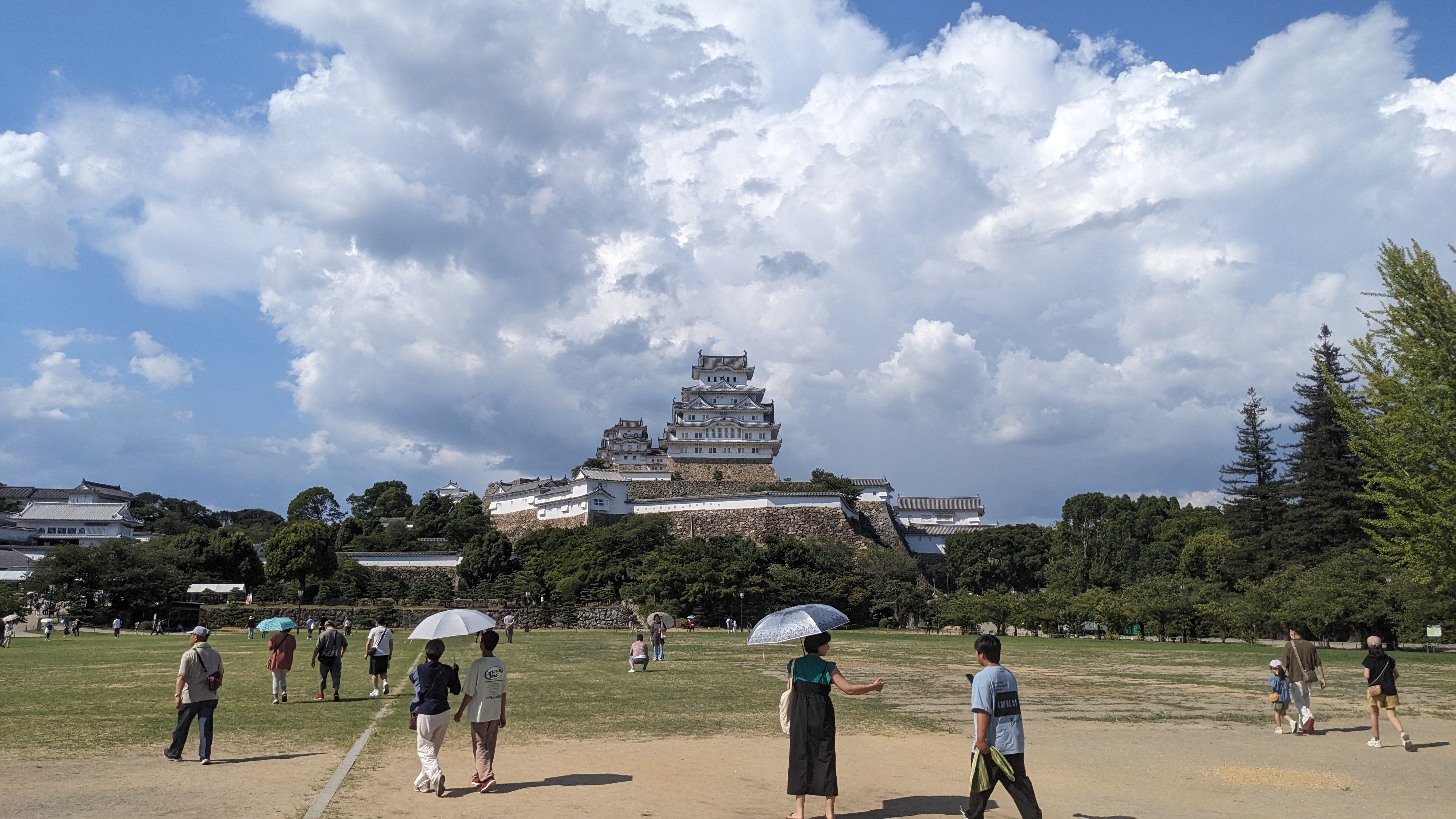
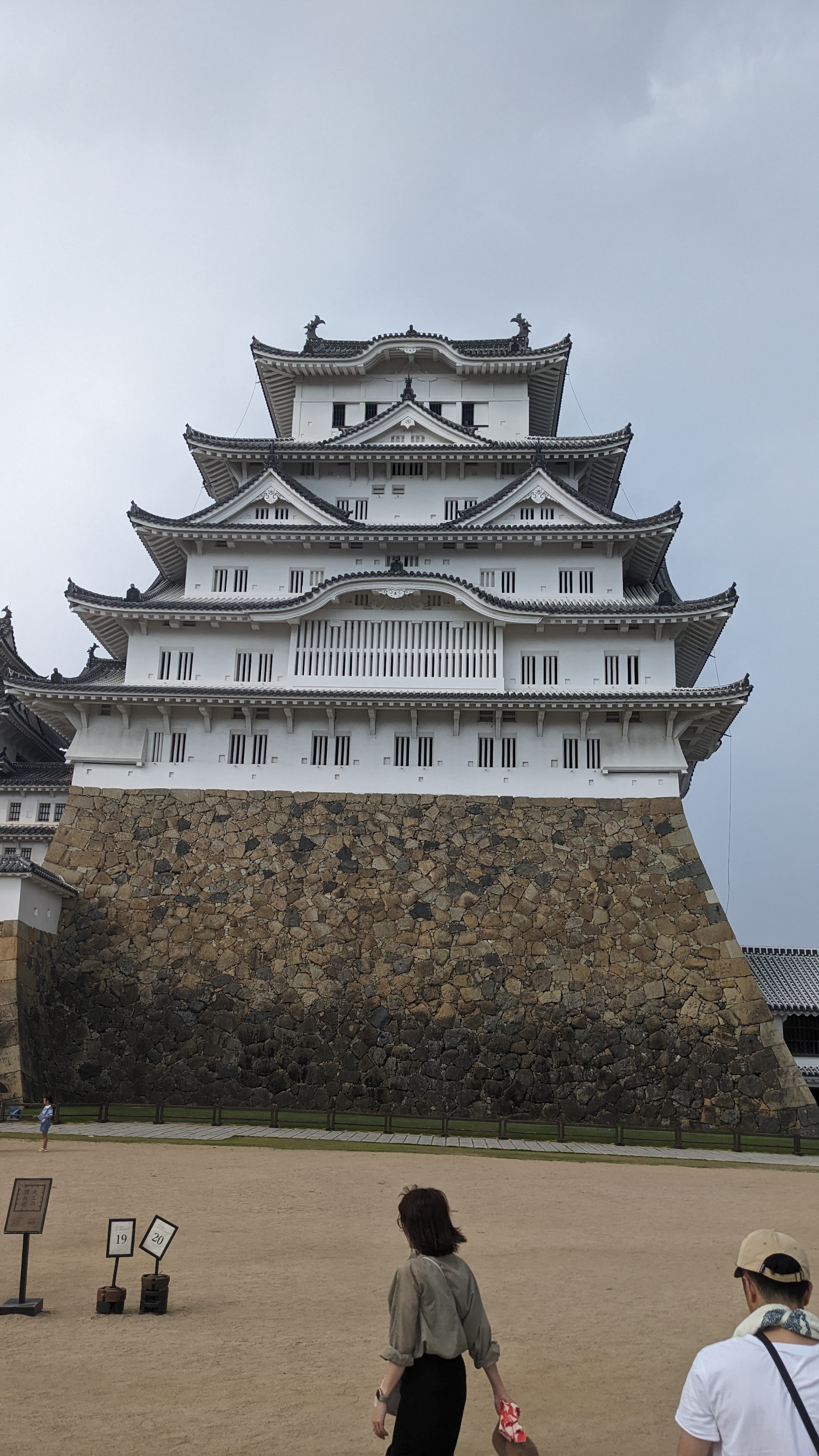
My Trip to Himeji castle had to be the most beautiful poorly planned experience that I ever had the grace of planning and participating in.

The Castle itself was something straight out of a fairytale. It was a marvel of Japanese engineering and completely blew me away with how large it was. None of these pictures will do justice to the size of this thing.

I payed a pretty penny (yen) to go all over and into the castle. I got to learn the history of the castle as a defensive position of a famous family. It was an indomitable fortress that was almost impossible to advance through. The castle was used for only two things. The storage of gold and the storage of weapons. Every wall was a weapon rack, and every other wall was a place to shoot out of.

The castle took my breath away with the detail in every single corner. It was a testament to the passion Japan has towards its history. Every structure is maintained using modern technology, while also preserving the beauty of the ancient structures. Which is even more impressive once you’ve experienced on of their tropical storms…

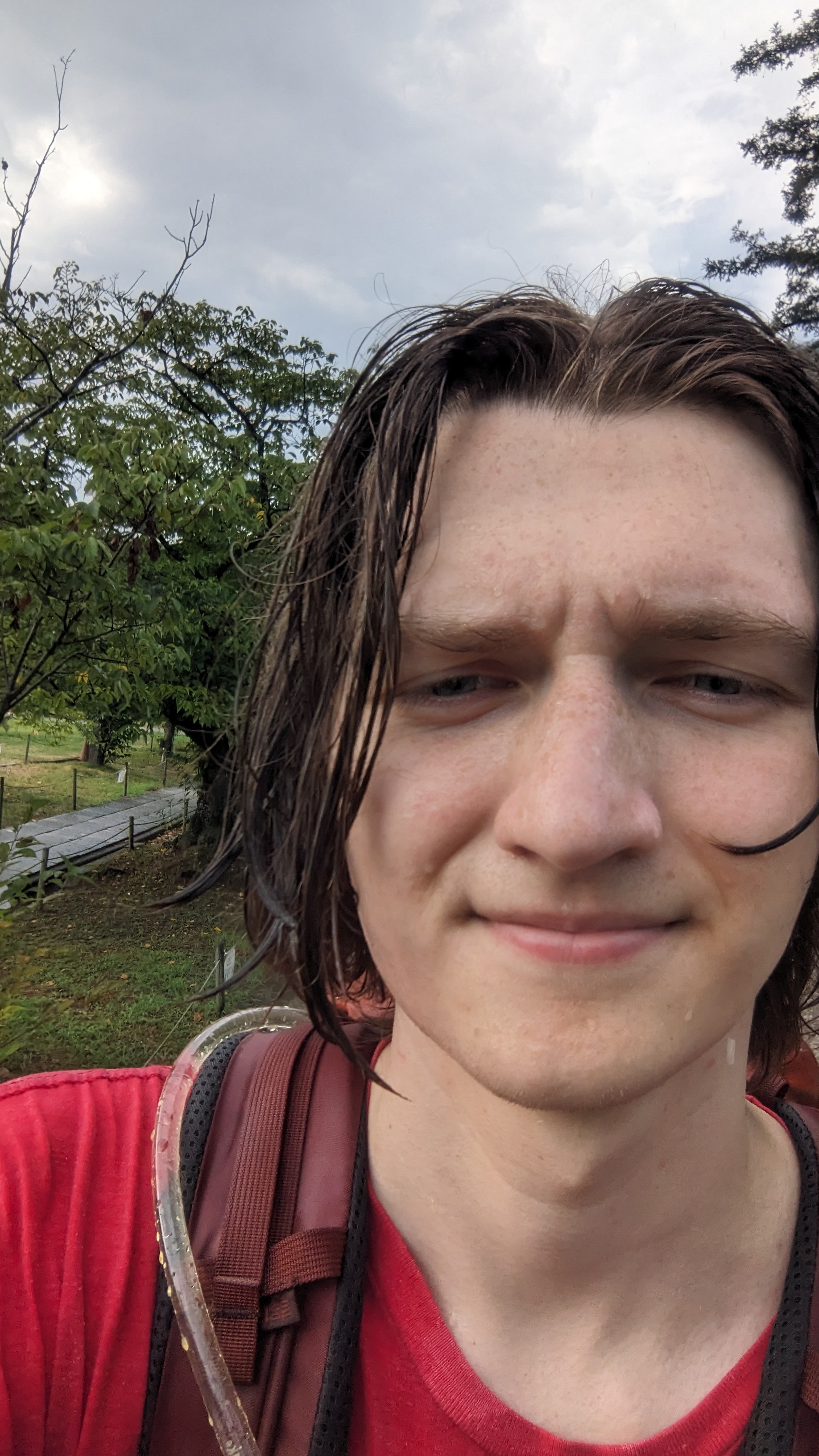
I failed to check the weather for my day in Himeji and a tropical storm following a hurricane was arriving on the same day. I saw this halfway up the castle. At the very top, I was getting battered with wind and rain in the heaviest rain I had ever experienced. With no umbrella and lots of castles left to explore I decided to walk through the halls as they fought the elements. Amazingly, nothing collapsed.

Learned a valuable lesson about weather apps, but I would definitely do it again if given the opportunity.

The Leiden Lessons

Have you ever spent seventeen hours on a Flixbus at the Port of Dover? Sat under the northern lights after an Icelandic man pulled your car out of a snow patch? Stayed in the apartment of a man named Jose in Barcelona with a cat named Lucky and a dog named Candela? Hi, I’m Kersey and I had the privilege of traveling to twenty-two countries over the past twelve months, all thanks to the beauty of study abroad.

My Lovely Leiden Loves

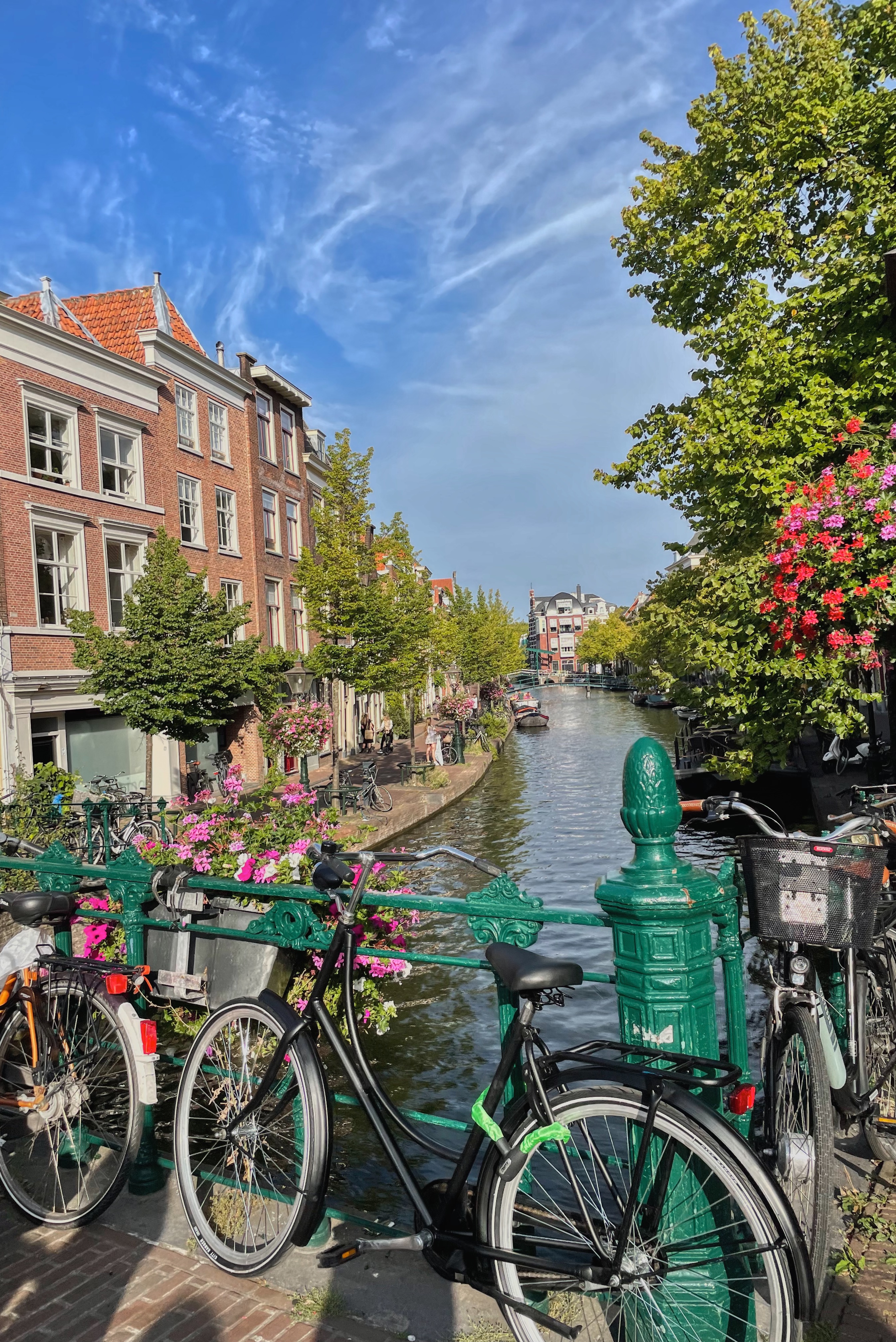
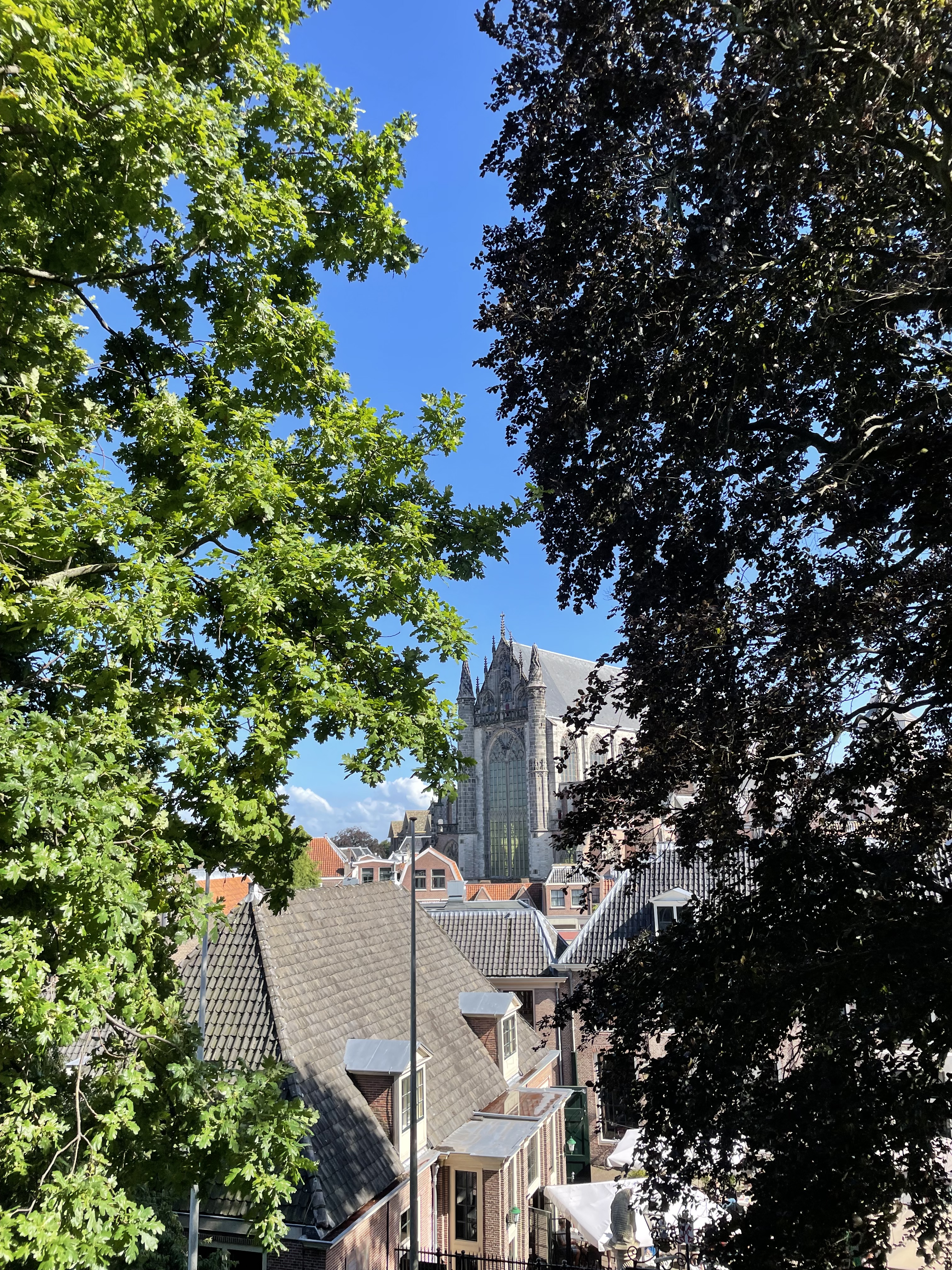
While attending Universiteit Leiden, the oldest university in the Netherlands, I studied in classrooms where brilliant minds like Einstein and Oppenheimer once taught. Navigating the Dutch education system proved challenging, yet I soon became accustomed to the art of field trips to naval bases and cheese cities. With a major in Political Science and my GLI theme being Culture & Politics, I took courses like Europe’s Armed Forces & Societies and Dutch Topical Debates to truly dig deeper into the European identity. My life became a routine of bike riding, canal sitting, and stroopwafel eating. I celebrated an array of holidays from Leiden Ontzet, a three day festival where the entire town was converted into an amusement park, and King’s Day, a weekend getaway to Amsterdam canal chaos. As the months passed and I adapted to my newfound Dutch identity, I began to take note of the lessons I could bring back to Montana — such as the ban of plastic bags, the intricate bike lanes, the constant availability of public transportation, the encouragement of youth to live with the elderly, the allowances towards child care, the joy of leaving work at work, the intensive welfare state, and the outward tolerance of other cultures.

My 21st Birthday & Leiden Ontzet with the Dutch

My Korean roommate and I spent our weekends using Skyscanner to locate our next destination, from Belgium, Germany, to the UK. I traveled to Palermo to watch a marathon, Basel to view Swiss architecture, Paris to reunite with my mom’s host family, Rome to take a gander at the Sistine Chapel, and Athens to pet the cats. I skied in the Alps with my parents, took night Flixbuses across Central Europe, toured Copenhagen and Lund under the guide of my Swedish mate, got annihilated by the surf in Spain, ventured all the way over to Taiwan (for free), roadtripped across Wales and Scotland, and painted like Monet in Normandie. I enjoyed Hungarian baths solo, moved from hostel to hostel in Interlaken, ate perogies in Krakow, and fully embraced the art of delayed or lost transportation.

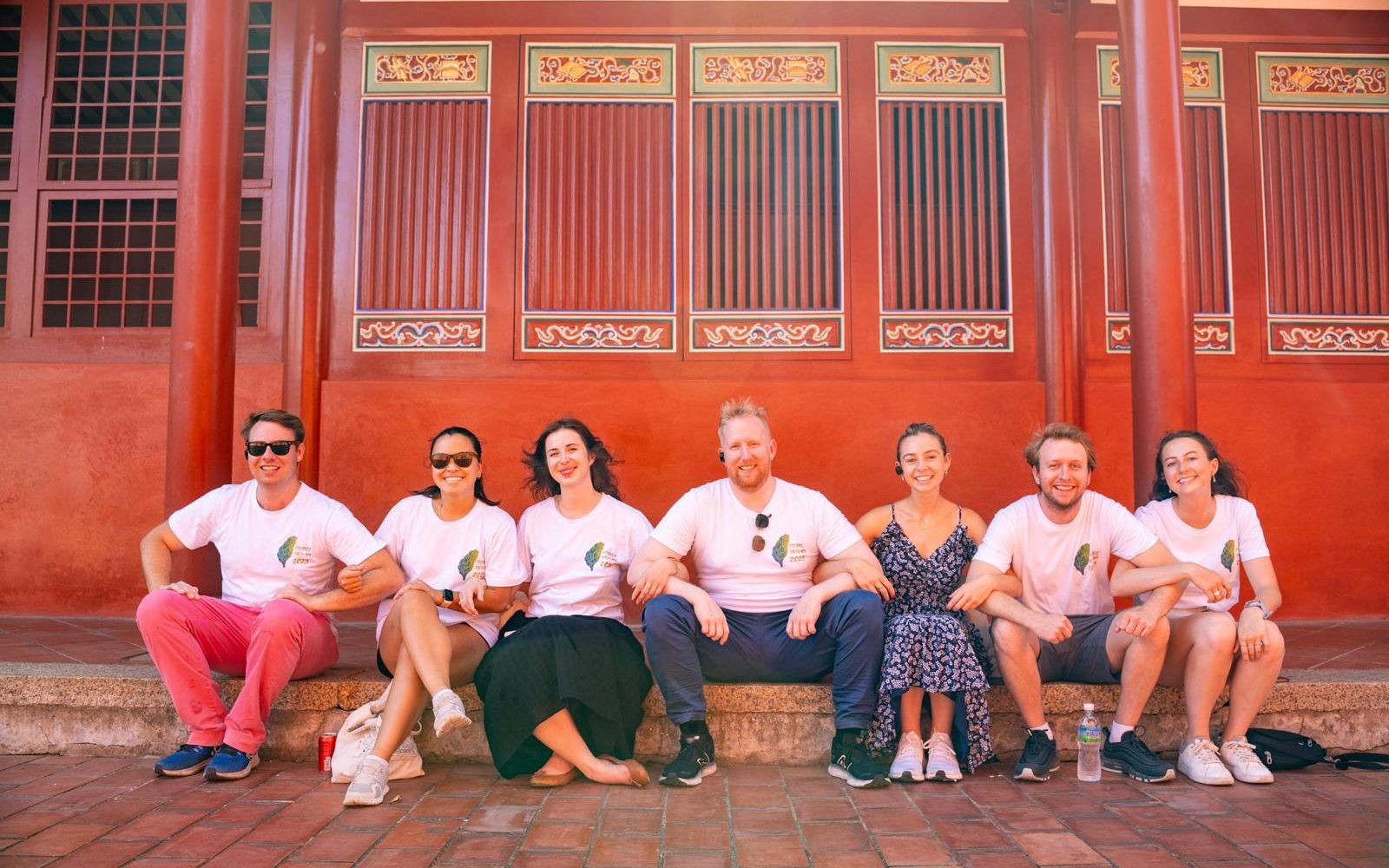
The MOSAIC Taiwan Fellows

I discovered the simple reality that humans are humans and we tend to overcomplicate it. Developing close relations with individuals from all across the globe challenged my preconceived notions and stereotypes, leading to intensive dialogues about who we are as people at our very core. Strangers became my friends who became my family. My heart aches knowing that we may never see each other again, but I am grateful that our paths crossed. As I sat in my last course, I looked around with nothing but appreciation that we all ended up together in the same place at the same time.

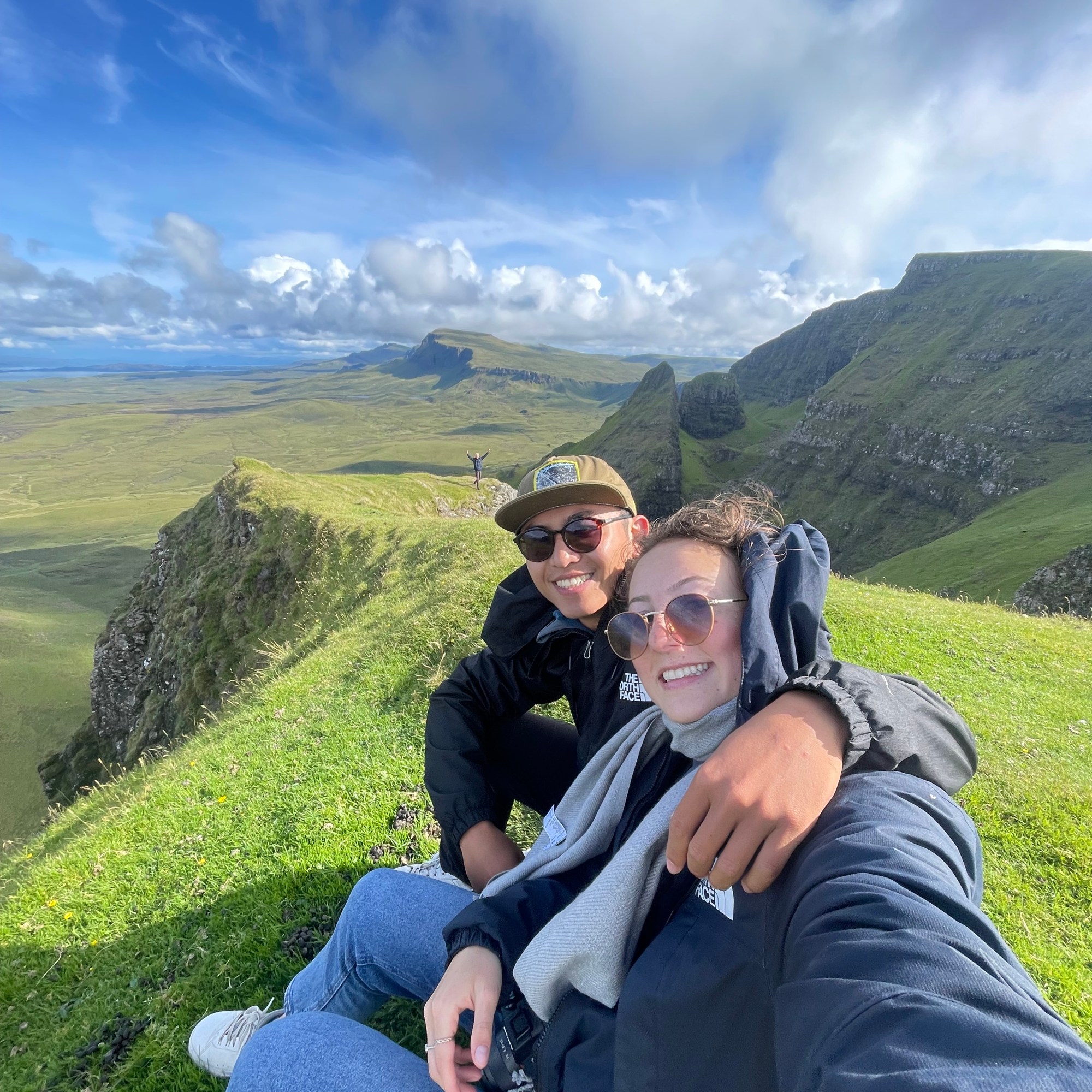
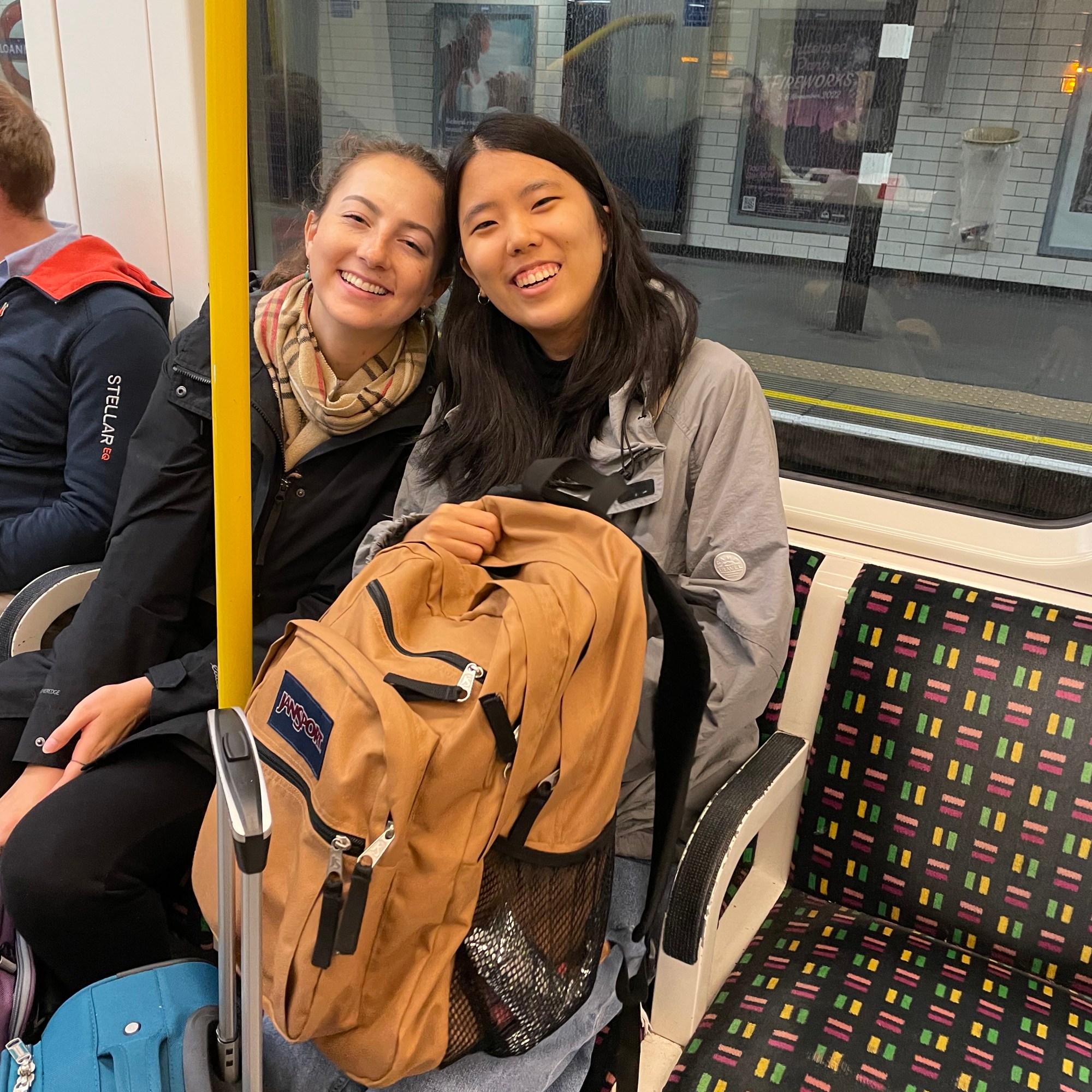
The Scottish Jolly In the Background | Bella Reunion in Barcelona | Lost on the London Tub w/ Eun Song

I will forever remember the nights spent at cold train stations with Eun Song, the late runs to Wong Kei’s for authentic Chinese food, the smell of Kibbling on a Saturday morning, the feeling of riding down Leeghwatertunnel on rainy afternoons, the rush of my Flixbus arriving at Station Victoria, the Remi situation that seemingly never ended, and the nerves of saying goodbye. I encourage all to go abroad, not only for the places and sights you’ll see, but for the people who will alter the course of your lives. Cheers to the last twelve months and all of the lessons it gave me, even the endless backache from lugging around my Ryanair-friendly backpack across half of Europe.

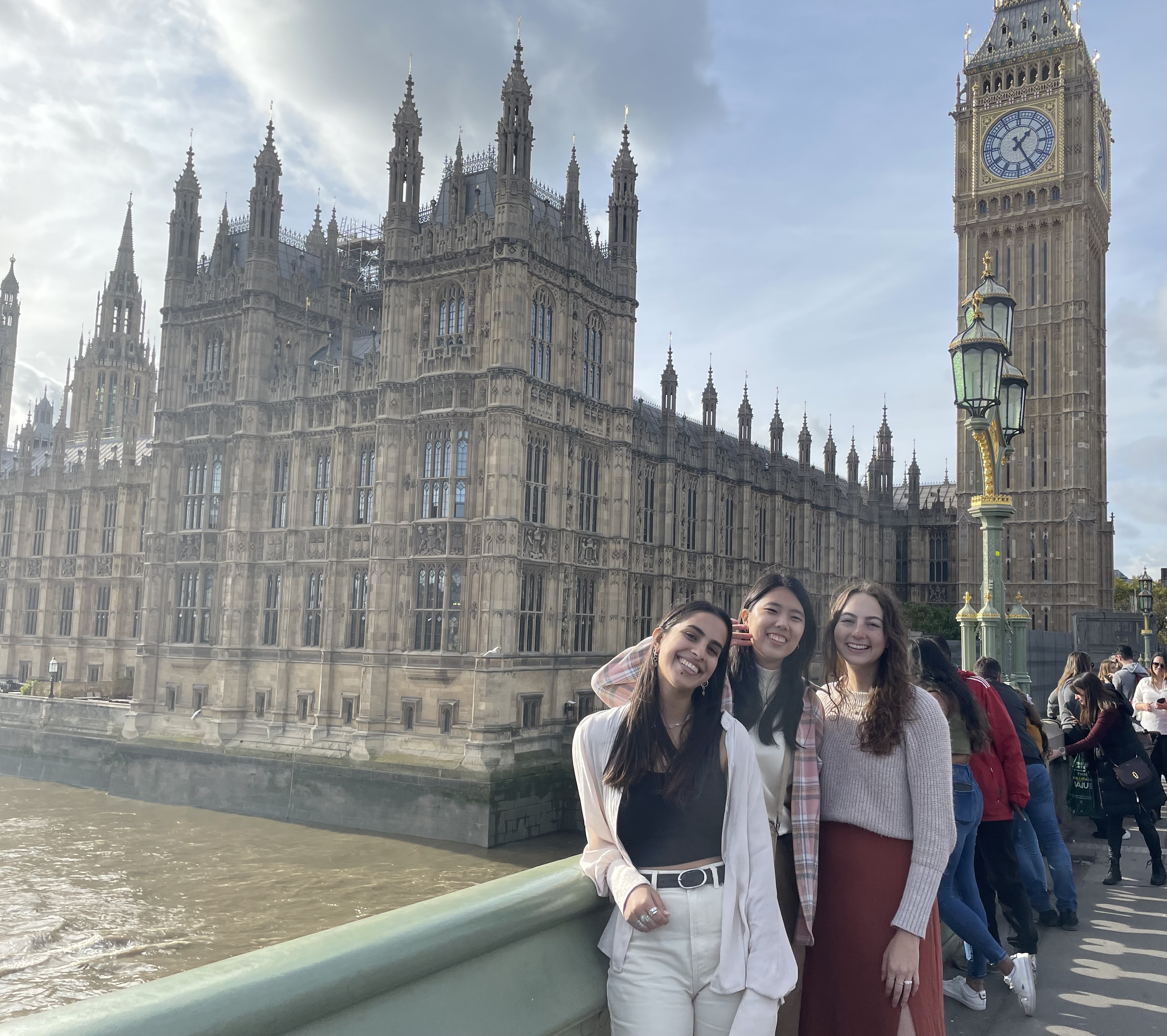
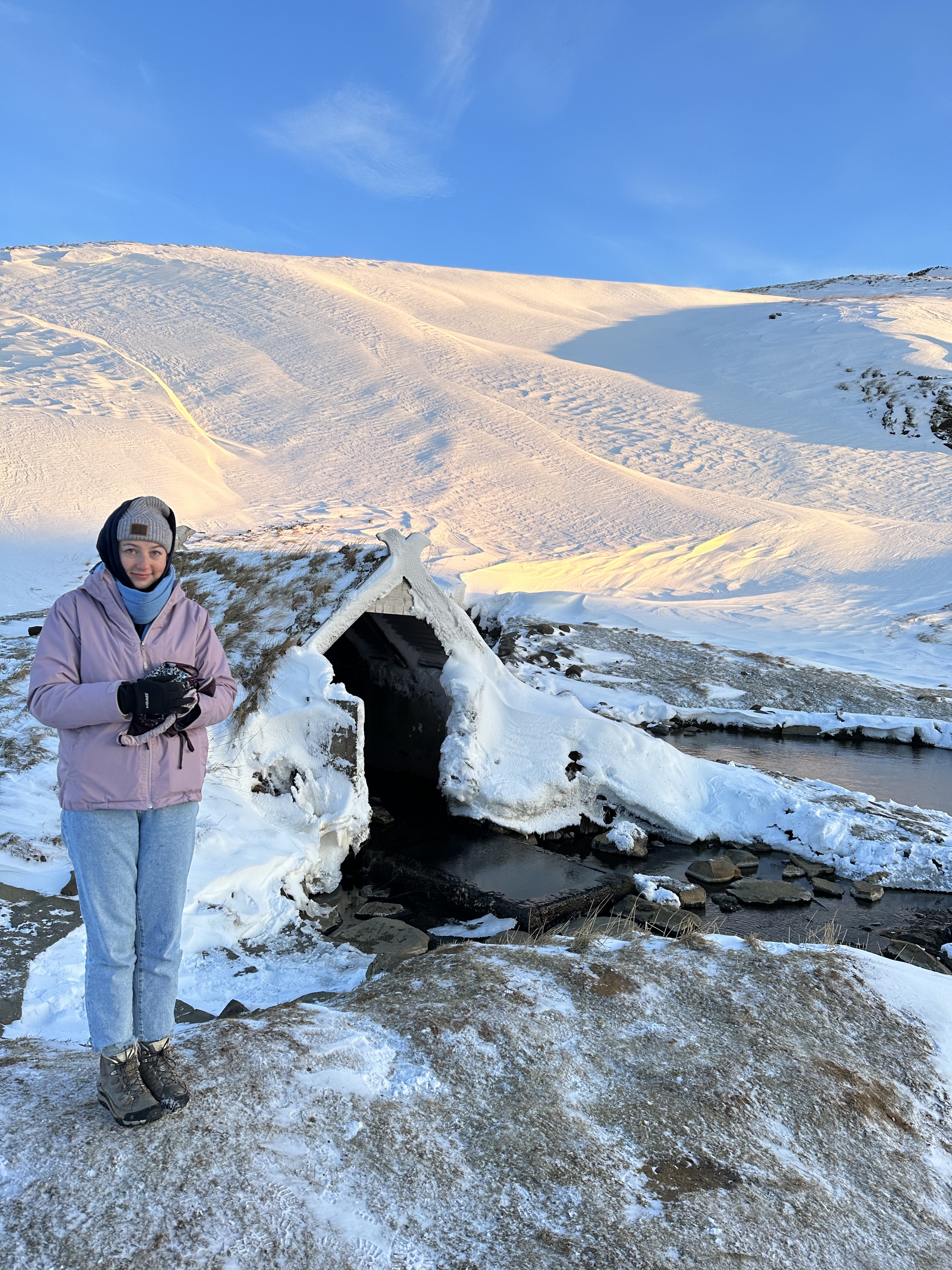
The Infamous Ryanair Bag | Mid-Term Getaway to London | Icelandic Natural Spring Shivers

A Semester in Ireland!

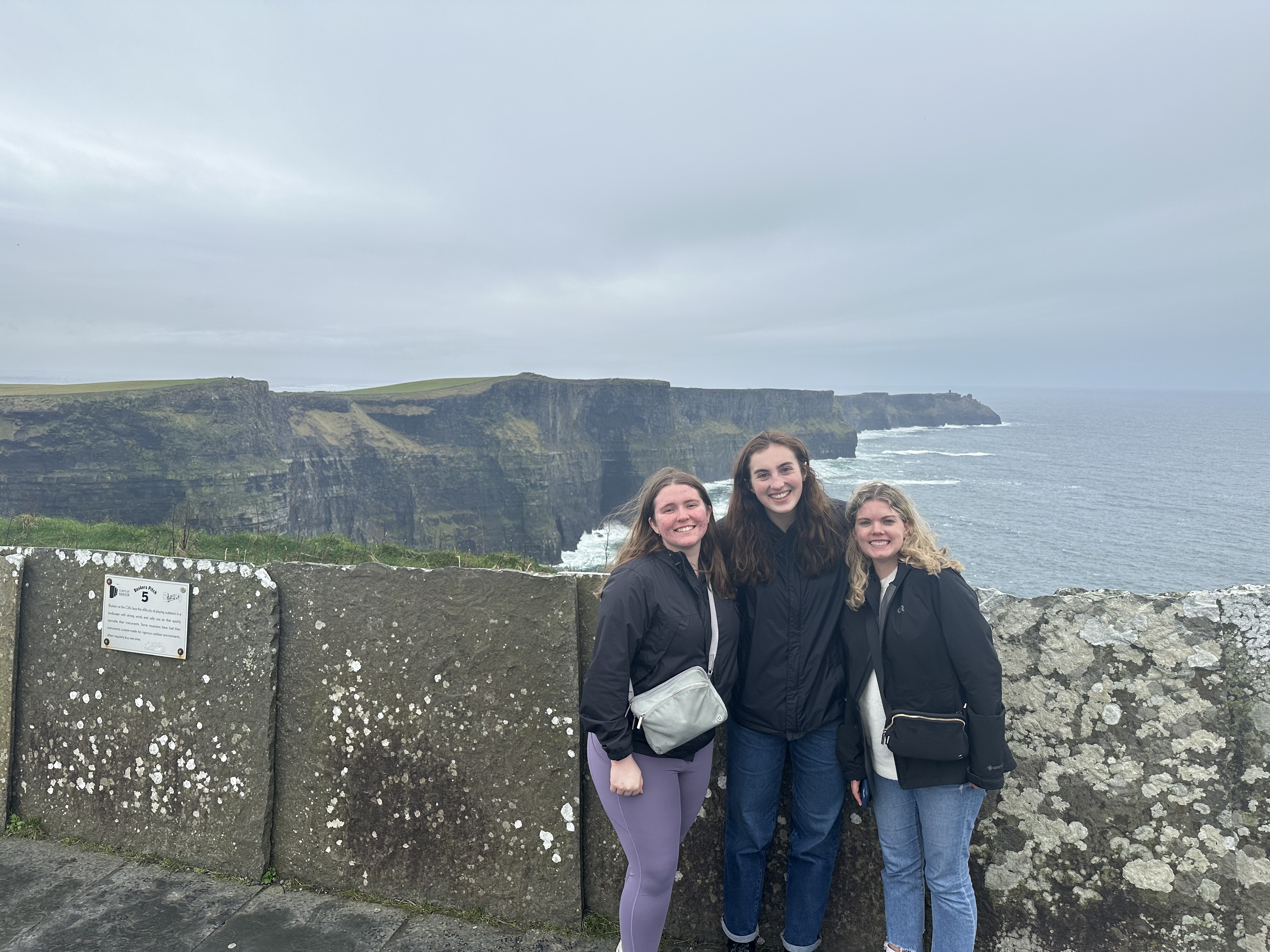
Hi! I am Holly Mahon, a senior at the University of Montana studying Political Science and Public Health. During the Spring of 2023, I had the opportunity to study abroad at the University College Cork (UCC) in Cork, Ireland for my Beyond the Classroom Experience. 

The course that I took that related to my Global Theme of Global and Public Health was Introduction to Health Information Systems. I chose this course because I am interested in the collection of data surrounding health outcomes. I really enjoyed a guest lecture from the Director of Mental Health Services in County Cork about community building cooking programs for men to build strong social networks to support mental health. The class taught very valuable lessons about validity and context when looking at data pertaining to global health. The amount of data surrounding health and the methods to collecting health data is extremely complex. I was glad to gain more knowledge and understanding surrounding information and health while at UCC.

Being and studying in Ireland helped me develop a lot of confidence in my future as I look forward to having a career in Public Health and just having a future being an adult. I developed a new level of independence. I traveled to Ireland and traveled around on Ireland’s public transportation on my own. I also made new friends and traveled to other areas of Europe with them like Edinburgh, Scotland and Paris, France. Growing up in Western Montana and having Ireland as my first experience out of the country was an extremely empowering adventure for me.

I am so grateful for my time in Ireland and I am very thankful for all of the memories and experience I have from my Beyond the Classroom Experience!

Prescribed Burning in the Longleaf pine (Pinus palustris) Ecosystems of the Southeast United States

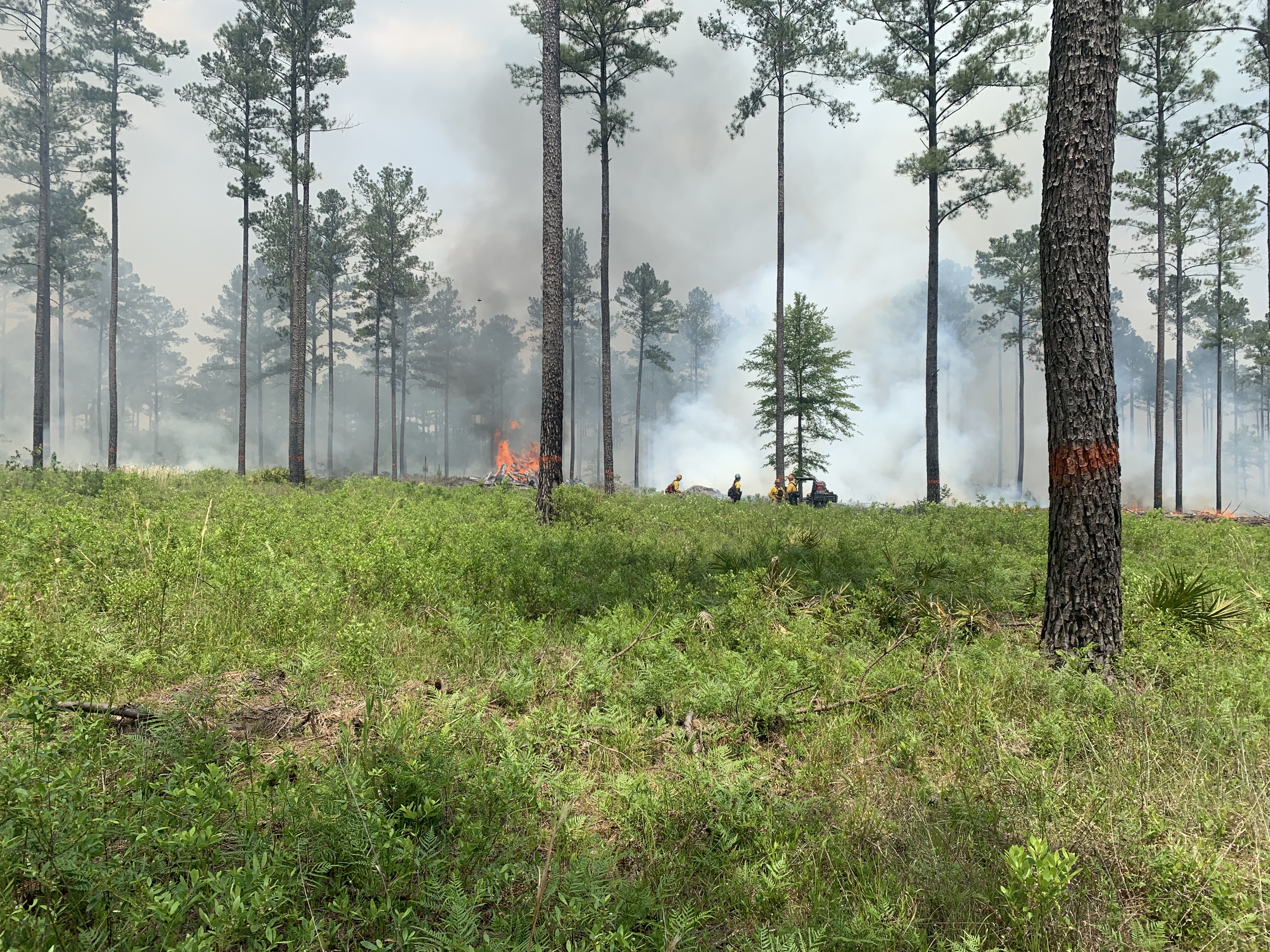
Imagine the birds are chirping, sounding like musical notes, cascading all around you. Above you, the trees are a vivacious green and insects hum from their trunks. Up ahead rises a column of smoke and a wave of flames bites at its heel. There is a trail of fire leading up to where you’re standing. You started the fire. And you watch as it burns through the blackberry bushes, palmetto, oaks, and pines. 

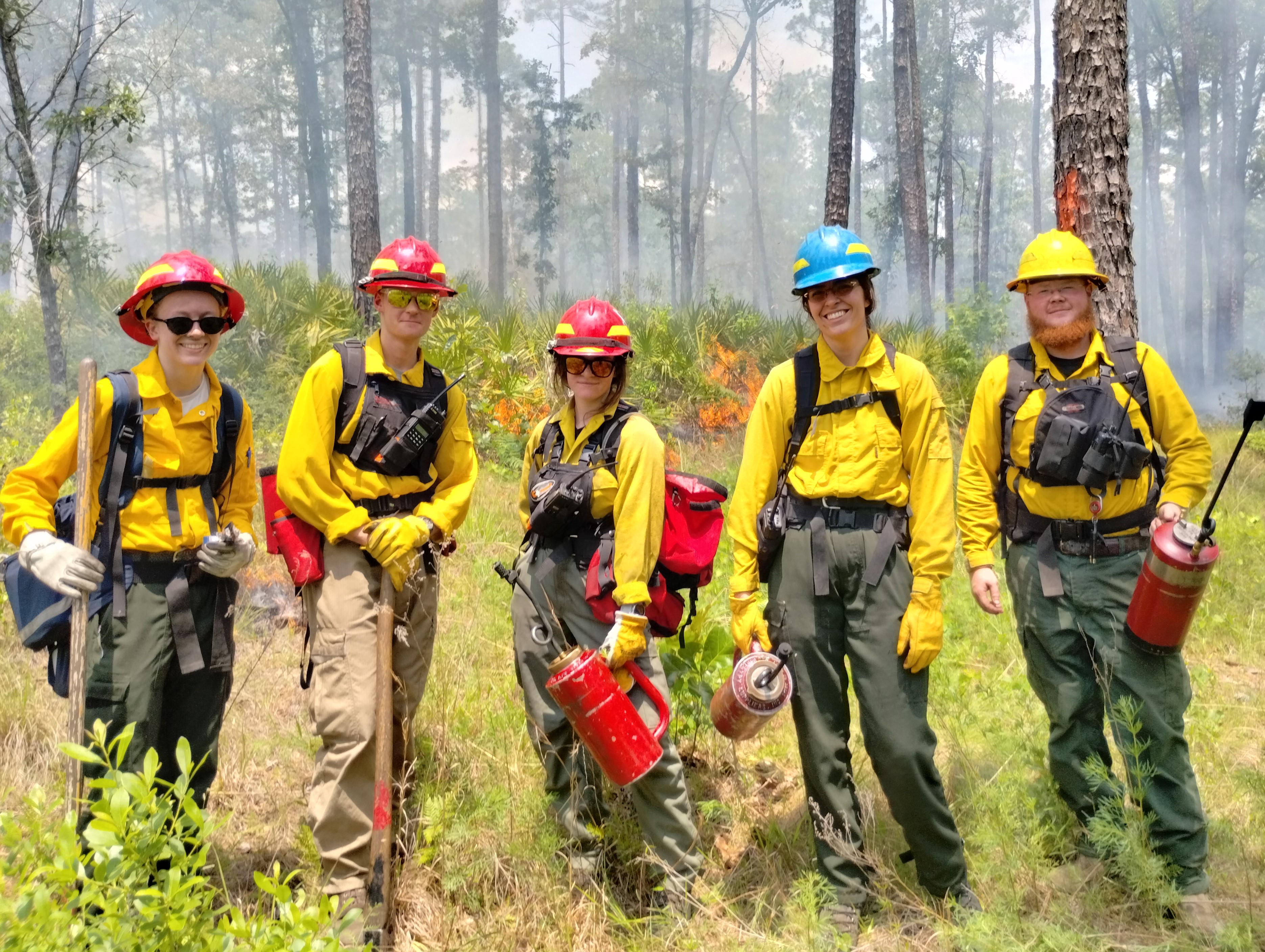
Hi! My name is Jaiden Stansberry and this was my Beyond the Classroom experience. I traveled to Baxley, Georgia with the University of Montana’s Prescribed Fire Practicum. The class was led by three UM professors and one Montana Forester, in addition to six University of Montana students from varying backgrounds. We traveled to the Moody Forest owned by The Nature Conservancy (TNC). The purpose of the prescribed burning was to regenerate longleaf pine (Pinus palustris) stands, which need fire to develop. This tree was once the predominant species of the south, creating many essential habitats, but has since deteriorated due to reduction of fire to eliminate its competition. This experience offered a unique and hands-on opportunity to aid in the restoration of these species through prescribed fire. In addition, I was also able to build my own knowledge and leadership in wildland fire, a career that I have worked for the last two years. 

The class and I hit the ground running when we arrived in Georgia, waking up early the first day to burn 100 acres in 90 degree weather and suffocating humidity. Upon arriving to breifing, it was very apparent that this forest ecosystem was unlike any that I had burned in. The grass and shrubbery seemed green and unburnable and the relative humidity (RH) was in the 70’s (for comparison, the RH is commonly in the 20’s in Yosemite). A rattlesnake slithered its way from the unit and settled beneath the handtools laid on the road, welcoming the traveler’s from Montana. Once we were briefed, we began firing operations and to my surprise the greenery caught flame like it had been soaked in kerosene. This was just the start of many prescribed burns we would complete in Georgia. 

Most days, the division of firing was operated by students, which allowed me to explore leadership roles in fire. Being relatively new to the fire world, I tend to listen to others with more experience and inquire to learn more, but in this environment, I was able to test my knowledge when telling others with less experience what to do. I felt that I got to use the techniques of leadership I learned in GLI last year when teaching others. I enjoyed sharing the world of fire to those that had yet to experience and share my knowledge.
The trip was not only compiled with amazing fire experience, but also the opportunity to explore the ecosystems of Georgia. There were a few days that the thunderstorms or wind direction prohibited us from burning. But these days were of no loss to our learning. One day we spent exploring the Moody Forest’s ecosystem of cypress forests and nests of Red-cockaded Woodpeckers. This species is directly affected by the decline of longleaf pine forests in the south as their resinous wood is preferred to build nests within. We also found the endangered species of Gopher Tortoise and explored the Okefenokee Swamp, one of the few Wilderness areas in the south, near the Florida-Georgia line. Other days, we assisted in preparing future burn units for TNC, which led to additional chainsaw and line-cutting experience. 

Burning in the south was informative from a wildfire perspective compared to burning in the west. Wildlfire is given a very negative connotation in the west, because it is often associated with destruction of property and forests. Prescribed fire is also difficult to initiate, because there are many hoops that need to be navigated, like burn plans, smoke permits, and personnel to operate the burn. And many communities tend to be fearful of fire as they may have lost homes or property in severe wildfires. However, in the south, prescribed burning was openly accepted by communities. Oftentimes, if we arrived in an area to burn, the neighboring houses would ask us to burn their property or join us in burning. This perspective was wildly different than what I was acclimated to seeing. The support seemed to aid in the implementation of prescribed burning and allowed burning to happen more often than I have seen anywhere in the west. The lack of prescribed burning is an issue on a global scale, because as wildfires spread severely all over the world there is more of a need for fuel mitigation, like prescribed burns, to reduce severity. My Beyond the Classroom experience gave me a new perspective of how difficult prescribed burning can be to implement without the support of the community. This helped me to connect my theme of Resources and Sustainability to my Beyond the Classroom experience and see this issue on a local and global scale.

This experience has been one of my favorite opportunities at the University of Montana. The connections I made with my professors, peers, and coworkers are unforgettable. I developed myself in a career that I pursue and participated as a leader, strengthening that skillset.