
Hi there! I’m Lucas, and I studied in Botswana for one semester as part of my abroad experience through the International Student Exchange. I’m a senior studying Environmental Science and Sustainability. My GLI global theme, naturally, is resources and sustainability. Resources and Sustainability works under the goal of understanding how society handles the natural world and how we manage to live alongside nature in a more globalized world. A global theme that allowed me to focus a clear lens to investigate the environmental conservation tactics utilized by Botswana officials and environmentalists. As many African conservation practices are often overlooked, getting the opportunity to directly work with leaders in the field was nothing short of eye-opening to a new world of cultural conservation.

A country steeped in rich culture, with an incredible emphasis on community, expression, and most notably conservation. I was able to experience Botswana through the University of Botswana, a large school located in Botswana’s capital city of Gaborone. The university is seen as a hub of development and concentrated culture, swarmed by swaths of budding scientists, creatives, and future leaders of Botswana. My classes were my conduit of information during my abroad experience. I took classes in Conservation Bio, Botswana Environment, Environmental Archeology, and Globalization and Environmental Change. These classes were the keystone to my understanding of how Botswana organized and executed conservation.
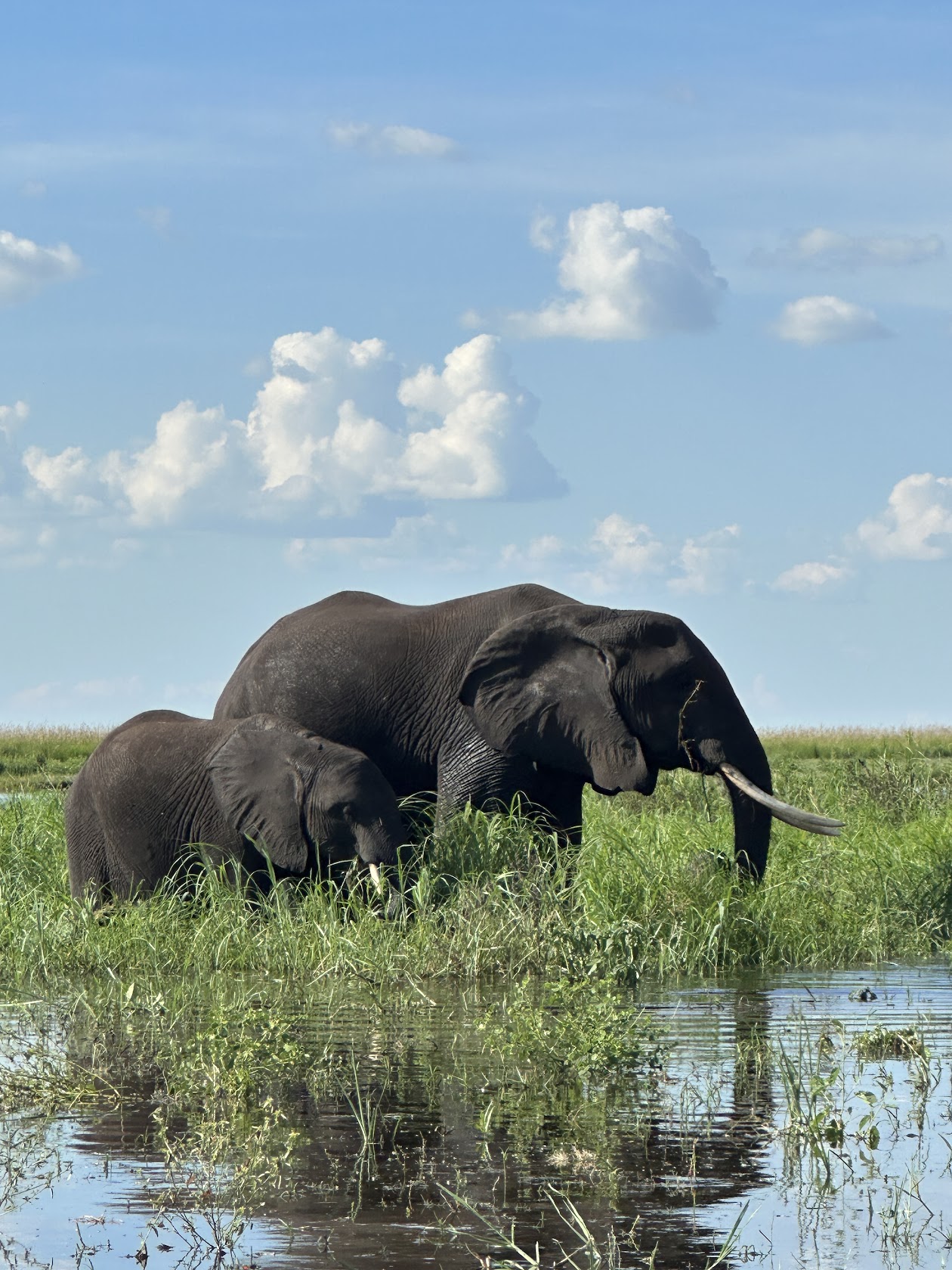
Lab work in the field with my conservation biology class allowed me to get hands-on with local diversity and learn how scientists handle the environment, often contextualized through large game conservation. Protecting the large, charismatic animals of the African continent is a tedious and dangerous process, as many of the issues manifest through Human-Wildlife conflicts, in which an animal has gotten into a situation where it either harms artificial infrastructure or humans are harmed by the animal. This conflict sparks many of the conservation efforts in Botswana. From how wildlife corridors are organized to how simple guard dogs are the perfect answer to large cats attacking livestock.
Professors were incredibly passionate and driven to educate pupils on how theory is applied in the field, often pressing students while in the field to be observant and asking difficult questions that kept students on their toes. Many faculty members of the university were rigid and intense instructors who expected a lot from their students, but taught with such passion that they couldn’t help but capture my attention. A consistent pattern among my professors was that they were farmers and landowners. All of whom were happy to indulge my insistent questioning of how farming and conservation interacted in Botswana. After my experience and education in Botswana, I walked away with a deeper understanding of what it means to be an environmentalist in Botswana and Southern Africa: you must be directly active in your land and your community. The land is directly shaped by how your community interacts with it. Having a culture that shapes your use of land around sustainability in a harsh environment, such as the Magkadikadi Desert, forces the Batswanan people to live in a way that aligns with the natural world, accentuating practices like minimizing food waste by using as many parts of the animals and plants as possible. Nothing goes to waste, and everyone is fed.

My most impactful experience was with culture. The friends I made were writers and English majors who were studying at the University of Botswana. Filling my nights with soulful poetry and conversation on culture. Making friends who had grown up in the Southern African region allowed me to stretch my cultural exchange muscles and represent Americans the best I could by discussing what feels right about our culture and many of the aspects I wished to change. But, I was often returned with similar talk of what needs to change in Botswana, allowing me to realize I was not in a perfect place, and somewhere that was dynamic and changing. I often inquired about why culture was the way it was, such as the age hierarchy or tribal heritage, which was met with history lessons and dynamic narrative stories that held me engaged through many long nights on the staircases outside my dormitory. Meeting close friends from the Khoisan and Kalangan ethnic groups allowed me to understand cultural conflicts that related to content in my classes, which related to both the history of the land and conservation in the area. This could vary from location to location, depending on the Tribe in control of that area, as they regulated much of the land in the country. Meeting these young, artistic, and knowledgeable friends pulled me headfirst into the culture, exposing me to art, music, language, and writing that I had never been around.
All of my experiences while abroad led me to having a thrilling, and life-changing , and incredibly educational time while in Botswana.
 Beyond the Classroom