Helo! Sut wyt ti? My name is Morgan Sandau, and this past Spring I studied at Aberystwyth University in Aberystwyth, Wales! I loved my time in Wales so much. I haven’t heard much about it in my life, which is what made me so excited to visit. Aberystwyth is an adorable coastal town in Mid Wales. The Welsh who live there are very proud, and I was always so excited to read and hear about the history. Aberystwyth has beautiful sights and buildings, and is full of so much personality. I met so many kind people who were excited to ask me about the US. It was funny to me and my fellow American roommates how fascinated people were with us being American. “Why would you come all the way to Wales?” was a question I received very frequently.
My GLI theme is Resources and Sustainability, and for the semester, I chose to challenge myself to understand Welsh climate change communication and perception. To ensure I could meet this goal, I took one course called Climate Change: Plants, Animals, and Ecoysystems and another called Environmental Regulation and Consultancy. Inside and out of class, I learned that people and governments in the UK are extremely aware of and invested in addressing climate change. I cannot express how happy it made me to see so many groups of people motivated to make real change. It was also cool to meet people with completely different upbringings from mine who ended up being as passionate about climate change as I am. In Environmental Regulation and Consultancy, I learned that all construction projects in the UK have to undergo an Environmental Impact Assessment. What’s more, I learned how to complete one. Having never lived outside Missoula, this experience was very important for my personal and professional growth. I have more hope for climate resilience, and I have more knowledge of what other places are doing to achieve this goal. I hope I can bring this knowledge into the climate sector in the US.
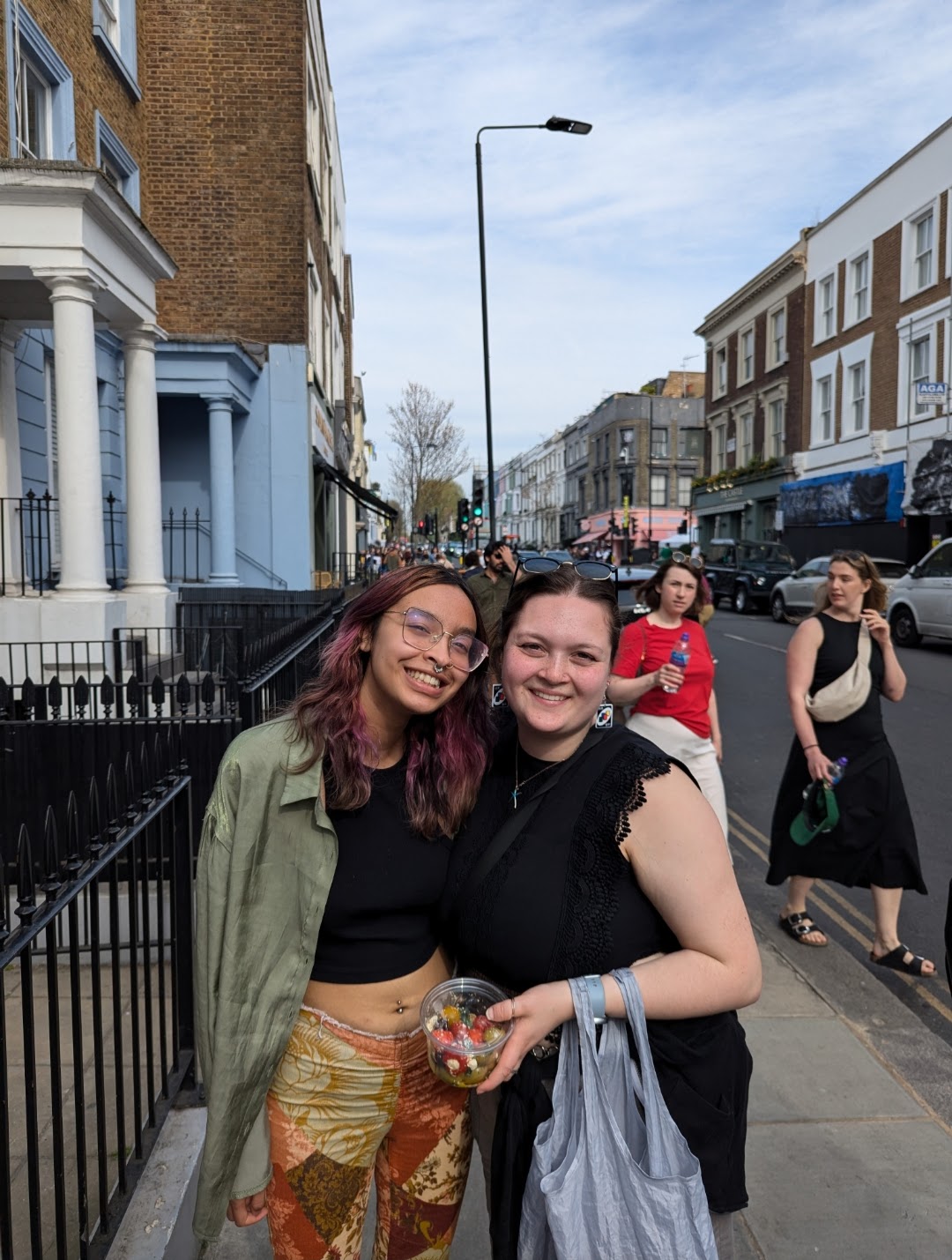
The view from the walking bridge at Aberystwyth University.Volunteering to clean up the beach in Aber.Dhriti and I in London.
Beautiful church in Bayeux, France.
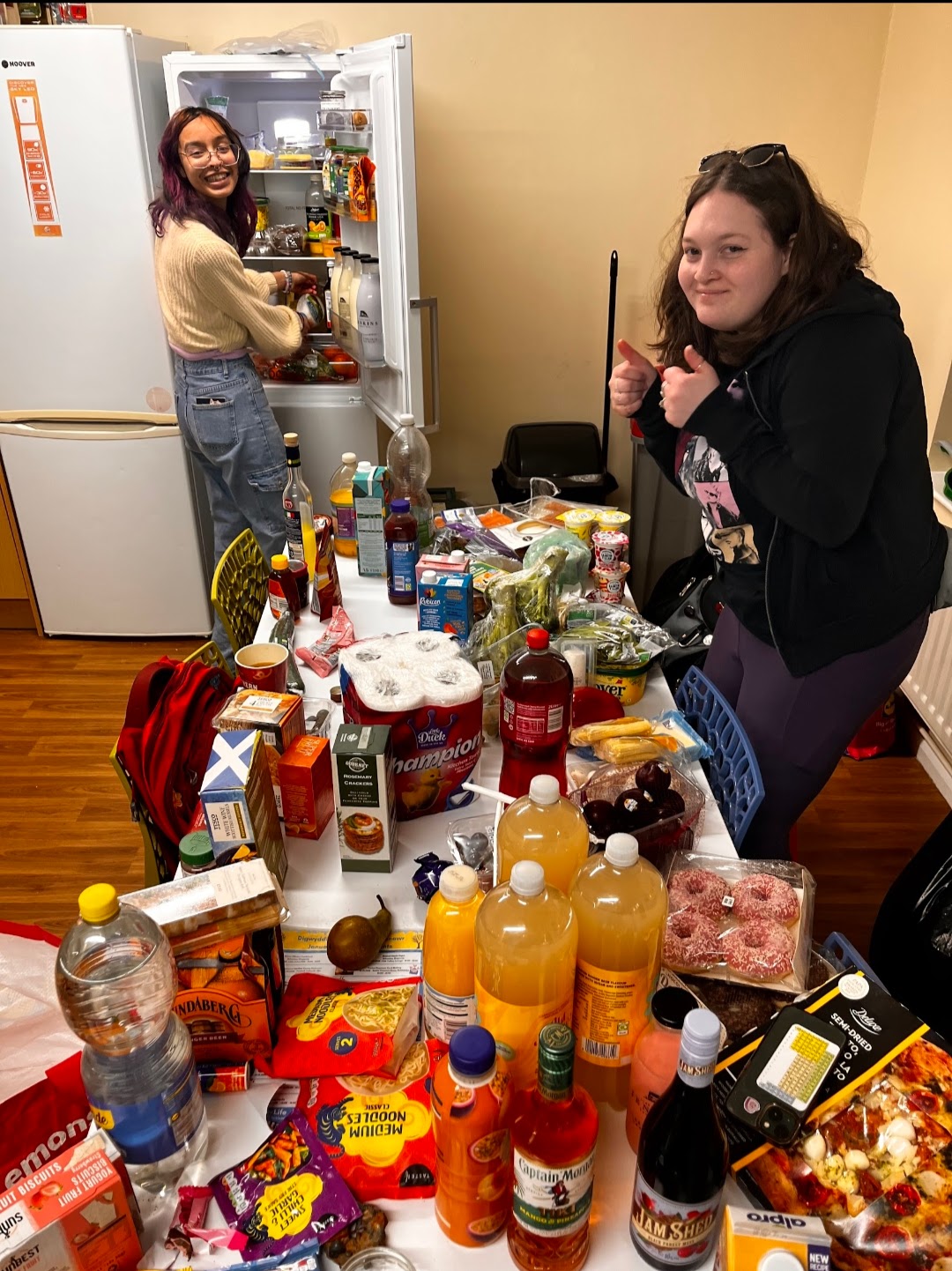
Grocery Haul!
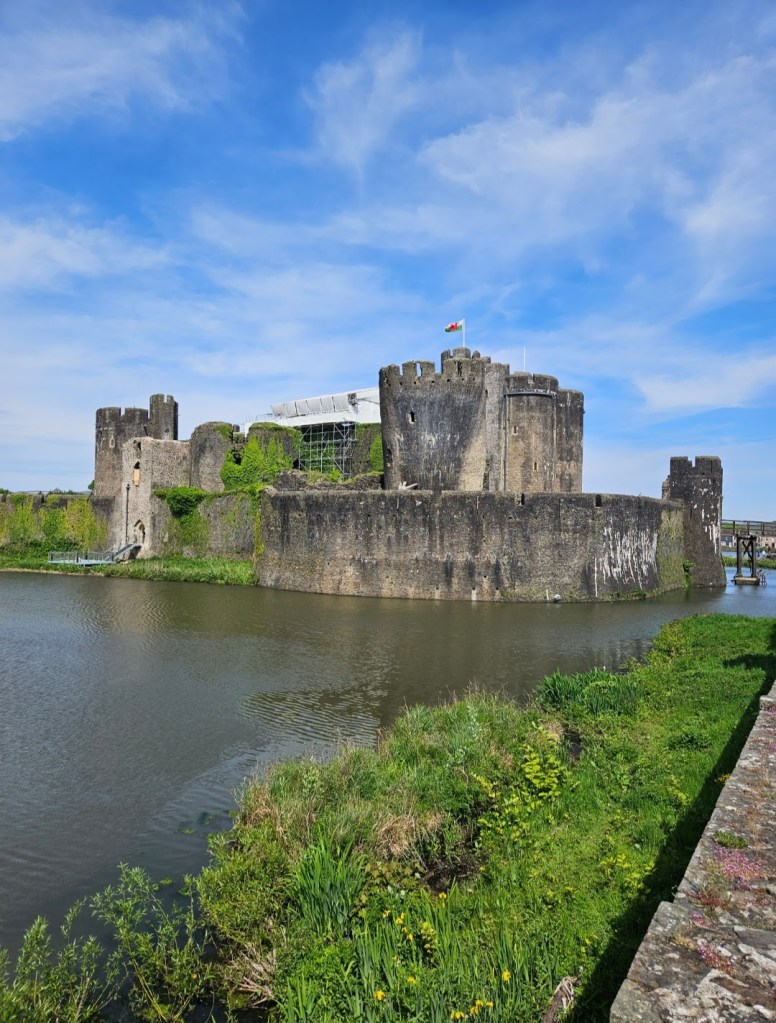
At AU, I lived in campus housing with two other Montanans (who also go to UM!), a Coloradan, and a Brit. We had a lot of fun together. Aberystwyth is a long way from other cities, but I left town a couple of times. One of my favorite adventures was when I went to Scotland on a whim with two of my flatmates. It was so cool to have no plan and just spend several days in Edinburgh and Dundee. On a separate occasion, we went to Cardiff, the capital of Wales, and saw Caerphilly Castle and went minigolfing at this really cool little place.
I am so glad I got to have this opportunity. I will remember it forever. It really is a once-in-a-lifetime experience. I hope I can get back to Aberystwyth at some point, but even if I don’t, I’m incredibly grateful for my time there. Thank you to the GLI for helping me work this process into my degree. It was so worth it!
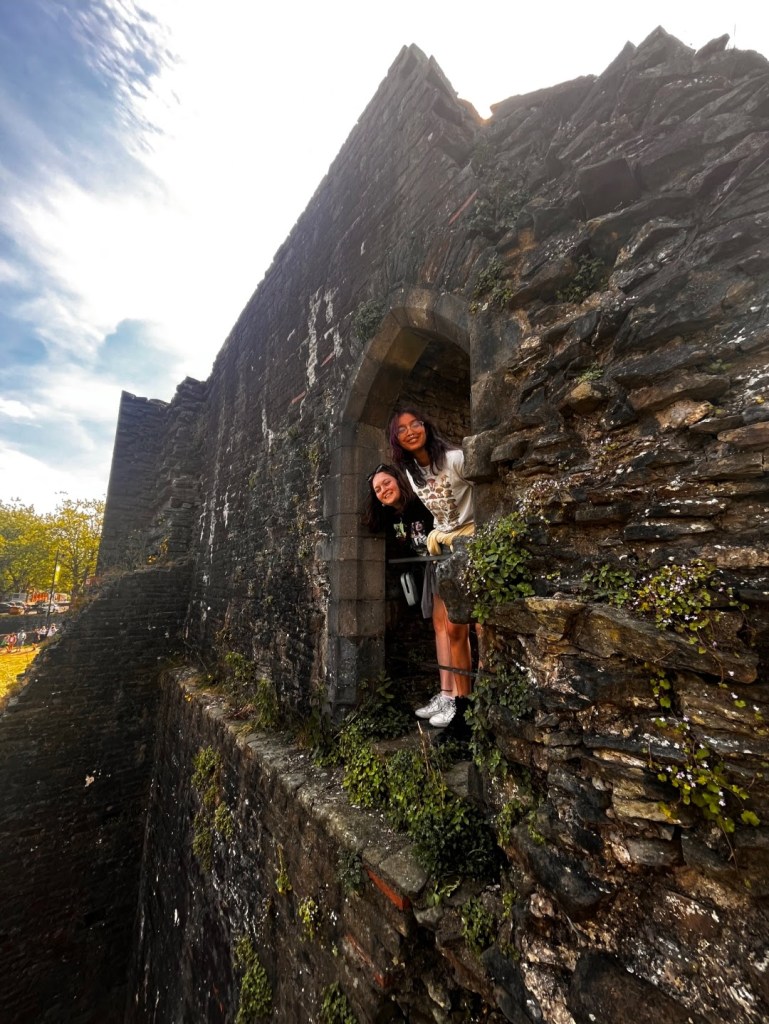
Caerphilly Castle in Caerphilly, Wales!Dhriti and I at Caerphilly Castle
Minigolfing in Cardiff.
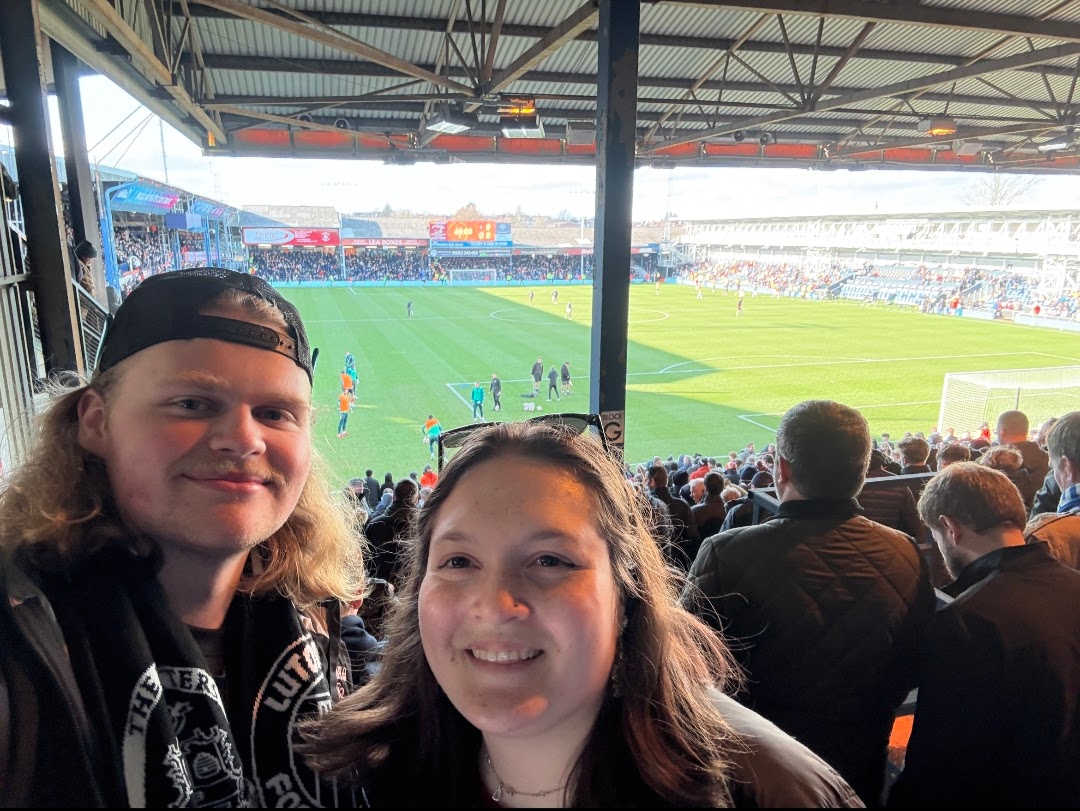
Wyatt and I at a football match in Luton, England.
“If nothing else, you will learn Patience while being here” – University of Ghana’s Study Abroad Leader
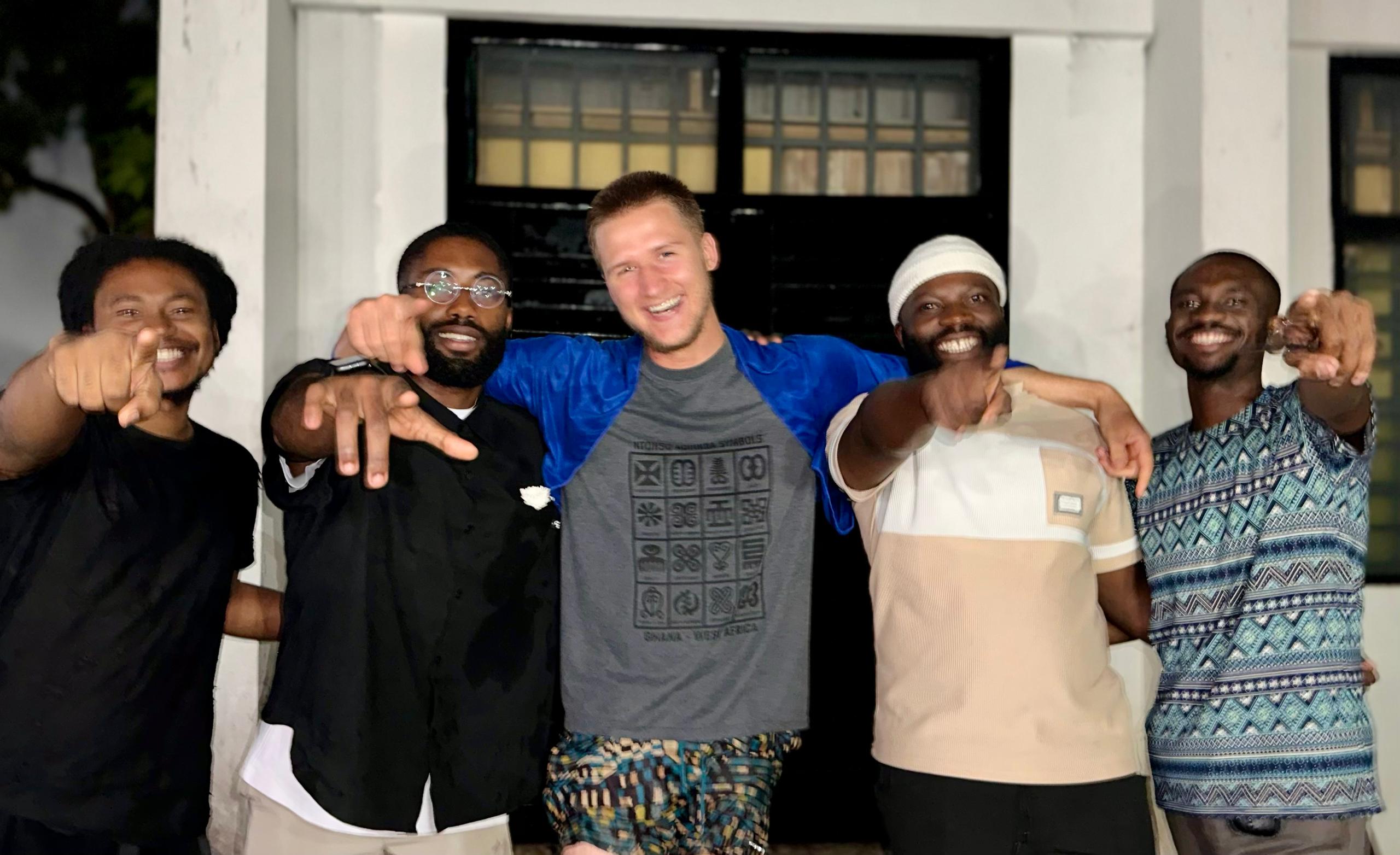
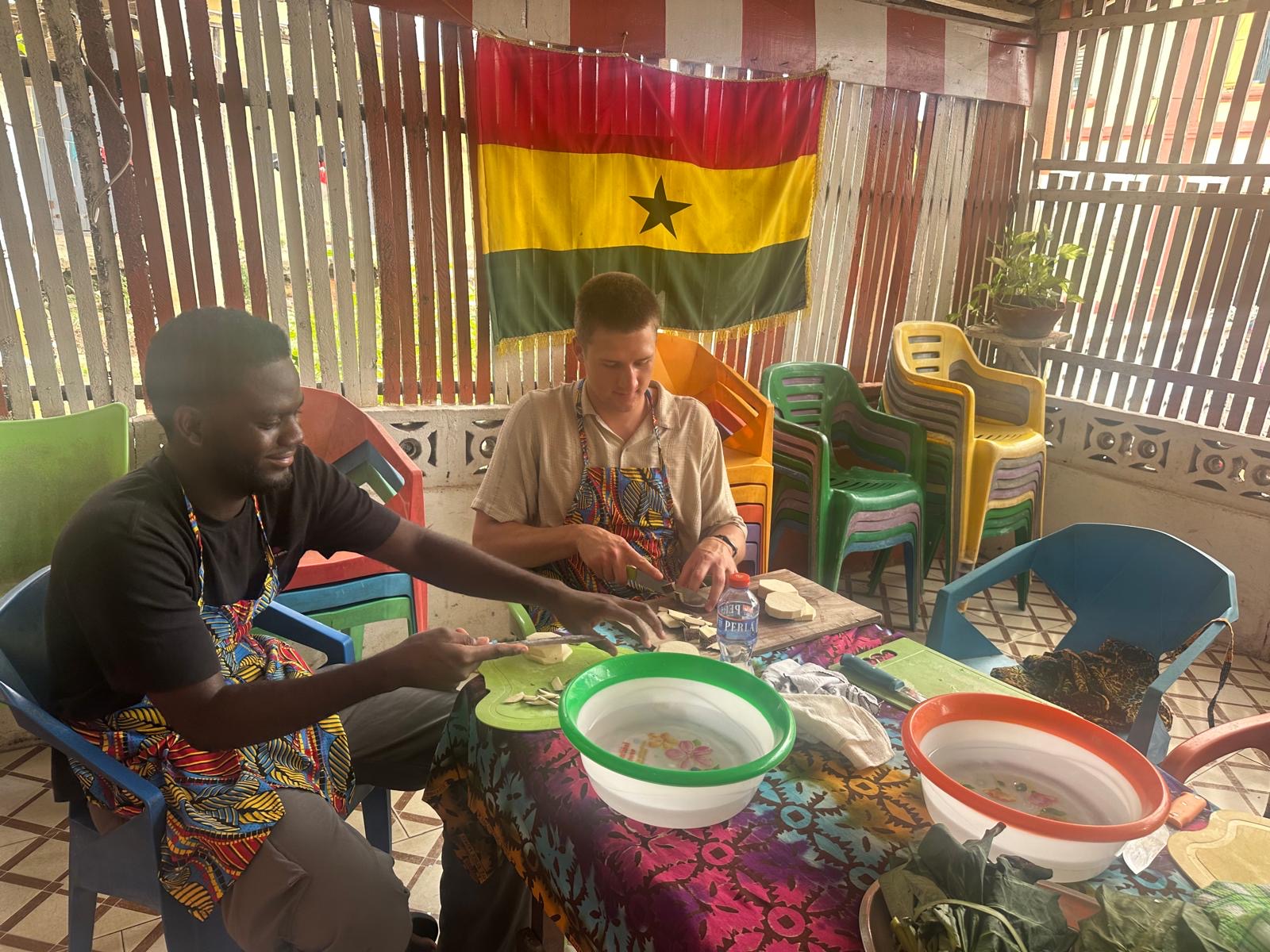
Hello! Noah Waltz here. I am a fourth year student in the GLI who has chosen a public and global health theme. Recently, I’ve returned from a Semester Abroad at the University of Ghana in Accra, Ghana where I had the goal of getting to know the emergency response system, the school and university system, as well as the overall culture. Through the volunteering at the local fire station and the ambulance service, enrolling in 15 credits, and engulfing myself in the culture for three and a half months, I achieved these goals! I got sick with Typhoid, got baptized, made great friends, grew in understanding how much of the world lives (as in less developed to America), and grew a whole lot in gratefulness. I’m sure glad I went!
In achieving these goals, I went through trials of various kinds, which I’ve come to understand is how one learns. The University system was less organized, less professional, and often chaotic. Eventually, I saw some good in them, which was that classes were more lively than I am used to, as well as that in West Africa’s history, the university system has come a long way. My health struggled at times due to Typhoid, although this is was simply cured when treated early with antibiotics. Eventually I learned which foods to eat, and I thoroughly enjoyed the foods they have to offer. My time with the fire and ambulance services were often difficult due to the lack of quality care comparatively to what I have seen in America. The key word in this is comparatively…
My heart grew while I was here, as a result of my relationship with God growing. Ghana can not be mentioned without it’s large religious presence. Even the stores have a religious influence to them as shown in the picture below of the beans seller titling her business “FEAR THOU NOT BEANS”. It was a great opportunity to grow in my religious convictions, and one that I am incredibly grateful for. The picture after my baptism is the first picture.
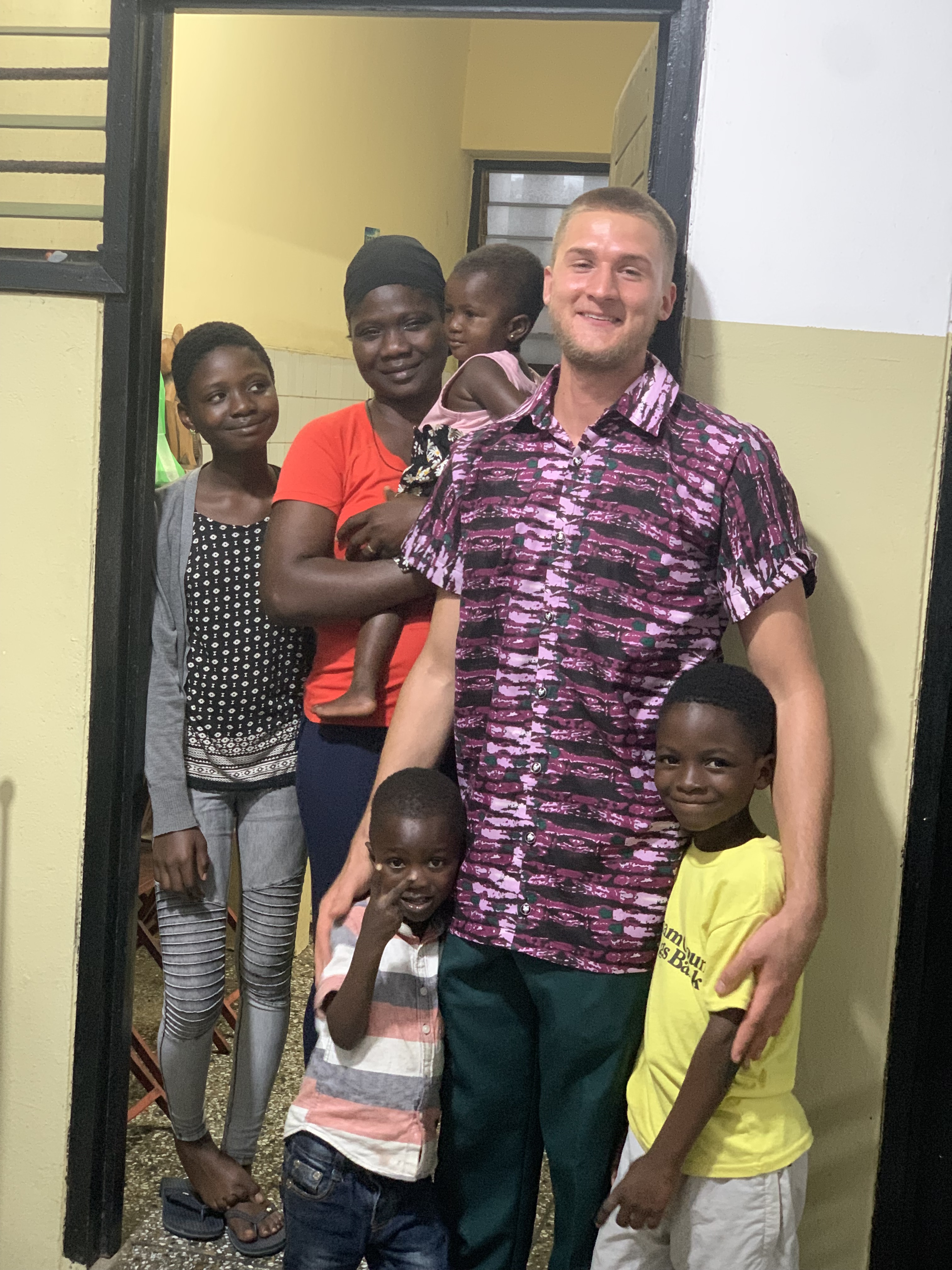
In conclusion, my experience in Ghana was worth it. Among the roller coaster ride of emotions that come from going from 1st to 2nd world (3rd world depending on what part of Ghana you go to), I am so grateful I went. I would likely not have done it if it wasn’t for the GLI scholarship that comes in year three of the program. Below is a picture right before I went to the airport with an amazing family I got to know well.We had just finished crying so forgive the picture.
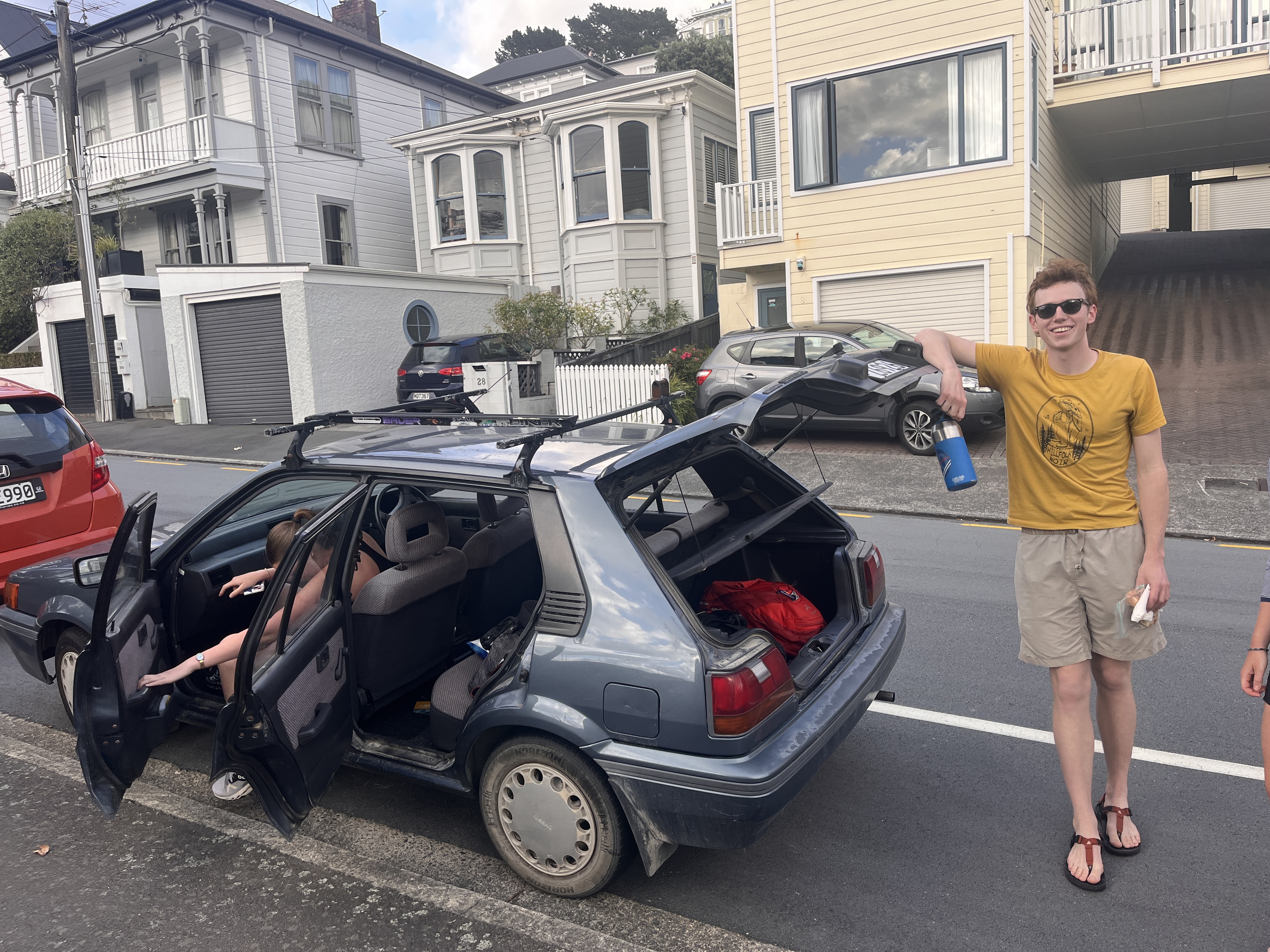
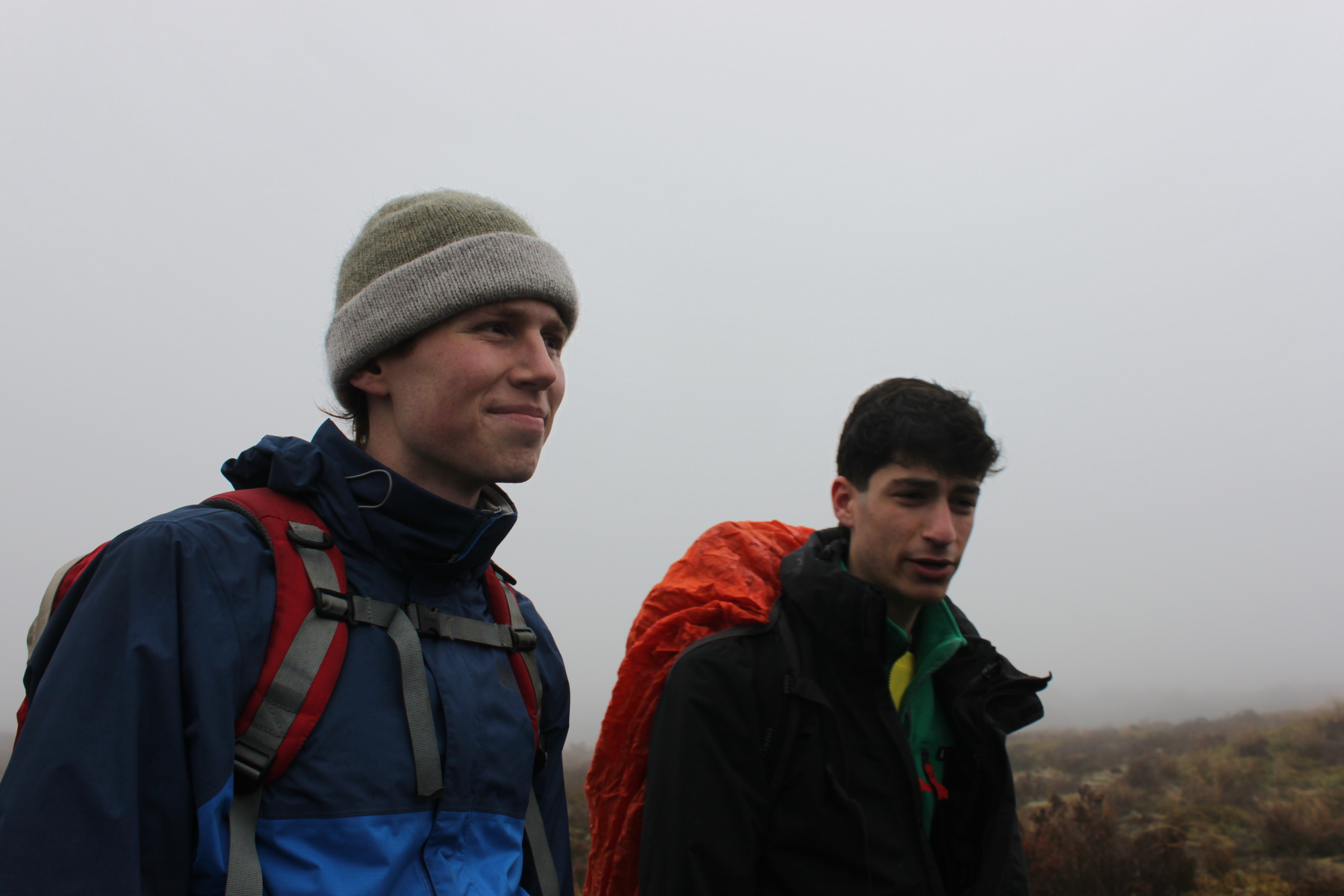
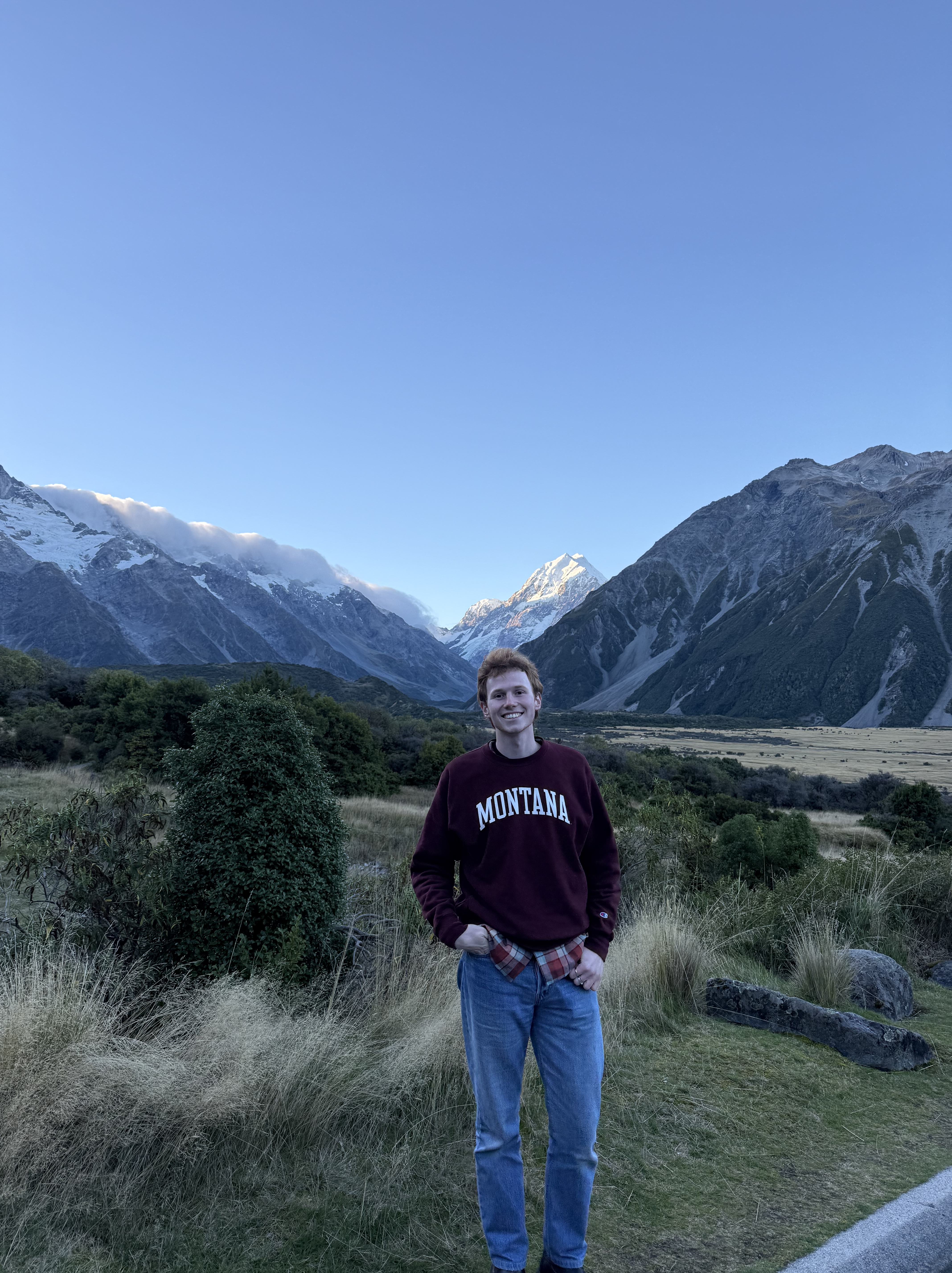
Kia Ora! My name is Chris Holstine, and for my Beyond the Classroom Experience I studied for a semester at Victoria University of Wellington in Wellington, Aotearoa (New Zealand). My GLI Global Theme is Resources and Sustainability. I took multiple classes related to Resources and Sustainability, but the one that I found most interesting was called Sustainable Destination Management. In this class, I learned about sustainable tourism development and how New Zealand is attempting to make tourism the most profitable industry in the country (previously dairy production). I was able to draw connections between New Zealand and Montana during class discussions about tourism development, as Montana faces similar environmental challenges to New Zealand. There are seldom wildfires in New Zealand, but the Eastern Canterbury Plains struggle through long drought seasons which makes farming difficult. Canterbury is also having to manage agricultural runoff into rivers as the drinking water of many rural communities is contaminated. I am grateful for the classes that I took at Victoria University of Wellington, because they all involved thoughtful discussions that helped me develop a global perspective on environmental management.
One of my favorite parts about New Zealand is their effort to include Māori culture and language in everyday life. Māori are the people who are indigenous to New Zealand, and they make up 17% of the country’s population. Nearly every place name, plant and animal species, and community event in New Zealand is named in both English and Māori. By living in New Zealand, I learned a lot about Māori culture and modern indigenous settler relationships. I appreciated Victoria University of Wellington’s emphasis on teaching indigenous knowledge as an institution that was started by white settlers. By living in New Zealand, I feel more prepared to be a leader in Montana with American indigenous perspectives in mind. I believe there are many administrative practices that American universities could be installing to promote indigenous knowledge and culture. As a leader, I want to direct change that emphasizes equity and unity between global perspectives. My Beyond the Classroom Experience has inspired me to further incorporate values of unity in my leadership.
One of the most fulfilling parts of my Beyond the Classroom experience was travelling the North and South Islands of New Zealand. I took many road trips with new friends and spent a lot of time hiking, camping, and swimming in the ocean. I am so grateful for all the people I met and places I was able to see during my time in New Zealand. A memorable moment during my semester was taking a two-week road trip around the South Island with my parents and meeting up with two friends at Fiordland National Park to drive back to Wellington. I feel so lucky and grateful for my Beyond the Classroom Experience!
Hi everyone! My name is Allison Webster. For my Beyond the Classroom Experience, I volunteered with the American Red Cross as a Duty Officer. This role put me on the front lines of their Disaster Action Team, where I was often the first person notified when someone was in crisis and needed help. I was able to find volunteers who were local to the event and dispatched them to offer Red Cross assistance in their time of need.
My Global Theme of Inequality and Human Rights and my Global Challenge, “How to offer support and hope to those in need during times of crisis and despair”, have both been deeply shaped by my experience working with the American Red Cross. As a Duty Officer, I had the opportunity to provide support to individuals facing some of the most challenging moments of their lives. My duties ranged from helping someone find emergency shelter, replace lost medications, access mental health services, or obtain financial assistance after a disaster. I was able to witness the real-world impact of compassionate and timely support. This role also helped me grow significantly as a leader, as I was the one behind the computer orchestrating the whole response with my DAT team and the clients.
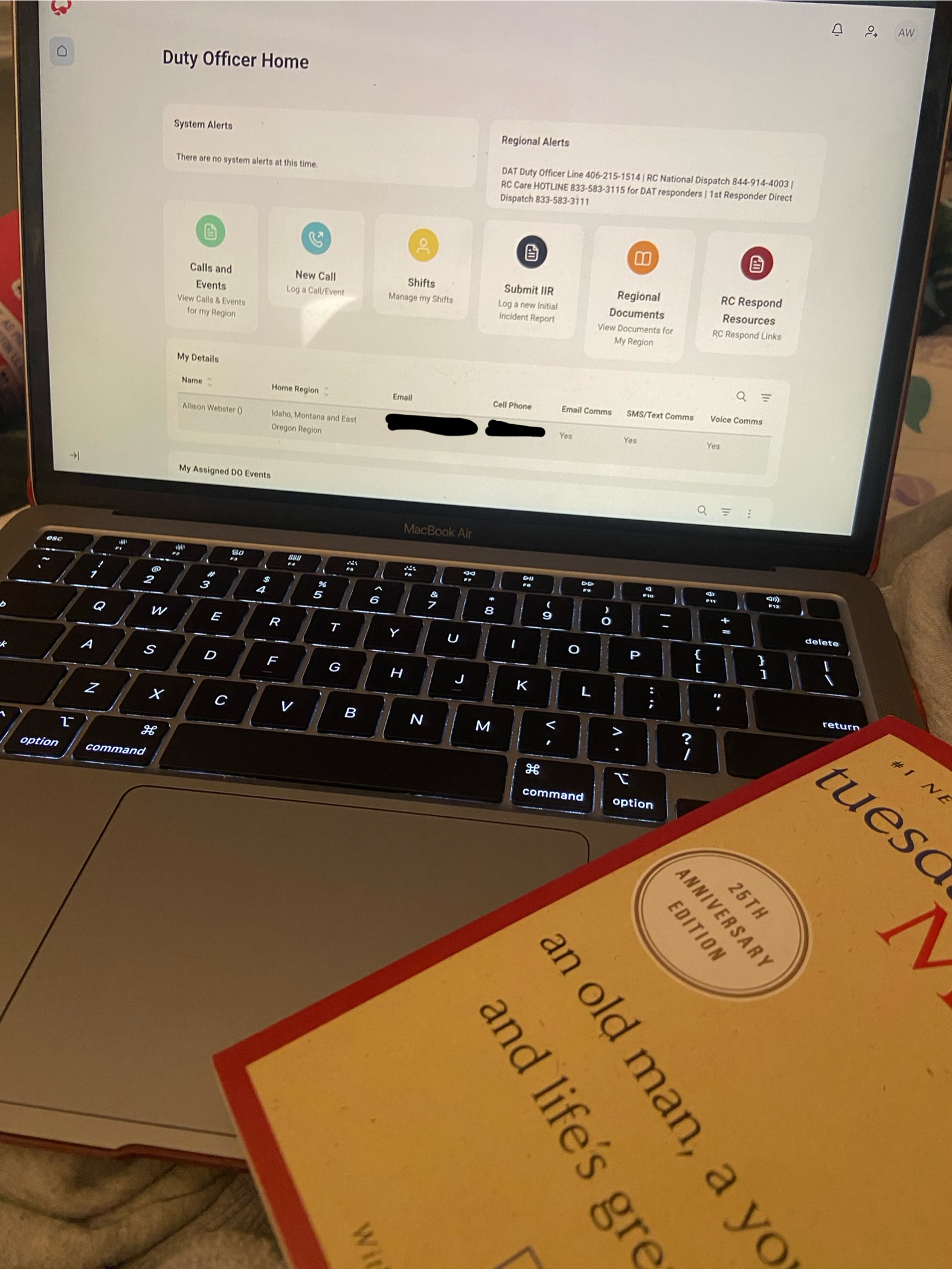
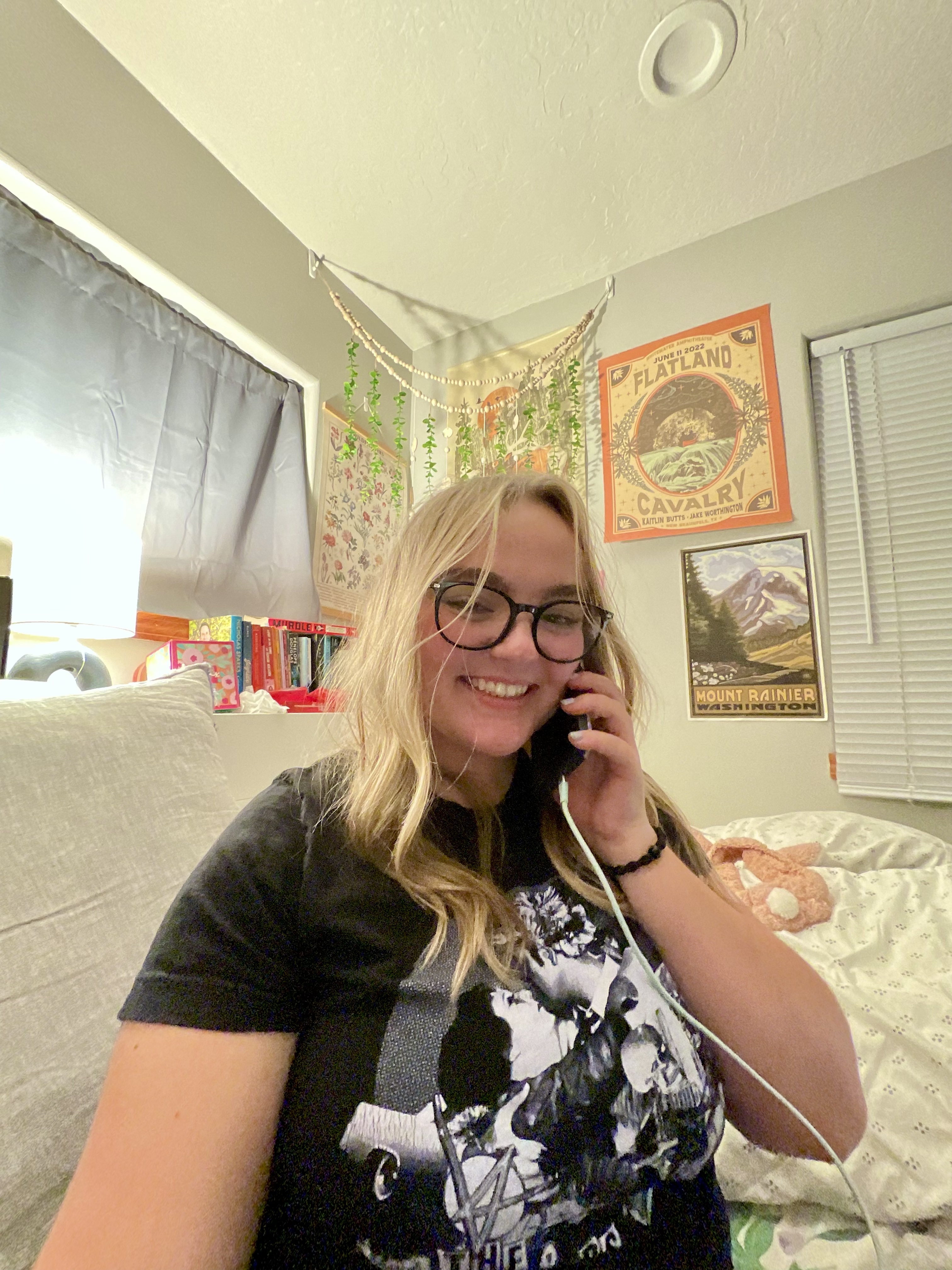
In between calls, you would often find me reading a book, waiting for my phone to ring with a call.
This role provided me with an understanding of how inequality can impact a person’s ability to recover from a crisis in their specific disaster. This often looks different from client to client. Many of these clients are experiencing the worst days of their lives, and I learned the importance of meeting people where they are. There were many circumstances where the DAT members would call me after speaking to the client and tell me that the client is unsure if they need the Red Cross’s help right now. Many clients need a little bit to process what has happened. In this case, we would leave their case open in our system and let them know that if they decide that they need our help, to just call us and let us know.
Academically, I’ve studied how social systems often fail to support individuals, especially in offering support in times of need. Working with the Red Cross allowed me to witness these systemic gaps that can often be overlooked when not aware of them. It was one thing to read about inequality in textbooks; however, it was a different ball game to see someone without a support system trying to recover from a house fire or struggling to access medication after a disaster. Many of us, even I included, take for granted our support systems. I know if my house caught on fire, I would be able to stay at so many people’s houses until I got back on my feet. I also know I would have the financial support of my family. However, many of these individuals don’t have that luxury that many of us have.
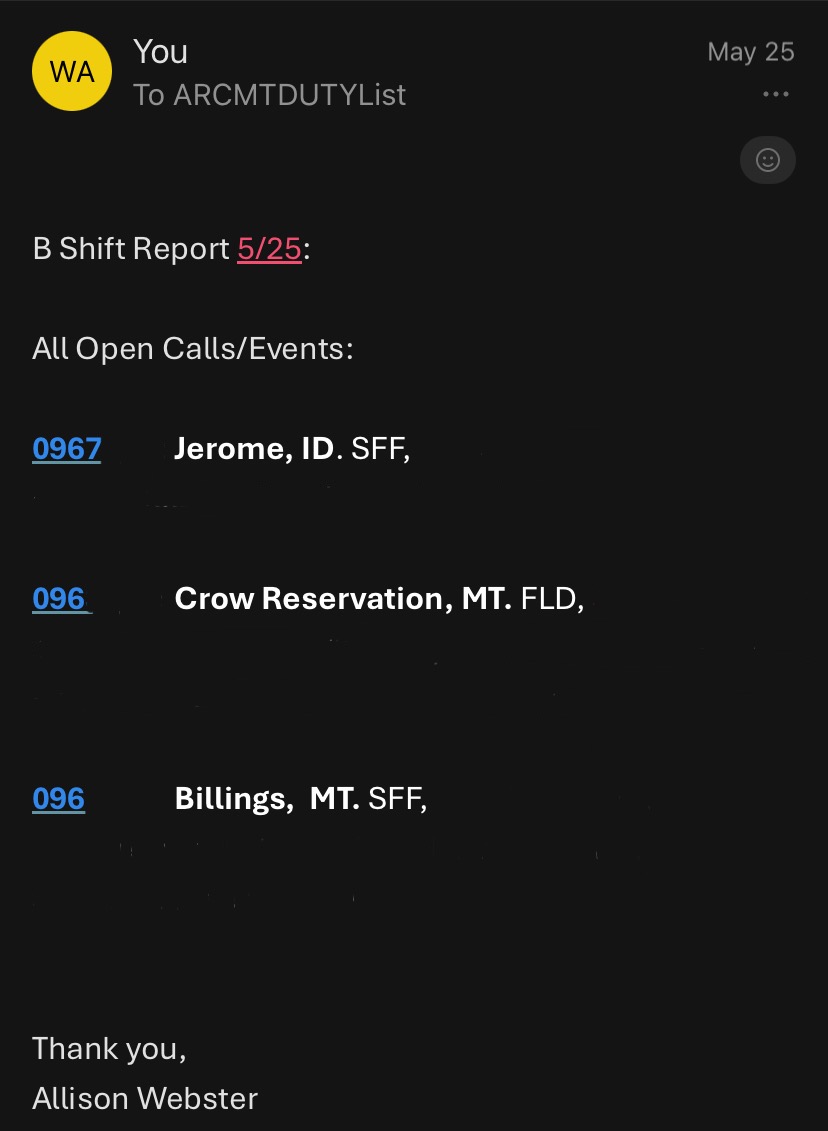
This is what a typical shift report looked like, so the next person on call could see the open cases (information missing to ensure client protection).
Throughout this experience, I’ve started asking new and important questions that I hope to look at further and take with me as I enter the workforce. How can crisis response systems better serve underserved or rural communities? How can we reduce barriers to accessing emergency support?
Hi there! I’m Lucas, and I studied in Botswana for one semester as part of my abroad experience through the International Student Exchange. I’m a senior studying Environmental Science and Sustainability. My GLI global theme, naturally, is resources and sustainability. Resources and Sustainability works under the goal of understanding how society handles the natural world and how we manage to live alongside nature in a more globalized world. A global theme that allowed me to focus a clear lens to investigate the environmental conservation tactics utilized by Botswana officials and environmentalists. As many African conservation practices are often overlooked, getting the opportunity to directly work with leaders in the field was nothing short of eye-opening to a new world of cultural conservation.
A country steeped in rich culture, with an incredible emphasis on community, expression, and most notably conservation. I was able to experience Botswana through the University of Botswana, a large school located in Botswana’s capital city of Gaborone. The university is seen as a hub of development and concentrated culture, swarmed by swaths of budding scientists, creatives, and future leaders of Botswana. My classes were my conduit of information during my abroad experience. I took classes in Conservation Bio, Botswana Environment, Environmental Archeology, and Globalization and Environmental Change. These classes were the keystone to my understanding of how Botswana organized and executed conservation.
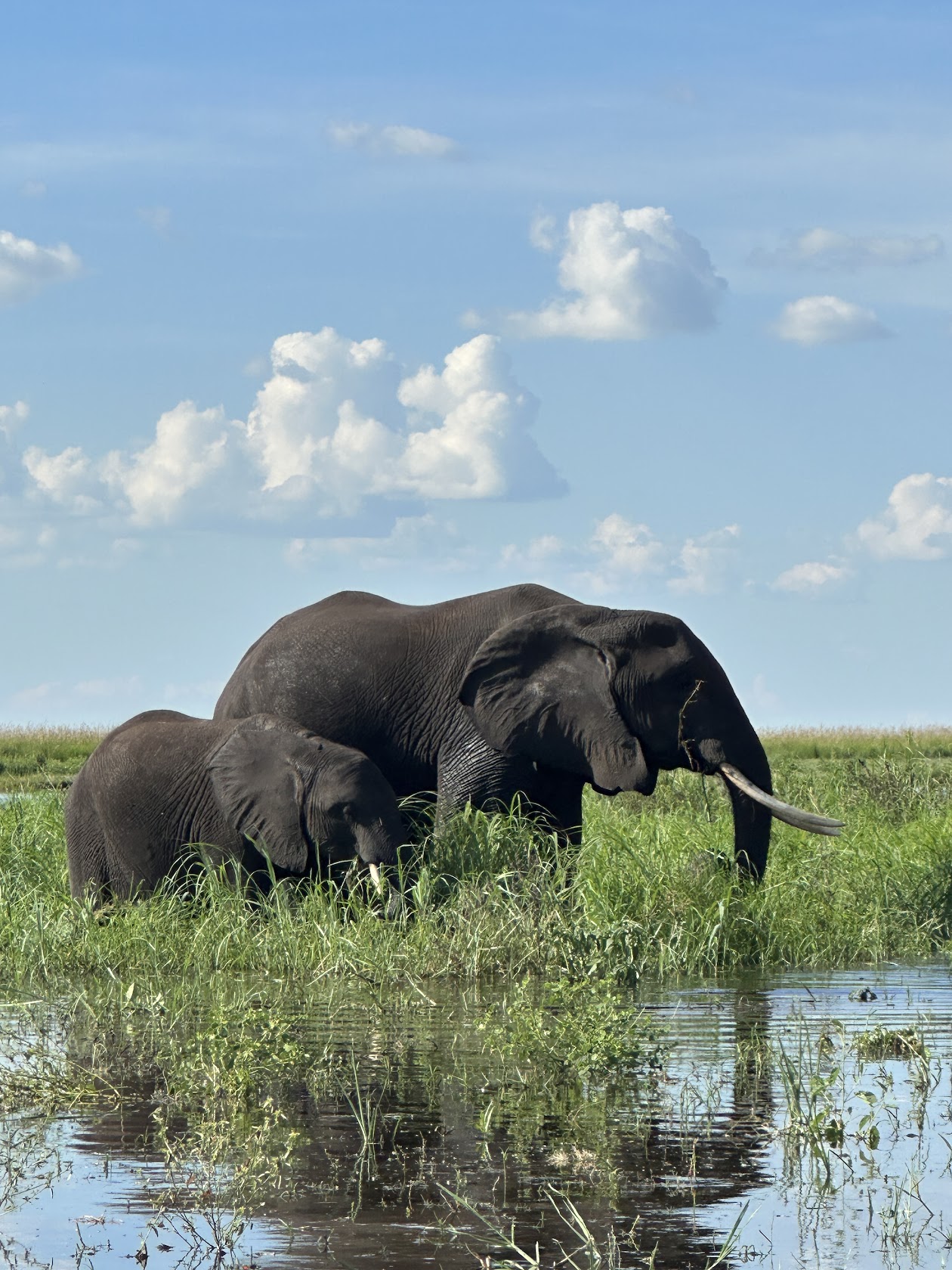
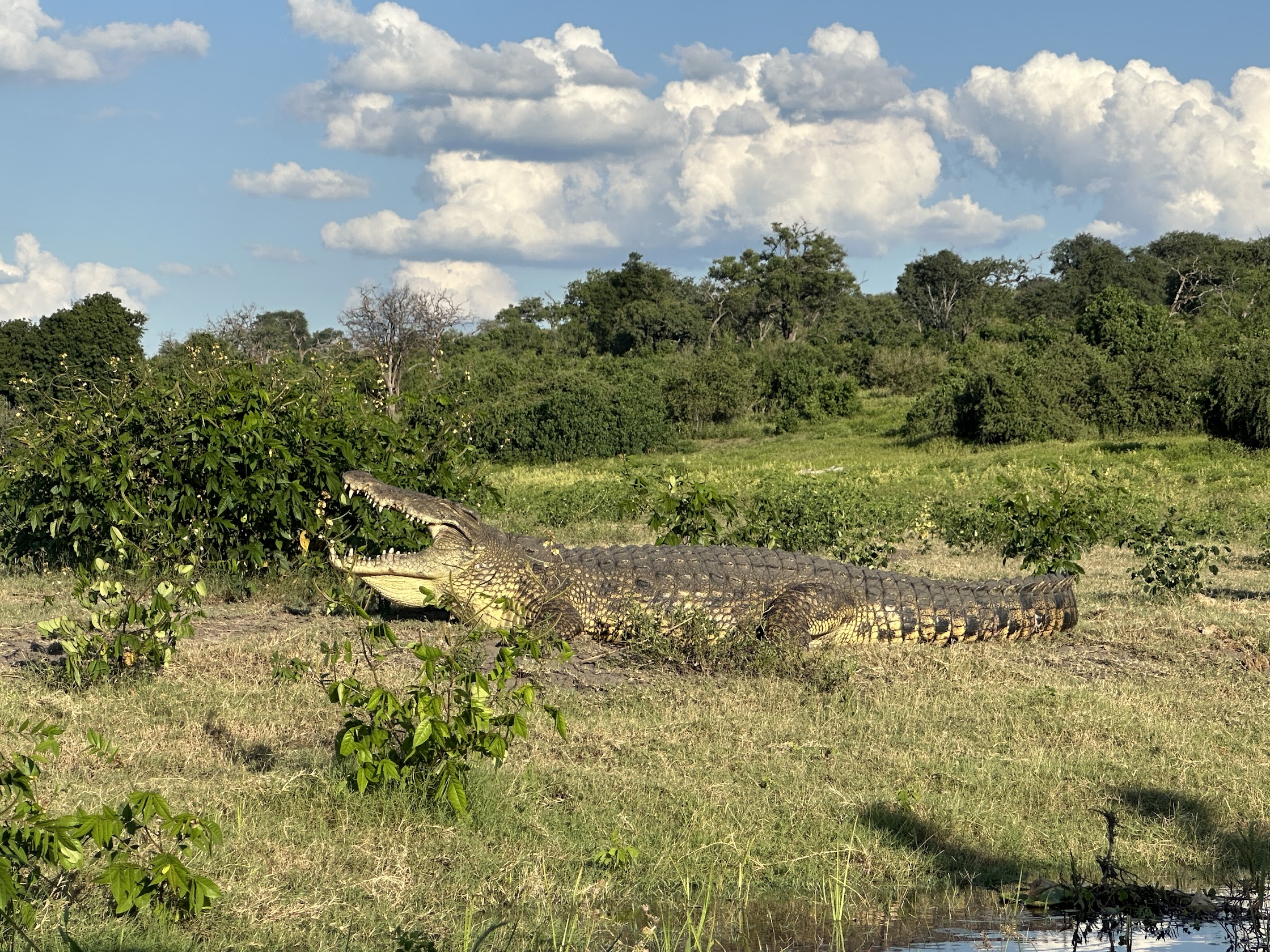
Lab work in the field with my conservation biology class allowed me to get hands-on with local diversity and learn how scientists handle the environment, often contextualized through large game conservation. Protecting the large, charismatic animals of the African continent is a tedious and dangerous process, as many of the issues manifest through Human-Wildlife conflicts, in which an animal has gotten into a situation where it either harms artificial infrastructure or humans are harmed by the animal. This conflict sparks many of the conservation efforts in Botswana. From how wildlife corridors are organized to how simple guard dogs are the perfect answer to large cats attacking livestock.
Professors were incredibly passionate and driven to educate pupils on how theory is applied in the field, often pressing students while in the field to be observant and asking difficult questions that kept students on their toes. Many faculty members of the university were rigid and intense instructors who expected a lot from their students, but taught with such passion that they couldn’t help but capture my attention. A consistent pattern among my professors was that they were farmers and landowners. All of whom were happy to indulge my insistent questioning of how farming and conservation interacted in Botswana. After my experience and education in Botswana, I walked away with a deeper understanding of what it means to be an environmentalist in Botswana and Southern Africa: you must be directly active in your land and your community. The land is directly shaped by how your community interacts with it. Having a culture that shapes your use of land around sustainability in a harsh environment, such as the Magkadikadi Desert, forces the Batswanan people to live in a way that aligns with the natural world, accentuating practices like minimizing food waste by using as many parts of the animals and plants as possible. Nothing goes to waste, and everyone is fed.
My most impactful experience was with culture. The friends I made were writers and English majors who were studying at the University of Botswana. Filling my nights with soulful poetry and conversation on culture. Making friends who had grown up in the Southern African region allowed me to stretch my cultural exchange muscles and represent Americans the best I could by discussing what feels right about our culture and many of the aspects I wished to change. But, I was often returned with similar talk of what needs to change in Botswana, allowing me to realize I was not in a perfect place, and somewhere that was dynamic and changing. I often inquired about why culture was the way it was, such as the age hierarchy or tribal heritage, which was met with history lessons and dynamic narrative stories that held me engaged through many long nights on the staircases outside my dormitory. Meeting close friends from the Khoisan and Kalangan ethnic groups allowed me to understand cultural conflicts that related to content in my classes, which related to both the history of the land and conservation in the area. This could vary from location to location, depending on the Tribe in control of that area, as they regulated much of the land in the country. Meeting these young, artistic, and knowledgeable friends pulled me headfirst into the culture, exposing me to art, music, language, and writing that I had never been around.
All of my experiences while abroad led me to having a thrilling, and life-changing , and incredibly educational time while in Botswana.
こんにちは! My name is Barrett, and I’m a fourth year student studying Japanese Language and Culture with a minor in Media arts. For my beyond the classroom experience, I studied abroad for one year in our sister city of Kumamoto, Japan. My Global Theme is Culture & Politics and my Global Challenge is centered on building cross-cultural understanding through arts and media which I was able to explore thoroughly while in Japan through my research in local folklore and mythology.
Kumamoto is believed to be one of the oldest cities in Japan with a rich history that dates back to the Jomon Period (14,000-300 BCE). As such, there is a rich history of mythology and folklore that has gone on to influence the most foundational stories of Japanese history and culture. Through my studies, I was able to make great strides in working on my Global Challenge, and I’m excited to continue that work.
This has been my dream since I was 10 years old, but for the longest time, I was unsure if I could ever make it a reality. Now, at the end of my journey, I am happy to report that it has more than lived up to my highest expectations. If I could tell my younger self even a fraction of the amazing adventures I’ve been lucky enough to experience here–hiking in ancient forests, praying at grand shrines, singing karaoke with strangers, swapping ghost stories with new friends, watching sacred theater, meditating on mountains, eating the most incredible food the world has to offer, etc., I know the look of pride and excitement on his face would compare with even the brightest Japanese sunrise. Though my time abroad has of course had its fair share of difficulties too, there is not one thing I would change. In this past year, I have been forced to face all my greatest fears and insecurities without the option to hide away in the comforts of home, but those experiences have tempered me and allowed me to realize just how capable I am. I don’t think I can fully grasp just how much this year has changed me until I have settled back into my life in Missoula, but already I am certain that I am not the same person–and for the first time in my life, I know I can face that change with excitement and competency. As I prepare for that return home, I am of course sad to leave this new home I’ve fallen so in love with, but at the same time I feel more ready than ever to get started on the next stage of life with this amazing experience in my back pocket. Living in Japan has been the adventure of my life, and I am just utterly grateful and proud to have gotten to experience it.
This year, I had the opportunity to connect my Global Leadership Initiative theme of Inequality and Human Rights to my Global Challenge of Early Childhood Education Access and Equity through hands-on work as a preschool teacher and teaching aide at Discovery Preschool and Childcare Center in Bonner, Montana. My role enabled me to move beyond the theories of Communication Studies into daily engagement with children, families, and educators, where the abstract principles of human rights became tangible in the everyday routines of teaching, nurturing, and advocating for our students.
At its core, my theme asks how inequality manifests in ways that limit human flourishing, and my Challenge focuses on how children’s right to education is upheld or restricted during the earliest years of life. Working in early childhood education has made me acutely aware of the disparities that appear before children even reach kindergarten. Access to high-quality preschool programs is uneven, shaped by factors such as cost, geography, and family resources. Observing how these inequities ripple into children’s social, emotional, and cognitive development clarified for me that education is not only a service but a fundamental right, one that sets the foundation for lifelong opportunity.
As part of my GLI deliverable, with guidance from UM professor of Communication Studies, Dr. Heather Voorhees, I created a comprehensive guide for teachers focused on engaging effective communication in early childhood education, drawing from my observations, research, and hands-on experience. This resource, now kept in each classroom at Discovery Bonner, highlights strategies for engaging both children and parents in ways that are developmentally supportive, inclusive, and equity-driven. In many ways, it is the synthesis of what I have been learning in both the classroom and the field.
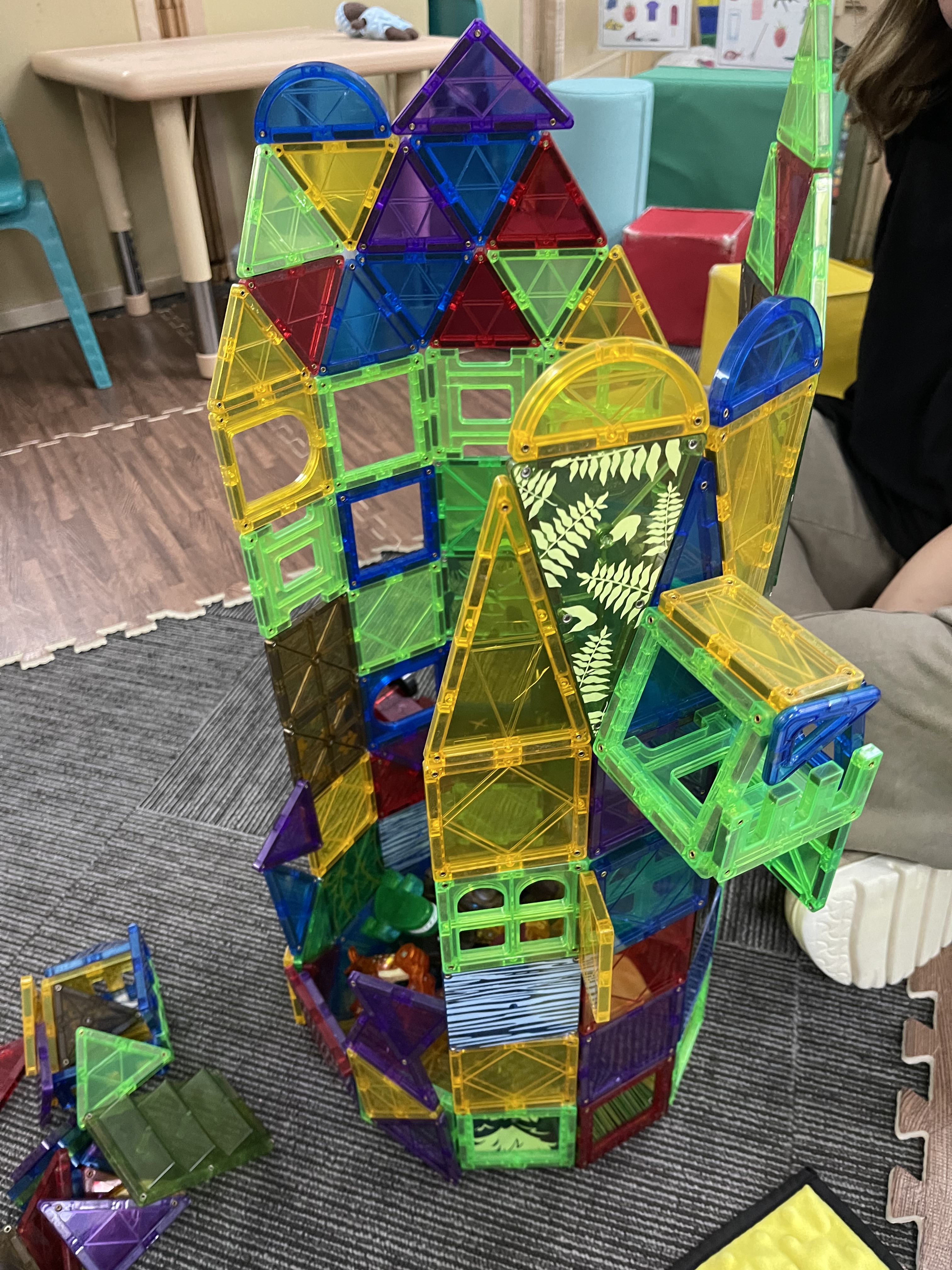
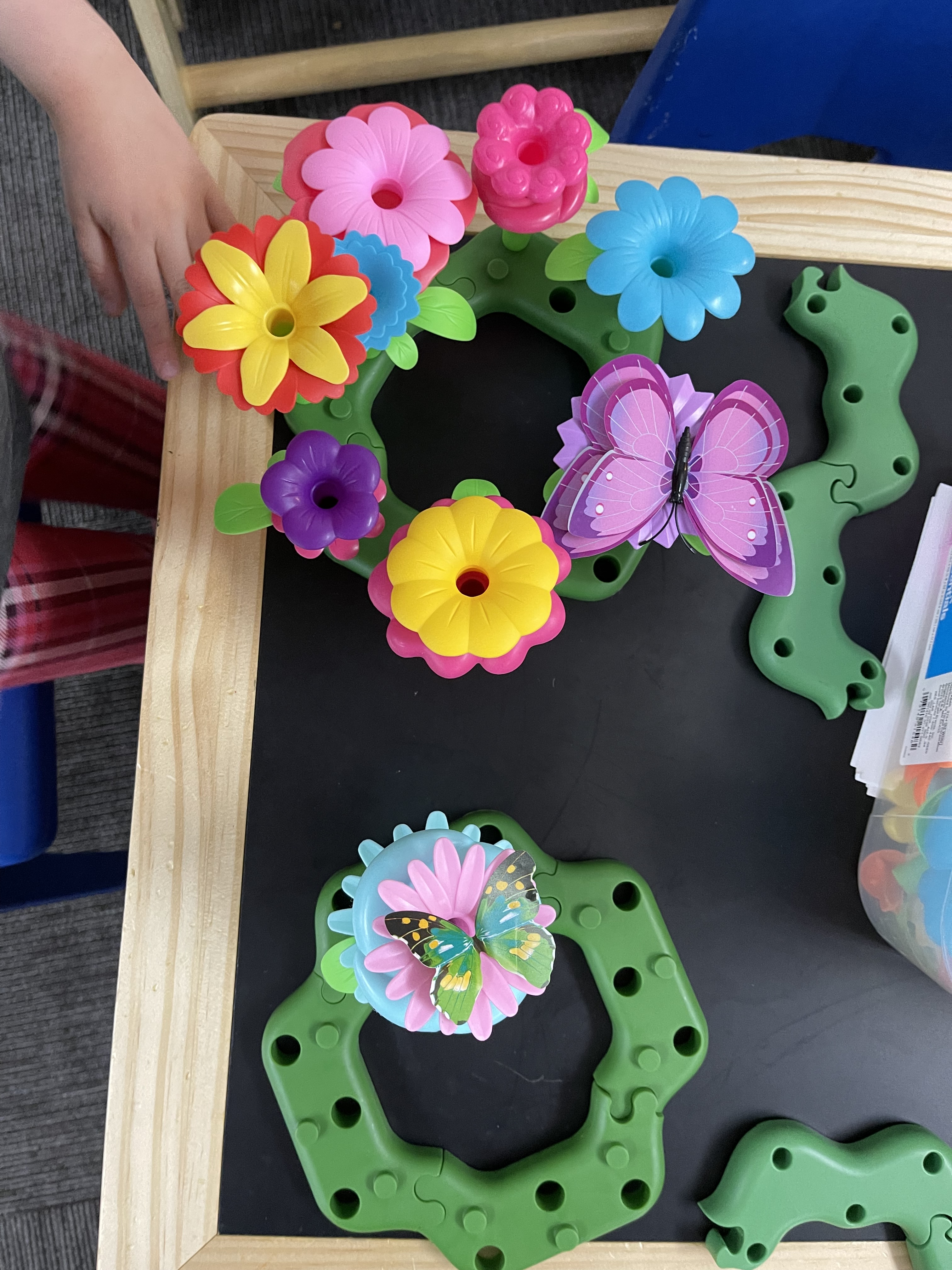
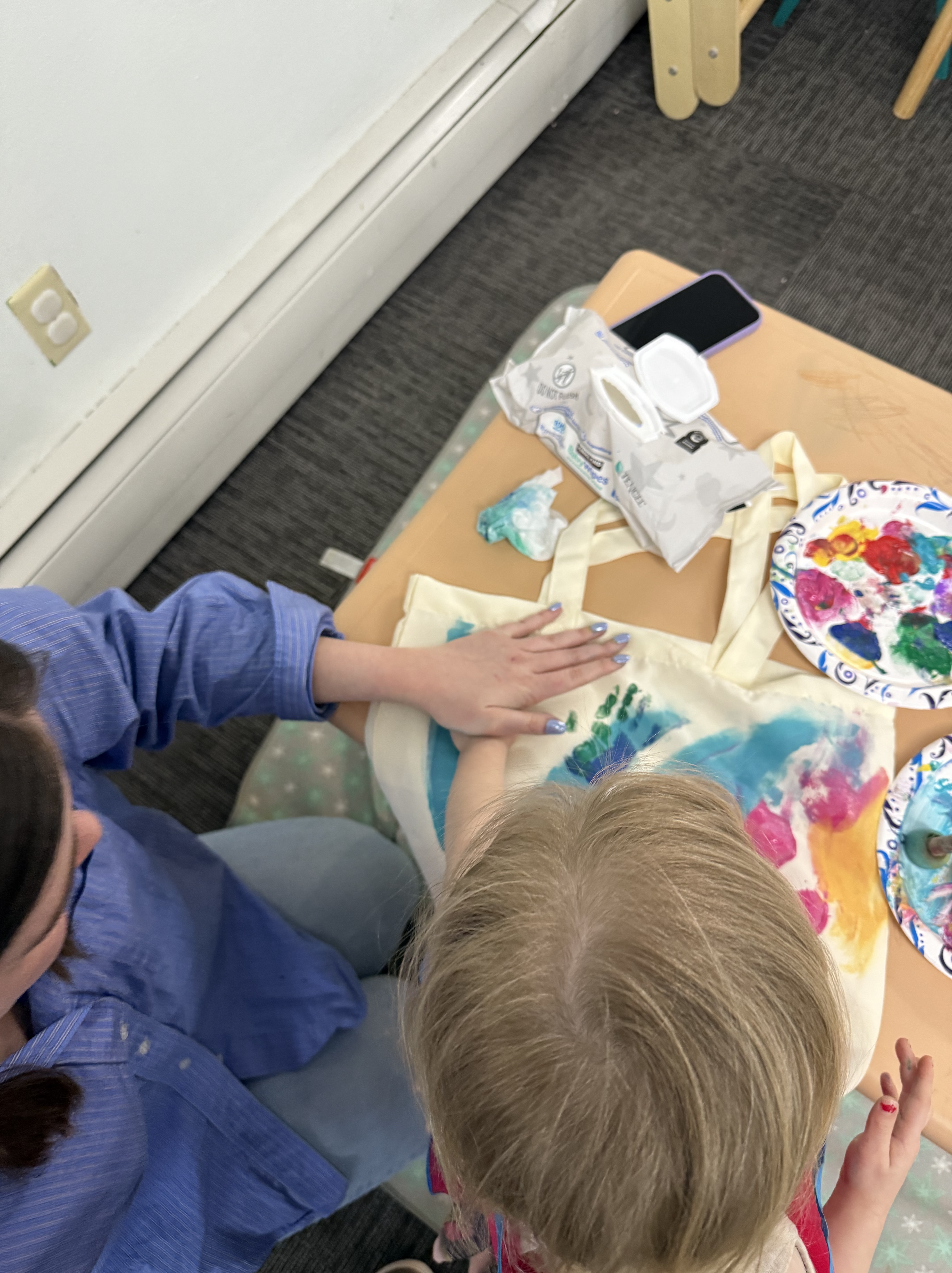
My work at Discovery also gave me the chance to form deep personal connections with the children. Each day brought laughter, challenges, and creativity, from spontaneous conversations to carefully stacked block towers. Behind these joyful moments were many hours of activity planning, each day attempting to engage students through thoughtful projects and interactive play. My phone’s camera roll has become a colorful collection of artwork, towers, and small victories, reminders of the joy and resilience children bring into the classroom when given the chance to thrive.
My hands-on engagement pushed me to reflect on culture, both my own and the communities I worked with. I grew up in a setting where access to early education was relatively secure, and I often took for granted that children would be prepared to thrive in school. In contrast, my work at Discovery highlighted how rural and working-class families often struggle to find consistent, affordable care. This contrast challenged me to think more critically about privilege and to value the resilience and resourcefulness that parents demonstrate in navigating these barriers. It deepened my respect for the families I served and gave me a more nuanced understanding of how culture, economics, and education intersect.
This experience also raised new questions for me. How can educational policy better support families so that access to early education is a right, not a privilege? What role should local communities play in shaping early childhood programs that reflect their unique needs and values? And how can educators themselves be supported to provide equitable, high-quality care when they often face underpayment and burnout?
Overall, this Beyond the Classroom experience gave me a more grounded perspective on my Global Theme and Challenge. It confirmed my commitment to pursuing a career in early childhood education and advocacy, while reminding me that addressing inequality requires both hands-on engagement and systemic change.
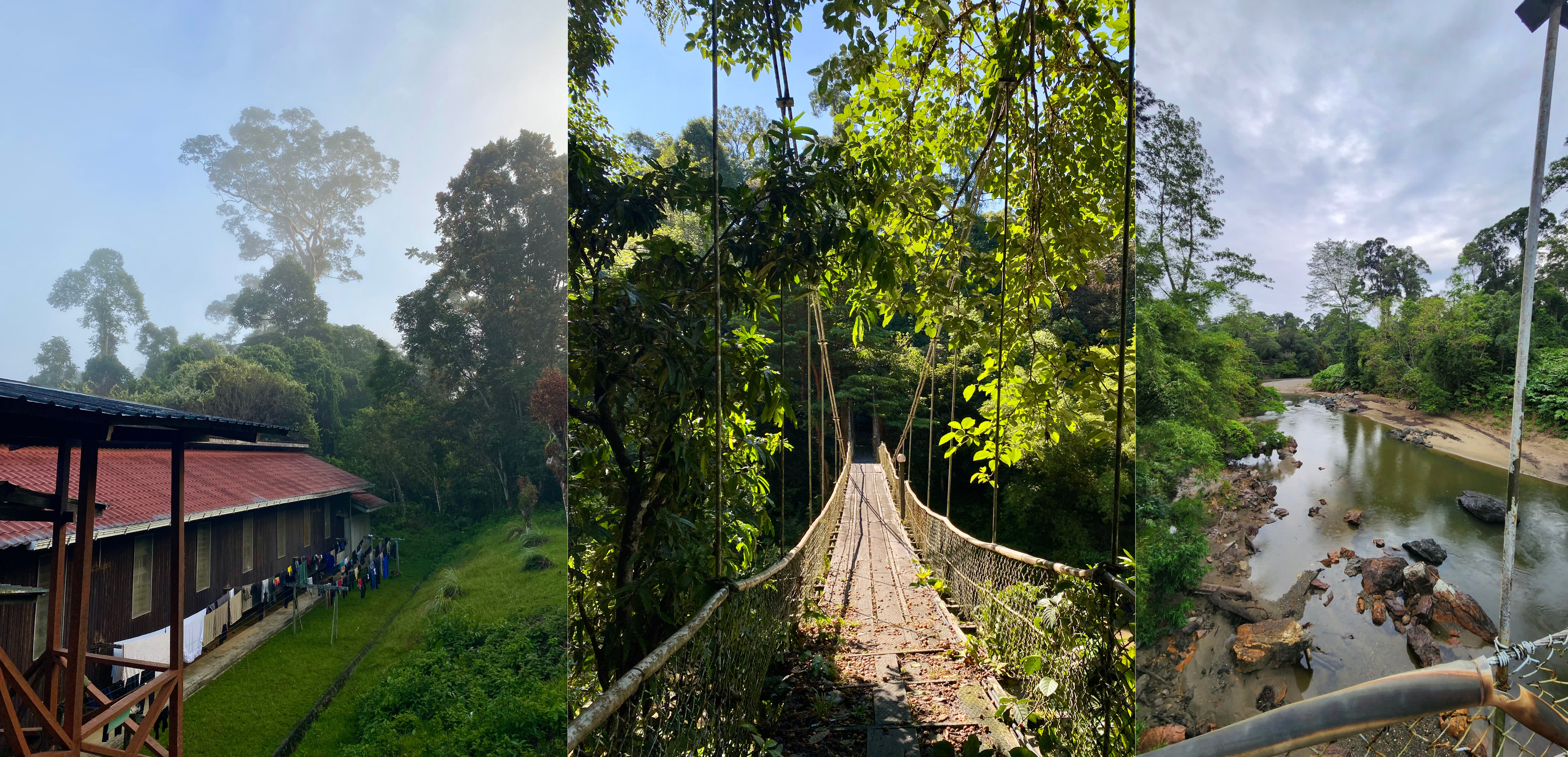
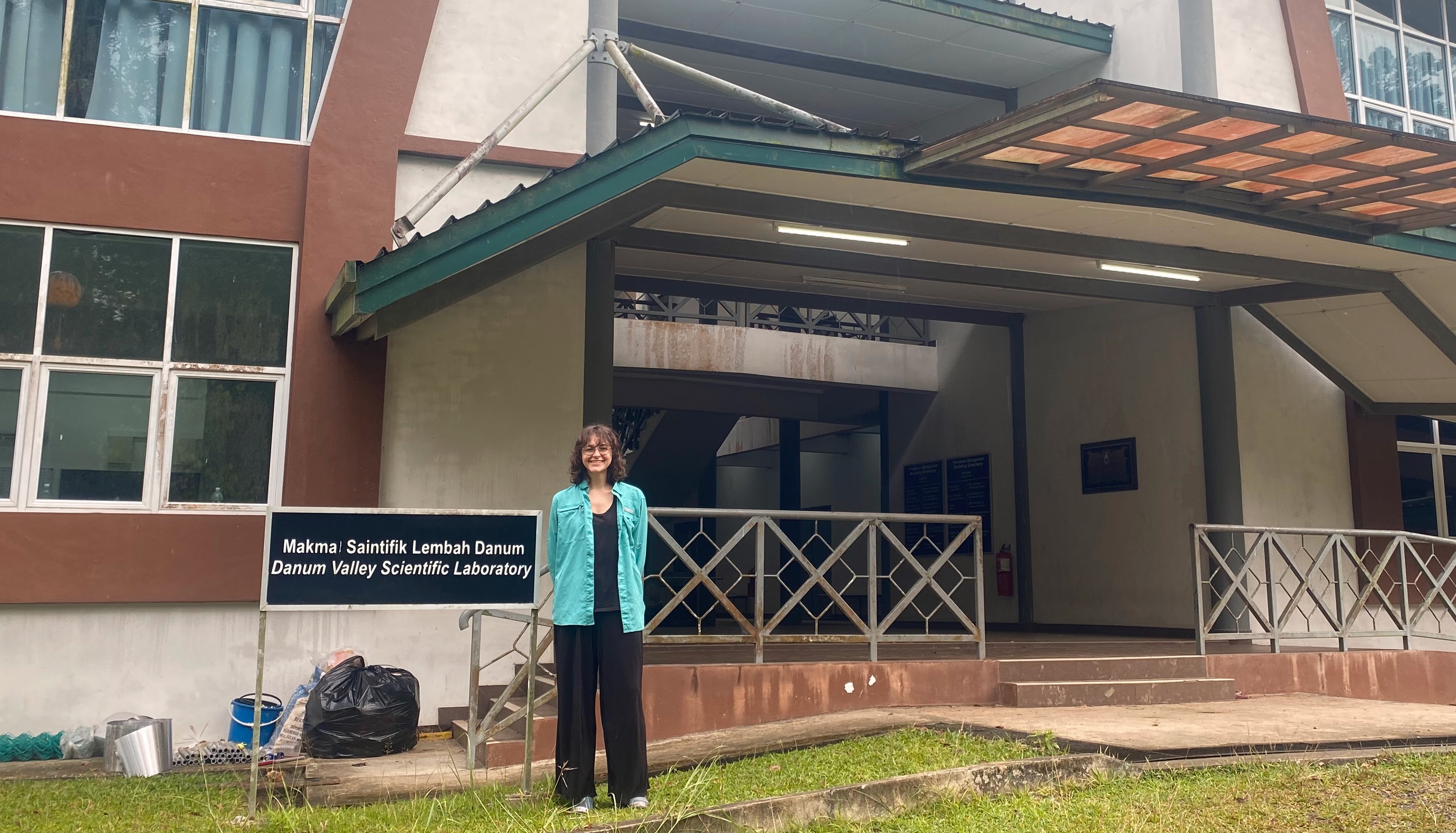
This summer, I had the opportunity to take my Global Leadership Initiative theme of Resources and Sustainability to Malaysian Borneo, where I spent several weeks as a research assistant at the Danum Valley Field Center. Danum Valley is one of the last primary lowland rainforests in Southeast Asia; a place where towering dipterocarp trees dominate the canopy, and endangered wildlife like Bornean elephants and orangutans still thrive.
My main role was assisting with a long-term forest phenology project that monitors how tropical plants respond to climate change. Phenology is the study of seasonal cycles such as leaf flush, flowering, and fruiting, the timing of which is critical for wildlife that depend on these resources. By recording fruit production and tree leafing patterns, the project helps researchers understand how shifts in climate ripple through the ecosystem.
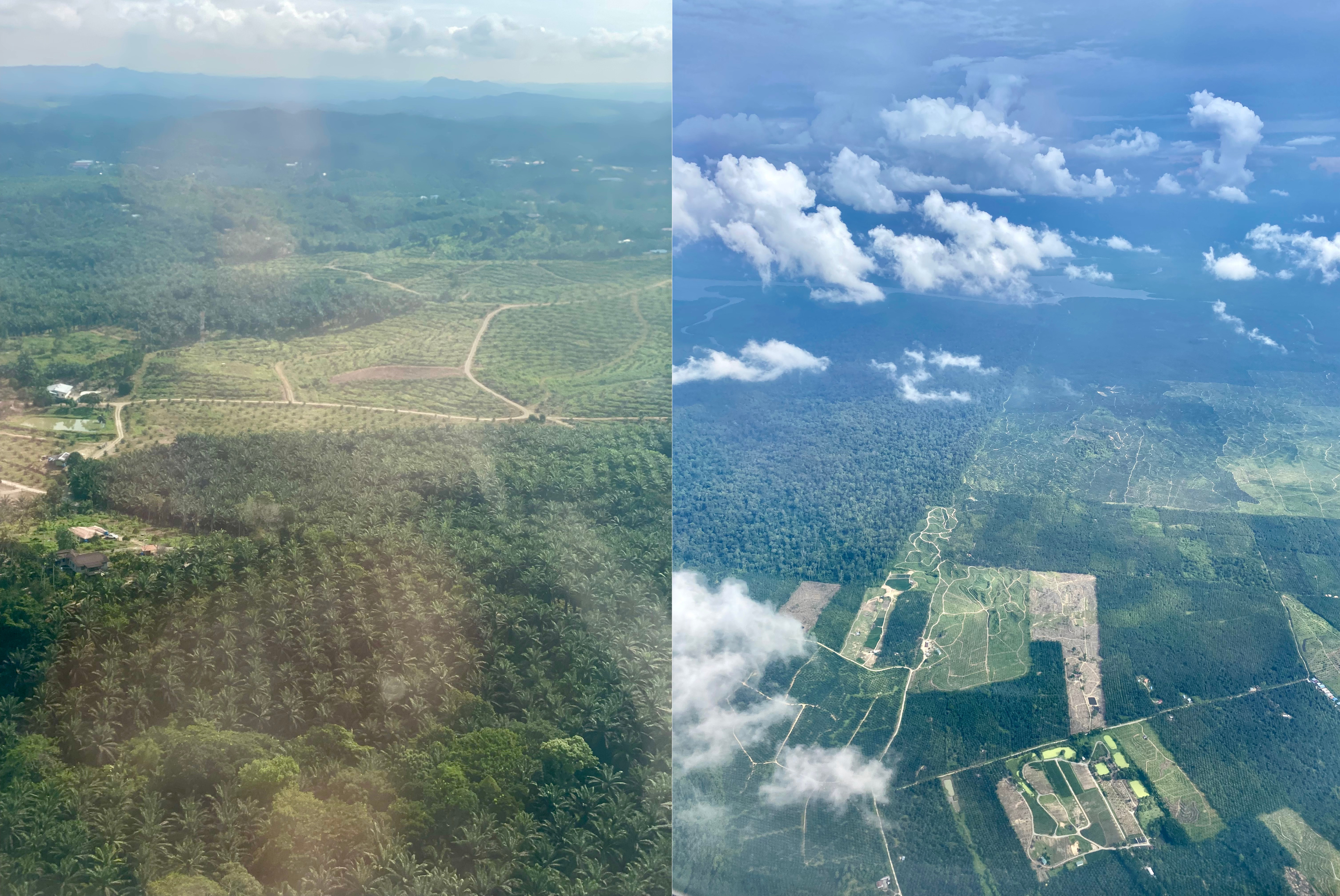
My internship connected to my global theme of Resources and Sustainability and my challenge of “conserving biodiversity in the face of environmental change” by highlighting how natural resources and human needs intersect in complex ways. Primary forests like Danum are irreplaceable for biodiversity, carbon storage, and climate regulation, yet the economy of Sabah in Malaysian Borneo has long depended on palm oil. Abandoning such a profitable industry would be very difficult, thus the state is pursuing a dual strategy by reforming palm oil through sustainability initiatives while also expanding ecotourism. My experience at Danum contributes to these tradeoffs by providing scientific data that helps policymakers and scientists understand how climate change affects tropical forests and the wildlife they support. At the same time, my presence as a visitor contributed to the ecotourism economy, since my funding helped support the operations of the field center. In this way, my experience reflected both sides of the sustainability challenge by advancing scientific knowledge and directly sustaining the institutions that make conservation possible. It also gave me an invaluable opportunity to engage with complex and conflicting perspectives related to my Theme and Challenge.
Oil Palm Plantations seen from above on the plane into Lahad Datu, the last stop before Danum.
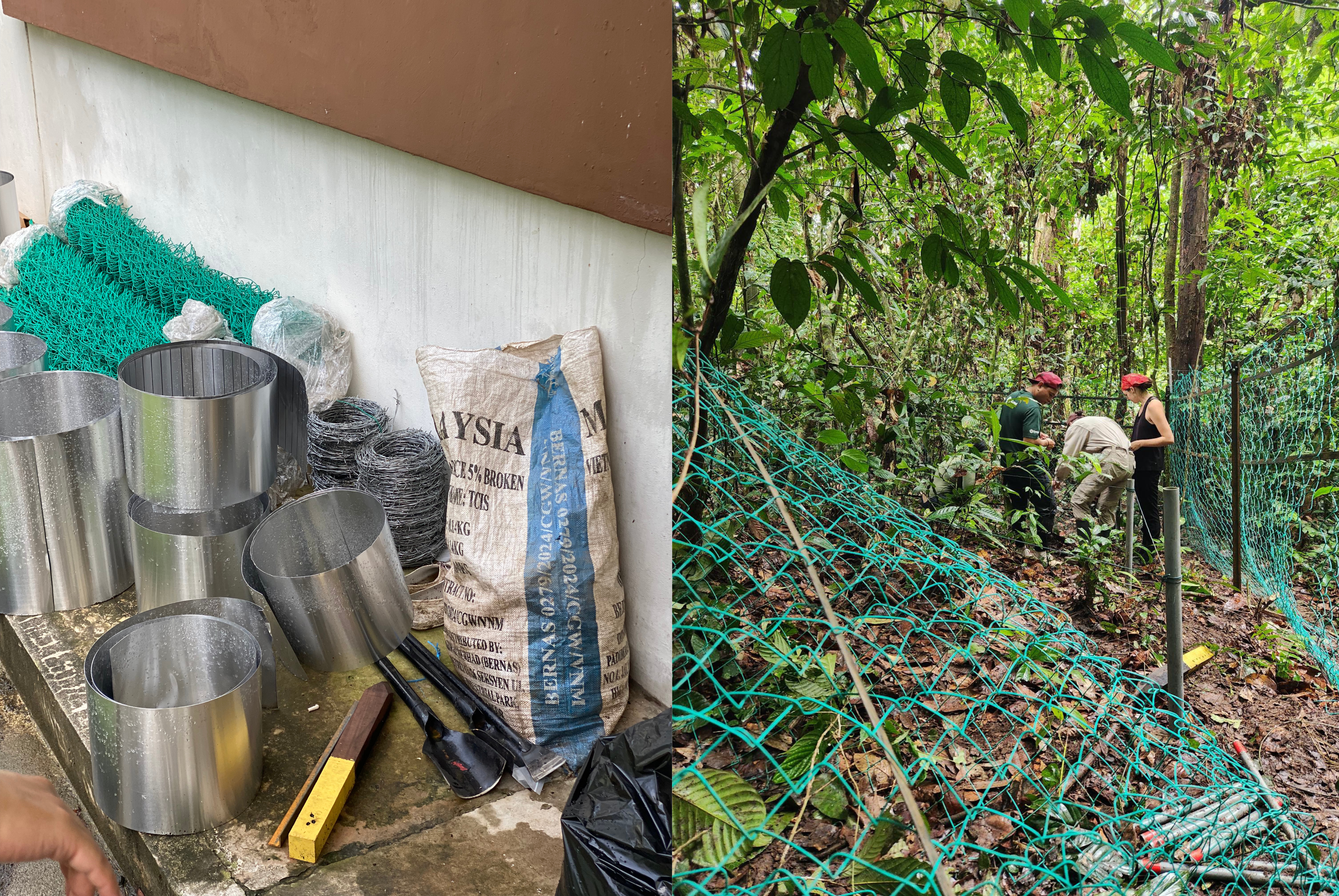
When not collecting phenology data, I also helped launch a new herbivory exclusion experiment. This study tests how insects and insect-eating birds influence the survival and growth of tree seedlings by using a combination of netting, insecticide, and protective fencing. Building enclosures strong enough to keep out all herbivores (from rats to elephants) in the humid rainforest was difficult, muddy work, but it gave me hands-on insight into the challenges of designing and implementing controlled experiments in complex and harsh ecosystems.
This experience also developed my leadership skills. For most of my time in Danum I was on my own, which required me to take initiative, coordinate daily fieldwork with the local research assistants, and manage my role in the project independently. In the final week, I also worked alongside a group of student volunteers, and I found myself stepping into a leadership role by helping guide their work and sharing what I had learned.
The students and I tagging and taking data on seedlings.
One of the most unforgettable moments of my internship was looking up to see a family of orangutans moving gracefully through the canopy. Spotting orangutans in Danum Valley is special because it offers a rare glimpse into their natural, undisturbed habitat in an ancient forest largely untouched by logging, poaching, or oil palm plantation development. Borneo is a global biodiversity hotspot, holding approximately 6% of the world’s biodiversity despite covering only about 1% of Earth’s land surface. During my time in Danum, I was able to see an incredible diversity of species that thrive in intact primary forests, many of them species that are often absent or less abundant in recently logged or restored areas elsewhere in Borneo. Each night on guided night walks, I encountered something new, reinforcing just how much remains to be discovered in these ecosystems and how much could be lost without protection.
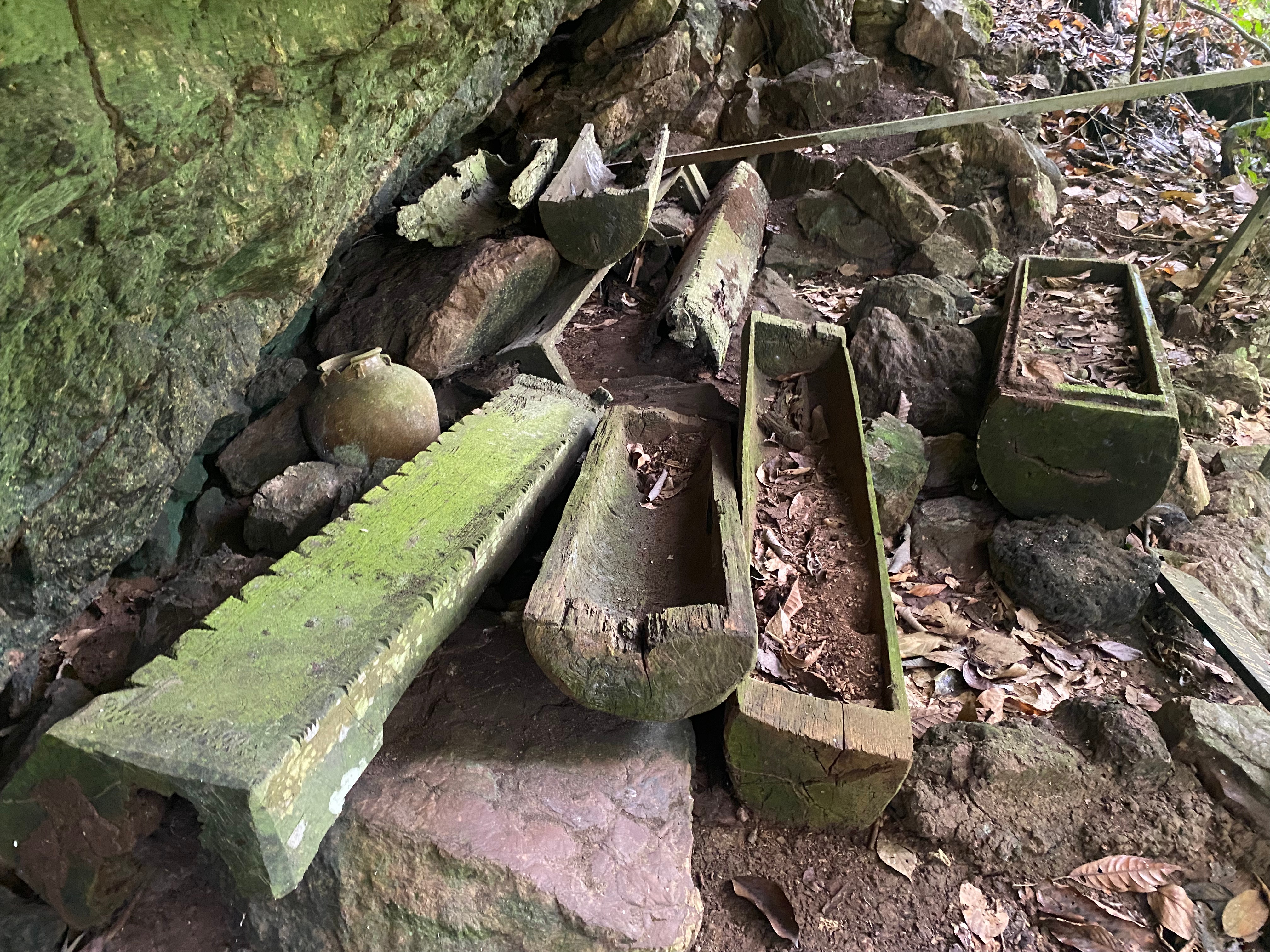
In Sabah, I saw clearly how people and forests are deeply intertwined. A striking reminder was encountering ancient wooden coffins in the forest, dated to around 400 years old, reflecting a long human presence in the landscape. Alongside these historical ties, I also experienced living traditions by taking Malay classes and joining a BBQ where local research assistants prepared traditional foods and taught us dances. These moments reinforced that conservation is inseparable from culture, and that local people must be included in every effort to address biodiversity loss and climate change. This challenged me to reflect on my own culture’s tendency to view wild and preserved places as “untouched” and gave me a more integrated understanding of how people and ecosystems are fundamentally connected.
Before the arrival and spread of Islam, caves overlooking a river were traditionally used by most indigenous groups in Borneo as burial sites. These coffins were made of belian wood, and are thought to be ~400 years old.
I still wonder how climate-driven changes in fruiting and leafing patterns might affect wildlife populations. Because this project is still underway, I look forward to reading the final PhD dissertation to fully understand the results and their implications for tropical forest conservation. Overall, this Beyond the Classroom experience gave me a clearer sense of the challenges facing tropical conservation, and a vision of how science and community engagement can work hand in hand. Beyond that, it strengthened my skills as a researcher and clarified my commitment to a career as a research wildlife biologist. I am grateful for the support that made it possible.
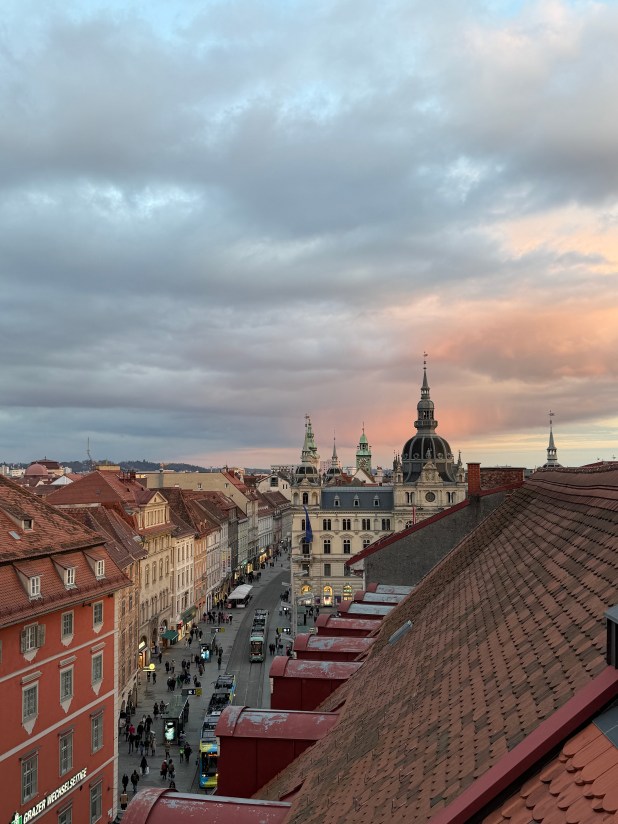
Hallo! My name is Cora and I just spent this last spring Graz, Austria for my Beyond the Classroom Experience. Graz is the second largest city in Austria and is home to four universities, including the one I was studying at, Universitaet Graz. Graz is designated the UNESCO City of Design because of the historic and well preserved architecture in its historic city center. Graz is situated southeast of the Austrian Alps and only two hours away from Austria’s capital city of Vienna.
During my time abroad I was able to travel throughout Western Europe, participate in a field course, and explore my global theme which was Resources and Sustainability. The European Union has a more extensive sustainability framework for its members when compared to the United States. Learning about the differences between the environmental policy in the United States and Austria was very insightful. I took a course that was named Geotechnologies for Monitoring Protected Areas, which explained the legal framework Europe uses to achieve conservation goals, including Agenda 2030. Being exposed to different perspectives and strategies to achieve sustainability will better prepare me to solve problems by implementing ideas I’ve learned from these different approaches. My global challenge was to explore alternative economic systems to capitalism. I took a course on the Circular Economy model, which allowed me to understand how businesses can look at different models and structures to promote sustainability.
I was also able to take an Alpine Hydrogeology field course that was conducted in the Austrian Alps right outside of Gesaüse National Park. During the field course I learned how water moves through Karst landscapes, specifically in Eastern European landscapes. I learned how to conduct a variety of water discharge measurements, and a tracer test to determine the path of water through the karst system. I was working with graduate and PhD students, which pushed me to produce a higher level of work. This experience was incredibly interesting, and sparked my interest in hydrology.
Resources and sustainability were not the only things I took from my Beyond the Classroom Experience. While I was abroad I was able to travel to eight different countries, which was a very eye opening experience. I was able to learn about different cultures and connect with people from around the world. I hiked up the northern coast of Spain on the Camino de Santiago. On this trip I learned a lot about the history of the Catholic Church and importance of this pilgrimage.
My time abroad pushed me to grow in many ways, and I will see its impacts in my life indefinitely. I am so grateful that I was able to experience new cultures and learn outside of the United States. I am excited to continue to travel, learn, and explore. Bitte schön!
Hello! My name is Delia, and I’m a senior studying Environmental Science and Sustainability and Political Science. I had the incredible opportunity to study and live in Tokyo, Japan this past year for my Beyond the Classroom Experience. While there, I focused on my global theme of Culture and Politics, and explored my global challenge of pursuing international collaboration on climate policy.
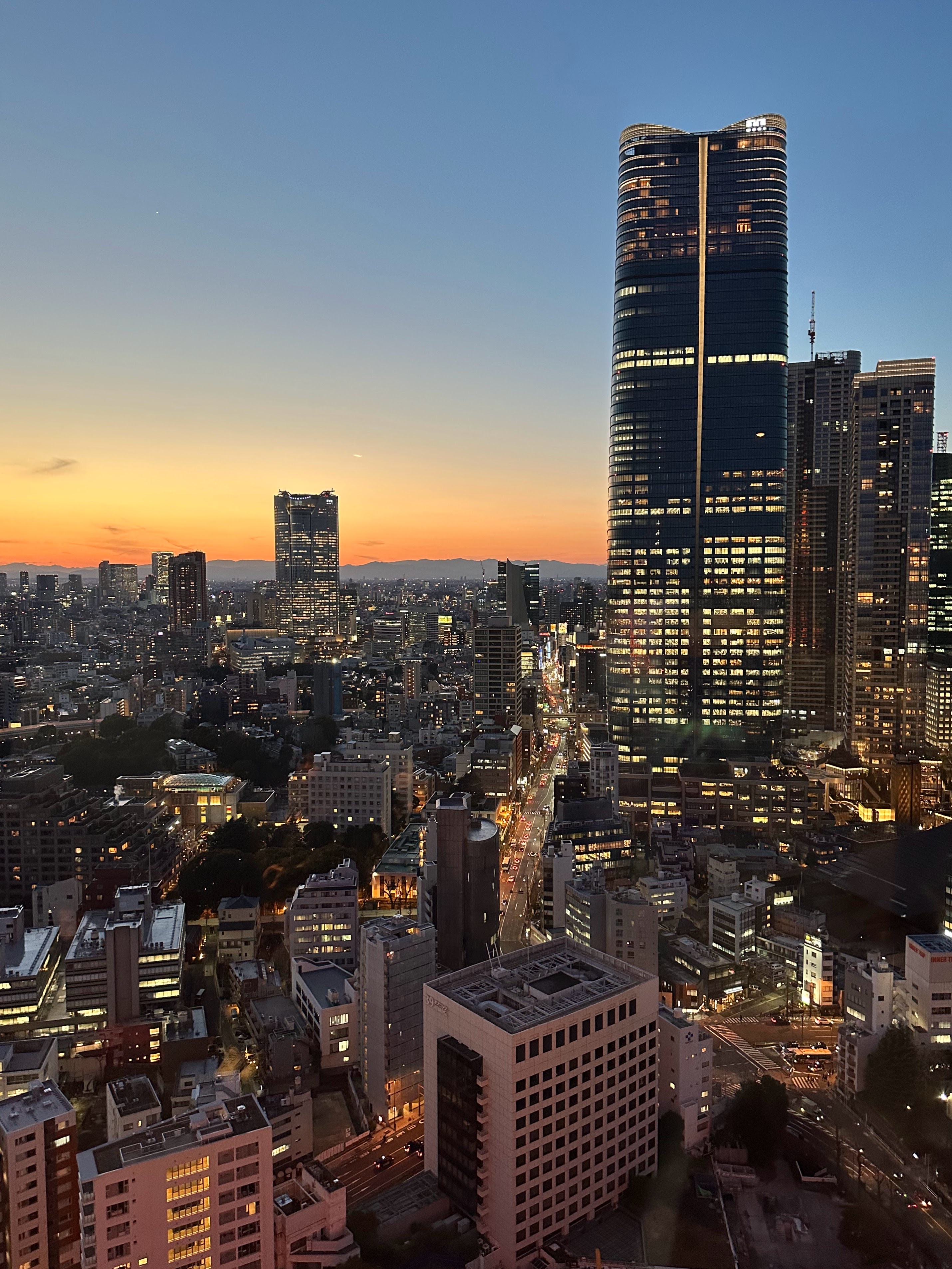
Living in the heart of Shinjuku, Tokyo was a challenging yet incredibly rewarding experience. Growing up in Phoenix, Arizona, I had considered myself accustomed to navigating a somewhat large city, but nothing can compare to Tokyo’s sheer vastness, nor the bustling crowds that surrounded me daily. It seemed like every week I discovered a new corner of the city, a new local shop or cafe near campus, or a new path to a familiar destination. While overwhelming at first, the city provided endless ways to immerse myself with Japanese history, tradition, and culture. Outside Tokyo, I was also able to visit several other large cities and smaller, rural towns, offering a glimpse into the slower side of life in Japan.
Reclining Buddha at Nanzoin Temple- Fukuoka Prefecture
Culture and history were everywhere I went. On my ten minute walk to campus each morning, I passed both a temple and a shrine, including a massive torii gate opening onto a major intersection. Elsewhere in the city, small shrines and temples intertwined with large, modern businesses and homes. I was able to visit and tour historical sites only a short train ride away, including the Imperial Palace, built on the site of an Edo-era castle where the Tokugawa shogunate once ruled, and Senso-ji, Tokyo’s oldest temple. Through Japanese language classes, I learned about Japanese society and habits, and built communication skills that were essential for navigating and connecting with my community.
Tokyo Tower– Minato, Tokyo
Studying at Waseda’s School of International Liberal Studies also allowed me to engage with other cultures. Many of my classmates were long-term and exchange international students, and discussions and group projects with students from various countries and backgrounds offered new perspectives on a range of issues. Classes such as Global Environmental Systems, Public Management and Local Government, and the Politics and International Relations of the EU helped me explore global challenges and potential solutions. The topic of international cooperation on climate change came up in multiple courses, and in my Public Management class I was able to put together a wildfire policy proposal project with students from three different countries. These discussions helped me deepen my understanding of my global theme and explore ideas to address my global challenge.
My time in Tokyo was invaluable to my academic, personal, and professional growth. Collaborating with students from diverse backgrounds and disciplines exposed me to diverse perspectives and experiences that have helped to shape my own understanding of global challenges such as sustainability and climate change. Being exposed to both a different educational system and a different way of life has tested my adaptability to new and uncomfortable situations and expanded my global and cultural awareness. I’m so grateful for all that I learned and experienced this past year. またね、日本!
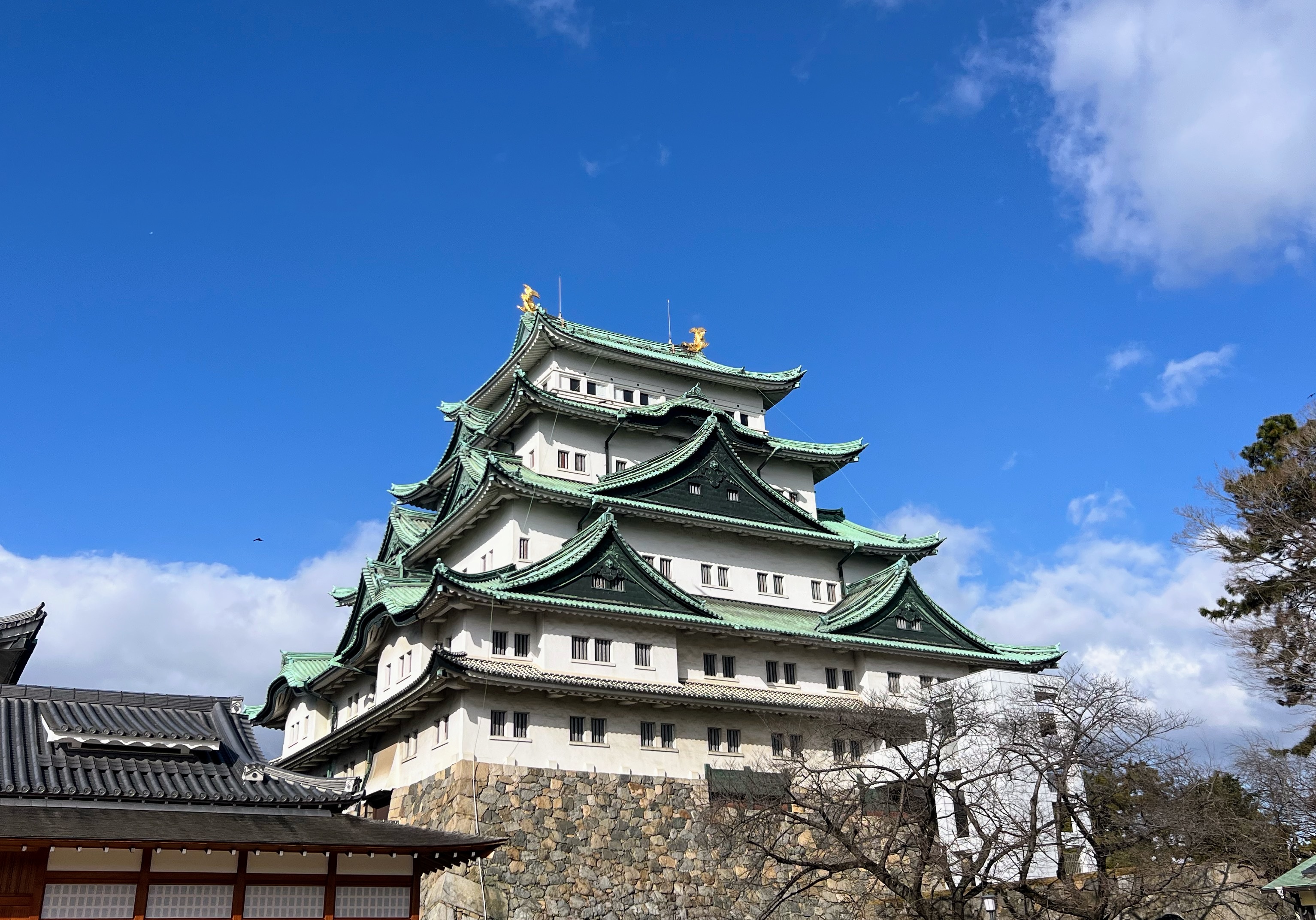
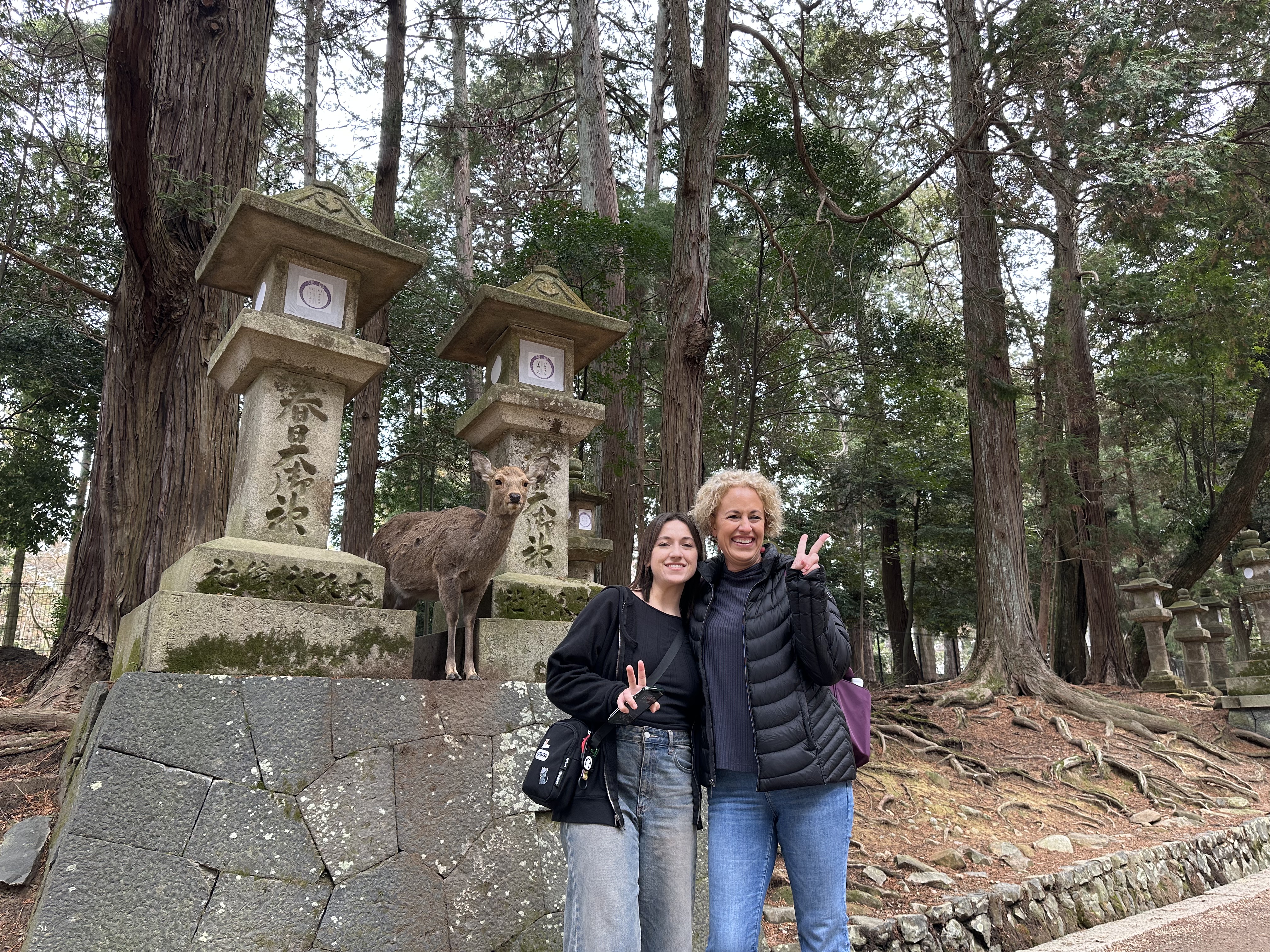
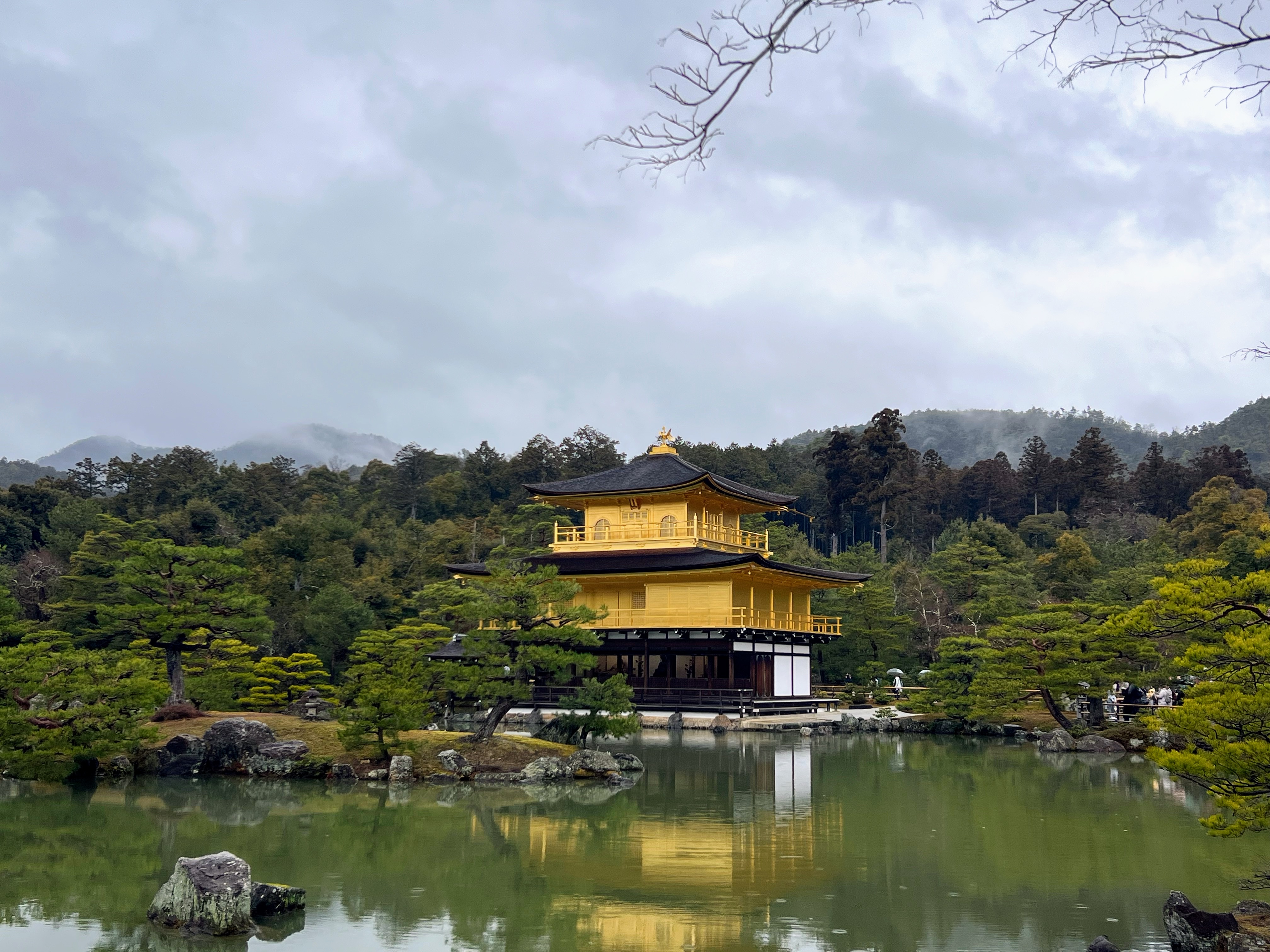
From left to right: Nagoya Castle, Nagoya, Aichi; Senso-ji, Asakusa, Tokyo; Nara Park, Nara; Meguro River, Tokyo; Kinkaku-ji, Kyoto
















 Beyond the Classroom