
Hi all! My name is Hattie Ransom, and I am a Wildlife Biology major with the GLI theme of Resources and Sustainability. I spent this past summer interning under Fauna Forever, an organization that collects important ecological data about the wildlife in the Peruvian Amazon to support the conservation of its resources, landscapes, and plant and animal populations.
Tucked away in the rainforest of the Madre de Dios region of Peru, getting to the Secret Forest Ranger Station was no easy feat. My 48 hour travel day consisted of a layover in LA, a night spent in Lima, a plane to Puerto Maldonado, a tuk tuk to a hostel, an hour long bus ride, and a 30 minute boat ride. Upon my arrival at the station, I was pretty exhausted to say the least. This exhaustion was quickly forgotten as I took in my surroundings. Located just off of the Madre de Dios River, the Secret Forest Station is a biodiversity hotspot with trees towering overhead and birds darting across the canopy. My crew’s arrival was welcomed by the call of oropendolas and the chatter of Tamarin monkeys.

After dropping luggage off and settling in a bit, we met for a two hour safety briefing. The presentation warned of us wandering spiders, bullet ants, coral snakes, dengue, tree falls, electric eels, and other dangers we may face while living in the rainforest. After this briefing, I found myself contemplating my life decisions. But after living in the Amazon for 3 months, I can safely say that, despite the many challenges I faced, it was all worth it.
My primary focus during my stay was to help conduct bird research in the form of bird banding. With almost 2,000 species recorded in the country, Peru is one of the most biodiverse places in the world when it comes to birds. In the areas surrounding our field sites alone, upwards of 600 species could be observed. It was incredible and honestly, a bit overwhelming. Between trying to learn names, calls, and life strategies, I sometimes felt like my brain might overheat and shut off.
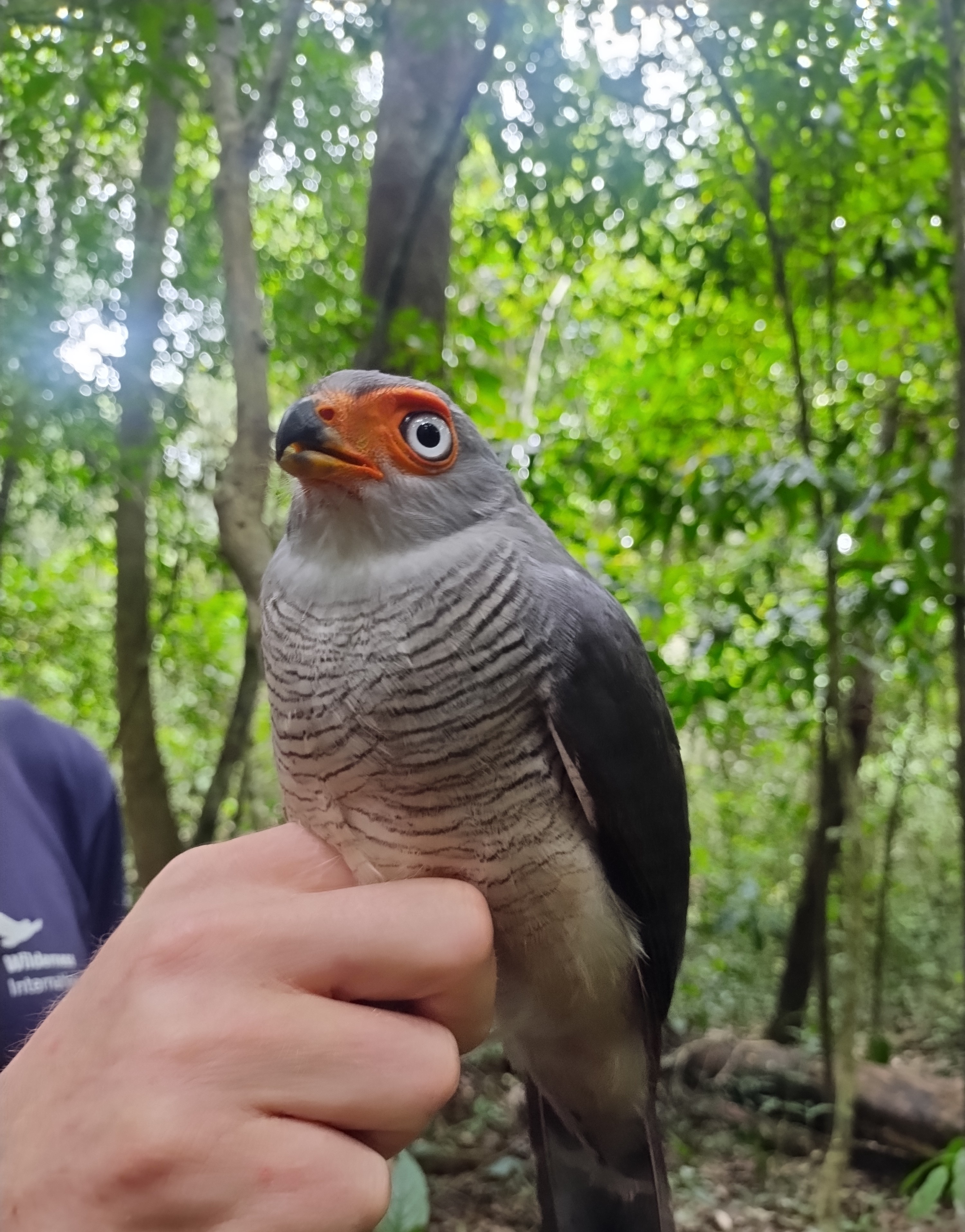
“The early bird catches the worm” and the early biologist catches the bird. On an average day, I was up at 4:30 am, eating breakfast at 5:00, and ready to go out into the rainforest by 5:30. Birds forage and are most active in the cooler morning hours and therefore, this is the best time to study them. Each morning, we set up 6-10 mist nets, checking them every 40 minutes to ensure that no bird had been left in the net for too long. After carefully extracting these birds, they were taken back to our banding station where they were given a unique band number in the form of a small, aluminum bracelet (used to track the bird in the event of a recapture). The birds were aged, sexed, weighed, and measured in a timely manner. They were then safely released with a little bit of ankle bling. This whole process was quite technical, and I spent much of my summer learning how to properly take measurements, and id and age each bird correctly. Because I had worked with birds prior to this experience, I had a lot of opportunities to lead and teach other interns which helped me to refine my own techniques and feel more confident in my abilities.

Not only did I learn an incredible amount about wildlife research, but I also feel like I learned a lot about the world. My research team members were from all over the globe, and I had a lot of interactions in which I learned about their cultural values and wildlife management approaches. I was also taught a lot by the Peruvians as they educated me about many of the challenges to conservation that are faced on a local level and shared some of the work that they are doing to protect the rainforests of the Amazon.

This experience was life-changing, and it would not have been possible without the Franke GLI Fellowship scholarship. I cannot thank the GLI program enough for guiding me through this experience and helping fulfill a childhood dream of mine.
 Beyond the Classroom