
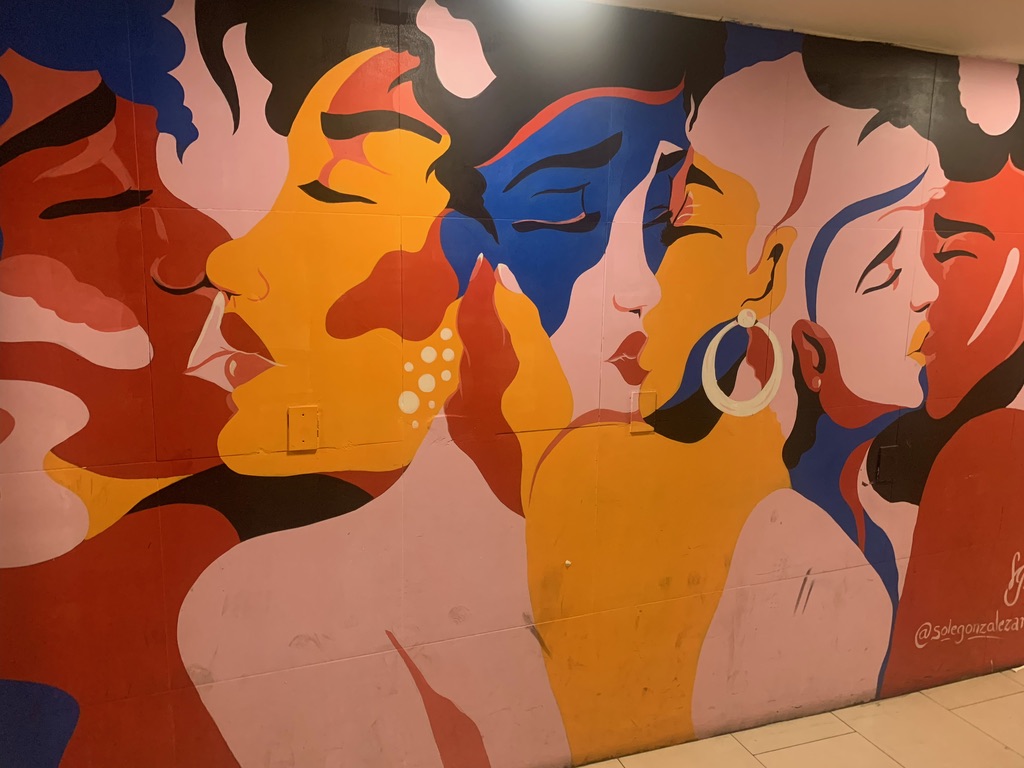
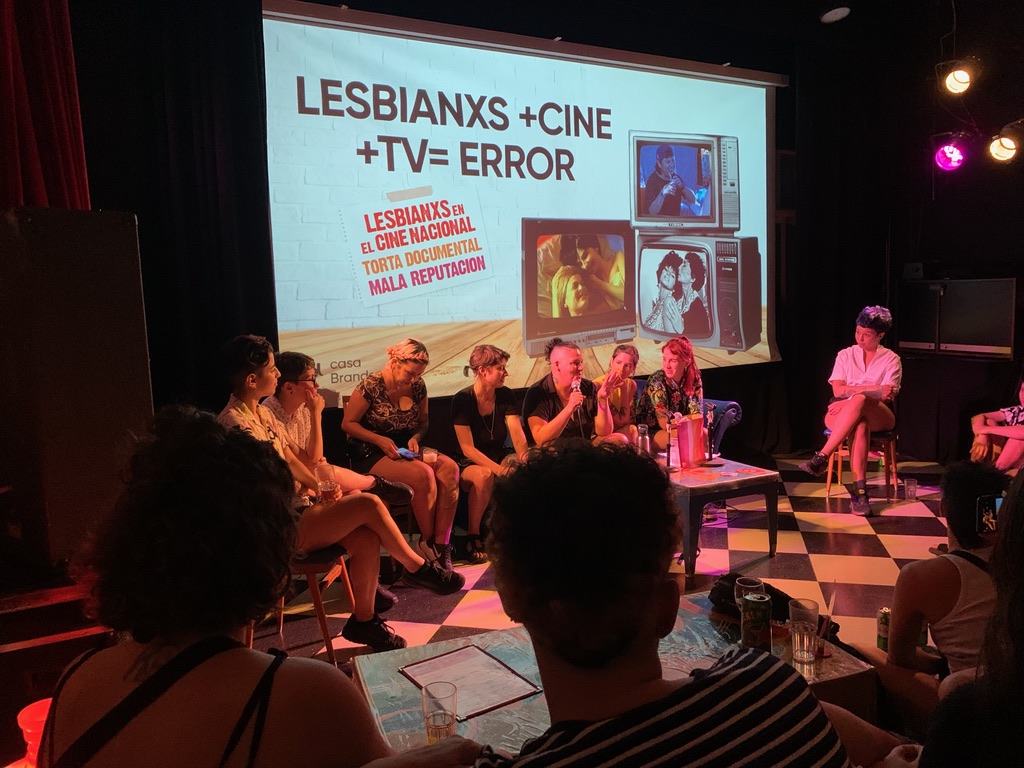
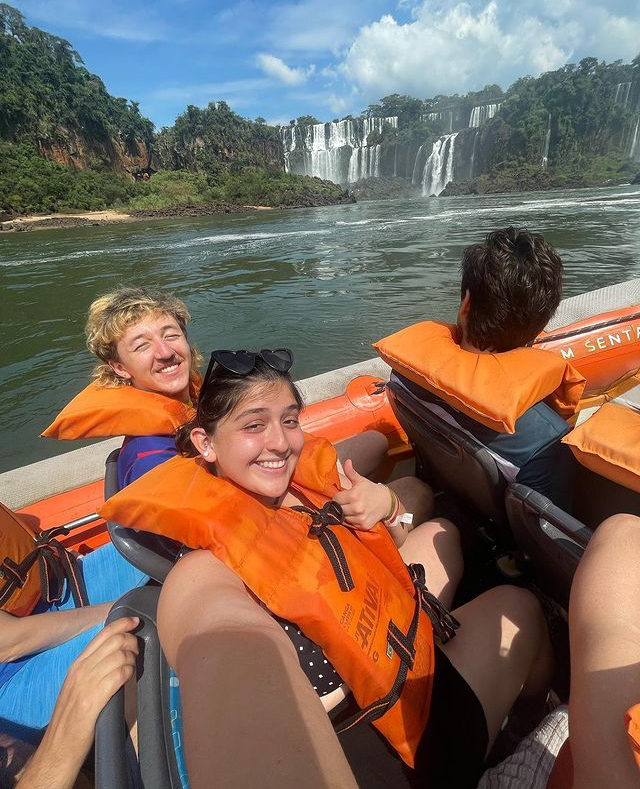
This past spring, I had the privilege of studying abroad for an entire semester in Buenos Aires, Argentina, at the Universidad del Salvador, taking a total of 20 credits for the semester. My Franke GLI global theme was inequality and human rights, which was a very central part of my experience abroad. Though Argentina is a beautiful country with a rich culture, it is also a country that as of recent is riddled by poverty and injustice. During my exchange semester, I bolstered my Spanish in a really meaningful way, ate some really incredible food, and met some amazing people, but at the center of it all, I gained a much better perspective on the implications of global inequality through the physical manifestations of that inequality that I saw firsthand.
The fact of the matter is that currently, Argentina is going through significant economic hardship. In the six months I was there, inflation went up just under 100%. A month after my departure, it was up around 150%. While it was nice for me being able to eat out at one of the many incredible restaurants in the downtown area of Buenos Aires for around $3-5 USD, and being able to literally change the course of someone’s day better by offering them a couple bucks, it was really difficult to see the intense poverty the vast majority of the country was, and still is confronted with. Though the cycle of living paycheck to paycheck is something that is very common in the United States, it seemed that even more of the people of Argentina were living in that vicious cycle, and that those at the bottom economically were much deeper in poverty than those in the same position in America.
Argentina is also in a very tricky position politically, with a Trump-style right-wing strongman, Javier Milei, recently taking the highest percentage of the vote in the country’s recent presidential primary elections. The presidential candidate has gone on record as wanting to cut essentially all social services, from public healthcare to public education, and is an unabashed denier of the genocide committed by a right-wing dictatorship some years earlier in the country’s history. Several friends of mine have expressed that they are genuinely considering fleeing the country should he actually win the presidency. In my time abroad, however, it became clear to me that Milei’s recent primary victory is in part the result of decades of American interference. According to the New York Times (https://archive.nytimes.com/lens.blogs.nytimes.com/2014/01/24/exposing-the-legacy-of-operation-condor/), the previously mentioned dictatorship that executed as many as 30,000 Argentinians was a direct result of the infamous Operation Condor, a United States-backed campaign of political repression and state terrorism that involved CIA-backed coups and the assassination of prominent leftist leaders all throughout South and Central America. However, despite my country being one of the driving factors behind one of the greatest traumas within Argentinian history, all of the people I met were exceedingly magnanimous with me, because I understood the historical relationship between my country and theirs. I think this was a relief for many people who have suffered such a deep cultural trauma, and are accustomed to Americans who don’t know or conveniently overlook that history, like during our required course, Successful Education Abroad (EDU 212), where we discussed the possibility of people attacking us for being American without ever examining what those attacks might be rooted in.
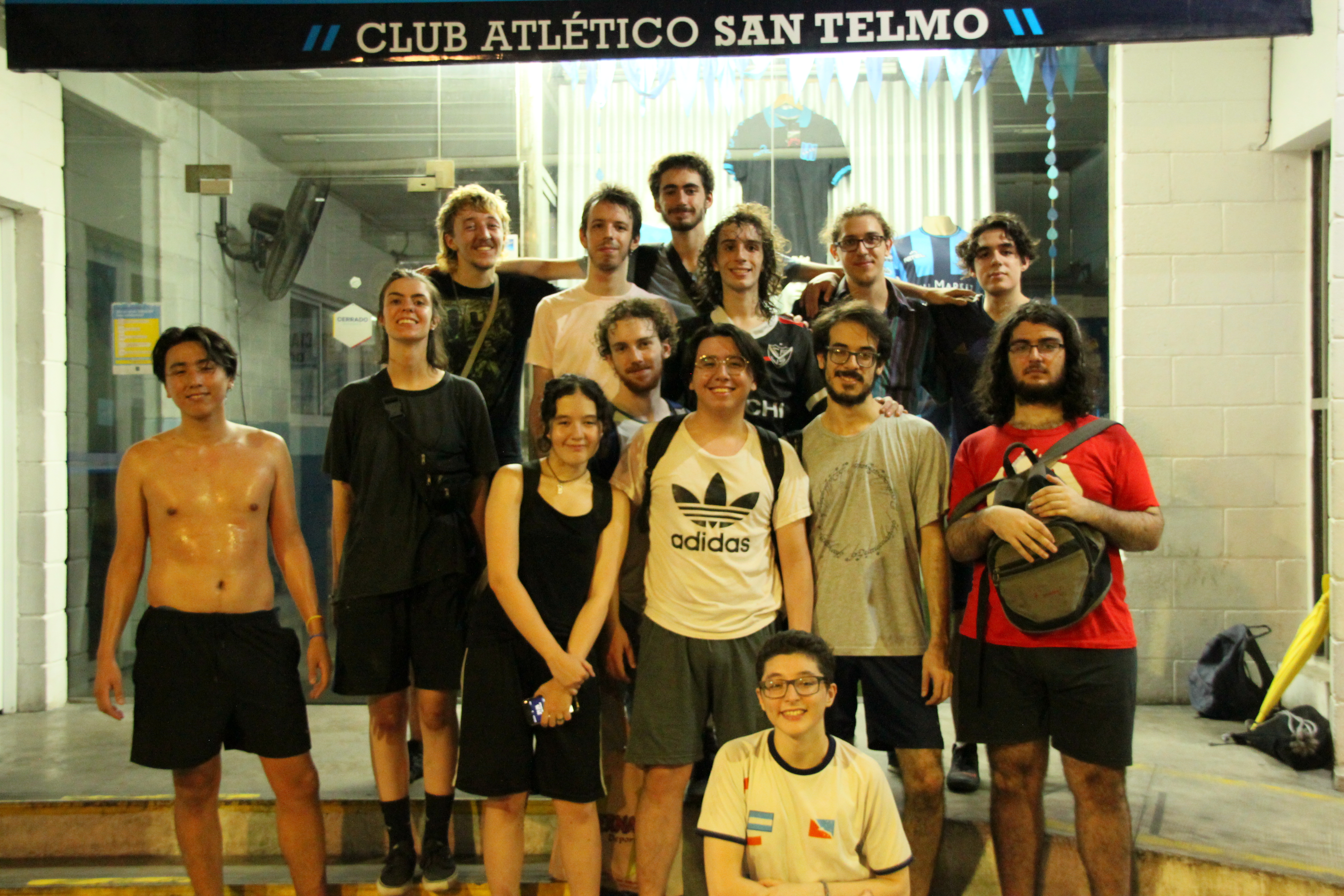
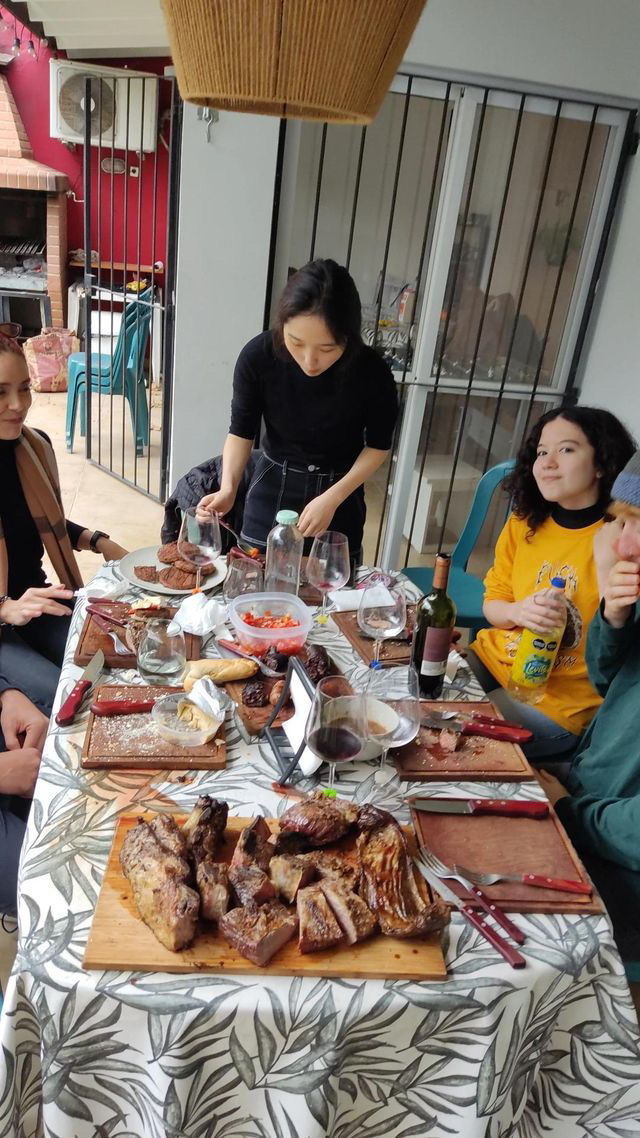
Despite my qualms, and the difficulty of seeing so much suffering, much of which is the direct responsibility of my own country’s actions, I am extremely grateful for the experience that I had in Buenos Aires. I am grateful for the perspective I gained not only on inequality and human rights, but also culture. In the United States, in my humble opinion, we lack any sort of culture or cultural practice that isn’t somehow rooted in domination, or simply the appropriation of other cultures. Hamburgers are from Hamburg, Germany, Thanksgiving is simultaneously a widely celebrated American holiday and a day of mourning for many indigenous peoples, and the Fourth of July is the celebration of a country that exists entirely on stolen indigenous land. So, keeping that in mind, it was a huge relief for me to live in a country with an actual coherent culture that drew people together. I enjoyed getting to try and help prepare milanesa, dulce de leche, choripan, and several other traditional Argentinian foods, including enjoying a traditional Argentinian asado on their respective independence day, and eating gnocchis every 29th of the month. Furthermore, it was really something special to be able to show up to any bus stop knowing that if I didn’t have funds on my card, someone would pay for me without hesitation, and then refuse when I offered to pay them back in cash. It felt like a different world knowing that if I wanted, I could talk to a random stranger on the street, and the odds are they would actually stop and chat with me, and I might even make a friend out of it. I ended up sleeping in the house of a friend I had made that way the night I lost my apartment keys, and I wouldn’t have had it any other way.
Seeing that culture of care for people that you barely know, even despite the right-wing uptick and intense political division in the country is something that I am still mourning losing, but also something that I hope to bring back. Everyday I work to be a more caring and kind person, even to those that I do not know. I work with Missoula Community Free Fridges to feed the most vulnerable in our city, I try and really listen to everyone I talk to, and I do everything I can to live my life in a way that is aligned with not only kindness, but also a better world for those who struggle every day, like many of the friends I made in Argentina. There are many things that I brought out of my study abroad experience, but a passion for equality, and kindness, even towards strangers are some of the biggest things I took away from my six months in the incomparable city of Buenos Aires.




 Beyond the Classroom