
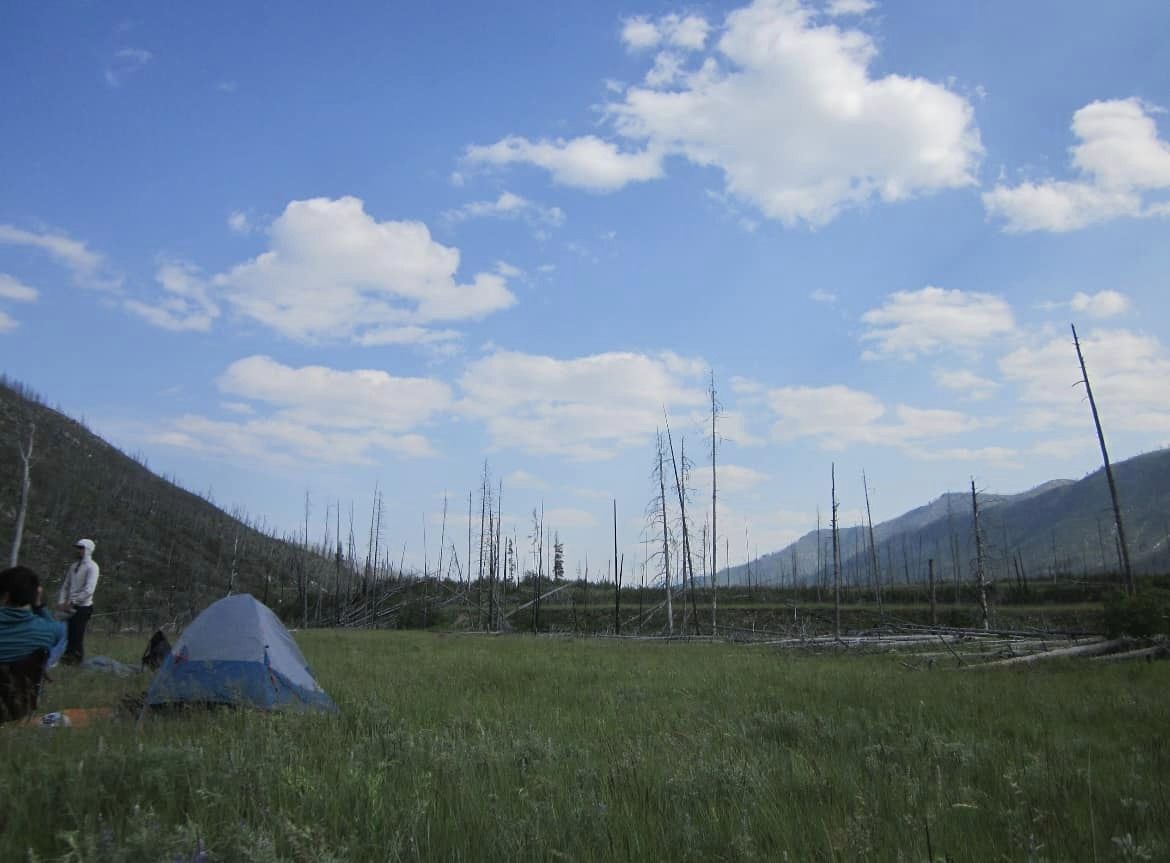
This summer I was fortunate enough to be able to participate in a Wild Rockies Field Institute course titled Conservation Across Boundaries. I am a Sustainability, Science, and Practices major and this course seemed to fit in perfectly with what I am already extremely passionate about and connected to by my global theme of Resources and Sustainability. The course was split into four sections. The first was an 8 day backpacking trip in the Bob Marshall. I have a Wilderness Studies minor and was able to contribute to a lot of the conversations had in this space as we discussed the terminology behind “Wilderness” and what implications that verbiage has.
After this section of the course we spent time in the front country and learned about life on a reservation and different environmental movements occurring in these spaces. We met with tribal elders and discussed the importance of Indigenous place names and what the Blackfeet Confederacy is doing to include more of those in the public sphere. We also had the opportunity to work on a trails crew for a few days, with the Great Divide Trail Association. Here we learned more about how trails are created and the importance of proper construction and maintenance.

In the third section of our course the focus was on a specific case study that occurred in British Columbia. We backpacked the Jumbo Loop Pass and learned all about the proposed glacial ski resort in that area. The Ktunaxa nation ancestrally occupied these lands and the specific piece of land the ski resort would have been put on was the Q’atmuk land, or the sacred grizzly land. A ski resort here would have had a major environmental and cultural effect that sparked a small grassroots movement called “Keep Jumbo Wild”. We met with people who were a part of the organization and discovered how effective this small conglomerate of passionate people were at keep the ski resort off the land.

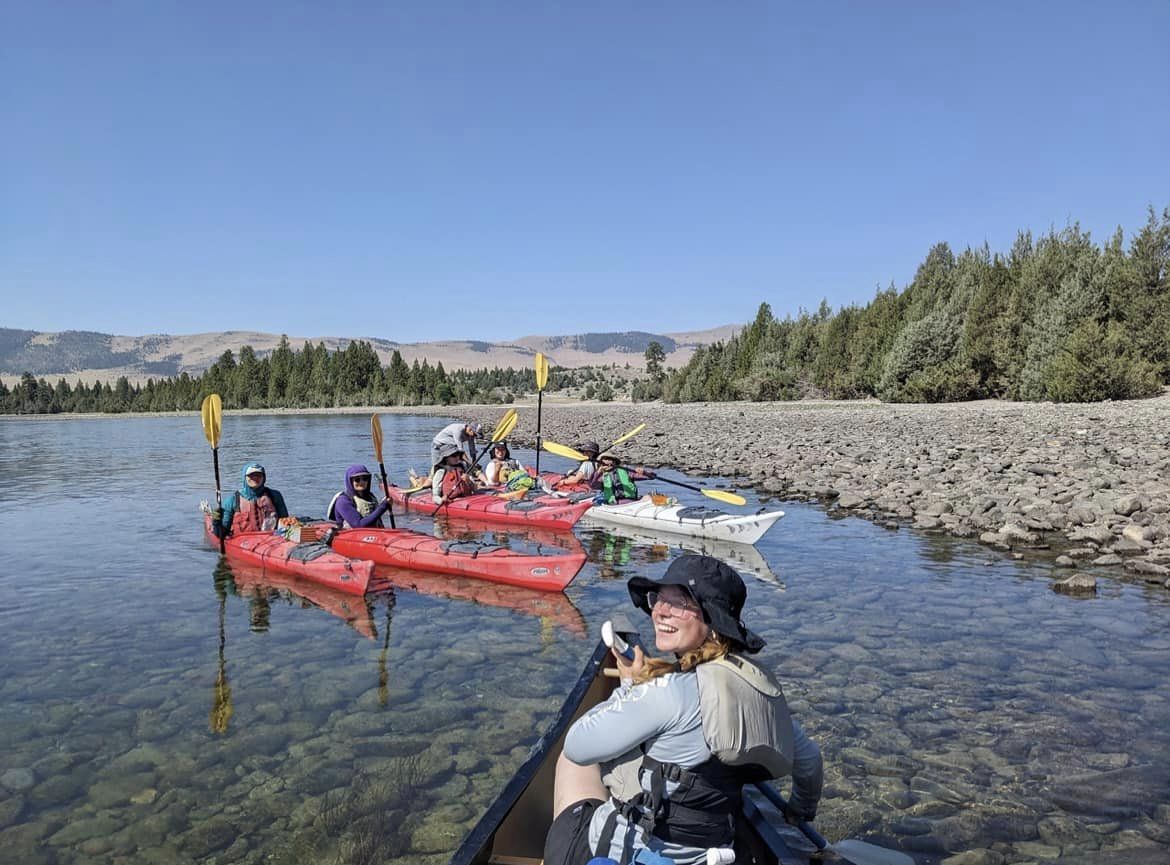
Lastly, we spent the final leg of our six week trip kayaking down the Flathead River. We learned a lot about the Confederated Salish and Kootenai Tribes and the work they did to reacquire the National Bison Range so the land is once again managed by the tribes and not the federal government. This is an example of the positive effects of the Land Back movement and we were able to visit the range and learn first hand how the returning of the bison to the land is vital to our environment.
This experience was one I will never forget. The knowledge I have attained from learning experientially and the people I met along the way are something I will always hold dear to me and will continue to reference in the rest of my education and career to follow.
 Beyond the Classroom